
Reviewed · TOKYO CYCLING TOURS
Tokyo: 2-Hour Night Bike Tour of the City’s Hidden Gems
Tokyo looks entirely different from a bicycle after sunset. On this two-hour neon ride, you pedal from Yoyogi Park through Shibuya, Omotesando, Roppongi, Tokyo Midtown, and on to Tokyo Tower, with the city lights close enough to feel rather than simply watch from a train window.
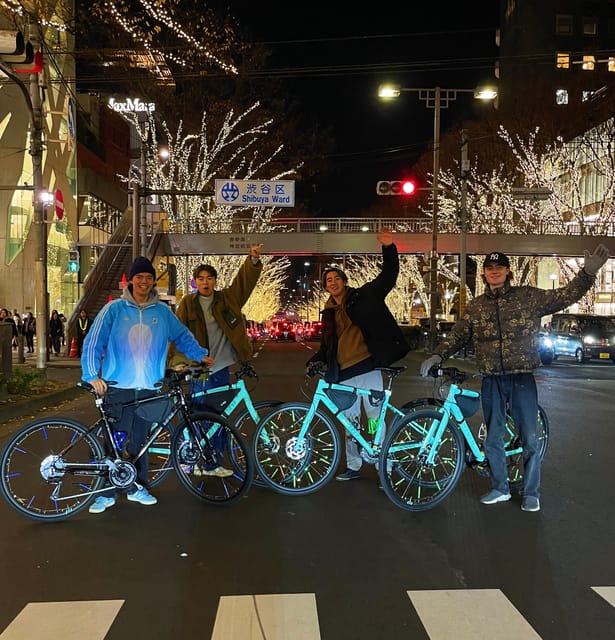
I like the custom neon-lit Bianchi and Fuji bikes, which make the outing feel playful without turning it into a costume show. I also like the guides’ flexibility. Kei, in particular, has adjusted routes for riders’ interests and added sights beyond the planned path.
The catch is simple: you need to ride confidently. Tokyo cycling can mean sharing roads without bike lanes, and this is not a lesson for beginners. Children under 12, pregnant women, people with back problems, and anyone unable to ride a bike should choose another evening activity.
In This Review
- Key points to know before you book
- Starting beneath the lights at Yoyogi Park
- Shibuya after dark, with the city moving around you
- Omotesando’s polished evening glow
- Roppongi and Tokyo Midtown’s seasonal displays
- Tokyo Tower provides the big finish
- Why the bicycle changes the evening
- Is $73 a fair price?
- Who will enjoy this ride most
- Practical tips for a smoother night
- Should you book the Tokyo neon bike tour?
- FAQ
- Where does the Tokyo neon bike tour start?
- Where does the tour finish?
- How long is the bike tour?
- What districts and sights does the route include?
- Is the tour offered in English?
- Who should not take this tour?
Key points to know before you book
- Neon-lit Bianchi and Fuji bikes: High-quality customized bikes provide the tour’s most distinctive touch.
- Yoyogi Park start: Look for the illuminated bikes at the park’s main entrance.
- Two hours through central Tokyo: The route links Shibuya, Omotesando, Roppongi, Tokyo Midtown, and Tokyo Tower.
- English-speaking guides: Guides share local stories and can adjust the route to suit the group.
- Road cycling required: Some streets have no bike lanes, so confident riding matters more than casual fitness.
- $73 value: The price covers the bike, guide, pouch, and bike insurance, making the tour most worthwhile if you want an active night out rather than a simple photo stop.
Starting beneath the lights at Yoyogi Park
The meeting point is the main entrance of Yoyogi Park. The operator places the neon bikes there with their lights on, so you should not need to search through the park or guess which bicycle group is yours.
That meeting point gives the ride a useful beginning. Yoyogi Park sits beside some of Tokyo’s most recognizable evening districts, so you are quickly out among city lights rather than spending much of the two hours getting to the main sights.
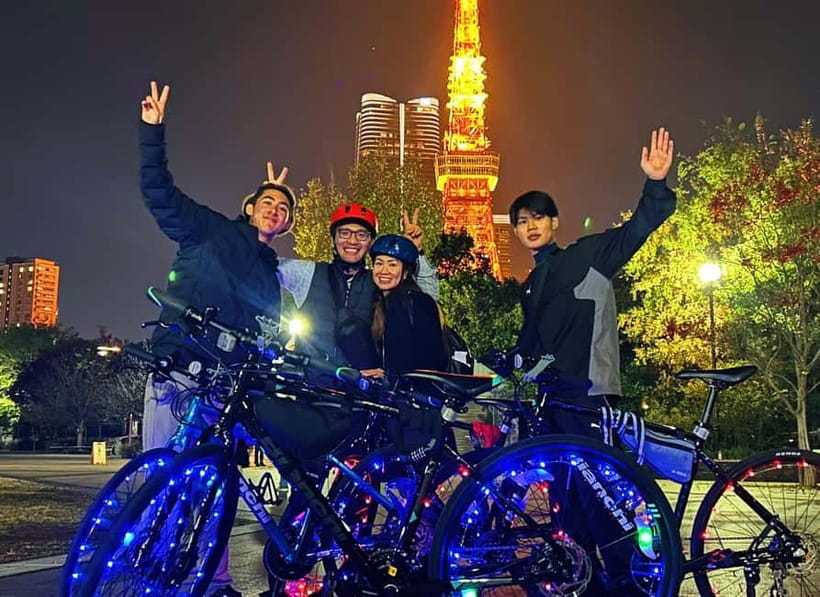
The bikes are Bianchi and Fuji models, fitted with neon lighting for the tour. I like this detail because it adds a bit of fun while also making the group easier to spot in the dark. You are not merely renting an ordinary bicycle and following a guide with a flag.
A small pouch attached to the bike holds a phone, wallet, or key. It is a minor feature, but a handy one. You can keep your pockets lighter and avoid juggling a phone every time you want to check directions or take a picture.
Wear comfortable clothes and shoes. Bring water, but keep the rest of your belongings modest. Smoking, alcohol, drugs, and littering are not allowed, sensible rules for a guided ride through busy city streets.
A few more Tokyo tours and experiences worth a look
Shibuya after dark, with the city moving around you
Shibuya is one of the tour’s strongest sections. The district is famous for Scramble Crossing, where streams of pedestrians cross from every direction beneath giant signs and screens. From a bicycle, you experience the area at street level, close to the movement and noise rather than looking down from a viewing deck.
The attraction here is not just the crossing itself. It is the change of pace between streets. Tokyo’s evening glow can shift from huge commercial displays to quieter corners within a few minutes, and a bicycle lets the guide connect those parts without the stop-and-start pattern of a walking tour.
The exact route may change. The guide can adapt it to the group’s interests, and Kei has been praised for accommodating preferred routes and adding places that riders wanted to see. That is useful if you have visited Tokyo before and want something beyond the standard postcard view.
You should still expect traffic and other road users. One important point for your planning is that some Tokyo streets do not have bike lanes. You need to be comfortable riding on roads and paying attention to the group, signs, and surrounding traffic.
This is why I would not book the experience simply because the neon bicycles look appealing. The lights are fun, but riding ability is the real entry requirement. If you cycle confidently in an unfamiliar city, the route can show you a side of Shibuya that trains and walking routes cannot.
Omotesando’s polished evening glow
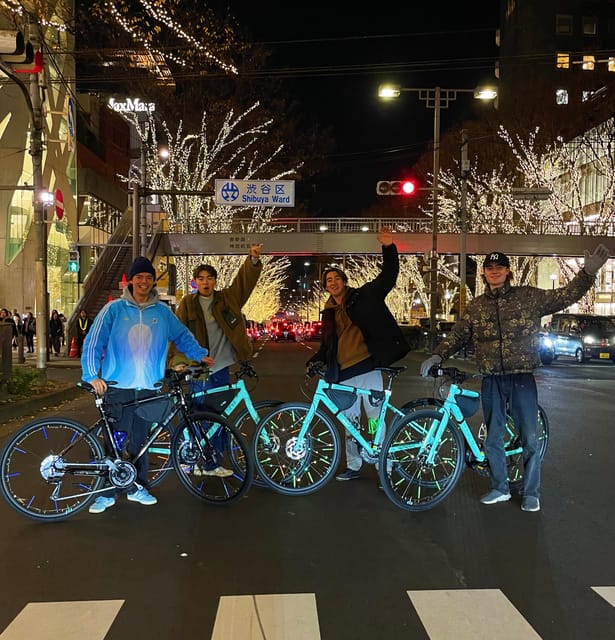
From the Shibuya area, the ride reaches Omotesando. This broad avenue is known for fashion stores, modern architecture, and seasonal light displays. The tour description highlights Omotesando’s illumination, so the exact appearance will depend on the time of year.
Omotesando works well by bicycle because the street itself becomes part of the show. Storefronts, trees, glass, and passing headlights create a long corridor of light. You do not have to spend the evening inside one attraction. You keep moving through the city and see how the illumination changes from block to block.
Seasonal displays are always a small gamble. They can be especially appealing when the lights are installed, but no fixed display can be guaranteed year-round from the information provided. I would treat Omotesando as a pleasant part of the route rather than book the tour for one specific decoration.
This section also helps explain the tour’s appeal for repeat visitors. Tokyo’s train system is excellent, but it tends to deliver you between major stations. A bicycle connects the spaces in between. You notice the architecture, side streets, and changing mood as you travel from one district to the next.
Roppongi and Tokyo Midtown’s seasonal displays
Roppongi brings a more modern, high-rise feel. Glass towers and design-led buildings reflect the lights, giving the district a sleek evening character. The route passes through the area and approaches Tokyo Midtown, where seasonal illuminations are part of the attraction.
Tokyo Midtown is a strong visual stop because the lights are set against large buildings and open urban space. Reflections from glass and polished surfaces can make the area feel brighter than a normal street scene. It is the sort of place where moving slowly by bike helps you take in several views without committing to a long walk.
The guide’s local stories add value here. You are not only being led from one lit district to another. The tour includes local insights, and a flexible guide can explain what you are seeing or respond to questions along the way.
Still, keep your expectations practical. This is a moving tour, not a long stop at every display. Two hours must cover several districts and the return to Yoyogi Park. You will likely get a broad evening circuit with selected pauses, not a detailed visit to every illuminated installation.
The route also means the quality of your evening may depend on the group. A small group with similar cycling ability can keep a comfortable rhythm. A mixed group may move more slowly. The available information does not give a group-size limit, so I would not assume a private ride or a tiny party unless your booking confirms it.
Tokyo Tower provides the big finish
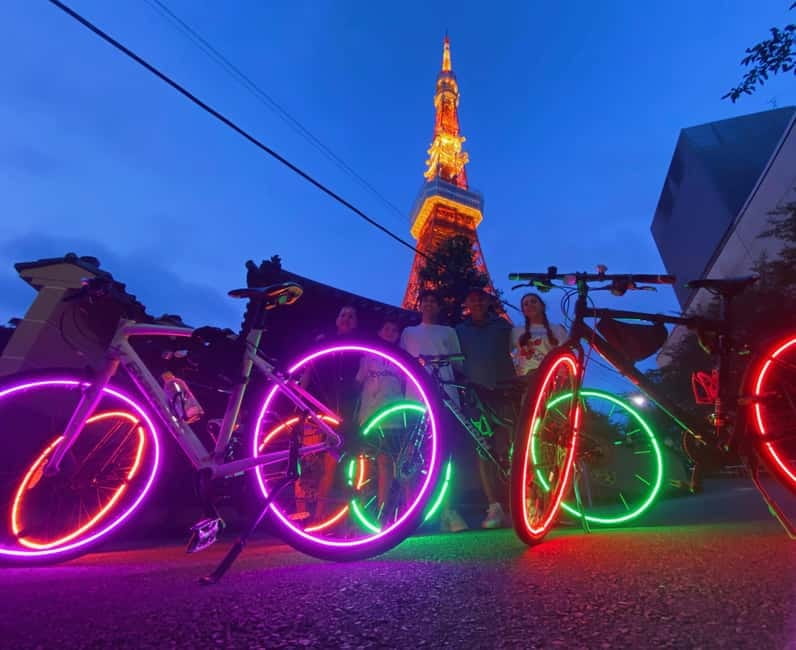
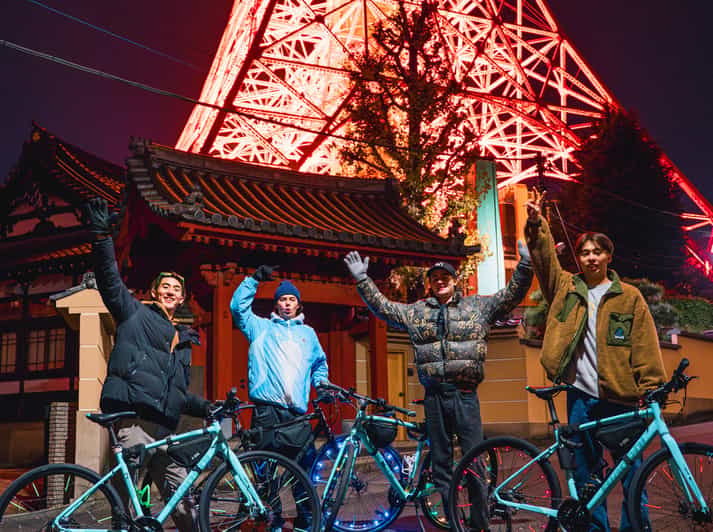
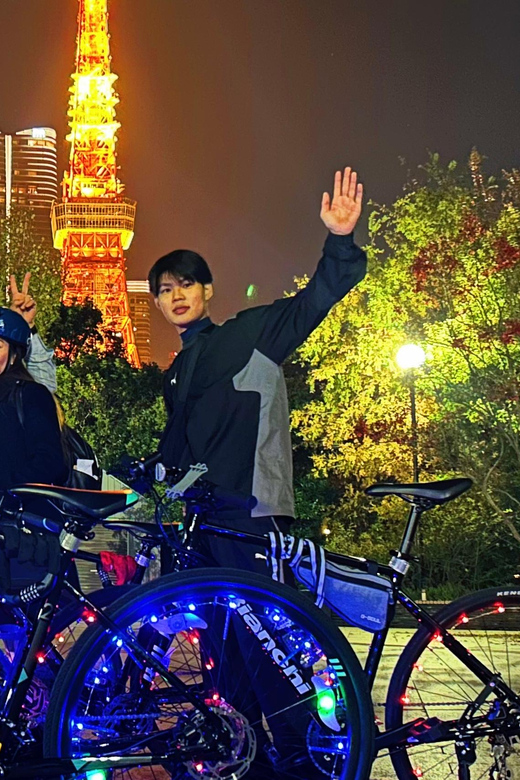
The ride culminates at Tokyo Tower, the red-and-white landmark that rises above central Tokyo. Its shape is easy to recognize, and seeing it at night gives the tour a clear final image before the group returns to Yoyogi Park.
Tokyo Tower is a fitting end because it gathers many of the evening’s themes in one view. You have passed through commercial streets, seasonal lights, glass towers, and busy crossings. Then the tower gives you a classic Tokyo symbol, lit against the dark sky.
This is not described as an interior visit or an observation-deck experience. You should book it for the city view and the approach, not for time inside the tower. The main reward is reaching the landmark by bicycle after crossing several distinct parts of Tokyo.
The return to the meeting point is included in the activity. That matters when you are planning the rest of your night. You do not finish at Tokyo Tower and need to arrange your own bicycle return or find a separate way back to Yoyogi Park.
A few more Tokyo tours and experiences worth a look


Why the bicycle changes the evening
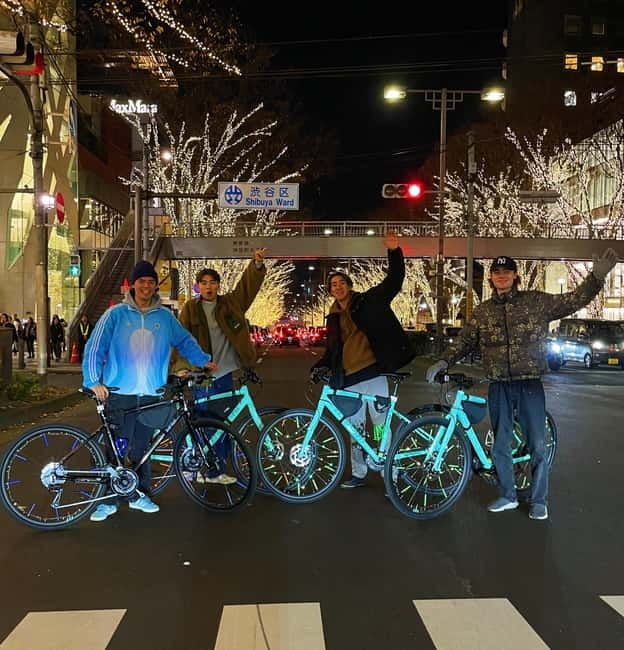
Tokyo is easy to explore by rail, but trains flatten the city into station names. A bicycle gives you a better sense of distance and transition. You feel when Shibuya gives way to Omotesando, when the streets become more high-rise in Roppongi, and when Tokyo Tower begins to dominate the view.
I also like the social quality of the ride. The neon wheels make the group visible and give the outing a lighthearted identity. You are likely to draw attention, but the activity remains focused on seeing Tokyo rather than performing for it.
The guides are another major part of the value. The advertised language is English, and the tour includes local stories and insight. Kei is specifically named by past customers as a guide who was entertaining, kind, and willing to shape the route around personal interests.
That flexibility is valuable for both first-time and repeat visitors. If you are new to Tokyo, the guide can connect the main districts for you. If you already know the famous sights, you can ask for a different angle or places that are not part of your usual route.
The tour is also more active than a standard night sightseeing bus. You are not seated behind glass while the city passes by. You pedal, keep watch, and take part in the movement. That makes the experience more memorable for the right rider, but more tiring and demanding for someone who wanted a relaxed sightseeing evening.
Is $73 a fair price?
At $73 per person, the tour is not the cheapest way to see Tokyo’s lights. You can visit Shibuya, Omotesando, Roppongi, and Tokyo Tower on your own using public transport and your feet. If you already have a bicycle, the price may look high at first.
The value comes from the package. You receive a customized bike, an English-speaking guide, local stories, a phone and wallet pouch, and bike insurance. You also avoid planning a route that links several districts after dark.
I would consider the price fair if you want a guided experience and do not want to arrange a bicycle yourself. The tour combines equipment and guiding in one booking, and the route covers a lot of ground in two hours.
The calculation is less favorable if you are a hesitant cyclist or mainly want photographs at one location. You could spend an evening walking through Shibuya and Omotesando, then take the train or another form of transport to Tokyo Tower. The bike tour earns its price through movement, route planning, and the guide’s local input.
The reserve-and-pay-later option can help if your schedule is still changing. You can book a place without paying immediately, and cancellation is allowed up to 24 hours in advance for a full refund. Check the current booking terms when you reserve, but that policy gives you some useful breathing room.
Who will enjoy this ride most
I would recommend this tour to confident cyclists who want to see Tokyo from street level. It is especially suited to couples, friends, and families with children aged 12 or older who enjoy an active evening and do not mind riding near city traffic.
It can also work well for repeat visitors. The route covers famous areas, but a flexible guide may take you along streets or viewpoints you did not reach on earlier trips. Kei’s willingness to respond to questions makes that possibility more useful.
Teenagers may enjoy the neon bikes more than a conventional city tour. The glowing wheels give the evening a playful edge, and the two-hour length is long enough to feel substantial without taking over the whole night.
I would not recommend it for a first-time cyclist, someone who cannot ride confidently in traffic, or anyone with a back problem. It is also not suitable for pregnant women or children under 12. Comfortable clothing will make the ride easier, and comfortable shoes are essential.
You should also think about your energy level. A two-hour ride through central Tokyo is not extreme for a regular cyclist, but it is more work than strolling through one neighborhood. If you have just arrived after a long flight, a quieter evening may serve you better.
Practical tips for a smoother night
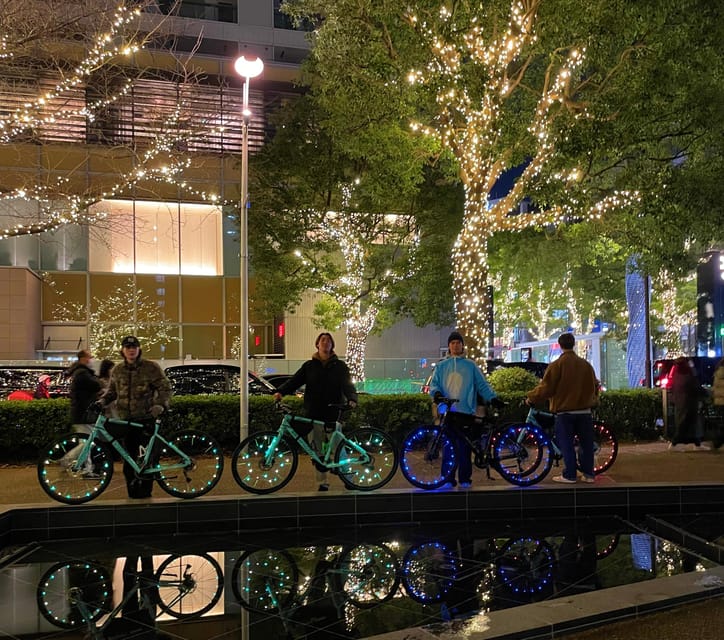
Arrive at the main entrance of Yoyogi Park and look for the bikes with their lights switched on. That is the clearest identifying feature at the meeting point.
Bring water and keep your valuables to the essentials. The bike pouch is intended for a phone, wallet, and key, not a full daypack. The less you carry, the easier it is to ride and stop.
Choose clothes that allow free movement. Avoid uncomfortable shoes, loose items that could interfere with cycling, or anything you would worry about in light rain or road spray. The supplied information does not specify weather procedures, so check the conditions and booking details before you go.
Keep your phone secure when taking pictures. The tour moves through streets, and stopping to photograph every light would make it hard to stay with the group. Listen to the guide about where it is safe to pause.
Most of all, be honest about your cycling level. A past rider described Tokyo cycling as difficult in places because roads may not have bike lanes. That is not a reason to avoid the tour if you are comfortable on city roads, but it is a reason to choose another activity if you are not.
Should you book the Tokyo neon bike tour?
Book it if you want active sightseeing with a local guide, enjoy night photography, and can ride confidently on city roads. The neon bicycles, flexible routing, and chain of major districts give the evening more character than a simple walk between illuminated spots.
Skip it if you want a slow, carefully paced photo tour, dislike traffic, or need cycling instruction. This is a guided city ride, not a beginner class.
For the right rider, $73 buys more than a bicycle rental. You get a ready-made route, English guidance, local context, and a memorable way to connect Yoyogi Park, Shibuya, Omotesando, Roppongi, Tokyo Midtown, and Tokyo Tower in one evening.
FAQ
Where does the Tokyo neon bike tour start?
The tour starts at the main entrance of Yoyogi Park. The neon bikes will be lit, making the meeting point easier to identify.
Where does the tour finish?
The activity ends back at the Yoyogi Park meeting point.
How long is the bike tour?
The ride lasts two hours.
What districts and sights does the route include?
The route includes Shibuya, Omotesando, Roppongi, Tokyo Midtown, and Tokyo Tower. It begins and ends at Yoyogi Park.
Is the tour offered in English?
Yes. An English-speaking guide is included.
Who should not take this tour?
The tour is not suitable for children under 12, pregnant women, people with back problems, or people who cannot ride a bike. You should also be comfortable cycling on roads, including streets without bike lanes.
More Backstreet & Hidden Rides in Tokyo

More Night Rides in Tokyo
More Tokyo Cycling Tours in Tokyo
More tours in Tokyo we've reviewed



Tokyo Cycling Tours, compared.
 ★ 5.0Tokyo Great Cycling TourFrom $99
 ★ 5.0Tokyo Top Highlights 3h Guided E-bike TourFrom $63
 ★ 5.03h Tokyo E-Bike Tour: Hidden Gems, and Local Life with guideFrom $63
 ★ 4.83-Hour Bike or E-Bike City Highlights TourFrom $453 hours
 ★ 4.83-hour Guided E-Bike Tour of the City’s Hidden GemsFrom $65
 ★ 5.0Tokyo West-Side Cycling & Food TourFrom $99
 ★ 5.03-Hour Bike/E-Bike Tour of the City’s HighlightsFrom $63
 ★ 5.0Small Group Cycling Tour in TokyoFrom $66
Browse the lists this tour appears in