
Reviewed · TOKYO CYCLING TOURS
Tokyo: 3-hour Guided E-Bike Tour of the City’s Hidden Gems
Tokyo looks huge from a subway map, yet an e-bike lets you connect its famous landmarks with the small streets between them. In three hours, you can pass the Imperial Palace, Tokyo Station, and Ginza, then stop at a quiet garden, a neighborhood shrine, or a waterfront viewpoint that is easy to miss underground.
I like two things especially: the electric assist keeps hills and heat from turning the ride into a workout, and the guides add local details that give the stops meaning. Guides including Hiro, Yota, Miki, Shinobu, and Yugo have been praised for clear explanations, patience, humor, and careful pacing.
The main consideration is traffic. Some riding takes place on roads or shared footpaths, so you should already feel comfortable handling a bicycle around cars, pedestrians, crossings, and changing surfaces. This is not a sightseeing bus with a seatbelt and a view window.
In This Review
- Key points to know before booking
- Why three hours on two wheels works in Tokyo
- Tokyo City Route: central landmarks, gardens, and old neighborhoods
- Tokyo Bay Route: bridges, Odaiba, and the best evening views
- Tokyo Tower Route: temples, hills, and modern Tokyo
- The guides make the ride more than a route map
- What riding in central Tokyo feels like
- Is $65 a fair price for three hours?
- Timing, weather, and practical planning
- Who should book this Tokyo e-bike tour?
- FAQ
- How long is the Tokyo e-bike tour?
- Which routes are available?
- Is the tour conducted in English?
- What is included in the price?
- Do I need to arrive early?
- Can children join the tour?
- Is the tour suitable for someone under 147 centimeters tall?
- Can I join if I weigh over 120 kilograms?
- What happens if it rains?
Key points to know before booking
- Three different routes: Choose between the Tokyo City, Tokyo Bay, and Tokyo Tower routes, each with a different mix of sights.
- Electric assistance matters: The bikes help with hills and reduce effort during hot or humid weather.
- Local stops add character: Gardens, shrines, temples, and traditional snacks make this more than a landmark checklist.
- Sunset favors the bay route: The Odaiba option can include bridge views, waterfront scenery, and a Tokyo skyline after dark.
- You need basic road confidence: The ride may include traffic and busy pedestrian areas, especially around central Tokyo.
- Good for first-time and repeat visits: You cover familiar icons while also seeing ordinary streets and less obvious stops.
Why three hours on two wheels works in Tokyo
Walking Tokyo is rewarding, but the distances between districts can eat up much of your day. The subway is fast, though it hides the city at street level. An e-bike gives you a useful middle ground. You travel farther than you could on foot and remain close enough to notice shopfronts, bridges, side streets, shrines, and daily routines.
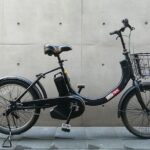
The electric motor is the key. You still pedal, but the bike provides assistance, making the ride manageable for people who do not want a strenuous cycling tour. Several routes include hills, yet the motor takes much of the sting out of them. The bikes were described as easy to use after a short adjustment period, though the proportions and handling may feel unfamiliar at first.
The ride lasts about three hours, including stops. That is long enough to get a real sense of a district without consuming an entire sightseeing day. You should arrive 15 minutes early for the briefing, since late arrivals cannot join the group partway through.
A few more Tokyo tours and experiences worth a look
Tokyo City Route: central landmarks, gardens, and old neighborhoods
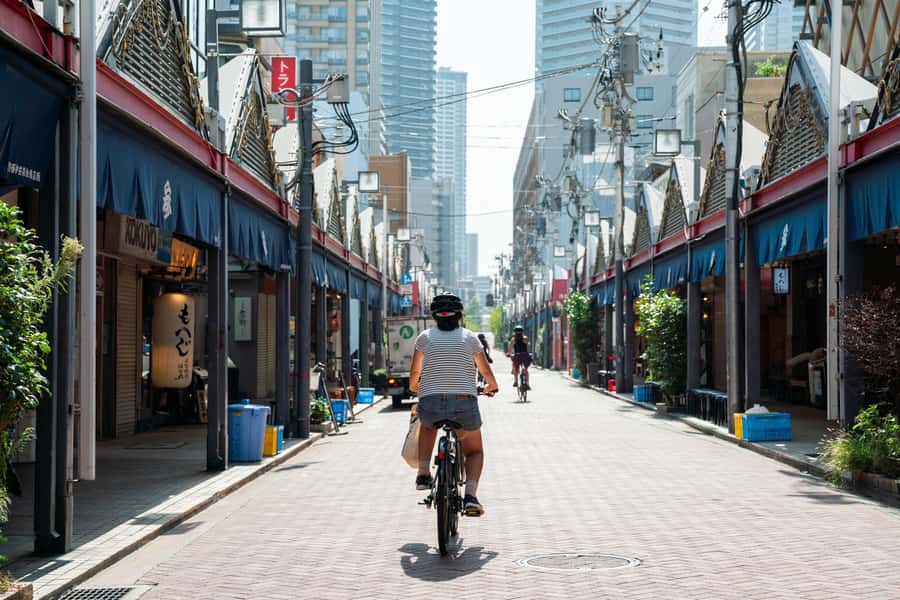
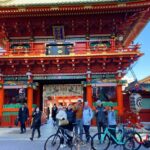
The Tokyo City Route is the best all-round choice if you want a mix of major sights and quieter cultural stops. It begins in the fish market neighborhood, then heads through central Tokyo toward Ginza, the Imperial Palace, Tokyo Station, Nihonbashi, Kiyosumi Japanese Garden, and Tomioka Hachimangu Shrine.
Ginza is passed rather than explored at length. That makes sense on a three-hour ride. You get a look at one of Tokyo’s best-known shopping districts without spending your limited tour time inside department stores or on crowded sidewalks.
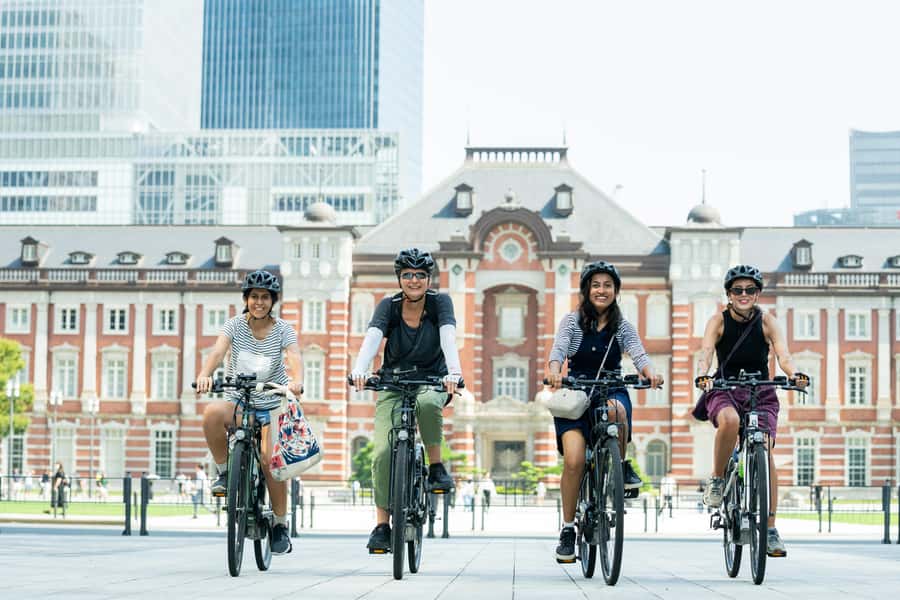
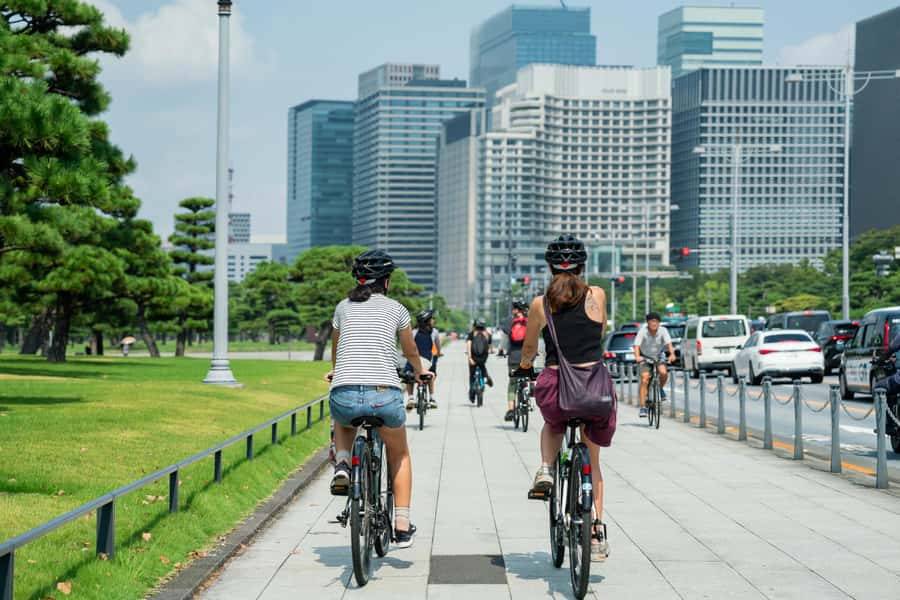
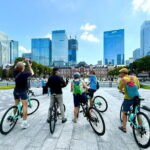
The Imperial Palace is also a pass-by stop. You should think of it as a chance to see the area and hear context from the guide, not a palace interior visit. Tokyo Station offers a strong contrast, with its grand exterior and the dense modern city around it.
Nihonbashi provides another change of mood. The district is tied to Tokyo’s old commercial life, but it now sits among office towers and major roads. This is the sort of place where a guide helps you notice connections that are easy to miss when you are simply moving from one attraction to the next.
One of the most appealing details is the traditional Japanese snack stop. The exact snack is not specified, but it is included as part of the tour. It gives you a small taste of local food culture without requiring a separate restaurant stop.
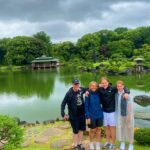
The highlight for many people will be Kiyosumi Japanese Garden. You can leave the bikes and walk through the garden, taking a break from traffic and pavement. This stop also gives you a direct look at Japanese garden design within a large modern city. If the heat is strong, the pause is welcome.
Tomioka Hachimangu Shrine adds another cultural layer. It is a more local-feeling stop than the headline attractions, and the guide can explain customs and the background of the site. One participant even described being lucky enough to see a monk ceremony during a visit, though you should treat that as a chance event rather than a promised part of the tour.
Choose this route if you want history, gardens, and central Tokyo in one outing. The tradeoff is that some sections around Tokyo Station and Nihonbashi may feel less visually dramatic than Shinjuku, Asakusa, or Akihabara. If your priority is neon, old temple streets, or famous pop culture districts, this may not be your ideal route.
Tokyo Bay Route: bridges, Odaiba, and the best evening views
The Tokyo Bay Route is the most scenic option. It is built around broad reclaimed land, open waterfront areas, bridges, and views back toward the city. The flatter roads make it a comfortable choice if you are more interested in scenery than central-city architecture.
The itinerary includes Sumiyoshi Shrine and Tsukuda Tendai Temple, described as a lesser-known temple. These early stops bring some traditional atmosphere before the ride shifts toward Tokyo Bay’s modern structures.
You pass TeamLab Tokyo and Tokyo Big Sight rather than entering them. The route is not a ticketed museum tour, so think of these as visual markers along the ride. The focus is on seeing how Tokyo’s waterfront has been reshaped for exhibitions, events, shopping, and recreation.
Odaiba supplies the playful landmarks: a large Gundam statue, a Statue of Liberty replica, and Aqua City Odaiba. These sights can feel wonderfully odd together, which is part of the appeal. Tokyo is good at placing old shrines, giant robots, polished malls, and wide waterfront promenades within the same afternoon.
A Japanese local snack is included near Aqua City. The stop gives you a chance to pause, eat, and look across the water instead of pedaling nonstop. One useful advantage of a guided ride is that the guide can manage the pace and make sure nobody gets left behind while the group takes photos.
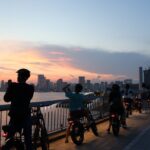
The route passes Rainbow Bridge, and the timing may be arranged for sunset or evening depending on the month. That matters. During daylight, you get a clear view of the water and wide roads. Near sunset, the trip becomes more atmospheric, and after dark the skyline and bridge lighting become the main show.
I would choose this route for a first e-bike experience if you want an easier-feeling ride and broad views. The roads around Odaiba are flatter and more open than some central streets. Still, a bridge-and-waterfront route will not give you as much traditional Tokyo as the city or tower options.
Tokyo Tower Route: temples, hills, and modern Tokyo
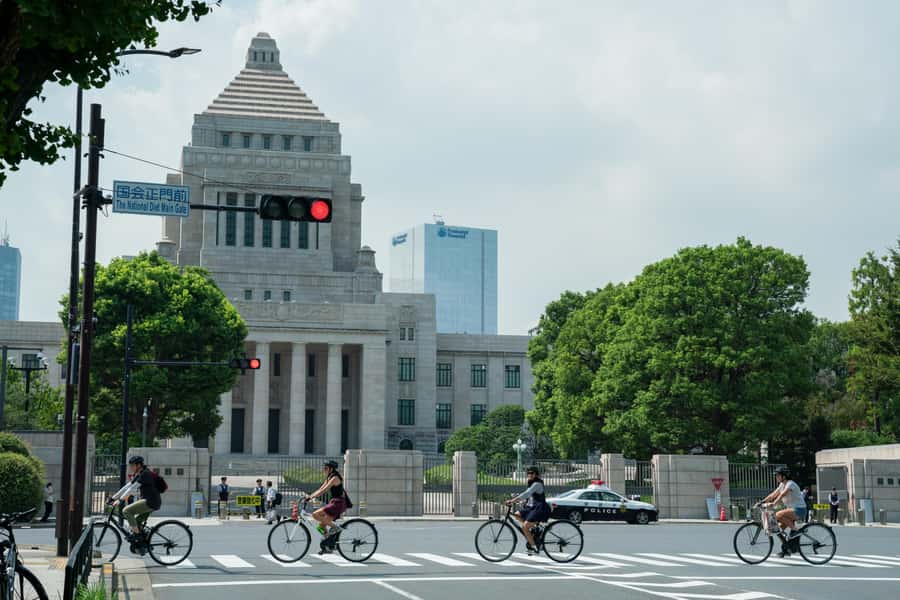
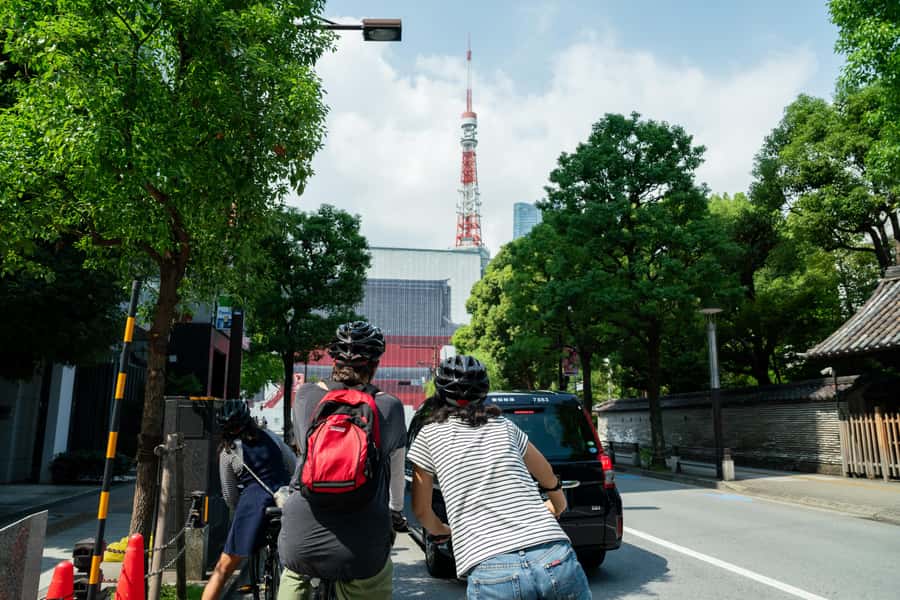
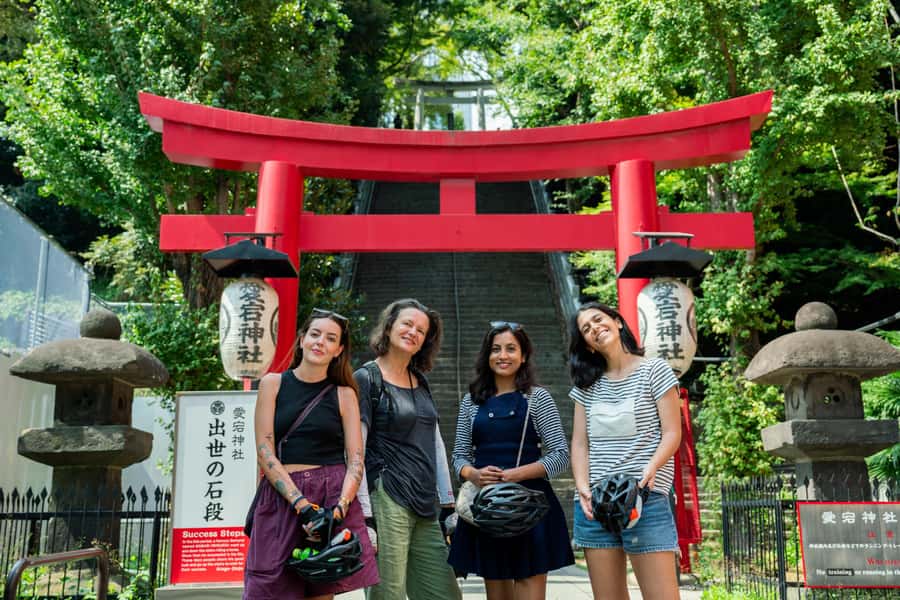
The Tokyo Tower Route offers the sharpest contrast between old and new Tokyo. You pass the Imperial Palace and Hibiya Park, then visit Zojo-ji Temple, take photos near Tokyo Tower, and continue through Atago Shrine and the National Diet Building.
Zojo-ji Temple is especially effective as a starting cultural stop. Tokyo Tower rises nearby, creating one of the city’s most recognizable juxtapositions: a major Buddhist temple beside a modern orange-and-white tower. You do not simply look at a postcard view; you see how different eras occupy the same neighborhood.
The Tokyo Tower photo stop is exactly that, a photo opportunity rather than an observation-deck visit. If you want to go up the tower, you will need a separate ticket and another visit. The advantage here is efficiency: you get the landmark as part of a wider route.
Atago Shrine brings a physical challenge, since the route explores a hilly part of Tokyo. The e-bike assist is useful here, and the tour information specifically presents the motor as a way to make the climbs feel much easier. You will still need to ride carefully and manage the bike, but this option does not demand strong traditional cycling fitness.
A traditional Japanese snack is included along the way. Hibiya Park offers another green pause, while the National Diet Building adds a political and architectural point of interest. The Imperial Palace appears again as a pass-by sight, tying the route together.
Choose this route if you want Tokyo Tower, temples, government buildings, and city greenery. It is less focused on waterfront views and may feel more demanding than the bay route because of the hills. The electric assist helps, but it does not remove the need for balance and alert riding.
The guides make the ride more than a route map
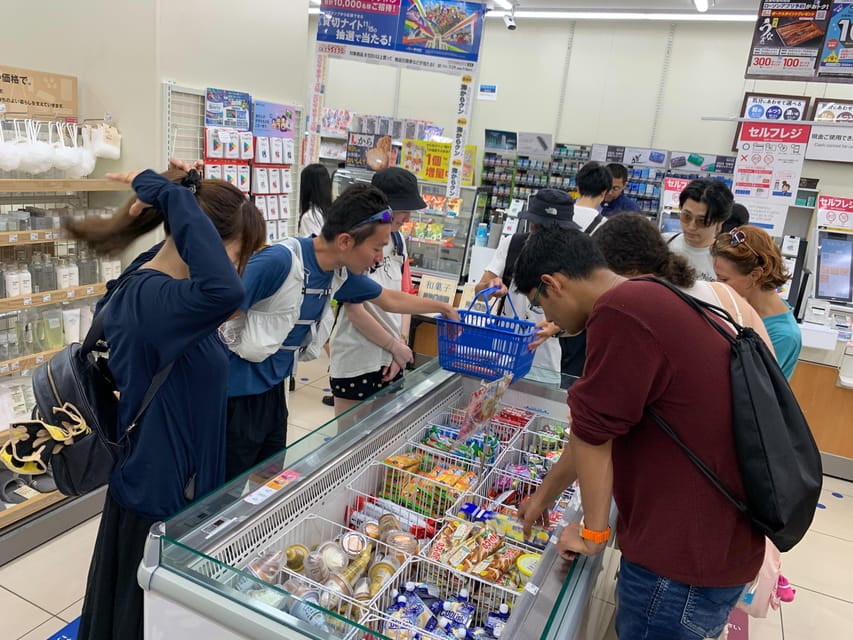
The guide is central to the experience. You are not simply following a rented bike around Tokyo. The English-speaking guide explains the landmarks, local customs, and small details that are easy to overlook while riding.
The named guides include Hiro, Yota, Miki, Shinobu, Yugo, Yota, Yuki, Sho, Daichi, Shou, Jun, Tai, Parks, Mana, and others. Feedback about them is consistently strong, with particular praise for friendly conversation, useful facts, patience during photo stops, and attention to the pace of the group.
Hiro appears repeatedly as a guide who kept the ride entertaining while also looking after safety. Yota was praised for planning a varied bay route and stopping so everyone could keep up. Miki was described as patient when people wanted photographs, while Shinobu was praised for commentary and conversation.
That human element is valuable in Tokyo. A shrine can be a quick photo stop when you are alone, but a short explanation about customs or history gives you a reason to pause. The guides also help with the practical side of the ride, such as finding the station after the tour or recommending places to visit later.
The tour is in English. If you want a silent ride or prefer to explore at your own speed, a self-guided rental may suit you better. If you enjoy asking questions and learning as you go, the guide is one of the main reasons to pay for this experience.
A few more Tokyo tours and experiences worth a look
What riding in central Tokyo feels like
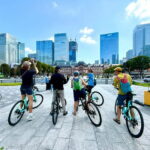
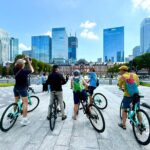
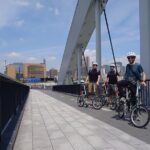
You should not imagine an uninterrupted ride on empty streets. Some sections use roads with moving traffic, and some use footpaths shared with pedestrians. Tokyo’s streets can be orderly, but they are still busy. You need to anticipate people stepping across your path and follow the guide’s signals.
One useful point from the experience is that the guides put safety first and keep the group together. That helps, but it does not replace your own cycling judgment. I would not recommend this tour to someone who has not ridden a bicycle for years or who feels nervous near cars.
The bikes are electric-assist models, not fully automatic scooters. You pedal and control the bike yourself. Participants found them comfortable and easy after getting used to the proportions, but allow a little time during the briefing to understand the controls.
The tour supplies helmets, and gloves are available during the winter season. A knapsack is available if needed, and luggage storage is included. These details are useful if you are carrying a small amount of gear, though you should not treat the bike as a substitute for a full luggage service.
You also need to fit the physical requirements. Children under 13 are not permitted according to the tour information, and another booking note says the activity is not suitable for children under 12. To avoid confusion, I would treat this as a tour for ages 13 and up. Riders should be at least about 145 to 147 centimeters tall and weigh no more than 120 kilograms.
The activity is not suitable for pregnant people, wheelchair users, or people with heart problems. Those limits are worth taking seriously because the tour involves sustained riding, traffic awareness, and getting on and off a bicycle.
Is $65 a fair price for three hours?
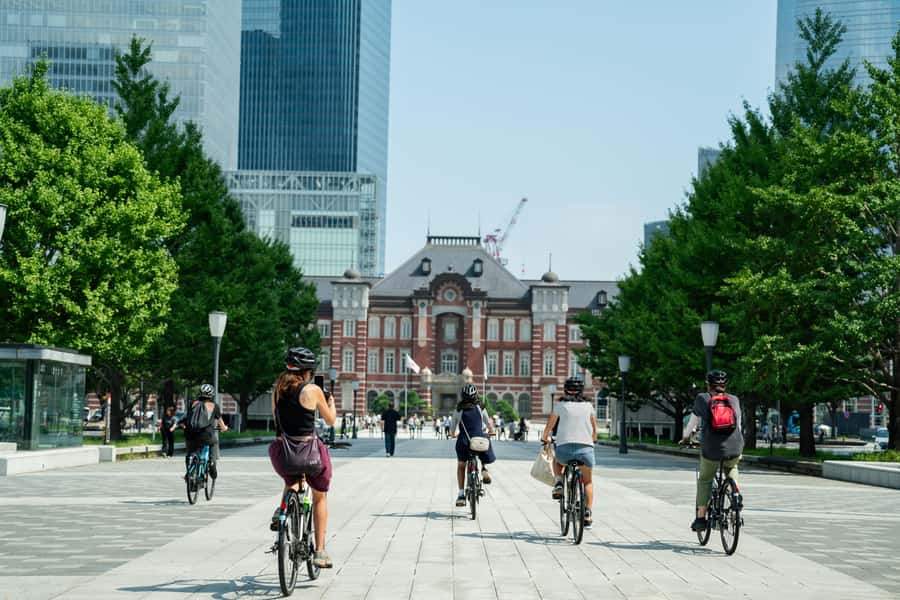
At $65 per person, the value depends on how you normally sightsee. The fee includes the e-bike, helmet, English-speaking guide, snack, luggage storage, and seasonal gloves. You are also paying for route planning and the ability to link several areas without working out the streets yourself.
Compared with a taxi or private guide, the price is modest. Compared with simply using Tokyo’s subway, it is more expensive, but the experience is completely different. The subway moves you efficiently between points. This tour shows you the spaces between them.
I think the price is strongest on the Tokyo Bay Route, especially if you choose a sunset departure. The wide views, bridges, waterfront stops, and nighttime skyline give you something difficult to reproduce on your own in a short visit.
The city route offers better value if you want cultural stops and a garden visit. The tower route makes sense if Tokyo Tower is high on your list and you want temple and government-district scenery in the same outing.
The tour receives a 4.8 rating from 251 reviews, and the praise is notably consistent around the guides, easy e-bikes, unusual viewpoints, and well-chosen stops. That does not mean every moment will suit everyone. A person looking only for Tokyo’s most iconic districts may find the central route less scenic than expected, while a nervous cyclist may focus more on traffic than on the sights.
Timing, weather, and practical planning
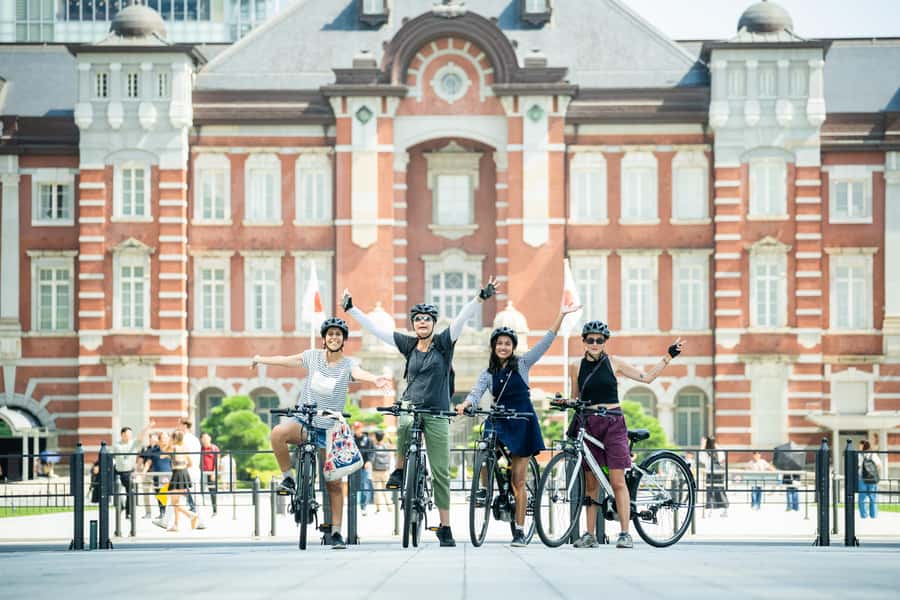
Arrive 15 minutes before the scheduled start for the briefing. The tour ends back at the meeting point, and the finish can run about 30 minutes late because of traffic or route conditions. Do not schedule a tight dinner reservation or train connection immediately afterward.
Weather can change the plan. If rain or another problem is expected, the provider may notify you by email the day before. Even if conditions change on the tour day, cancellation is possible for safety reasons.
For clothing, choose something comfortable for sitting and pedaling. In summer, the heat and humidity can be noticeable, although the e-bike assistance and garden breaks help. In winter, gloves are provided, but you should still dress for moving air, especially on the bay route and bridges.
The tour must be completed on the assigned course, and bikes cannot be left at another location. This is a guided group activity, not a flexible bike rental. If you want to stop for a long meal, shop, or museum visit, plan that for another part of the day.
You can cancel up to 24 hours in advance for a full refund, and the reserve-now, pay-later option can help if your schedule is still shifting.
Who should book this Tokyo e-bike tour?
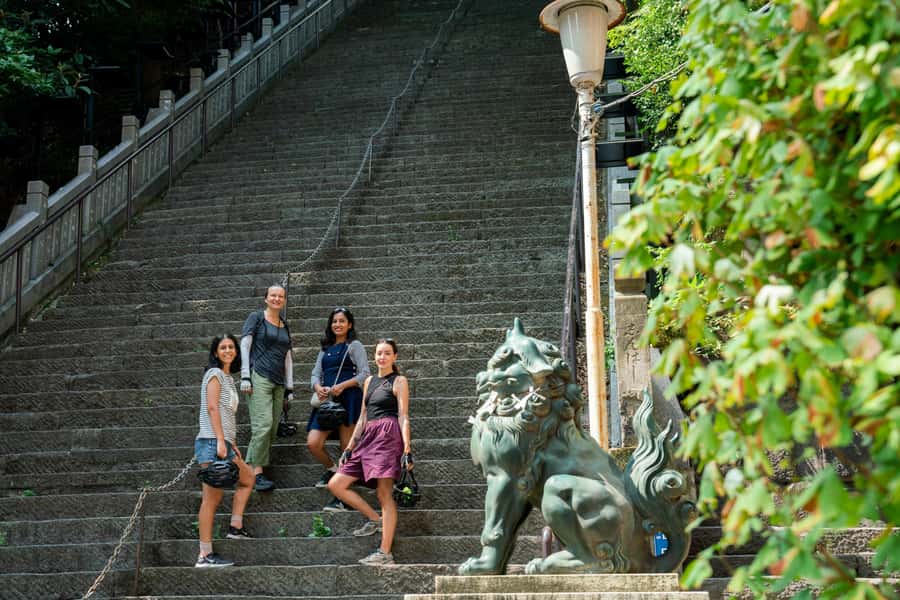
I would recommend it to first-time visitors who want an overview with more personality than a bus tour. It is also useful for repeat visitors who have already seen the headline sights and want a different side of Tokyo.
It suits active couples, friends, solo visitors comfortable joining a group, and families with teenagers who meet the height and age rules. The electric assistance makes it much more approachable than a standard cycling tour, especially in warm weather or on the hillier tower route.
I would be cautious if you dislike traffic, have poor bicycle balance, or want a slow walking tour with long time at each landmark. I would also compare routes carefully before booking. The route you choose matters more than the general tour title.
Pick Tokyo City for gardens, shrines, central districts, and traditional snacks. Pick Tokyo Bay for easy-feeling riding, bridges, water, Odaiba landmarks, and sunset views. Pick Tokyo Tower for temples, hills, modern architecture, and one of Tokyo’s classic photo stops.
If you are comfortable on a bike and want to see Tokyo from street level, I think this is worth booking. The strongest reason is not simply that you cover more ground. It is that you notice how the city’s old shrines, office districts, broad roads, gardens, waterfronts, and daily life fit together.
FAQ
How long is the Tokyo e-bike tour?
The tour lasts three hours. The end may be delayed by about 30 minutes because of traffic or other course conditions.
Which routes are available?
You can choose the Tokyo City Route, Tokyo Bay Route, or Tokyo Tower Route. The sights and starting time can vary by the option selected, especially for the Odaiba route.
Is the tour conducted in English?
Yes. The tour includes an English-speaking guide.
What is included in the price?
The price includes the e-bike, guide, helmet, a traditional Japanese snack, luggage storage, and a knapsack if you need one. Gloves are provided during the winter season.
Do I need to arrive early?
Yes. You should arrive at the meeting point 15 minutes before the tour begins for the briefing.
Can children join the tour?
Children under 13 are not permitted according to the tour information. Another booking note lists children under 12 as unsuitable, so this experience is best treated as appropriate for ages 13 and older.
Is the tour suitable for someone under 147 centimeters tall?
The tour information says it is not suitable for people under 147 centimeters, while another note gives a minimum of about 145 centimeters. If you are near the limit, check the booking details before reserving.
Can I join if I weigh over 120 kilograms?
No. The stated maximum weight is 120 kilograms, or 264 pounds.
What happens if it rains?
The tour may be canceled for rain or other safety concerns. You may receive an email the day before if poor weather is expected, and cancellation can also happen on the day if conditions change.
More Backstreet & Hidden Rides in Tokyo
More E-Bike Tours in Tokyo
More Tokyo Cycling Tours in Tokyo
More tours in Tokyo we've reviewed



Tokyo Cycling Tours, compared.
 ★ 5.0Tokyo Great Cycling TourFrom $99
 ★ 5.0Tokyo Top Highlights 3h Guided E-bike TourFrom $63
 ★ 5.03h Tokyo E-Bike Tour: Hidden Gems, and Local Life with guideFrom $63
 ★ 4.83-Hour Bike or E-Bike City Highlights TourFrom $453 hours
 ★ 5.0Tokyo West-Side Cycling & Food TourFrom $99
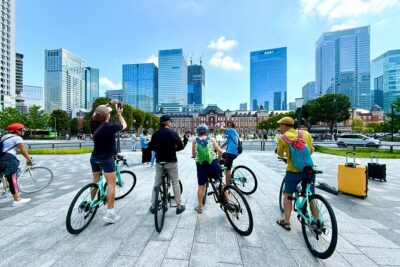 ★ 5.03-Hour Bike/E-Bike Tour of the City’s HighlightsFrom $63
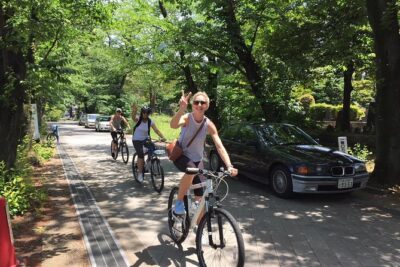 ★ 5.0Small Group Cycling Tour in TokyoFrom $66
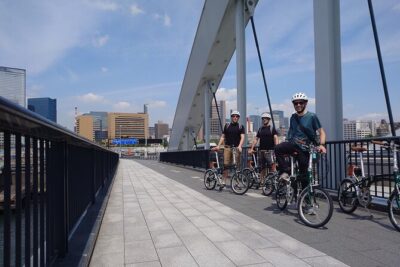 ★ 5.03-Hour Tokyo Private E-Bike Tour Starting from Your HotelFrom $145
Browse the lists this tour appears in