
Reviewed · TOKYO CYCLING TOURS
Tokyo Night Bike Tour: From Shibuya to Tokyo Tower via Roppongi
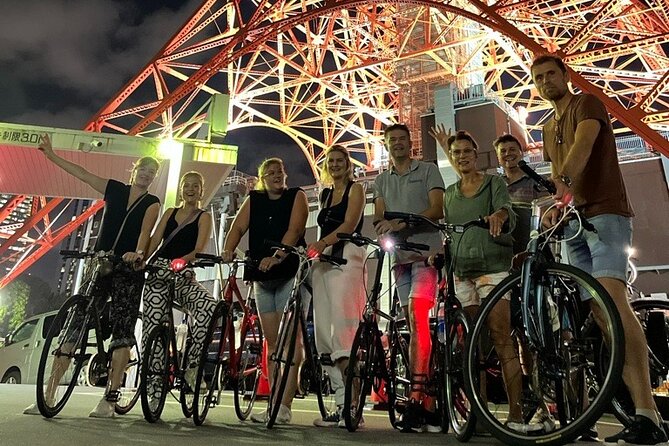
Tokyo looks different from a bicycle after dark. This two-hour ride links Tokyo Tower, Roppongi, Omotesando, and Aoyama with quieter streets and places that are awkward to reach by train. You cover real ground, catch the city’s lights, and get a look at Tokyo beyond the usual station exits.
I especially like the small six-person limit and the way the route mixes famous sights with less expected corners, including Aoyama Cemetery and Meiji Jingu Gaien. Guides such as Taichi are praised for clear English, local insight, careful pacing, and good photo stops. The main catch is that you need to be a confident city cyclist, since the group rides at about 15 kilometers per hour through traffic lights, narrow spaces, and crowded areas.
In This Review
- Key points before you book
- Why Tokyo works so well at night on two wheels
- From Sendagaya toward Meiji Jingu Gaien
- Omotesando, where Tokyo gets polished
- Keyakizaka Dori and Roppongi lights
- Azabujuban and the quieter side of the city
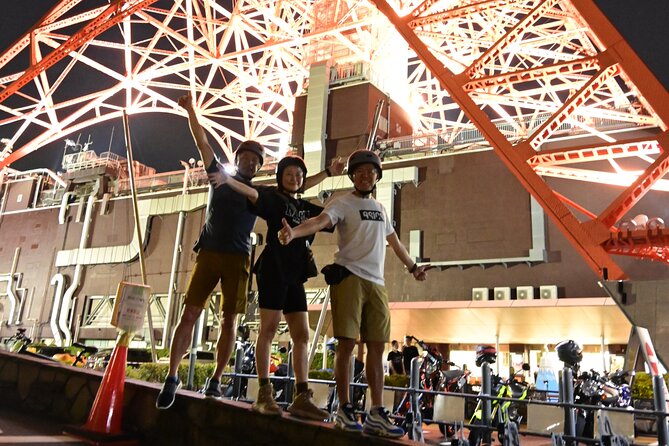
- Tokyo Tower, the big visual payoff
- Aoyama Cemetery after dark
- Nishiazabu and the return through Roppongi
- How safe and demanding is the ride?
- What the $56.01 price gets you
- Weather, timing, and practical planning
- Who will enjoy this Tokyo bike tour?
- Should you book it?
- FAQ
- Where does the Tokyo night bike tour begin?
- What time does the tour start?
- Where does the tour finish?
- How long does the bike tour last?
- What sights are included?
- Are bicycles and helmets provided?
- Is dinner included?
- What happens if the weather is poor?
Key points before you book
- Tokyo after dark: See Tokyo Tower, Roppongi, Keyakizaka Dori, and Omotesando under city lights.
- Small-group format: The maximum is six riders, allowing the guide to give attention and keep the group together.
- Local guide Taichi: Taichi is noted for clear English, friendly conversation, safety, cultural information, and photos.
- A real cycling requirement: You should confidently ride on pavements, cross traffic lights, and maintain about 15 kilometers per hour.
- Bikes and helmets included: The supplied bicycles fit riders from 155 to 185 centimeters tall.
- Plan food first: Dinner is not included, and the tour does not stop for a meal.
Why Tokyo works so well at night on two wheels
Tokyo’s rail network is superb, but trains also shape what you see. You travel from station to station, rise to street level, and often miss the links between districts. A bicycle fills in those gaps.
This route begins at Umayamichi Park, at 5-chome-24-11 Sendagaya, near Yoyogi Station and roughly 10 minutes from Shinjuku Station. The 8 p.m. start gives you a useful balance: the city is lit up, the worst daytime heat has eased, and the roads and pavements can feel less pressured than during the afternoon.
You are not simply pedaling past sights. You are moving through several different versions of Tokyo in one evening. There are polished shopping streets, restaurant districts, office avenues, quiet green spaces, and a cemetery with a very different mood from Roppongi’s lights.
I like that contrast. A standard night sightseeing trip might keep you around one bright entertainment district. This ride gives you a broader sense of how Tokyo changes from block to block.
A few more Tokyo tours and experiences worth a look
From Sendagaya toward Meiji Jingu Gaien
The route sets off from the Sendagaya area and heads toward Meiji Jingu Gaien. This is a good opening section because it eases you into the ride before the route reaches the stronger concentration of neon and nightlife.
Meiji Jingu Gaien offers wide, open surroundings and a calmer feel than the shopping streets. At night, the area can provide a welcome break from traffic and signs. It also shows why a bicycle is useful here: you can move between districts without waiting for a train or walking long distances underground and above ground.
The guide’s role matters from the first few minutes. You need to follow the correct turns, stay aware of other road users, and keep the group at a steady pace. Taichi receives especially strong praise for making riders feel safe and for giving instructions that are easy to follow.
That does not mean the ride is passive. You need to pay attention. This is not a slow sightseeing bus with a guaranteed seat and a view in every direction.
Omotesando, where Tokyo gets polished
Omotesando brings a change of mood. The district is known for its major shops, clean architectural lines, and fashionable streets. At night, the illuminated storefronts and broad avenues create some of the ride’s most attractive city views.
You will see this area from street level and at cycling speed, which gives you more time to notice how the buildings, signs, and pedestrians fit together. The bicycle also lets the group pass through connections that are less convenient by public transport.
The drawback is simple: shopping districts can still be crowded after dark. You must be comfortable riding through tight spaces and watching for pedestrians. The guide sets the pace, but you remain responsible for handling your bicycle confidently.
For an active visitor, this is part of the appeal. You are not boxed into a vehicle, and the city air and changing streets make the ride feel more immediate.
Keyakizaka Dori and Roppongi lights
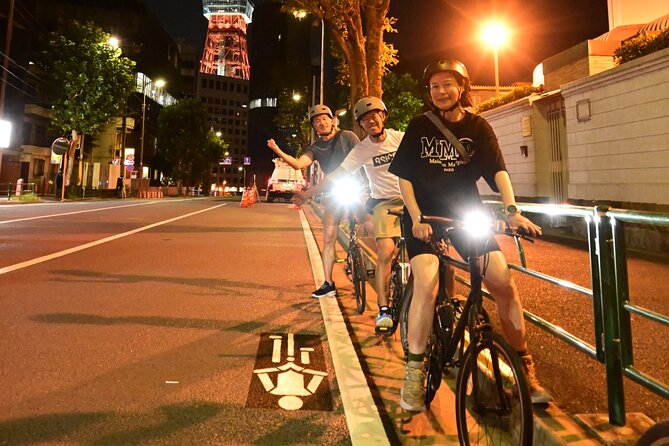
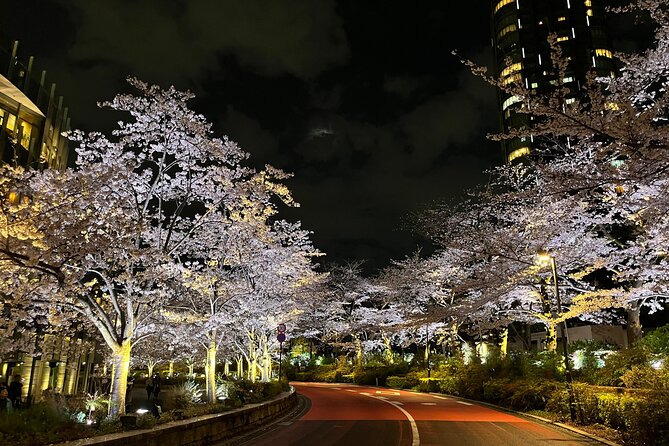
Roppongi Keyakizaka Dori is one of the evening’s more polished stops. The avenue is known for its illuminated trees and upscale surroundings, making it a natural place to pause for views and photographs.
This is also where the route begins to show Tokyo’s nightlife character more clearly. Roppongi has restaurants, bars, shopping, and a steady mix of local and international life. The ride does not turn into a bar crawl, though. You see the district from outside, then continue through it.
That distinction is useful when deciding if this tour suits you. If you want a long stop for drinks or a sit-down meal, this is not the right format. If you want to see several nightlife districts in one evening while staying active, the route makes better sense.
The guide adds value by explaining what you are seeing and pointing out streets that are easy to miss when you move through Roppongi on foot. Several riders have singled out Taichi’s conversation and cultural knowledge as a highlight, especially for first-time visitors who have many questions.
Azabujuban and the quieter side of the city
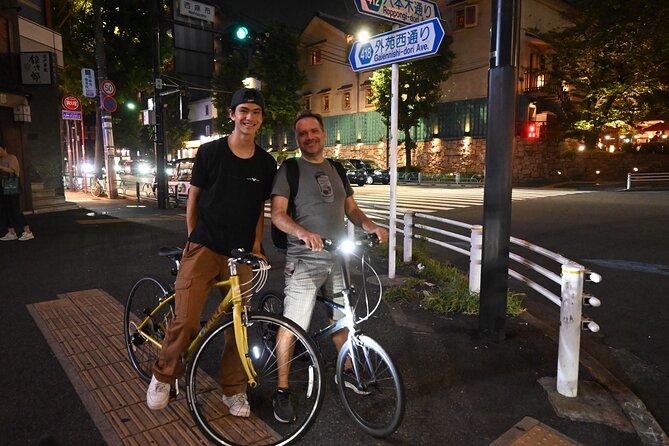
Azabujuban gives the tour another change of pace. Instead of only presenting Tokyo’s famous signs and large avenues, the route passes through an area with local streets, restaurants, and a more neighborhood feel.
This is one of the reasons I would choose a bike ride over a standard central Tokyo sightseeing route. You get a sense of the spaces between major attractions. The guide can point out details as the group moves, and you do not have to spend the evening working out which train line connects one district to another.
The route is still active and fairly quick. At approximately 15 kilometers per hour, you will not have unlimited time to study every storefront. Think of the ride as a moving overview, with selected pauses for views and orientation.
You should also eat before arriving. Dinner is not included, and there is no meal stop. A small snack is sensible if you need fuel for two hours of cycling.
A few more Tokyo tours and experiences worth a look

Tokyo Tower, the big visual payoff
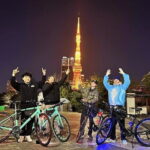
Tokyo Tower is the route’s clearest landmark and one of its strongest photo stops. Seeing the tower lit against the night sky gives the ride a familiar Tokyo image, but arriving by bicycle adds a different sense of scale.
You have crossed several districts under your own power, then reach one of the city’s best-known sights. That progression makes the stop more satisfying than simply arriving by train and walking a few minutes from a station.
The tour does not state that you go inside Tokyo Tower, so you should expect an exterior viewing stop rather than an observation-deck visit. If going up the tower is your main goal, plan that separately.
For photography, the evening timing helps. The guide is also praised for taking good pictures in attractive locations, which is useful if you are riding alone or want a group image without relying on a stranger.
Aoyama Cemetery after dark
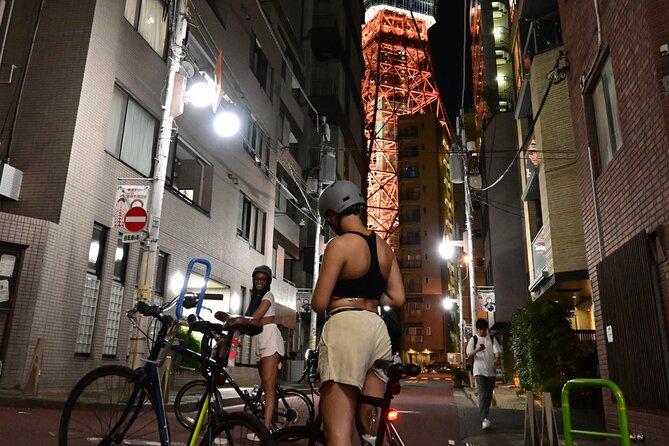
Aoyama Cemetery is an unusual part of the route. It offers a quiet, spacious setting and a sharp contrast with the commercial districts around Roppongi and Omotesando.
Some visitors may find a cemetery at night an unexpected choice. That is precisely why it adds character. It shows a side of central Tokyo that you would likely skip if you followed only the standard sightseeing circuit.
You should be comfortable with the atmosphere. This is not a lively photo backdrop in the same way as Tokyo Tower or Keyakizaka Dori. It is a peaceful stop, and the guide can help provide context as you pass through.
The cemetery also underlines one of the tour’s practical strengths. Public transport can take you close to many famous districts, but it is less useful for linking quieter places in a smooth evening loop. A bicycle handles those connections well.
Nishiazabu and the return through Roppongi
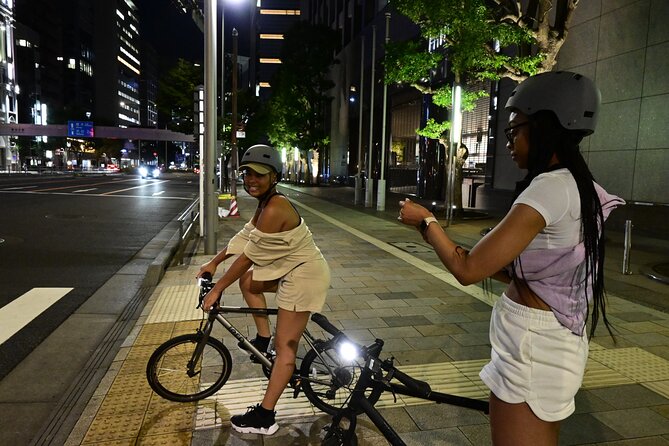
The final sections include Roppongi again and Nishiazabu, completing a route through some of Tokyo’s best-known nightlife areas and its less obvious side streets.
Nishiazabu is associated with restaurants and evening activity, but the mood is generally more restrained than the brightest parts of Roppongi. The contrast gives you a useful final look at how Tokyo’s nightlife is not one single scene. Some streets are loud and highly lit, while others are quiet and discreet.
Because the tour returns to the original meeting point, you do not need to arrange a separate late-night pickup at the finish. The activity ends back at Umayamichi Park.
The two-hour length is well judged for an evening ride. It is long enough to cross several districts but short enough that most fit cyclists should not feel they have sacrificed the whole night. You can still arrange a late dinner or another activity afterward, though you should account for the 8 p.m. start and the time needed to eat before riding.
How safe and demanding is the ride?
The most important booking question is your cycling ability. The operator expects you to ride confidently on pavements, cross traffic lights, and pass through crowded or narrow spaces. The group moves at approximately 15 kilometers per hour, described as a typical cycling speed.
That pace is manageable for a regular cyclist, but it is not ideal for someone who rarely rides or feels uneasy in city traffic. You do not need to be a racing cyclist. You do need to control the bicycle, watch the road, and stay with the guide.
The small-group size helps. With no more than six participants, the guide can keep a closer eye on the group than on a large cycling excursion. Taichi is repeatedly praised for making the ride feel organized and safe, including by a solo woman and by a family traveling with a 15-year-old.
Still, good guidance cannot remove every city-riding responsibility. Wear practical clothes, pay attention at crossings, and do not treat the ride as a casual photo walk.
The supplied bicycles fit people from 155 to 185 centimeters tall. If you fall outside that range, you should contact the organizer before booking rather than assume a suitable bicycle will be available.
What the $56.01 price gets you
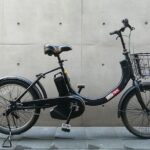
At $56.01 per person, the price is reasonable if you value access, guidance, and a compact route through several districts. You receive the bicycle, helmet, and a small-group guide for about two hours.
The main value is not the equipment alone. You are paying to avoid getting lost, connect districts that are spread across central Tokyo, receive local explanations, and reach places that are less convenient by train. A bicycle also lets you see more ground than a walking tour in the same time.
The price is less attractive if you already know Tokyo well, dislike cycling near traffic, or mainly want long stops at one or two landmarks. You also need to budget for dinner or snacks separately.
Group discounts are available, and groups of four or more should contact the organizer directly. The maximum group size is six, so even a discounted group should retain the personal feel that makes this activity appealing.
Weather, timing, and practical planning
The tour can proceed in light rain, but sudden weather changes may lead to cancellation. This is a weather-dependent activity, and a cancellation caused by poor conditions comes with the choice of another date or a full refund.
You can cancel for a full refund if you do so at least 24 hours before the 8 p.m. start time. Changes or cancellations made inside that window are not accepted for a refund, so check the forecast before the deadline.
Wear shoes that are comfortable for steady cycling and clothes suited to the evening temperature. The ride can feel refreshing in summer, when Tokyo’s daytime heat is tiring, but conditions can still change after sunset.
The meeting point is near public transport, with Yoyogi Station only about one minute away according to the tour information. Allow enough time to find Umayamichi Park and settle in before departure. The tour includes a helmet, but no meal.
Who will enjoy this Tokyo bike tour?
I would recommend it most to active first-time visitors who want a broad introduction to central Tokyo at night. It suits solo riders, couples, families with a confident teenage cyclist, and small groups that prefer conversation over a large organized excursion.
It is also a strong choice if you have already visited the major daytime sights and want a different look at Shibuya, Roppongi, Aoyama, and Azabujuban. The night setting, quieter streets, and mix of bright districts and calm corners give the route a useful sense of variety.
You should think twice if you are not comfortable cycling at 15 kilometers per hour or navigating crossings and tight spaces. The activity is not suitable for someone hoping to sit back and watch the city without physical effort.
The guide can speak English, and Taichi is particularly praised for friendly conversation, local information, and clear instructions. That makes the experience more than a ride from point to point. You have someone to answer questions as the city moves around you.
Should you book it?
Book this ride if you want to see Tokyo’s famous night views while also reaching streets and areas that a train-based tour tends to skip. The strongest reasons are the six-person limit, the well-planned route, the Tokyo Tower and Roppongi views, and the chance to see Meiji Jingu Gaien and Aoyama Cemetery in the same evening.
Skip it if you want dinner included, a slow sightseeing pace, or a visit inside Tokyo Tower. Also skip it if city cycling makes you nervous.
For a confident cyclist, this is a smart way to spend two hours in Tokyo. Eat first, arrive ready to ride, and expect a lively but demanding evening that shows you more than the usual neon postcard.
FAQ
Where does the Tokyo night bike tour begin?
The tour begins at Umayamichi Park, 5-chome-24-11 Sendagaya, Shibuya, Tokyo 151-0051, Japan. The starting point is near public transportation, about one minute from Yoyogi Station and roughly 10 minutes from Shinjuku Station.
What time does the tour start?
The tour starts at 8:00 p.m.
Where does the tour finish?
The ride ends back at the original meeting point at Umayamichi Park.
How long does the bike tour last?
The experience lasts approximately two hours.
What sights are included?
The route includes Tokyo Tower, Meiji Jingu Gaien, Omotesando, Roppongi Keyakizaka Dori, Azabujuban, Aoyama Cemetery, Roppongi, and Nishiazabu.
Are bicycles and helmets provided?
Yes. The bicycle and helmet are included. The bicycles are suitable for people between 155 and 185 centimeters tall.
Is dinner included?
No. The tour does not stop for dinner, so eat before the ride or bring a snack.
What happens if the weather is poor?
The tour may be canceled because of sudden weather changes or poor conditions. If the operator cancels, you can choose another date or receive a full refund.
More Cycling Tours in Tokyo

More Night Rides in Tokyo
More Tokyo Cycling Tours in Tokyo
More tours in Tokyo we've reviewed
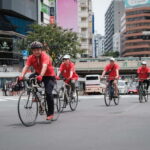

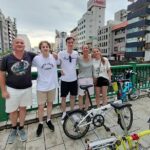

Tokyo Cycling Tours, compared.
 ★ 5.0Tokyo Great Cycling TourFrom $99
 ★ 5.0Tokyo Top Highlights 3h Guided E-bike TourFrom $63
 ★ 5.03h Tokyo E-Bike Tour: Hidden Gems, and Local Life with guideFrom $63
 ★ 4.83-Hour Bike or E-Bike City Highlights TourFrom $453 hours
 ★ 4.83-hour Guided E-Bike Tour of the City’s Hidden GemsFrom $65
 ★ 5.0Tokyo West-Side Cycling & Food TourFrom $99
 ★ 5.03-Hour Bike/E-Bike Tour of the City’s HighlightsFrom $63
 ★ 5.0Small Group Cycling Tour in TokyoFrom $66
Browse the lists this tour appears in