
The blue line wobbles ahead of you, painted onto the deck of the Innoshima Bridge, and the sound that comes up through the railings is half wind, half the sea moving in the strait fifty metres below. Cars pass on a separate carriageway. Cyclists have their own lane, and at this hour it’s mostly empty. That is the small miracle of the Shimanami Kaido: the bridges that link Honshu to Shikoku across six islands of the Seto Inland Sea were built with bicycles in mind, not as an afterthought.
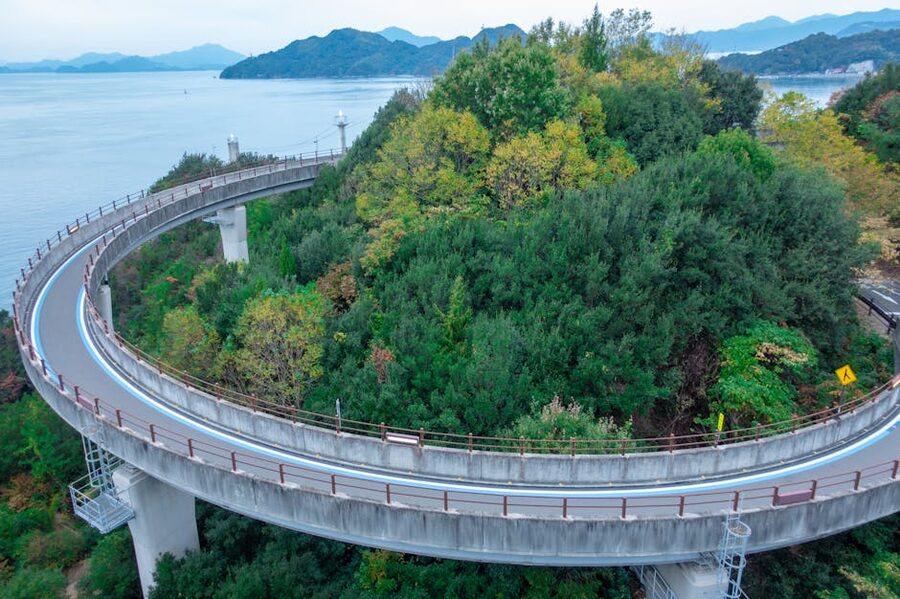
I’ve ridden this route both directions, with rented hybrids and with my own road bike sent down by takkyubin. This is the guide I wish I’d had on my first attempt: the bridges in order, the realistic timings, where to break the ride, and where to not waste your time. If you’d rather start with the planning details and route logistics in plain Q-and-A form, the cycling Japan FAQ covers train rules, rinko-bag etiquette, and seasonal weather. Otherwise, ride with me from Onomichi to Imabari.
In This Article
- The numbers, fast
- Why the route wins people over
- Onomichi or Imabari? Which way to start
- Why most people start in Onomichi (and you probably should)
- The case for starting in Imabari
- Renting a bike: the three options worth knowing
- Shimanami Rental Cycle (the public scheme)
- Giant Store
- Red Bicycles (Onomichi)
- The two questions everyone gets wrong
- The standard two-day plan, bridge by bridge
- Day 1: Onomichi to Omishima (~40 km)
- Day 2: Omishima to Imabari (~36 km)
- Doing it in a day
- Best time of year
- Where to stay at the ends
- Onomichi
- Imabari
- Food on the route
- Practicalities
- Luggage forwarding
- Trains and your own bike
- Mechanical support
- What to pack
- Cycling rules
- Beyond the standard route: extensions worth knowing
- What I’d skip and what I’d add
- Common questions, fast
The numbers, fast
Before you book trains or hotels, see whether the basic shape of the ride works for you.
| Metric | Standard route | What it actually feels like |
|---|---|---|
| Length (Onomichi–Imabari) | ~70 km blue line, 76 km via the official cycling road that includes the Onomichi–Mukaishima ferry detour | Most riders end up at 76–85 km after stops and detours |
| Bridges crossed | 6 (Innoshima, Ikuchi, Tatara, Omishima, Hakata-Oshima, Kurushima-Kaikyo) | 5 cycled, 1 ferried (Onomichi–Mukaishima) |
| Islands traversed | 6 (Mukaishima, Innoshima, Ikuchijima, Omishima, Hakatajima, Oshima) | You can island-hop additional ferries if you want to extend |
| Total elevation | ~600 m cumulative | Each bridge approach is a 3% spiral, barely a climb on its own, but they add up across six |
| Standard rental price | ¥3,000 / day cross-bike, ¥4,000 / day e-cross, ¥8,000 / day E-bike | Helmet included in the public rental scheme |
| Realistic time | Strong rider: 4–5 hours rolling; relaxed rider: 7–9 hours; first-timer with stops: split over two days | The Japan Cycling Association estimates 8 hours average for a first-time rider on a rental cross-bike |
| Direction | North to south (Onomichi→Imabari) is the most common | You finish on the longest, most spectacular bridge, which makes sense psychologically |
Why the route wins people over
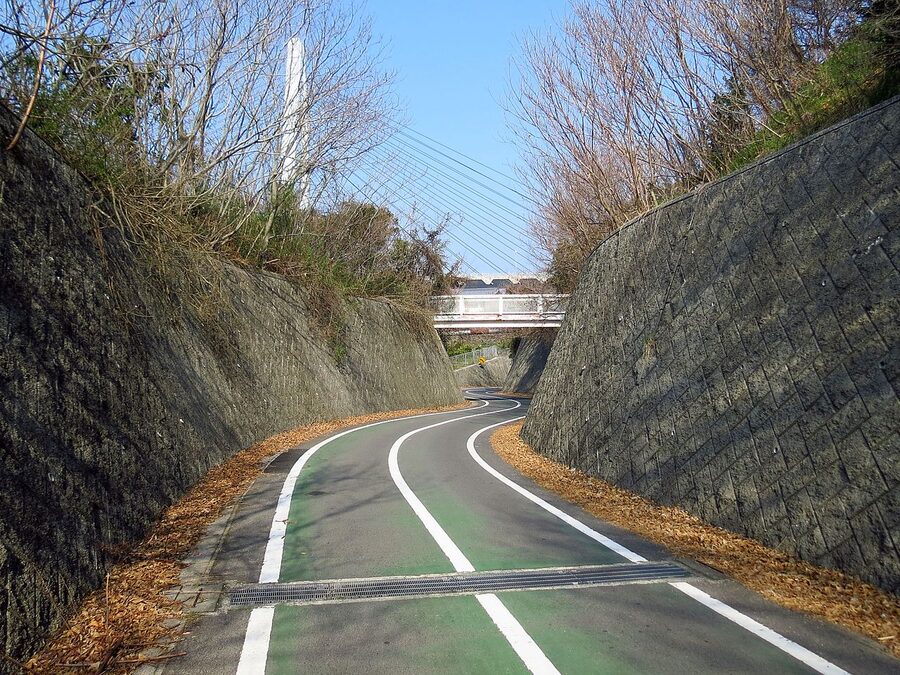
The Shimanami Kaido is the only cycling-specific multi-bridge route in Japan, and it’s the one piece of cycling infrastructure here that genuinely sells itself to non-cyclists. CNN once put it in its top seven cycling routes worldwide. The route runs about 70 km along Highway 317, but the part you’ll remember is the bridges, structures that show up on engineering shortlists for the longest cable-stayed and longest serial-suspension bridge spans on earth.
Unlike the more punishing Lake Biwa loop (200 km of inland riding), Shimanami is a soft introduction. The grades on the bridge approaches don’t exceed 3%, the islands themselves are flat-ish unless you go deliberately hunting climbs, and you’re never more than 15–20 km from a 7-Eleven or Lawson. It is the route I recommend to anyone wanting to ride in Japan for the first time.
Onomichi or Imabari? Which way to start
Both work. There are good arguments for each.
Why most people start in Onomichi (and you probably should)
Onomichi is on the Sanyo main line, which makes it directly reachable from Hiroshima Shinkansen station with one local-train transfer at Fukuyama. The full chain from Tokyo is: Shinkansen Tokyo→Fukuyama (3 h 50 min on Nozomi), then JR Sanyo line Fukuyama→Onomichi (about 20 minutes, four stops). From Osaka, halve those times. Onomichi has more accommodation, more food choice, and the ride from town to the ferry slip at Onomichi Port is literally five minutes.
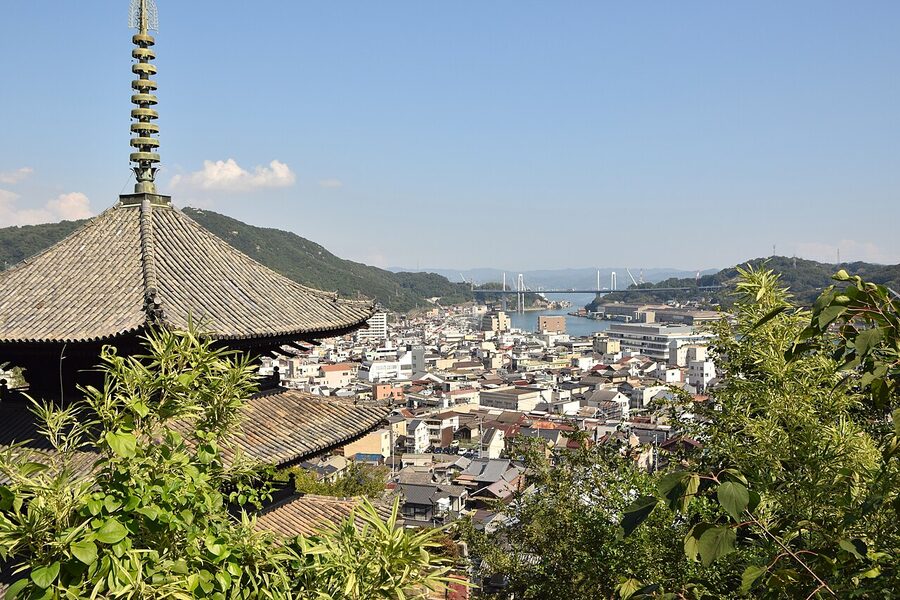
Onomichi is also the more pleasant town to spend a half-day in. The hillside temple walk to Senkoji and the “cat alley” (the locals call it Neko no Hosomichi) take ninety minutes if you don’t hurry, and the post-ride hot bath at Onomichi U2, a converted maritime warehouse that’s now a cycling-themed hotel, is hard to beat.
The case for starting in Imabari
Imabari has fewer trains but a fast bus from Hiroshima (about 90 minutes, ¥3,650 one-way) and is closer if you’re coming from Matsuyama on Shikoku. If you want to finish your ride with a temple walk and dinner in Onomichi rather than crossing back over the bridges by bus, ride south-to-north. The downside: you save the most spectacular bridge, Kurushima-Kaikyo, for your first thirty minutes, and the rest of the ride feels slightly anticlimactic. I’d only recommend starting in Imabari if your onward travel logically runs through Hiroshima.
Renting a bike: the three options worth knowing
Shimanami Rental Cycle (the public scheme)
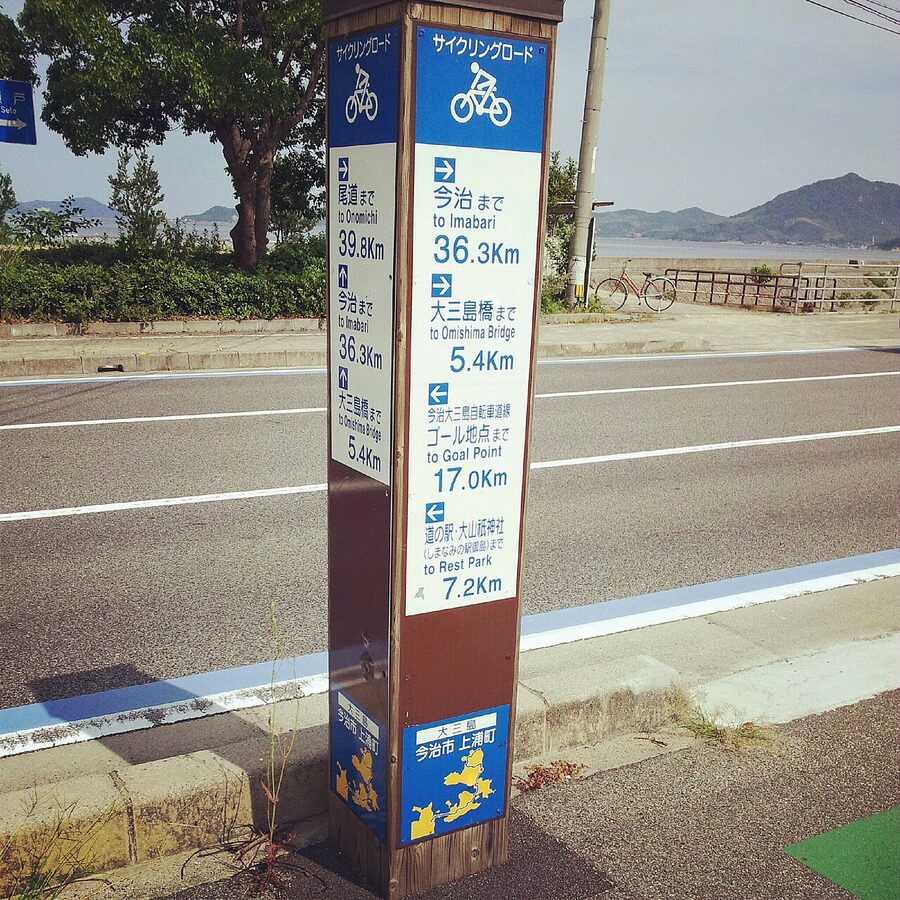
This is the one to use unless you have a specific reason not to. Run by the local cycling-tourism foundation (formerly under the prefecture), it operates 10 terminals along the route, which means you can rent at Onomichi and drop off anywhere you choose, including all the way through at Imabari. Cross-bike: ¥3,000 / day. City bike (mama-chari): same price. Electric-assist: ¥4,000 / day. Tandem: ¥4,000 / day, return same terminal. Helmet free. You also pay a refundable ¥1,100 deposit per bike that comes back when you return it. Carry that in cash; some terminals will only refund cash to cash.
Reservations work via their bilingual site. You can book one–two months ahead in cherry-blossom and autumn-leaf season; four to six weeks is usually fine the rest of the year. A few bikes are kept aside for walk-ups daily but counting on those during Golden Week is a recipe for stress.
Giant Store
Two locations: Onomichi (next to U2 hotel) and Imabari (in the train station building). One-way drop-off available between those two specific shops. Bikes are road bikes and high-end hybrids: TCRs, Escapes, the Anyroad gravel platform. Daily rates run ¥5,000–10,000 depending on bike. For experienced riders who care about saddle and gearing, especially anyone over 6 ft / 183 cm who finds public-rental cross-bikes too small, this is the answer. You also get a proper tool kit and emergency-shop contacts.
Red Bicycles (Onomichi)
Independent shop near Onomichi station. Carbon road bikes and decent e-bikes. No one-way drops, you have to come back to Onomichi. That’s a deal-breaker for most multi-day riders, but if you’re doing a one-day round-trip with a ferry shortcut, it works.
The two questions everyone gets wrong
First: in Japan, “cross-bike” means a flat-bar hybrid. The public-rental cross-bike is roughly equivalent to a department-store hybrid in the West: mid-range frame, basic Shimano components, decent for 70–100 km a day. Don’t expect a road bike under that name.
Second: the rental seats are unforgiving. Most public-rental bikes have a narrow plastic saddle clearly designed for someone wearing real cycling shorts. Bring padded bib shorts or a padded liner short. I’ve seen first-time riders go from elated at lunchtime to standing on the pedals by 15:00 because they didn’t. Do not skip this step.
The standard two-day plan, bridge by bridge
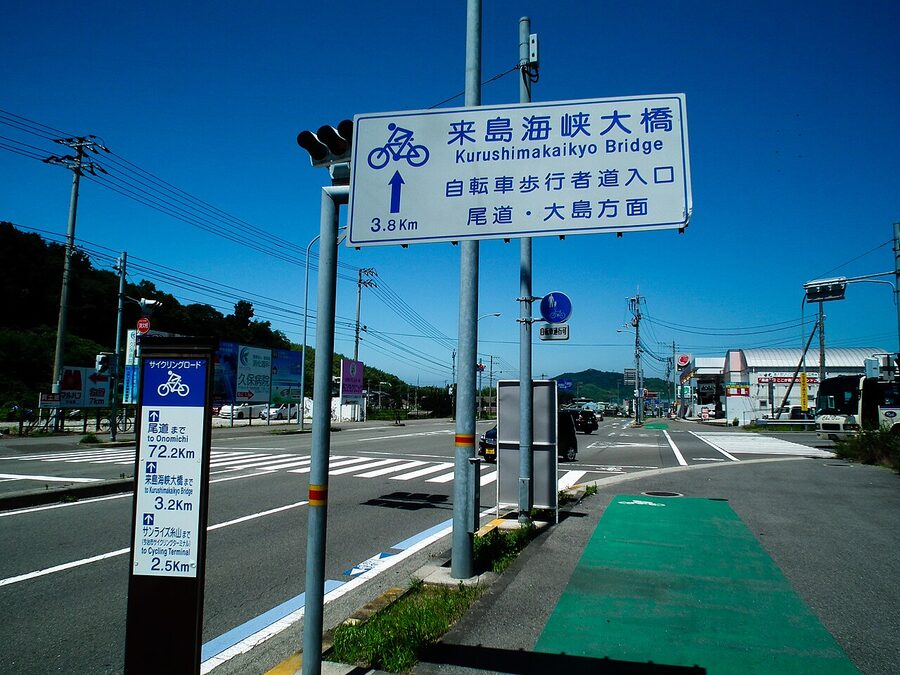
If you’ve got two days, this is the rhythm I’d use, with a halfway-point overnight on Omishima or Ikuchijima. If you’ve got one, see “Doing it in a day” below.
Day 1: Onomichi to Omishima (~40 km)
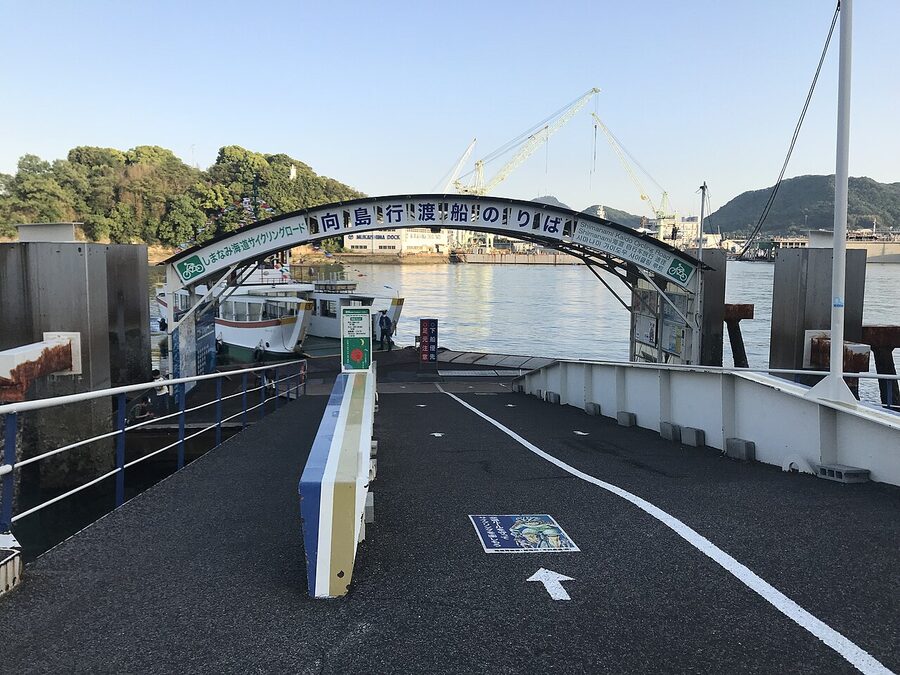
Pick up your rental at the Onomichi terminal in front of the station, then ride to the ferry slip 100 m to the right. The ferry to Mukaishima costs ¥110 per person plus ¥10 per bike, runs every 10–15 minutes from roughly 06:00 to 22:00, and takes five minutes. Pay on board. The Shin-Onomichi Bridge is closed to cyclists, which is why you ferry across.
Bridge 1: Innoshima Bridge (~1.5 km, deck level)
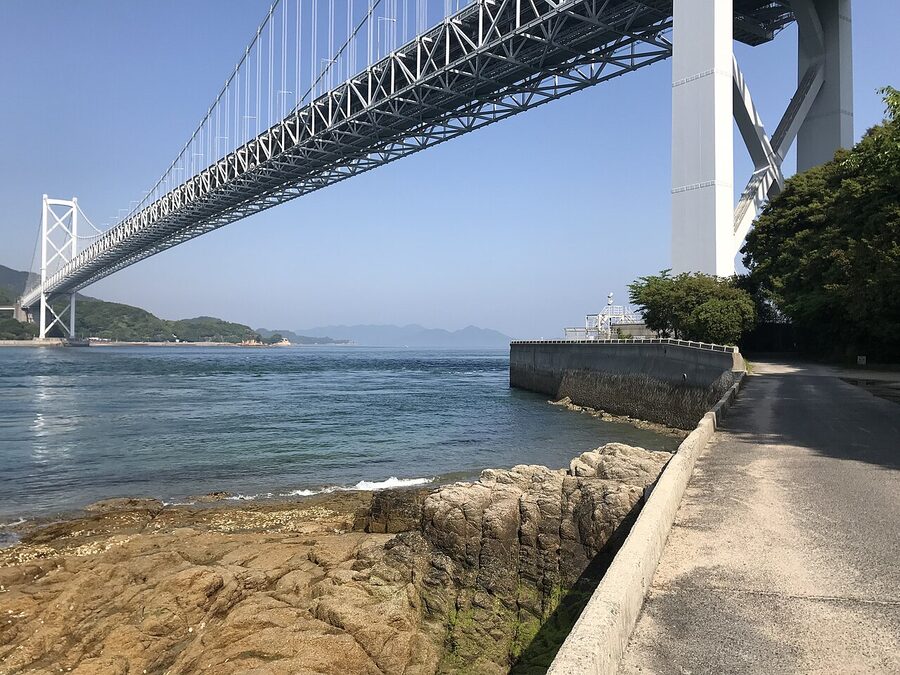
From the Mukaishima ferry slip, follow the blue line north up the island for about 9 km until you hit the spiralling cycle approach to Innoshima Bridge. It’s a 1,270 m suspension bridge built in 1983, and it’s the only one of the six where bikes ride a separate deck below the road. That gives you the sound of cars passing overhead and a slightly less open view, but the engineering is fascinating.
On Innoshima, watch for the citrus daifuku at Hassakuya, a small confectionary shop run out of an old farmhouse near the bridge approach. Soft mochi wrapped around a whole hassaku citrus segment, ¥200 each, cash only, closed Wednesdays. The locals queue here on weekends.
Bridge 2: Ikuchi Bridge (~790 m)
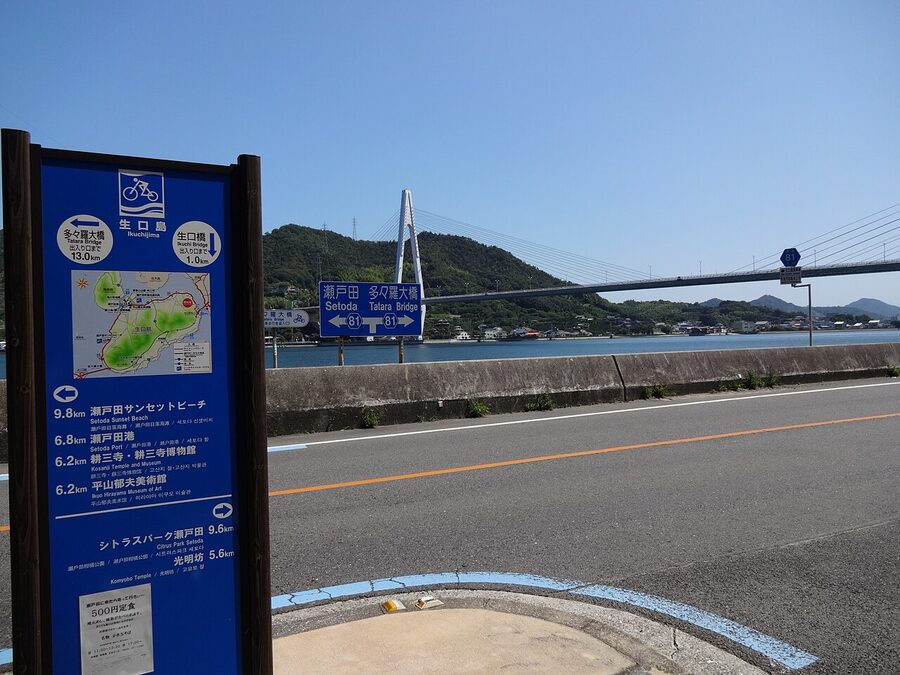
Cross to Ikuchijima, pronounced “ee-koo-chee-jee-ma”, and you’re on the island most people remember for two things. First, gelato. Dolce, on the seafront in Setoda, makes a salt-and-citrus combination using local lemons that is genuinely the best ice cream I’ve had in Japan. ¥500 single scoop, open 10:00–17:00, closed irregularly. There’s usually a queue but it moves.
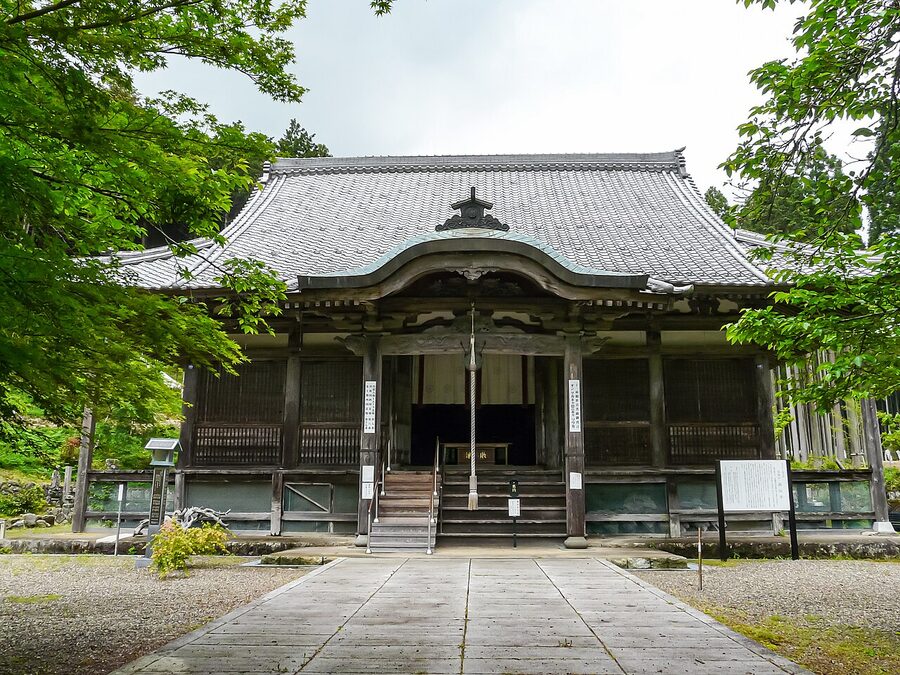
Second, Kosanji Temple. It looks like a tourist trap on paper (replica buildings copying famous temples from across Japan) but in person it works. The white-marble Hill of Hope sculpture park behind the temple is the standout, and the cave-tour through a painted reproduction of Buddhist hell is bizarre in a memorable way. Allow 90 minutes minimum if you stop. If you’re only doing one cultural detour the entire trip, this is it.
Bridge 3: Tatara Bridge (1,480 m, the showstopper)
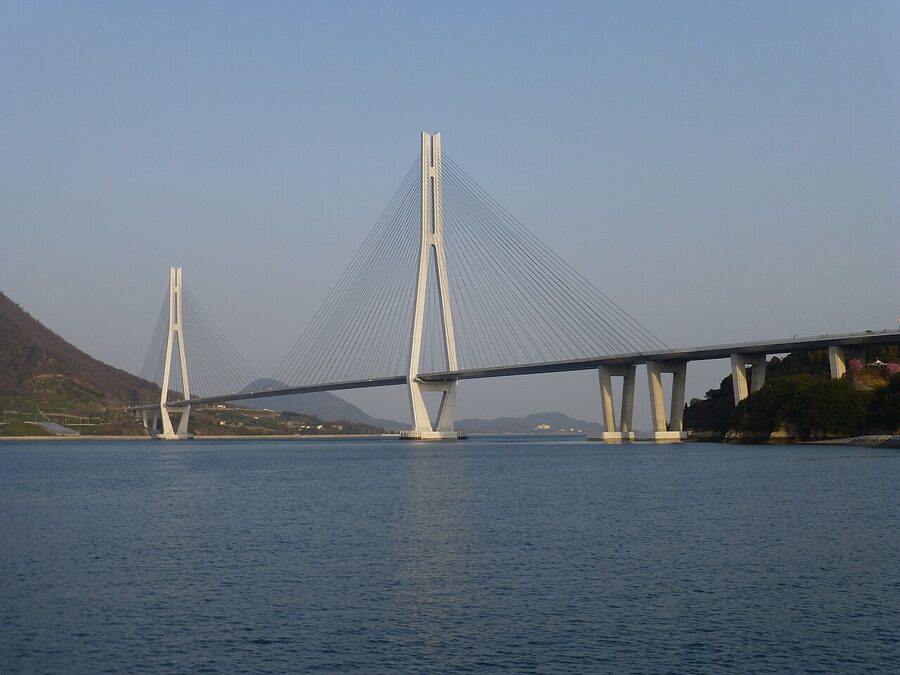
Tatara is the bridge that sells the route in photographs. When it opened in 1999 it was the longest cable-stayed bridge in the world; it held that record for six years. The cycling deck is the same level as the cars, separated by a low barrier, and the view of the Inland Sea opens up to both sides as you climb. The towers are 220 m high.
There’s a small “singing pillar” just before the bridge entry on the Ikuchijima side, clap once and you get a clean echo back from the underside of the towers. Touristy, but it works.
Cross onto Omishima. Most two-day riders sleep here.
Where to stop on Omishima for the night
- WAKKA, cycling-themed accommodation with private cottage rooms, glamping dome tents, and dorm beds. Cottage doubles run ¥15,000–22,000 per person with breakfast and an outdoor BBQ option. The on-site cafe and showers are well set up for cyclists. Booking via Booking.com or the property’s direct site, both available.
- Tomarigi, a homely guesthouse with capsule-style dorm bunks (¥4,500) and a private tatami room (¥9,000). Indoor bike storage. Owner is a former cyclist; the breakfast is small but properly cooked.
- OHANA in Mishima, closest to Oyamazumi Shrine. Organic cafe downstairs, simple rooms upstairs from ¥2,900 dorm. Vegan options on the dinner menu, which is a rarity on the route.
If you’d rather break the day at Setoda on Ikuchijima instead of pushing on to Omishima (only ~25 km from Onomichi but with more food options and a better selection of inns), the editorial “halfway” isn’t a hard rule. Setoda also has a convenient public bath at Yumeyu Onsen, ¥500, open 11:00–22:00, closed Tuesdays.
Day 2: Omishima to Imabari (~36 km)
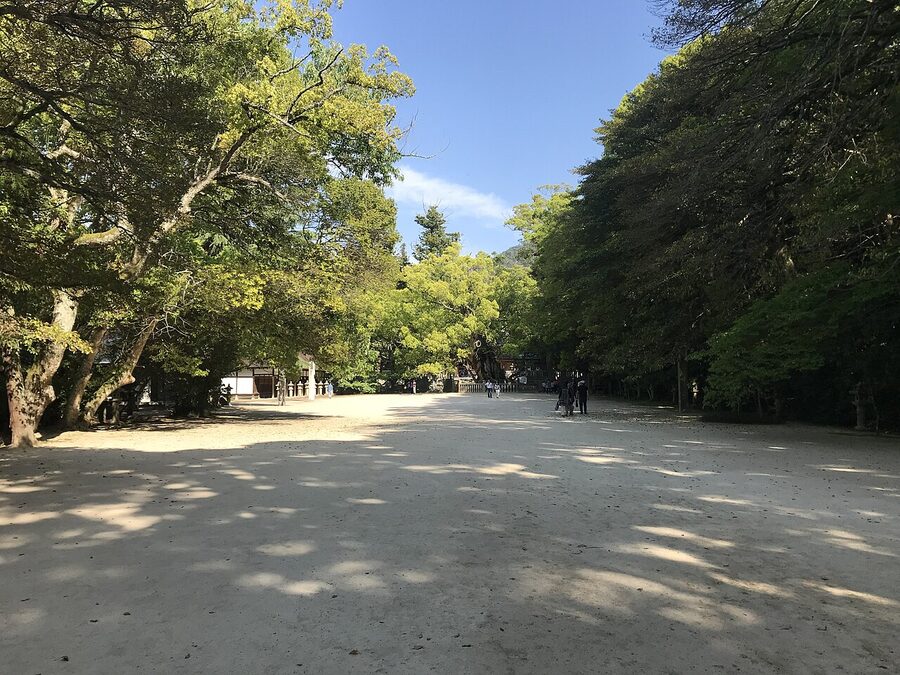
Get a proper breakfast and don’t skip Oyamazumi Shrine if you’ve any interest in Japanese history. It’s about a 4 km detour off the blue line on the western side of Omishima. The grounds are old: some of the cedar trees are 2,600 years old, and there are 38 of them on a national-treasure register. The treasure museum (¥1,000) holds armour from Minamoto no Yoritomo and Kusunoki Masashige; whether you care about that depends on you, but the shrine grounds themselves are free and worth ten minutes regardless.
Bridge 4: Omishima Bridge (328 m)
The shortest bridge on the route. You’re across in two minutes. The interesting part is the scale change, after Tatara’s 1.5 km, Omishima Bridge feels almost domestic.
Bridge 5: Hakata-Oshima Bridge (~830 m)
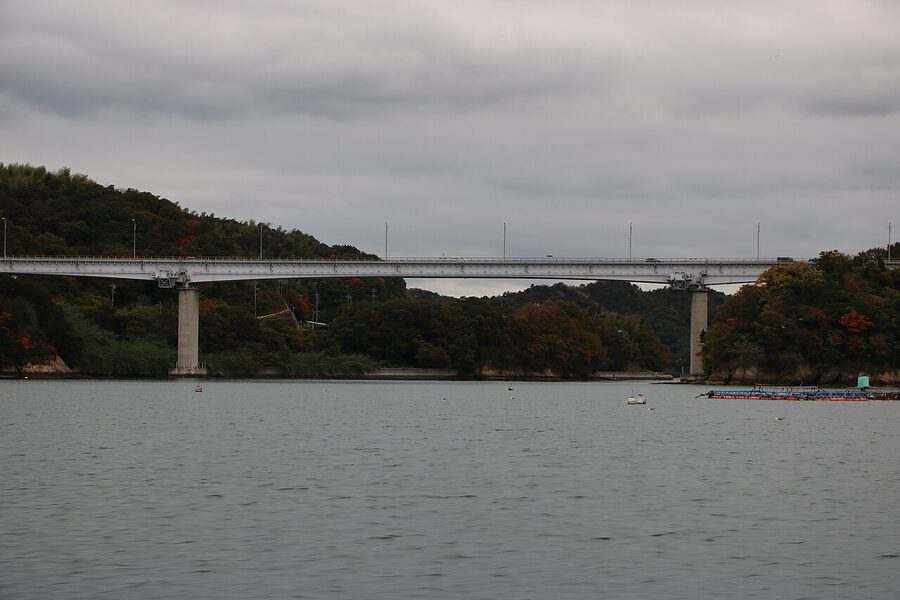
Technically two bridges in sequence with a tiny island in the middle. The Hakata Bridge half is a clean suspension; the Oshima Bridge half a shorter cable-stayed crossing. The water below moves fast, this is the strait where the legendary Murakami pirates of the medieval Inland Sea controlled passage and tolls. There’s a small pirate-history museum on Hakatajima (¥310) if it’s your kind of thing; it’s mostly text with some scale models and old maps, so a Japanese reader will get more out of it than a non-reader.
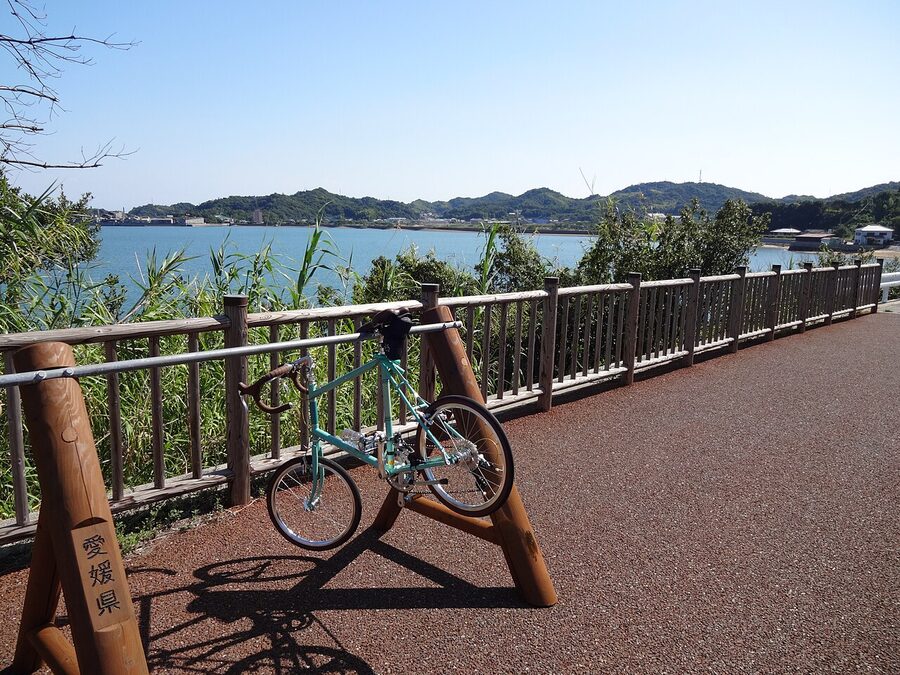
Detour: Kirosan Observatory on Oshima
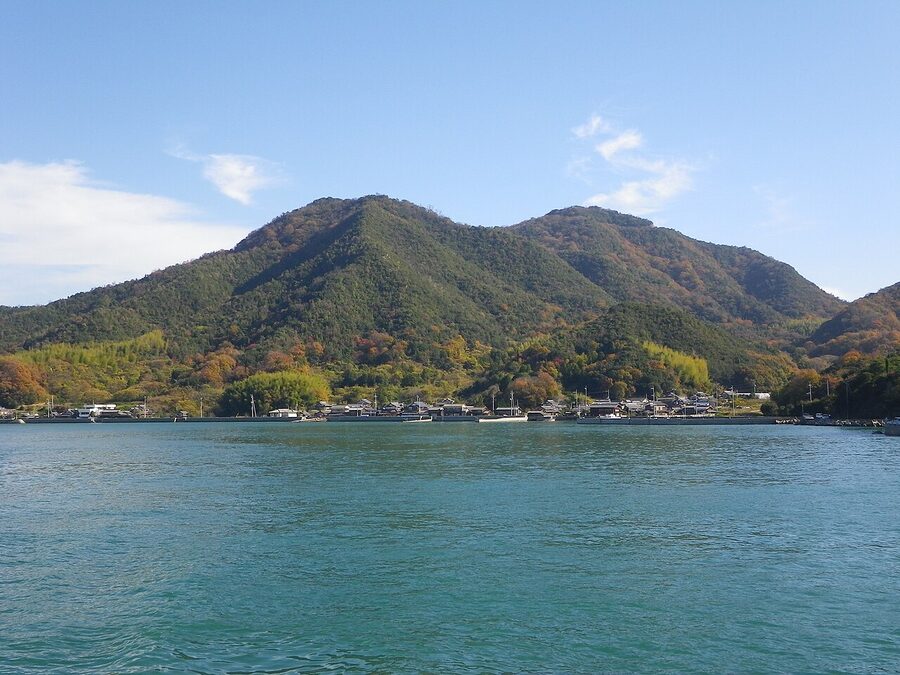
This is the most opinion-divisive part of the route. Kirosan is a 307 m peak on Oshima with an observation deck designed by Kengo Kuma. The view of the Kurushima-Kaikyo Bridge from the top is genuinely the best on the entire ride, you see the three suspension spans laid out in their entirety. But the climb is hard. The 2.8 km road up the south face has sustained sections of 7–9% with 10%+ near the top. On a rental cross-bike with no granny gear, you’ll walk part of it. On an electric, it’s straightforward. The descent takes about seven minutes from peak to base.
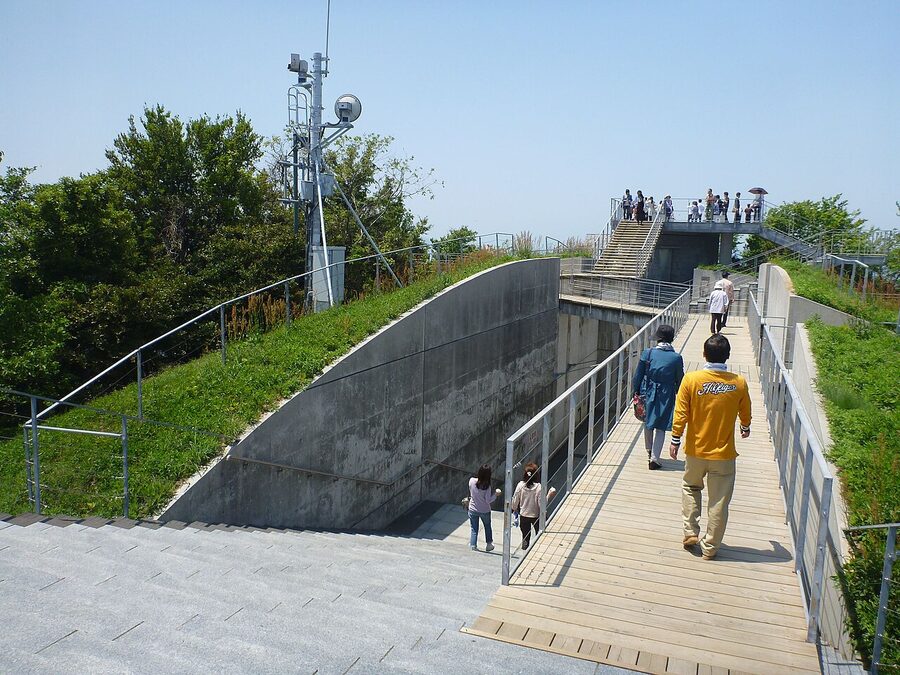
My view: skip Kirosan if it’s overcast or if you’re running tight on light. Make the climb if the weather’s clear and you’ve still got energy, it pays off. Add 90 minutes to your day for the detour.
Bridge 6: Kurushima-Kaikyo Bridge (4,015 m, the finale)
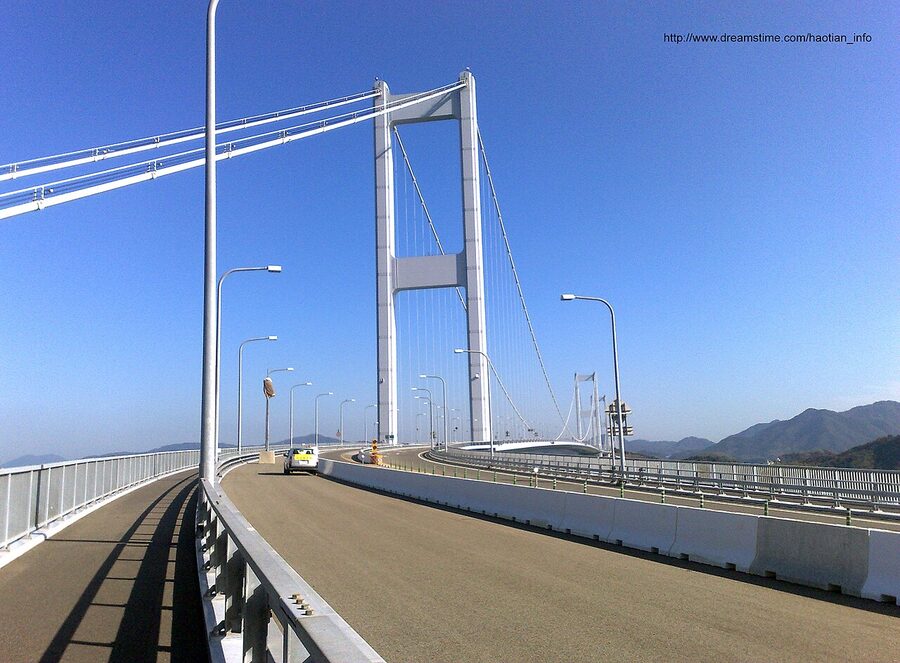
Three suspension spans linked end to end, 4 km of bridge, finished in 1999. It is the longest serial-suspension bridge in the world. The cycling deck sits beside the road deck on a separated track, and you ride for what feels like fifteen minutes between strait crossings. Look down: when the tide’s running, the Kurushima Strait is one of the few places in Japan where you can see proper standing whirlpools from above. The current can hit 10 knots.
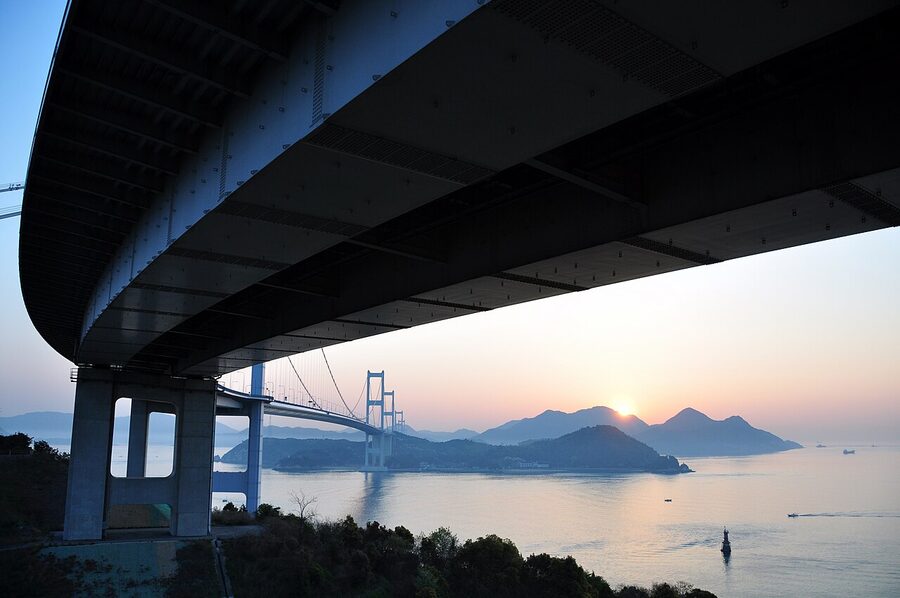
The Imabari side approach has a small observation deck and a return-to-start photo spot, a painted mural near the Cyclo-no-ie guesthouse where everyone takes a finish-line photo. The ride from there to Imabari Station is a mildly disappointing 6 km of city traffic; bear with it, drop the bike off, and find dinner.
Doing it in a day
Possible. Worth it? Only if you have to.
The realistic timing for a one-day Onomichi–Imabari is roughly: 06:30 ferry across to Mukaishima, 18:00–19:00 arrival at Imabari Station. That’s eleven to twelve hours of riding plus stops, with no time for Kosanji, Oyamazumi, or Kirosan. You eat at convenience stores, you skip the gelato queue, and you push through the bridges as transit rather than experiences.
Strong club riders on their own road bikes do it in 4–5 hours rolling, sometimes less, and have time for a sit-down lunch. If that’s you, you don’t need this guide. For anyone doing one day on a rental cross-bike: plan for sunset. Take a basic light. Don’t do it in winter when daylight cuts short at 17:00.
The other one-day option I’d actually recommend: ride the central two-thirds. From Setoda on Ikuchijima to Imabari is about 45 km and three of the six bridges, including the two best ones (Tatara and Kurushima-Kaikyo). Take the Onomichi–Setoda fast ferry first thing in the morning (50 minutes, ¥1,250) with your bike on board, then ride south. You finish in time for dinner and you don’t miss the showpiece bridges.
Best time of year
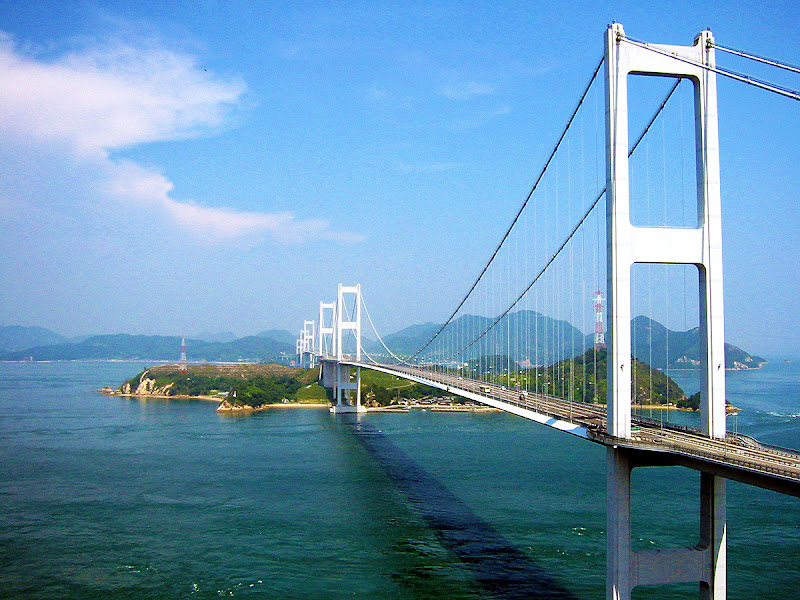
Spring (mid-March to mid-May) and autumn (October to mid-November) are the sweet spots. Daytime temperatures sit between 18°C and 23°C, the air is clear, and the cherry blossoms or the autumn citrus harvest add a layer to the ride. Mid-April hits a cherry-blossom peak; the early November light through the orange-laden citrus groves on Ikuchijima is one of those things you can’t fake with a digital filter.
Summer (late June to early September) is humid and pushes 32°C. The hot ride alone wouldn’t put me off, but the rainy season around mid-June to mid-July adds genuine risk, bridge crossings get sketchy in heavy crosswinds, and visibility drops fast. Pack proper rain gear regardless of forecast.
Winter (December to February) is colder than people expect, daytime around 8–14°C, and the Inland Sea wind has bite at bridge level. Snow is rare but possible north of the route. Light is short: dark by 17:00. Riding in winter is feasible if you’re kitted and don’t mind layering up; the upside is empty roads.
Avoid Golden Week (the cluster of holidays end of April through 5 May) and the Cycling Shimanami event weekend (typically late October, check their calendar) unless you booked accommodation months ahead. The route gets clogged.
Where to stay at the ends
Onomichi
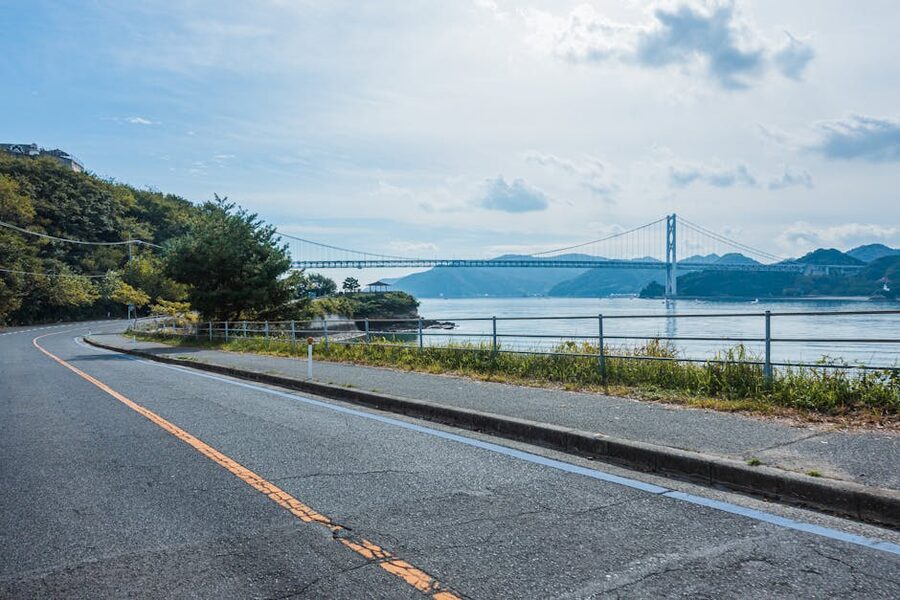
- HOTEL CYCLE / Onomichi U2, the converted maritime warehouse that’s the unofficial cycling clubhouse for the route. Rooms are small but designed around bike-storage racks; you wheel your bike straight into the room. Doubles from ¥15,000 with breakfast. Ground floor has a bakery, a wine bar, and a Giant Store. Book via Booking.com or Agoda; rates are usually identical between the two.
- urashima INN GANGI, smaller, cheaper, right on the waterfront. Modern fixtures in older bones. Doubles around ¥10,000.
- Anago no Nedoko, converted long, narrow machiya townhouse turned guesthouse, in the old shopping arcade. Dorm beds ¥3,000, private rooms from ¥7,000. Cafe-bar attached.
Imabari
- Imabari Kokusai Hotel, standard business hotel near Imabari Station, doubles from ¥9,000. Useful if you’ve got an early train out the next morning. Book via Booking.com.
- Cyclo-no-ie, cyclist-focused guesthouse near the route’s end mural. Mixed and women’s dorms, private singles. Friendly and run by riders. From ¥3,500 dorm.
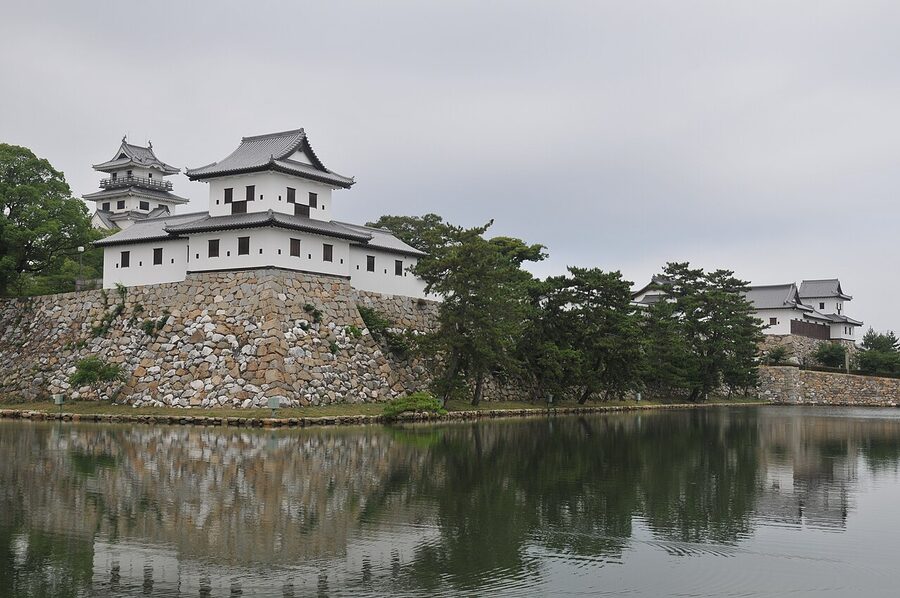
Food on the route
Cyclists worry too much about this. The convenience stores (7-Eleven, Lawson, FamilyMart) are roughly every 15–20 km, and they sell better cycling fuel than most western convenience stores. Onigiri, sandwiches, isotonic drinks, salt tablets, ice cream: everything you need for ¥800 a stop. Don’t skip them.
Beyond conbini, the standouts:
- Hassakuya, Innoshima, the citrus daifuku I mentioned earlier. ¥200 per piece, eat one immediately, take three for later.
- Dolce, Setoda (Ikuchijima), gelato. Salt-and-lemon, mikan-citrus, fig-with-rum if you’re feeling adventurous. ¥500.
- Cafe Shozan, Oshima, counter-style cafe overlooking the strait, post-Kirosan descent. Set lunches around ¥1,400 with a salad and a drink. Pasta or beef curry. Closes around 16:00. Cash and card.
- Roadside Station Yoshiumi Iki Iki Kan, Oshima, the seafood barbecue you grill yourself over a charcoal pit. Pick your scallops, oysters, prawns from the counter, hand them to the staff to weigh, then cook them at your table. Around ¥3,000 a head. The closing time is 17:00, so plan around it.
- Onomichi Ramen, back at the start or end, depending on direction. The local style uses chicken-and-pork double-broth with thin straight noodles. Shukaen on the seafront and Tsutafuji in the arcade are the two old-school shops worth queuing for.
The local meal you’ll see most often promoted as the “regional speciality” is okonomiyaki, the Hiroshima-style cabbage-and-noodle savoury pancake. It exists everywhere, it’s usually fine, but it’s not actually a Shimanami signature. The food worth chasing on this ride is fish and citrus.
Practicalities
Luggage forwarding
Sagawa runs a same-day luggage service called Shimanami Te-bura Cycling (literally “empty-handed cycling”) between partner hotels in Onomichi and Imabari. Drop your suitcase at your starting hotel before 09:00; it arrives at your destination hotel by evening. About ¥1,500–2,500 per bag depending on size. The list of partner hotels is on the official Shimanami portal. For multi-day riders this is the thing, ride with a small backpack only.
Yamato Takkyu-bin works similarly but is next-day delivery, so for a two-day ride you’d need to send luggage on day 1 and pick it up day 3. Use Sagawa.
Trains and your own bike
Bringing your own bike on JR is permitted, but it must be in a rinko bag, a fabric bike bag that fits a fully disassembled bike (front wheel off, sometimes rear too). The bike-shaped bag rule is enforced. You can buy a basic rinko bag for around ¥5,000 at any decent Japanese cycling shop or order online before arrival. Pedals don’t need to come off; wheels do.
If your own bike is on the way, ship it ahead by takkyubin from your origin hotel to the Onomichi U2 hotel or your accommodation of choice; cost is around ¥3,000–5,000 one-way and the box arrives a day or two later. This is what most international cyclists do.
Mechanical support
Cycle Oasis is a local volunteer scheme: more than 150 cafes, shops, and inns along the route fly a Cycle Oasis flag and offer free water, a pump, a basic tool set, and a place to sit. They’re marked on the official map. For real mechanical issues there’s a local emergency number, the Shimanami Island Rescue volunteer service. Most rental shops also give you a list of partner repair shops at hand-over.
Carry a spare inner tube and a pump regardless. Punctures happen.
What to pack
- Padded cycling shorts or a padded liner. Not optional.
- Sun cream. The strait reflects glare back up at you, even in spring.
- A light, packable rain shell.
- A small handlebar or top-tube bag for phone, snacks, cash.
- Cash, the ferry, some smaller cafes, the Hassakuya daifuku stall, and the rental deposit are all cash.
- An IC card (Suica, Pasmo, or Icoca) for trains and convenience-store payments.
Cycling rules
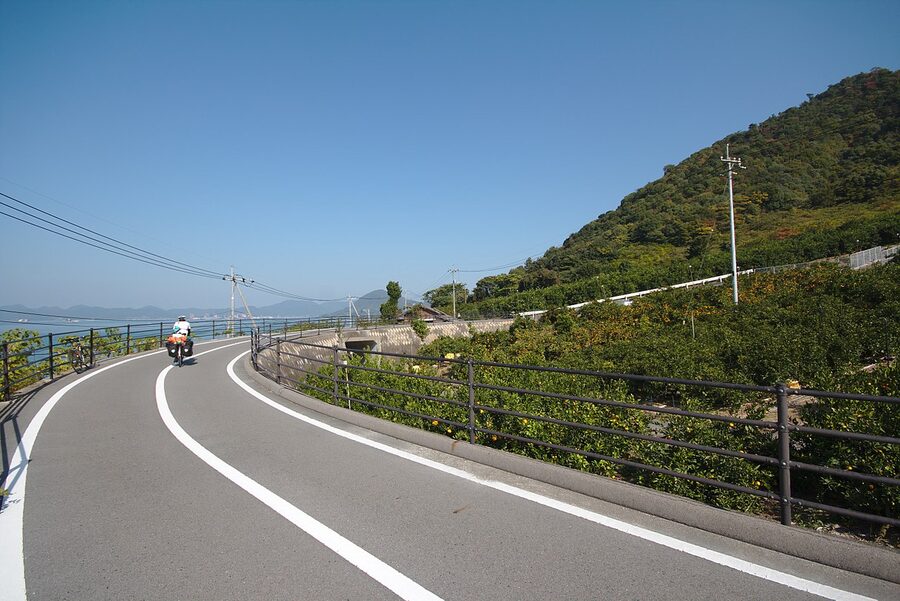
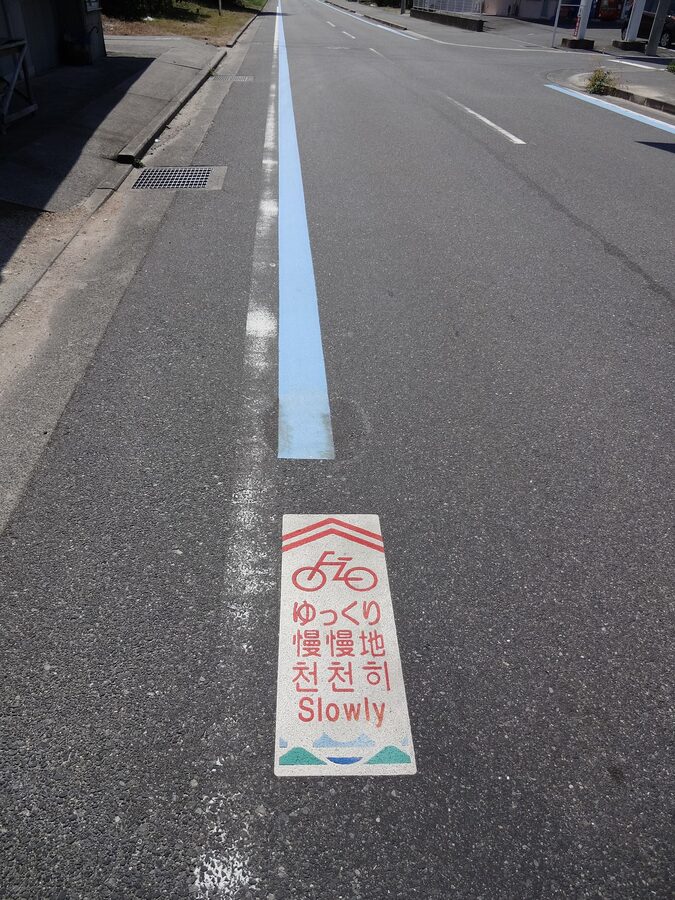
Ride on the left. Stop fully at red lights, even on a deserted island lane. Train-track crossings: stop, check, cross. Stop signs are upside-down red triangles with the kanji 止まれ (tomare), learn the shape. Ride on the road in the left third of the lane in town; on the bridges, ride the dedicated cycle path. The blue line is your guide everywhere.
Beyond the standard route: extensions worth knowing

Once you’ve done the basic route, there’s a network of extensions:
- Tobishima Kaido, from Imabari you can ferry to Okamura island and ride a 7-island chain westward back to Kure on the mainland. About 60 km, less developed for cyclists than Shimanami but improving rapidly. More climbing, fewer crowds, cheaper accommodation.
- Yumeshima Kaido, the smaller bridge-and-ferry chain just east of Shimanami connecting Innoshima to a cluster of even smaller islands (Ikina, Yuge, Sashima). Add a half-day to a one-day if you’ve got the time.
- Outer-island routes on the main route, each of the six islands has a marked outer-perimeter loop that adds 10–30 km of extra riding. Marked with the same blue line system. Ikuchijima’s south coast and Omishima’s south-west loop are the standout extensions if you’ve already done the standard route once.
For the comparison route in central Honshu, the Biwaichi loop around Lake Biwa is the obvious next ride, longer, more inland, and a different kind of test. Most cyclists who did Shimanami first go to Biwa second.
What I’d skip and what I’d add
Skip: the “pirate” museum on Hakatajima unless you read Japanese. The salt-water bath at Mare Grassia on Omishima, it’s fine but not better than a normal sento. Filling up on okonomiyaki at every other stop, it’s the same dish twelve times.
Add: a sunset on Omishima’s western coast, Oyamazumi Shrine even if you’re not a history reader, the Kirosan climb if the weather is clear, a slice of Setoda lemon cake at Setoda Lemon Cake Honpo for the ride home. And a proper hot bath at Onomichi U2 or anywhere in Onomichi after the ride, you will earn it.
Common questions, fast
Can I do it on a normal mama-chari? Yes, but slowly. The cross-bike is ¥0 more expensive on the public scheme, and the difference in ride feel over 70 km is significant. Pick the cross-bike.
Is it safe at night? Yes, but the bridges aren’t lit on the cycle deck. If you’re still on a bridge after sundown, you’ll need lights. Most rental bikes don’t come with usable ones.
Do I need to speak Japanese? No. The route signage is bilingual. Most rental shops have English-speaking staff. Some smaller cafes don’t, but pointing at a menu works fine. Convenience stores have English on the registers.
Can I bring a child? The route is genuinely family-friendly, flat, well-signed, low traffic on the bridge decks. The public rental has children’s cross-bikes (¥1,000 / day) and tandems (¥4,000 / day). I’ve seen 8-year-olds finish the standard route in two days.
What about e-bikes? Available from Shimanami Rental Cycle (¥4,000 e-cross, ¥8,000 sport E-bike per day) and Giant. Strongly recommended if you’re unsure about your fitness or want to do Kirosan without walking. Battery range is comfortably enough for a day’s riding.
For more on rinko-bag rules, train rules, weather windows, and the rest of the practical questions, see the cycling Japan FAQ.
 RoutesTsukuba Kasumigaura Ring Ring: Japan’s 180km lake loop you’ve never heard ofTake the JR Joban Line out of Tokyo Station, change at Tsuchiura, and you can be on the Ring Ring…
 RoutesSazanami Kaido: cycling Hiroshima’s coastal road east of KureForty kilometres in, the road bends inland near Aki-Tsu and the noise drops off all at once. The articulated lorries…
 RoutesKibi-no-michi: 17km of cycling through Okayama’s ancient capitalThe mistake people make on Kibi-no-michi is starting at Okayama Station. The bike-rental desk is hard to walk past, the…