
Reviewed · TOKYO CYCLING TOURS
Tokyo: 3-Hour Bike or E-Bike City Highlights Tour
Tokyo is huge, and this three-hour bike ride gives you a fast, lively introduction without locking you inside a train carriage. You roll from the Commodore Perry statue near Daimon through temples, palace grounds, parks, grand civic buildings, back streets, and Shibuya’s neon core. I like the broad mix of old and new, and I like that guides such as Naoki, Atsu, Kosei, and Rikuu are praised for keeping groups safe while sharing useful local stories.
The main thing to consider is the riding itself. This is not only a sidewalk cruise. You may move between sidewalks and roads, and some parts involve traffic. If you rarely cycle or lack stamina, choose the e-bike. Helmets are not included, so bring ¥1,000 in cash if you want one.
In This Review
- Key points at a glance
- Why a bicycle works so well in central Tokyo
- Starting at Commodore Perry near Daimon
- Zojo-ji and Shiba Park: Tokyo’s calm opening
- Hibiya Park and the Imperial Palace
- Tokyo Station and Ōte-mon Gate
- Chidorigafuchi and Akasaka Palace
- The National Stadium and quieter side streets
- Cat Street, Shibuya Crossing, and the finish
- Choosing between the cross bike and e-bike
- Safety, traffic, weather, and comfort
- What the $45 price really buys you
- Who should book this ride
- Should you book the Tokyo bike tour?
- FAQ
- How long is the Tokyo bike tour?
- Where does the tour meet?
- Where does the tour finish?
- Are e-bikes available?
- Are helmets included?
- What is included in the price?
- Is the tour suitable for children?
- Can I cancel the booking?
Key points at a glance
- A 15 to 20 kilometer city sampler: You cover a surprising amount of Tokyo in three hours, with stops at temples, parks, palace sites, Aoyama, and Shibuya.
- A useful choice of bikes: Bianchi and Fuji cross bikes are offered, along with e-bikes for riders who want help on longer stretches and hills.
- Guides who shape the experience: English and Japanese-speaking guides, including Naoki, KJ, Atsu, and Kosei, add stories and keep checking on the group.
- A strong first-day activity: The route helps you understand how Tokyo’s central districts fit together before you tackle them by train and on foot.
- A real city ride: You will ride near traffic at times, so confidence on a bicycle matters more than simply being able to balance.
- Good value at $45: The price includes the guide, bicycle, insurance, local commentary, and a small pouch, but not a helmet or child seat.
Why a bicycle works so well in central Tokyo
Tokyo’s rail system is excellent, but trains show you only the stations and the tunnels between them. On a bicycle, you notice the shift from a temple wall to an office district, from a quiet park to a shopping street, and from a formal government building to the bright signs of Shibuya.
The route covers a lot of ground. Depending on the exact group and route, you may ride about 15 to 20 kilometers. That sounds substantial, but the pace is broken up by frequent photo stops and short guided visits. You are not pedaling hard for three straight hours.
I especially like this format for a first or second day in Tokyo. It gives you a mental map of several central districts. Afterward, you can return to the places that caught your eye, perhaps by subway, perhaps on foot.
The ride also has a social advantage. Groups may be private or small, and larger departures can be split into smaller riding groups. That makes it easier to hear the guide and helps the group move through city streets without becoming a long bicycle train.
A few more Tokyo tours and experiences worth a look
Starting at Commodore Perry near Daimon
The meeting point is near the statue of Commodore Perry, about a three-minute walk from Daimon Station’s A6 exit. This is a practical starting point because the area sits close to Shiba Park and Zojo-ji Temple, the first major stop.
Allow enough time to find the statue and meet the guide. The tour provider is Tokyo Rental Bicycle, and the guides speak English and Japanese. Names that appear frequently among the guiding team include Naoki, Atsu, Kosei, Rikuu, KJ, Kay, and Keiji.
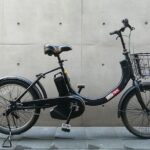
You receive a cross bike from Bianchi or Fuji, depending on the selected option and availability. E-bikes are available as a separate choice. A small pouch mounted on the bicycle holds a phone, wallet, or key, which is a modest but useful touch when you do not want a bag bouncing around while you ride.
Bike insurance is included. Helmets cost an additional ¥1,000 each and must be paid in cash on site. A child seat costs ¥3,000, but the tour is not suitable for children under 12, so this option has limited use for most families.
Zojo-ji and Shiba Park: Tokyo’s calm opening
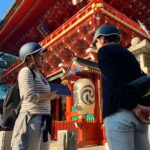
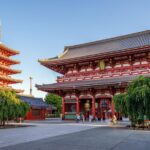
Zojo-ji Temple gives the tour an immediate sense of old Tokyo. The temple is associated with the Tokugawa shoguns, and its setting beside Shiba Park and Tokyo Tower makes it one of the city’s most recognizable historic scenes.
The planned stop lasts about 15 minutes. That is enough time for a guided explanation, photographs, and a quick look around, but not enough for a slow temple visit. Think of it as an orientation stop rather than a full temple tour.
This early pause also lets the group settle into the riding rhythm. You can check your seat, gears, water, and pace before the route becomes busier. If you want a long, quiet temple experience, return another day. If you want context before moving on, this works well.
Hibiya Park and the Imperial Palace
The short stop at Hibiya Park provides a change of pace from the temple grounds. The park sits among government offices and major roads, yet it offers open space and greenery in the middle of central Tokyo.
The Imperial Palace receives a longer visit of about 15 minutes. You should expect photo opportunities and an explanation from the guide rather than entry into the palace itself. The outer areas are the focus, and the value comes from seeing the scale and position of the imperial compound within modern Tokyo.
This is one reason the bicycle route is useful. The palace area is spread out, and a ride lets you connect its different edges with the city around it. You get a sense of how the palace grounds divide the central business districts, something that can be harder to grasp when you arrive at one train station and leave from another.
Tokyo Station and Ōte-mon Gate
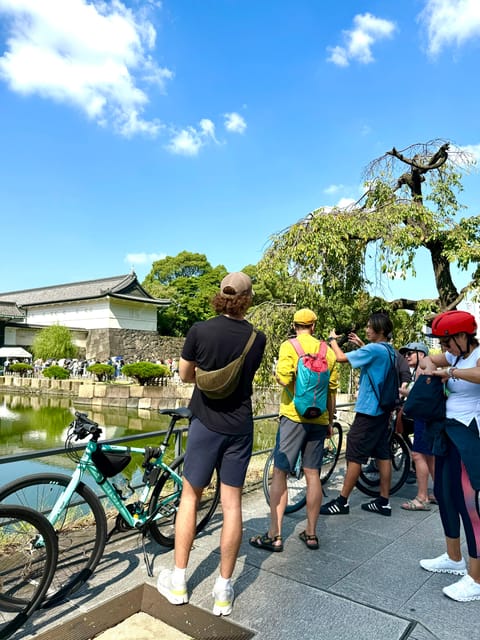
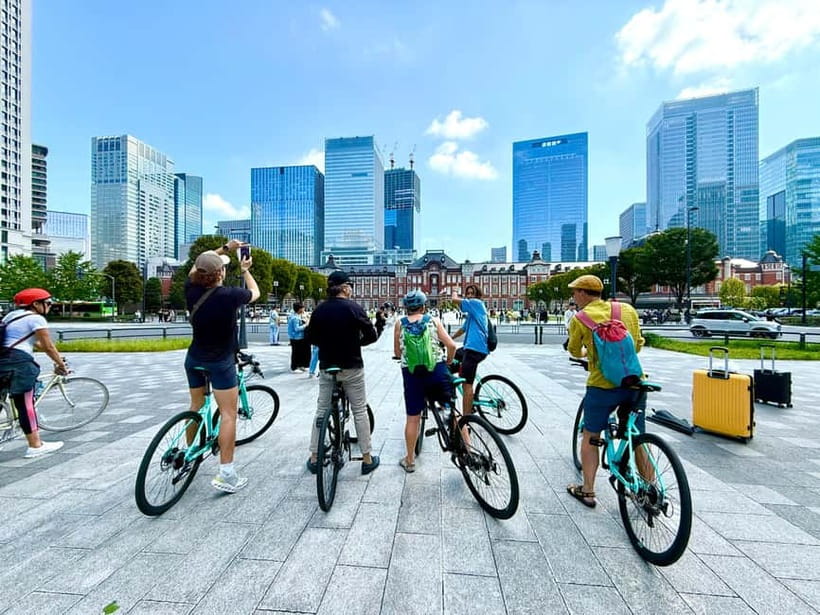
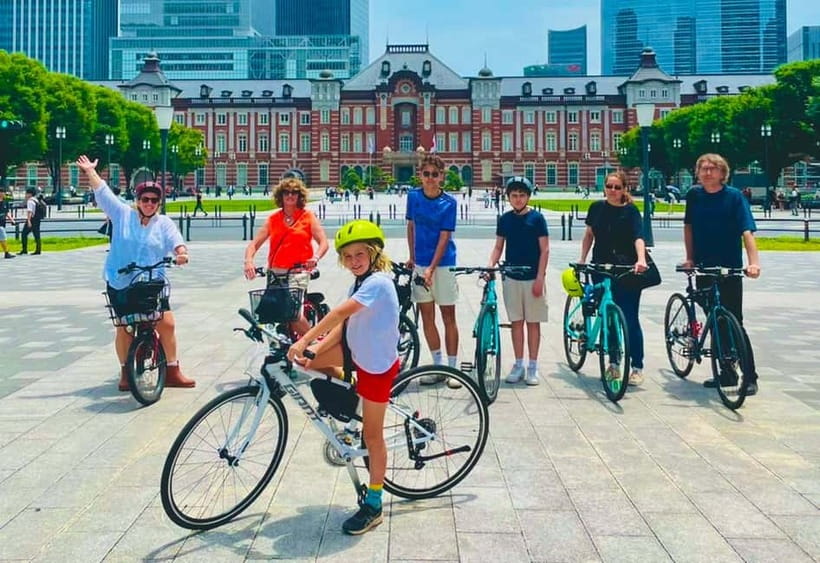
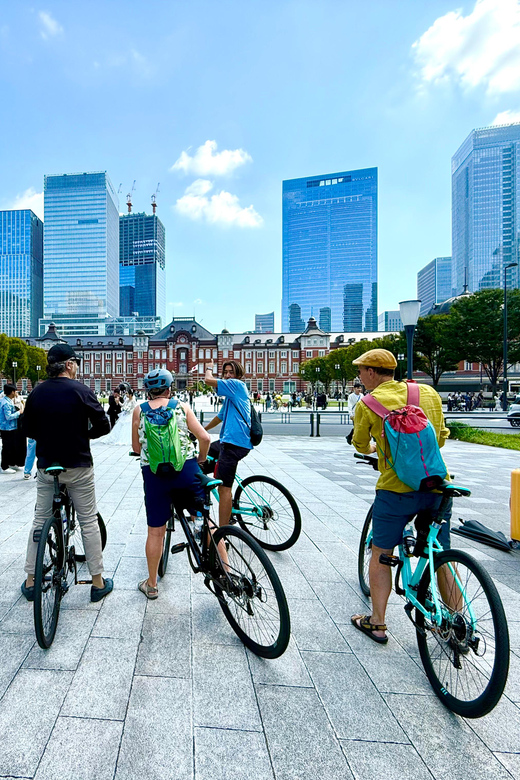
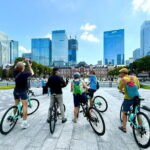
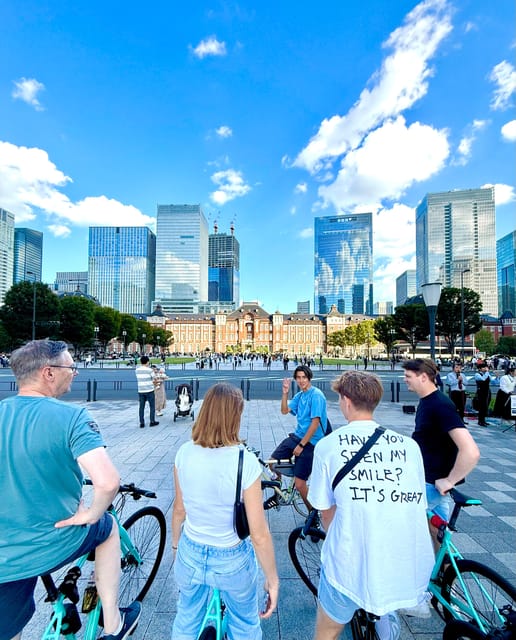
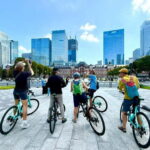
Tokyo Station is one of the route’s best architecture stops. Its red-brick exterior gives you a striking contrast with the glass towers around it. The planned visit lasts about 10 minutes, enough for photographs and a quick look at the station district.
Next comes Ōte-mon Gate, one of the traditional entrances to the Imperial Palace grounds. The five-minute stop is brief, but the gate helps connect the palace’s defensive past with the city’s present-day office core.
Do not expect long time at every landmark. The appeal here is the accumulation of impressions. You see several important places, hear a short explanation, and keep moving before the day becomes slow.
A few more Tokyo tours and experiences worth a look

Chidorigafuchi and Akasaka Palace
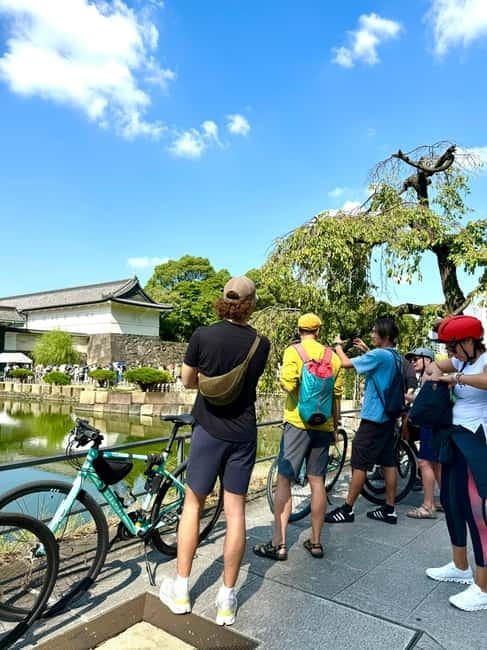
Chidorigafuchi is scheduled as a five-minute break and photo stop. The area is especially attractive when seasonal flowers are in bloom, though the experience naturally depends on the time of year. It is a useful pause after several central-city sights.
The route then reaches the State Guest House Akasaka Palace, with around 10 minutes for photographs. Its formal European-style architecture is a sharp contrast to Zojo-ji’s Buddhist setting and Tokyo’s compact commercial streets.
These stops show how varied central Tokyo can be within a short distance. The drawback is that the schedule leaves little room for a full visit inside either site. You are getting an exterior-focused city tour, not a series of museum admissions.
The National Stadium and quieter side streets
The New National Stadium provides another modern landmark and a reminder of Tokyo’s recent sporting history. The stop lasts about 10 minutes and gives you time to look at the building and hear the guide’s explanation.
After that, the itinerary includes a lesser-known stop described simply as a local discovery. The exact location may vary, and that flexibility is part of the appeal. Guides can take you away from the headline sights and show you a corner of Tokyo that you might not choose on your own.
The route also includes Aoyama St. Grace Cathedral for a very brief sightseeing and photo stop. You will not have time for a detailed visit, but the building adds another architectural note before the ride reaches the more commercial western districts.
Several people who rode this route particularly enjoyed the back streets. That is where a guided bicycle tour earns its price. A train can bring you to Shibuya, but it will not give you the same view of the streets between the major districts.
Cat Street, Shibuya Crossing, and the finish
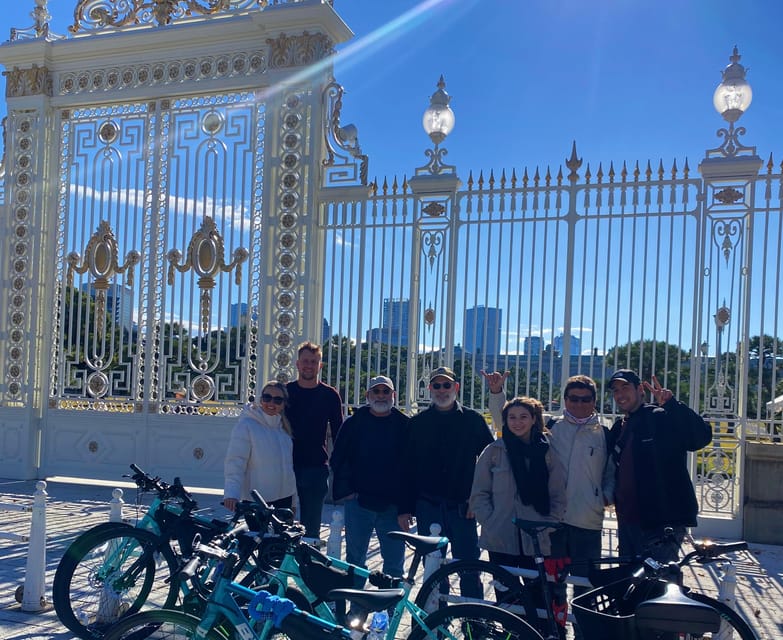
Cat Street offers a short look at one of Tokyo’s best-known youth-fashion and shopping areas. The five-minute stop is more about atmosphere and location than shopping. If you see a store you want to explore, make a note of it and come back later.
Shibuya Crossing is the route’s big urban finale. The planned stop lasts about 10 minutes, with time for photographs and commentary. The crossing is loud, bright, and crowded compared with the calmer palace and temple sections. A bicycle makes the approach memorable because you experience the change in mood block by block.
Tower Records Shibuya follows as a three-minute photo and sightseeing stop. The tour finishes at the Bell of Peace. The final location lets you continue into Shibuya afterward, though the activity itself does not include a longer shopping or nightlife visit.
Some departures have finished in the evening, when Shibuya is especially bright. If your starting time allows that, the final section can feel quite different from a morning ride. The published schedule says to check availability for start times, so do not assume every departure has the same light or atmosphere.
Choosing between the cross bike and e-bike
The standard option uses a quality cross bike, with Bianchi and Fuji models offered. You need to be comfortable shifting gears, controlling the bicycle, and riding for several hours with breaks.
Choose the e-bike if you do not cycle often, have limited stamina, or simply want to save energy for sightseeing afterward. The route includes longer stretches and some hills, and an e-bike can make those sections much easier. It is not only for older riders. One useful reason to choose it is that you can pay more attention to the city instead of worrying about keeping up.
The standard bicycle is a good fit for regular cyclists who want a little exercise. The e-bike is the safer practical choice for casual riders, but it does not remove the need to ride confidently. You still steer, brake, and share space with traffic.
One bike had a gear problem during a ride, while most equipment was reported to be in good working order. Tell the guide promptly if a gear slips or the bike feels wrong. Do not wait until you are far into the route.
Safety, traffic, weather, and comfort
The guides focus on safety, check the group’s pace, and may divide larger groups into smaller units. Several guides are praised for watching the riders closely and helping with photographs. That support matters in a city where the riding surface can change from sidewalk to road.
Still, you should not book this assuming the entire tour uses quiet cycle paths. One rider specifically found the road sections more stressful than expected, and another advised against the experience if you are not comfortable riding in traffic. Read that plainly: basic bicycle skills are not enough if road riding makes you nervous.
Wear comfortable clothes and shoes, and bring water. Tokyo can be hot, especially in summer. Rain does not automatically make the tour impossible, but you will be more comfortable with waterproof clothing. A practical tip is to buy a poncho at FamilyMart or 7-Eleven if rain is forecast.
A quick 7-Eleven stop may be included during some rides. It can be useful for water or a small snack, but it should not be treated as a guaranteed convenience-store break on every departure.
The tour is not suitable for children under 12, pregnant women, people with back problems, or anyone unable to ride a bicycle. A helmet is optional at an extra charge, but I would bring the cash and wear one, especially if you are not accustomed to city riding.
What the $45 price really buys you
At $45 per person, this is a strong value if you want a broad first look at Tokyo. The fee includes the bicycle, guide, local stories, bike insurance, and the small handlebar pouch. You are paying not just for a rental, but for a route that links districts that would take more planning to connect independently.
The value is strongest for first-time visitors with limited time. In three hours, you can see a temple, palace surroundings, historic gates, formal buildings, parks, Aoyama, Cat Street, and Shibuya. You will not explore each place in depth, but you will learn where they are and which ones deserve a return visit.
The extras are modest but worth budgeting for. Helmets are ¥1,000 each, payable in cash, and a child seat costs ¥3,000. The activity allows free cancellation up to 24 hours before departure and offers reserve-now, pay-later booking, which helps if your Tokyo schedule is still shifting.
Who should book this ride
I would choose this tour if you want orientation, local conversation, and a way to cover a lot of ground quickly. It suits couples, friends, families with children aged 12 and older, and solo visitors who want company without committing to a full-day group excursion.
It is also a good match for people who find train maps tiring during their first hours in Tokyo. Guides can point out places to revisit and answer questions about local customs, food, neighborhoods, and transport. Several guides, including Naoki and KJ, are praised for being friendly and open to conversation, which adds a personal edge to the sightseeing.
I would skip it if you dislike riding beside traffic, have back trouble, cannot cycle steadily, or want long visits inside temples and historic buildings. The route is active, the stops are short, and the schedule favors variety over depth.
Should you book the Tokyo bike tour?
Book it early in your Tokyo stay if you are a confident cyclist and want to get your bearings fast. Choose the e-bike if you rarely ride or want a relaxed pace, but do not confuse electric assistance with a traffic-free outing.
For $45, the tour gives you an efficient mix of landmarks, side streets, exercise, and conversation with an English-speaking local guide. Bring water, comfortable clothes, and ¥1,000 cash for a helmet. If the idea of riding from Zojo-ji to Shibuya sounds more exciting than spending another afternoon underground, this is a smart way to meet Tokyo.
FAQ
How long is the Tokyo bike tour?
The activity lasts three hours. The route may cover roughly 15 to 20 kilometers, depending on the group and route conditions.
Where does the tour meet?
Meet the guide near the Statue of Commodore Perry. It is about a three-minute walk from Daimon Station’s A6 exit.
Where does the tour finish?
The tour finishes at the Bell of Peace, after stops around Shibuya including Cat Street, Shibuya Crossing, and Tower Records Shibuya.
Are e-bikes available?
Yes. You can select an e-bike option when booking. The e-bike is recommended if you do not cycle often, are uncomfortable with longer distances, or do not have much stamina.
Are helmets included?
No. Helmets are available on site for ¥1,000 per unit, payable in cash.
What is included in the price?
The price includes an English-speaking guide, a Bianchi or Fuji cross bike or an e-bike depending on your selection, local stories and insights, a small bike pouch, and bike insurance.
Is the tour suitable for children?
Children under 12 are not permitted. The activity is also not suitable for pregnant women, people with back problems, or people who cannot ride a bike.
Can I cancel the booking?
You can cancel up to 24 hours in advance for a full refund. Reserve-now, pay-later booking is also available.
More Cycling Tours in Tokyo
More E-Bike Tours in Tokyo
More Tokyo Cycling Tours in Tokyo
More tours in Tokyo we've reviewed



Tokyo Cycling Tours, compared.
 ★ 5.0Tokyo Great Cycling TourFrom $99
 ★ 5.0Tokyo Top Highlights 3h Guided E-bike TourFrom $63
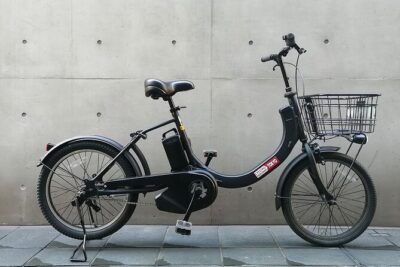 ★ 5.03h Tokyo E-Bike Tour: Hidden Gems, and Local Life with guideFrom $63
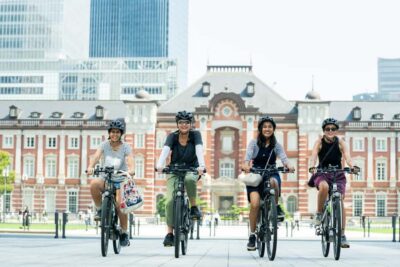 ★ 4.83-hour Guided E-Bike Tour of the City’s Hidden GemsFrom $65
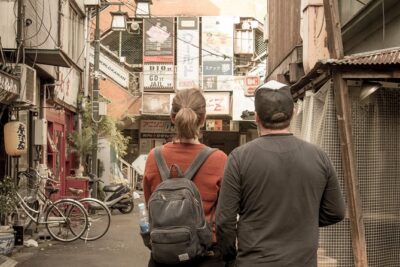 ★ 5.0Tokyo West-Side Cycling & Food TourFrom $99
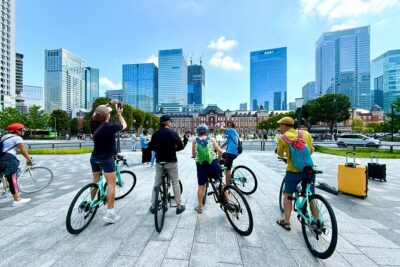 ★ 5.03-Hour Bike/E-Bike Tour of the City’s HighlightsFrom $63
 ★ 5.0Small Group Cycling Tour in TokyoFrom $66
 ★ 5.03-Hour Tokyo Private E-Bike Tour Starting from Your HotelFrom $145
Browse the lists this tour appears in