
Reviewed · TOKYO CYCLING TOURS
Tokyo: 3-Hour E-Bike Tour of the City’s Riverside Areas
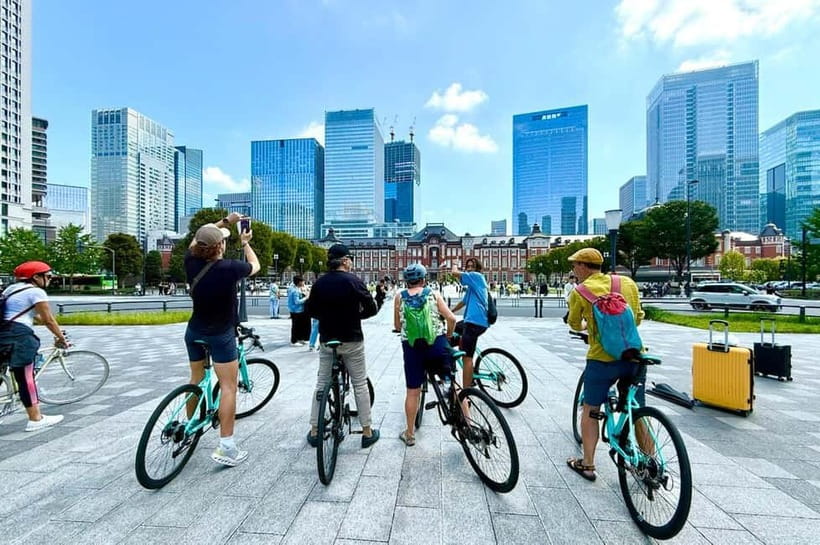
Tokyo’s best cycling comes when the skyscrapers thin out and old neighborhoods take over. This three-hour e-bike ride links Ginza, the former fish-market district of Tsukiji, Monja Street, temples, and Kiyosumi Gardens without asking you to tackle the city on foot.
I like the small group size, capped at eight, and the route’s mix of famous names and less obvious streets. I also like that the electric bikes make a long city ride manageable, while the guide adds useful local context at each stop. The main catch is traffic around Ginza, which can feel less relaxed than the quieter riverside sections.
In This Review
- Key points before you book
- Why this route shows you a different Tokyo
- Starting beside Hibiya Park
- Ginza and Kabuki-za: Tokyo’s polished center
- Tsukiji Hongan-ji and the outer market
- Tsukishima Monja Street and Sumiyoshi Jinja
- Kiyosumi Gardens: the quietest pause
- Fukagawa Fudō-dō and the finish
- What the three-hour pace feels like
- Is $78 a fair price?
- Who should book this ride?
- Final call: book it for the route, not just the bikes
- FAQ
- How long is the Tokyo e-bike tour?
- Where does the tour begin?
- Where does the tour finish?
- What languages does the guide speak?
- How many people are in the group?
- Is the Kiyosumi Gardens entrance fee included?
- Is entry to Fukagawa Fudō-dō included?
- Are food and drinks included?
- What should I bring?
- Who cannot join the tour?
Key points before you book
- A cross-city route on two wheels: Ride from Hibiya Park through Ginza, Tsukiji, Tsukishima, and eastern Tokyo.
- The old fish-market district: Stop at Tsukiji Hongan-ji and Tsukiji Outer Market, with time for snacks at your own expense.
- A small group of up to eight: The guide can keep the pace more personal than a large bus or walking tour.
- Electric bikes with baskets: The motor helps with a three-hour ride, and you have a place for a small bag.
- Kiyosumi Gardens is included: Your entry fee covers one of Tokyo’s most pleasant traditional gardens.
- A temple finish: The tour ends at Fukagawa Fudō-dō, where optional entry costs ¥1,000 in cash.
Why this route shows you a different Tokyo
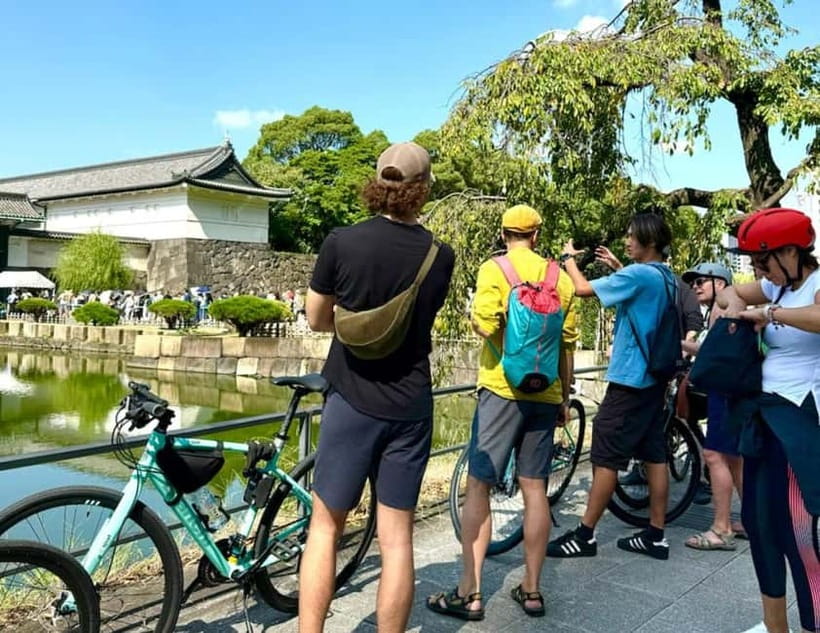
This is not a landmark checklist done from a coach window. You move through several sides of Tokyo in a single morning or afternoon: polished Ginza, old Tsukiji, the food-focused streets of Tsukishima, and the quieter temple and garden districts farther east.
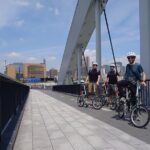
I like the way the route follows the city’s waterways and older neighborhoods. Tokyo is huge, and public transport can get you almost anywhere, but a train usually leaves you underground or inside a station. On a bike, you notice small shrines, low-rise streets, bridges, and the change in mood from one district to the next.
The electric assistance matters. You still pedal, but the bike takes some strain out of the distance. That makes this a better fit for a casual rider than a standard road-bike tour. You still need to be comfortable riding in city conditions, though. This is not an entirely traffic-free outing.
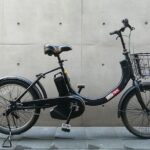
The tour uses high-quality road bikes with baskets and includes bike insurance. Guides speak English or Japanese, and the small group limit gives the ride a more personal feel. Guides named in past outings include Nooki, Casey, Naoki, and Show, but your guide will depend on the date.
A few more Tokyo tours and experiences worth a look
Starting beside Hibiya Park
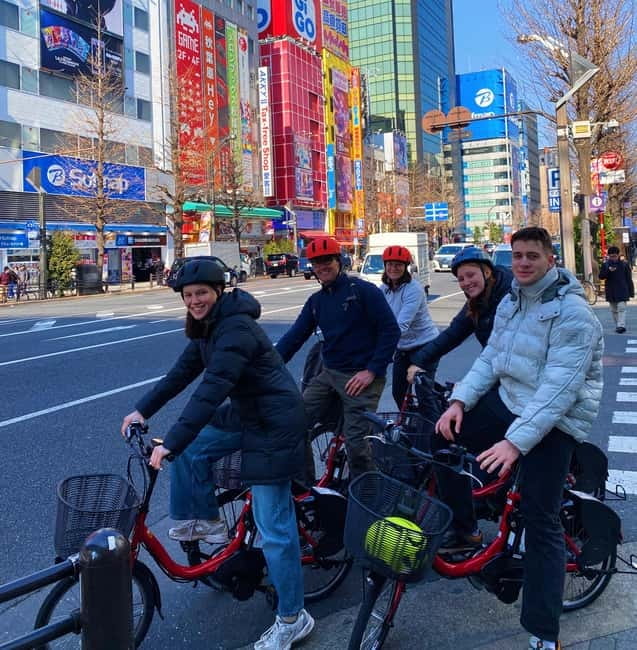
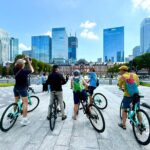
Meet at the right side of the kiosk in Hibiya Park, at 1-3 Hibiyakōen. Arrive about 10 minutes early so you have time to meet the guide and get ready without cutting into the riding time.
Hibiya is a useful starting point because it places you near central Tokyo without beginning in one of the city’s tightest commercial streets. It also gives the group a clear point to gather before heading toward Ginza.
Wear comfortable clothes and shoes you can pedal in. Bring water, sunscreen, and sunglasses. Food and drinks are not included, so carry water from the start, especially in warm weather.
The tour is not suitable for children under 12, pregnant women, people with back problems, or anyone who cannot ride a bike. Those limits are worth taking seriously. An electric bike makes the distance easier, but it does not remove the need to balance, steer, brake, and pay attention to traffic.
Ginza and Kabuki-za: Tokyo’s polished center
The first major section takes you into Ginza, one of Tokyo’s best-known shopping and business districts. Expect modern storefronts, broad avenues, and a very different feel from the older neighborhoods later in the ride.
You have about 10 minutes for a guided stop in Ginza, followed by another 10 minutes at Kabuki-za. The Kabuki theater’s distinctive exterior gives you a strong photo stop, even if you are not attending a performance.
This is also the part of the ride that requires the most care. The route passes through traffic in Ginza, and that can feel more demanding than the calmer streets near the rivers and temples. One useful benefit of riding with a guide is that you are not trying to work out the route while watching every turn.
I would not choose this tour if you want three hours of completely quiet cycling. I would choose it if you want to see how Tokyo shifts between grand commercial avenues and older local districts. The contrast is one of the route’s strengths.
Tsukiji Hongan-ji and the outer market
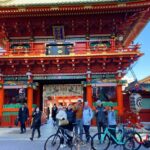
From Ginza, the ride heads toward Tsukiji, the former wholesale fish-market area. Tsukiji Hongan-ji is the first stop here, with around 15 minutes for a visit and explanation.
The temple is an unusual sight in Tokyo. Its exterior does not look like a simple neighborhood shrine, and the stop gives the guide room to explain more about the place and its role in the district. You do not need to make this a long formal temple visit. It works well as a short pause during the ride.
Next comes Tsukiji Outer Market, with about 20 minutes. This is one of the most useful stops for anyone who wants a food break, since you can buy snacks and drinks on your own. Food is not included, so budget separately if you want to sample something.
Twenty minutes is enough for a look and a quick bite, but not enough for a slow market crawl. If Tsukiji is a top priority for you, keep your expectations in check. The market visit is part of a wider cycling route, not a dedicated food tour.
Still, this stop adds something a bus or subway ride cannot. The bike takes you directly between districts, and the market becomes one piece of a larger picture of Tokyo’s waterfront past and present.
Tsukishima Monja Street and Sumiyoshi Jinja
The route continues to Tsukishima Monja Street, where you have roughly 10 minutes. Tsukishima is linked with monjayaki, a local Tokyo specialty cooked on a hot griddle. The short stop is mainly for orientation and photos rather than a full meal, so do not expect time for an extended restaurant visit.
This is a good example of the tour’s approach. You get a quick introduction to a neighborhood known for a particular local food and identity, then keep moving. If you prefer long meals and unhurried sightseeing, the pace may feel brisk. If you want to cover more ground, it is useful.
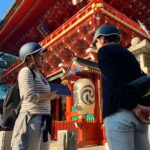
At Sumiyoshi Jinja, another 10-minute stop gives you a chance to see a local Shinto shrine. The guide can help you understand what you are looking at, which is helpful when shrine features and customs are unfamiliar.
The appeal here is not one blockbuster sight. It is the steady change in setting. Tokyo can feel like an endless wall of buildings when you stick to major stations. This route gives you smaller points of interest that are easy to miss from a train.
A few more Tokyo tours and experiences worth a look
Kiyosumi Gardens: the quietest pause
Kiyosumi Gardens gets the longest stop so far, around 25 minutes, and the entrance fee is included. That makes it one of the strongest value points in the tour.
The garden gives you a break from traffic and a chance to slow down. Traditional gardens are best appreciated at an easy pace, and 25 minutes allows you to look around without turning the visit into a rushed photo stop. You might find this is the point where the tour feels most restful.
The included admission also removes one small decision during the outing. You do not need to wonder about an extra ticket or decide whether the stop is worth the cost once you arrive.
I would especially value this section after several days in Tokyo. The ride reaches places that can feel fresh even if you have already visited the major central districts. One past outing included both the fish market and a garden, a useful combination if you want food culture and a calmer traditional setting in the same experience.
Fukagawa Fudō-dō and the finish
The final stop is Naritasan Fukagawa Fudō-dō, also called the Tokyo branch of Fukagawa Fudō-dō. You have about 20 minutes for a guided visit, and the tour ends here.
Entry to the temple is optional and costs ¥1,000 per person, payable in cash. You do not need to enter to finish the tour, so bring the cash only if you want to see the inside.
Ending here works well because the route finishes in a district with a different pace from central Ginza. The temple gives the ride a clear cultural endpoint instead of simply stopping on an ordinary street.
The end point also means you should plan your next move before setting out. The activity does not return you to Hibiya Park. Make sure you are comfortable finishing at Fukagawa Fudō-dō and check your onward plans in advance.
What the three-hour pace feels like
The stop times add up to about two hours, leaving roughly one hour for cycling between locations. That is a useful way to understand the outing. This is not a race, but it is not a slow walking tour on bikes either.
You will keep moving through the city, stopping for short explanations, photos, and brief visits. The electric assistance helps make that rhythm comfortable for many casual riders. You still need to stay alert, especially through Ginza and at street crossings.
The group limit of eight is another practical advantage. A small group is easier to keep together, and the guide has a better chance of answering questions or adjusting the pace. The experience may still feel more structured than riding alone, but it should not have the scale of a large sightseeing departure.
Past guides have been praised for being friendly, fun, and well informed. Casey was singled out for taking good care of the group, while Nooki, Naoki, and Show were also named positively. You should treat those names as examples rather than a guarantee for your date.
Is $78 a fair price?
At $78 per person, this tour is not the cheapest way to see Tokyo. You could visit many of these districts independently by train and on foot for less, especially if you skip paid garden or temple entry.
The value comes from combining several benefits in one outing:
- An electric bike and basket
- A local English or Japanese-speaking guide
- Bike insurance
- Entry to Kiyosumi Gardens
- A small group capped at eight
- Route planning through districts that take more effort to connect independently
I think the price is fair if you want an organized ride and local explanation. It is less compelling if you already know Tokyo’s streets, feel confident cycling alone, and mainly want to reach Tsukiji or Kiyosumi Gardens.
The tour can also save time. Instead of planning separate train rides between Ginza, Tsukiji, Tsukishima, and eastern Tokyo, you follow one continuous route. That convenience is a real part of the price.
Food and drinks are extra, and the ¥1,000 temple entry is optional. Add a little spending money for Tsukiji, plus water if you do not bring your own.
Who should book this ride?
I would recommend it to an active adult who can ride a bike comfortably and wants more than Tokyo’s standard central sights. It is particularly good if you have already spent several days in the city and want to reach quieter areas without designing your own route.
It also suits friends and families with children aged 12 or older, provided everyone can cycle confidently. The e-bikes help, but this is still a road-based city experience.
You may want to choose another activity if you have back problems, are pregnant, cannot ride, or dislike cycling near traffic. You should also think twice if your main goal is an extended Tsukiji food crawl. The market stop is useful, but brief.
The tour is offered in English and Japanese. Free cancellation is available up to 24 hours before the start, and the reserve-now, pay-later option can help if your Tokyo schedule is still shifting.
Final call: book it for the route, not just the bikes
I would book this tour for its route and range. In three hours, you move from Hibiya and polished Ginza to Tsukiji’s food district, local shrine neighborhoods, a traditional garden, and a temple finish. That is a lot of Tokyo without spending the whole day underground or following a standard coach circuit.
The best reason to book is simple: you want to see real everyday districts between the famous sights, with a guide to explain what you are passing. The main reason to skip it is equally clear: Ginza traffic and a steady cycling pace may not suit you.
Bring water, arrive early, keep some cash for snacks and optional temple entry, and expect short stops rather than long visits. If that sounds like your kind of morning or afternoon, $78 buys a practical and pleasantly different look at Tokyo.
FAQ
How long is the Tokyo e-bike tour?
The tour lasts three hours.
Where does the tour begin?
Meet at the right of the kiosk in Hibiya Park, at 1-3 Hibiyakōen.
Where does the tour finish?
The tour finishes at Fukagawa Fudō-dō, also known as Naritasan Fukagawa Fudō-dō or the Naritasan Tokyo branch temple.
What languages does the guide speak?
The tour is available with an English-speaking or Japanese-speaking guide.
How many people are in the group?
The group is limited to eight participants.
Is the Kiyosumi Gardens entrance fee included?
Yes. Admission to Kiyosumi Gardens is included in the tour price.
Is entry to Fukagawa Fudō-dō included?
No. Entry is optional and costs ¥1,000 per person, payable in cash. You can finish the tour without entering.
Are food and drinks included?
No. Food and drinks are not included. You can bring water and purchase snacks at Tsukiji Outer Market.
What should I bring?
Bring comfortable shoes, comfortable cycling clothes, water, sunscreen, and sunglasses.
Who cannot join the tour?
The tour is not suitable for children under 12, pregnant women, people with back problems, or people who cannot ride a bike.
More Cycling Tours in Tokyo
More E-Bike Tours in Tokyo
More Tokyo Cycling Tours in Tokyo
More tours in Tokyo we've reviewed

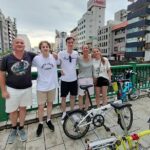
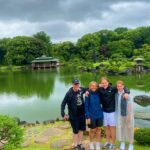
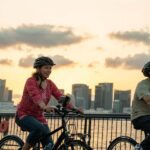
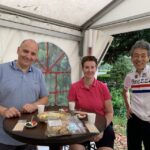

Tokyo Cycling Tours, compared.
 ★ 5.0Tokyo Great Cycling TourFrom $99
 ★ 5.0Tokyo Top Highlights 3h Guided E-bike TourFrom $63
 ★ 5.03h Tokyo E-Bike Tour: Hidden Gems, and Local Life with guideFrom $63
 ★ 4.83-Hour Bike or E-Bike City Highlights TourFrom $453 hours
 ★ 4.83-hour Guided E-Bike Tour of the City’s Hidden GemsFrom $65
 ★ 5.0Tokyo West-Side Cycling & Food TourFrom $99
 ★ 5.03-Hour Bike/E-Bike Tour of the City’s HighlightsFrom $63
 ★ 5.0Small Group Cycling Tour in TokyoFrom $66
Browse the lists this tour appears in