
Reviewed · TOKYO CYCLING TOURS
Small Group Cycling Tour in Tokyo
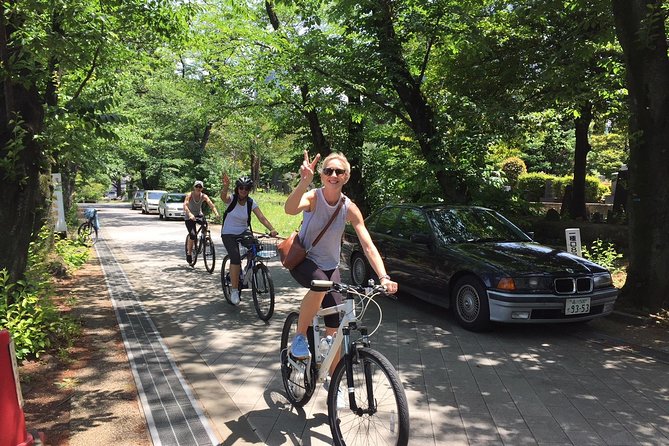
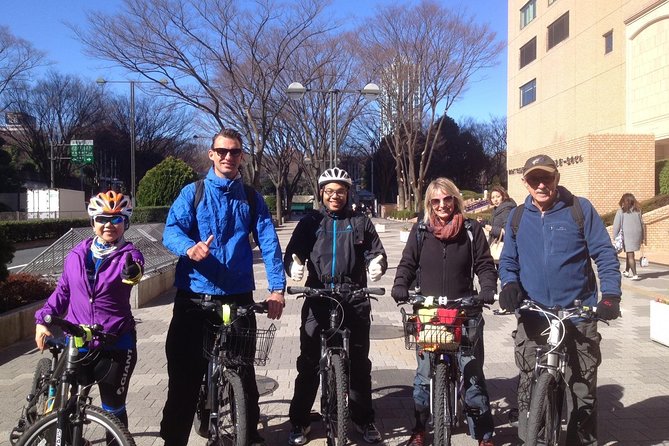
Tokyo makes more sense from a bicycle seat than through a bus window. This ride links Meiji Shrine, Zojo-ji, Shiodome, and the Imperial Palace with quiet residential streets, sidewalks, and main roads, giving you both famous sights and ordinary city scenes.
I like the eight-person limit, which keeps the pace personal and makes it easy to ask questions. I also like the mix of riding and walking, especially the chance to pause at a Shinto shrine, a Buddhist temple, and a high-rise viewpoint over Tokyo Bay.
The main consideration is fitness. The route can cover about 12.5 to 15 miles, or roughly 20 kilometers, with a few inclines. Ask for an e-bike in advance if you are not used to urban cycling, and request a helmet if you want one.
In This Review
- Key points to know before you ride
- Why a bicycle works so well in Tokyo
- Starting in Shinjuku at the Hyatt Regency
- Meiji Shrine: Tokyo’s quiet beginning
- Aoyama Cemetery and Tokyo’s quieter side
- Roppongi Hills: a short modern-city pause
- Zojo-ji and the best Tokyo Tower view
- Shiodome: lunch and Tokyo Bay from above
- The Imperial Palace and the ride back
- How hard is the cycling?
- Safety, traffic, and the city streets
- The guides shape the experience
- Is $66.32 good value?
- Who should book this ride?
- My verdict: a smart first look at Tokyo
- FAQ
- How long does the Small Group Cycling Tour in Tokyo last?
- What sights does the tour visit?
- Is lunch included?
- How many people can join the tour?
- Are electric bikes available?
- What is the cancellation policy?
Key points to know before you ride
- A rare city overview by bike: Cover several major Tokyo sights without spending the entire day underground on trains.
- A maximum of eight people: Small groups allow guides such as Aiko, Noriko, Keco, and Akio to adjust explanations and riding speed.
- A mix of quiet streets and city traffic: You ride on back roads, sidewalks, and main roads, not on a completely separated cycle path.
- The ride may be longer than advertised: The tour is listed at about three to six hours, but the full route can run close to six or seven hours.
- E-bikes are worth considering: The route is mostly flat, but even modest slopes feel different after many miles.
- Lunch is your responsibility: The Shiodome stop includes a lunch break, but food is not part of the $66.32 price.
Why a bicycle works so well in Tokyo
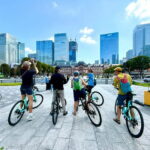
Tokyo is easy to cross by train, but trains give you little sense of how one neighborhood meets the next. On this tour, you move from the wooded grounds of Meiji Shrine to small streets, modern shopping districts, temple courtyards, office towers, and the Imperial Palace moat.
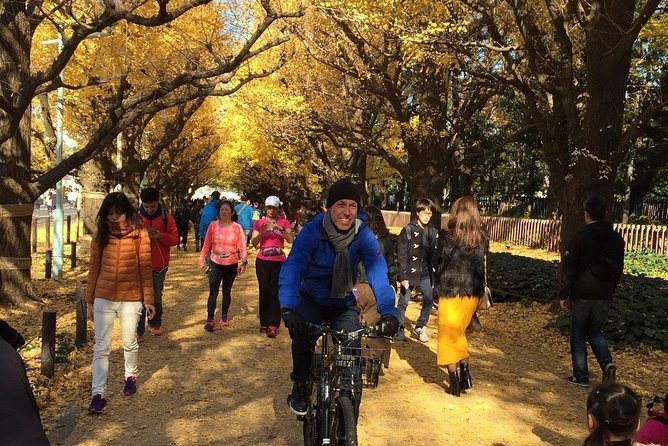
That change of scenery is the real value. You do not simply collect six stops and return to the starting point. You see the spaces between them, including quieter residential streets that are easy to miss when you stay on major avenues.
The pace is leisurely compared with a bus tour, though leisurely does not mean effortless. The group may cover a large part of central Tokyo, and the route uses a mixture of sidewalks, ordinary roads, and main streets. Your guide leads the way and checks the group, but you still need to feel comfortable riding in an unfamiliar city.
The small-group setup helps here. With no more than eight people, the guide can watch the pace more closely and answer questions without addressing a crowd. Some departures may be even smaller, and the experience can feel almost private when numbers are low.
A few more Tokyo tours and experiences worth a look
Starting in Shinjuku at the Hyatt Regency
The tour begins at KakouJapan on the third floor of the Hyatt Regency Tokyo in Nishishinjuku. That is a useful starting point, since Shinjuku is well served by public transportation and puts you near the western side of central Tokyo.
Allow time to arrive at the stated meeting point rather than assuming the bikes will be waiting on a street corner. The activity returns to this same location, which makes the end of the day simple if you are staying in or near Shinjuku.
The bicycle is included in the price. Electric bikes are offered, but you need to request one before the tour. That detail matters because several riders found the e-bike helpful on slopes, while stronger cyclists were comfortable on a standard bicycle.
You may also want to ask for a helmet. One practical note from the experience is that a helmet is an option that should be requested, not something to assume will automatically be provided.
Meiji Shrine: Tokyo’s quiet beginning
Meiji Jingu is the largest Shinto shrine in Tokyo and one of the best places on the route to see how quickly the city can give way to trees and open space. You leave the bicycle for about 30 to 40 minutes and walk through the shrine grounds.
Your guide explains the basic rituals and customs, making this more useful than a quick photo stop. You might also be lucky enough to see a Japanese-style wedding, a particularly memorable sight in the shrine setting.
The stop is a good early introduction because it gives you cultural context before the ride moves into modern districts. It is also a walking break at a sensible point in the day.
Do not expect a long, detailed visit to every corner of the grounds. The schedule has several stops ahead, so Meiji Shrine is an introduction rather than an exhaustive shrine tour.
Aoyama Cemetery and Tokyo’s quieter side
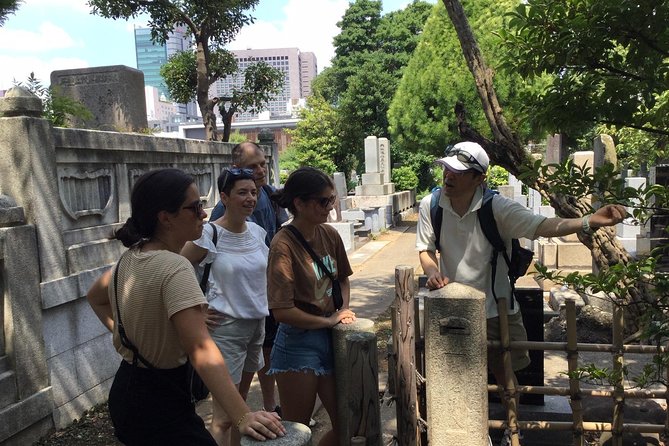
Aoyama Cemetery offers a sharp change in mood. It is a well-known Tokyo cemetery where the graves of historical Japanese figures and Western residents can be found.
The stop lasts around 20 minutes. That is enough to see the setting and hear stories from your guide, but not enough for a lengthy exploration. Its value lies in showing a side of Tokyo that rarely appears on standard sightseeing routes.
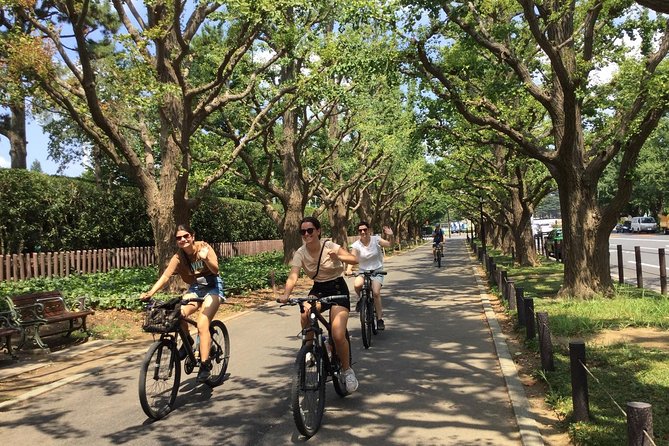
This is also one of the places where the bicycle format pays off. You can reach an area that feels removed from the usual shopping and sightseeing circuit without arranging a separate train ride or walk.
Roppongi Hills: a short modern-city pause
Roppongi Hills brings you back to contemporary Tokyo. This large complex includes shops, cafes, and restaurants, and the scheduled visit lasts about 15 minutes.
That short stop is best treated as a brief orientation rather than shopping time. You can see the contrast between the older cultural sites and Tokyo’s polished commercial districts, then get back on the bicycle.
Roppongi can be busy and visually intense, so do not expect the same quiet mood as Meiji Shrine or Aoyama Cemetery. The quick timing keeps the day moving and prevents the ride from turning into a shopping excursion.
Other cycling tours in Tokyo



Zojo-ji and the best Tokyo Tower view
At Zojo-ji, you trade Shinto for Buddhism. This is the main temple of the Jodo sect in the Kanto region, and the grounds provide one of the route’s clearest views of Tokyo Tower.
The planned stop is about 20 minutes. Your guide explains the temple’s role and Buddhist customs, then gives you time to take in the striking pairing of traditional architecture and the red-and-white tower behind it.
It is an efficient sightseeing stop, but the short visit means you should focus on the main temple grounds and the view. If Tokyo Tower is high on your list, this stop gives you a fine visual encounter, though it is not a visit to the tower itself.
Shiodome: lunch and Tokyo Bay from above
Shiodome is a large redevelopment district filled with modern towers, offices, shops, and restaurants. Here you take a lunch break, with about 50 minutes set aside for the stop.
Lunch is not included, so budget for your own meal. The break is useful not only for food but also for getting off the bicycle before the final section of the route.
After lunch, you go to the top of a building for a view toward Tokyo Bay. The high-floor outlook gives you a different way to understand Tokyo’s scale, after seeing the city close to street level for most of the morning or afternoon.
The exact food choice is not specified, so you should think of this as free time to eat rather than a hosted meal. If you prefer a particular diet or a sit-down restaurant, plan to make your own choice during the available break.
The Imperial Palace and the ride back
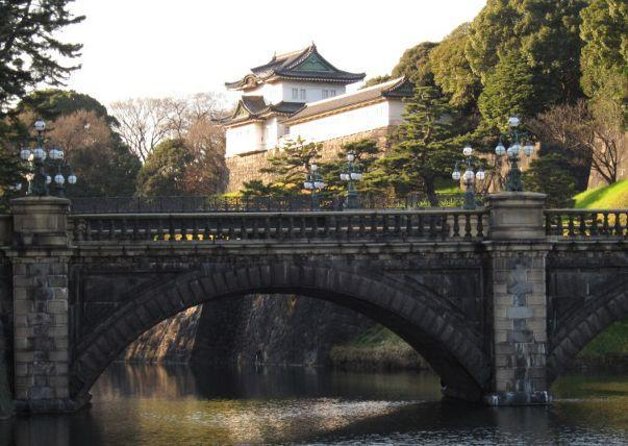
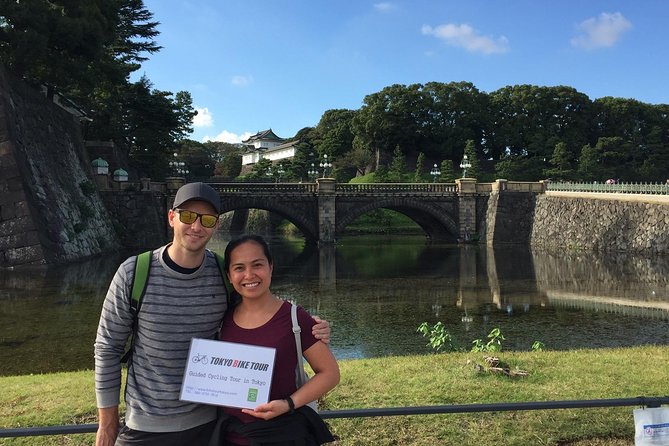
The Imperial Palace is the residence of the Japanese Imperial family. You cycle along part of the moat, then begin the return to Shinjuku.
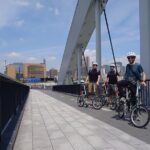
The palace section lasts about 30 minutes, but the approach and return are part of the experience. The moat, broad open spaces, and formal setting offer a strong contrast with the narrow residential streets used earlier in the tour.
You should not expect to enter the Imperial Palace residence itself. The route takes you around part of the outside area, giving you views and historical context from the bicycle.
The return ride is important when judging the physical demand. By this point, you may have already ridden many miles, stopped for several walks, and spent time in the saddle through different kinds of streets. The route is described as mostly flat, with a few hills, but the total distance can still be tiring.
How hard is the cycling?
This is best for someone with a moderate level of fitness. The experience is not presented as a race, and guides ride at the group’s pace, but it is still a substantial day of movement.
The route has been described as roughly 20 kilometers, with some riders covering 12.5 to 15 miles. The hills are limited, yet they can feel demanding if you do not cycle often. One rider who struggled uphill found the guide encouraging and helpful, but that support does not remove the need for basic stamina.
I would choose the e-bike if you are unsure. It is also a smart choice if people in your group have different fitness levels, since it can make the ride more comfortable without changing the sights you see.
Experienced cyclists may find a regular bike perfectly manageable. Several riders who cycle often considered the route easy, but your own fitness matters more than someone else’s standard.
Safety, traffic, and the city streets
The route uses back streets, sidewalks, and main roads. That variety is part of its appeal, but it also means this is not a fully traffic-free cycle tour.
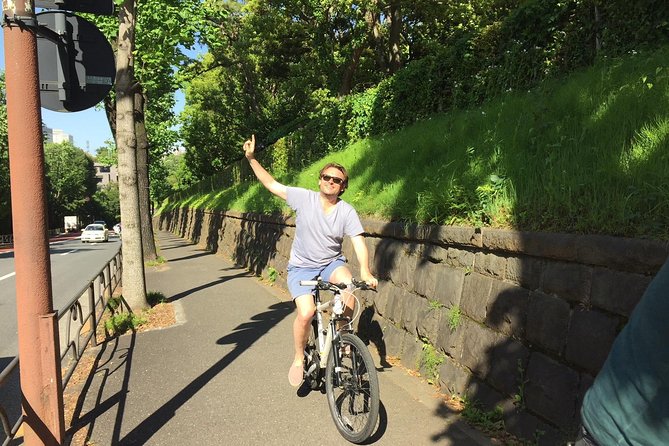
A good guide makes a major difference. Guides named Aiko, Noriko, Keco, and Akio are praised for being attentive, friendly, clear in English, and careful about the group’s pace. Guides also stop for water or snacks and take photos along the way when time allows.
The small group makes it easier to stay together, but you should still follow instructions closely. Tokyo is a large city, and the route includes ordinary urban riding rather than a closed course.
Weather matters. Rain can make the ride less comfortable, and the operator may cancel in poor weather. If that happens, you are offered another date or a full refund.
The guides shape the experience
The route is useful on its own, but the guide turns it into more than a bike rental with directions. At the shrines and temple, you learn how to approach the sites and understand the rituals. Along the route, short stories and local observations help connect the neighborhoods.
Aiko is noted for warm explanations, local insights, and taking photos. Noriko is described as encouraging, attentive, and highly fit on the hills. Keco is praised for clear English and for answering questions, while Akio is remembered for careful pacing and a good sense of humor.
You cannot necessarily select a particular guide, so treat these names as examples of the guiding style rather than a promise of assignment. The important point is that the tour depends heavily on the person leading it, and the guide is expected to manage both the cultural stops and the road portion.
Is $66.32 good value?
At $66.32 per person, the tour offers a bicycle, a guide, a small group, and a route connecting several major areas of Tokyo. Admission is included where the itinerary lists an admission ticket, while the Shiodome viewpoint and Imperial Palace portion are free stops.
The strongest value comes from time saved. You can see Meiji Shrine, Aoyama Cemetery, Roppongi, Zojo-ji, Shiodome, and the Imperial Palace in one organized outing, without repeatedly figuring out train connections or navigating between distant neighborhoods.
The price does not include lunch, and you may want to pay extra for an e-bike if that option carries a separate charge. The information provided confirms that e-bikes are available, but does not state an additional price.
For a short Tokyo visit, I think the cost is reasonable if you enjoy cycling and want a broad first look at the city. If you dislike bikes, tire easily, or mainly want long visits inside each attraction, a walking or car-based tour may suit you better.
Who should book this ride?
I would recommend it to active couples, families with older teenagers, and visitors who want to cover a lot of ground without spending the whole day on public transportation. It also suits people who enjoy seeing ordinary neighborhoods between famous sights.
The route works particularly well early in a Tokyo visit. It gives you a sense of the city’s scale and helps you identify places you may want to revisit later, such as Meiji Shrine, Roppongi, or the Imperial Palace area.
It is less suitable for anyone expecting a gentle spin around a park. You need moderate fitness, comfort on city streets, and enough flexibility for a long day. If your group includes mixed abilities, request e-bikes ahead of time.
The tour requires a minimum number of participants, so a departure can be canceled if that number is not reached. You can cancel for a full refund up to 24 hours before the start time. Inside 24 hours, changes and refunds are not accepted.
My verdict: a smart first look at Tokyo
Book this tour if you want Tokyo in broad strokes: shrine, cemetery, commercial district, temple, bay view, palace moat, and the quieter streets linking them. The best part is not any single stop. It is the changing view from the saddle.
Choose an e-bike if you are uncertain about the distance, request a helmet, and reserve time for a real lunch break at Shiodome. With those points handled, this is a lively and practical way to get your bearings while seeing parts of Tokyo that a bus or train would pass by.
FAQ
How long does the Small Group Cycling Tour in Tokyo last?
The tour is listed as approximately three to six hours. The full route can take close to six hours or longer, depending on the group and pace.
What sights does the tour visit?
The route includes Meiji Jingu Shrine, Aoyama Cemetery, Roppongi Hills, Zojo-ji, Shiodome, and the Imperial Palace.
Is lunch included?
No. The tour includes a lunch break at Shiodome, but you pay for lunch yourself.
How many people can join the tour?
The group has a maximum of eight travelers.
Are electric bikes available?
Yes, electric bikes are offered, but you must request one before the tour.
What is the cancellation policy?
You can cancel at least 24 hours before the start time for a full refund. Cancellations or changes made within 24 hours are not refunded or accepted. If poor weather or an insufficient number of participants causes cancellation, you are offered another date or a full refund.
More Cycling Tours in Tokyo
More Tokyo Cycling Tours in Tokyo
More tours in Tokyo we've reviewed



Tokyo Cycling Tours, compared.
 ★ 5.0Tokyo Great Cycling TourFrom $99
 ★ 5.0Tokyo Top Highlights 3h Guided E-bike TourFrom $63
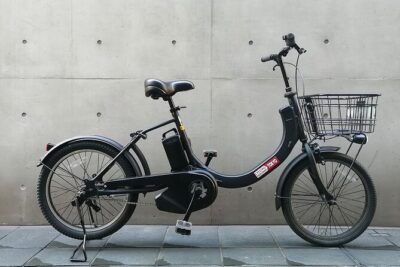 ★ 5.03h Tokyo E-Bike Tour: Hidden Gems, and Local Life with guideFrom $63
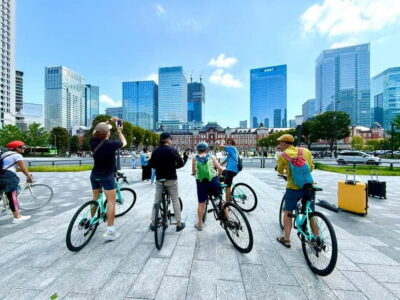 ★ 4.83-Hour Bike or E-Bike City Highlights TourFrom $453 hours
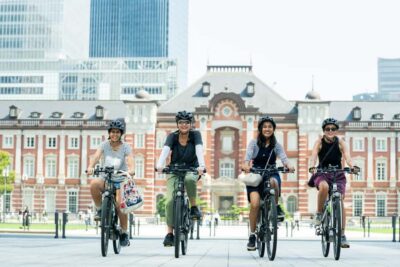 ★ 4.83-hour Guided E-Bike Tour of the City’s Hidden GemsFrom $65
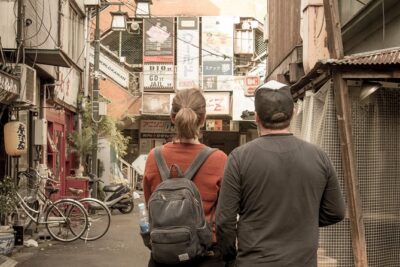 ★ 5.0Tokyo West-Side Cycling & Food TourFrom $99
 ★ 5.03-Hour Bike/E-Bike Tour of the City’s HighlightsFrom $63
 ★ 5.03-Hour Tokyo Private E-Bike Tour Starting from Your HotelFrom $145
Browse the lists this tour appears in