
Reviewed · TOKYO CYCLING TOURS
Tokyo Top Highlights 3h Guided E-bike Tour
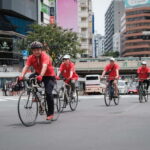
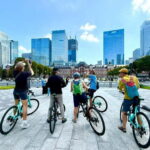
Tokyo is easier to understand from a bicycle seat. This 3 to 4 hour ride takes you past major sights, quiet shrines, local streets, gardens, and waterfront views without trapping you behind a bus window. The small group of up to six keeps the pace personal, while the electric motor takes the sting out of Tokyo’s hills.
I especially like the choice of three routes and the way each one returns to the Tsukiji starting point. I also like the included Japanese snack, which might be mochi or a convenience-store treat selected by the guide. The main consideration is traffic: much of the ride uses city streets, so you should already be comfortable on a bicycle and ready to follow traffic rules closely.
In This Review
- Key points to know before you book
- Why an e-bike works so well in Tokyo
- Starting in Tsukiji and choosing your route
- Tokyo City Route: history, gardens, and central neighborhoods
- Tokyo Station
- Ningyocho Street
- Kiyosumi Teien
- Tomioka Hachimangu
- Tokyo Bay Route: shrines, Odaiba, and city lights
- Sumiyoshi Shrine and Tsukuda Tendai Jizoson
- Passing Skytree and teamLab Planets
- Tokyo Big Sight
- Aqua City Odaiba and the Gundam statue
- Tokyo Tower Route: temples, hills, and national landmarks
- Zojo-ji Temple
- Atago Shrine
- National Diet Building and Hibiya Park
- Guides, pace, and the human side of the ride
- Price, equipment, and what the $63.67 buys you
- Who should book this Tokyo e-bike tour
- Should you book it?
- FAQ
- Where does the Tokyo e-bike tour start and finish?
- How long does the experience last?
- How many people can join the tour?
- What routes can I choose from?
- What equipment is included?
- Are children allowed to participate?
- What level of fitness do I need?
- What happens if the weather is bad?
Key points to know before you book

- Three very different routes: Pick city sights and gardens, Tokyo Bay at sunset and night, or Tokyo Tower and government landmarks.
- An easy-to-use electric bike: The bikes require little technical effort and help with hills, heat, and longer distances.
- A genuinely small group: The maximum is six people, giving the guide room to answer questions and manage the pace.
- A local snack is included: Stops may feature mochi or another Japanese snack chosen by the guide.
- Guides make the difference: Hiro, FK, Shinobu, Miky, Takuro, Sho, Taiki, and others have been praised for clear explanations, humor, photography, and careful riding.
- You need basic fitness and road confidence: Riders must be at least 147 centimeters tall, age 13 or older, and no more than 120 kilograms.
Why an e-bike works so well in Tokyo
Tokyo can feel enormous when you explore it on foot. The subway is fast, but it often leaves you below ground and sends you from one station entrance to another without much sense of the neighborhoods in between.
An e-bike fills that gap. You can cover ground between Tokyo Station, shrines, gardens, parks, and waterfront districts while still seeing ordinary streets and shopfronts along the way. You are close enough to notice small details, but you do not need to spend the whole day walking.
The bikes are described as simple to operate, with no complicated gear changes. That matters if you are a casual cyclist rather than a serious rider. The electric assist also helps on the uphill approach to Atago Shrine and makes hot weather more manageable. One August rider found the ride comfortable despite Tokyo’s heat, while another described the effort as enough exercise without becoming punishing.
Still, this is not a bike path cruise from start to finish. You ride in Tokyo traffic, and the group must stay together. I would treat the briefing seriously, keep a safe distance, and never copy another rider through a yellow or red light. One piece of feedback raised concern about a guide moving too quickly and riders following through signals, so road awareness remains your responsibility.
A few more Tokyo tours and experiences worth a look
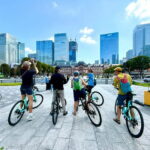
Starting in Tsukiji and choosing your route
All three options begin and end at the same e-bike shop at 6-chōme-11-5 Tsukiji, in Chuo City. The meeting time is 15 minutes before departure for the bike briefing, helmet fitting, and basic orientation.
Tsukiji is a useful starting point because it sits near several central Tokyo districts and public transport. The exact sights depend on the route you select, so check the route details before booking. You cannot casually switch to another route once the ride is underway.
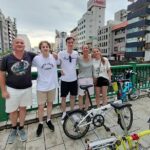
The group size is capped at six. That is small enough for a guide to notice a nervous rider, stop for questions, and make occasional adjustments. It also means the tour can feel quite different depending on the group. A full group may require more waiting at crossings, while a quiet day could feel almost private. One person even ended up on a solo ride with Hiro.
Tokyo City Route: history, gardens, and central neighborhoods
The City Route is the best all-round choice if you want a first look at Tokyo’s older and newer sides. It combines grand buildings, local streets, a Japanese garden, a major shrine, and a sweet stop.
You first pass through Ginza, Tokyo’s luxury shopping district. The point is not to shop, which is good news for your budget. You get a quick look at one of the city’s polished commercial centers before moving toward Tokyo Station.
Tokyo Station
Tokyo Station was built in 1914 in a Western architectural style. Its red-brick appearance makes a sharp contrast with the modern towers around it, and it gives the route an early lesson in how Tokyo layers old and new.
The stop lasts about 15 minutes, with no admission fee. You have enough time for photographs and a short explanation, but not for a long interior visit. Think of it as a well-placed orientation stop rather than a full station tour.
Ningyocho Street
Next comes Ningyocho, a district once linked with traditional dolls. The dolls are not the main attraction today, but the area still provides a change of mood from central Tokyo’s large avenues.
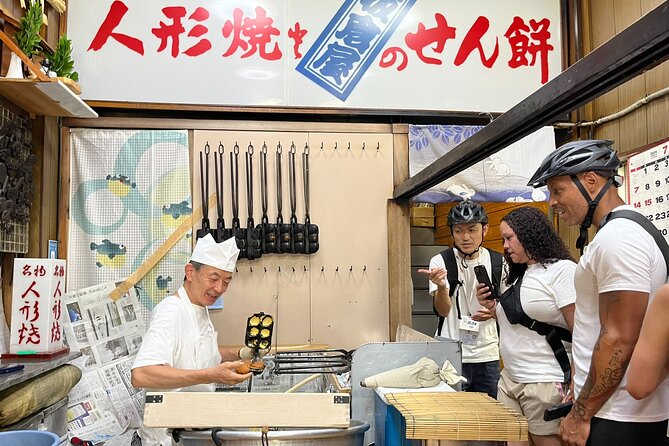
You spend about 20 minutes here and sample a traditional sweet. This is one of the tour’s more appealing details because food gives you a quick connection to daily life. The snack is modest, not a meal, so eat beforehand if you tend to get hungry after cycling.
A few more Tokyo tours and experiences worth a look

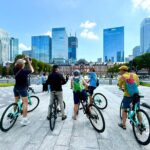
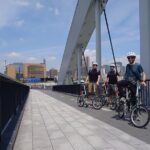
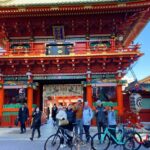
Kiyosumi Teien
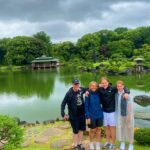
Kiyosumi Teien is the City Route’s quiet pause. This Japanese garden is less famous than Tokyo’s headline sights, which is exactly why it works well in the middle of a bike tour.
You leave the bikes and walk through the garden for roughly 25 minutes. The setting offers ponds, planted scenery, and a calmer rhythm after the roads. Admission is included, an important detail since some city tours charge extra for garden entrances.
The limitation is time. Twenty-five minutes lets you enjoy the atmosphere, but not explore every corner. If gardens are your main reason for visiting Tokyo, plan a separate, longer visit.
Tomioka Hachimangu
The route ends its main sightseeing sequence at Tomioka Hachimangu in Fukagawa. This Shinto shrine is tied to the early development of sumo and is one of the more important shrines in this part of Tokyo.
The stop lasts around 30 minutes and is free to enter. I like this part of the route because it shifts attention away from postcard Tokyo and toward a district with a local character. You get a shrine visit, cultural context, and a glimpse of how a major religious site fits into an active neighborhood.
This route also passes waterways and local streets near Tsukiji and Hamarikyu Gardens. Bikes are not allowed inside Hamarikyu itself, so you should expect to see the area from outside rather than take a full garden visit there.
Tokyo Bay Route: shrines, Odaiba, and city lights
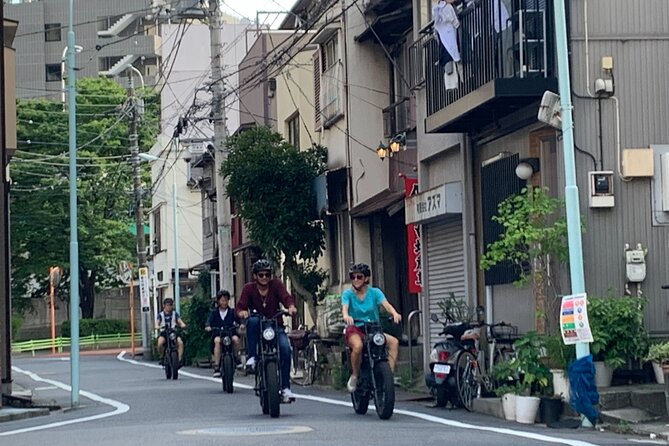
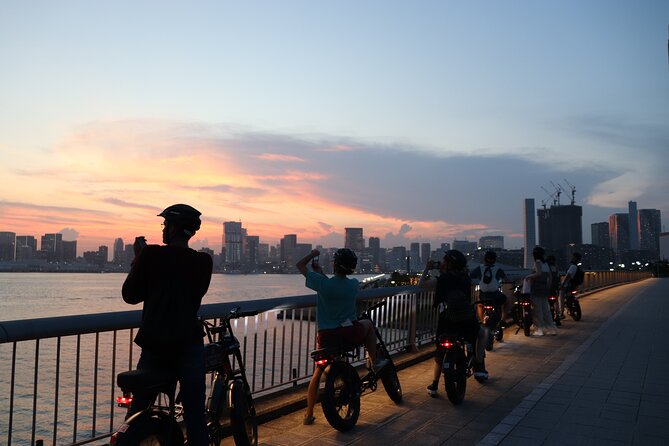
Choose the Tokyo Bay Route if your priority is scenery and evening atmosphere. The sunset and night version is especially appealing when the timing lines up with sunset, since the ride moves from local shrine streets to the bright waterfront and illuminated city views.
The route includes more passing sights than formal stops. You may see Tokyo Skytree, teamLab Planets TOKYO, and other major places from the bike without entering them. This keeps the ride moving, but you should not book this route expecting admission to those attractions.
Sumiyoshi Shrine and Tsukuda Tendai Jizoson
The first stop is Sumiyoshi Shrine, located on the more local side of Tokyo. The ride toward it gives you a look at residential life rather than only major tourist zones.
After about 15 minutes at the shrine, you continue to Tsukuda Tendai Jizoson, a small temple tucked into the city. The stop here is only about five minutes, but that brevity suits the site. It is a quick look at a place you might pass without noticing on your own.
Passing Skytree and teamLab Planets
The route passes Tokyo Skytree, the world’s tallest radio tower, with about a minute allocated for the sight. It also passes teamLab Planets TOKYO, the popular modern art museum.
These are visual markers rather than visits. You will not have time to enter, queue, or experience the exhibitions. That is not a flaw if you want a broad city ride, but it matters if either attraction is high on your list.
Tokyo Big Sight
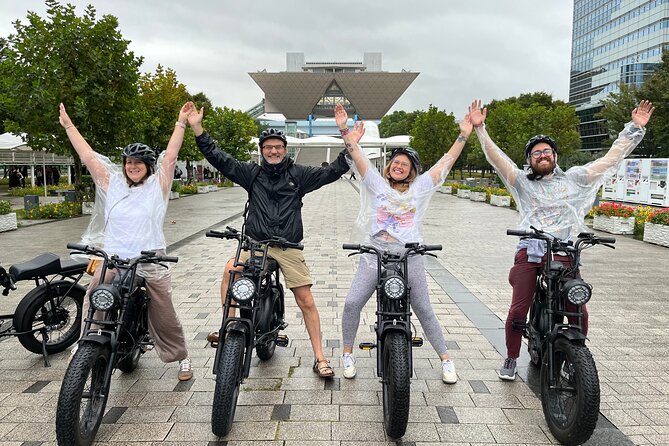
Tokyo Big Sight, Japan’s largest exhibition hall, provides a ten-minute stop and an unusual photograph. Its distinctive architecture is more playful than beautiful, and the guide may point out details that make the building fun to frame.
Aqua City Odaiba and the Gundam statue
Aqua City Odaiba is the route’s longer break, lasting about 30 minutes. You can rest, take in the waterfront setting, and enjoy a Japanese convenience snack selected by the guide.
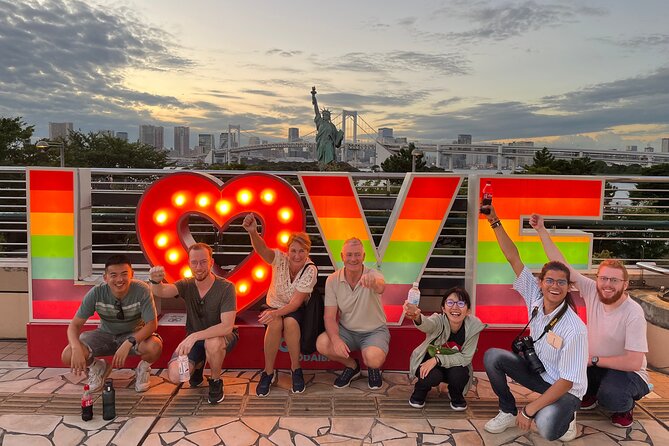
The Gundam Base Tokyo stop lasts about ten minutes. The enormous Gundam statue rises 19.7 meters, so photographs do not quite prepare you for its scale. It is a deliberately pop-culture-heavy moment, and a nice reminder that Tokyo’s identity includes anime and technology as much as temples and gardens.
The bay route is strongest around sunset and after dark. One suggested departure is around 3:45 or 4 p.m., though exact times vary. That timing can give you fading daylight, sunset colors, and then the city lights. Check the start time carefully, since a morning ride will not offer the same mood.
Tokyo Tower Route: temples, hills, and national landmarks
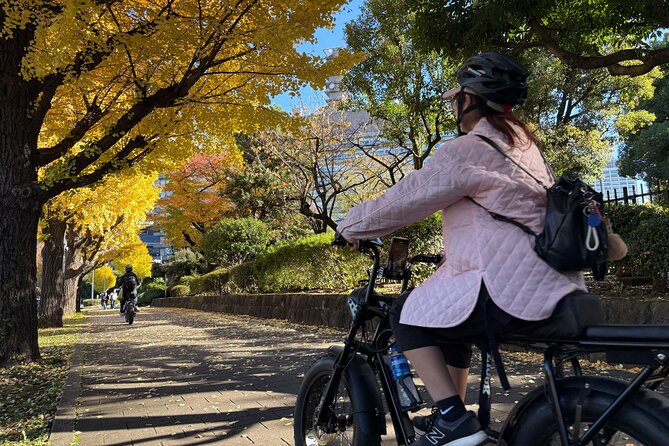
The Tokyo Tower Route is the best pick if you want classic central Tokyo sights with a cultural stop or two. It includes Zojo-ji Temple, Tokyo Tower, Atago Shrine, the National Diet Building, the Imperial Palace area, and Hibiya Park.
Zojo-ji Temple
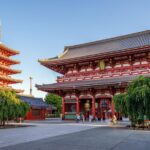
The first formal stop is Zojo-ji, a major Buddhist temple associated with the powerful Tokugawa shogun family. You have about 30 minutes here, enough to look around and hear why the temple mattered during the shogunate period.
Tokyo Tower rises behind the temple area, creating one of the city’s most recognizable contrasts. The traditional temple grounds and orange tower make a strong photograph, though the tour only passes Tokyo Tower itself rather than taking you up to an observation deck.
Atago Shrine
The ride to Atago Shrine includes a hill. This is where the e-bike earns its keep.
Atago Shrine sits on a small mountain, and the climb would be a serious nuisance without electric assistance. The stop lasts about 20 minutes and offers a more intimate shrine visit than the grander sites on the route.
You should still expect real pedaling. The motor reduces strain, but it does not turn the route into a motorized sightseeing trip. Basic stamina helps, especially if the weather is warm.
National Diet Building and Hibiya Park
The National Diet Building dates from 1936 and gives you a look at Japan’s government district. The stop is brief, around five minutes, so the value comes mainly from the guide’s explanation and the view from outside.
On the way, the group picks up a traditional Japanese snack near Hibiya Park. The final 20-minute stop takes place in the park, where you can leave the bike, eat, and rest among a wide range of trees and flowers.
The route also passes the Imperial Palace, once the site of a much larger castle. You may see the palace pond and ducks along the way. Again, this is a passing view, not a palace interior visit or extended palace tour.
Guides, pace, and the human side of the ride
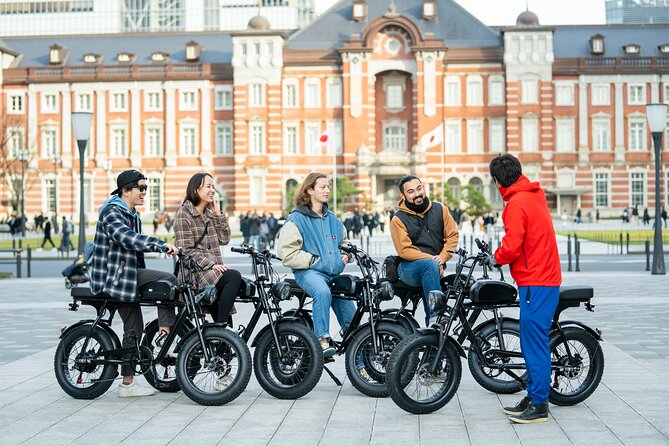
The guide is central to the experience. The company has used guides including Hiro, FK, Shinobu, Miky, Takuro, Sho, Taiki, YK, Mihori, and Javi.
The strongest guide qualities are clear English, local context, humor, and steady attention to safety. Hiro has been praised for using an iPad to show historical background, answering questions, making photo stops, and helping less-confident cyclists feel secure. FK is associated with both the City and Bay routes and is described as friendly and well informed about unusual places. Shinobu received praise for handling a family group and adding a mochi snack.
Miky and Taiki have also been singled out for engaging rides, photography, and sunset timing. Sho’s friendly explanations have helped make hot-weather rides feel manageable. Guide quality can vary from person to person, but the pattern is clear: this is not just a bike rental with a map.
The pace can be adjusted more easily in a group of six than in a large coach tour. Still, the group must keep moving and the end time can run about 30 minutes late because of traffic. Do not schedule a tight dinner reservation immediately afterward.
Price, equipment, and what the $63.67 buys you
At $63.67 per person, the tour is not the cheapest way to see Tokyo. You can visit many of these districts by subway for less money, and walking around individual neighborhoods costs almost nothing.
The value comes from combining transport, a guide, an e-bike, a helmet, winter gloves, luggage storage, and a snack in one compact outing. You also cover more ground than you could comfortably manage on foot, with someone else handling the route and explaining what you are seeing.
The included Kiyosumi Teien admission on the City Route adds a little more value. The biggest benefit, though, is time. If you have only a few days in Tokyo, this ride gives you a useful survey of several districts before you decide where to return on your own.
The shop can store luggage, and a knapsack is available to rent at no charge. Arrive 15 minutes early for the briefing. If you arrive much earlier, the shop may still be closed, so wait for the guide rather than assuming something has gone wrong.
Who should book this Tokyo e-bike tour
I would recommend it to adults and teenagers who already know how to ride a bicycle and want a broad first look at Tokyo. It suits couples, families with older children, and small groups who prefer active sightseeing to a standard bus route.
It is also a good choice for people who want local neighborhoods mixed with famous sights. The City Route gives you the best balance, the Bay Route is the strongest option for sunset and night views, and the Tokyo Tower Route offers the most concentrated mix of temples, government buildings, and central landmarks.
I would hesitate if you dislike riding near cars, need a completely flat route, or want long visits inside museums and attractions. The ride is designed for seeing many places from the outside, not for lingering at one major sight.
Participants must be at least 13 years old, at least 147 centimeters tall, and no more than 120 kilograms. A moderate level of fitness is required. The company cannot accommodate allergies or vegetarian dietary needs, so bring your own extra food if that is important to you.
The tour depends on good weather. If rain or another safety issue prevents the ride, the company may offer a new date, a rental tour, a special non-bike itinerary, or a refund. You can cancel for a full refund up to 24 hours before the start time, but late cancellations and changes are not accepted.
Should you book it?
Book this tour if you want to see Tokyo from street level, cover several districts in half a day, and enjoy a guide-led ride without working hard up every hill. I would choose the Tokyo City Route for a first visit, the Tokyo Bay sunset and night route for photographs and waterfront views, and the Tokyo Tower Route for temples and central landmarks.
Skip it if you are not comfortable cycling in traffic or if your schedule allows only a narrow window. For the right rider, the mix of easy cycling, small-group attention, local snacks, and sights that are awkward to connect on foot makes the price fair.
FAQ
Where does the Tokyo e-bike tour start and finish?
The tour starts at 6-chōme-11-5 Tsukiji, Chuo City, Tokyo 104-0045, Japan. All routes return to the same meeting point.
How long does the experience last?
The tour lasts approximately 3 to 4 hours. Traffic can delay the finish by about 30 minutes.
How many people can join the tour?
The maximum group size is six participants.
What routes can I choose from?
You can choose the Tokyo City Route, the Tokyo Bay Route with sunset and night views, or the Tokyo Tower Route. The stops vary by route, so check the selected itinerary before booking.
What equipment is included?
The tour includes an e-bike and helmet. Gloves are provided during winter. The shop also offers luggage storage and free knapsack rental.
Are children allowed to participate?
Participants must be older than 12 and at least 147 centimeters tall. Children age 12 and younger are not permitted.
What level of fitness do I need?
You need to know how to ride a bicycle and have moderate physical fitness. The e-bike reduces effort, but the tour still involves cycling on city streets and includes a hill near Atago Shrine on the Tokyo Tower Route.
What happens if the weather is bad?
If poor weather makes the ride unsafe, you may be offered a different date, a rental tour, a special non-bike itinerary, or a full refund. The company may also cancel on the tour day if weather conditions change.
More Cycling Tours in Tokyo
More E-Bike Tours in Tokyo
More Tokyo Cycling Tours in Tokyo
More tours in Tokyo we've reviewed




Tokyo Cycling Tours, compared.
 ★ 5.0Tokyo Great Cycling TourFrom $99
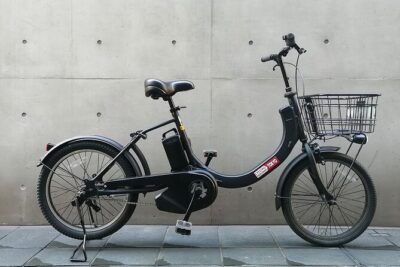 ★ 5.03h Tokyo E-Bike Tour: Hidden Gems, and Local Life with guideFrom $63
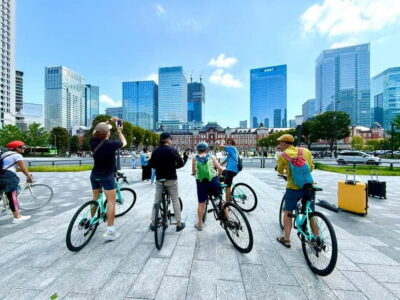 ★ 4.83-Hour Bike or E-Bike City Highlights TourFrom $453 hours
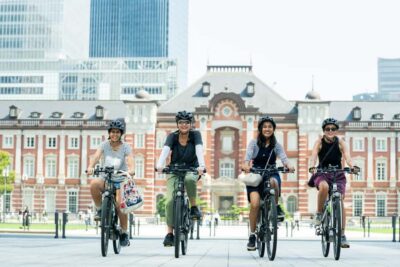 ★ 4.83-hour Guided E-Bike Tour of the City’s Hidden GemsFrom $65
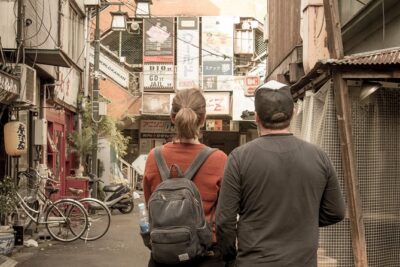 ★ 5.0Tokyo West-Side Cycling & Food TourFrom $99
 ★ 5.03-Hour Bike/E-Bike Tour of the City’s HighlightsFrom $63
 ★ 5.0Small Group Cycling Tour in TokyoFrom $66
 ★ 5.03-Hour Tokyo Private E-Bike Tour Starting from Your HotelFrom $145
Browse the lists this tour appears in