
Reviewed · TOKYO CYCLING TOURS
Tokyo: Super Local Private E-bike Cycling Tour from Asakusa
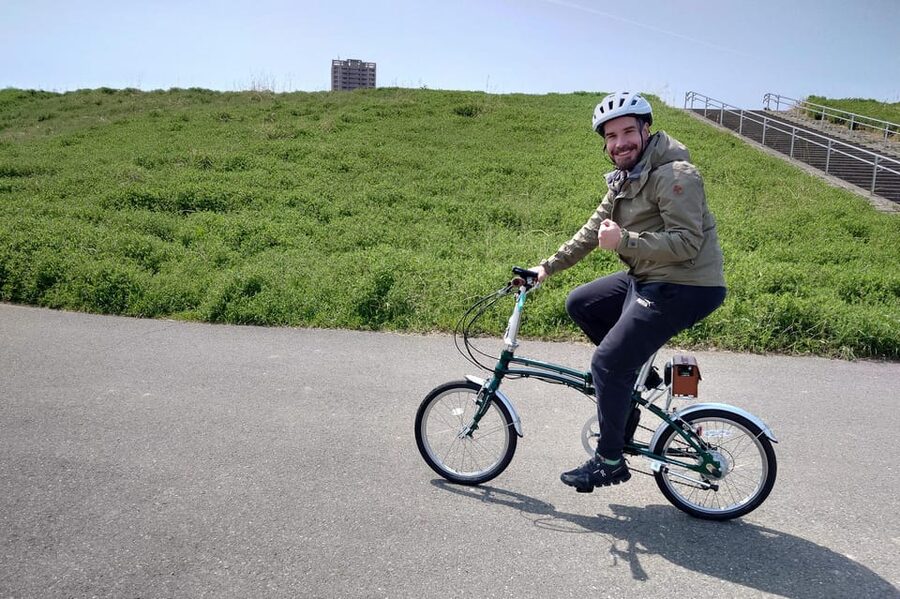
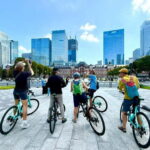
Tokyo can feel very different once you leave the big sights behind. This private e-bike ride from Asakusa takes you through local shopping streets, quiet backstreets, riverside paths, shrines, a fish market, and Kitasenju, with the route adjusted to your pace.
I like the easy motor assistance and the chance to see parts of Tokyo you would not reach on foot. I also like the personal touch: guides including Kazuma can adapt the ride to your interests, even adding local food stops when practical.
The main catch is the price, $141 per person for three hours, and the tour is not suitable for children under 12. You also need closed shoes and comfortable clothing, not sandals or skirts.
In This Review
- Key things to know before you pedal
- Why this ride shows you a different Tokyo
- Starting at Kaminarimon and Asakusa
- Imado Shrine and the smaller religious stops
- Backstreets, shopping streets, and the old red-light district
- The fish market stop and the food question
- Kitasenju, a local district worth reaching by bike
- Riverside riding and views of Tokyo Skytree
- What the three-hour schedule feels like
- Is $141 per person good value?
- Who should book this Asakusa e-bike tour?
- A practical verdict on Tokyo Bike Bliss
- FAQ
- Where does the Tokyo e-bike tour start?
- How long does the tour last?
- Is the tour private?
- What languages are available?
- Are e-bikes and helmets included?
- Is food included?
- Can children join the tour?
- What should I wear for the ride?
Key things to know before you pedal
- Local Tokyo beyond Asakusa: Expect backstreets, neighborhood shrines, shopping streets, a fish market, and riverside views rather than a checklist of major attractions.
- E-bike assistance: The motor helps as you pedal, making the ride more relaxed and useful for people who are not regular cyclists.
- Private pacing: You ride only with your own party, so the guide can adjust the speed and, within limits, the route.
- Three-hour route: The ride starts and ends at the Asakusa Culture Tourist Information Center and includes stops of roughly 10 to 15 minutes.
- Strong guide element: Kazuma is named in the feedback, while another guide, K, is described as friendly and helpful with local areas.
- Practical limits: Children under 12 cannot join, the recommended height is 145 to 185 centimeters, and the tour is not suitable for anyone over 100 kilograms.
Why this ride shows you a different Tokyo
Most first visits to Asakusa revolve around Senso-ji, Kaminarimon Gate, Nakamise shopping street, and the Tokyo Skytree. Those places deserve your time, but they show only one side of the city. Tokyo’s everyday character appears in smaller streets where bicycles, delivery trucks, neighborhood shops, and local temples share the road.
That is the appeal here. You begin in one of Tokyo’s best-known districts, then pedal outward into areas that are less polished for sightseeing but more revealing of ordinary city life. The route can include old religious sites, a local fish market, the former red-light district, Kitasenju, and the banks of the Arakawa and Sumida rivers.
I would not book this ride if your main goal is to collect the standard Tokyo highlights quickly. I would book it if you want to understand how the city fits together beyond the usual visitor circuit.
A few more Tokyo tours and experiences worth a look
Starting at Kaminarimon and Asakusa
Meet at the Asakusa Culture Tourist Information Center, a convenient starting point near Kaminarimon Gate. Look for the guide wearing or carrying a white bicycle helmet. The operator may contact you by WhatsApp, iMessage, or SMS, so keep an eye on your messages before the start.
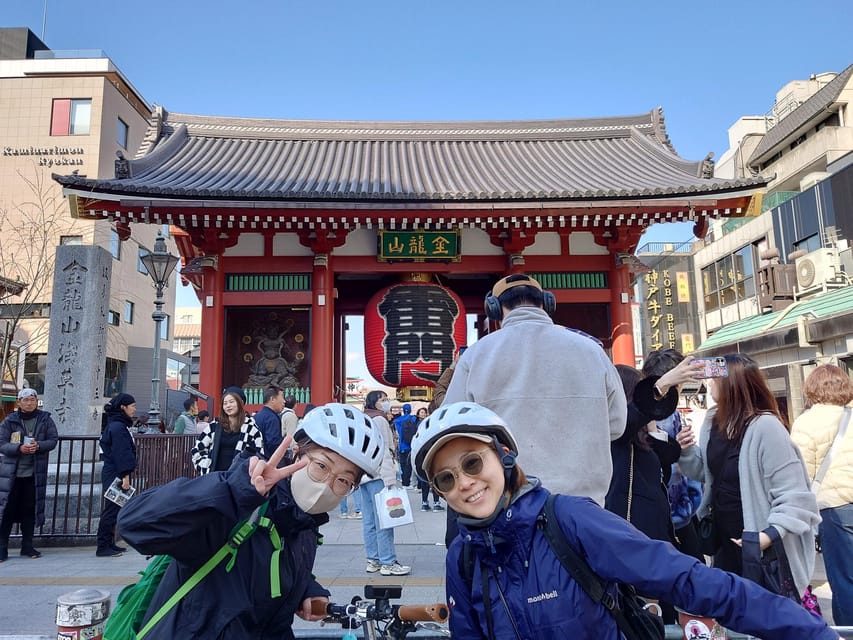
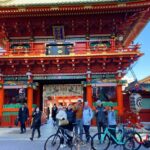
Kaminarimon is a sensible first stop. Its large red lantern is one of Tokyo’s most recognizable images, and you have about 10 minutes for photos and a quick look around. This is the most obviously tourist-focused part of the ride, but it also gives you a clear starting point for seeing how quickly Asakusa changes once you move away from the gate.
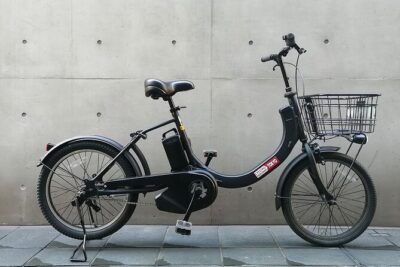
The opening briefing covers safety and the e-bike. If you have never used an e-bike, do not worry. The motor assists while you pedal, so you still control the bicycle, but hills and longer stretches require less effort. You should still be comfortable riding in an urban setting and following the guide’s instructions.
You cannot take photos or video while cycling. That rule is sensible, but it means you need to stop properly when you want a picture. The short sightseeing pauses are built into the ride for that reason.
Imado Shrine and the smaller religious stops
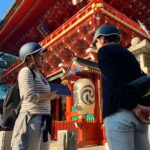
Imado Shrine is one of the named stops, with about 10 minutes for sightseeing and photos. The route also includes Matsuchiya Shoden Temple and other religious sites, although the exact order can vary.
These stops matter because they put Tokyo’s shrines and temples into a neighborhood setting. Instead of spending your whole visit in one major temple complex, you get short looks at places tied to local streets and daily routines. The guide can add context and personal stories, which helps keep the stops from becoming a series of quick photo breaks.
You should keep your expectations realistic. The itinerary allows around 10 minutes at several stops, so this is not a long temple study or a formal religious tour. You will have time to look, take photos, and ask questions, but not to examine every building or stay for a lengthy visit.
That short-stop format works well for a bike tour. You keep moving, see more ground, and avoid spending three hours in one small area.
Backstreets, shopping streets, and the old red-light district
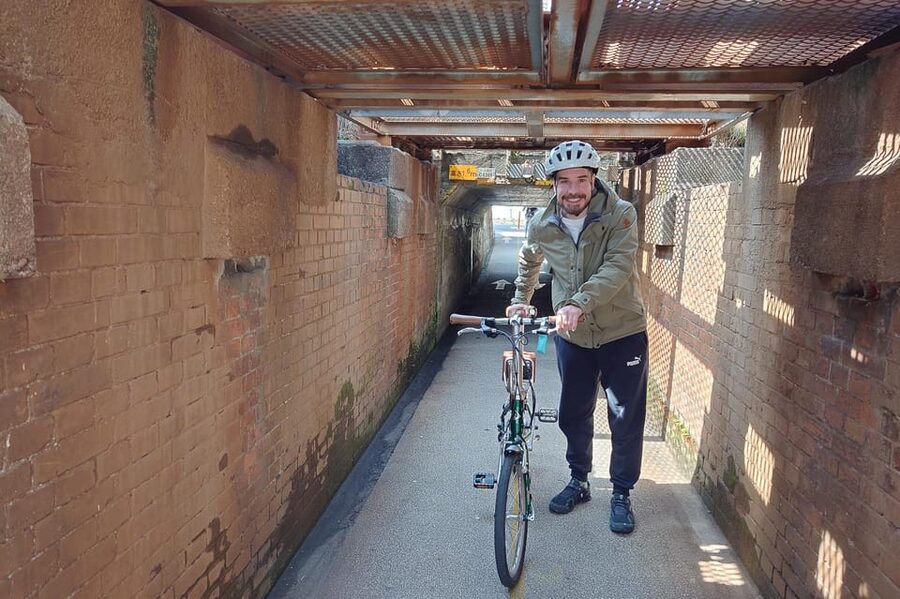
The strongest part of the ride is likely to be the movement between the major stops. You pedal through backstreets and local shopping areas where the city feels less arranged for sightseeing. Depending on the day, you might see few other visitors along the way.
The old red-light district adds historical and social context, but the supplied information does not specify which sites you stop at or how much time the guide spends there. Think of it as one part of a broader neighborhood ride, not a standalone museum visit.
A private tour is useful here because the guide can explain what you are seeing while keeping the pace comfortable. You can ask about local customs, street design, the area’s past, or the way Tokyo neighborhoods function. The feedback specifically points to personal anecdotes and cultural explanations as part of the experience.
You may also pass through local shopping streets. These are valuable not because they provide a grand monument, but because they show where residents shop and move through the day. If you want only famous landmarks, these stretches may feel ordinary. That ordinariness is exactly their value.
The fish market stop and the food question
Adachi Fish Market is included among the possible places on the route. The available details do not promise a meal or a specific tasting, and food and drinks are not included in the price.
Still, this is an area where the private format can help. Kazuma adapted one ride to personal interests and included several local food tasting stops. That does not mean every departure includes tastings, so ask about food before booking or contact the operator ahead of time.
You should carry water and plan your food budget separately. A three-hour ride with several sightseeing pauses may not require a full meal during the activity, but you should not assume that snacks or drinks come with the booking.
A fish market also gives you a different view of Tokyo’s food culture than a restaurant stop does. You see a working local district rather than simply sitting down for a prepared experience. The value depends on the day, the route, and what is open, so treat it as a possible part of the neighborhood story rather than a guaranteed tasting event.
A few more Tokyo tours and experiences worth a look
Kitasenju, a local district worth reaching by bike
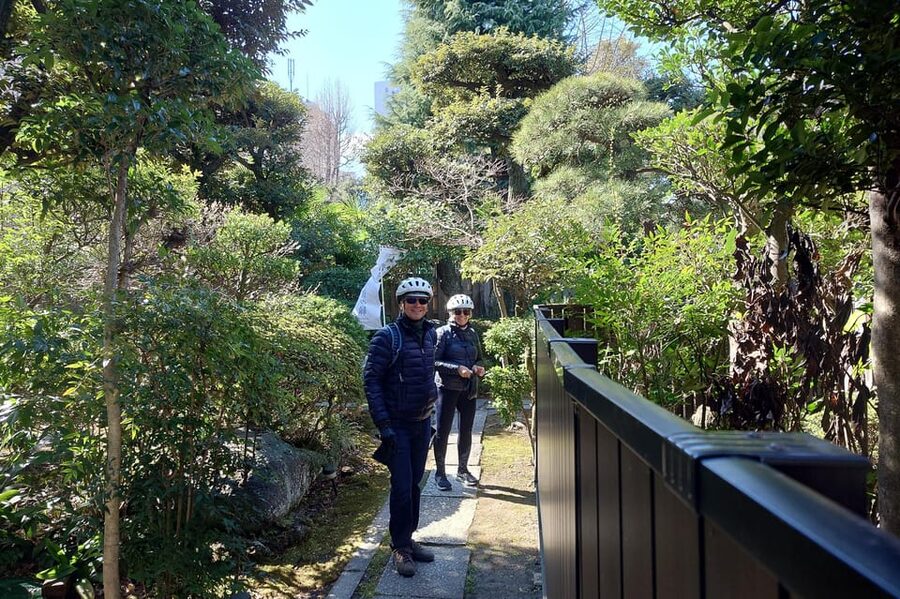
Kitasenju is listed as one of the possible destinations. It is far enough from the standard Asakusa circuit to make the e-bike especially useful. You are not just riding in circles around the starting district. You are using the bicycle to connect different parts of northeastern Tokyo.
The neighborhood is described as lively, but the important point for you is its local character. This is the kind of area that can be hard to appreciate from a train window and tiring to reach on foot from Asakusa. On a bike, you can see the streets change gradually.
The route may not include every listed place on every departure. The operator presents several possible stops, and the guide may shape the ride around timing, interests, and local conditions. Ask at the start which places are planned if a particular stop matters to you.
This flexibility is a strength, though it also means you should not treat the list as a guaranteed fixed schedule. A private ride gives you more say than a group tour, but longer detours or major route changes can cost extra.
Riverside riding and views of Tokyo Skytree
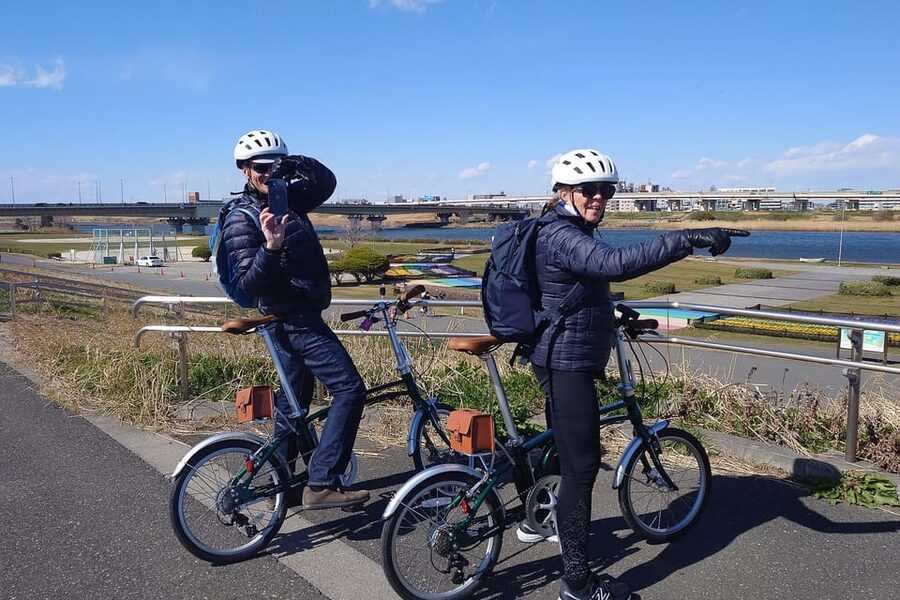
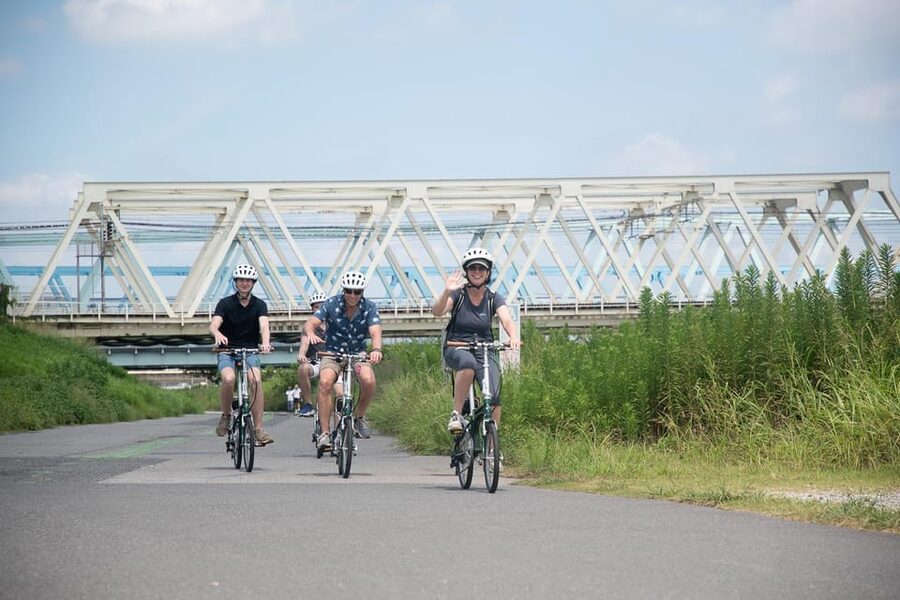
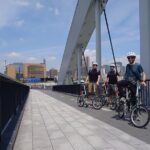
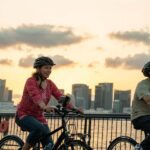
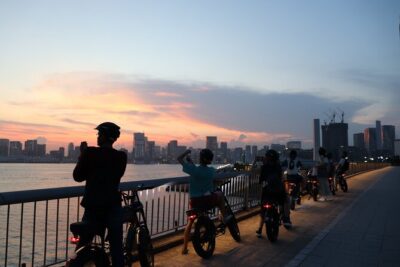
The Arakawa Riverside and Sumidagawa Riverside are among the most appealing parts of the plan. After dense streets and neighborhood shops, the open river corridors give you room to breathe and a change of pace.
You can enjoy the breeze while riding, and the rivers provide a useful sense of Tokyo’s geography. Instead of seeing the city only as a wall of buildings, you notice the water routes and open edges that shape its neighborhoods.
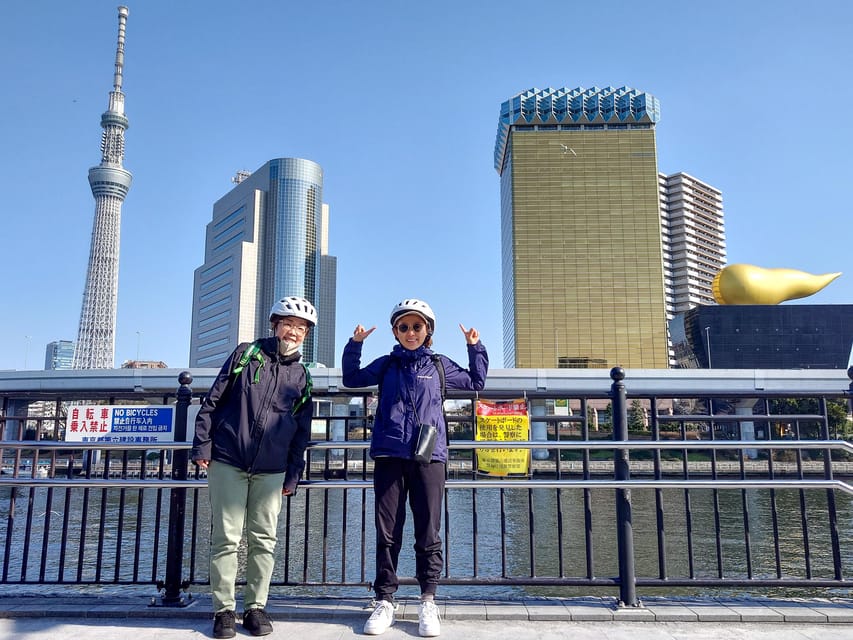
The Sumida River is especially familiar from the Asakusa area, but seeing it by bicycle gives you a more active connection to the city. The Tokyo Skytree may also appear as a reference point during the ride. It helps you understand where you are in relation to Asakusa and the surrounding districts.
Riverside cycling is not the same as a quiet countryside ride. You are still in urban Tokyo, and the experience includes city movement, crossings, and shared paths. Follow the guide closely and keep your camera away while the bicycle is moving.
What the three-hour schedule feels like
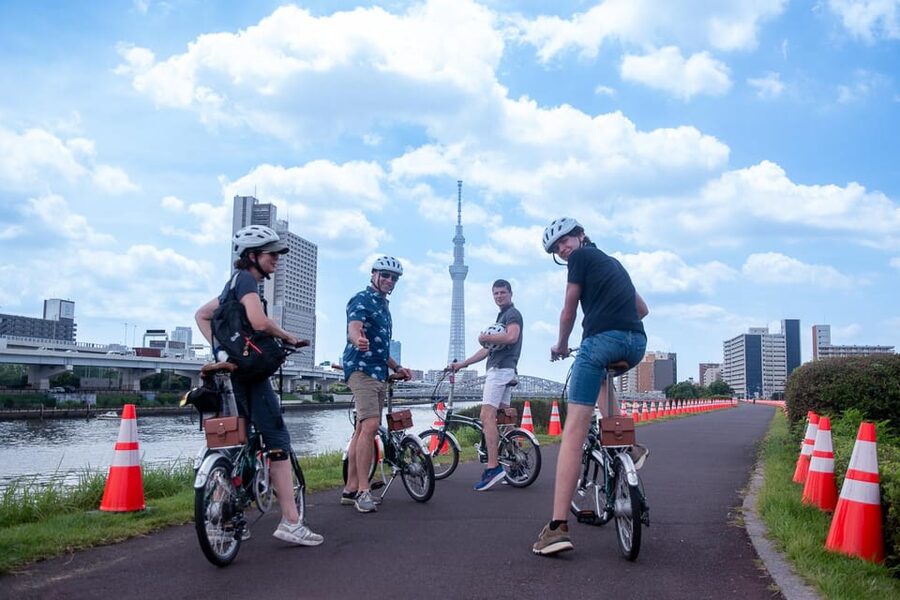
The ride lasts about three hours and returns to the Asakusa Culture Tourist Information Center. The listed sightseeing pauses include several 10-minute stops, one 15-minute stop, and the time spent cycling between them.
That gives you a good mix of riding and looking around. You are not expected to pedal continuously for three hours, but you should be ready for an active morning or afternoon. The e-bike reduces strain, not the need to ride.
The private format is a real advantage. Your pace becomes the group pace, so the guide can slow down for photos, allow questions, or keep things moving if you are eager to cover more ground. It also avoids the awkwardness of trying to match a large group on narrow streets.
Customization has limits. Changes to the start time, duration, or visits to places far from the original route may involve an extra charge. Confirm those details before agreeing to a different plan.
Is $141 per person good value?
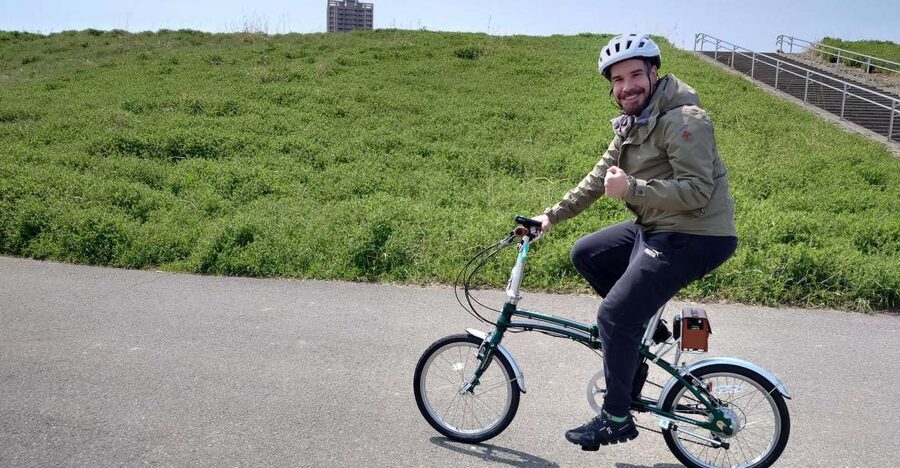
At $141 per person, this is not a cheap way to rent a bicycle for three hours. You are paying for the e-bike, helmet, safety instruction, insurance, and a live English or Japanese-speaking guide, along with the private arrangement.
The price makes more sense for couples, families with older children, or small groups who value personal attention. If four people share a private booking, the cost buys a tailored outing rather than a standard group ride. The private guide also saves you from planning a route through unfamiliar streets.
The value is weaker if you already know Tokyo well, own a bicycle plan, or want only a short ride around Asakusa. You could see some central sights more cheaply on your own. You are paying here for local route planning, guidance, and access to neighborhoods you might not think to connect yourself.
The four published ratings are all five out of five, with praise focused on safe pacing, friendly guidance, unusual streets, and the chance to see Tokyo away from the usual tourist areas. That pattern fits the tour’s strongest feature: the guide makes the ride more than simple transport.
Who should book this Asakusa e-bike tour?
I would recommend it to adults and children 12 or older who are comfortable on a bicycle and want an active introduction to Tokyo. You do not need to be an avid cyclist, and previous e-bike experience is not required, but you should be willing to ride on city streets and follow safety directions.
It suits first-time visitors who have already planned time for Tokyo’s major sights and want something more personal. It also works for repeat visitors who have seen Asakusa before and want to move into less familiar districts.
The height guidance is 145 to 185 centimeters, and the tour is not suitable for people over 100 kilograms. Those limits are important because the bicycles and riding position need to fit safely.
Dress for cycling. High heels, sandals, flip-flops, and skirts are not allowed. Smoking, alcohol, and drugs are prohibited, and you cannot bring alcoholic drinks onto the vehicle. The experience is not designed as a party outing.
A practical verdict on Tokyo Bike Bliss
Book this tour if you want to trade a standard sightseeing route for local streets, rivers, neighborhood shrines, a fish market, and a glimpse of how Tokyo’s outer districts connect. The e-bike makes the distance manageable, while the private format lets you keep the ride relaxed and personal.
Skip it if your schedule is tight, your group cannot meet the height or age rules, or $141 feels too high for a three-hour activity. Also skip it if you want guaranteed long visits at every named location, because the route can change and several stops are brief.
For the best fit, tell the operator what interests you before the ride. Kazuma has adapted a route for local food, and guides such as K have taken visitors beyond the main Asakusa sights. That flexibility is the reason to choose this experience over a basic bicycle rental.
FAQ
Where does the Tokyo e-bike tour start?
The tour starts at the Asakusa Culture Tourist Information Center. Look for the guide with a white bicycle helmet.
How long does the tour last?
The tour lasts about three hours and returns to the Asakusa Culture Tourist Information Center.
Is the tour private?
Yes. It is a private group experience, with no other booking parties joining your ride.
What languages are available?
The live guide service is available in English and Japanese.
Are e-bikes and helmets included?
Yes. The price includes the e-bike, helmet, safety instruction, insurance, and live guide.
Is food included?
No. Food and beverages are not included. Local food stops may be possible depending on the route and your interests, so ask the operator in advance.
Can children join the tour?
Children under 12 cannot join this experience.
What should I wear for the ride?
Wear practical clothing and closed, comfortable shoes. High heels, sandals, flip-flops, and skirts are not allowed. You also cannot smoke or use alcohol or drugs during the activity.
More Cycling Tours in Tokyo
More E-Bike Tours in Tokyo
More Tokyo Cycling Tours in Tokyo
More tours in Tokyo we've reviewed


Tokyo Cycling Tours, compared.
 ★ 5.0Tokyo Great Cycling TourFrom $99
 ★ 5.0Tokyo Top Highlights 3h Guided E-bike TourFrom $63
 ★ 5.03h Tokyo E-Bike Tour: Hidden Gems, and Local Life with guideFrom $63
 ★ 4.83-Hour Bike or E-Bike City Highlights TourFrom $453 hours
 ★ 4.83-hour Guided E-Bike Tour of the City’s Hidden GemsFrom $65
 ★ 5.0Tokyo West-Side Cycling & Food TourFrom $99
 ★ 5.03-Hour Bike/E-Bike Tour of the City’s HighlightsFrom $63
 ★ 5.0Small Group Cycling Tour in TokyoFrom $66
Browse the lists this tour appears in