
Reviewed · TOKYO CYCLING TOURS
Tokyo 3 Hour E Bike Tour of the City Bayside Areas
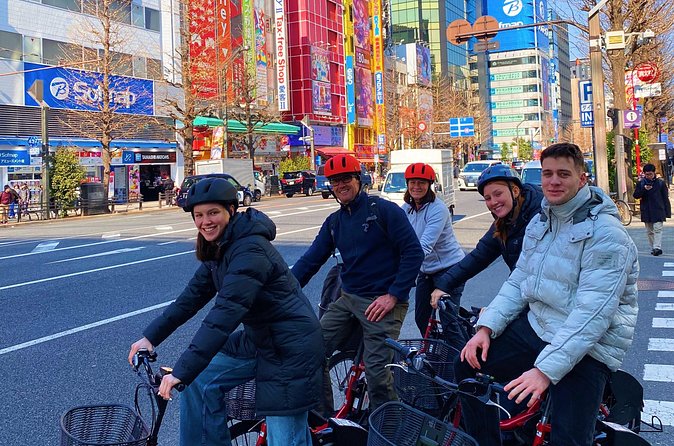
Tokyo’s polished center gives way quickly to old shrines, food stalls, riverside roads, and quiet neighborhood lanes on this small-group e-bike tour. In three hours, you move from Ginza’s luxury storefronts to Tsukiji, Tsukishima, Kiyosumi Gardens, and Fukagawa, seeing parts of the city that are easy to miss by train.
I like the easy electric bikes, especially for covering a lot of ground without wearing yourself out. I also like the mix of famous sights and local corners, with guides such as Sho and Nao leading the way through busy streets and lesser-known backstreets. The main drawback is that cycling in central Tokyo still demands a moderate fitness level and comfort around city traffic.
In This Review
- Key points to know before booking
- Why an e-bike is a smart way to see Tokyo’s bayside
- Starting among Ginza’s bright streets
- Kabuki-za and the theater tradition
- Tsukiji Hongwanji and the market’s food stalls
- Tsukishima Monja Street and old Tokyo flavor
- Sumiyoshi Jinja in a traditional neighborhood
- Kiyosumi Gardens offers the best walking break
- Fukagawa Fudodo and the optional ¥1,000 ending
- What the guides add to the ride
- Price, timing, and the real value
- Who should book this Tokyo bike tour
- Should you book it?
- FAQ
- How long does the Tokyo bayside e-bike tour last?
- Where does the tour begin?
- Where does the tour end?
- What sights are included on the route?
- Is the bicycle included?
- Is a guide included?
- Is admission to Kiyosumi Gardens included?
- How much does the optional Fukagawa Fudodo entry cost?
- Is food included?
- How many people can join the tour?
- Can I cancel for a full refund?
Key points to know before booking
- Electric Bianchi bikes make a long city ride easier: The bikes provide assistance, so you can cover several districts in three hours without relying on public transport.
- The route links major sights with quieter neighborhoods: You see Ginza, Kabuki-za, Tsukiji, Tsukishima, Kiyosumi Gardens, and Fukagawa in one outing.
- The fish market stop includes time for a quick snack: Food is not included, but you can buy something at Tsukiji, including sashimi if you wish.
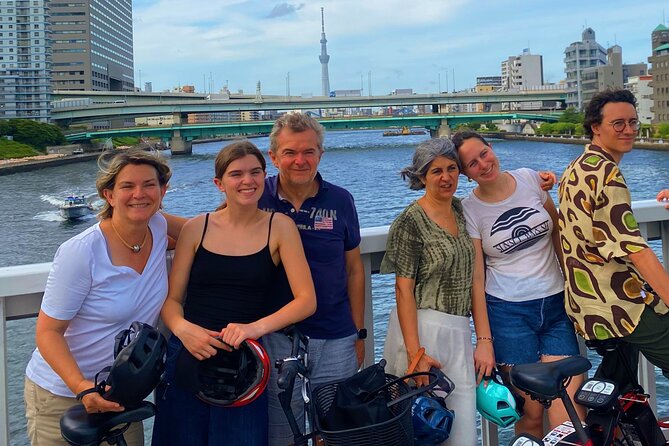
- The group is capped at seven people: That keeps the ride smaller and should make it easier to hear the English-speaking guide.
- The final temple visit is optional: Entering Fukagawa Fudodo costs ¥1,000 in cash. You can skip the interior and finish there.
- The tour begins in Hibiya and ends in Fukagawa: It is not a loop, so plan your next train or activity from the eastern side of Tokyo.
Why an e-bike is a smart way to see Tokyo’s bayside
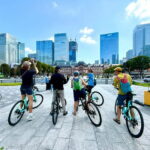
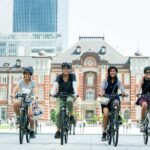
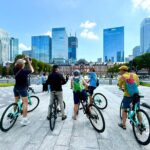
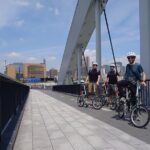
Tokyo is easy to explore by rail, but trains can hide the changes between neighborhoods. An e-bike gives you a better sense of distance and lets you pass from grand avenues to narrow local streets without spending your whole morning underground.
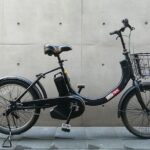
The electric assist matters here. The route includes several districts, and the ride lasts about three hours, so a standard bicycle could feel demanding for some people. The e-bikes used on the tour have been identified as Bianchi models, a useful detail if you care about bike quality.
You still need moderate physical fitness. An electric bike does not remove the need to pedal, steer, stop, and stay alert in city traffic. The guides have led groups through busy Tokyo streets safely, but you should feel comfortable riding in an urban setting before booking.
The maximum group size is seven. That is a real advantage over a large cycling group. You have a better chance of staying close to the guide, asking questions, and getting help with the bike. It also makes the ride feel more like a guided outing with a few people than a moving crowd.
A few more Tokyo tours and experiences worth a look
Starting among Ginza’s bright streets
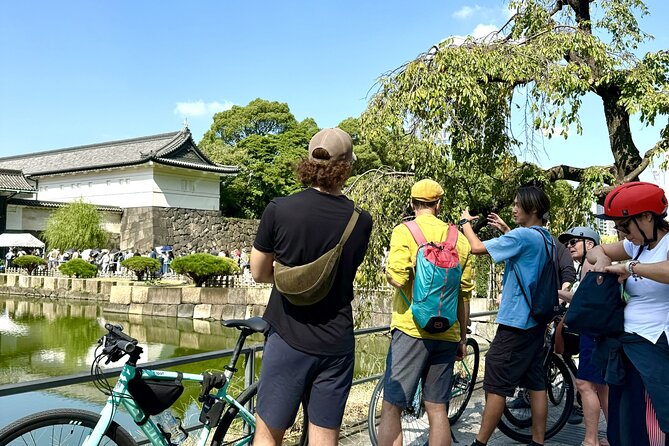
The tour begins at 1-3 Hibiya Park in Chiyoda City, close to the polished Ginza area. From here, you cycle through one of Tokyo’s best-known shopping districts.
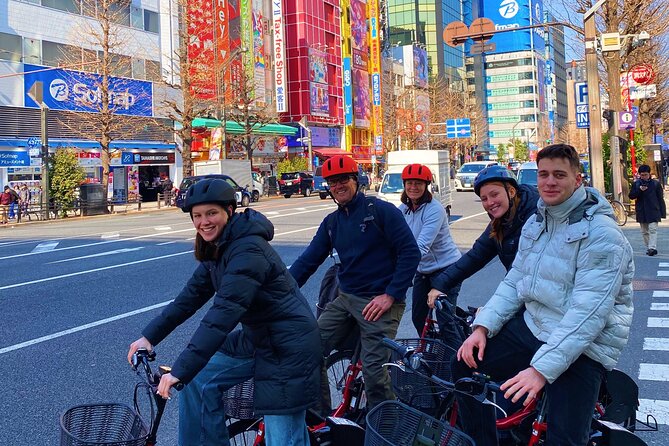
Ginza is famous for luxury stores, department stores, grand facades, and wide streets. The stop is brief, about 10 minutes, so do not expect a shopping trip or a detailed architectural walk. Think of it as a quick orientation to Tokyo’s high-end side before the route shifts toward older neighborhoods and food districts.
This is a good opening because it shows you one of the city’s most formal faces. Soon after, the ride becomes less about expensive storefronts and more about local religious sites, markets, and residential streets.
Kabuki-za and the theater tradition
The next stop is Kabuki-za, the landmark theater associated with classical Japanese kabuki performance. You have about 10 minutes here, enough for a look at the building and a short explanation from the guide.
The tour does not include a theater performance. That is important if you are hoping to see kabuki on stage. Instead, this stop adds cultural context to the ride and gives you a recognizable Tokyo sight without requiring a long indoor visit.
With a guide, Kabuki-za becomes more than a quick photo stop. You can ask about the theater tradition and its place in Japanese culture, then continue by bike rather than spending a large part of the tour standing in line or inside a museum.
Tsukiji Hongwanji and the market’s food stalls
The route then reaches Tsukiji Hongwanji Temple, also called Hongan-ji Temple. You have around 15 minutes to look around this striking religious site in the center of Tsukiji.
This stop changes the mood again. Ginza is commercial and polished, Kabuki-za is tied to performance, and Tsukiji Hongwanji brings you into a place of worship. The short visit works well as part of a wider ride, though it is not long enough for a slow, detailed study of every feature.
After the temple comes Tsukiji Fish Market, with about 20 minutes for a walk and a quick snack. This is one of the most useful parts of the route because you can pause, leave the bikes, and taste something instead of simply looking at another landmark.
Food and drinks are not included, so bring money for your own purchase. You might find seafood, snacks, or sashimi, depending on what catches your eye and what is available when you visit. Keep the timing in mind: 20 minutes is a short market stop, not a full food tour.
I like the practical balance here. The market gives you a chance to experience Tokyo through food, and the guide can help place the area in context. At the same time, you should not book this ride expecting a leisurely breakfast or a long meal.
Tsukishima Monja Street and old Tokyo flavor
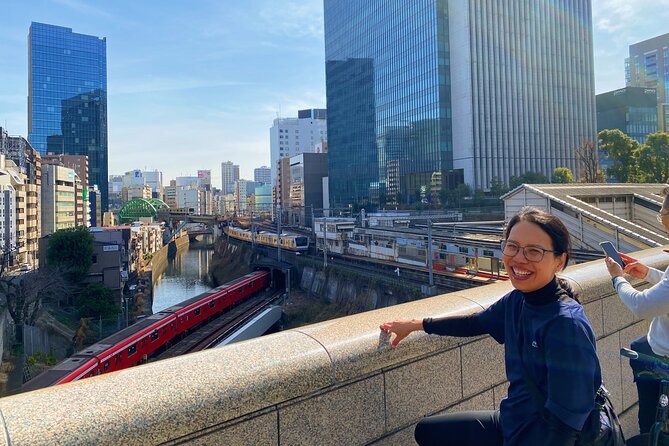
From Tsukiji, the route heads toward Tsukishima Monja Street. The stop lasts about 10 minutes and offers a look at a traditional food district centered on monjayaki, a Tokyo-style savory dish cooked on a hot plate.
The tour does not list a meal here, so the stop is mainly for cycling through the area and taking in the local character. If you want to try monjayaki, you would need to return at another time or arrange your own meal outside the tour schedule.
Tsukishima helps show why this route is more interesting than a ride that sticks only to famous central sights. You move from Ginza’s grand shopping streets to a neighborhood with a more everyday feel, all without changing trains.
A few more Tokyo tours and experiences worth a look
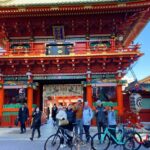
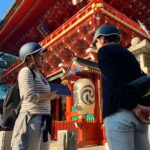
Sumiyoshi Jinja in a traditional neighborhood
The next stop is Sumiyoshi Jinja, a local shrine in a traditional Japanese town. You have around 10 minutes to visit.
This is another short stop, but it gives the route a steady rhythm: ride, pause, look around, and continue. The shrine is not presented as a major tourist complex. Its value is the chance to see a local place of worship within a neighborhood setting.
The guide is especially useful at stops like this. Sho and Nao are named as guides who lead the ride, and the strongest praise for them centers on their energy, kindness, explanations, and ability to guide the group safely through the streets. You are not just following a route on a map. You have someone pointing out what you might otherwise pass without noticing.
Kiyosumi Gardens offers the best walking break
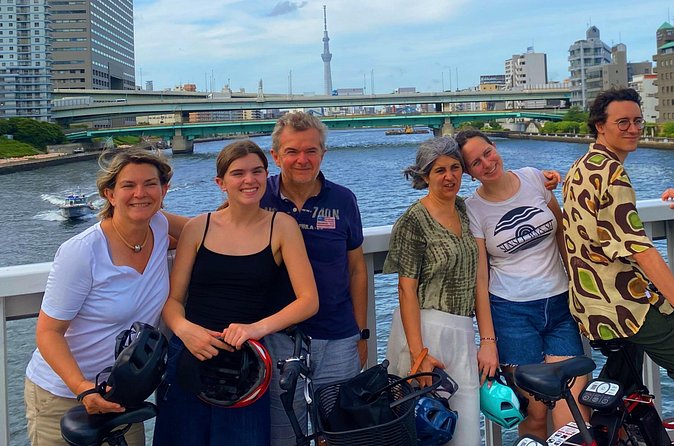
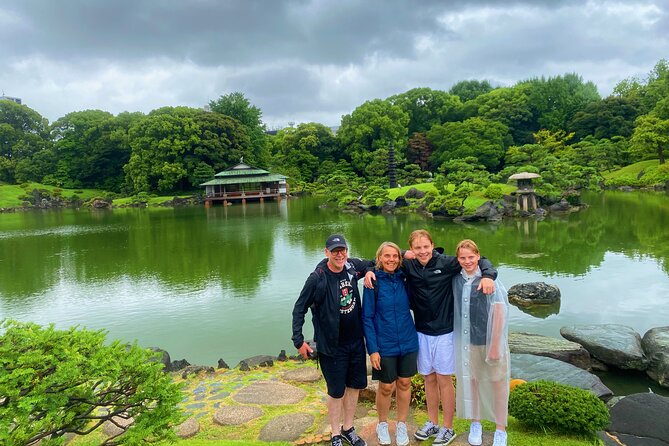
Kiyosumi Gardens is the longest stop before the final temple, with about 25 minutes to leave the bikes and walk through the grounds. Entrance is included in the tour price.
After cycling through city streets, this pause should feel welcome. You get time away from traffic and a chance to slow down among the garden paths. The tour does not allow enough time for an unhurried, full garden visit, but 25 minutes gives you more breathing room than the shorter shrine and theater stops.
This is one of the strongest parts of the route for anyone who wants variety. You have seen commercial Tokyo, a theater, a temple, a market, a food street, and a shrine. Kiyosumi Gardens adds a quieter setting without requiring you to spend a separate half-day reaching it.
Because the entrance fee is included, you do not need to make another payment here. You should still keep the schedule in mind. The guide needs to keep the group moving, so this is a scenic break, not a private garden tour.
Fukagawa Fudodo and the optional ¥1,000 ending
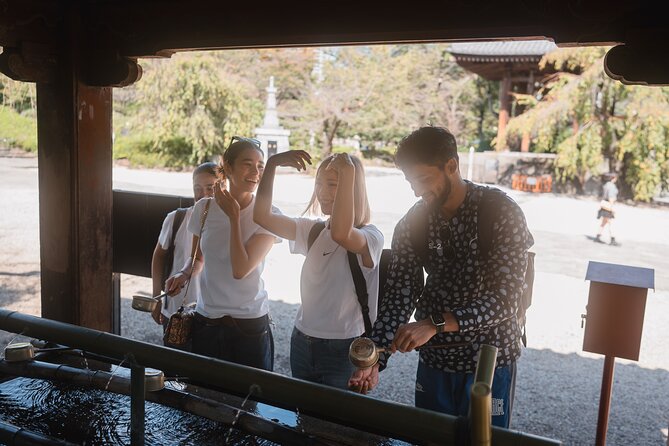
The ride ends at Naritasan Fukagawa Fudodo Honden, the Tokyo branch temple known as Fukagawa Fudodo. You spend about 20 minutes at this final stop.
Entry is optional and costs ¥1,000, payable in cash. The tour information says the ride can end here if you choose not to enter, so bring cash only if you want the additional temple visit. The entrance fee is not included in the tour price.
This final choice is helpful because it lets you decide how to spend the last part of the outing. If you are tired, you can finish at the temple. If you want another cultural stop and have ¥1,000 in cash, you can go inside.
The end point is at 1-chome-17-13 Tomioka in Koto City, not back at Hibiya. Plan your next move from Fukagawa rather than assuming you will return to Ginza. The one-way route is part of the appeal, but it requires a little thought when planning the rest of your day.
What the guides add to the ride
A bicycle tour depends heavily on the guide. Here, Sho and Nao are specifically associated with the experience. The most consistent strengths are their enthusiasm, clear explanations, kindness, and care when riding through busy streets.
That matters in Tokyo. A guide can help you stay with the group, explain the purpose of a shrine or district, and direct your attention to smaller details in the backstreets. The ride is not simply a bike rental with a printed map.
The group limit of seven also helps. A small group makes it easier for the guide to keep an eye on the riders and adjust explanations to the people present. You should still ask questions if you want more detail, especially at the shorter stops.
The tour is offered in English. That makes it useful for English-speaking visitors who want cultural explanation along with the ride, rather than simply pedaling behind a leader.
Price, timing, and the real value
The listed price is $87.96 per person. That is not a bargain-priced bicycle rental, but the comparison is not quite fair because you are paying for an electric bike, a guide, entrance to Kiyosumi Gardens, and a planned route through several districts.
You also get convenience. In three hours, the tour connects Hibiya, Ginza, Kabuki-za, Tsukiji, Tsukishima, Sumiyoshi Jinja, Kiyosumi Gardens, and Fukagawa. Doing this independently by rail and on foot would require more planning, and some of the transitions would be less interesting.
Food is extra, and the optional Fukagawa Fudodo entry costs ¥1,000 in cash. The Tsukiji stop is best treated as a chance to buy a small snack, not as an included meal.
This experience is booked an average of 67 days ahead, so it is worth planning early if your Tokyo dates are fixed. The cancellation terms are friendly: you can receive a full refund if you cancel at least 24 hours before the start time. Changes or cancellations inside that window are not refunded, and poor weather can lead to a different date or a full refund.
Who should book this Tokyo bike tour
I would choose this ride if you want to see several sides of Tokyo in one morning or afternoon and prefer moving through the city to sitting on trains. It suits couples, friends, families, and solo riders who are comfortable joining a small group.
It is especially good for a return visit, when you have already seen the major central sights and want a route through Tsukiji, Tsukishima, Kiyosumi, and Fukagawa. It also works well for a first visit if you want a broad introduction rather than a single landmark.
You should think twice if you dislike cycling in traffic, have limited physical fitness, or want long visits at each stop. Most stops last only 10 to 15 minutes, with more time at Tsukiji, Kiyosumi Gardens, and the final temple.
Good weather is required, so keep some flexibility in your schedule. The tour is also not a loop, and the finish in Fukagawa may be far from whatever you plan next in western or central Tokyo.
Should you book it?
Book this tour if you want an active, efficient way to connect Tokyo’s polished center with markets, shrines, gardens, and local streets. The electric bikes, small group, English-speaking guides, and included garden entry give the $87.96 price solid value for a guided three-hour outing.
Skip it if you want a slow food tour, a full kabuki experience, or extended time at every temple and garden. For most people who are comfortable on a bike, though, this is a smart way to see Tokyo at street level, with Sho or Nao helping you make sense of the city as you ride.
FAQ
How long does the Tokyo bayside e-bike tour last?
The tour lasts approximately three hours.
Where does the tour begin?
The meeting point is 1-3 Hibiya Park, Chiyoda City, Tokyo 100-0012, Japan.
Where does the tour end?
The tour ends at Fukagawa Fudodo, at 1-chome-17-13 Tomioka, Koto City, Tokyo 135-0047, Japan.
What sights are included on the route?
The route includes Ginza, Kabuki-za, Tsukiji Hongwanji Temple, Tsukiji Fish Market, Tsukishima Monja Street, Sumiyoshi Jinja, Kiyosumi Gardens, and Fukagawa Fudodo.
Is the bicycle included?
Yes. Use of an electric bicycle is included in the tour.
Is a guide included?
Yes. An English-speaking guide is included.
Is admission to Kiyosumi Gardens included?
Yes. Entrance to Kiyosumi Gardens is included.
How much does the optional Fukagawa Fudodo entry cost?
The optional entrance fee is ¥1,000, payable in cash.
Is food included?
No. Food and drinks are not included, though you have a quick snack break at Tsukiji Fish Market.
How many people can join the tour?
The tour has a maximum of seven participants.
Can I cancel for a full refund?
Yes. You can cancel at least 24 hours before the start time for a full refund. Cancellations made less than 24 hours before the start time are not refunded.
More Cycling Tours in Tokyo
More E-Bike Tours in Tokyo
More Tokyo Cycling Tours in Tokyo
More tours in Tokyo we've reviewed



Tokyo Cycling Tours, compared.
 ★ 5.0Tokyo Great Cycling TourFrom $99
 ★ 5.0Tokyo Top Highlights 3h Guided E-bike TourFrom $63
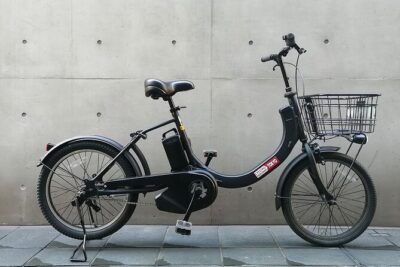 ★ 5.03h Tokyo E-Bike Tour: Hidden Gems, and Local Life with guideFrom $63
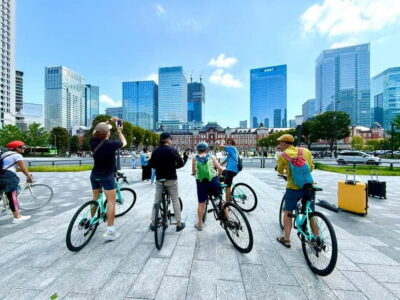 ★ 4.83-Hour Bike or E-Bike City Highlights TourFrom $453 hours
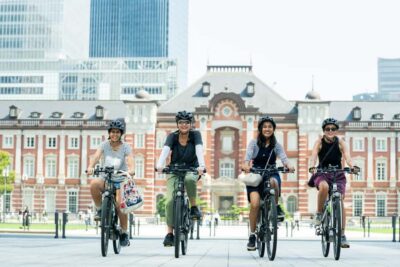 ★ 4.83-hour Guided E-Bike Tour of the City’s Hidden GemsFrom $65
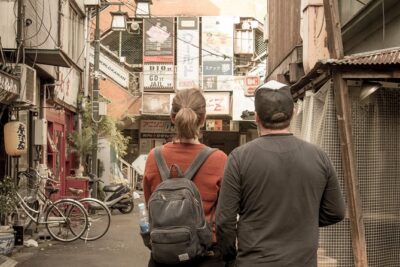 ★ 5.0Tokyo West-Side Cycling & Food TourFrom $99
 ★ 5.03-Hour Bike/E-Bike Tour of the City’s HighlightsFrom $63
 ★ 5.0Small Group Cycling Tour in TokyoFrom $66
Browse the lists this tour appears in