
Reviewed · TOKYO CYCLING TOURS
Tokyo West-Side Cycling & Food Tour
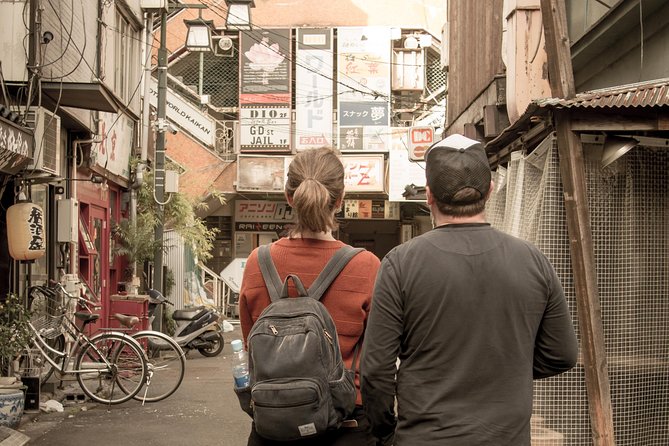
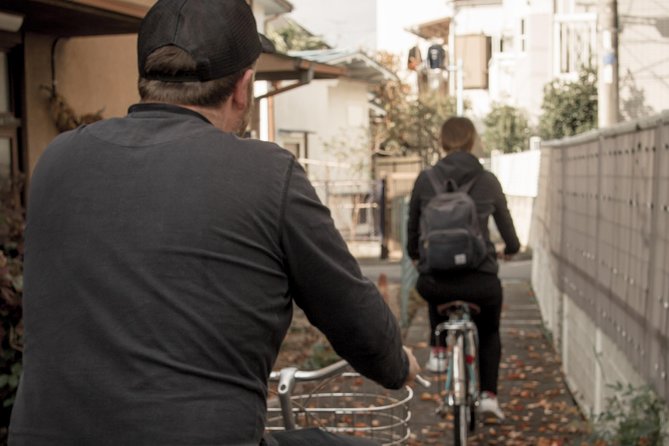
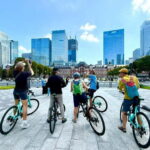
Tokyo’s west side is where this tour earns its keep. From Koenji Station, you ride a sturdy, slightly old-fashioned mamachari bicycle through back streets, neighborhood shopping areas, and along the Zenpukuji River. The reward is not a checklist of famous sights. It is a close look at how ordinary Tokyo works.
I like the small group of no more than eight and the way the ride mixes cycling with food and walking. I also like Andy’s personal approach: he has lived in Japan for more than 20 years, answers questions freely, and adds useful context about housing, schools, religion, bicycle parking, and work culture. The main consideration is simple: you need to be comfortable riding 12 to 15 kilometers through narrow streets and around pedestrians, cyclists, and uneven surfaces.
In This Review
- Key points at a glance
- Why West Tokyo makes a better bike ride than central Tokyo
- The mamachari: practical, quirky, and very Japanese
- Koenji back streets and the first taste of local life
- Nakano and Asagaya, neighborhoods with their own rhythm
- The Zenpukuji River brings a quieter stretch
- Snacks and lunch are part of the sightseeing
- Andy’s guiding style makes the difference
- How hard is the ride?
- Weather, timing, and the fine print
- Who should book the West-Side Cycling and Food Tour?
- Should you book it?
- FAQ
- Where does the Tokyo West-Side Cycling and Food Tour start?
- Where does the tour end?
- How long does the experience last?
- How far do you ride?
- What neighborhoods does the tour visit?
- What kind of bicycles are provided?
- Are helmets available?
- Is lunch included?
- Can the tour accommodate dietary restrictions?
- What happens if the weather is poor?
Key points at a glance
- Mamachari bicycles: Salvaged Japanese city bikes with front baskets, maintained for urban riding.
- Local Tokyo route: Explore Koenji, Nakano, Asagaya, and the Zenpukuji River instead of the standard central sights.
- Food included: Sample local snacks and enjoy a Japanese-style lunch at a typical neighborhood eatery.
- Guide-led cultural context: Andy explains everyday customs, food, transport habits, and local life in clear English.
- Flat, active outing: Expect about 3.5 to 4 hours, with roughly 12 to 15 kilometers of riding plus walking and meal stops.
- Weather matters: Basic ponchos are supplied in rain, but poor weather can lead to a cancellation, alternate date, or refund.
Why West Tokyo makes a better bike ride than central Tokyo
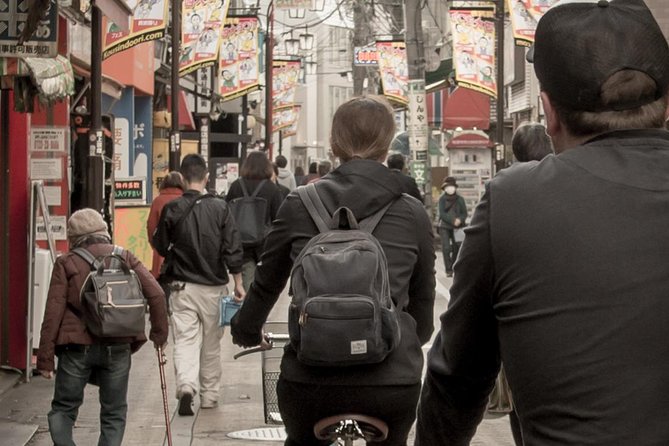
Tokyo can feel overwhelming when you spend your days around Shibuya, Shinjuku, and Asakusa. The west side offers a quieter rhythm. Here, the streets twist between small homes, local shops, railway neighborhoods, temples, riverside paths, and modest restaurants.
That change of pace is the point. You are not riding past one grand monument after another. Instead, you see the details that are easy to miss from a train window: how bicycles are parked, how narrow streets function, where people stop for food, and how residential districts fit around the city’s rail lines.
The route focuses on Nakano, Koenji, and Asagaya, three areas with distinct local character. You may pass through back streets where a guide matters, since these are places you might not choose on your own during a first visit to Tokyo.
The ride begins and ends at Koenji Station, at 4-chōme-48-2 Kōenjiminami in Suginami City. Since the activity returns to its starting point, you do not need to solve a complicated transportation problem at the end. Koenji is also near public transportation, making the meeting point practical for a morning or afternoon outing.
A few more Tokyo tours and experiences worth a look
The mamachari: practical, quirky, and very Japanese
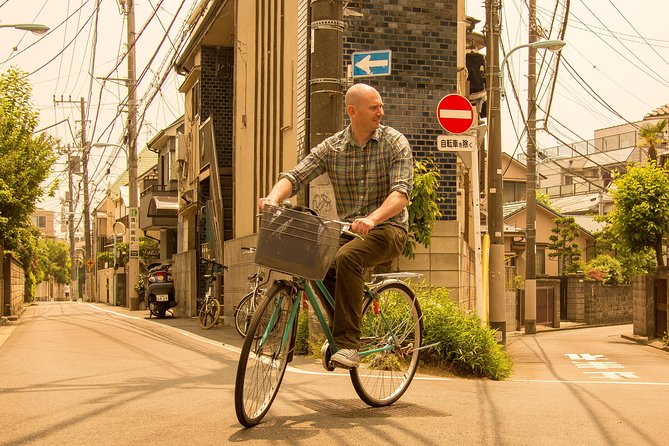
The bike is part of the experience. Mamachari bicycles are the common Japanese city bikes designed for short urban trips. These are salvaged bikes, but they are described as well maintained. Some may creak or squeak, yet they are kept in good working order for the ride.
They are Japanese-sized, so height matters. You should be over 140 centimeters, or about 4 feet 7 inches, to ride comfortably. Each bicycle has a front basket that can hold a standard backpack. That is useful, but I would still keep your belongings compact and secure.
Helmets are available for everyone who requests one. Ask for yours when booking or before the ride begins. You should also wear comfortable clothing and shoes that work for both pedaling and short walks.
The route is mainly flat, which makes it manageable for people with ordinary cycling experience. Still, flat does not mean effortless. You will be riding through narrow and potentially crowded streets, around uneven surfaces, and along changing urban paths. You need to control a bicycle confidently, stop when asked, and stay alert.
Koenji back streets and the first taste of local life
Koenji is a fitting starting point because it quickly pulls you away from the Tokyo many people picture. Instead of heading toward a major attraction, you begin by learning how to move through a residential district.
This part of the ride is less about speed than awareness. Tokyo’s smaller streets can be surprisingly calm, but they are not empty. You may need to share space with residents, delivery vehicles, pedestrians, and other cyclists. Andy sets the pace and gives directions, which helps you relax without switching off your attention.
The route also introduces the practical side of city cycling. Tokyo has specific systems for bicycle parking, and one of the tour’s playful challenges is learning how to use them. It is a small detail, but it gives you a better sense of the rules that shape daily life here.
Andy’s explanations add value at this point. He does not only point out buildings. He talks about how people live, work, and move around the city. If you are curious about Japanese customs or have questions about local life, this is the sort of tour where you can ask as you go.
Nakano and Asagaya, neighborhoods with their own rhythm
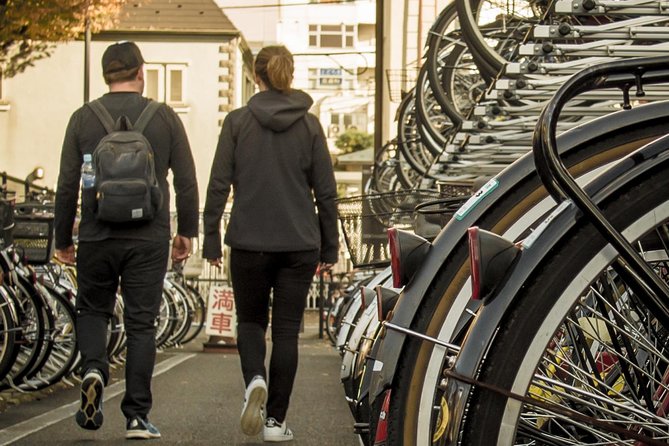
The ride continues through Nakano and Asagaya, areas that many first-time visitors overlook. Their appeal comes from ordinary streets, local businesses, and the contrast between quiet residential lanes and more active neighborhood centers.
You will likely walk at some points, park the bicycles, and pause for explanations. This makes the outing more social than a nonstop bike ride. It also gives you time to look around rather than simply pedal past everything.
The tour does not promise major sightseeing stops, and that is worth understanding before you book. If you want Tokyo Tower, the Meiji Shrine, or a grand view of the skyline, choose another activity. If you want a better feel for residential Tokyo, these neighborhoods are a strong fit.
The local context is one of the best reasons to choose this experience. Andy has been praised for explaining subjects such as housing, schooling, religion, and work culture in a relaxed way. Those topics may sound broad, but they help make sense of the streets around you. A compact home, a neighborhood shrine, or an unusual parking system becomes more interesting when you understand the habits behind it.
The Zenpukuji River brings a quieter stretch
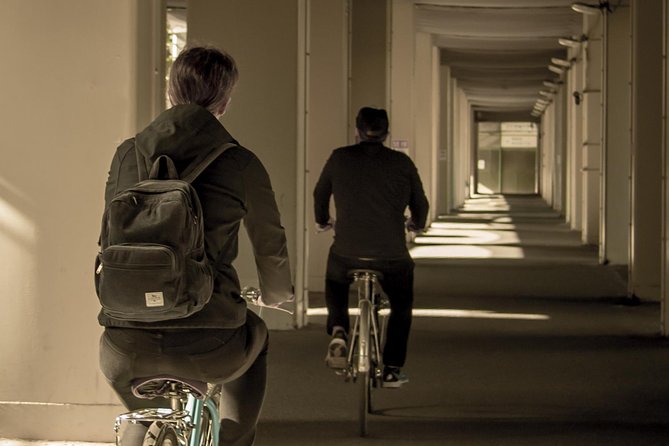
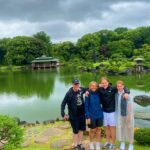
One of the most pleasant changes in the ride comes along the Zenpukuji River. Riverside bike paths give you a break from the tight turns and close quarters of the back streets.
This is where the ride can feel most restful. You are still in Tokyo, but the pace slows and the city opens out slightly. The river section also gives you a scenic contrast to the residential streets, without turning the tour into a formal sightseeing circuit.
The exact route and timing can change with group pace, weather, and how long people spend eating. Keep that flexibility in mind. The outing is advertised at about three and a half hours, but four hours is a more useful planning estimate.
A few more Tokyo tours and experiences worth a look
Snacks and lunch are part of the sightseeing
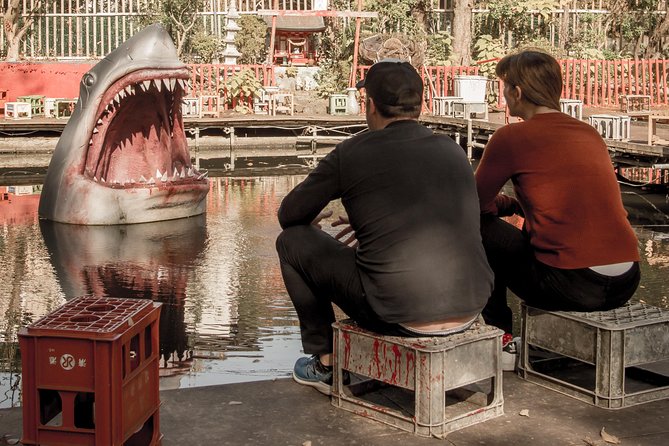
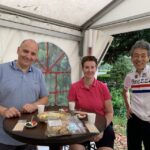
Food is not an afterthought here. The tour includes a tailored selection of popular local snacks and a Japanese-style lunch at a typical local eatery.
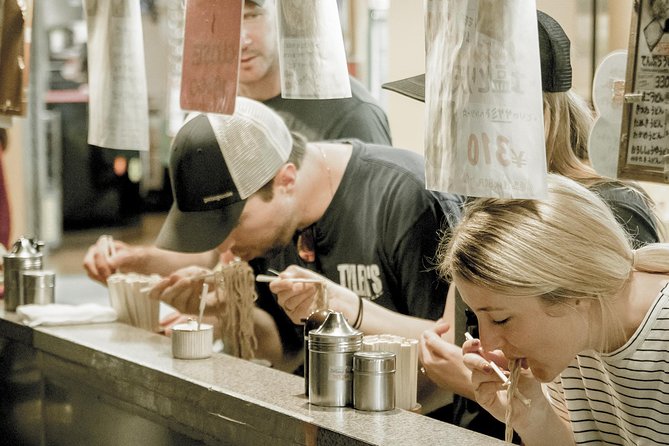
That means you should expect everyday food rather than a polished restaurant meal. You may eat at a counter, and the description specifically mentions sharing counter space with hungry salarymen. That setting is valuable because it places you in the normal flow of the neighborhood, but it may feel less comfortable if you prefer leisurely table service.
The food stops also make the ride more approachable. You are not just listening to cultural explanations. You are tasting things you might not recognize or feel confident ordering alone. The experience includes noodles and other local snacks, though the precise choices can vary.
Dietary limits require careful thought. Japanese cuisine often contains meat and seafood, with dashi frequently used as a base. Since the tour visits typical local establishments, it may be difficult to accommodate allergies, personal preferences, or strict dietary requirements. Ask before booking if food is a central concern, and do not assume that a dish is vegetarian simply because it contains no visible meat.
At about $99.49 per person, the price is fair if you value the complete package. You are paying for a small group, bicycle use, a guide, snacks, lunch, and several hours of local orientation. Compared with a standard sightseeing tour, the cost is not low. Compared with arranging separate meals, bicycle rental, and a private neighborhood guide, it offers solid value.
Andy’s guiding style makes the difference
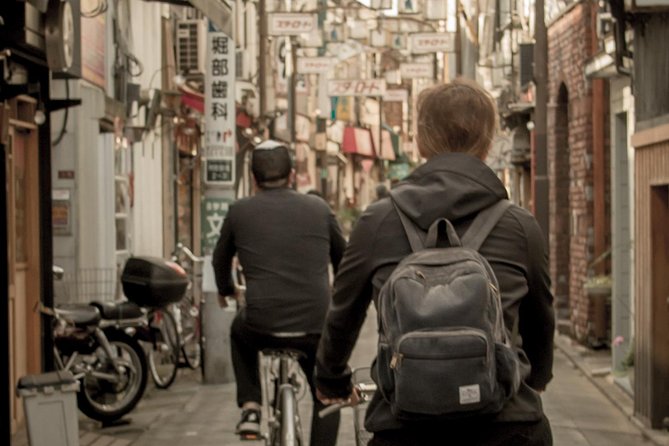
A bike route through quiet neighborhoods can be pleasant on its own, but the guide determines how much you take away. Andy is described as friendly, energetic, and easy to talk with. He has guided families, couples, and groups of friends, including children, and he keeps the pace comfortable.
His background as an Australian from Melbourne and his long residence in Japan give him an outsider-insider perspective. He can explain local customs in English while understanding the questions that visitors tend to ask.
The strongest feature is his willingness to connect the route to your interests. He has answered questions throughout the ride and, in some cases, followed up with food details and personal suggestions after the tour. That sort of follow-through is especially useful early in a Tokyo visit, when you are still figuring out where to eat and what areas suit you.
Do not expect a scripted lecture. The tone is social, informal, and conversational. That works well if you like asking questions and meeting other people. If you prefer silence, speed, or a tightly timed sightseeing program, this may feel too relaxed.
How hard is the ride?
The tour suits most people who can ride a bicycle competently in an urban setting. You should be able to handle narrow streets, uneven surfaces, turns, stops, and a distance of roughly 12 to 15 kilometers.
The route is mainly flat, and rest stops are built into the food and walking portions. Even so, this is not a passive activity. If you have not ridden a bike in years, busy city streets may feel stressful. A basic level of confidence is more important than athletic fitness.
Families can take part, and an 11-year-old has completed the experience according to the supplied information. Height still matters, and every child needs to be comfortable managing a bicycle in city conditions. The maximum group size of eight helps the guide keep an eye on the group, but it does not remove the need for individual caution.
Cycling liability insurance is included for the cycling portion. You are still expected to carry comprehensive travel insurance for other unexpected problems.
Weather, timing, and the fine print
This is an outdoor activity, so weather can shape the day. The tour generally proceeds in rain, and basic ponchos are provided. That does not mean you should expect a dry ride or perfect comfort in poor conditions.
The experience also requires good weather under its cancellation terms. If the operator cancels because of weather or because the minimum number of participants is not reached, you can choose another date or receive a full refund.
You can cancel for a full refund up to 24 hours before the start time. Changes or cancellations made inside that 24-hour window are not accepted for a refund. Since the ride can run closer to four hours, avoid scheduling a tight appointment immediately afterward.
Who should book the West-Side Cycling and Food Tour?
I would choose this tour early in a Tokyo visit if I wanted a practical introduction to daily life. It helps you get oriented, gives you food ideas, and shows you an area you might otherwise miss.
It is especially suitable for:
- People who enjoy seeing cities by bicycle
- Families and friends who want an active shared outing
- Repeat visitors seeking a different side of Tokyo
- Curious eaters who are open to typical local food
- Anyone who prefers small groups and conversation
- Visitors who want neighborhood context more than famous sights
I would skip it if you dislike cycling, need a fully accessible or stationary activity, have serious food restrictions, or want a list of headline attractions. The tour asks you to be flexible about weather, meal style, route timing, and the occasional squeak of a well-used city bike.
Should you book it?
Book it if your idea of a good Tokyo day includes quiet streets, local snacks, a flat bike ride, and a guide who can explain how the city works. The strongest reasons are the small group, the personal guiding from Andy, and the chance to connect food with everyday neighborhoods rather than tourist landmarks.
The $99.49 price makes the most sense when you use every part of the experience: eat the included food, ask questions, enjoy the walking stops, and treat the ride as a cultural introduction rather than a workout. For a first day in Tokyo or a break from central crowds, this is a practical and unusually personal choice.
FAQ
Where does the Tokyo West-Side Cycling and Food Tour start?
It starts at Koenji Station, at 4-chōme-48-2 Kōenjiminami, Suginami City, Tokyo 166-0003, Japan.
Where does the tour end?
The activity ends back at the Koenji Station meeting point.
How long does the experience last?
The listed duration is about 3 hours and 30 minutes. A practical estimate is 3.5 to 4 hours, depending on group size, weather, eating speed, and cycling pace.
How far do you ride?
You should expect to cycle roughly 12 to 15 kilometers, or about 7.5 to 9.5 miles.
What neighborhoods does the tour visit?
The route explores parts of Nakano, Koenji, and Asagaya, along with the Zenpukuji River and nearby back streets.
What kind of bicycles are provided?
You ride salvaged mamachari bicycles, which are Japanese city bikes with front baskets. They are maintained for urban riding.
Are helmets available?
Yes. Helmets can be provided for all participants on request.
Is lunch included?
Yes. The tour includes local-style snacks and a Japanese-style lunch at typical neighborhood eateries.
Can the tour accommodate dietary restrictions?
Japanese food often includes meat, seafood, and dashi. Because the tour visits typical local eateries, personal tastes, allergies, and strict dietary requirements may be difficult to accommodate.
What happens if the weather is poor?
Basic ponchos are provided if it rains, and the tour generally continues. If the operator cancels because of poor weather, you can choose a different date or receive a full refund.
More Food Experiences in Tokyo
More Food & Cycling Tours in Tokyo
More Tokyo Cycling Tours in Tokyo
More tours in Tokyo we've reviewed



Tokyo Cycling Tours, compared.
 ★ 5.0Tokyo Great Cycling TourFrom $99
 ★ 5.0Tokyo Top Highlights 3h Guided E-bike TourFrom $63
 ★ 5.03h Tokyo E-Bike Tour: Hidden Gems, and Local Life with guideFrom $63
 ★ 4.83-Hour Bike or E-Bike City Highlights TourFrom $453 hours
 ★ 4.83-hour Guided E-Bike Tour of the City’s Hidden GemsFrom $65
 ★ 5.03-Hour Bike/E-Bike Tour of the City’s HighlightsFrom $63
 ★ 5.0Small Group Cycling Tour in TokyoFrom $66
 ★ 5.03-Hour Tokyo Private E-Bike Tour Starting from Your HotelFrom $145
Browse the lists this tour appears in