
Reviewed · TOKYO CYCLING TOURS
Tokyo: 3-Hour Bike/E-Bike Tour of the City’s Highlights
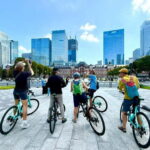
Tokyo can feel enormous on your first day, and this three-hour bike tour gives you a quick, lively orientation. You ride from Zojo-ji and Tokyo Tower country across the Imperial Palace area, Aoyama, and Harajuku to Shibuya Crossing, with a guide handling the route.
I like the efficient route and the local stories, especially when guides such as Naoki, Rinto, Sho, Rin, Kei, or Casey are leading. I also like that the ride ends near Yoyogi Park and Shibuya, where you can continue exploring. The trade-off is traffic: you should be comfortable riding in crowds and on city streets, and three hours can feel long in Tokyo heat.
In This Review
- Key points to know before you book
- Starting near Zojo-ji and Tokyo Tower
- The Imperial Palace, Otemon Gate, and Tokyo Station
- Akasaka Palace and the National Stadium
- Aoyama’s streets and the ride toward Harajuku
- Shibuya Crossing and the finish near Yoyogi Park
- What the cycling is really like
- Timing, weather, and the best departure
- How much value do you get for $63.01?
- Who should book this Tokyo bike tour?
- FAQ
- How long is the Tokyo bike tour?
- Where does the tour begin?
- Where does the tour finish?
- Is a helmet included?
- Is a child seat available?
- What happens if the weather is poor?
- Should you book it?
Key points to know before you book
- See eight major areas in three hours: The route links Zojo-ji, the Imperial Palace, Tokyo Station, Akasaka, the National Stadium, Aoyama, Harajuku, and Shibuya.
- E-bike assistance matters: The distance is manageable for a reasonably fit rider, but pedal assist makes the ride easier, especially in hot weather or when the group moves across central Tokyo.
- The route ends in a useful place: You finish in Jinnan, about five minutes from Yoyogi Park and roughly ten minutes from Shibuya Station.
- Bring cash for the helmet: Bike use and insurance are included, but helmet rental costs ¥1,000. A child seat costs ¥3,000 and must be arranged at least two days ahead.
- The meeting point needs extra time: The start is at the Statue of Commodore Perry near Zojo-ji. This spot can be hard to find, so do not arrive at the last minute.
- This is best as an early-trip orientation: You cover a large area quickly, giving you a useful sense of where to return for a longer visit.
Tokyo is one of the few cities where a bicycle can give you a better first look than a bus. You are close enough to notice side streets, cemetery walls, shop fronts, and changing neighborhoods, yet you move far enough to connect places that would take much longer on foot.
This route begins near Zojo-ji in Minato and ends near Yoyogi Park. Along the way, you pass imperial grounds, formal avenues, fashionable Aoyama, Harajuku’s Cat Street, and Shibuya Crossing. It is not a slow sightseeing ride with long visits inside each attraction. It is a moving introduction to Tokyo.
The current price is $63.01 per person. That is fair if you value a guide, bike rental, route planning, and the ability to cover a wide section of the city in one morning or afternoon. It is less compelling if you want detailed museum visits or long photo stops, since the tour spends only a few minutes at many places.
The experience is private, meaning only your own group is booked for the activity. The route itself moves through public streets and major visitor areas, so you should expect the feel of a city ride rather than a quiet country cycle.
Starting near Zojo-ji and Tokyo Tower
The meeting point is the Statue of Commodore Perry at 2-chome-2-20 Shibakoen, close to Zojo-ji. The location is near public transportation, but the exact statue has caused confusion, so I would allow extra time to find it.
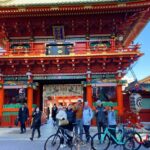
Zojo-ji is a fitting opening stop. This Buddhist temple sits beside Tokyo Tower and is tied to the Tokugawa shoguns, including several figures connected with Japan’s early modern rulers. The tour allows about five minutes here, enough for a look and a few pictures, but not enough for a full temple visit.
That short stop tells you something important about the tour. The guide is helping you understand what you are seeing, but the goal is breadth. If Zojo-ji is high on your list, plan to return later on your own.
A few more Tokyo tours and experiences worth a look
The Imperial Palace, Otemon Gate, and Tokyo Station
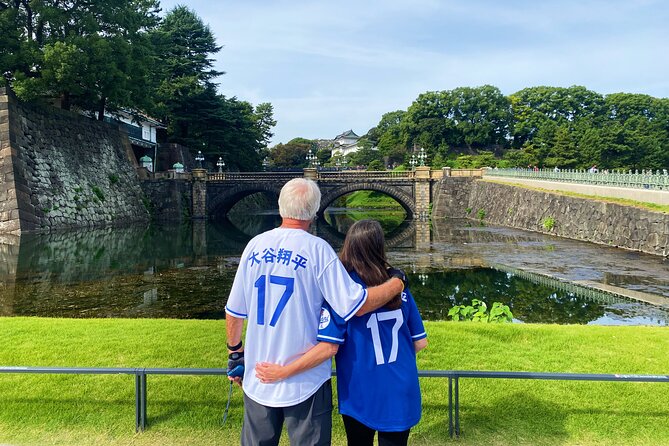
The ride continues to the Imperial Palace, the official residence of Japan’s Emperor. You spend about fifteen minutes in this area, learning about its role in modern Japan and its earlier connection to the shogunate.
The palace grounds are spacious and formal. From the public areas, you mainly see gates, stone walls, trees, and broad open spaces rather than the inner residence. The short visit works well for a first look, but you should not expect entry into the palace itself.
Otemon Gate receives another ten-minute stop. It is one of the grand entrances to the palace grounds, with a strong sense of old Edo-era defense and ceremony. This is one of the better planned photo stops because the gate gives the route a clear historical marker.
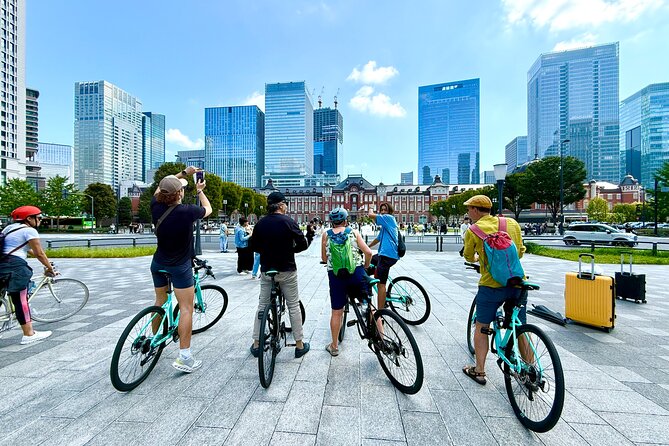
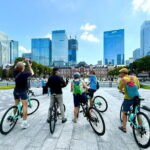
Tokyo Station follows, with roughly ten minutes at Marunouchi Station Square. The red-brick building opened in 1914 and offers a striking contrast to the towers and glass offices around it. The tour helps you connect Tokyo’s older public architecture with its present-day business center.
You may see Tokyo Station from outside and from a distance rather than touring the interior. That is a limitation, but it keeps the ride moving. I would treat this stop as a visual introduction, then return later if you want to study the building or explore Marunouchi on foot.
Akasaka Palace and the National Stadium
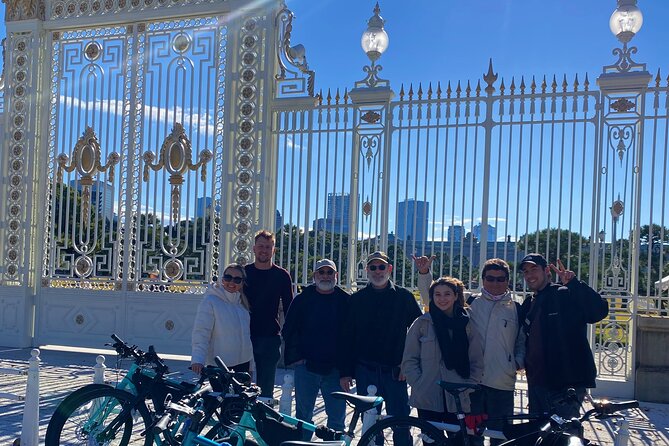
Akasaka Palace, also called the State Guesthouse, adds another change of mood. Built originally as a royal villa, it now receives visiting dignitaries. The exterior has a grand European-inspired style that looks quite different from Zojo-ji or the Imperial Palace gates.
The scheduled stop is only about five minutes. You get the setting and a quick explanation, but the short visit does not allow much time for the building’s interiors or grounds. If your interest is architecture, note the location and consider returning separately.
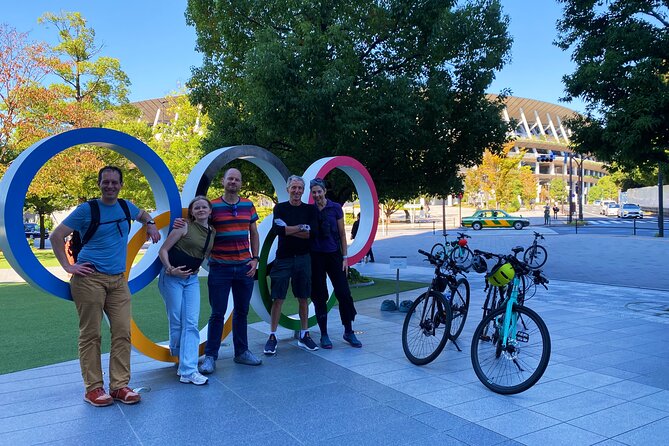
The route then reaches Japan National Stadium, used for the 2020 Tokyo Olympic and Paralympic Games. Fifteen minutes here gives you more breathing room than at some of the other stops. It is a useful reminder that Tokyo’s story is not only about temples and imperial sites. The city also presents itself through large modern projects and international sporting events.
This section can feel like a lot of information in a short span. A good guide helps by explaining why each place matters instead of simply naming it. Guides including Naoki, Hiroto, Rinto, Sho, Rin, Kei, and Casey have been praised for clear explanations, friendly manner, and careful group handling. Your assigned guide will vary, so the quality of the spoken detail may differ slightly from one departure to another.
Aoyama’s streets and the ride toward Harajuku
Aoyama brings the tour into contemporary Tokyo. The area is known for high-end fashion, polished storefronts, and unusual modern architecture. You do not stop long, about five minutes, but cycling gives you a better sense of how the district changes from the palace area.
This is one of the reasons I prefer the bike format to a bus. You can notice the transition from government and ceremonial spaces to fashion streets without waiting for a vehicle to crawl through traffic. You also get a bit of exercise and fresh air along the way.
The ride continues toward Shibuya Cat Street, a popular stretch associated with fashion brands, smaller shops, and vintage clothing. Again, the stop is short. You are passing through rather than shopping, so save your browsing for after the tour.
The guide’s role is especially useful here. Tokyo’s neighborhoods can blur together when you first arrive. Moving through them in sequence gives you a mental map: Minato and Zojo-ji, central government Tokyo, Aoyama, Harajuku, then Shibuya.
Shibuya Crossing and the finish near Yoyogi Park
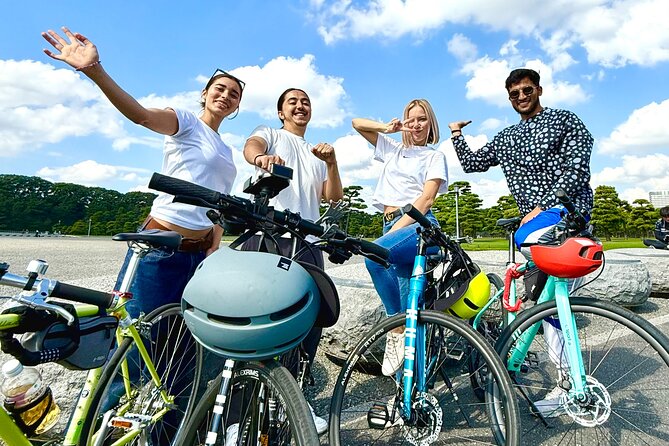
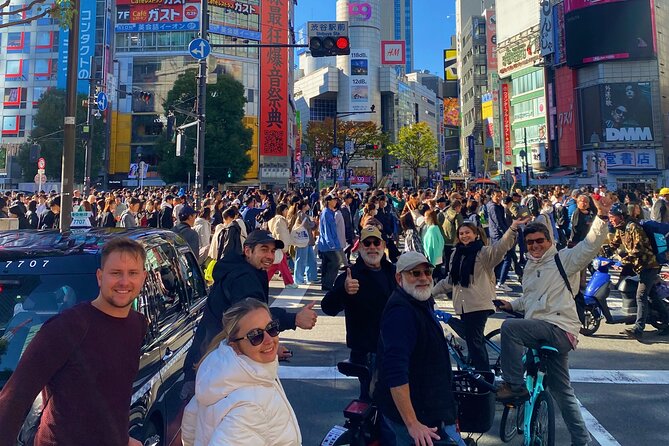
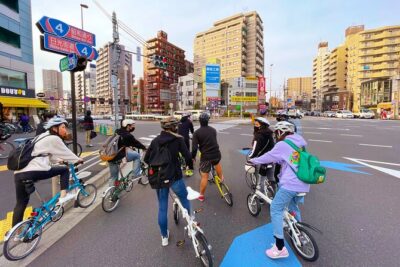
The final major stop is Shibuya Crossing. The itinerary includes biking through the famous intersection, which is unusual and memorable, but it also requires alert riding. You are moving through a busy public road, not a closed attraction.
Some riders describe moments of stress in traffic, while others say the guides made them feel safe and kept the group together. The practical truth is simple: you need to be comfortable following instructions, stopping when asked, and riding around other cyclists, cars, and pedestrians.
The route ends at the Bell of Peace in Jinnan, a shopping and dining area between Shibuya and Yoyogi Park. From there, it is about a five-minute walk to Yoyogi Park and ten minutes to Shibuya Station. This is an excellent finish because you are not dropped in an isolated rental shop or sent back to the starting point.
You can continue into Harajuku, walk through Yoyogi Park, or head toward Shibuya for food and shopping. One guide even helped a group with a dinner suggestion, which is the sort of small local help that adds value after the formal ride ends.
A few more Tokyo tours and experiences worth a look
What the cycling is really like
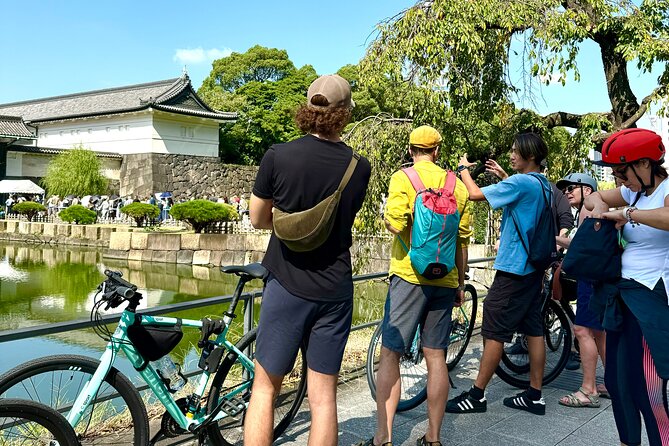
The tour lasts about three hours, including travel between stops. You are not pedaling continuously at full speed, but this is still a physical activity. One direct warning from the experience is worth taking seriously: you should have a moderate level of fitness.
The e-bike option is a major advantage. It makes the distance less tiring and helps if you are dealing with heat, jet lag, or a mixed-age group. A family group ranging from younger adults to older riders completed the route without reported problems, and slower riders were given time to keep up.
You will sometimes ride on the road. Tokyo traffic is not as intimidating as many people expect, but it is still a major city. Guides have been praised for explaining road rules, riding at the front and back of small groups, and checking that everyone stays together.
The ride includes bike insurance and a small pouch attached to the bike for your phone, wallet, and keys. Raincoats are supplied on rainy days. Helmets are not included, however. Rental costs ¥1,000, payable in cash, so bring yen if you want one.
For a child seat, contact the operator at least two days before the activity. The setup costs ¥3,000 and also requires cash on the day. This detail matters for families because you should not assume a seat will be available at the meeting point without advance notice.
Timing, weather, and the best departure
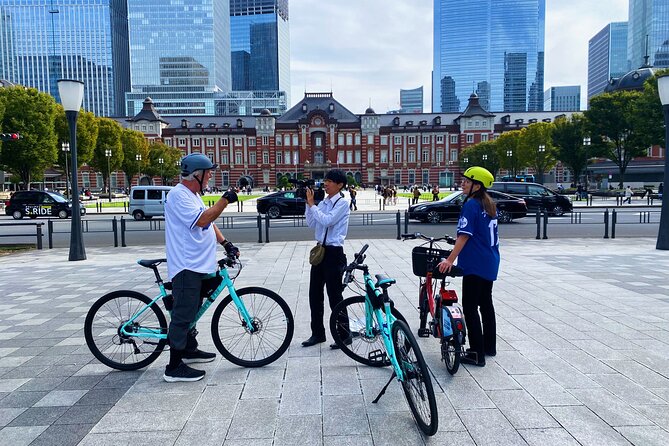
The tour can work well during a short stay or a long airport layover. One twelve-hour layover group used it to see a large part of Tokyo before returning to the airport. I would still allow plenty of extra time around the tour if you have a flight, since the ride ends far from its starting point.
Morning departures make sense in hot weather. A few riders found the heat tiring, and starting earlier can make the three-hour ride more comfortable. Afternoon departures offer a different payoff: the route can reach Shibuya when the area is especially atmospheric, and an evening departure may let you see the crossing after dark.
The experience requires good weather. If the operator cancels because of poor conditions, you are offered another date or a full refund. That policy is reasonable, but it can disrupt a tightly planned schedule. One person had a date changed because of rain even though the weather later improved, so do not place this tour on the only possible day of your Tokyo visit if your schedule is inflexible.
Cancellation is free up to 24 hours before the start time. Inside that window, you do not receive a refund and changes are not accepted.
How much value do you get for $63.01?
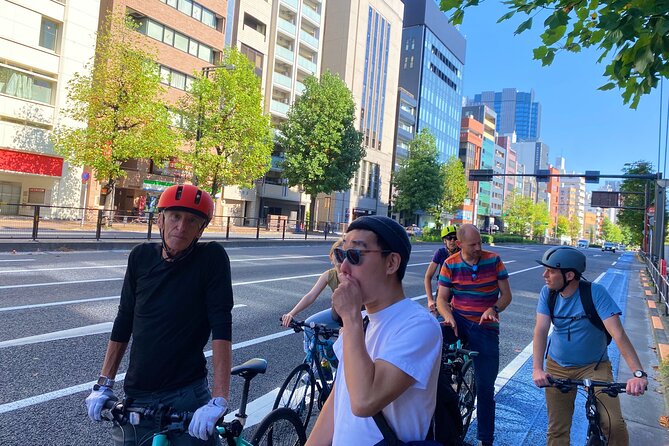
At $63.01 per person, the cost is not simply paying for a bicycle. You are paying for the rental, route design, English- or Japanese-speaking guidance, bike insurance, and a way to connect distant Tokyo districts without figuring out the roads yourself.
The strongest value comes on your first day. You can quickly decide which neighborhoods deserve a longer return visit. If you are short on time, the tour gives you a useful overview far faster than walking between the same places.
The weaker value comes if you want depth. Five or ten minutes at a stop is enough for orientation and photographs, not a full cultural visit. One rider felt that some locations needed more explanation, while the larger pattern of feedback praised the guides for history, popular culture, safety, and group care.
I would not book this as your only Tokyo sightseeing activity. I would book it as a moving introduction, then return to Zojo-ji, the Imperial Palace area, Tokyo Station, or Shibuya on your own.
Who should book this Tokyo bike tour?
I recommend it for first-time visitors who want to get their bearings fast, people with only a few hours in Tokyo, and anyone who finds buses too enclosed or walking tours too slow. It also suits families and mixed-age groups when everyone can ride safely and the e-bike option is available.
It is a good fit for riders who enjoy seeing ordinary streets between famous sights. The cemeteries, parks, neighborhood roads, and changing architecture help the city feel more connected than a checklist of isolated attractions.
I would hesitate if you dislike city traffic, have trouble riding for three hours, or want frequent, lengthy photo stops. The guides are patient, but the group still has a route to complete. Tokyo weather also matters, especially during hot or rainy periods.
FAQ
How long is the Tokyo bike tour?
The tour lasts approximately three hours, including the time spent riding between stops.
Where does the tour begin?
The meeting point is the Statue of Commodore Perry at 2-chome-2-20 Shibakoen, Minato City, Tokyo 105-0011, Japan. It is near Zojo-ji and public transportation.
Where does the tour finish?
The ride ends at the Bell of Peace in Jinnan, near the shopping and dining area between Yoyogi Park and Shibuya. Yoyogi Park is about a five-minute walk away, and Shibuya Station is about a ten-minute walk.
Is a helmet included?
No. Helmet rental costs ¥1,000, and you should bring cash to pay on the activity date.
Is a child seat available?
Yes, a child seat can be arranged for ¥3,000. You must contact the operator at least two days before the tour and bring cash on the day.
What happens if the weather is poor?
The experience requires good weather. If the operator cancels because of poor conditions, you can choose a different date or receive a full refund. You can also cancel for a full refund up to 24 hours before the start time.
Should you book it?
Book this tour if you want a fast, active introduction to Tokyo and feel comfortable riding through city streets. The combination of Zojo-ji, the palace district, Tokyo Station, Aoyama, Harajuku, and Shibuya is hard to cover so efficiently on foot.
Bring cash for a helmet, arrive early for the Commodore Perry meeting point, and choose a cooler departure when possible. If you want quiet temples, long explanations, or extended shopping time, plan separate visits afterward. For a first look at Tokyo that gives you both famous sights and a sense of how the neighborhoods connect, this is a strong choice.
More Cycling Tours in Tokyo
More E-Bike Tours in Tokyo
More Tokyo Cycling Tours in Tokyo
More tours in Tokyo we've reviewed

Tokyo Cycling Tours, compared.
 ★ 5.0Tokyo Great Cycling TourFrom $99
 ★ 5.0Tokyo Top Highlights 3h Guided E-bike TourFrom $63
 ★ 5.03h Tokyo E-Bike Tour: Hidden Gems, and Local Life with guideFrom $63
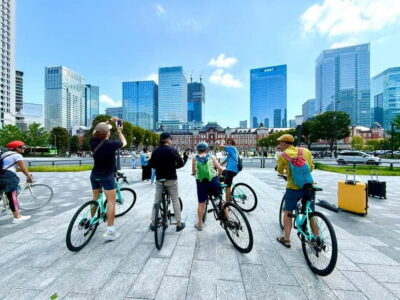 ★ 4.83-Hour Bike or E-Bike City Highlights TourFrom $453 hours
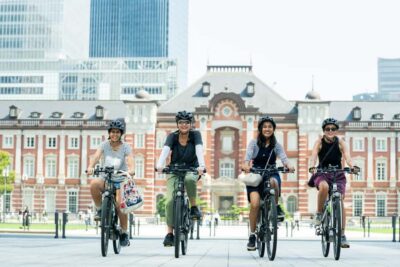 ★ 4.83-hour Guided E-Bike Tour of the City’s Hidden GemsFrom $65
 ★ 5.0Tokyo West-Side Cycling & Food TourFrom $99
 ★ 5.0Small Group Cycling Tour in TokyoFrom $66
 ★ 5.0Tokyo downtown bicycle tour Tokyo Backstreets Bike TourFrom $65
Browse the lists this tour appears in