
Reviewed · TOKYO CYCLING TOURS
Tokyo Bike Tour: Shibuya, Harajuku & Hidden Gems
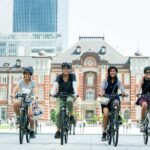
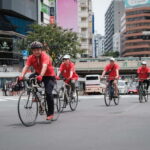
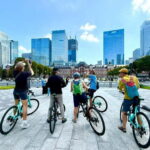
Tokyo reveals itself quickly from a bicycle. In three hours, you can move from Yoyogi’s leafy paths to Shibuya Crossing, then on through Harajuku, Aoyama, and Gaien without spending half the tour underground on trains. The best part is the change of pace: you see the famous city, then turn into a quiet street that most visitors would walk right past.
I like the small group of six and the guide’s local angle. Taichi, an experienced cyclist based around Shibuya, leads the ride in English and shares practical tips about cafes, restaurants, local customs, and the stories behind the streets. I also like the efficient route, which links several major Tokyo districts in one morning or afternoon.
The main consideration is the riding. You need to feel comfortable on city streets, crossing at traffic lights, handling occasional narrow or crowded sections, and maintaining roughly 15 kilometers per hour. This is not a gentle park ride, and a few uphill sections may test your legs.
In This Review
- Why this three-hour ride earns a place on your Tokyo plan
- Starting beside Yoyogi Station
- Yoyogi Park and the first quiet streets
- Shibuya by bike, then on foot
- Harajuku and Omotesando without the usual rush
- Aoyama’s quieter side
- Gaien, the Ginkgo Avenue, and the National Stadium
- What the riding feels like
- The guide and the value of a small group
- Who should book this ride
- Should you book the Shibuya bike tour?
- FAQ
- Where does the Tokyo bike tour start?
- How long does the bike tour last?
- What areas does the tour visit?
- Is the tour conducted in English?
- How many people are in the group?
- Are bicycles and helmets included?
- How fast do I need to ride?
- Can I join if I am not confident riding in traffic?
- What should I wear and bring?
- What happens if it rains?
Why this three-hour ride earns a place on your Tokyo plan
- Maximum six participants: The small group gives you room to ask questions and makes it easier for the guide to manage city traffic.
- A useful first-day orientation: Shibuya, Harajuku, Omotesando, Aoyama, and Gaien all appear in one compact route.
- Quiet streets alongside famous sights: You get more than major photo stops, with backstreets and less familiar corners along the way.
- A local guide who cycles the area: Taichi can offer practical neighborhood advice rather than only repeating standard landmark facts.
- Proper city riding: Expect traffic lights, narrow lanes, occasional crowds, and a normal cycling pace of about 15 kilometers per hour.
- Bikes and helmets included: You do not need to arrange equipment before arriving.
Starting beside Yoyogi Station
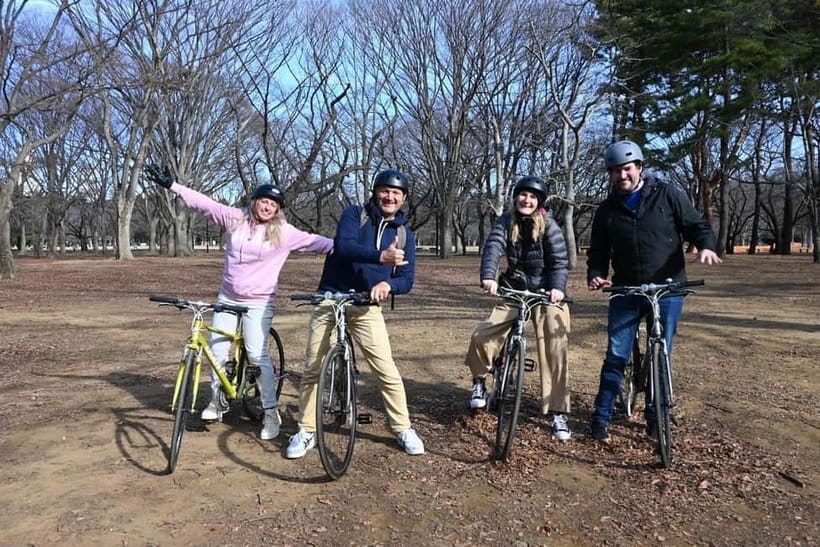
The tour begins at Umayamichi Park, at the park next to Freshness Burger. This is a handy meeting point, about one minute on foot from Yoyogi Station and roughly ten minutes from Shinjuku Station.
That location matters. Shinjuku Station can feel like a small city, so beginning near Yoyogi keeps your arrival simple. Allow enough time to find the park and settle in. You will receive a short, five-minute safety briefing before riding away.
The bikes and helmets are included. Wear comfortable clothes and closed-toe shoes, and bring a drink. Sandals, flip-flops, open-toe shoes, short skirts, large bags, umbrellas, and headphones are not allowed. Those rules may sound fussy, but they make sense once you are riding through Tokyo traffic.
The tour is limited to six people, which is a real advantage here. A large bike group would be awkward around traffic lights and narrow streets. With six or fewer riders, the guide can keep the pace together and answer questions without turning the outing into a lecture.
A few more Tokyo tours and experiences worth a look

Yoyogi Park and the first quiet streets
After the safety talk, the route heads toward a secret stop with a scenic view. The stop itself is not described in advance, which is part of the appeal. You are not simply ticking off a list of attractions. The guide can point out places that are easy to miss when you follow only the usual Tokyo route.
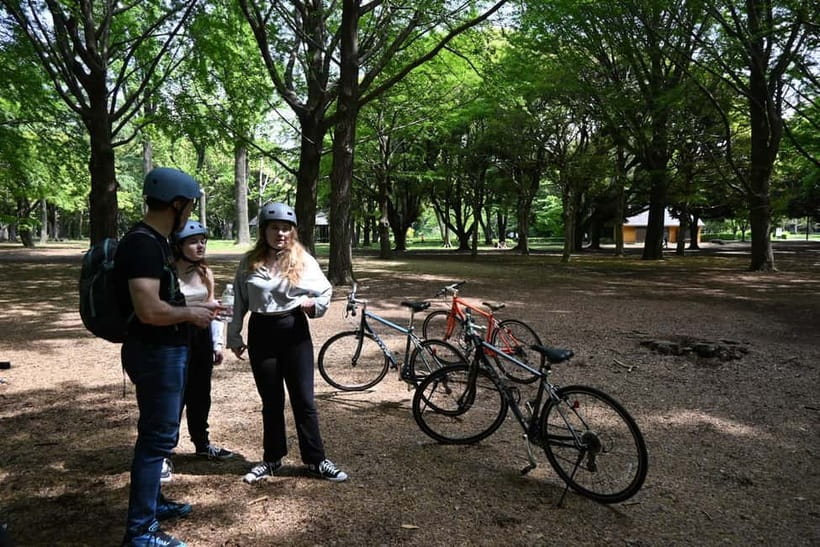
Yoyogi Park follows, with about 15 minutes for a photo stop and views along the way. The park gives you an early change from dense city blocks to open paths and trees. It also helps you get used to the bike before the route becomes more urban.
Do not mistake this for a long park cycling session. The park is one section of a wider city ride. You will soon be back on public streets, and the tour’s value comes from connecting the park with Shibuya and Harajuku rather than treating each district as a separate outing.
Shibuya by bike, then on foot
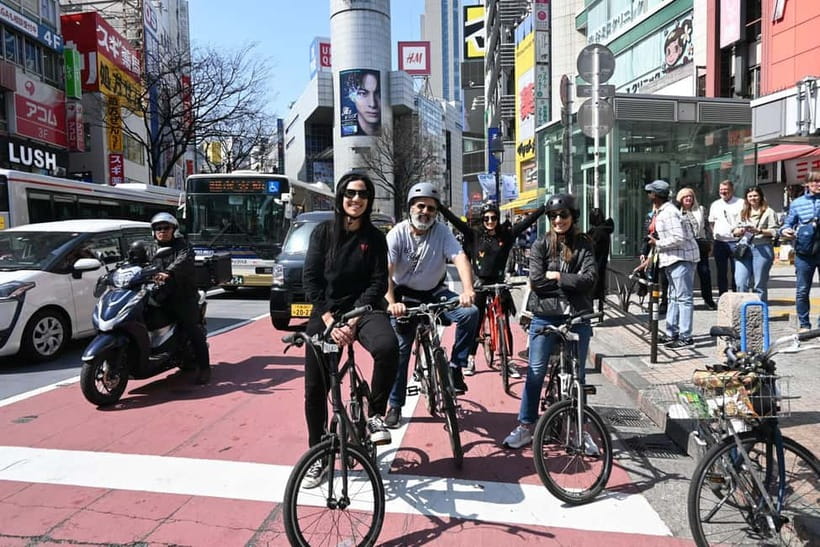
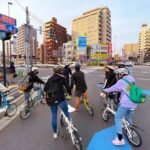
The ride through Shibuya lasts about 15 minutes before reaching Shibuya Crossing. This is a smart use of a bicycle. Shibuya’s major sights are close enough to connect, but walking between them can take longer than expected, especially when you are stopping for photos and trying to orient yourself.
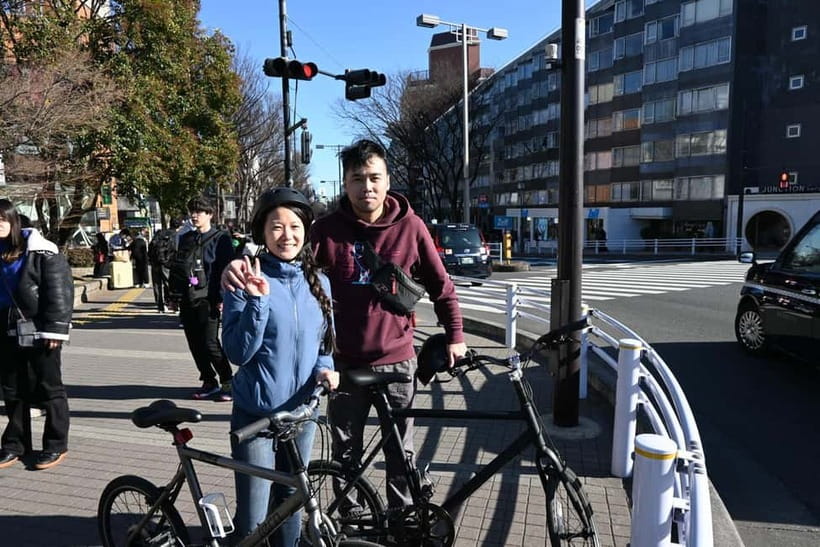
At Shibuya Crossing, you have about ten minutes for a guided visit, a walk, and photos. You may leave the bikes briefly to take in the crossing properly. The famous intersection is best understood from street level, where several streams of people move through the same space at once.
The nearby Hachikō Statue gets another ten minutes. The statue honors Hachikō, the loyal dog remembered for waiting at Shibuya Station for his owner. This is a short stop, but it gives the district a human story amid all the giant screens and commercial energy.
Between the crossing and Hachikō, the route also includes another lesser-known stop with time for a guided look and photos. That balance is one of the ride’s strongest features. You get the obvious Shibuya landmark, then a quieter place where the guide can explain something you might not have noticed alone.
Harajuku and Omotesando without the usual rush
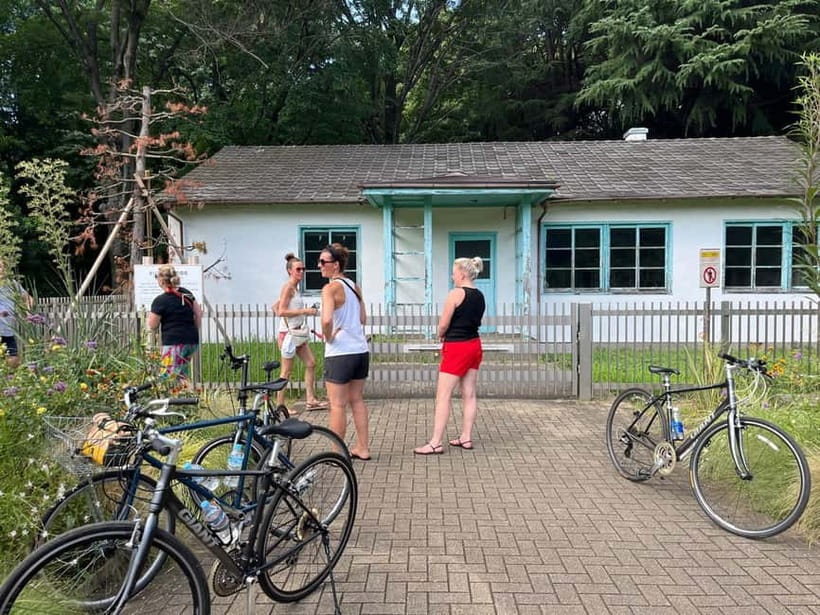
From Shibuya, you cycle toward Harajuku for a short photo stop and scenic ride. Harajuku is often reduced to fashion shops and youth culture, but moving through it by bike gives you a wider view of the district. You can take in the shift from Shibuya’s large-scale commercial streets to a more varied mix of lanes, shops, and side roads.
Another secret stop follows, again with time for photos and views. The wording is deliberately vague, so do not book this expecting a named attraction at every turn. Book it if you enjoy letting a local guide choose the route and point out small details.
Omotesando comes next, with about five minutes for photos and a look at the area. This broad avenue is known for its polished architecture, fashion stores, and carefully designed streetscape. It offers a sharp contrast with the quieter lanes earlier in the tour.
The bicycle lets you see that contrast in a short time. You do not need to plan separate walks through Shibuya, Harajuku, and Omotesando, and you avoid using public transport between them. Still, the pace means you should think of this as an overview with selected stops, not a full shopping tour or a detailed visit to every neighborhood.
Aoyama’s quieter side
The ride then enters Aoyama, where the schedule allows about 20 minutes for photos and scenic views. Aoyama is a good place to slow the route down. Its streets feel more spacious and composed than the busiest parts of Shibuya, while still offering plenty of city character.
The guide’s local knowledge is especially useful here. Taichi can answer questions about cafes and restaurants, and he can add personal observations about how the area has changed. You should ask about places to return to later, since the bike tour itself does not include a meal or cafe stop.
Aoyama Cemetery receives a longer visit of about 20 minutes. You will walk with the guide and have time for photos. This is one of the more unusual stops on the route, and it gives the tour a calmer, more reflective pause after the noise of Shibuya and Harajuku.
The cemetery also shows why a local guide can add value. A quick independent ride might pass the entrance without a second thought. Here, the stop is built into the route, with time for the guide to explain what you are seeing. Keep in mind that it is a place of remembrance, so quiet behavior and respect are important.
A few more Tokyo tours and experiences worth a look
Gaien, the Ginkgo Avenue, and the National Stadium
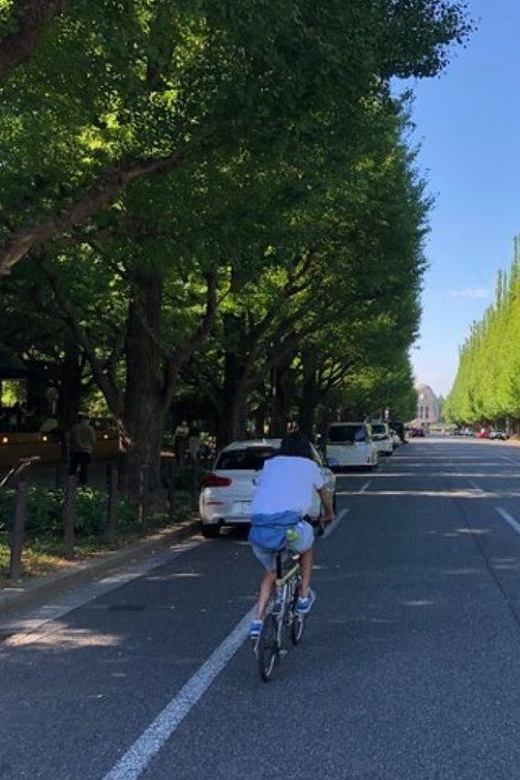
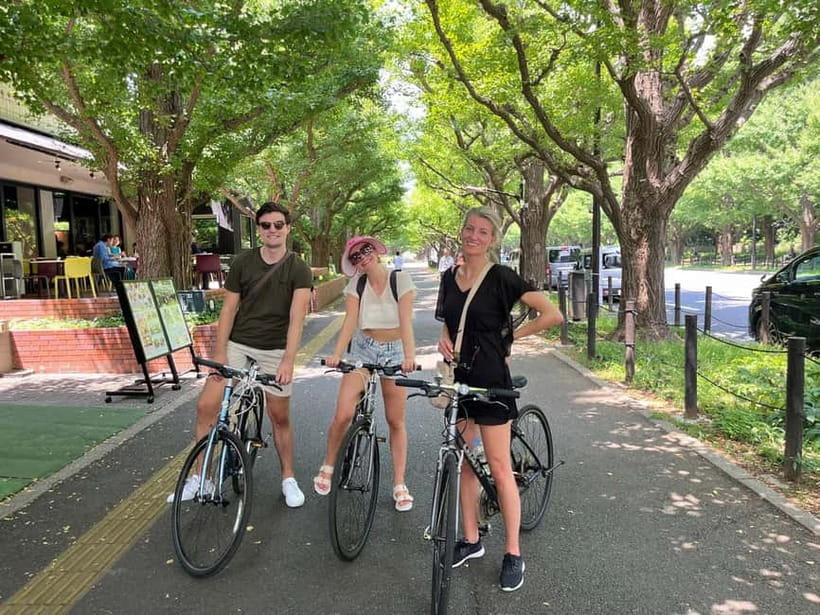
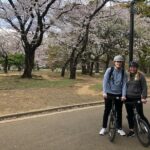
The route continues to Meiji Jingu Gaien Ginkgo Avenue for a short photo stop and scenic ride. The avenue is particularly associated with its rows of ginkgo trees. Seasonal appearance can change the view, so the experience will not look identical throughout the year.
Next comes Japan National Stadium, with about five minutes for photos. The stadium adds a modern architectural and sporting landmark to a route that has already included parks, a cemetery, old neighborhood streets, and famous shopping districts.
These final stops give the tour a useful sense of range. You are not seeing only Tokyo’s most crowded commercial center. You are also passing through broad avenues, open areas, and districts with a different rhythm. After the stadium, the group cycles back to Umayamichi Park.
What the riding feels like
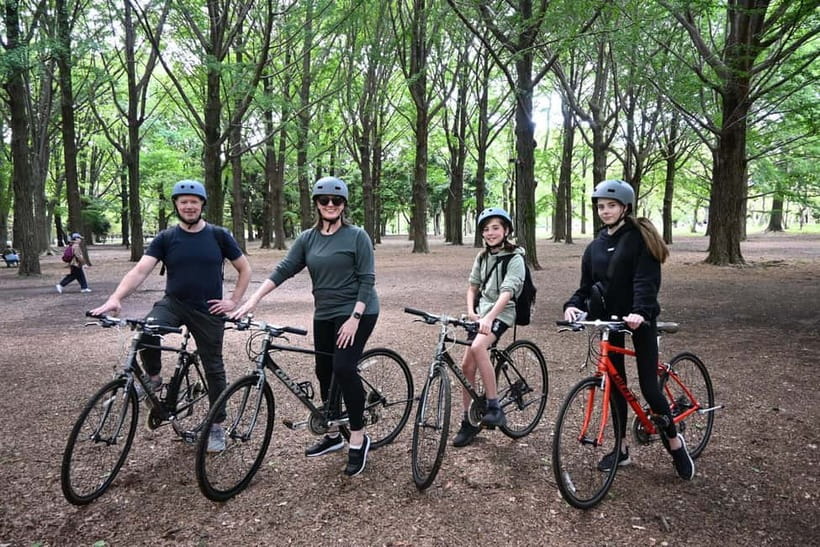
You should be a confident recreational cyclist before booking. The tour expects a typical speed of about 15 kilometers per hour, or 9.3 miles per hour, and includes city streets, traffic lights, narrow sections, and occasional crowds.
The guide is an experienced cyclist and leads with safety in mind. You must still follow Japanese traffic rules and the guide’s instructions. The tour is not suitable for someone who has not ridden a bike for years or who feels nervous riding near cars and pedestrians.
The route may include uphill stretches. One useful detail is that the bikes have working gears, so you can adjust your effort rather than grind up every slope in one setting. There are small pauses and photo stops, but you should still expect to ride for much of the three hours.
The tour can operate in light rain. A sudden weather change may cause cancellation, so pack for conditions without assuming the ride will proceed in heavy or unstable weather. Comfortable clothing is more important than looking polished. Closed-toe shoes give you better control and meet the tour rules.
The guide and the value of a small group
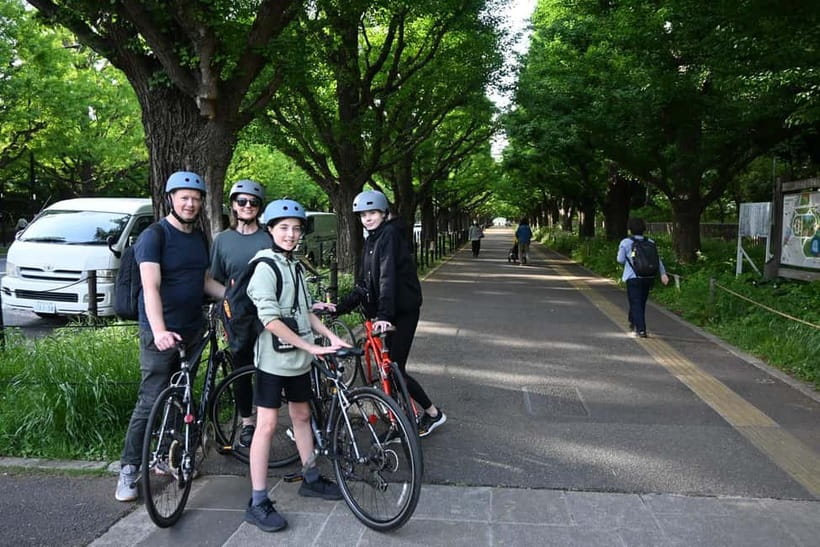
Taichi is the guide name associated with this experience. He has guided the area since 2018 and is also an active cyclist. That combination matters because the tour depends on both local awareness and steady bike handling.
A good guide on this route does more than point toward Shibuya Crossing. You need someone who can set a safe pace, explain when to walk the bike, keep the group together, and adjust commentary to your questions. Taichi’s English-language guiding makes the tour accessible to international visitors, and the small group leaves room for direct conversation.
The local advice may be one of the best reasons to book early in your Tokyo stay. You can ask about cafes and restaurants in Shibuya, Harajuku, Aoyama, and nearby areas, then use those suggestions later. The tour does not include food, but its neighborhood coverage can help you decide where to eat afterward.
At $63 per person, the price is fair for three hours when you consider the included bike, helmet, small group, English guide, and the amount of ground covered. You are paying for access to a planned route and local direction, not simply for bicycle rental. If you already know Tokyo well and enjoy planning your own rides, the value is lower. If this is your first visit, the combination of transport, orientation, and commentary makes the cost easier to justify.
Who should book this ride
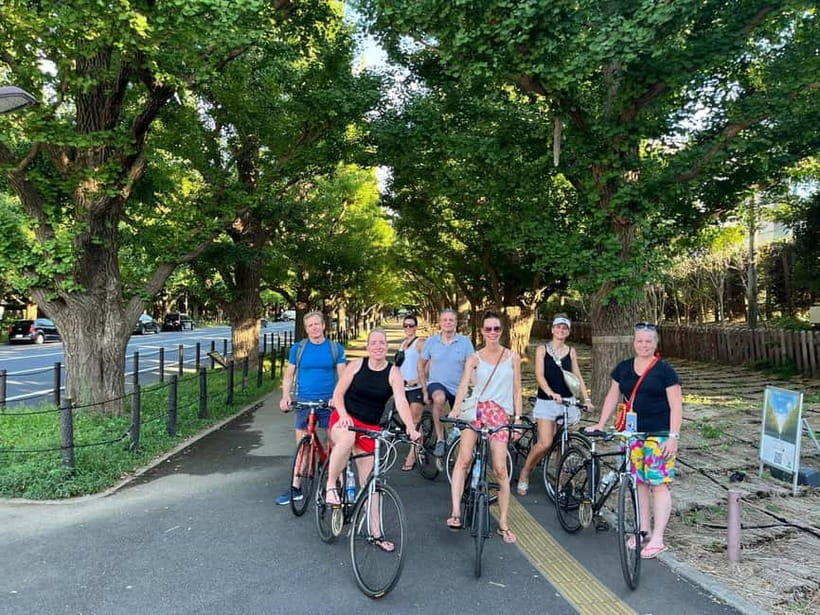
I would put this near the start of a first Tokyo visit, especially if you want to understand how Shibuya, Harajuku, Aoyama, and Gaien fit together. The tour gives you a practical map of the area and helps you identify places worth revisiting on foot.
It suits adults and older teens who ride regularly and can manage city traffic. Children under 13 are not accepted, and the experience is not suitable for pregnant women, people who cannot ride, or anyone over 75. Height limits are also listed: riders must be at least 155 centimeters and no taller than 200 centimeters.
This is less suitable if you want a slow, highly detailed walking tour. Some stops last only five or ten minutes, and the main goal is to connect many areas efficiently. It is also a poor fit if you dislike riding near traffic or prefer to avoid any chance of rain.
Free cancellation is available up to 24 hours before the start time, and you can reserve now and pay later. Check the available starting times when booking, then plan your day around a full three-hour outing rather than treating it as a quick activity between train connections.
Should you book the Shibuya bike tour?
Book it if you want to see more of western central Tokyo in less time and feel comfortable riding on city streets. The route works especially well on your first or second day, when you want a clear sense of direction before returning to favorite neighborhoods on foot.
Skip it if you cannot ride confidently at about 15 kilometers per hour, dislike traffic, or want long visits inside museums and landmarks. For the right rider, the strongest draw is the mix of famous places and quiet corners, guided by Taichi in a group small enough for real questions. At $63, that is a practical way to get oriented and see a side of Tokyo that a standard sightseeing loop can miss.
FAQ
Where does the Tokyo bike tour start?
The tour starts at Umayamichi Park, at the park next to Freshness Burger. It is about one minute on foot from Yoyogi Station and about ten minutes on foot from Shinjuku Station.
How long does the bike tour last?
The tour lasts three hours, including the safety briefing, cycling, guided stops, walks, and photo breaks.
What areas does the tour visit?
The route includes Shibuya, Harajuku, Omotesando, Aoyama, Yoyogi Park, Aoyama Cemetery, Meiji Jingu Gaien Ginkgo Avenue, and Japan National Stadium.
Is the tour conducted in English?
Yes. The tour has a live English-speaking guide.
How many people are in the group?
The experience is limited to six participants.
Are bicycles and helmets included?
Yes. A bicycle and helmet are included in the price.
How fast do I need to ride?
You should be comfortable riding at a typical speed of about 15 kilometers per hour, or 9.3 miles per hour.
Can I join if I am not confident riding in traffic?
No. Participants should feel comfortable riding on city streets, crossing at traffic lights, and handling occasional narrow or crowded areas.
What should I wear and bring?
Bring comfortable clothes, comfortable closed-toe shoes, and drinks. Sandals, flip-flops, open-toe shoes, short skirts, headphones, large bags, and oversize luggage are not allowed.
What happens if it rains?
The tour can proceed in light rain, but it may be canceled if weather conditions change suddenly. You must also follow the guide’s safety instructions and Japanese traffic rules.
More Cycling Tours in Tokyo
More Backstreet & Hidden Rides in Tokyo
More Tokyo Cycling Tours in Tokyo
More tours in Tokyo we've reviewed



Tokyo Cycling Tours, compared.
 ★ 5.0Tokyo Great Cycling TourFrom $99
 ★ 5.0Tokyo Top Highlights 3h Guided E-bike TourFrom $63
 ★ 5.03h Tokyo E-Bike Tour: Hidden Gems, and Local Life with guideFrom $63
 ★ 4.83-Hour Bike or E-Bike City Highlights TourFrom $453 hours
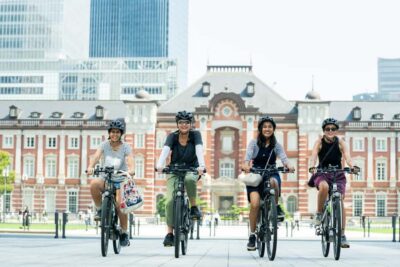 ★ 4.83-hour Guided E-Bike Tour of the City’s Hidden GemsFrom $65
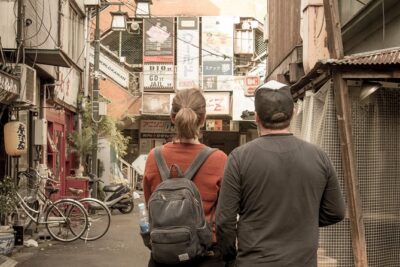 ★ 5.0Tokyo West-Side Cycling & Food TourFrom $99
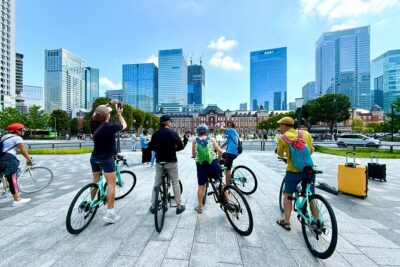 ★ 5.03-Hour Bike/E-Bike Tour of the City’s HighlightsFrom $63
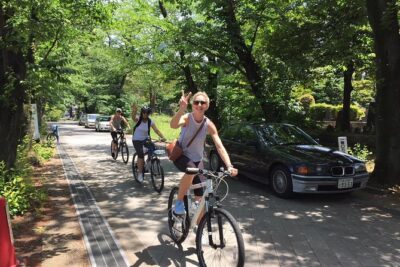 ★ 5.0Small Group Cycling Tour in TokyoFrom $66
Browse the lists this tour appears in