
Reviewed · TOKYO CYCLING TOURS
3-Hour Tokyo Private E-Bike Tour Starting from Your Hotel
Tokyo is much easier to understand from a bicycle than from a subway map. In three hours, this private e-bike outing can connect the Imperial Palace, Tokyo Tower, quiet residential lanes, parks, shrines, and Shibuya or Asakusa, depending on your starting point and wishes. Kazuma Naoi leads the ride in English and handles the route while you focus on the city around you.
I like the personal route planning and the electric assistance, which makes hills and long stretches far less tiring. I also like the way the tour can reveal everyday Tokyo, from embassy districts and local streets to a 7-Eleven break or a small Japanese sweets shop. The main consideration is that three hours is short for a city this large, so you may see many places briefly rather than explore any one of them in depth.
In This Review
- Key points to know before you book
- Why an e-bike is a smart way to see Tokyo
- Meeting Kazuma and setting the route
- Tokyo Tower and the Imperial Palace
- Parks, bridges, and room to breathe
- Shrines, temple gates, and local flavor
- Shibuya Crossing and modern Tokyo
- What the price includes, and what it does not
- Who will enjoy this ride most
- Is this the right three hours for you?
- FAQ
- Is hotel pickup and drop-off included?
- How long does the Tokyo e-bike tour last?
- Which Tokyo sights are included?
- Is the tour private?
- What equipment and services are included?
- What should I wear and avoid bringing?
Key points to know before you book
- Hotel-to-hotel convenience: Pickup and drop-off are included, with changes to the time or location possible for an additional charge.
- Kazuma Naoi leads in English: He gives a road-safety briefing, explains the places you pass, and adjusts the route as you ride.
- Electric assistance matters: You still pedal, but the motor helps on hills and keeps the pace comfortable.
- Tokyo beyond the subway: The route can include quiet streets, parks, temple districts, government areas, and local neighborhoods.
- Private means flexible: Your group alone participates, so you can request sights, breaks, and a pace that suits you.
- Come dressed to ride: No sandals, skirts, high heels, flared trousers, wireless earphones, or smartphone use while cycling.
Why an e-bike is a smart way to see Tokyo
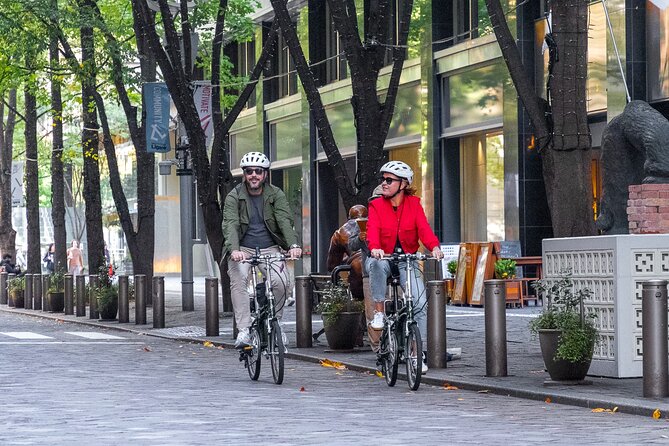
Tokyo is enormous, and its attractions are spread across very different districts. The subway is fast, but underground travel hides the connections between places. On a bicycle, you see the shift from office towers to temple gates, from formal avenues to narrow residential streets.
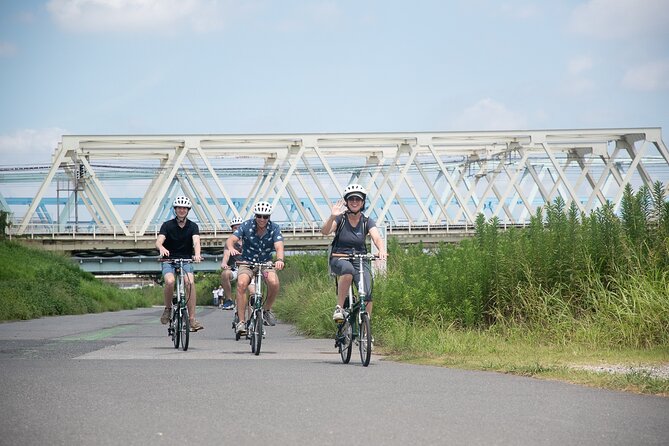
The electric assist is the key. You pedal normally, but the motor adds power on inclines and longer stretches. That makes this a practical choice if you want to cover ground without arriving at every stop overheated. You still need to cycle, steer, and pay attention, but the physical effort is easier to manage.
I also like the scale of a bicycle tour. You move quickly enough to cover a broad slice of Tokyo, yet slowly enough to notice shopfronts, small shrines, bridges, parks, and streets that mean little when viewed from a taxi window. The guide handles navigation through the city’s complicated streets, which removes one of the biggest challenges of cycling in Tokyo.
This is not a race. Safety instructions and basic Japanese road regulations are included, and the tour rules are sensible: no phone use while cycling, no wireless earphones, and no alcohol before or during the ride. The experience is best treated as active sightseeing, not simply transport between photo stops.
A few more Tokyo tours and experiences worth a look
Meeting Kazuma and setting the route
Kazuma Naoi is the named guide for Tokyo Bike Bliss. He speaks English well and begins with an explanation of the road rules and a broad idea of the route. You can discuss what interests you before setting off, and the route can change based on your starting and ending points.
The private format makes a real difference here. You are not locked into a fixed group itinerary or a single pace. If you care more about historic places than shopping districts, or prefer parks and local streets to famous crossings, you can say so. You may also request particular sights when booking, though route, time, and meeting-point changes can bring an additional charge.
The standard experience lasts about three hours. Hotel pickup and drop-off are included for convenience, but the exact route depends on where your hotel is located. Tokyo’s size matters: a starting point in western Tokyo will naturally produce a different ride from one in the east.
Kazuma has also been praised for taking photographs of the group and sharing them afterward. That is a useful touch on a bicycle tour, since stopping to arrange your own group photo is not always easy. Still, the amount of sightseeing depends on the route and the time spent at each stop, so tell him your priorities early.
Tokyo Tower and the Imperial Palace
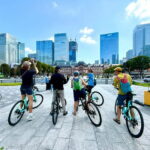
Tokyo Tower is one of the clearest symbols of the city, and a bicycle gives you several ways to see it. The route may include familiar photo angles as well as less obvious viewpoints known to the guide. It can also pass Zojoji Temple, where the traditional temple setting and orange tower make a memorable combination.
The supplied route allows roughly ten minutes at each named stop, so do not expect a long visit inside Tokyo Tower. One tour included a spontaneous visit to the tower’s Main Deck, showing how a private ride can adapt when time and interest allow. Admission to the listed outdoor stops is free, but any optional attraction entry is not included in the tour price.
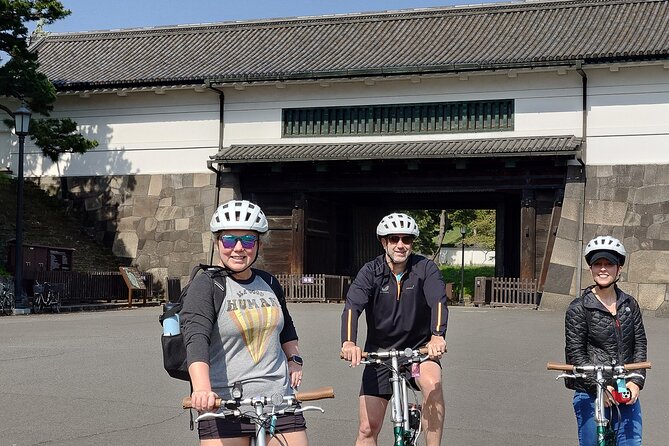
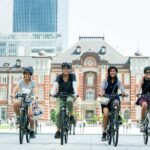
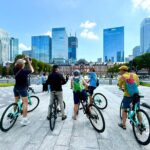
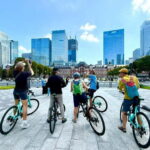
The Imperial Palace offers a different mood. You can trace parts of the former moats and hear about Japanese history while riding around the perimeter. The appeal is not only the palace itself, but the way the route links old defensive lines with modern government districts.
Nearby Hibiya Park and Kasumigaseki can add useful context. Kasumigaseki is associated with Japan’s ministries, and the ride may also pass the American Embassy and embassy-lined streets around Azabudai. These are not standard sightseeing stops for every first-time visit, yet they help you see how Tokyo’s political and diplomatic center fits together.
Parks, bridges, and room to breathe
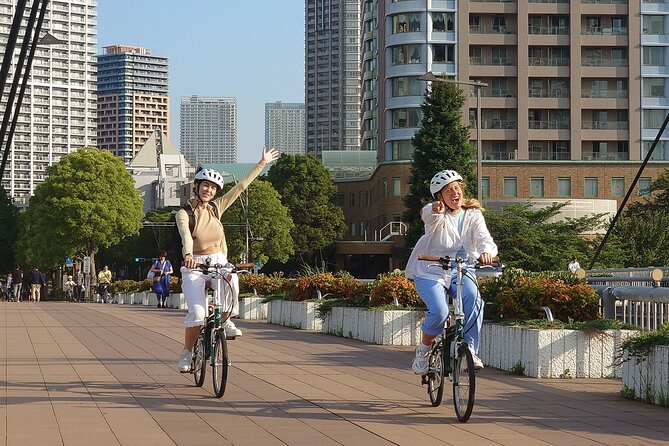
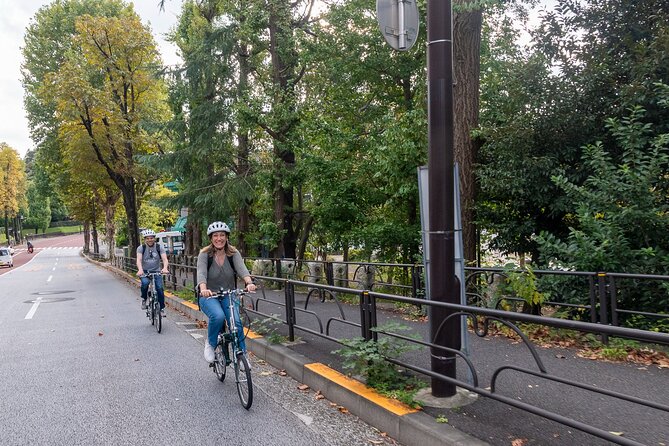
Yoyogi Park offers a welcome break from dense streets. The park is large, green, and easy to appreciate by bicycle, especially when the weather is warm. You can enjoy the breeze while riding rather than stopping only for a photograph.
Ueno Park gives the ride another broad open area. It is one of Tokyo’s major parks and has cultural importance as well as space for cycling. The tour description promises an explanation of why the park matters, but the precise stops and amount of time depend on the route.
Shioiri Park is another possible choice, especially during cherry-blossom season. Its broad views and seasonal flowers have made it more popular, and the guide can add local background. It is not guaranteed, so it should be treated as an option rather than a promise.
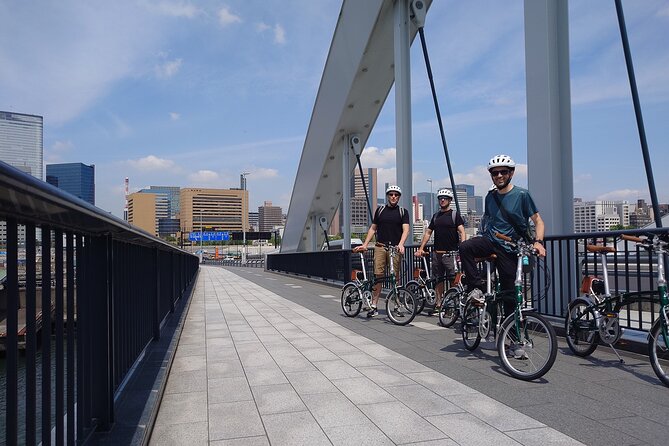
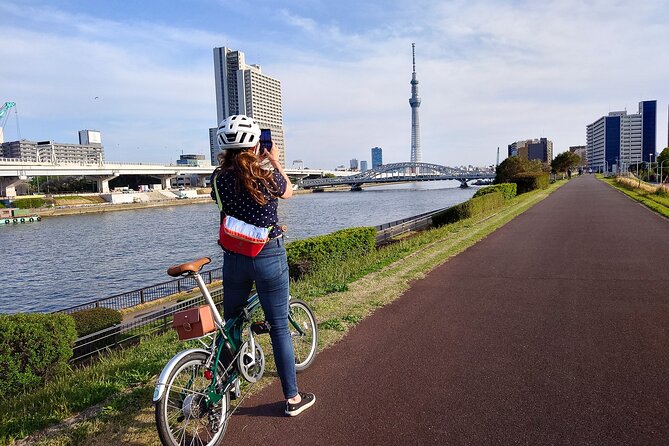
The route can also reach bridges and waterfront views. One three-hour ride crossed Chuo Bridge and included a view toward Tokyo Skytree. That kind of connection is one of the tour’s strengths: you can move from a local neighborhood to a large city vista without spending time changing trains.
Do keep expectations realistic. Tokyo’s parks are not always quiet, and cycling conditions can vary with weather and crowds. The guide’s decision to slow down, stop, or alter the route is important, especially in summer heat.
Shrines, temple gates, and local flavor
Kanda Shrine provides a chance to see another side of Japanese religious life. The guide explains the shrine’s spiritual importance and offers cultural context beyond the usual photo stop. A ten-minute visit is enough to look around and ask questions, but not enough for a detailed temple-and-shrine study.
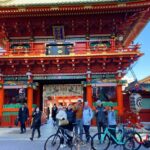
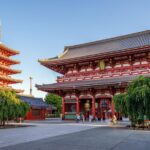
At the eastern end of Tokyo, Kaminarimon Gate marks the entrance to Senso-ji in Asakusa. Its enormous red lantern is one of the city’s most recognizable sights. Arriving by bicycle lets you approach the gate as part of a broader ride through Tokyo rather than as an isolated subway excursion.
The bicycle itself may not be taken through every crowded pedestrian area. Expect to park or walk briefly where necessary, and follow the guide’s instructions. The attraction is the route and the setting, not simply riding through the busiest foot traffic.
Tsukishima Monja Street adds food and neighborhood history. Monja is a Tokyo specialty, and the guide can explain how the area became associated with it. Lunch is not included, nor are snacks, coffee, tea, or bottled water, so budget for your own refreshments if you want more than a short break.
A useful detail from the ride descriptions is the flexibility to stop at a 7-Eleven or coffee shop. That may sound ordinary, but it is practical in Tokyo’s heat. You can use the break for water, a quick snack, or a chance to reset before continuing.
A few more Tokyo tours and experiences worth a look
Shibuya Crossing and modern Tokyo
Shibuya Crossing is the most famous modern stop on the possible route. The idea of visiting it by bicycle is appealing, but do not picture yourself racing through the middle of the crossing. Traffic rules, pedestrians, and the guide’s safety instructions come first.
The point is to experience the scale and movement of the district from street level. You may stop nearby for photographs, then continue through the surrounding streets. If Shibuya is your main goal, tell Kazuma before the tour so the route can allow enough time for it.
The Tokyo Metropolitan Government Buildings offer another view of the capital. Their twin-tower design is easy to recognize, and the guide can take you to a good viewing point. The buildings are in western Tokyo, so combining them with eastern stops such as Asakusa, Ueno, or Tsukishima may be difficult within three hours, depending on the hotel location.
That is the central planning issue with this experience. The list of possible sights is broad, but it is not a promise that all ten will appear in one ride. Tokyo Tower, the Imperial Palace, Yoyogi Park, Ueno Park, Shibuya, Asakusa, and the government buildings sit in different parts of the city. The best route chooses a sensible cluster rather than chasing every landmark.
What the price includes, and what it does not
The listed price is $145.35 per person. For a private three-hour experience, that is not a budget sightseeing ride, but the value depends on how much you appreciate personal attention and saved time.
The price includes the e-bike, helmet, insurance, a basic road-regulation briefing, and an in-person English-speaking guide. Hotel pickup and drop-off are included under the standard arrangement. You are paying for more than bicycle rental: you are also paying for route planning, navigation, interpretation, and the ability to adjust the ride for your group.
The private setup is especially useful for families or pairs with different cycling abilities. The electric assistance helps, and the guide can set a comfortable pace. It is also a strong choice for a first day in Tokyo because you can get your bearings across several districts and note places to revisit later.
The price does not include food or drinks. Bring or buy water, especially in hot weather. Also remember that optional admissions, such as going up Tokyo Tower’s Main Deck, are separate.
Group discounts are available, so the per-person cost may work better for a larger private party. Ask about the exact total before booking if you are changing the start or end point, since those adjustments may cost extra.
Who will enjoy this ride most
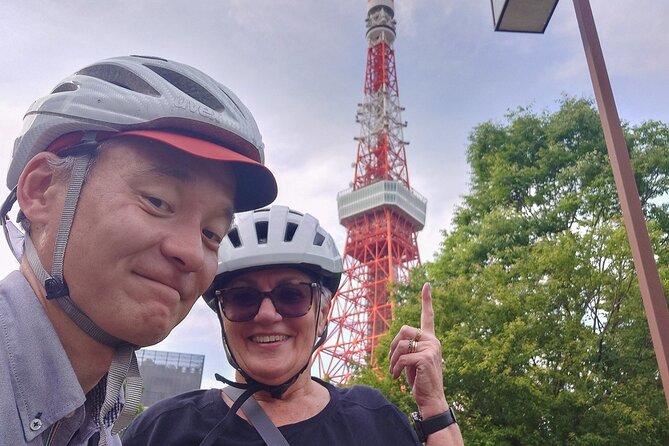
I would recommend this tour to active first-time visitors who want a broad introduction to Tokyo without spending the day underground. It suits families with teenagers particularly well, provided everyone meets the size and cycling requirements.
The ideal rider is at least 10 years old, between about 145 and 185 centimeters tall, and under 100 kilograms. These are stated ideal guidelines, not a promise that every rider outside them can be accommodated, so check before booking if anyone in your group falls outside those ranges.
You need to be comfortable on a bicycle and willing to follow road instructions. The tour is not suitable for someone looking for a purely passive sightseeing experience. Clothing matters too: wear closed, practical shoes and fitted trousers or shorts. Sandals, flip-flops, skirts, high heels, and wide or flared trousers are not allowed.
I would be more cautious about booking during a period of extreme heat or uncertain weather. The tour requires good weather, and a cancellation for poor conditions results in a different date or a full refund. You can cancel for a full refund up to 24 hours before the start time, but late cancellations and changes are not accepted.
Is this the right three hours for you?
Book it if you want Tokyo explained while you move through it, and if the freedom to shape the route matters more than a fixed checklist. Kazuma’s careful approach to safety, strong English, route knowledge, and willingness to stop for practical breaks are major advantages.
Choose another activity if you want long visits inside museums, extended temple time, a guaranteed stop at every listed attraction, or a completely effortless ride. This tour covers ground, but three hours passes quickly, and the route must respond to your hotel location and traffic conditions.
For many visitors, the smartest use is at the beginning of a Tokyo stay. You can see how districts connect, ask questions about places that catch your eye, and return later by train or on foot. At $145.35 per person, it is a worthwhile splurge for a private introduction, particularly when shared by a family or small group that values convenience and local guidance.
FAQ
Is hotel pickup and drop-off included?
Yes. The tour starts and ends at your hotel under the standard arrangement. Changes to the starting or ending time or location may involve an additional charge.
How long does the Tokyo e-bike tour last?
The tour lasts approximately three hours.
Which Tokyo sights are included?
Possible sights include Tokyo Tower, the Imperial Palace, Yoyogi Park, Shioiri Park, Ueno Park, Kanda Shrine, Tsukishima Monja Street, Shibuya Crossing, the Tokyo Metropolitan Government Buildings, and Kaminarimon Gate. The exact route depends on your starting and ending points and may not include every stop.
Is the tour private?
Yes. Only your group participates in the activity.
What equipment and services are included?
An e-bike, helmet, insurance, a brief explanation of Japanese road regulations, and an in-person English-speaking guide are included.
What should I wear and avoid bringing?
Do not wear sandals, flip-flops, skirts, high heels, or pants with wide or flared bottoms. Wireless earphones and smartphone use while cycling are not allowed. Alcohol before or during the tour is also prohibited.
More Cycling Tours in Tokyo
More E-Bike Tours in Tokyo
More Tokyo Cycling Tours in Tokyo
More tours in Tokyo we've reviewed


Tokyo Cycling Tours, compared.
 ★ 5.0Tokyo Great Cycling TourFrom $99
 ★ 5.0Tokyo Top Highlights 3h Guided E-bike TourFrom $63
 ★ 5.03h Tokyo E-Bike Tour: Hidden Gems, and Local Life with guideFrom $63
 ★ 4.83-Hour Bike or E-Bike City Highlights TourFrom $453 hours
 ★ 4.83-hour Guided E-Bike Tour of the City’s Hidden GemsFrom $65
 ★ 5.0Tokyo West-Side Cycling & Food TourFrom $99
 ★ 5.03-Hour Bike/E-Bike Tour of the City’s HighlightsFrom $63
 ★ 5.0Small Group Cycling Tour in TokyoFrom $66
Browse the lists this tour appears in