
Reviewed · KYOTO CYCLING TOURS
See What You Can’t See by Day — Explore Kyoto at Night by E-Bike
Kyoto after dark has a softer mood than Kyoto by day. On this small-group e-bike tour, you roll past temple gates, old lanes, canals, and riverside paths without fighting daytime crowds. The route links central Kyoto with the Nanzen-ji and Okazaki areas, giving you a broad look at the city in about three hours.
I like the careful start, with time to practice hand signals and review night-riding safety. I also like the personal scale: the tour accepts no more than five people, so guide Yuki can stop for photos and adjust the pace. The main consideration is that you need to be comfortable riding a bicycle, and the tour depends on good weather.
In This Review
- What makes this night ride worth considering
- Kyoto by bicycle after the daytime crowds fade
- Starting at The Thousand Kyoto
- Old Kyoto streets and Nishi Hongan-ji
- Shirakawa Canal and the old tea district atmosphere
- Shomen-dori and the old Nintendo headquarters
- Following the Lake Biwa Canal toward Nanzen-ji
- Nanzen-ji and Heian Shrine after sunset
- Ending beside the Kamo River
- What the $117.28 price includes
- Who will enjoy this tour most
- Practical points before you book
- My call: book it if you want Kyoto with motion and mood
- FAQ
- How long does the Kyoto night e-bike tour last?
- Where does the tour start?
- Where does the tour end?
- What sights does the route visit?
- Is a bicycle provided?
- What languages does the guide speak?
- How many people can join?
- Can children participate?
- What happens if the weather is poor?
What makes this night ride worth considering
- Small group of up to five: You get a more personal ride and can stop at interesting lanes or photo spots.
- A useful mix of Kyoto sights: The route includes Nishi Hongan-ji, the Biwa Canal, Nanzen-ji, Heian Shrine, and the Kamo River.
- E-bikes reduce the effort: Electric assistance helps make a long evening ride easier, especially in Kyoto’s summer heat.
- A safety briefing comes first: You review cycling hand signals and riding procedures before setting off.
- A local guide adds character: Yuki is praised for patient instruction, clear communication, and entertaining stories.
- The final stop is by the Kamo River: You can relax beside the water and cool your feet before returning the bicycle.
Kyoto by bicycle after the daytime crowds fade
This tour begins near Kyoto Station, then heads into the city after sunset. That timing changes what you notice. Instead of packed approaches to major sights, you get quiet streets, temple walls, illuminated entrances, and the sound of the bicycle itself.
The ride is not built around entering every temple or spending long periods inside each attraction. It is better understood as a moving evening portrait of Kyoto. You pause at important landmarks, take photos, hear some local background, and keep going.
That format suits you if you have already seen Kyoto’s major sights by day and want a different angle. It also works well for a first visit because the route connects several famous places without asking you to navigate Kyoto’s streets alone at night.
The tour lasts about three hours. That is long enough to cover a satisfying stretch of the city, but not so long that the evening becomes an endurance test. The electric bicycle helps here. You still pedal, but the motor takes some of the strain out of the ride.
A few more Kyoto tours and experiences worth a look
Starting at The Thousand Kyoto
Meet at the Clew share-cycle port in front of Seikouin Wagatazizou, behind The Thousand Kyoto, at 570 Higashishiokōjichō. The meeting point is close to Kyoto Station, but you should allow enough time to locate the bicycle port and temple area rather than assuming you can walk up at the last second.
The first 15 minutes are important. Your guide explains how to use the bicycle, reviews hand signals, and covers basic safety. Take this part seriously. Night cycling is pleasant only when everyone knows how to signal turns, keep formation, and react to traffic.
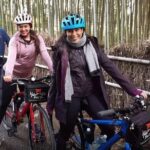
The supplied bicycles are e-bikes, and a cycling helmet is included. The electric assistance should make the route manageable for most people who can ride a bicycle, but this is still a cycling activity. You are not sitting in a vehicle while someone else handles the roads.
The guide speaks Japanese and Mandarin. Yuki is the guide connected with the experience and is described as patient, clear, and attentive to comfort. That matters for a small evening ride. A guide who notices when you are uncertain can make the difference between relaxing into the route and worrying about every turn.
Old Kyoto streets and Nishi Hongan-ji
After the briefing, you move through old streets and narrow lanes where Kyoto’s traditional character comes through in the buildings, walls, and subdued evening light. The route allows stops when something catches your eye, which is one advantage of a private-style outing over a large coach tour.
You can pause for photographs rather than simply passing through. The guide can also explain what you are seeing as the group moves between major stops.
The first named temple stop is Nishi Hongan-ji, the head temple of the Jodo Shinshu Hongwanji-ha sect. Its large wooden buildings and formal temple grounds provide a strong early contrast with the smaller residential lanes.
The stop lasts about 20 minutes. That gives you time to look around and photograph the architecture, though not enough for a detailed exploration of every building. If you want a long temple visit, you may find this brief. If your goal is to see several parts of Kyoto in one evening, the short pause keeps the ride moving.
Shirakawa Canal and the old tea district atmosphere
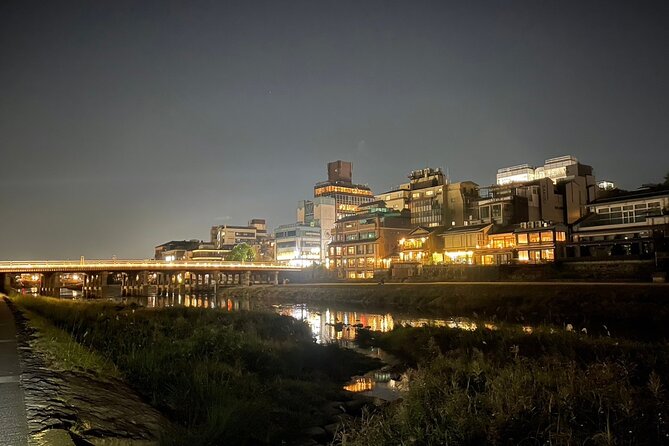
The route then reaches the Shirakawa Canal, where old buildings line the water and the area recalls Kyoto’s traditional tea-house districts. The canal is especially appealing at night because the water, plants, and older facades take on a quieter tone.
This is one of the tour’s better stops for atmosphere rather than a checklist sight. You are not just looking at a single monument. You are seeing how Kyoto’s older streets relate to water, homes, and small lanes.
The scheduled stop is about 20 minutes. Depending on the season, plants and blossoms may add color, but the tour information does not promise a particular seasonal display. I would treat the canal as a calm photo stop, not book the tour solely for cherry blossoms.
Shomen-dori and the old Nintendo headquarters
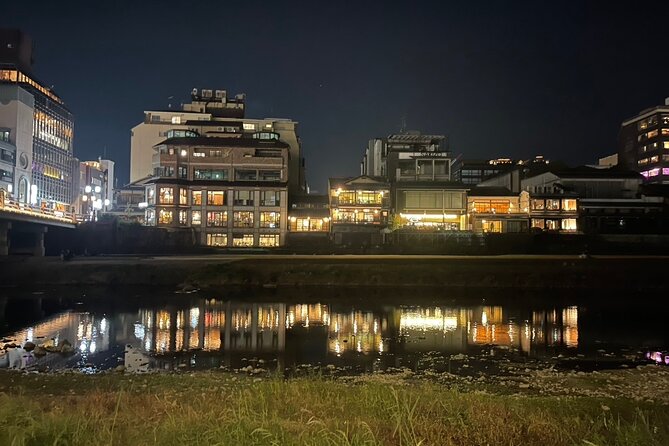
At Shomen-dori Street, the ride passes through a more local part of Kyoto. The large former Nintendo headquarters is the visual surprise here. Its size and appearance offer a reminder that Kyoto is not only temples and wooden townhouses.
This stop adds useful variety. After the formal setting of Nishi Hongan-ji and the traditional mood of the canal, the former headquarters brings in a piece of modern commercial history. You see a different side of the city without leaving the evening route.
The planned time is around 20 minutes. The information describes passing through the area and seeing the building, not entering it. Set your expectations accordingly. This is an exterior viewing stop.
A few more Kyoto tours and experiences worth a look
Following the Lake Biwa Canal toward Nanzen-ji
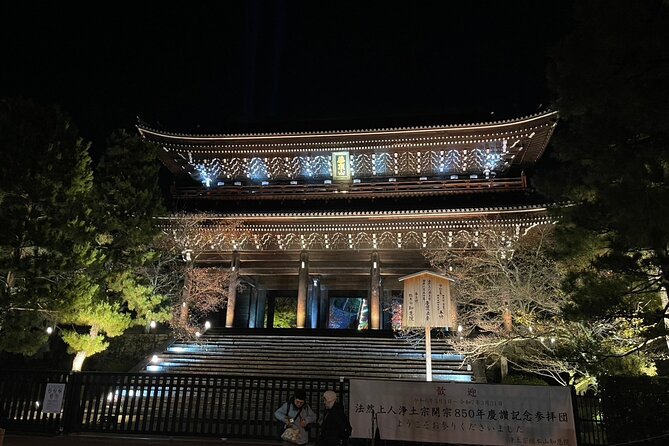
The next part of the ride follows sections of the Lake Biwa Canal. The canal system links Kyoto with Lake Biwa and helped provide water to the city. Here, the route becomes more about movement and scenery than about one single photo point.
Two listed stops in the Nanzenji Fukuchichō and Nanzenji Kusakawachō areas each allow about 20 minutes. The repeated canal stops suggest that you will see different stretches of the waterway rather than stop at one overlook and leave immediately.
Cycling beside a long canal is also where the e-bike earns its keep. You can cover more ground than on foot, while still moving slowly enough to notice bridges, water, and the changing character of the streets.
Do not expect a completely traffic-free ride. The description emphasizes quieter roads and fewer crowds, not an empty city. You remain responsible for riding safely, following the guide, and paying attention at crossings.
Nanzen-ji and Heian Shrine after sunset
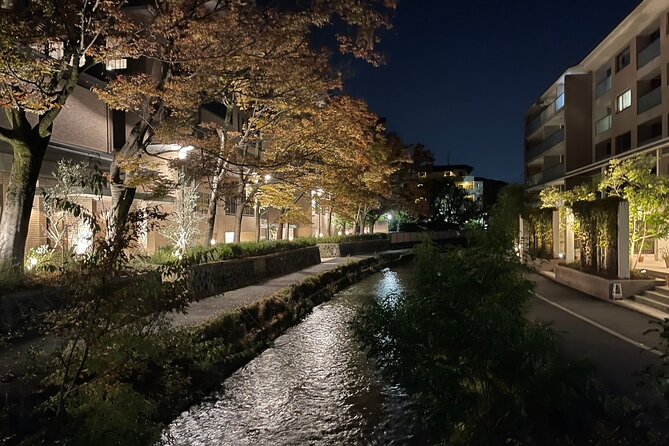
Nanzen-ji is one of Kyoto’s major temple complexes and is associated with the Five Mountains of Kyoto. The tour stops for about 20 minutes, giving you a chance to take in the imposing gate and main temple area.
At night, the value here is visual and atmospheric. Large temple structures can feel especially powerful when the surrounding streets are calm. The short stop is enough to appreciate the scale, but not enough for an in-depth visit to the entire complex.
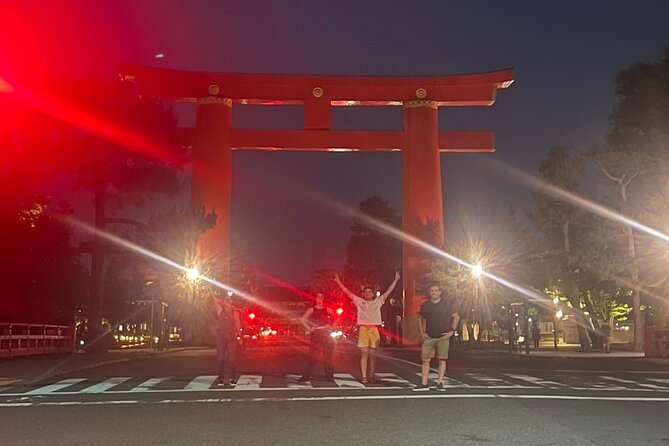
The route continues to Okazaki and Heian Shrine. Heian Shrine was founded to mark the 1,100th anniversary of Kyoto becoming the capital of Heian-kyo, and its large red torii is a recognizable city landmark.
The planned stop is another 20 minutes. The torii and shrine architecture provide some of the strongest photo opportunities on the route, especially for anyone who wants a clear sense of Kyoto’s ceremonial side without spending a full day at temples.
Because this is a night ride, lighting conditions can vary. You should bring realistic expectations for photographs. Some locations may be beautifully lit, while others may be dim enough that your best memories come from being there rather than capturing perfect images.
Ending beside the Kamo River
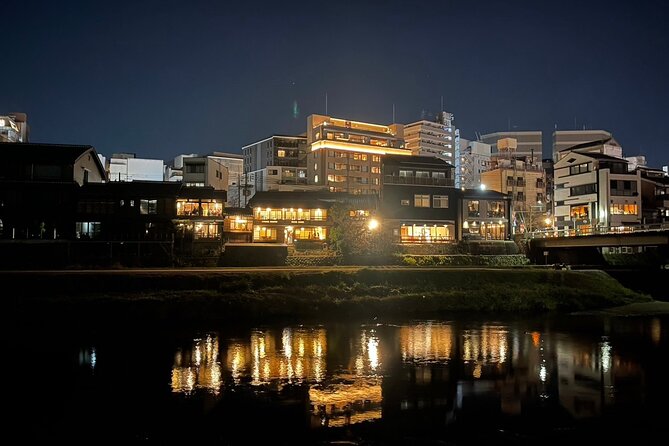
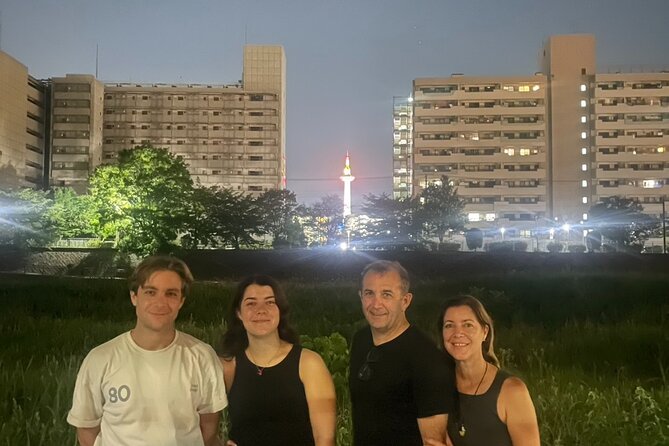
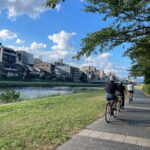
The final sightseeing stop is at the Kamo River in Hokodenchō. You can ride along the riverbank, rest on the riverbed, or take a moment to cool your feet in the water.
This is a smart ending for an evening bicycle tour. After several stops and city streets, the river gives you room to slow down. The scheduled time is about 10 minutes, so think of it as a brief pause rather than a long riverside picnic.
The river also gives the tour a relaxed finish. You return to the original bicycle port after this stop, hand back the e-bike, and are free to continue exploring Kyoto on your own.
What the $117.28 price includes
At $117.28 per person, this is not the cheapest way to see Kyoto. The value comes from the combination of equipment, guide time, route planning, and the small group size.
Your fee includes the bicycle, helmet, cycling guide, and a Mandarin and Japanese-speaking guide. You are also paying to avoid working out a night route yourself, finding a suitable bicycle, and deciding how to connect Nishi Hongan-ji, the canal, Nanzen-ji, Heian Shrine, and the Kamo River.
For a group of up to five, the cost can make more sense than it first appears, especially if you care about personal attention. The guide can explain local sights, help with safe riding, and stop for photos. That is more useful than a simple bicycle rental.
Still, the price is harder to justify if you are already confident cycling in Kyoto and only want an inexpensive bike for independent use. You should also remember that the tour visits many places from the outside or for short pauses. It is not a substitute for a full temple admission tour.
Who will enjoy this tour most
I would recommend this ride to couples, families with older children, and first-time visitors who want an active evening. It is also a good fit for anyone who finds Kyoto’s daytime crowds tiring.
Children under 10 can participate if they are taller than 140 centimeters and can ride a bicycle. They pay the same price as adults. That height and riding requirement should be checked carefully before booking, since the tour does not describe a child seat or trailer.
The experience is suitable for most people who can cycle, but it is not designed for someone who cannot ride confidently. The e-bike makes pedaling easier, not optional.
The small maximum group of five is useful for families and couples. You will not be lost in a crowd, and the guide can keep an eye on the group. It also means availability may be limited on popular dates.
Practical points before you book
The tour uses a mobile ticket, and confirmation is provided when you book. It starts and ends at the same Kyoto Station-area meeting point, which simplifies your evening plans.
Wear clothing suitable for cycling and shoes that are comfortable on pedals. The tour depends on good weather. If poor weather forces a cancellation, you can choose another date or receive a full refund.
You may cancel for a full refund up to 24 hours before the start time. Changes or cancellations inside that 24-hour window are not accepted and are not refunded, so check the forecast before the deadline passes.
The tour description mentions no traffic and no crowds in its promotional language, but you should read that as a quieter evening route rather than a guarantee of empty streets. Kyoto remains a working city, and normal care is needed around roads and crossings.
My call: book it if you want Kyoto with motion and mood
Book this tour if you want to connect several famous Kyoto sights in one evening, prefer a small group, and like the idea of moving through the city rather than standing in lines. The canal, old lanes, temple gates, and Kamo River create a pleasing mix, while the e-bike keeps the route within reach of ordinary cyclists.
Skip it if you want long visits inside temples, dislike cycling after dark, or need a fully weather-proof activity. For everyone else, the strongest reasons to go are the small group, the well-planned route, and Yuki’s careful approach to safety and communication. It gives you a useful second look at Kyoto, after the day crowds have gone home.
FAQ
How long does the Kyoto night e-bike tour last?
The tour lasts approximately three hours, including the cycling briefing, sightseeing stops, and bicycle return.
Where does the tour start?
It starts at the Clew share-cycle port in front of Seikouin Wagatazizou, behind The Thousand Kyoto, at 570 Higashishiokōjichō, Shimogyo Ward, Kyoto.
Where does the tour end?
The tour ends back at the same meeting point where you return the bicycle.
What sights does the route visit?
The route includes Nishi Hongan-ji Temple, Shirakawa Canal, Shomen-dori Street and the former Nintendo headquarters, sections of the Lake Biwa Canal, Nanzen-ji Temple, Heian Shrine, and the Kamo River.
Is a bicycle provided?
Yes. The use of an e-bike is included, along with a cycling helmet.
What languages does the guide speak?
The tour includes a Mandarin and Japanese-speaking guide.
How many people can join?
The maximum group size is five people.
Can children participate?
Children under 10 can participate if they are at least 140 centimeters tall and can ride a bicycle. They are charged the same fee as adults.
What happens if the weather is poor?
The tour requires good weather. If it is canceled because of poor weather, you can choose a different date or receive a full refund.
More Night Rides in Kyoto
More E-Bike Tours in Kyoto
More Kyoto Cycling Tours in Kyoto

More tours in Kyoto we've reviewed


Kyoto Cycling Tours, compared.
 ★ 5.0Bike Tour Exploring North Kyoto plus LunchFrom $106
 ★ 5.05 Top Highlights of Kyoto Full Day Bike Tour (E-bike option)From $172
 ★ 5.0E-Bike Tours of the highlights of Kyoto!!!From $109
 ★ 5.0Afternoon Kyoto Bike Tour: Bamboo Forest, Monkeys & Hidden SpotsFrom $106
 ★ 5.0South Kyoto in a Nutshell: Gentle Backstreet Bike Tour!From $79
 ★ 4.9Kyoto: City Secrets eBike TourFrom $1273h 45m
 ★ 5.0Pedal Adventure Kyoto’s iconic landmarks on an e-bike tourFrom $86
 ★ 4.9Kyoto: Hidden Gems E-Bike Tour with Local Japanese GuideFrom $753h 30m
Browse the lists this tour appears in