
Reviewed · KYOTO CYCLING TOURS
Kyoto: Night E-Bike Tour Hidden Gems & Backstreets
Kyoto changes after sunset. The daytime crowds thin, temple roofs catch the soft light, and the narrow lanes around Gion and Kiyomizu feel calmer. This two-hour night ride gives you a quick but well-chosen look at Kyoto’s old eastern districts without asking you to climb every hill on foot.
I like the small group of six or fewer, which should make it easier to hear the guide and keep the ride together. I also like the electric bikes: you still pedal, but the motor takes the edge off the slopes around Kiyomizuzaka and Yasaka Pagoda.
The main consideration is that this is still a bicycle tour, not a motorized sightseeing loop. You need to be comfortable riding an e-bike, and one rider noted that there was more pedaling than expected. The minimum age is 12, and you must be taller than 145 centimeters.
In This Review
- Key points to know before booking
- Why Kyoto works so well after sunset
- Starting near Kyoto Tourist Lounge Gion
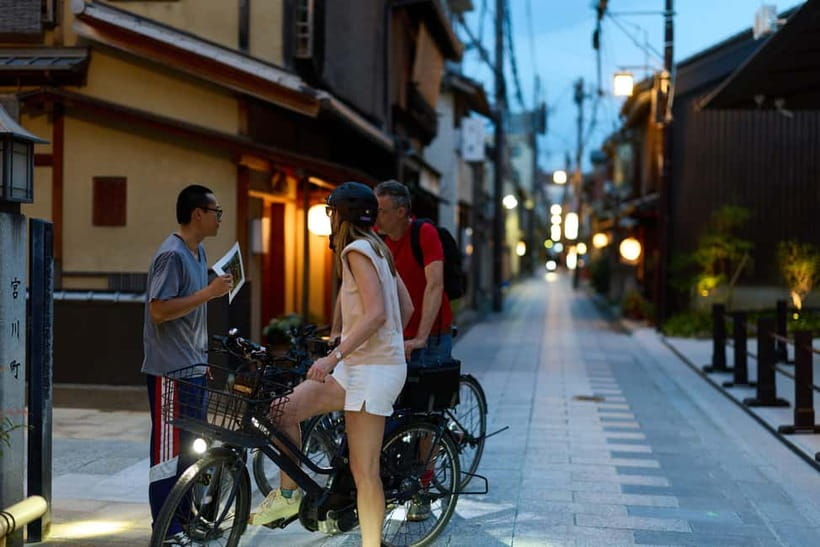
- Miyagawacho and the quiet side of Gion
- Toyokuni Shrine and the Kyoto National Museum exterior
- Kiyomizu slope and the climb toward Yasaka Pagoda
- Ninenzaka, where the route slows down
- Maruyama Park and a welcome pause
- What the two-hour format really delivers
- Is $64 a fair price?
- Rain, fitness, and who should book
- Should you book the Kyoto night e-bike tour?
- FAQ
- How long is the Kyoto night e-bike tour?
- Where does the tour start and finish?
- What is included in the price?
- Is hotel pickup or drop-off included?
- How many people are in the group?
- What age and height requirements apply?
- Can I join if I do not ride a bicycle?
- What happens if it rains?
Key points to know before booking
- Kyoto after dark: See Gion, Ninenzaka, Yasaka Pagoda, and temple areas when they are cooler and generally quieter.
- A short route with many landmarks: The two-hour schedule covers Miyagawacho, Toyokuni Shrine, the Kyoto National Museum exterior, Kiyomizuzaka, Maruyama Park, and more.
- Electric assistance, not a free ride: The bike helps with hills, but you will still pedal and should wear comfortable shoes.
- Personal guiding: The group is limited to six, with an English-speaking guide. Past guides have included Ben and Jay.
- Good summer timing: Evening riding can mean less heat and fewer people around the major sights.
- Practical flexibility: You can cancel up to 24 hours before departure for a full refund, and you can reserve now and pay later.
Why Kyoto works so well after sunset
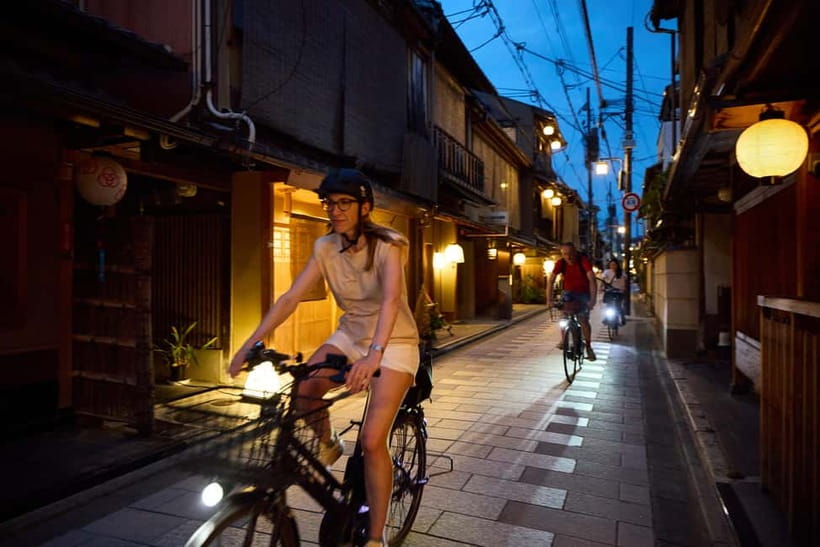
Kyoto is famous for its temples, but many daytime visits become a contest with crowds, tour buses, and foot traffic. At night, the same streets often feel more spacious. You can pay attention to the shape of a wooden townhouse, the glow of a lantern, or the quiet edge of a shrine instead of simply trying to move with the crowd.
This ride focuses on the southeastern center of Kyoto, where old entertainment districts, temple approaches, shrines, parks, and museum grounds sit close together. An e-bike is useful here because the route connects places that are easy to reach separately but tiring to cover on foot in one evening.
The experience is not built around long stops inside major attractions. Instead, it gives you a guided look at several places, with time for photos and short explanations. That makes it a strong choice for a first evening in Kyoto, especially if you want an overview before returning to a few favorite areas on your own.
You should expect a relaxed pace rather than a workout. Still, you will pedal, stop, start, and ride on city streets. Wear shoes that stay comfortable for two hours, and arrive at the Kyoto Tourist Lounge Gion 10 minutes early so the group can get organized without cutting into sightseeing time.
A few more Kyoto tours and experiences worth a look

Starting near Kyoto Tourist Lounge Gion
The meeting point is in front of Kyoto Tourist Lounge Gion. This puts you close to the traditional Gion district, a sensible starting point for an evening focused on old streets and temple neighborhoods.
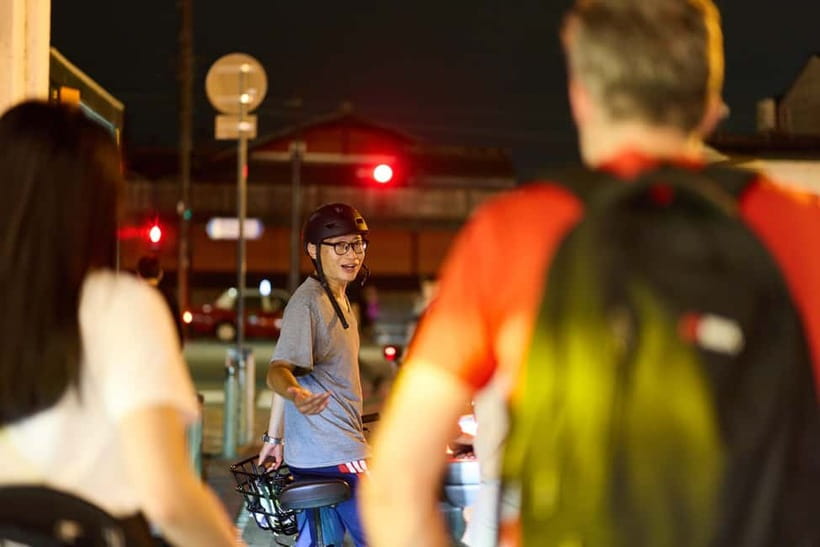
The guide provides the e-bike and helmet, then leads the group through the route. Since the group is capped at six, the guide can give clearer instructions and keep an eye on riders than would be possible with a large cycling party. That matters in Kyoto, where narrow lanes and busy intersections can appear close together.
The tour is offered in English. Past guide names include Ben and Jay. Ben has been praised for clear information and careful attention to the group, while Jay has been noted for his explanations of Kyoto’s history. Guide assignments can change, so treat those names as examples rather than a promise about who will lead your ride.
Miyagawacho and the quiet side of Gion
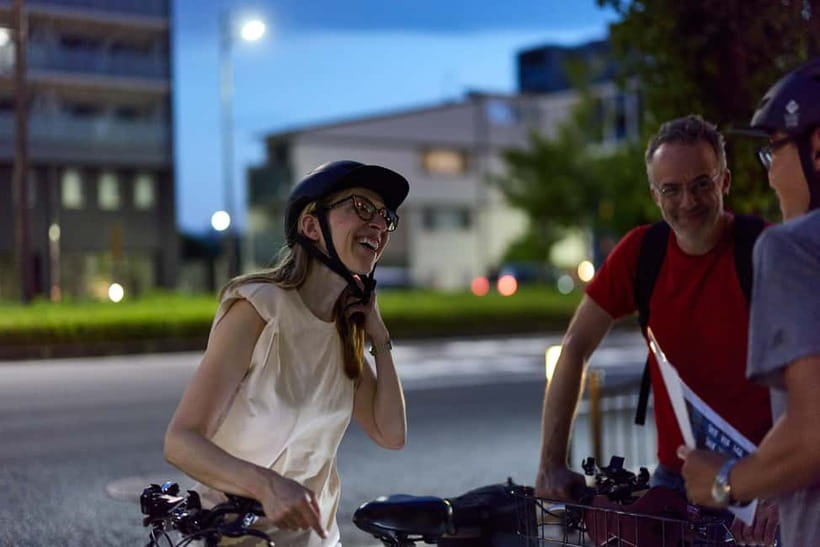
One of the first areas is Miyagawasuji, associated with Miyagawacho, a traditional district along the Kamo River. The guided portion here lasts about 10 minutes.
This is a good place to see a different side of Gion. The appeal is not a single grand monument. It is the atmosphere of the lane, the older buildings, and the contrast between Kyoto’s famous tourist image and its quieter evening streets.
You may also hear local context about the area and its connection to traditional entertainment. Keep your expectations sensible: a night bicycle ride is not a guaranteed geisha sighting. One past rider did see geishas, but that was a fortunate encounter, not a scheduled part of the tour.
The bike helps you cover this district without spending the entire evening walking between scattered points. You will likely pause for explanations and photos, then continue before the route begins to feel repetitive.
Toyokuni Shrine and the Kyoto National Museum exterior
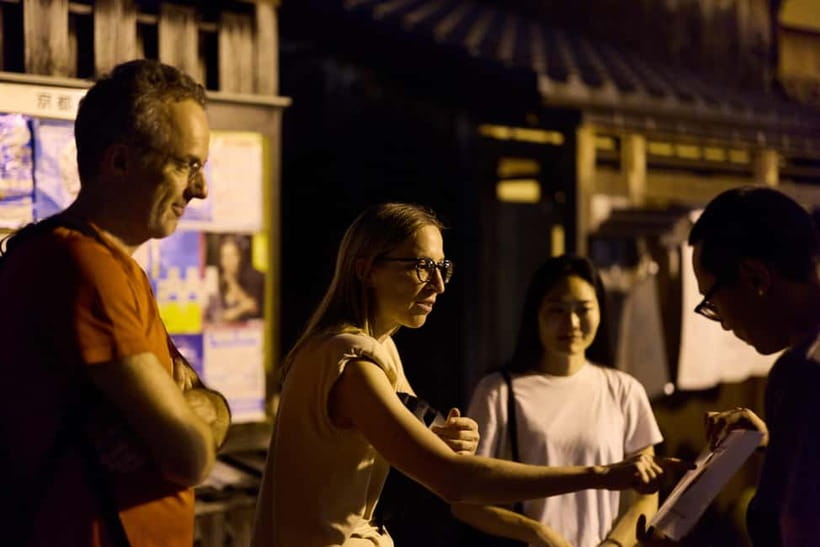
The route includes Toyokuni Shrine and the exterior of the Kyoto National Museum. The museum stop is listed at about five minutes, so think of it as a quick orientation and photo point rather than a museum visit.
Toyokuni Shrine is tied to Toyotomi Hideyoshi, one of the major figures of Japan’s late sixteenth century. The site adds political and historical context to a route otherwise centered on streets, temples, and scenic viewpoints. Even a brief stop can help connect Kyoto’s elegant old districts with the power struggles that shaped Japan.
At the Kyoto National Museum, the value is seeing the building and understanding where it sits within this cultural quarter. The museum itself is not included as an evening indoor visit. If you want its galleries, plan a separate daytime stop.
This part of the ride shows the value of having a guide. Without context, you might pass a shrine or museum facade and simply note that it looks old. With a short explanation, the stop becomes part of a larger story about Kyoto’s rulers, religion, art, and urban life.
Kiyomizu slope and the climb toward Yasaka Pagoda
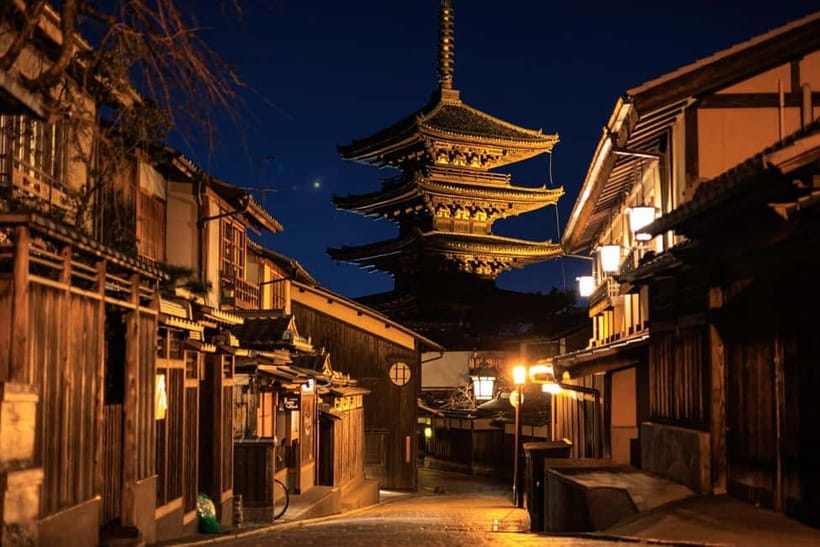
The ride continues toward Kiyomizuzaka and the Kiyomizu-dera area. The schedule allows about 10 minutes for a photo stop and guided visit at Kiyomizu-dera, followed by another 10 minutes at the Yasaka Pagoda photo spot.
This is likely the most visually rewarding section of the ride. The approach around Kiyomizu is known for sloping lanes, traditional buildings, and views toward the distinctive Yasaka Pagoda. At night, the setting takes on a softer look, and the reduced heat can make the uphill sections more pleasant than they are during a hot afternoon.
The e-bike matters most here. It does not remove the need to pedal, but it makes the slopes less demanding. If you rarely ride a bicycle, this is the section where you will notice the difference between an electric bike and a standard rental.
You should also expect some limits. The tour does not promise extended time inside Kiyomizu-dera, and the listed schedule is built around short stops. The focus is on the surrounding approach, views, and explanations. If your priority is a long temple visit, this tour will feel too quick. If you want to see the area without committing an entire afternoon, the timing works well.
The Yasaka Pagoda stop is primarily a photo opportunity. It gives you a clear landmark and a chance to pause after the ride uphill. Bring a phone or camera, but remember that stopping in narrow lanes requires awareness of other people and bikes.
A few more Kyoto tours and experiences worth a look
Ninenzaka, where the route slows down
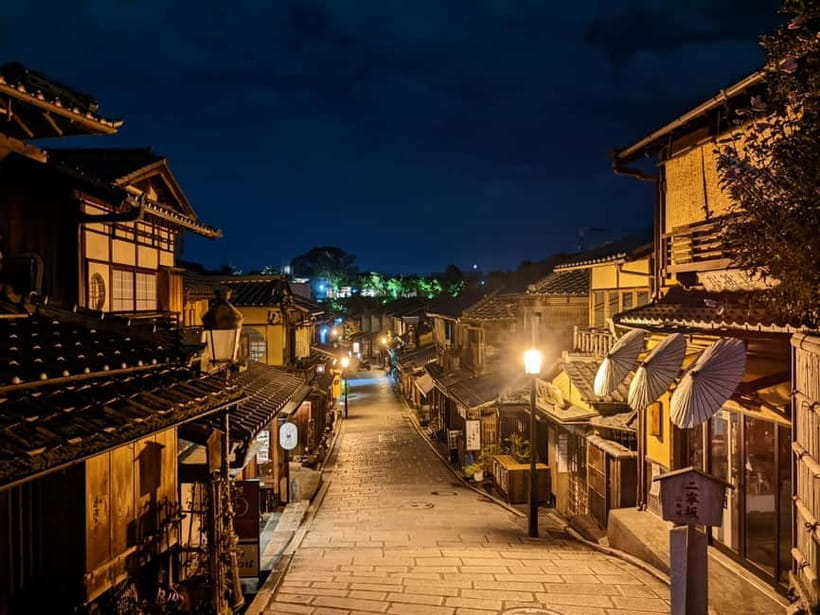
Ninenzaka is another important stop, with about 10 minutes for a visit and guided commentary. This famous slope is lined with traditional-style shops and buildings, and it is one of the best places to understand Kyoto’s visual appeal.
At night, Ninenzaka can feel more peaceful than during peak daytime hours. That does not mean it will be empty, and you should not treat the street as a private photo set. The advantage is simply that the evening often offers more room to notice details.
Because you arrive by bike, the tour gives you a wider sense of the district than a short walk from one attraction. You see how Ninenzaka connects with Kiyomizu, Yasaka Pagoda, and Maruyama Park. The route becomes a neighborhood tour rather than a checklist of unrelated monuments.
Riders should follow the guide’s instructions about where to move and stop. Traditional slopes and narrow lanes are better suited to a controlled group than to fast riding. This is one reason the small group size is useful.
Maruyama Park and a welcome pause
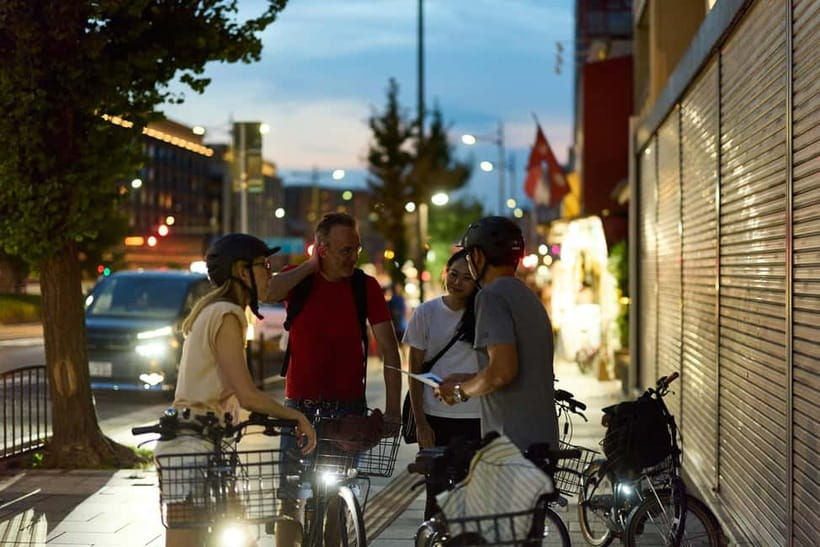
Maruyama Park is scheduled as a break, photo stop, visit, and guided segment of about 10 minutes. It provides a change of pace after the tighter streets around Kiyomizu and Ninenzaka.
The park is especially suited to an evening stop because you can pause, look around, and let the group reset. The tour is short, so this is not a long rest break, but it gives you a chance to catch your breath and take photos without rushing immediately from one lane to the next.
Maruyama Park also helps you see how Kyoto’s historic sights connect with open public spaces. A good city tour needs these transitions. They prevent the experience from becoming a string of temple facades and give you a better sense of the city’s layout.
From here, the route includes additional guided riding and may pass areas such as Furukawacho Shopping Street before returning to Gion. The exact amount of time at each unnamed section can vary with traffic, riding conditions, and the group’s pace.
What the two-hour format really delivers
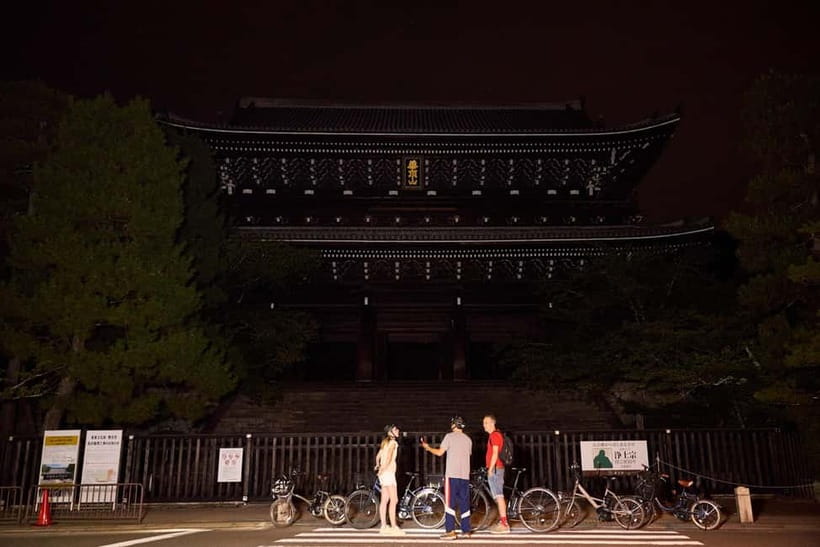
Two hours is long enough to give you a strong introduction, but too short for slow exploration at every stop. The schedule uses several 10-minute sections, with a five-minute museum stop and additional riding between them.
I see that as a reasonable tradeoff. You can cover a lot of ground and learn how the eastern districts fit together, then decide which area deserves a longer visit later. The format is particularly useful on a first night, when you want orientation without spending half a day indoors or on a large bus.
It is less suitable if you dislike moving on before you have had time to explore. Kiyomizu-dera, Ninenzaka, and Gion can each fill several hours on their own. Here, you are sampling them from the saddle, with short stops and a guide’s explanation.
The timing also has a practical benefit in warmer months. A past rider specifically appreciated the cooler evening air and smaller crowds, while another noted that the ride involved some pedaling. Bring that same expectation: cooler does not mean effortless.
Is $64 a fair price?
At $64 per person, the tour sits in a reasonable range for a two-hour guided activity that includes an e-bike, helmet, and English-speaking guide. You are paying not only for the bicycle, but also for local routing, historical explanations, and the chance to cover several districts in one evening.
The value is strongest if you would otherwise rent a bike and struggle to plan a safe, interesting route yourself. The guide connects the stops and helps you understand what you are seeing. The small group limit also gives the experience a more personal feel than a large sightseeing tour.
The value is weaker if you already know Kyoto well, have your own bicycle, or want long visits inside the temples and museum. Food, drinks, insurance, hotel pickup, and drop-off are not included. You also need to make your own way to Gion and arrange any separate admissions or meals.
I would compare the price with the cost of a standard bike rental plus the time you would spend planning. For a first visit, the convenience and evening timing make the fee easier to justify.
Rain, fitness, and who should book
The tour runs in light rain, and ponchos are available if needed. That is useful in Kyoto, where weather can change quickly, but you should still dress for a damp ride and wear shoes that can handle two hours of activity.
You must be able to ride a bicycle comfortably. People with back problems and anyone unable to ride a bike should not book this experience. The minimum age is 12, and riders must be taller than 145 centimeters.
I would recommend it to couples, friends, and solo visitors who want a guided introduction to Kyoto’s eastern districts. It is also a good fit if daytime sightseeing has left you tired of crowds but you still want to see major landmarks.
I would not choose it for a family with younger children, someone seeking a strenuous cycling workout, or a person who wants a slow, detailed temple tour. It is an active sightseeing experience, even with electric assistance.
Should you book the Kyoto night e-bike tour?
Book it if you want to see Kyoto’s famous eastern neighborhoods in a cooler, quieter setting and like the idea of combining local history with light exercise. The strongest features are the small group, the e-bike assistance, the carefully linked route, and guides such as Ben and Jay who have been praised for clear explanations and attentive group management.
Skip it if you cannot ride comfortably, need hotel transportation, or want substantial time inside Kiyomizu-dera or the Kyoto National Museum. For most first-time visitors who want a useful orientation to Gion, Kiyomizu, Ninenzaka, and Maruyama Park, $64 is a fair price for two hours of active evening sightseeing.
FAQ
How long is the Kyoto night e-bike tour?
The tour lasts two hours, including the guided riding and stops at the listed sights.
Where does the tour start and finish?
It starts in front of Kyoto Tourist Lounge Gion and returns to Kyoto Tourist Lounge Gion.
What is included in the price?
The price includes the e-bike rental, a helmet, and a live English-speaking guide.
Is hotel pickup or drop-off included?
No. Hotel pickup and drop-off are not included, so you need to reach the meeting point in Gion yourself.
How many people are in the group?
The group is limited to six participants.
What age and height requirements apply?
Participants must be at least 12 years old and taller than 145 centimeters.
Can I join if I do not ride a bicycle?
No. You must be comfortable riding an e-bike. The tour is not suitable for people who cannot ride a bike or who have back problems.
What happens if it rains?
The tour proceeds in light rain, and ponchos are available if needed. You should still bring comfortable shoes and dress suitably for outdoor riding.
More Night Rides in Kyoto
More E-Bike Tours in Kyoto
More Kyoto Cycling Tours in Kyoto

More tours in Kyoto we've reviewed



Kyoto Cycling Tours, compared.
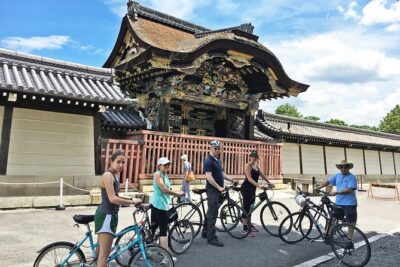 ★ 5.0Bike Tour Exploring North Kyoto plus LunchFrom $106
 ★ 5.05 Top Highlights of Kyoto Full Day Bike Tour (E-bike option)From $172
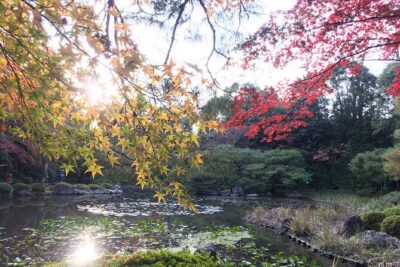 ★ 5.0E-Bike Tours of the highlights of Kyoto!!!From $109
 ★ 5.0Afternoon Kyoto Bike Tour: Bamboo Forest, Monkeys & Hidden SpotsFrom $106
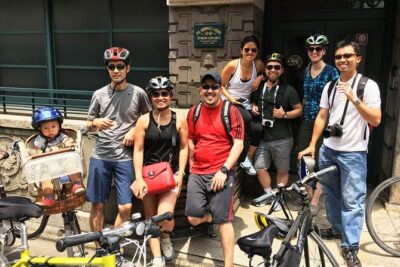 ★ 5.0South Kyoto in a Nutshell: Gentle Backstreet Bike Tour!From $79
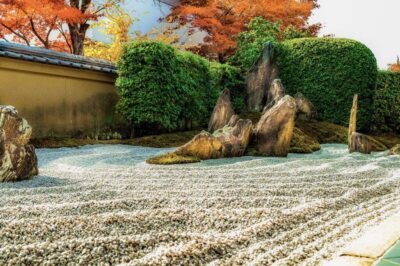 ★ 4.9Kyoto: City Secrets eBike TourFrom $1273h 45m
 ★ 4.9Kyoto: Hidden Gems E-Bike Tour with Local Japanese GuideFrom $753h 30m
 ★ 5.0Pedal Adventure Kyoto’s iconic landmarks on an e-bike tourFrom $86
Browse the lists this tour appears in