
Reviewed · KYOTO CYCLING TOURS
Bike Tour Exploring North Kyoto plus Lunch
Kyoto reveals itself best at bicycle speed. This six-hour ride links major sights with quieter streets, back alleys, and everyday corners that are easy to miss from a bus. You’ll visit the Golden Pavilion, stop at shrines, pass through Gion, and cover roughly 13 miles, or about 24 kilometers, at a steady pace.
I especially like the small maximum group of eight, which lets the guide adjust the pace and answer questions without turning the ride into a parade. The included Japanese lunch is another strong point, with past meals ranging from a 400-year-old noodle restaurant to sushi when the planned venue was closed.
The main caution is simple: this is an active day. Most of the riding is manageable and there are frequent stops, but hot Kyoto weather, a slight climb toward Kinkakuji, and six hours on a bike may not suit everyone.
In This Review
- Key Points to Know Before You Book
- Why Kyoto Works So Well by Bicycle
- Starting at Cycle Kyoto at 10:00
- Nishi Honganji, a Quiet First Temple Stop
- Kitano Tenmangu and the Rhythm of a Local Shrine
- Kinkakuji, Kyoto’s Golden Pavilion
- The Former Imperial Grounds and a Change of Pace
- Lunch, With Room for Local Variety
- Gion, Geisha Culture, and the Last Stretch
- Guides Who Shape the Day
- Safety, Comfort, and Weather
- Is $106.12 a Fair Price?
- Who Should Book This Bike Tour?
- Final Verdict: Book It for the Route and Guide
- FAQ
- How long does the Bike Tour Exploring North Kyoto plus Lunch last?
- Where does the tour start and finish?
- What sights are included?
- Is the Kinkakuji entrance fee included?
- What is included in the tour price?
- Is lunch included?
- How fit do I need to be?
- What happens if the weather is poor?
Key Points to Know Before You Book
- You cover about 13 miles: The cycling is spread across roughly six hours, with sightseeing breaks and lunch along the way.
- The group stays small: A maximum of eight people makes it easier to ride safely and get personal attention.
- Major sights come with local context: Nishi Honganji, Kitano Tenmangu, Kinkakuji, the former imperial grounds, and Gion all appear on the route.
- Lunch is part of the price: A Japanese meal is included, though the exact restaurant and menu can vary.
- The bikes are high quality: You ride a Cannondale bike, with helmets available and comfort adjustments made during fitting.
- Rain can change the plan: You can cancel up to 24 hours ahead for a full refund, and poor weather may lead to a rescheduled tour or refund.
Why Kyoto Works So Well by Bicycle
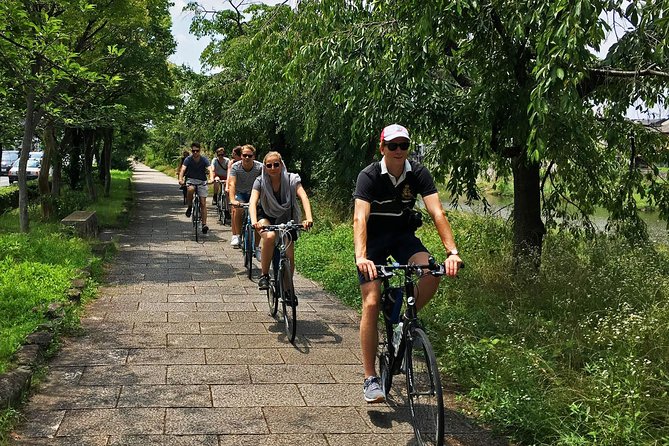
Kyoto has famous sights scattered across a wide area. Walking between them takes too long, while buses can be crowded and slow. A bicycle gives you a useful middle ground: you cover real distance, but you still notice narrow lanes, small repair details on old buildings, and the change from busy tourist streets to quieter neighborhoods.
This is not a race. The ride includes stops for temples, shrines, photographs, explanations, water, and lunch. The cycling portion itself has been described as about two and a half hours, with the rest of the day devoted to sightseeing and breaks.
The route is generally easy to moderate. You should be comfortable riding a bike, but you do not need to be an athlete. The pace can be adjusted to the group, and there are not many hills. One short incline leads toward Kinkakuji, then much of the route becomes easier.
Still, do not confuse manageable with effortless. A hot day in Kyoto can make even an easy ride feel longer. Wear light clothing, use sunscreen, and take the water provided. Riders must be at least 13 years old.
A few more Kyoto tours and experiences worth a look

Starting at Cycle Kyoto at 10:00
You meet at Cycle Kyoto, located at 7 Higashikujō Nishisannōchō in Minami Ward. The tour begins at 10:00 a.m. and returns to the same meeting point, so you do not need to arrange a separate ride back from another part of the city.
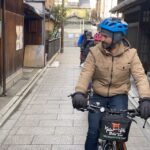
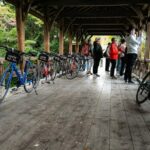
The opening 15 minutes are practical rather than scenic. You meet the guide and the rest of the group, choose a bike suited to your height, and get ready for the day. The tour includes a high-quality Cannondale bicycle, bottled water, and cycling equipment.
Helmets are available, and a padded seat can be added for comfort. That matters more than it sounds. Six hours is a long time to spend on a poorly fitted bike, so take a moment at the start to speak up if the seat or handlebars do not feel right.
The guides vary by departure. Guides named in the supplied tour details include Jay, Quinn, Indra, Julian, Karl, Mayco, Jamie, and Quin. Their strengths are not identical, but the pattern is clear: expect a guide who combines route management with explanations of Japanese religion, history, and local customs.
Nishi Honganji, a Quiet First Temple Stop
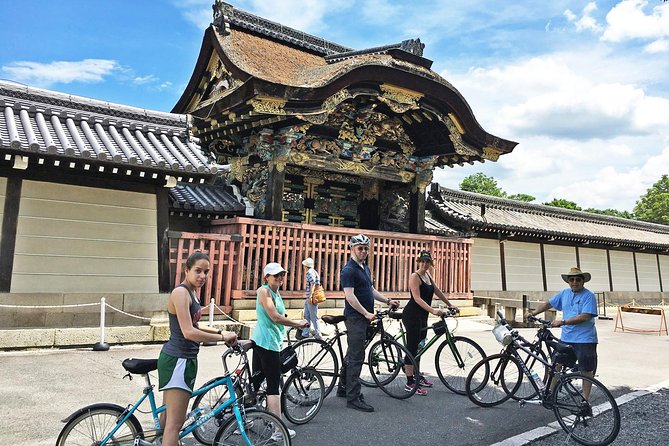
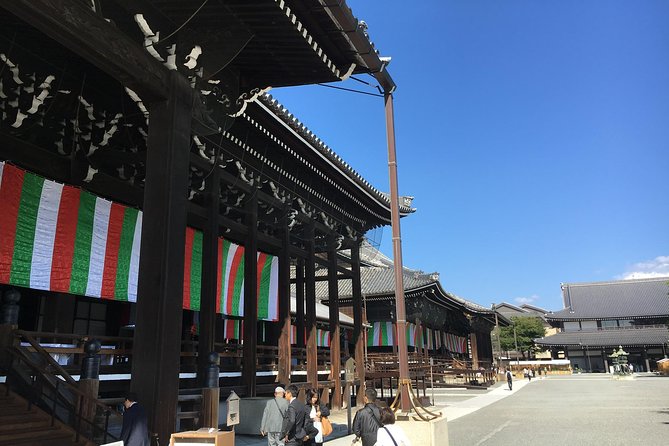
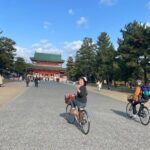
The first major stop is Nishi Honganji, one of Kyoto’s large Buddhist temples and one of the least visited religious sites on this route. You spend about 15 minutes here.
The appeal is scale and atmosphere. Nishi Honganji includes one of the largest wooden buildings in the world, yet it does not carry the same visitor pressure as Kinkakuji. It gives you room to look closely at the architecture and notice details that can be lost at more famous attractions.
One particularly memorable feature is the visible repair work on the historic buildings. The mended sections are not something to rush past. They show how old structures are cared for over time, and they make the temple feel like a working place rather than a polished stage set.
This is also where a good guide adds real value. The buildings may look impressive on their own, but an explanation of Buddhist traditions and the temple’s role helps you read what you are seeing. The short stop will not satisfy anyone seeking a long, quiet temple visit, but it works well as an introduction to Kyoto’s religious life.
Kitano Tenmangu and the Rhythm of a Local Shrine
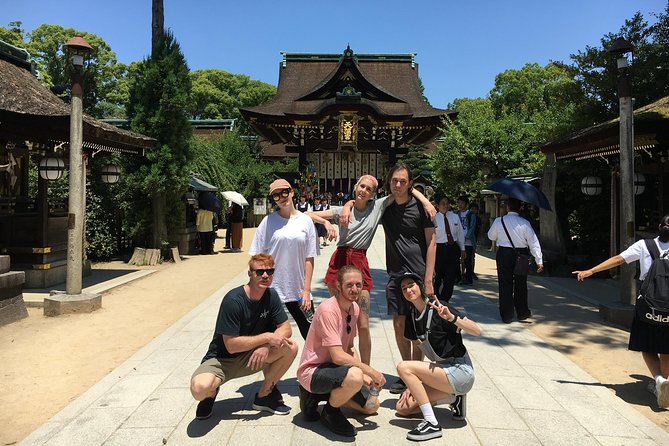
Next comes Kitano Tenmangu Shrine, with about 20 minutes to explore. This stop shifts the mood from a major Buddhist temple to an active Shinto shrine.
You can observe local shrine goers, take in the grounds, and learn about the shrine’s past. The setting offers a calm pause in the middle of the ride, and the guide can help explain the difference between Shinto and Buddhism, a subject that can seem confusing when you visit several sacred sites in one day.
That explanation is one of the strongest reasons to choose a guided bicycle tour rather than simply following a map. The day is not just a checklist of buildings. You begin to understand why a shrine and a temple feel different, how religious traditions developed in Japan, and how those traditions remain part of daily life.
The 20-minute stop is enough for an overview, photographs, and questions. It is not enough for a slow, detailed study of every corner, so you should think of the tour as an orientation. You can return later to the places that catch your attention.
Kinkakuji, Kyoto’s Golden Pavilion
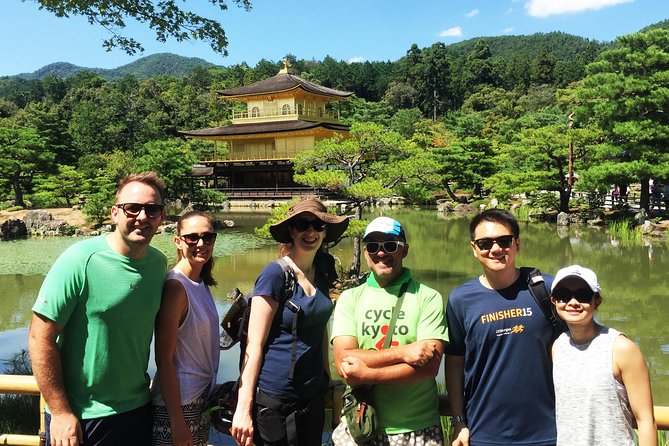
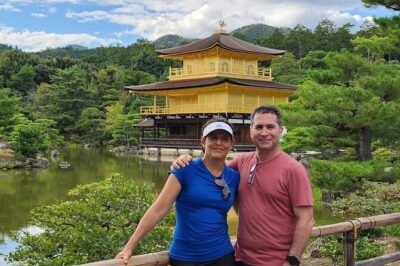
Kinkakuji is the route’s headline attraction. You spend about 30 minutes at the Golden Pavilion, with the entrance fee included.
This is one of Japan’s most visited sights, and you should expect it to feel more crowded than Nishi Honganji or Kitano Tenmangu. The pavilion’s gold exterior and its reflection over the pond are the obvious draw, but the surrounding grounds also give the stop some breathing room.
The guide’s commentary is useful here because Kinkakuji is easy to reduce to a quick photograph. You learn more about the site and its place in Kyoto’s story, then have time to relax, take pictures, or grab an ice cream.
The short climb approaching the pavilion is the main physical challenge on the route. It is not a mountain road, but you may notice it after several earlier stops. Once you reach the attraction, the pace becomes easier again.
I like that the entrance fee is included. At a listed price of $106.12 per person, the value depends less on the temple ticket itself than on the combination of bike rental, route planning, guide service, water, lunch, and access to several major sights in one day. If you were already planning to rent a bike and pay for lunch separately, the package becomes easier to justify.
A few more Kyoto tours and experiences worth a look
The Former Imperial Grounds and a Change of Pace
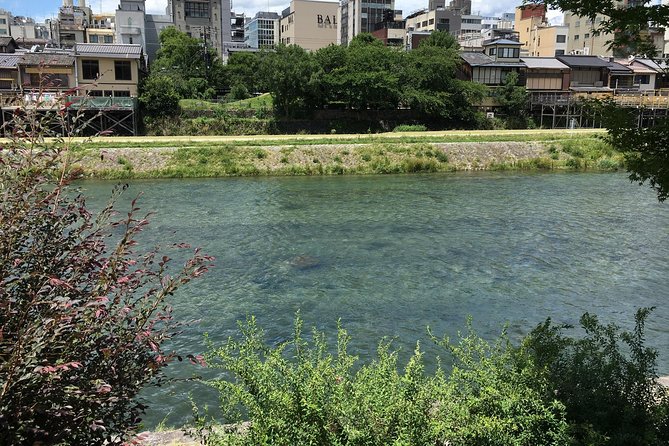
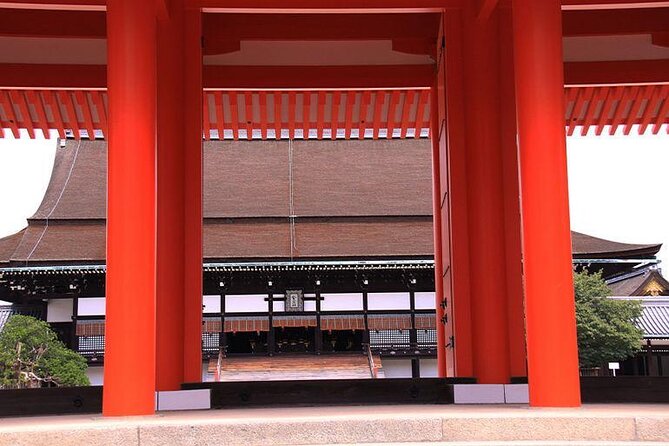
The itinerary also takes you through the grounds of the former seat of Japan’s imperial family. The supplied details do not give a fixed stop length or a separate admission charge, so treat this part as a passing visit and guided look rather than a long formal tour.
This section helps break up the temple visits. After several religious sites, you get a different view of Kyoto’s political past and the city’s connection to the imperial court. The guide explains what you are seeing and how the grounds fit into Kyoto’s past.
Because the day is spread across the city, this kind of ride-through stop is valuable. You get context without spending another hour indoors or waiting in a line. It also shows the advantage of using a bicycle: the route itself becomes part of the experience, not just empty time between attractions.
Lunch, With Room for Local Variety
Lunch is included, and it is more than a quick fuel stop. The meal gives the day a cultural pause and lets you sit down, recover, and talk with the group.
The exact venue can change. One scheduled noodle house was closed during a particular departure, so the group went to a sushi bar instead. Other meals included a 400-year-old noodle restaurant, traditional Japanese food, and sushi. This flexibility is useful, but it also means you should not book the tour expecting one guaranteed restaurant or exact menu.
Dietary requirements must be provided ahead of time. Vegetarian options have been arranged on past tours, but you should not wait until the morning of the ride to mention food restrictions.
Lunch is an important part of the value. A six-hour bike tour without a proper meal would feel demanding, especially in Kyoto’s heat. Here, you get time to rest and eat before continuing toward the final part of the route.
Gion, Geisha Culture, and the Last Stretch
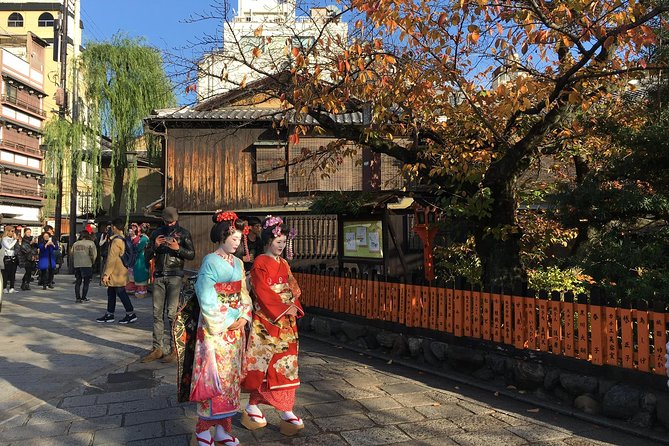
The ride includes a 10-minute stop in Gion, Kyoto’s famous geisha district. This is a brief introduction rather than a full evening walk through the neighborhood.
Your guide explains the district and the world of geisha, including how this tradition developed and what these entertainers do. You might catch a glimpse of one, but there is no promise of that, and it is important to treat the area with care and respect.
Gion can feel very different from the open grounds of a temple. The lanes are narrower, the buildings more closely packed, and the atmosphere more urban. A short guided stop helps you look beyond the idea of simply spotting a geisha. You get a better sense of the district as a place with rules, work, residents, and a long cultural role.
Ten minutes goes quickly, so do not expect a detailed exploration. The point is to give you an introduction and perhaps help you decide if you want to return later on foot.
Guides Who Shape the Day
The route is fixed enough to provide structure, but the guide makes the day feel personal. Jay has been praised for making families feel comfortable and for sharing local places and stories. Quinn is noted for adjusting speed, adding breaks in hot weather, and explaining temples and shrines in detail.
Indra brings strong explanations of Japanese history, Shinto, Buddhism, and geisha culture. Julian is described as easygoing, enthusiastic, and helpful with suggestions for the rest of a Kyoto visit. Karl is known for lively commentary and answering a steady stream of questions, while Mayco has been singled out for making the route feel safe and personal.
You cannot choose the guide listed for your departure unless the operator allows it, so book this for the structure and style of the experience rather than one particular person. The consistent advantage is having someone lead through city traffic, select the route, manage the stops, and explain what you are seeing.
The small group helps. With no more than eight people, the guide can keep an eye on the pace and respond when someone needs water or a slower stretch. It also makes it easier for solo participants to feel included.
Safety, Comfort, and Weather
You should be comfortable riding a bicycle before booking. The route has been described as safe and not overly difficult, but you are riding through a real city, not a closed park. Follow the guide closely and be ready to ride for several hours.
The tour operates only in suitable weather. If rain or other poor conditions causes a cancellation, you can take another date or receive a full refund. You can also cancel for a full refund up to 24 hours before the 10:00 a.m. start time. Changes or cancellations inside that window are not accepted.
Weather planning matters. Booking near the beginning of your Kyoto stay gives you more room to shift the tour if rain appears in the forecast. On hot days, the frequent breaks and supplied water help, but you still need to pace yourself.
Public transportation is nearby, which makes reaching the starting point easier. The tour ends back at the shop, a useful detail if you have dinner plans or another booked activity afterward.
Is $106.12 a Fair Price?
At $106.12 per person, this is not the cheapest way to see Kyoto. You can rent a bicycle on your own for less, and many temples can be visited independently. But the comparison is not simply bike rental versus tour price.
The fee covers a Cannondale bike, cycling equipment, guidance, bottled water, lunch, and the Kinkakuji entrance fee. It also buys a planned route that connects sights across the northern part of the city, plus explanations that are hard to get from signs alone.
The value is strongest if you have one full day for an overview of Kyoto, want to avoid crowded buses, and appreciate help with navigation. It is weaker if you already know the city well, dislike group schedules, or want long unhurried visits at each temple.
The tour has a 4.9 rating from 1,087 reviews and a 99 percent recommendation rate, which supports the idea that the format works for many people. Still, the physical effort and short sightseeing windows are real trade-offs.
Who Should Book This Bike Tour?
I would recommend it to active first-time visitors who want a broad introduction to Kyoto. It works especially well on your first full day, since you can see several major areas and use the guide’s suggestions to plan later visits.
Families with older children can also benefit. The minimum age is 13, and the route has suited families with children from 12 to 17 in some cases, but the stated booking rule requires riders to be at least 13. Everyone in your party should be comfortable on a bike.
Solo visitors may find the small group welcoming, while couples and friends get an easy way to combine exercise, sightseeing, and lunch. It is also a good choice if you want to understand the difference between temples and shrines rather than simply photograph them.
I would skip it if you have limited cycling ability, serious mobility concerns, or strong heat sensitivity. You should also avoid placing another demanding activity immediately afterward. The tour finishes back at the meeting point, but you may want a quieter evening.
Final Verdict: Book It for the Route and Guide
This is a strong Kyoto introduction because it joins the city’s famous sights with the spaces between them. You see Kinkakuji, but you also ride through ordinary streets, pause at a quieter temple, learn about Shinto at Kitano Tenmangu, and get a short look at Gion.
Book it if you want a well-organized, active day and value a guide who can explain Japanese culture while keeping the group moving safely. The included lunch, equipment, temple admission, and small group make the $106.12 price reasonable for many first-time visitors.
Skip it if your ideal Kyoto day means lingering for hours at one temple or moving entirely at your own pace. For everyone else, this is a practical way to cover a lot of ground without spending the day on crowded buses.
FAQ
How long does the Bike Tour Exploring North Kyoto plus Lunch last?
The tour lasts approximately five to six hours. It begins at 10:00 a.m. and ends back at the Cycle Kyoto meeting point.
Where does the tour start and finish?
The meeting point is Cycle Kyoto at 7 Higashikujō Nishisannōchō, Minami Ward, Kyoto, 601-8003, Japan. The activity ends at the same meeting point.
What sights are included?
The route includes Nishi Honganji, Kitano Tenmangu Shrine, Kinkakuji Temple, the grounds of the former imperial seat of Japan, and Gion.
Is the Kinkakuji entrance fee included?
Yes. The Kinkakuji Temple admission fee is included in the tour price.
What is included in the tour price?
You receive a Cannondale bike, cycling equipment, guide service, bottled water, lunch, and the included temple entrance fee.
Is lunch included?
Yes. Lunch is included, but the restaurant and meal may vary. Dietary requirements must be provided ahead of time.
How fit do I need to be?
You need a moderate level of physical fitness and must be comfortable riding a bicycle. The route is about 13 miles, or roughly 24 kilometers, with breaks and sightseeing stops.
What happens if the weather is poor?
The tour requires good weather. If it is canceled because of poor conditions, you can choose a different date or receive a full refund.
More Cycling Tours in Kyoto

More Rides with Lunch in Kyoto
More Kyoto Cycling Tours in Kyoto
More tours in Kyoto we've reviewed
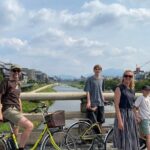
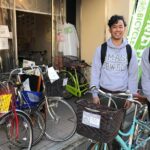
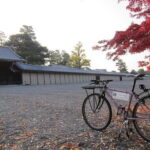
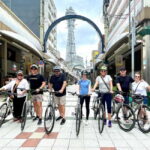
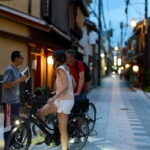
Kyoto Cycling Tours, compared.
 ★ 5.05 Top Highlights of Kyoto Full Day Bike Tour (E-bike option)From $172
 ★ 5.0E-Bike Tours of the highlights of Kyoto!!!From $109
 ★ 5.0Afternoon Kyoto Bike Tour: Bamboo Forest, Monkeys & Hidden SpotsFrom $106
 ★ 5.0South Kyoto in a Nutshell: Gentle Backstreet Bike Tour!From $79
 ★ 4.9Kyoto: City Secrets eBike TourFrom $1273h 45m
 ★ 5.0Pedal Adventure Kyoto’s iconic landmarks on an e-bike tourFrom $86
 ★ 4.9Kyoto: Hidden Gems E-Bike Tour with Local Japanese GuideFrom $753h 30m
 ★ 5.0Historical Kyoto E-Bike TourFrom $99
Browse the lists this tour appears in