
Reviewed · KYOTO CYCLING TOURS
Kyoto in a Day by eBike: The Best Bits Tour (East Course)
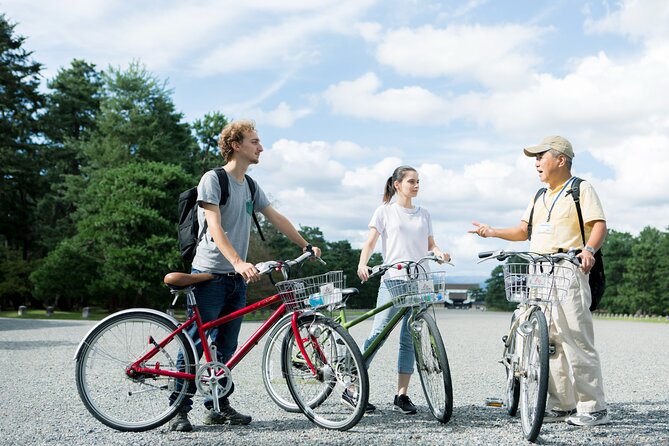
Kyoto’s best sights are spread across the city, and this full-day e-bike tour links them without making you depend on crowded buses. You’ll ride from Kyoto Station through temples, palace grounds, quiet lanes, and the eastern hills, with an English-speaking guide explaining how Kyoto’s shogun-era past still shapes the city.
I like the small private-group format, capped at six people per guide, and the useful mix of major sights and calm cycling routes. The route also includes lunch and listed admission fees, while guides such as Makoto Yanai, Kay, Tad, and Tomoko have been praised for keeping groups safe, sharing history clearly, and adjusting the ride when useful.
The main caution is stamina. Eight hours on a bicycle is a serious day, and Kyoto’s eastern side includes hills and busy roads. Children must be at least 10 years old, 145 centimeters or taller, and able to ride safely on the road without help.
In This Review
- Key points about Kyoto’s eastern e-bike route
- Why an e-bike makes Kyoto easier to cover
- Starting at Kyoto Station at 9 a.m.
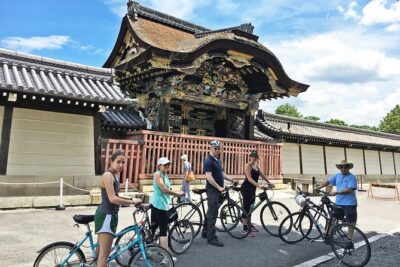
- Nishi Honganji offers a quiet opening
- Nijo Castle shows the shogun’s political side
- Kyoto Gyoen brings a change of pace
- Ginkakuji pairs a simple pavilion with a careful garden
- Philosopher’s Path is the ride’s most peaceful stretch
- Kiyomizu-dera finishes with a view
- What lunch and the included fees really add
- Guides, safety, and the small-group difference
- Rain planning and what to bring
- Who should book this Kyoto cycling day?
- Should you book Kyoto in a Day by eBike?
- FAQ
- Where does the Kyoto e-bike tour begin?
- What time does the tour start?
- How long does the experience last?
- Where does the tour end?
- Which sights are included?
- Are lunch and admission fees included?
- How many people can join one guide?
- What happens if it rains?
- Can children join the tour?
Key points about Kyoto’s eastern e-bike route
- A full-day route from Kyoto Station: Begin at 9 a.m. and return to the Kyoto Cycling Tour Project terminal after visiting several of the city’s main sights.
- Small private groups: Two to six people are accepted per guide, with an extra guide available for groups of seven to twelve.
- Five major stops: See Nishi Honganji, Nijo Castle, Kyoto Gyoen, Ginkakuji, and Kiyomizu-dera, plus Philosopher’s Path.
- Lunch and entry fees included: You do not need to budget separately for the listed temple and castle admissions.
- Rain does not automatically cancel the ride: You can continue by bicycle with a free poncho or switch to a walking route using included bus or metro transport.
- A guide-led ride, not a casual rental: The value comes from navigation, historical explanation, road safety, and access to a route that would be difficult to organize in one day.
Why an e-bike makes Kyoto easier to cover
Kyoto looks compact on a map, but its sights are spread across several districts. Nijo Castle sits near the center, Ginkakuji lies in the northeast, and Kiyomizu-dera rises on the eastern side. Connecting all of them by foot would be tiring, while relying on public transportation can mean waiting, transfers, and crowded vehicles.
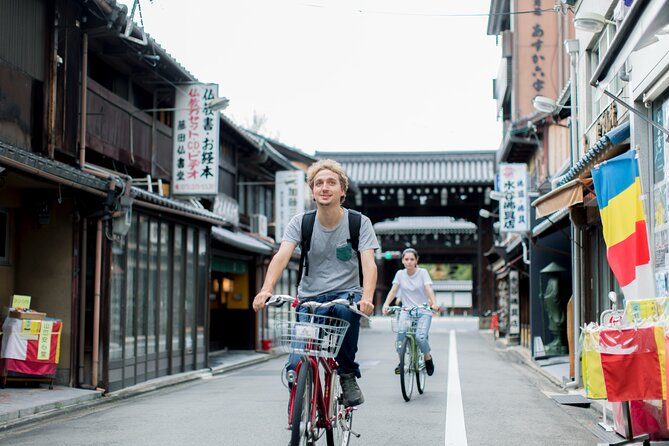
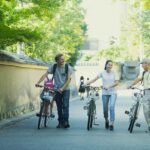
An e-bike gives you a practical middle ground. You still see the city at street level, but you can cover more ground than on foot. The ride also lets you move between famous places through ordinary Kyoto streets rather than spending the whole day inside buses.
This is not a gentle sightseeing loop around one neighborhood. The tour lasts about eight hours and includes several major stops. The pace depends on the group, traffic, photo breaks, and the guide, but you should expect a substantial day outdoors.
A guide matters here. Kyoto cycling requires attention around traffic, pedestrians, narrow streets, and changing road conditions. The small-group limit means the guide can keep an eye on the group more easily than on a large coach excursion.
A few more Kyoto tours and experiences worth a look
Starting at Kyoto Station at 9 a.m.
You meet at the Kyoto Cycling Tour Project’s Kyoto Station Cycle Terminal, at 552-13 Higashiaburanokōjichō in Shimogyo Ward. The activity begins at 9 a.m. and ends back at the same meeting point.
Starting near Kyoto Station is convenient if you arrive by train or are staying nearby. You should allow enough time to reach the terminal, check in, and prepare before the morning departure. Since the tour returns to the starting point, you do not need to plan an afternoon pickup in another part of the city.
The tour is private, meaning only your group takes part. That is helpful for families and friends who want to keep the day together, ask questions freely, or adjust the pace within reason. The minimum is two people per guide. A solo booking is not accepted.
The operator can arrange another guide for groups of seven to twelve. That keeps the cycling group manageable, which is especially important on city roads.
Nishi Honganji offers a quiet opening
The first stop is Nishi Honganji, one of Kyoto’s major Buddhist temples. The planned visit is about 15 minutes, and admission is free.
This is a smart opening stop because it gives you a taste of Kyoto’s religious architecture before the busier parts of the day. The temple is known for impressive buildings and often feels less crowded than some of the city’s headline sights.
Do not expect a long temple study here. Fifteen minutes is enough for an introduction, a look at the main architecture, and a short explanation from the guide. The brief stop also keeps the morning moving.
If you enjoy detailed temple visits, you may wish this stop were longer. Its value is as a calm first look and a chance to begin understanding Kyoto’s long religious tradition without using much of your cycling time.
Nijo Castle shows the shogun’s political side
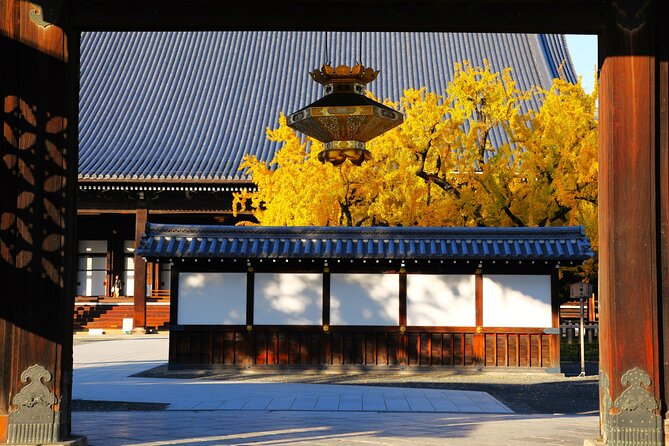
Next comes Nijo Castle, with about an hour set aside and admission included.
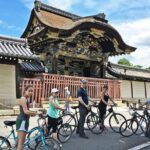
Nijo Castle is different from the temples on this route. It presents the political and military world of the shoguns, with formal architecture, decorated interiors, and grounds that show how power was displayed. Your guide can help connect what you see inside the castle with the larger story of Kyoto as Japan’s imperial and political center.
The hour gives you time to see the important interior spaces and take in the artwork. This is one of the stops where a guide adds real value, since the meaning of the rooms and decoration is not always clear from a quick walk-through.
The castle can also be one of the more structured parts of the day. You are following a set visit rather than wandering freely for hours. That is useful on a route with many stops, though you will need to keep an eye on the clock.
Admission is included, so you do not need to calculate the castle fee separately when judging the price.
Kyoto Gyoen brings a change of pace
The bicycles then head toward Kyoto Gyoen National Garden, the broad green area around the Imperial Palace. The planned cycling visit lasts about 15 minutes, and there is no separate admission charge.
This is a welcome change after the formal castle visit. You get to ride through a quieter open area and see the setting around the Imperial Palace without committing to a long palace tour.
The short visit is mainly about cycling and orientation. It is not presented as an extended Imperial Palace visit, so keep your expectations focused on the garden setting and the ride itself.
I like this part because it breaks up the indoor sightseeing. After a morning of looking at buildings and artwork, a short stretch through open grounds helps the day feel less like a string of ticketed entrances.
A few more Kyoto tours and experiences worth a look
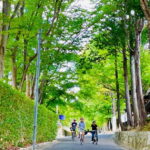
Ginkakuji pairs a simple pavilion with a careful garden
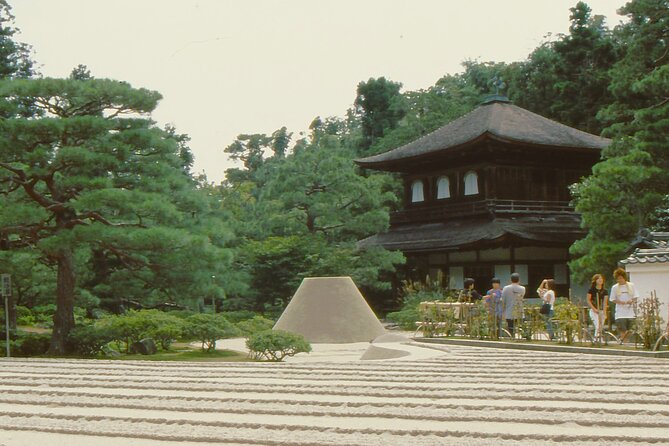
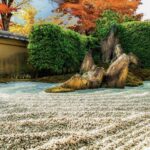
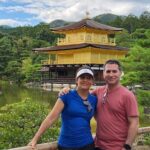
Ginkakuji, the Silver Pavilion, receives about 45 minutes of the day, with admission included.
The pavilion was built by a shogun, and the appeal lies in the relationship between the building and its garden. Despite the familiar Silver Pavilion name, the structure is not simply a glittering silver monument. Its restrained appearance and carefully arranged grounds are central to what you see.
Forty-five minutes is enough for a guided introduction and photographs, though anyone interested in Japanese garden design may want more time. The guide can point out features you might otherwise pass without noticing and explain why this place matters within Kyoto’s shogun-era story.
Ginkakuji is also a useful contrast with Nijo Castle. Nijo presents authority through grand interiors and formal space. Ginkakuji offers a quieter, more refined setting. Seeing both in one day gives you a better sense of how power and taste were expressed in different ways.
Philosopher’s Path is the ride’s most peaceful stretch
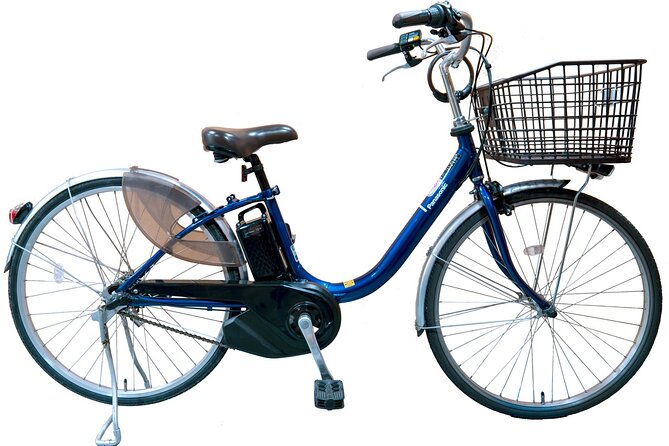
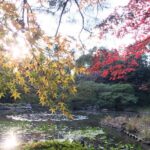
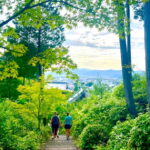
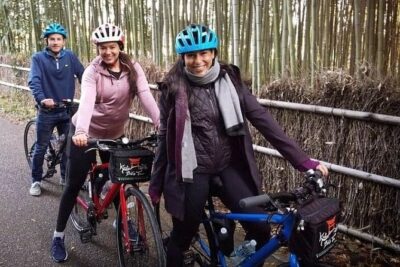
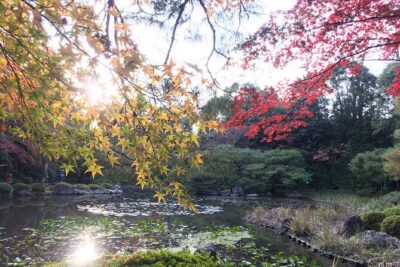
The route continues along Philosopher’s Path in northeastern Kyoto. The path follows a quiet street and is especially attractive during the autumn maple season.
This is one of the places where using a bicycle makes sense. You can move steadily along the route and enjoy the change from temple grounds to a calmer neighborhood setting. The path is not treated as a long formal stop, so the time here may depend on the group and the guide’s plan.
You should not expect an empty road at every moment. Kyoto’s popular paths can still have pedestrians and other cyclists, so ride carefully and follow the guide’s instructions.
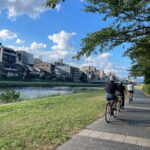
The route can also be adjusted when conditions or group interests allow. Makoto Yanai has taken a family along the Kamo River as a detour, using a beautiful riverside path for cycling. That detail suggests the day can have some flexibility, but you should not assume every optional detour is guaranteed.
Kiyomizu-dera finishes with a view
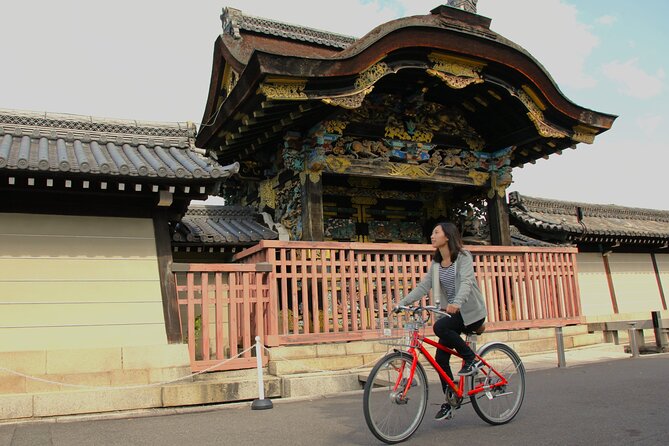
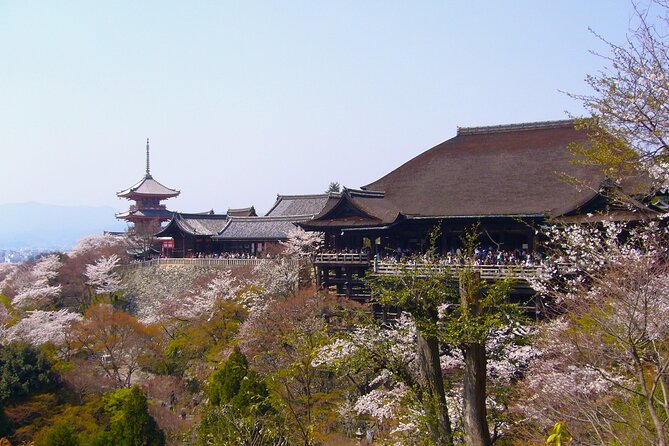
The final major stop is Kiyomizu-dera, set in Kyoto’s eastern hills. The visit lasts about 30 minutes, with admission included.
Kiyomizu-dera is known for its wooden temple setting and views over Kyoto from the mountainside. The climb to the temple area gives this stop a different feel from the flatter city routes earlier in the day.
Thirty minutes is enough for the guide to explain the temple’s importance and for you to take in the view. It is not enough for a slow, complete exploration of every corner, so treat this as a focused visit rather than an unhurried afternoon.
The setting makes Kiyomizu-dera a fitting end to the sightseeing portion. You have moved from central Kyoto toward the eastern hills, and the view helps you understand the city’s layout after spending the day crossing it by bicycle.
The final ride returns you to the Kyoto Station Cycle Terminal. Since the tour ends where it begins, you can collect your belongings and continue with your own evening plans from the station area.
What lunch and the included fees really add
The price is $247.12 per person. That is not a low-cost bicycle rental, but this is a guided private activity with an approximately eight-hour schedule, an e-bike, lunch, and listed entry fees included.
The value is strongest if you want structure. You are paying for the bicycle, route planning, road guidance, historical explanations, admission to Nijo Castle, Ginkakuji, and Kiyomizu-dera, plus lunch. You also avoid spending time arranging transport between widely separated sights.
The value is weaker if you prefer to move slowly, spend hours inside one temple, or explore independently. A self-guided day using buses and trains may cost less, but it will not provide the same level of navigation or a single person linking the sites together.
Some posted feedback describes outings lasting about three hours, even though this experience is advertised as approximately eight hours. That may refer to a different cycling product or a shortened schedule. I would confirm the exact day’s timing when booking, especially if you are comparing this route with a shorter option.
Guides, safety, and the small-group difference
The guide is a central part of the experience. Makoto Yanai has been described as kind, entertaining, and willing to suggest detours, including a Kamo River route. Kay and Tad have led families while focusing on road safety and explaining Kyoto’s past. Tomoko has guided a three-hour ride with time for photos and refreshments.
Those details point to the kind of help you should expect: route management, historical context, safety reminders, and some room for the day to respond to the group. Actual guide assignments are not guaranteed, so book this for the format and route rather than for one specific person.
The two-to-six-person limit is a real advantage. Your guide can communicate more easily, keep the group together, and make small adjustments without the delay of a large convoy. It also means the experience depends on the pace and cycling ability of the people sharing your group.
You need to be comfortable riding on public roads without assistance. Children must meet the stated age and height rules and ride safely on their own. The information does not specify an adaptive bicycle option, so ask the operator directly if anyone in your party has special cycling needs.
Rain planning and what to bring
The tour operates in rain. You can continue on bicycles with a free rain poncho, or choose a walking tour that uses public transportation, with bus or metro costs included in the tour fee.
That policy makes the booking less vulnerable to an ordinary Kyoto shower, but it does not guarantee the same experience in poor weather. Cycling in rain can be less comfortable, and switching to public transportation changes the feel and possibly the pace of the day.
Wear practical clothing and shoes suitable for several hours outside. Bring a way to protect your phone or camera from rain, even if you choose the poncho option. In hot weather, plan for the physical effort, since Tomoko’s shorter summer ride included a welcome need for refreshment breaks.
The mobile ticket is useful for access to the booking details, but you still need to arrive at the named cycle terminal at the stated time.
Who should book this Kyoto cycling day?
I would choose this tour if you have one full day in Kyoto and want to see several major places without working out the transport plan yourself. It is especially useful for families with older children, couples, and small groups who like a guide but do not want to join a large bus tour.
It suits you if you enjoy seeing a city from the saddle and are happy with focused visits rather than long, slow temple stays. It is also a good choice if you want both famous sights and calmer stretches such as Kyoto Gyoen and Philosopher’s Path.
I would think twice if you dislike cycling in traffic, tire easily, or want to spend most of the day indoors. The eight-hour schedule is ambitious, and a bicycle does not remove the need to walk around temple and castle grounds.
The cancellation terms need careful attention. One set of booking information says you should cancel at least three days before the tour date by 6 p.m. Japan time for a refund, while the stated cancellation policy says the experience is non-refundable and cannot be changed. Because those terms conflict, confirm the applicable rule with KCTP before paying. If the minimum number of participants is not met, the operator says you will be offered another date or experience, or a full refund.
Should you book Kyoto in a Day by eBike?
Book it if your priority is coverage, context, and easy movement between Kyoto’s eastern sights. The route gives you Nijo Castle, Ginkakuji, Philosopher’s Path, and Kiyomizu-dera in one organized day, while the small group keeps the ride personal.
Skip it if you want a relaxed single-district visit or do not feel strong on a bicycle. At $247.12, the price makes sense when you use the included lunch, admissions, e-bike, private guide, and transport planning. It makes less sense if you will not ride for most of the day.
For the right rider, this is a practical way to see Kyoto’s shogun-era landmarks and quieter streets in one sweep, with a guide handling the route and the history along the way.
FAQ
Where does the Kyoto e-bike tour begin?
It begins at the Kyoto Cycling Tour Project Kyoto Station Cycle Terminal, 552-13 Higashiaburanokōjichō, Shimogyo Ward, Kyoto, 600-8235, Japan.
What time does the tour start?
The tour starts at 9 a.m.
How long does the experience last?
The advertised duration is approximately eight hours.
Where does the tour end?
The tour ends back at the Kyoto Station Cycle Terminal, the same place where it begins.
Which sights are included?
The route includes Nishi Honganji, Nijo Castle, Kyoto Gyoen National Garden, Ginkakuji Temple, Philosopher’s Path, and Kiyomizu-dera Temple.
Are lunch and admission fees included?
Lunch and all listed entry fees are included in the tour fee.
How many people can join one guide?
The minimum is two people, and the maximum is six people per guide. For groups of seven to twelve, an additional guide can be arranged.
What happens if it rains?
The tour operates in rain. You can continue by bicycle with a free rain poncho or switch to a walking tour using public transportation. Bus and metro costs are included.
Can children join the tour?
Children must be at least 10 years old, at least 145 centimeters tall, and able to ride a bicycle safely on the road without assistance.
More Cycling Tours in Kyoto


More E-Bike Tours in Kyoto
More Kyoto Cycling Tours in Kyoto
More tours in Kyoto we've reviewed
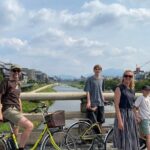
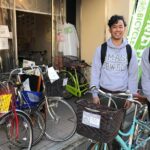
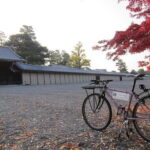
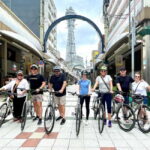
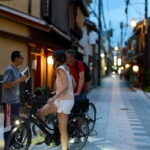
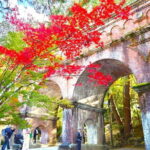
Kyoto Cycling Tours, compared.
 ★ 5.0Bike Tour Exploring North Kyoto plus LunchFrom $106
 ★ 5.05 Top Highlights of Kyoto Full Day Bike Tour (E-bike option)From $172
 ★ 5.0E-Bike Tours of the highlights of Kyoto!!!From $109
 ★ 5.0Afternoon Kyoto Bike Tour: Bamboo Forest, Monkeys & Hidden SpotsFrom $106
 ★ 5.0South Kyoto in a Nutshell: Gentle Backstreet Bike Tour!From $79
 ★ 4.9Kyoto: City Secrets eBike TourFrom $1273h 45m
 ★ 5.0Pedal Adventure Kyoto’s iconic landmarks on an e-bike tourFrom $86
 ★ 4.9Kyoto: Hidden Gems E-Bike Tour with Local Japanese GuideFrom $753h 30m
Browse the lists this tour appears in