
Reviewed · KYOTO CYCLING TOURS
5 Top Highlights of Kyoto Full Day Bike Tour (E-bike option)
Kyoto’s biggest sights are spread across the city, and this tour links them by bicycle in one ambitious day. You’ll ride as far as 27 miles, or 44 kilometers, moving from Arashiyama in the west to Fushimi Inari in the south and Kinkakuji in the north. It is a smart way to cover ground without spending the day waiting in traffic.
I like two things right away: the small group of no more than eight keeps the ride personal, and the guides add far more than directions. Rob, Cass, Peter, Ray, and Kes are named in the tour material, and the guide you receive may share local history, Japanese culture, daily life, and good photo spots along the way. Lunch, water, snacks, admission fees, a bicycle, and helmet are included.
The catch is simple: this is a full day of riding and walking, not a gentle sightseeing loop. The route requires moderate fitness, and the e-bike costs extra and needs confirmation. On a hot day, the distance can feel long, so eat a solid breakfast, use sun protection, and consider the e-bike if hills or endurance concern you.
In This Review
- Key things to know before booking
- Why a bicycle works so well for Kyoto’s scattered sights
- Starting at Saga-Arashiyama Station
- Walking beneath Arashiyama’s bamboo
- Following the red torii at Fushimi Inari
- Gion and the old Kyoto atmosphere
- Kiyomizu-dera and Kyoto’s classic view
- Lunch, water, and the practical middle of the day
- Finishing at the Golden Pavilion
- Regular bicycle or e-bike?
- How demanding is the full day?
- The guides and the value of local context
- Price and what the $172.44 covers
- Who should book this Kyoto bike tour?
- Should you book it?
- FAQ
- How long does the Kyoto bike tour last?
- Where does the tour start?
- Where does the tour end?
- Which attractions are included?
- Is an e-bike included in the price?
- How far might I ride?
- What is included with the tour?
- Is hotel pickup available?
- What age do I need to be?
- What happens if the weather is poor?
Key things to know before booking
- Five famous sights in one day: Visit the bamboo forest, Fushimi Inari, Gion, Kiyomizu-dera, and Kinkakuji without arranging separate transport between them.
- Up to 44 kilometers of riding: Expect a serious day on the bike, mixed with temple visits, walking, photo stops, and lunch.
- E-bike choice available: A regular bicycle is included. An e-bike requires an extra fee and confirmation, but it can help on inclines and during a long, hot day.
- Small groups matter: The maximum group size is eight, giving your guide room to manage road crossings, answer questions, and adjust the pace.
- More than city streets: Depending on the route and conditions, you may ride along river paths, through quieter neighborhoods, past rice fields, and near streams.
- Ages 16 and up: You need a moderate level of fitness and should notify the operator about food allergies or restrictions when booking.
Why a bicycle works so well for Kyoto’s scattered sights
Kyoto is easy to explore badly. You can spend long stretches on crowded buses, wait for taxis, or waste time retracing your route between far-flung temples. A bicycle changes the rhythm. You move through ordinary streets and quieter edges of the city, then park near a major sight and continue on foot.
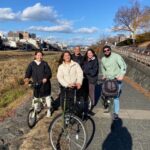
I especially like the transition between tourist centers. A bus takes you from one landmark to another with little sense of the space between them. On this ride, the spaces count. You may pass local streets, waterways, gardens, rice fields, and paved paths along the river. Those stretches help you understand Kyoto as a living city rather than a collection of postcard stops.
This is still a highlights tour, not a slow neighborhood ride. The schedule is tight because the route covers so much ground. You’ll need to keep moving, follow the guide’s signals, and accept that each stop offers an introduction rather than a full visit to every corner.
The small group helps here. Guides such as Rob are praised for clear signals and careful road management, while Cass, Peter, and Ray are noted for adding cultural context and keeping the day sociable. That matters if city cycling makes you nervous. You are not left to find the route on your own.
A few more Kyoto tours and experiences worth a look

Starting at Saga-Arashiyama Station
The tour begins at 8:30 a.m. near Saga-Arashiyama Station, at 11-1 Sagatenryuji Kurumamichicho in Kyoto’s Ukyo Ward. You should plan your morning around arriving at the meeting point on time, since the first stop is close to one of Kyoto’s most popular areas and the day’s schedule has little spare room.
The starting point puts you near Arashiyama, an area known for its bamboo grove, temples, river views, and traditional streets. The tour begins with one of Kyoto’s most recognizable sights, then gradually carries you across the city.
Your bicycle and helmet are included, along with bottled water. The regular bike is part of the listed price. If you want an e-bike, request it when booking and wait for confirmation, since it is an added-cost option rather than an automatic upgrade.
Walking beneath Arashiyama’s bamboo
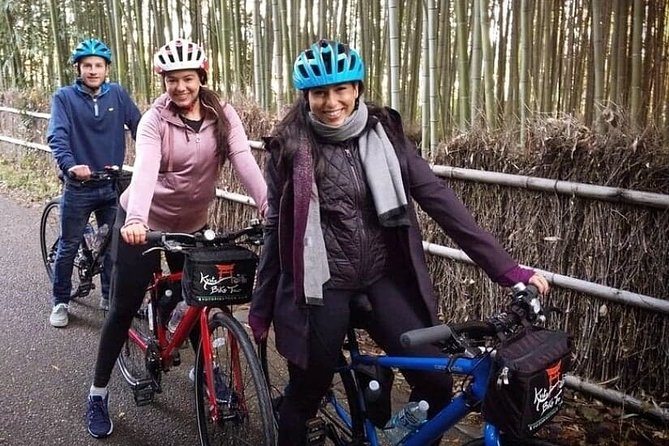
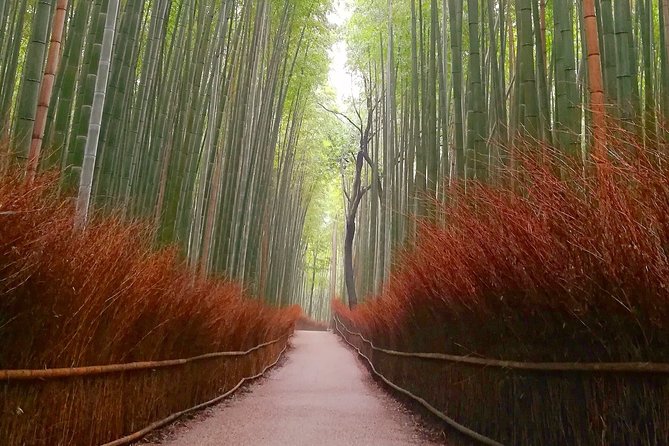
The first stop is Bamboo Forest Street, with about 20 minutes set aside. The tall bamboo creates one of Kyoto’s most striking visual scenes, but the sound is part of its appeal too. Stems shift and rustle above you, creating a calm break from traffic and conversation.
Twenty minutes is enough for a look and photographs, but not for a long wander through the wider Arashiyama area. If bamboo is your main reason for visiting this part of Kyoto, you may want a separate visit on another morning. On this tour, think of the stop as a strong opening scene rather than a full Arashiyama exploration.
The advantage of arriving by bike is that you do not have to build a separate transport plan around this popular area. You see it early, then leave the crowds and continue toward the next major sight.
Following the red torii at Fushimi Inari
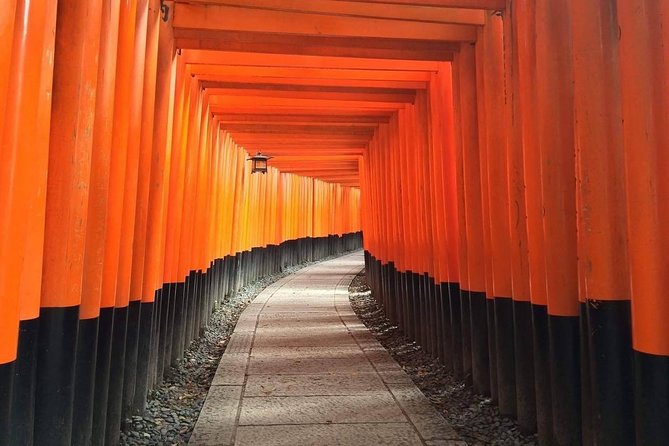
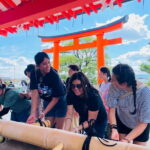
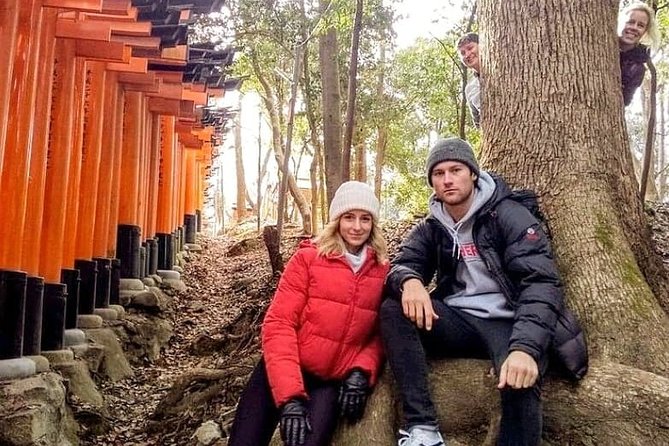
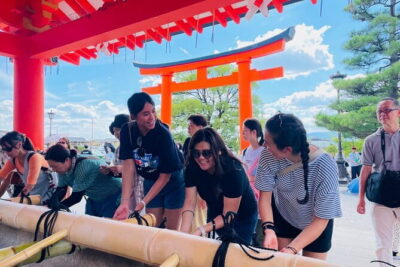
Fushimi Inari-taisha receives roughly 30 minutes. The shrine is famous for its long tunnel of red torii gates, which climb through the wooded slopes behind the main shrine buildings. Even a short walk gives you the essential experience and the photographs most people hope to take.
The time limit is the main compromise. Fushimi Inari extends much farther than the portion you can cover in half an hour, and the upper trails require a longer climb. This tour is designed to show you the signature entrance and torii corridor, not to take you to the summit.
That tradeoff makes sense in a one-day citywide ride. You get a taste of one of Kyoto’s most important shrine settings without losing the hours needed for Kiyomizu-dera and Kinkakuji. Wear shoes you can walk in comfortably, since the day alternates between pedaling and temple paths.
Gion and the old Kyoto atmosphere
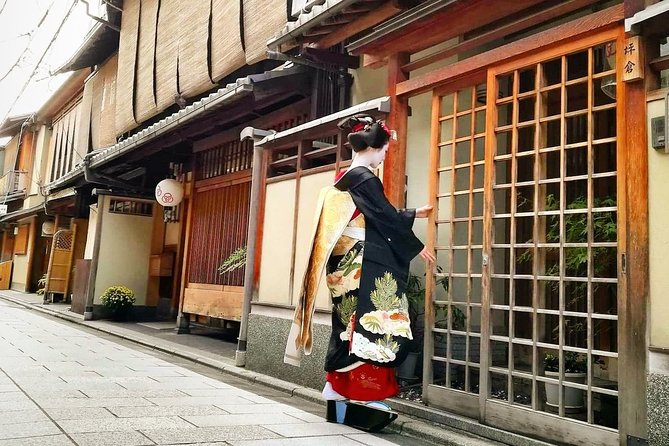
The stop in Gion lasts about 20 minutes. This historic district is associated with geisha and maiko, traditional wooden buildings, teahouses, and narrow lanes. Your guide can help explain the difference between the district’s historic role and the modern assumptions many visitors bring with them.
Again, the stop is brief. You will not have time for a long search through every lane or for an evening performance. The value is in seeing the district as part of the larger route and hearing context from a guide who can connect the streets with Japanese culture and present-day life.
The bicycle format also lets you approach Gion as part of Kyoto’s ordinary flow. You are not simply dropped at a tourist gate. You ride through the city and then pause in one of its best-known historic quarters.
A few more Kyoto tours and experiences worth a look
Kiyomizu-dera and Kyoto’s classic view
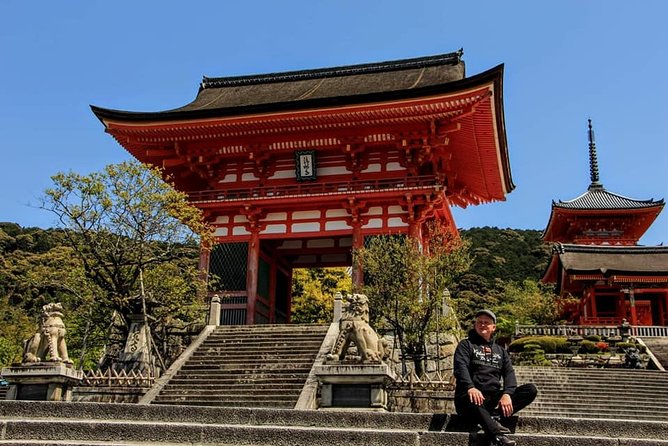
Kiyomizu-dera gets the longest stop, one hour, and that is appropriate. The temple is one of Kyoto’s oldest and offers one of the city’s most familiar elevated views. Its setting on the eastern hills gives you a chance to look back across Kyoto after spending the morning riding through it.
The temple grounds involve walking and some uneven or sloping sections. You will also encounter one of Kyoto’s busiest sightseeing areas, especially at popular times of day. Your guide can help you make the most of the allotted hour, but this is not a private, crowd-free temple visit.
I like this stop because it gives the day a pause. After the long ride between Arashiyama, Fushimi Inari, and Gion, you can leave the bicycle, explore the temple grounds, and take in the view. It is also a good point to judge your energy for the rest of the route. Kinkakuji still lies ahead, so pace yourself.
Lunch, water, and the practical middle of the day
A light lunch, bottled water, and snacks are included. You should still eat a hearty breakfast. With this much riding and walking, a light included meal may keep you going, but it is not a substitute for starting the day well fed.
Food allergies or restrictions should be reported at booking. The supplied information does not specify the lunch menu, so ask the operator directly if your needs are strict or complex.
The included water is useful, particularly in warm weather. Several accounts of the tour describe hot conditions, regular attention to water levels, and guides checking that riders were coping well. You should still bring sun protection and be ready for the possibility that conditions change during the day.
One couple encountered a torrential downpour, and the guide sheltered with the group until it was safe to ride again. That is reassuring, but you should remember that the tour depends on suitable weather. If poor weather forces cancellation, you are offered another date or a full refund.
Finishing at the Golden Pavilion
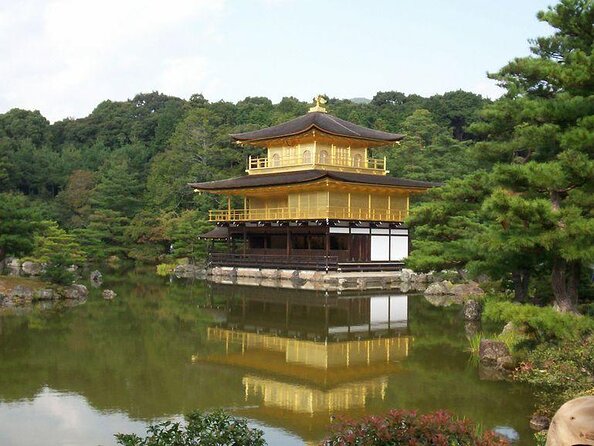
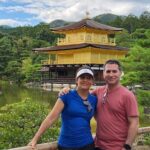
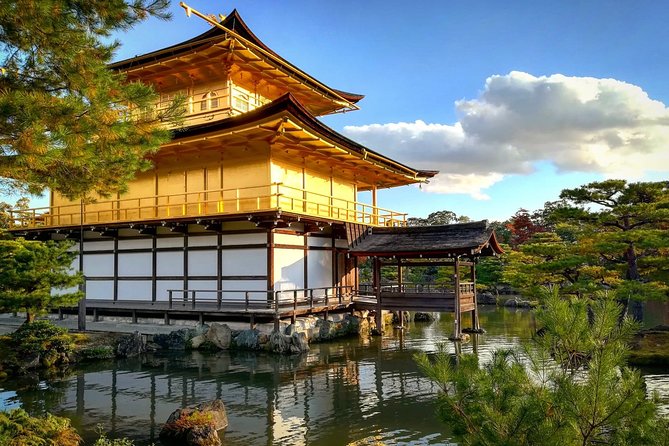
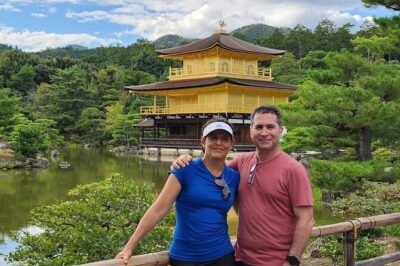
Kinkakuji Temple, the Golden Pavilion, receives about 30 minutes. The pavilion’s gold-covered exterior reflects in the pond, making this one of Kyoto’s most instantly recognizable views. The garden setting gives you a quieter visual finish after the city riding and temple crowds.
Half an hour is enough to enter the grounds, see the pavilion from the main viewing areas, and take photographs. It is not enough for a leisurely garden study or an extended temple visit. The attraction is popular, and the route gives you a planned introduction rather than a slow afternoon.
By the end of the day, the Golden Pavilion works as a final major image. You have seen Kyoto’s bamboo, shrine gates, geisha district, hillside temple, and golden pavilion, then return by bicycle to the original meeting point.
Regular bicycle or e-bike?
The regular bicycle is included. The e-bike is an optional extra with a separate fee and confirmation requirement. This choice deserves real thought, since the route can reach 44 kilometers and includes hills or inclines.
You may be perfectly comfortable on a standard bicycle if you ride regularly and handle a full day of activity well. One rider on a hot day found the regular bike manageable. Still, several groups chose e-bikes for family members or partners who wanted help with the hills, and one group described Specialized e-bikes as especially easy to ride.
I would choose the e-bike if:
- You do not often ride long distances.
- You are concerned about Kyoto’s inclines.
- Your group has mixed fitness levels.
- You are visiting in hot weather.
- You want to save energy for walking around the temples.
The e-bike does not remove the walking or turn this into a relaxed tour. You still spend most of the day active. It simply makes the cycling portion less demanding.
How demanding is the full day?
The tour requires moderate physical fitness and has a minimum age of 16. The reviews supplied with the tour repeatedly describe it as a workout, a serious full-day ride, or a long but worthwhile day. Take that literally.
You will cycle on urban streets and quieter paths, stop to walk through temple and shrine areas, climb or navigate some slopes, and get back on the bike several times. Your legs may feel it by the afternoon, especially if you choose a standard bicycle.
The route is broken up by stops, which keeps it from becoming seven or eight straight hours in the saddle. That makes the day manageable for active people who are not competitive cyclists. It is not the right choice if you want a hop-on, hop-off sightseeing pace or need frequent long breaks.
Guides are an important part of the physical experience. Rob is described as patient and careful with safety, and other guides are praised for adjusting to group needs. That does not change the distance, but it can make a demanding day feel controlled rather than chaotic.
The guides and the value of local context
The guide is not there only to lead the bikes. The strongest part of this experience is the combination of route management and cultural explanation. Guides named in the supplied material include Rob, Cass, Peter, Ray, and Kes, with the assigned person depending on the departure.
Rob is noted for having lived in Japan for 14 years and for teaching Japanese culture and philosophy. Cass is praised for local insight, photography, and making riders feel safe. Peter and Ray are described as engaging, patient, and good at explaining history and culture while keeping the day fun.
You may also get help with photographs. Cass and Rob are specifically praised for finding good photo locations and taking pictures of couples and families. That is a useful bonus when you are traveling without someone who can take a decent group shot.
The route can reveal everyday Kyoto between the headline sights. You might ride near rice fields, streams, gardens, or paved river paths, depending on the day’s route. Those details give the tour more character than a simple checklist of temples.
Price and what the $172.44 covers
At $172.44 per person, this is not a cheap bicycle rental. It is priced as a guided full-day experience with a bicycle, helmet, admission fees, bottled water, snacks, and light lunch included.
The value depends on how you would otherwise see Kyoto. If you tried to visit all five sights independently, you would need to plan several train, bus, or taxi connections, pay separate admission fees, rent a bicycle, navigate unfamiliar roads, and organize lunch. The tour bundles those tasks and adds a guide who manages the route.
You are also paying for access to a small group, with no more than eight participants. That is more useful than a large coach group when cycling through city streets and stopping at crowded sites.
The price is harder to justify if you prefer slow temple visits, already know Kyoto well, or dislike structured days. You will not have unlimited time at any one stop, and the e-bike surcharge increases the total. For a first Kyoto visit with only a day available, the ability to see five major sights can make the cost reasonable.
Who should book this Kyoto bike tour?
I would recommend it most strongly to active first-time visitors, couples, families with older teenagers, and anyone with limited time in Kyoto. It is also a good fit if you want history and culture explained as you move, rather than simply following a map between attractions.
It suits confident recreational cyclists and beginners who are comfortable staying active for most of a day. A novice cyclist can manage it with the right attitude and, possibly, an e-bike, but you should not book it expecting a casual ride.
I would look elsewhere if you have mobility limits, cannot ride for long periods, want a deep visit inside each temple, or prefer to avoid traffic and weather entirely. The tour is also restricted to people aged 16 or older.
The activity ends back at the meeting point, and there is no hotel pickup or drop-off. It is near public transportation, but you must arrange your own way to Saga-Arashiyama Station and home again.
Should you book it?
Book this tour if your Kyoto plan needs a strong overview in one day and you enjoy seeing a city under your own power. The route is long, but it gives you the five major sights, quieter stretches between them, lunch, equipment, admissions, and a guide who can explain what you are seeing.
Choose the e-bike if you are unsure about hills, heat, or distance. Choose the standard bicycle if you ride often and want more exercise. Either way, arrive rested, eat breakfast, bring sun protection, and accept that you will be tired at the end.
With free cancellation up to 24 hours before the start time, you have some flexibility. If bad weather or a failure to meet the minimum group size cancels the tour, you can select another date or receive a full refund. For an active visitor trying to make one day in Kyoto count, this is one of the more efficient ways to connect the city’s greatest sights.
FAQ
How long does the Kyoto bike tour last?
The tour lasts approximately 7 to 8 hours and begins at 8:30 a.m.
Where does the tour start?
It starts at Saga-Arashiyama Station, at 11-1 Sagatenryuji Kurumamicho in Kyoto’s Ukyo Ward.
Where does the tour end?
The activity ends back at the original meeting point.
Which attractions are included?
The route includes Bamboo Forest Street, Fushimi Inari-taisha Shrine, Gion, Kiyomizu-dera Temple, and Kinkakuji Temple.
Is an e-bike included in the price?
No. A standard bicycle is included, while an e-bike requires an additional fee and confirmation.
How far might I ride?
The route can cover up to 27 miles, or 44 kilometers.
What is included with the tour?
A bilingual English-speaking guide, bicycle, helmet, bottled water, admission fees, light lunch, and snacks are included.
Is hotel pickup available?
No. Hotel pickup and drop-off are not included.
What age do I need to be?
Participants must be at least 16 years old.
What happens if the weather is poor?
If poor weather causes the tour to be canceled, you will be offered another date or a full refund. The same choice applies if the minimum number of participants is not reached.
More Cycling Tours in Kyoto

More E-Bike Tours in Kyoto
More Kyoto Cycling Tours in Kyoto
More tours in Kyoto we've reviewed

Kyoto Cycling Tours, compared.
 ★ 5.0Bike Tour Exploring North Kyoto plus LunchFrom $106
 ★ 5.0E-Bike Tours of the highlights of Kyoto!!!From $109
 ★ 5.0Afternoon Kyoto Bike Tour: Bamboo Forest, Monkeys & Hidden SpotsFrom $106
 ★ 5.0South Kyoto in a Nutshell: Gentle Backstreet Bike Tour!From $79
 ★ 4.9Kyoto: City Secrets eBike TourFrom $1273h 45m
 ★ 5.0Pedal Adventure Kyoto’s iconic landmarks on an e-bike tourFrom $86
 ★ 4.9Kyoto: Hidden Gems E-Bike Tour with Local Japanese GuideFrom $753h 30m
 ★ 5.0Historical Kyoto E-Bike TourFrom $99
Browse the lists this tour appears in