
Reviewed · KYOTO CYCLING TOURS
Discover Kyoto at Night by Bike
Kyoto changes after sunset. On this small-group bicycle ride, you pass glowing shrine gates, quiet lanes, old tea-house streets, and the famous Yasaka Pagoda while the city cools around you. I especially like the nighttime access to Fushimi Inari and the chance to see Gion and Higashiyama without the daytime crush. The tour also includes a bicycle, bottled water, and all entrance fees.
I like the small maximum of nine people, which should make it easier to stay with the guide and ask questions. Bilingual guides, including a guide named Juan on at least one departure, add useful cultural context. The main caution is that this is not a nonstop cycling workout. Some riders found the talking took up a large part of the time, and you need solid bike skills for city riding after dark.
In This Review
- Key points to know before booking
- Kyoto by bicycle after the lanterns come on
- Starting near Kyoto Station at 5 pm
- Fushimi Inari and its thousands of torii gates
- Miyagawa-cho and the old geisha districts
- Gion, Hanamikoji, and quiet cultural details
- Yasui-Konpiragu and the shrine for cutting ties
- Yasaka Pagoda and the lanes of Higashiyama
- Ninenzaka, Kyoto’s best photo stop
- A final Higashiyama park stop
- How much riding is included
- What the $80 price covers
- Who should book this Kyoto night ride
- Booking, weather, and timing tips
- Should you book Discover Kyoto at Night by Bike?
- FAQ
- How long does the Kyoto night bicycle tour last?
- What time does the tour begin?
- Where does the tour meet?
- Where does the tour end?
- What sights does the bike tour visit?
- Is the bicycle included in the price?
- Is bottled water included?
- Are entrance fees included?
- What happens if bad weather cancels the tour?
Key points to know before booking
- Fushimi Inari after sunset: Spend about 40 minutes at Kyoto’s famous rows of orange torii gates, with fewer daytime crowds.
- A lantern-lit route through Gion: Miyagawa-cho, Hanamikoji, and nearby geisha districts provide the most atmospheric streets of the evening.
- A compact group of no more than nine: The small size helps the guide manage the ride and keep the group together.
- More than a simple bike ride: Expect stops and cultural explanations, not four hours of constant pedaling.
- Moderate physical demand: You should already be comfortable riding a bicycle, especially on city streets at night.
- $80 with useful inclusions: Your bicycle, bottled water, and entrance fees are covered, but hotel transport and gratuity are not.
Kyoto by bicycle after the lanterns come on
Most visitors see Kyoto’s temples and old streets in daylight. This tour takes a different approach. You begin at 5 pm near Kyoto Station and ride into the evening, when shop signs, shrine lanterns, and street lighting change the mood of the city.
The route links several of Kyoto’s best-known sights, but the bicycle is the real connector. Instead of moving between attractions by taxi or train, you travel through the spaces between them. That gives you a better sense of how Fushimi, Gion, and Higashiyama fit together.
The tour lasts about 3 hours and 45 minutes. That sounds like a long ride, but you should not picture nearly four hours in the saddle. The listed stops add up to roughly 1 hour and 45 minutes, before allowing for cycling, instructions, and guide commentary. One important point is that the balance can lean toward standing and listening. If you want a fast ride with little explanation, this may feel slow.
If you enjoy learning why a place matters, the pauses make more sense. The guides speak both Japanese and English, and the tour is designed around Kyoto’s customs, religious sites, old neighborhoods, and traditional culture. The best experience will come from treating this as a sightseeing ride with a history lesson, not as a bicycle training session.
A few more Kyoto tours and experiences worth a look

Starting near Kyoto Station at 5 pm
The meeting point is the 7-Eleven at 44-1 Higashikujō Kamitonodachō, in Minami Ward. It is close to public transportation, which makes the start practical if you are staying near Kyoto Station or arriving there by train.
You receive a mobile ticket and booking confirmation at the time of reservation. Hotel pickup is not included, so leave enough time to reach the convenience store before the 5 pm start. The activity returns to this same meeting point at the end.
The group can have up to nine people. That is a useful size for a bicycle tour. A large group can spread out at crossings and make it hard to hear explanations, while a group of nine or fewer should be easier to manage. Still, city riding calls for attention. You need a moderate level of fitness and should already know how to handle a bicycle confidently.
A past rider found the tour better suited to a proficient cyclist than to someone taking a bike out for the first time. That is sensible advice. You will be riding after dark, stopping and starting, and moving through Kyoto streets and narrow historic areas. The route is not presented as a beginner lesson.
Fushimi Inari and its thousands of torii gates
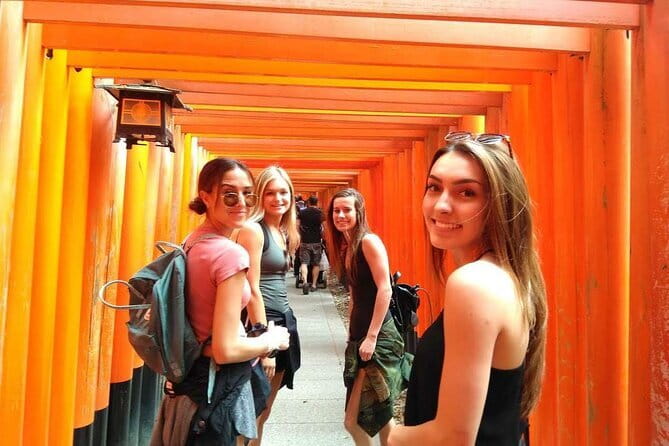
The first major stop is Fushimi Inari-taisha, Kyoto’s most visited Shinto shrine. You have about 40 minutes here, the longest stop of the evening.
Fushimi Inari is known for its thousands of closely spaced torii gates, which form orange corridors up the wooded mountain. Even if you do not walk far into the full shrine complex, seeing the gates at night gives the place a quieter, more focused mood than the busy daytime approach.
The free admission is helpful, but the real value is timing. Fushimi Inari attracts large numbers of people during the day. After sunset, the softer light and reduced noise can make it easier to pay attention to the gates, shrine buildings, and small details along the paths.
Do not expect to cover every part of Fushimi Inari in 40 minutes. The shrine complex is large, and this is one stop within a longer route. You will need to follow the guide’s schedule and return to the bicycles on time.
This stop also sets the tone for the evening. You are not simply checking off a famous sight. You are seeing how a major religious place feels after the tour buses and day crowds begin to thin.
Miyagawa-cho and the old geisha districts
From Fushimi Inari, the tour moves toward Miyakawa-cho Dori, also called Miyagawa-cho. This narrow area runs south of Gion and parallel to the Kamogawa River.
The scheduled stop is about 15 minutes, so think of it as a short look and explanation rather than a long neighborhood walk. At night, lanterns give the street a soft glow, and the traditional architecture feels more at home than it does under bright daytime light.
Miyagawa-cho is associated with Kyoto’s geisha culture. The point of passing through is not to treat the district like a stage set. Keep your voice down, stay respectful, and listen to the guide’s explanation of the area’s role in Kyoto’s traditional entertainment world.
The bicycle helps here because you can move through the district without making the visit feel like a long, formal stop. At the same time, narrow streets require care. You may spend part of this section walking the bike or waiting while the group gathers. That is normal for an evening ride through old neighborhoods.
Gion, Hanamikoji, and quiet cultural details
The next stop brings you into Gion, Kyoto’s best-known traditional district. You have about 10 minutes, with admission included.
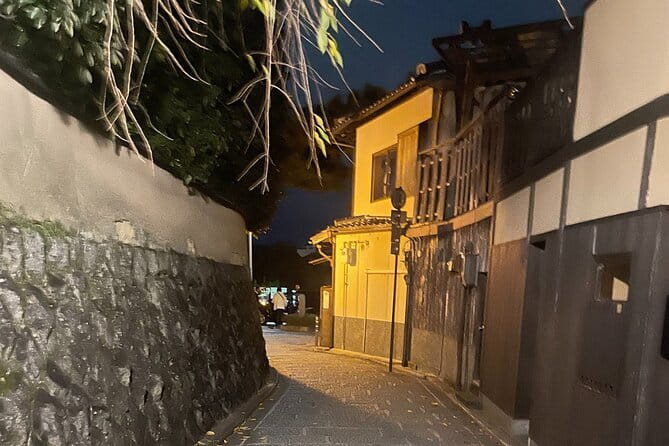
Gion is most closely associated with Hanamikoji Street and its historic tea houses. After dark, the area has a different character from the shopping streets and sightseeing routes around Kyoto Station. Wooden buildings, subdued lighting, and narrow lanes make this one of the tour’s strongest settings for a short explanation.
Ten minutes is not enough for a full exploration of Gion. You will not have time to wander through every lane or visit a tea house. Instead, the guide points out the area and explains what you are seeing.
This is also a place where good conduct matters. Do not block doorways, photograph private homes, or treat people working in the district as part of the scenery. The tour’s bilingual guidance is useful because it can give you context without asking you to guess what is public, private, religious, or commercial.
I like this part of the route because the bicycle gets you close to the old streets without requiring a separate evening excursion. The limitation is that the tour moves on quickly. If Gion is your main reason for visiting Kyoto, plan extra time to return on your own another evening.
A few more Kyoto tours and experiences worth a look
Yasui-Konpiragu and the shrine for cutting ties
After riding through the maiko and geisha districts, you stop at Yasui-Konpiragu for about 10 minutes. This is one of Kyoto’s more unusual Shinto shrines.
People visit the shrine to cut ties with harmful relationships or unwanted habits and to form better connections. Its purpose gives the stop a personal quality that differs from the grand scale of Fushimi Inari.
The admission is free, and 10 minutes is enough for a brief visit and explanation. The guide can help you understand the custom instead of leaving you to wonder why people come here and what the shrine represents.
This is a good example of the tour’s wider value. You are not only seeing Kyoto’s most photographed buildings. You are also hearing about the everyday hopes and concerns that shape religious practice. The stop is brief, but it adds a distinct human element to the evening.
Yasaka Pagoda and the lanes of Higashiyama

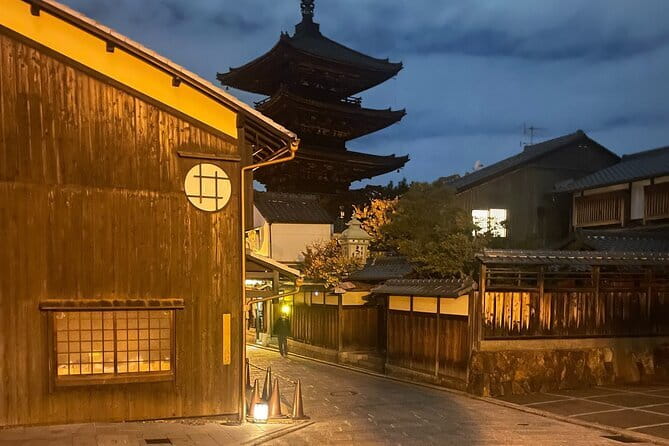
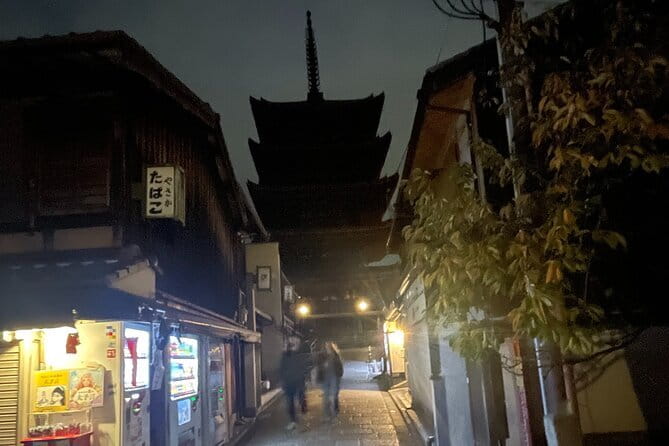
Hōkan-ji Temple, usually called Yasaka Pagoda, is one of the most recognizable sights in Kyoto. The pagoda rises above narrow cobbled streets and traditional machiya townhouses, making the surrounding area a favorite place for photographs.
You have about 15 minutes here. The visit is free, and the exterior setting is the focus. The combination of old wooden buildings, sloping lanes, and the pagoda’s silhouette gives you one of the clearest pictures of historic Higashiyama.
The setting is also one of the less forgiving parts of the route for a bicycle. Cobblestones and narrow streets are not ideal for quick riding. You may need to slow down, stop, or walk the bicycle. That is a small tradeoff for seeing the area at night, when the streets can feel calmer and the lighting is more flattering for photographs.
Keep your expectations practical. The tour does not promise entry into every temple or a long visit inside Hōkan-ji. You are seeing the pagoda and its surrounding streets as part of a larger evening circuit.
Ninenzaka, Kyoto’s best photo stop
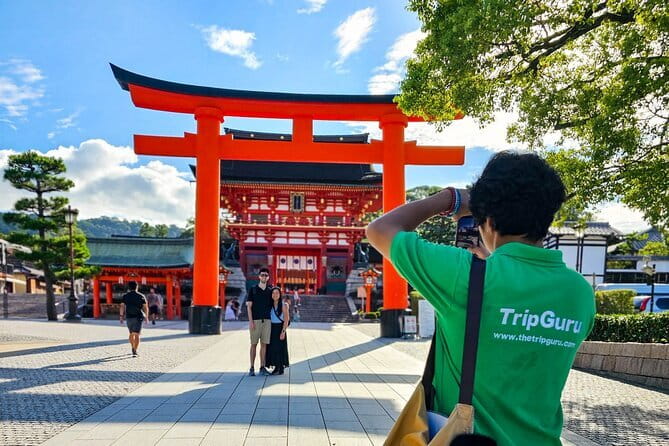
Ninenzaka is one of two famous slopes in Higashiyama, and the tour allows about 15 minutes here. This is likely to be one of your favorite stops if you want photographs of old Kyoto.
The slope is lined with traditional buildings and gives you a strong view of the district’s preserved appearance. At night, the combination of street lighting and darkened wooden facades creates the kind of scene many people hope to find in Kyoto.
Again, bicycles are not always the main advantage at the stop itself. Ninenzaka is a pedestrian-oriented historic area, and you may spend more time beside the bike than riding it. The benefit is reaching this area as part of a connected route rather than arranging several separate trips.
Take care with your footing and your belongings on the slope. The tour is short, so have your camera ready before you arrive. If you want a quiet, unhurried photo session, return here independently at another time.
A final Higashiyama park stop
The final listed stop is a well-known Higashiyama park with cherry trees, ponds, and wooden bridges. The information provided does not give the park’s name, but it does identify the setting and its appeal.
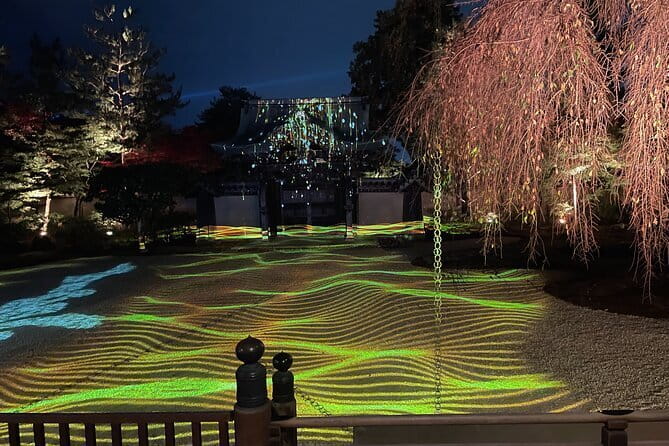
This stop adds open space after the tighter streets of Gion and Ninenzaka. Ponds and bridges can look especially calm after sunset, and the park gives you a change from shrine gates, pagodas, and townhouses.
The timing is not specified for this stop, so the overall pace may vary. That is worth keeping in mind if you have dinner plans immediately afterward. The tour ends back at the original meeting point, but the schedule can run long when the guide spends extra time explaining the sights.
How much riding is included
The bicycle lets you cover more ground than a walking tour, but the experience is not built around constant motion. The stops are frequent, and the guide talks about Kyoto’s culture, traditions, and past.
That format will suit you if you like to connect sights with stories. It may not suit you if you mainly want exercise or a quick ride along the river. One rider felt that only about 1 hour and 45 minutes was spent riding and that too much time went into explanations. The guide acknowledged the concern and said finding a better balance was a priority.
That feedback gives you a useful way to choose. Ask yourself which matters more: seeing many places with context, or spending most of the 3 hours and 45 minutes cycling. This is clearly closer to the first option.
The ride along the river is a highlight for some departures, particularly when the temples and shrines begin to light up. Still, exact conditions can change with the season, weather, traffic, and group pace. The tour requires good weather, and a cancellation caused by poor weather brings a choice of another date or a full refund.
What the $80 price covers
The price is $80 per person. For a nearly four-hour guided activity in Kyoto, the value depends on how much you use the guide’s local context and how convenient the route feels.
Your bicycle is included, which saves you from finding a rental shop and planning a route through several districts. Bottled water is also included, as are entrance fees. The listed stops are mostly free, but having admissions handled still keeps the evening simple.
Hotel transportation is not included, and gratuity is separate. You also need to reach the starting point near Kyoto Station on your own.
I consider the price reasonable for someone who wants a planned evening route through Fushimi, Gion, and Higashiyama. It is less compelling if you already have a rental bicycle, know Kyoto well, and are happy to navigate these areas independently. The small group and bilingual guide are the parts that make the fee worthwhile.
Who should book this Kyoto night ride
I would choose this tour if you have limited time in Kyoto and want to see several major areas in one evening. It works especially well early in a stay, since the guide can help you get oriented and offer ideas for further exploring.
It is also a good fit if you like old streets, shrines, photography, and cultural explanation. The ride gives you more variety than a single neighborhood walk, and Fushimi Inari, Gion, Yasaka Pagoda, and Ninenzaka each offer a different mood.
You should think twice if you are a first-time cyclist, dislike riding after dark, or want a quiet tour with little narration. The required fitness level is moderate, and one rider specifically advised having solid bicycle skills.
The tour can also suit solo visitors. On one departure, Juan guided a single participant rather than canceling, and that rider found the evening a highlight of the trip. There is no guarantee you will have a private ride, but the maximum group size remains small.
Booking, weather, and timing tips
You can cancel for a full refund if you do so at least 24 hours before the 5 pm start. Changes or cancellations within 24 hours are not refunded. The local Kyoto cutoff time applies.
Because poor weather can cancel the activity, avoid placing it on the final night of your trip if this is an important sightseeing plan. If the minimum number of participants is not met, the provider can offer another date or experience, or issue a full refund.
Wear clothing that lets you pedal comfortably and prepare for a cooler evening, especially outside the warmer months. One rider specifically advised choosing a warmer night. The tour supplies water, but you should not expect hotel pickup or a meal.
Should you book Discover Kyoto at Night by Bike?
Book it if you want a guided cultural outing that happens to use bicycles. The strongest parts are the evening timing at Fushimi Inari, the lantern-lit streets of Miyagawa-cho and Gion, the views around Yasaka Pagoda and Ninenzaka, and the small group size.
Skip it if your idea of a bike tour means nearly four hours of steady riding. The guide’s explanations are a major part of the experience, and the schedule can run long when conversations stretch. For a confident cyclist who enjoys stories and atmospheric night scenery, the $80 price is fair. For a beginner cyclist or a rider seeking speed, a self-guided daytime rental may be a better choice.
FAQ
How long does the Kyoto night bicycle tour last?
The tour lasts approximately 3 hours and 45 minutes.
What time does the tour begin?
The scheduled start time is 5 pm.
Where does the tour meet?
The meeting point is the 7-Eleven at 44-1 Higashikujō Kamitonodachō, Minami Ward, Kyoto, 601-8002, Japan.
Where does the tour end?
The activity ends back at the original meeting point.
What sights does the bike tour visit?
The route includes Fushimi Inari-taisha Shrine, Miyakawa-cho Dori, Gion, Yasui-Konpiragu, Hōkan-ji Temple, also called Yasaka Pagoda, Ninenzaka, and a Higashiyama park with ponds, cherry trees, and wooden bridges.
Is the bicycle included in the price?
Yes. Use of a bicycle is included.
Is bottled water included?
Yes. Bottled water is included.
Are entrance fees included?
Yes. All entrance fees are included, although several listed stops have free admission.
What happens if bad weather cancels the tour?
You will be offered a different date or a full refund if poor weather causes the cancellation.
More Cycling Tours in Kyoto



More Night Rides in Kyoto
More Kyoto Cycling Tours in Kyoto
More tours in Kyoto we've reviewed


Kyoto Cycling Tours, compared.
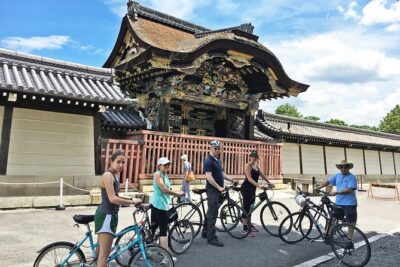 ★ 5.0Bike Tour Exploring North Kyoto plus LunchFrom $106
 ★ 5.05 Top Highlights of Kyoto Full Day Bike Tour (E-bike option)From $172
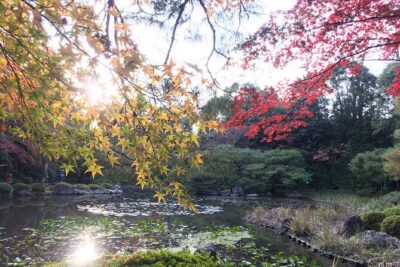 ★ 5.0E-Bike Tours of the highlights of Kyoto!!!From $109
 ★ 5.0Afternoon Kyoto Bike Tour: Bamboo Forest, Monkeys & Hidden SpotsFrom $106
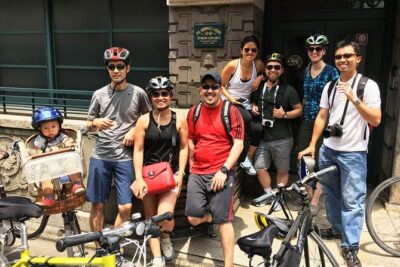 ★ 5.0South Kyoto in a Nutshell: Gentle Backstreet Bike Tour!From $79
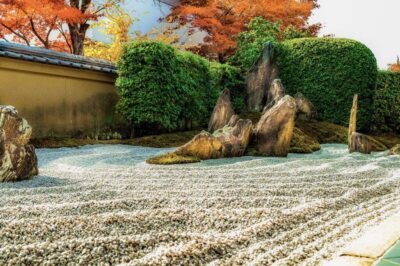 ★ 4.9Kyoto: City Secrets eBike TourFrom $1273h 45m
 ★ 4.9Kyoto: Hidden Gems E-Bike Tour with Local Japanese GuideFrom $753h 30m
 ★ 5.0Pedal Adventure Kyoto’s iconic landmarks on an e-bike tourFrom $86
Browse the lists this tour appears in