
Reviewed · KYOTO CYCLING TOURS
Kyoto: Early Bird E-Bike Tour with Lunch
Kyoto makes its best first impression early in the day, when the red gates of Fushimi Inari Shrine are easier to see and the famous temple lanes have not yet filled with people. This seven-hour ride links major sights that sit far apart, so you cover much more ground than you would on foot. I especially like the early start and the relaxed pace, with time for coffee, temple visits, and a proper lunch.
I also like the small group of no more than eight people. Guides such as Julian, Indra, Karl, and Carl have been praised for explaining local sights clearly and adjusting the pace when the group wants more time for photos. The main consideration is physical: you need to ride confidently for a full day, and some uphill cycling makes an e-bike a smart choice.
In This Review
- Key points to know before booking
- Why an early e-bike start works so well in Kyoto
- Fushimi Inari and Tofukuji set the tone
- A morning coffee break beside the Kamo River
- Ginkakuji and the Path of Philosophy
- Nanzenji, the aqueduct, and Heian Shrine
- Lunch before the final ride through Gion
- Shirakawa Canal and the lanes of Gion
- What the $135 price really covers
- Fitness, clothing, and the real level of effort
- Who will get the most from this Kyoto ride
- Should you book the Early Bird E-Bike Tour?
- FAQ
- How long is the Kyoto Early Bird E-Bike Tour?
- What language is the tour conducted in?
- How many people can join the tour?
- Is an e-bike included?
- Are coffee and lunch included?
- Where does the tour meet?
- How early should I arrive?
- Which major sights are included?
- Is the tour suitable for someone who cannot ride a bicycle?
- Can I cancel the booking?
Key points to know before booking
- Fushimi Inari before the crowds: Begin with Kyoto’s famous torii gates while the morning is still calm.
- A full day without constant hill climbing: The e-bike helps with longer distances and uphill sections.
- Coffee and a sit-down lunch included: You get two useful breaks rather than cycling nonstop.
- Kyoto’s temples and old districts in one route: See Fushimi Inari, Tofukuji, Ginkakuji, Nanzenji, Heian Shrine, Gion, and Higashi Honganji.
- Small English-speaking group: The tour is limited to eight participants, allowing room for questions and minor timing changes.
- A good option for first-time Kyoto visitors: The route gives you a broad look at south and east Kyoto in one day.
Why an early e-bike start works so well in Kyoto
Kyoto’s famous sights are spread across the city. Buses can be slow, trains do not reach every temple, and walking between southern Fushimi and northern Higashiyama would take far too long. A bicycle fills that gap nicely.
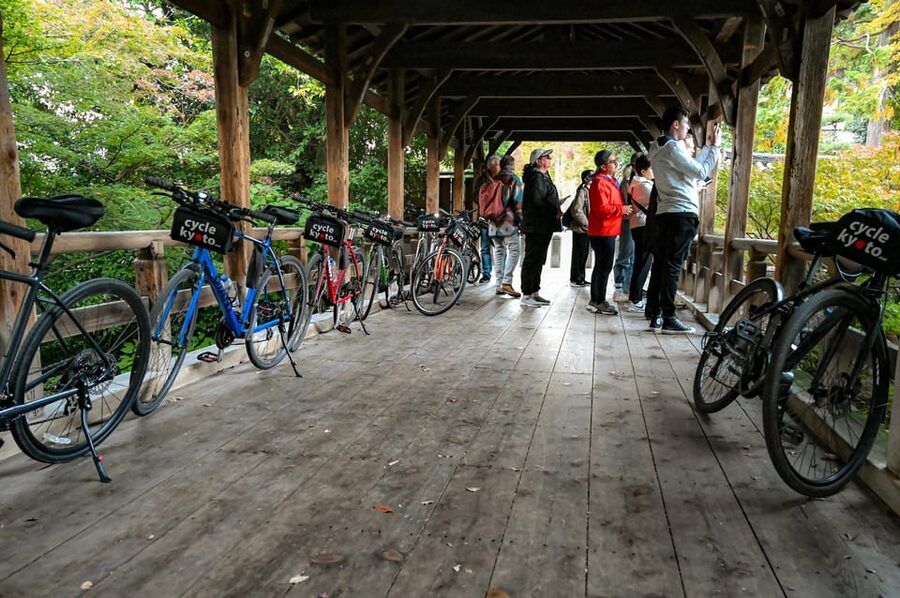
The electric motor matters because this is not a short, flat city ride. You travel for about seven hours, with stops at major temples and shrines, and some uphill stretches along the way. You still pedal, but the motor takes the edge off longer distances and inclines. The supplied bicycle, helmet, and water keep the basic setup simple.
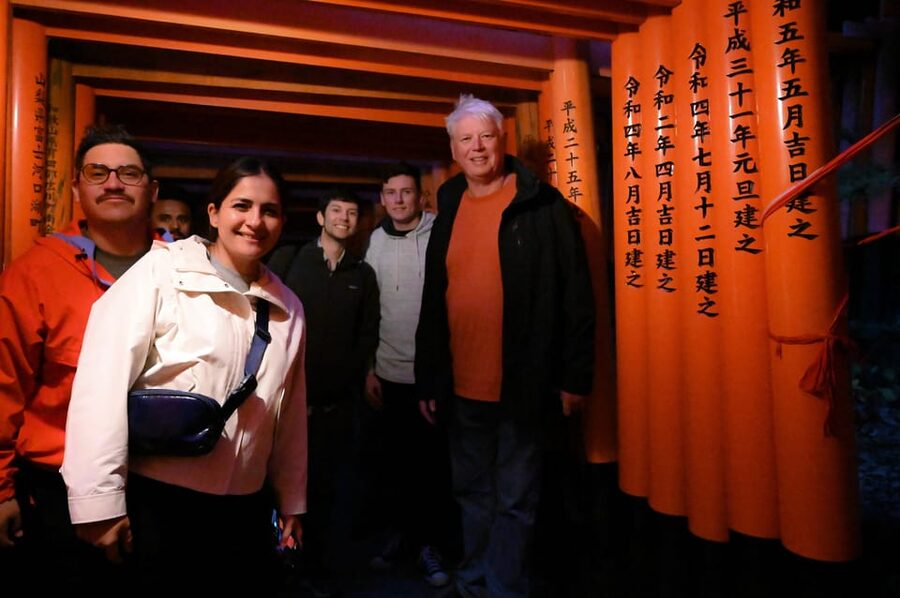
The early departure is one of the strongest reasons to choose this tour. Fushimi Inari is one of Kyoto’s most photographed sights, and its orange torii gates draw large numbers of people later in the day. Reaching it near the start gives you a better chance to appreciate the shrine grounds without spending the whole visit weaving through crowds.
You should arrive 15 minutes before departure at Cycle Kyoto. From JR Kyoto Station, walk past Avanti, cross at the traffic lights, continue past the Daily Yamazaki convenience store, and take the next left. The meeting point is close enough to reach on foot from the station area, but leave time to find it without rushing.
A few more Kyoto tours and experiences worth a look
Fushimi Inari and Tofukuji set the tone
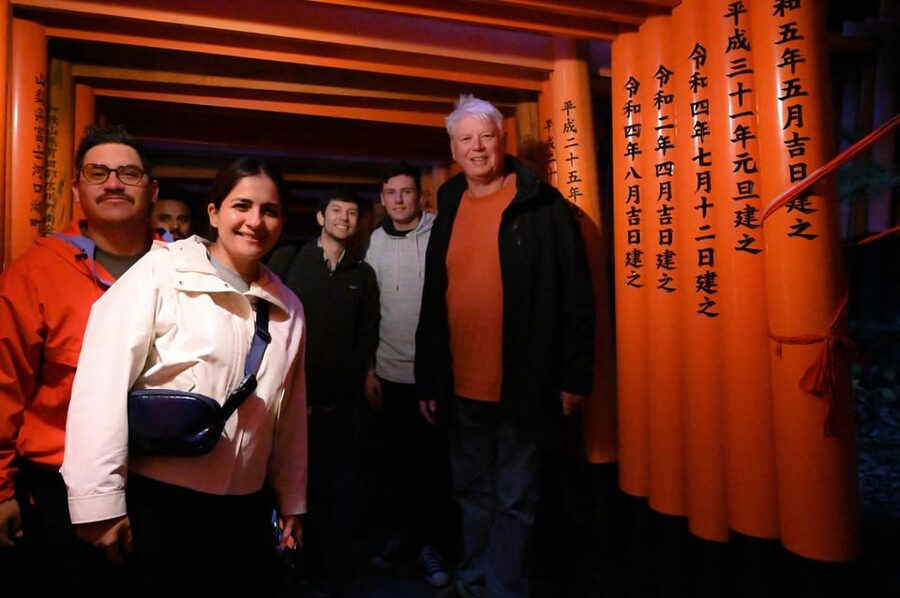
After a short 15-minute safety briefing, the route heads south to Fushimi Inari Taisha. The guide spends about 45 minutes showing you the shrine, including its famous rows of red-orange torii gates.
Fushimi Inari is dedicated to Inari, the Shinto deity associated with rice, business, and prosperity. The fox statues found around the shrine are linked with Inari, and they are a useful detail to watch for as you walk. The tour does not require you to hike the entire mountain trail, which is important because the complete climb takes much longer than a normal sightseeing stop.
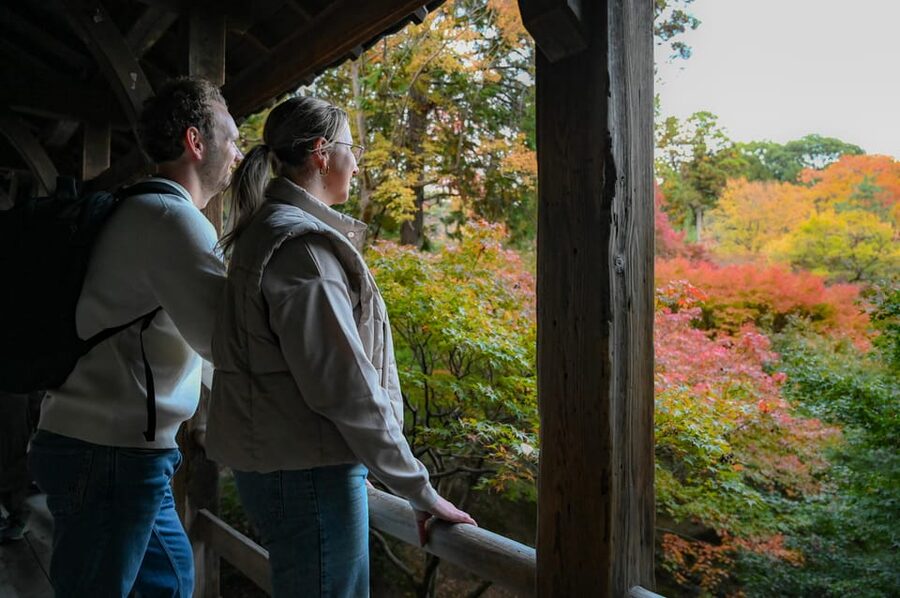
From Fushimi Inari, the route continues toward Tofukuji Temple. Tofukuji is best known for its temple buildings, Zen gardens, and autumn foliage, though the experience changes with the season. Here, the value of having a guide becomes clear. Rather than simply arriving, taking a photo, and leaving, you get context for what you are seeing.
The southern part of Kyoto is often missed by people who stay around Kyoto Station and central Gion. Starting here gives you a different opening to the city, with a major shrine and temple before the route moves toward the better-known eastern districts.
A morning coffee break beside the Kamo River
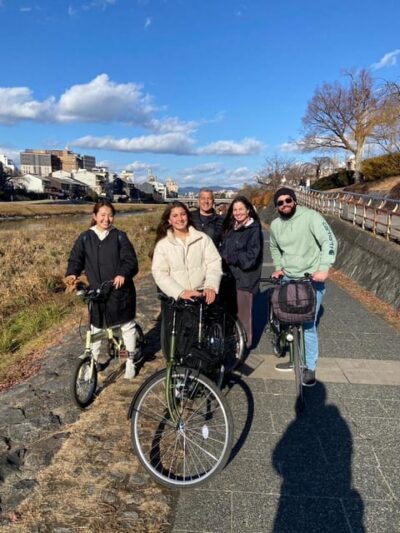
The ride then follows the Kamo River for about 40 minutes before stopping at a local café selected by the guide. The coffee break lasts about 20 minutes.
This is a small detail, but it makes a long bike tour more pleasant. You have time to sit down, drink coffee, and reset before the next temple block. The café is described as one of the guide’s favorite local haunts, so the stop has a more personal feel than a standard chain-coffee break.
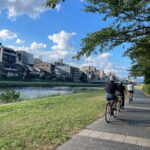
The Kamo River also gives you a welcome change from temple grounds and city traffic. The route lets you see Kyoto from a lower, slower angle, with the river providing a clear sense of how the city is laid out. The exact café can depend on the guide and operating conditions, so do not book this expecting a fixed menu or a particular coffee style.
Coffee is included, while extra drinks and snacks are not. Water is supplied, but it is still sensible to bring sunscreen, a hat, and perhaps a small amount of money for anything else you want during the day.
Ginkakuji and the Path of Philosophy
After the river section, you ride toward Ginkakuji, the Silver Pavilion. The temple visit lasts about an hour and is one of the main cultural stops of the day.
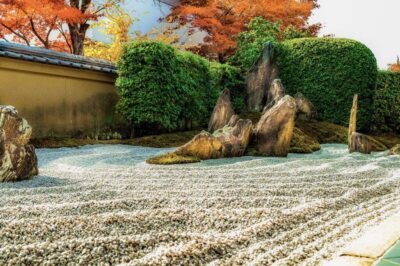
Despite its name, Ginkakuji is not covered in silver. The nickname comes from an old plan to coat the pavilion in silver that was never completed. What you see today is a restrained wooden pavilion surrounded by carefully arranged gardens, ponds, moss, sand, and clipped plants. The setting rewards a slower visit, and the guide can help you notice design features that are easy to miss when you move through quickly.
Ginkakuji is UNESCO-listed and sits at the northern end of the Path of Philosophy. After the temple, the tour rolls slowly south along this well-known pedestrian route. The name comes from philosopher Nishida Kitaro, who was said to walk here while thinking about his work.
The path follows a canal lined with trees and small shops. Its character depends heavily on the season. Spring brings blossoms, while other times of year offer quieter walks and less spectacle. Since this section can include pedestrians, the slow pace matters. You should be ready to ride carefully and follow the guide rather than treating it like an open road.
Cycling does not mean every moment is spent on the bike. The itinerary includes guided visits, short stops, and time to take pictures. That balance is one reason the tour can cover so much without feeling like a race.
Nanzenji, the aqueduct, and Heian Shrine
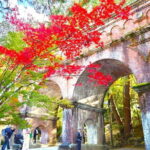
The next major stop is Nanzenji Temple, where the guided visit lasts about 35 minutes. Nanzenji is known for its large temple grounds, traditional gardens, ornate religious buildings, and the striking red brick aqueduct that crosses the site.
The aqueduct is a reminder that Kyoto is not only about old wooden architecture. Built in a Western style during Japan’s modernization, it now forms an unusual backdrop within a traditional temple complex. It is one of the more memorable visual contrasts on the route.
Nanzenji’s grounds are spacious, so 35 minutes gives you a useful introduction but not an exhaustive look at every garden and building. If you want a very slow temple visit, this tour may feel brisk. If you prefer to see several parts of Kyoto in one day, the timing is sensible.
The route also includes about 30 minutes at Heian Shrine. Its large vermilion torii and broad grounds give it a different scale from Ginkakuji and Nanzenji. Heian Shrine was built to honor Kyoto’s imperial past, and its architecture draws on earlier court traditions.
The stop adds variety, but it also shows the tradeoff of a full-day city tour. You will see many important places, yet you will not have unlimited time at each one. I would bring a camera, but keep your focus on the guide and the setting rather than trying to document every building.
A few more Kyoto tours and experiences worth a look
Lunch before the final ride through Gion
A sit-down lunch at a local restaurant is included and lasts about 40 minutes. This is more useful than a quick snack eaten beside the bicycles. Seven hours of riding and sightseeing call for a real pause, especially if the day is warm.
The supplied details do not specify the restaurant or menu, so you should not book this expecting a particular dish. What you can count on is a scheduled meal included in the price, which makes it easier to budget for the day. Extra drinks and snacks are separate.
Lunch also gives you a chance to talk with the guide and the other people in the group. Previous guide assignments have included Julian, Indra, Karl, and Carl. The strongest pattern in the feedback is that guides explain more than basic dates and names, adding local facts and answering questions along the route.
The small group helps here. With a maximum of eight participants, the guide can keep the ride together and make modest adjustments, such as allowing extra time for a photo or a particular sight. That does not mean the itinerary is completely private, but it should feel more manageable than a large cycling group.
Shirakawa Canal and the lanes of Gion
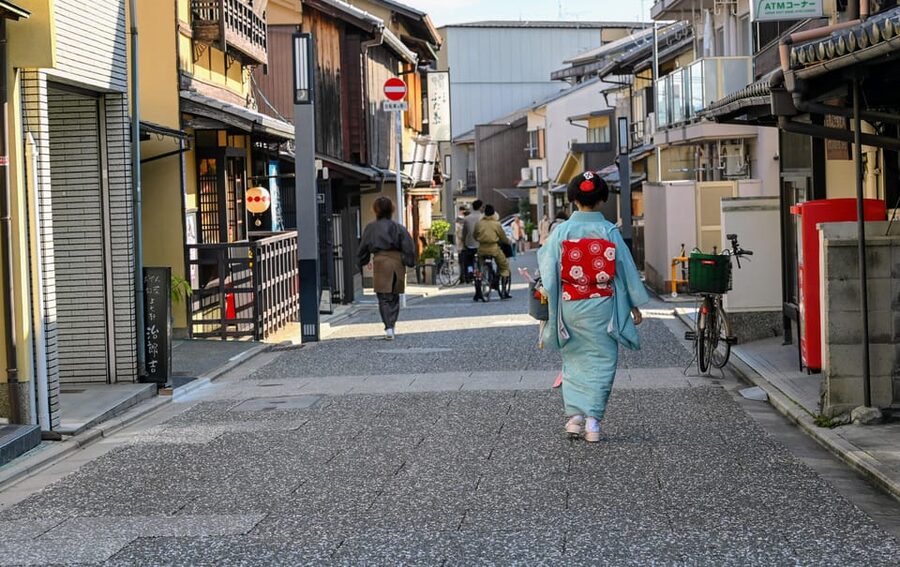
After lunch, the route heads south along the Shirakawa Canal and into Gion. This is a fine way to approach Kyoto’s most famous traditional district. The canal, narrow streets, wooden buildings, and old-fashioned details give this part of the ride a different mood from the larger temple grounds.
Gion is associated with geisha culture, but it is also a living neighborhood. You should ride respectfully, keep your camera ready without blocking lanes, and follow the guide’s instructions around pedestrians. The guided Gion section lasts about 50 minutes, so you have time to see more than a quick pass through one street.
A bicycle lets you link Gion with the next stop without returning to a bus or train. That saves time, but the route is not a freewheeling ride through empty streets. Kyoto’s older districts can be narrow, and you need to stay alert.
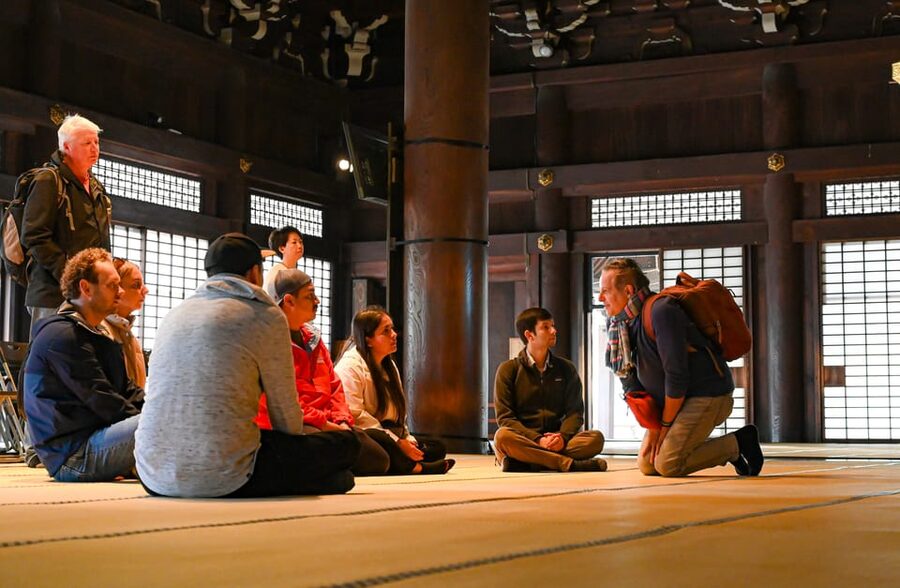
The final temple visit is Higashi Honganji, with about 50 minutes for a guided look. Located near Kyoto Station, the temple provides a fitting end to a route that began in the south and crossed much of eastern Kyoto. Its large wooden buildings and broad grounds offer a change from the smaller lanes of Gion.
After Higashi Honganji, you cycle back to Cycle Kyoto. The route ends where it began, making it easy to continue sightseeing around Kyoto Station or return to your accommodation.
What the $135 price really covers
At $135 per person, this is not the cheapest way to see Kyoto. The price includes a well-maintained e-bike, helmet, English-speaking live guide, water, morning coffee, and a sit-down lunch. It also covers seven hours of guided sightseeing across several parts of the city.
The value depends on how you would otherwise organize the day. Paying separately for bicycle rental, a guide, transport between southern and eastern Kyoto, coffee, and lunch could narrow the price gap. You also avoid spending time working out how to connect Fushimi Inari, Ginkakuji, Nanzenji, Gion, and Higashi Honganji on your own.
The tour makes the most sense for a first visit or a short stay. In one day, you get a broad introduction to Kyoto’s shrines, temples, river corridors, gardens, historic districts, and modern city connections. If you already know Kyoto well and prefer long, quiet visits at one or two temples, the schedule may feel too packed.
The flexible booking terms add practical value. You can cancel up to 24 hours before the start for a full refund, and the reserve-now, pay-later option lets you hold a place without paying immediately. Starting times vary, so check availability when you book.
Fitness, clothing, and the real level of effort
You need to know how to ride a bicycle. The tour is not suitable for people who cannot ride, pregnant women, or people with back problems. Comfortable clothes and shoes suitable for biking are essential.
The e-bike reduces effort, but it does not turn the day into a motorized sightseeing trip. You will ride for long stretches, stop and start in city streets, and manage the bicycle around pedestrians. Reviews of the tour describe it as manageable rather than exhausting, but that depends on your comfort on a bike and the weather.
Warm clothing is listed among the suggested items, along with gloves. A hat and sunscreen are useful for exposed sections, and a camera is worth bringing. Carry water even though some is provided.
Smoking, alcohol, and drugs are not allowed during the activity. You should also arrive 15 minutes early for the safety briefing and bicycle setup.
Who will get the most from this Kyoto ride
I would recommend this tour to you if you want a guided overview rather than a single-site visit. It suits active first-time visitors, couples, solo visitors, and small groups who want to see major sights without spending the day changing buses.
It is also a good fit if you enjoy hearing the story behind a place. Guides have been praised for being enthusiastic, explaining many of the sights, and sharing details that are not always found in guidebooks. The English-language format keeps the day straightforward for international visitors.
You may want a different plan if you dislike cycling, have back problems, are pregnant, or want a slow, private temple day. The route is long, and the number of stops means you must keep moving. It is also not the right choice if you expect hotel pickup, since you make your own way to Cycle Kyoto near JR Kyoto Station.
Should you book the Early Bird E-Bike Tour?
Book it if you want to see a large slice of Kyoto in one active day, especially if Fushimi Inari, Ginkakuji, Gion, and Nanzenji are all on your list. The early start, small group, included meals, and electric bicycle solve several common Kyoto problems at once: crowds, distance, hills, and transport planning.
I would make this one of my first choices for a short Kyoto stay, provided I was comfortable cycling. Give yourself enough sleep the night before, arrive early, wear practical clothes, and expect a full but varied day. At $135, it offers solid value for a guided route that combines transportation, sightseeing, coffee, lunch, and local explanation in one package.
FAQ
How long is the Kyoto Early Bird E-Bike Tour?
The tour lasts seven hours, including the safety briefing, sightseeing stops, coffee break, lunch, and the return ride to Cycle Kyoto.
What language is the tour conducted in?
The live guided tour is conducted in English.
How many people can join the tour?
The tour is limited to eight participants.
Is an e-bike included?
Yes. The price includes an e-bike rental and helmet.
Are coffee and lunch included?
Yes. Morning coffee and a sit-down lunch are included. Extra drinks and snacks are not included.
Where does the tour meet?
The meeting point is Cycle Kyoto. From JR Kyoto Station, walk past Avanti, cross the traffic lights, pass the Daily Yamazaki convenience store, and take the next left.
How early should I arrive?
You should arrive 15 minutes before the tour begins.
Which major sights are included?
The route includes Fushimi Inari Taisha, Tofukuji Temple, Ginkakuji Temple, the Path of Philosophy, Nanzenji Temple, Heian Shrine, Gion, and Higashi Honganji Temple.
Is the tour suitable for someone who cannot ride a bicycle?
No. The tour is not suitable for people who cannot ride a bike.
Can I cancel the booking?
Yes. You can cancel up to 24 hours in advance for a full refund. You can also reserve now and pay later.
More Rides with Lunch in Kyoto
More E-Bike Tours in Kyoto
More Kyoto Cycling Tours in Kyoto

More tours in Kyoto we've reviewed

Kyoto Cycling Tours, compared.
 ★ 5.0Bike Tour Exploring North Kyoto plus LunchFrom $106
 ★ 5.05 Top Highlights of Kyoto Full Day Bike Tour (E-bike option)From $172
 ★ 5.0E-Bike Tours of the highlights of Kyoto!!!From $109
 ★ 5.0Afternoon Kyoto Bike Tour: Bamboo Forest, Monkeys & Hidden SpotsFrom $106
 ★ 5.0South Kyoto in a Nutshell: Gentle Backstreet Bike Tour!From $79
 ★ 4.9Kyoto: City Secrets eBike TourFrom $1273h 45m
 ★ 5.0Pedal Adventure Kyoto’s iconic landmarks on an e-bike tourFrom $86
 ★ 4.9Kyoto: Hidden Gems E-Bike Tour with Local Japanese GuideFrom $753h 30m
Browse the lists this tour appears in