
Reviewed · KYOTO CYCLING TOURS
Kyoto E-Bike Tour of Hidden Gems, Backstreets and Temples
Kyoto’s best sights are spread across a wide area, and this four-hour e-bike tour links them without asking you to puzzle over bus routes or crowded train transfers. You roll from Gion’s canal lanes to major temples, old shrine forests, and the Imperial Palace, with an English-speaking guide such as Ben, Yuki, or Jay leading the way.
I like the small maximum of eight people, which makes it easier to keep the group together and ask questions. I also like the mix of famous places and quieter streets, plus the fact that the e-bike is included. The main consideration is that this is not only a cycling tour: you will also walk at several stops, so comfortable shoes and moderate fitness matter.
In This Review
- Key points to know before you book
- Why an e-bike makes sense in Kyoto
- Starting in Gion Shirakawa
- Nanzen-ji and the eastern temple district
- Heian Shrine’s grand approach
- The quiet paths of Honen-in
- Shimogamo Shrine and its old forest
- Kyoto Imperial Palace and Kyoto Gyoen
- The Philosopher’s Walk finale
- What the guides add to the ride
- Price, timing, and practical value
- Who should choose this Kyoto bike tour?
- FAQ
- How long is the Kyoto e-bike tour?
- What time does the tour start?
- Where does the tour meet?
- Where does the tour end?
- Is the bicycle included?
- Is the tour guided in English?
- How many people can join the tour?
- Are entrance fees included?
- What fitness and age requirements apply?
- Should you book it?
Key points to know before you book
- Seven major Kyoto stops in four hours: The route covers Gion Shirakawa, Nanzen-ji, Heian Shrine, Honen-in, Shimogamo Shrine, Kyoto Imperial Palace, and the Philosopher’s Walk.
- E-bike rental is included: You do not need to arrange a bicycle before arriving, and the electric assistance helps cover more ground.
- Small-group guiding: The tour has a maximum of eight people, a useful size for city riding and questions.
- Strong English-language guiding: Ben, Yuki, and Jay are praised for clear explanations, local suggestions, and an easygoing manner.
- A morning start: Meet at Kyoto Tourist Lounge Gion at 9:00 a.m., then return to the same meeting point.
- Some walking is built in: Bring comfortable shoes, and note that Honen-in admission is not included.
Why an e-bike makes sense in Kyoto
Kyoto is easy to admire and surprisingly tiring to cross. Gion, the eastern temple district, the Imperial Palace, and the northern shrine area do not sit next door to one another. Public transport can get you close, but it does not always take you from one quiet lane to the next.
An e-bike solves much of that problem. You can cover more ground than you could on foot, while still moving slowly enough to notice canals, old wooden buildings, shrine gates, and tree-lined lanes. The electric assist also makes the ride more approachable if you are not a regular cyclist. One guide-led outing is described as requiring little fitness because the bikes were easy to use.
This is still an active morning. You need to ride through city streets, stop and start, park the bike, and walk around the sights. The tour asks for moderate physical fitness, and riders must be taller than 145 centimeters. It is not recommended for children under 12.
The group size matters here. With no more than eight people, you are less likely to lose the guide at a turn, and the guide can give more direct help with questions and local advice. That is a better arrangement than a large bike convoy for Kyoto’s narrow streets.
A few more Kyoto tours and experiences worth a look

Starting in Gion Shirakawa
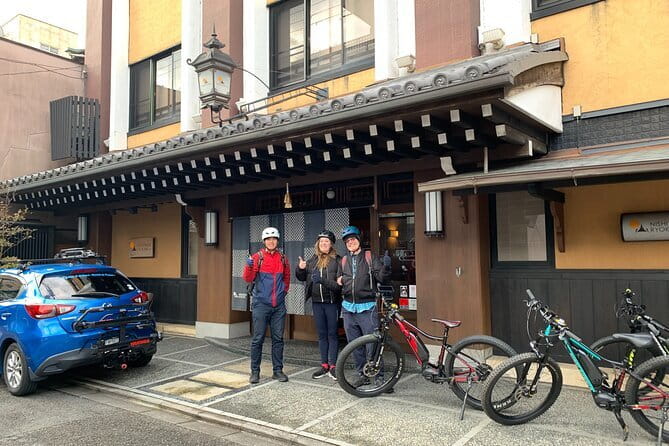
The meeting point is Kyoto Tourist Lounge Gion, at 557-4 Komatsu Cho, with the ride beginning at 9:00 a.m. The first stop, Gion Shirakawa, gives you an immediate taste of old Kyoto.
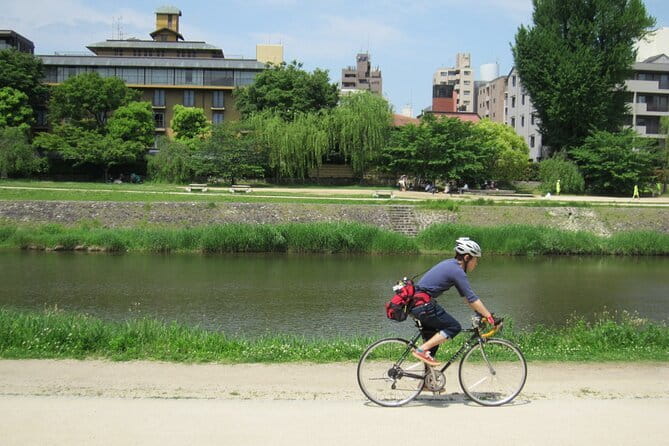
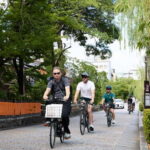
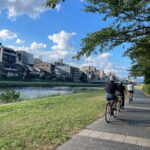
This area follows the Shirakawa Canal through a traditional district with preserved streets and a calm atmosphere. It is an excellent place for photographs, especially if you want more than the standard views of central Gion. The canal, traditional buildings, and narrow lanes create a sense of how Kyoto’s older districts are arranged.
The scheduled stop is about 30 minutes. That is enough time for an introduction, photographs, and a look around, but not enough for a long independent wander. The advantage is momentum. You see the area, hear why it matters, and then move on instead of spending the whole morning in one district.
Listen closely here to the guide’s local advice. Ben, Yuki, and Jay are each praised for explaining Kyoto clearly, answering questions, and offering suggestions for places to eat or shop. Those tips can be especially useful at the start of your stay, when you are still deciding how to spend the rest of your time.
Nanzen-ji and the eastern temple district
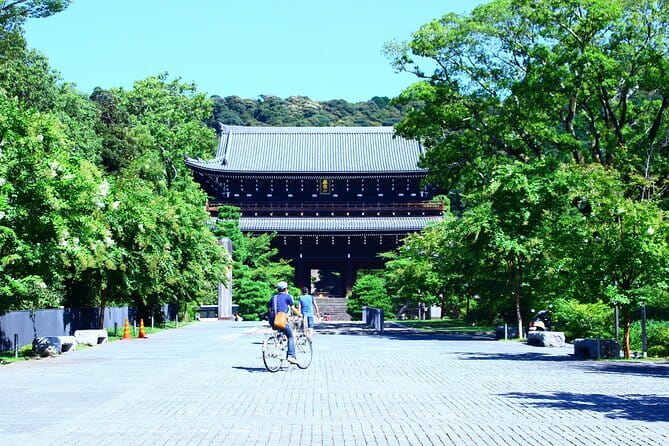
Nanzen-ji is one of the tour’s major temple stops. Located near the Higashiyama mountains, it has a broad temple complex, traditional buildings, and quiet garden spaces.
A bike is useful in this part of Kyoto because the area contains several places of interest close to one another, yet the distances can become tiring on foot. The guide can show you the main setting and explain the Buddhist context before you continue.
The stop lasts about 30 minutes and admission is listed as free. That does not mean you will see every corner of the temple complex. Think of this as an informed introduction rather than a full temple visit. If Nanzen-ji becomes a favorite, you can return later with more time.
This is also one of the places where the ride changes pace. You will park and walk, and the quiet paths call for a slower look. The tour is not a race to collect photographs. It uses the bicycle to connect the stops, then gives you short periods on foot to take in the architecture and surroundings.
Heian Shrine’s grand approach
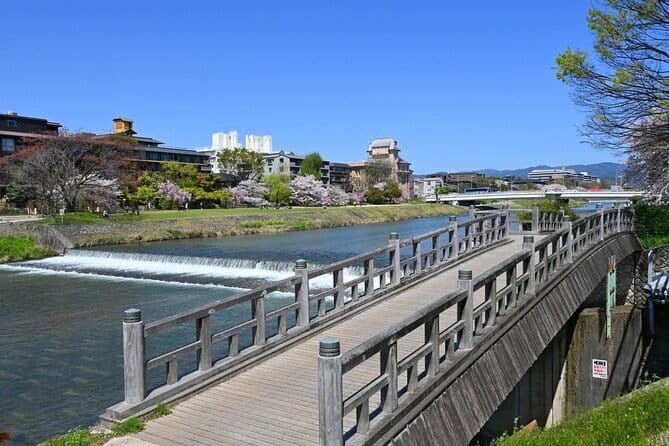
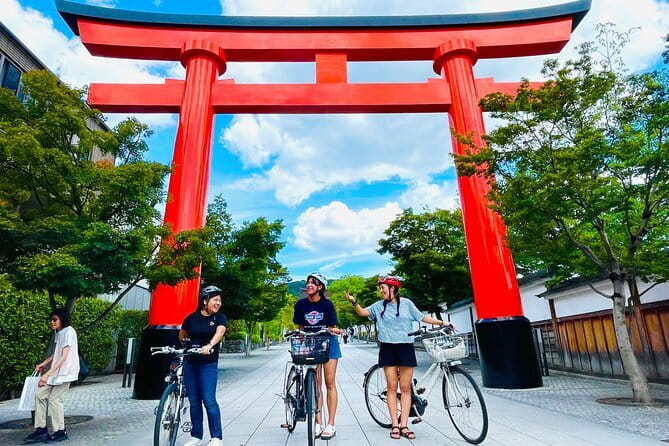
Heian Shrine offers a very different visual experience. Its red and white buildings are large, formal, and designed to recall earlier periods of Japanese architecture. The shrine is in central Kyoto and provides a strong contrast to the smaller lanes of Gion and the wooded temple setting around Nanzen-ji.
The planned visit is about 30 minutes, with free admission. That gives you time to see the main shrine area and hear about its role in Kyoto’s religious and civic life. The bold colors also make it one of the more dependable photo stops on the route.
The gardens are part of Heian Shrine’s appeal, but the itinerary does not promise an extended garden visit or include a separate garden admission. Keep your expectations focused on the main shrine grounds and the guide’s explanation.
A good guide adds value here because the buildings can seem oversized if you only see them as a photo backdrop. Ben, Yuki, and Jay are praised for connecting the sights to Japanese culture, religion, and the city’s past. That context helps the stops feel related rather than like a string of unrelated monuments.
The quiet paths of Honen-in
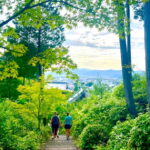
Honen-in is the most peaceful stop on the route. This temple was founded in the 12th century and is reached through tree-lined paths. It offers a gentler mood after the larger scale of Heian Shrine.
You can expect about 20 minutes here. The stop includes time to walk along the paths, see the main hall, and learn about Honen’s teachings. Admission is not included, so check the current entry arrangement before you go.
The short visit is both a strength and a limitation. It gives you a taste of a less prominent temple without slowing the whole route, but you will not have time for a long, quiet temple visit. If you prefer peaceful gardens and small religious sites to famous landmarks, make a note to return independently.
This is also a reminder to wear good shoes. Even though the tour is sold as an e-bike experience, you will be walking at several temples and shrines. Comfortable shoes will make the morning much more pleasant.
A few more Kyoto tours and experiences worth a look
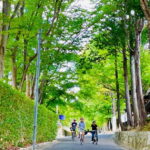
Shimogamo Shrine and its old forest
Shimogamo Shrine takes the tour farther north and adds another change of setting. It is one of Kyoto’s oldest and most respected Shinto shrines, surrounded by an ancient forest and quiet paths.
The scheduled stop is 30 minutes, with free admission. The shrine’s wooded approach offers a strong contrast to the open Imperial Palace grounds and the colorful Heian Shrine. Here, the atmosphere is more enclosed and shaded, with the forest adding a sense of age and stillness.
This is one of the clearest examples of why the bicycle route works. On foot, fitting Gion, eastern Kyoto, central Kyoto, and northern Kyoto into one morning would be difficult. By bike, you can sample each area while the guide handles the route.
Do not expect a long private exploration of Shimogamo Shrine. Thirty minutes goes quickly, especially once you account for parking and walking. The value is in seeing the place as part of a wider picture of Kyoto and learning enough to decide if you want to return.
Kyoto Imperial Palace and Kyoto Gyoen
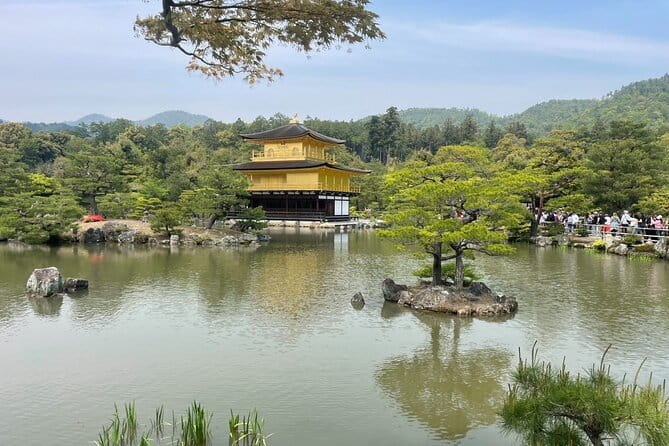
The Imperial Palace stop shifts the mood again. The former home of Japan’s imperial family sits within Kyoto Gyoen National Garden, a broad green area in the center of the city.
The planned visit lasts about 30 minutes and admission is listed as free. The palace buildings provide a look at formal traditional design, while the surrounding garden gives you room to breathe after several temple and shrine visits.
This is a useful stop for first-time visitors because it places Kyoto’s imperial past in the middle of the modern city. The guide can help explain why the palace matters, rather than leaving you to judge it only by its gates and buildings.
The timing is concise. You will see the setting and main points, but this is not a detailed palace tour. If you want a slow examination of the grounds, add a separate visit to your Kyoto plans. On this tour, the palace works as one piece of a carefully packed morning.
The Philosopher’s Walk finale
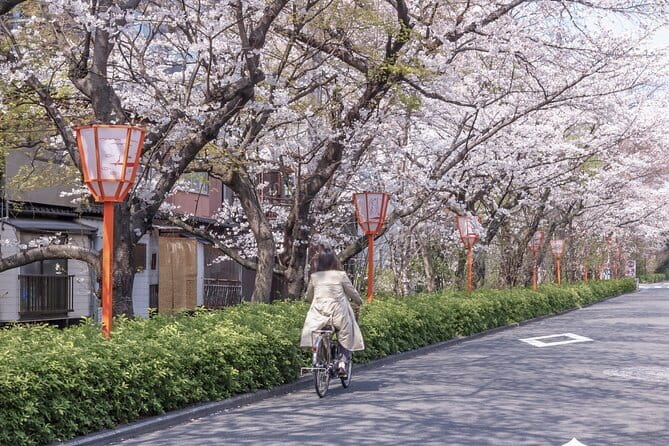
The Philosopher’s Walk is the final listed stop before the return to Gion. This scenic route follows a canal and is lined with cherry trees and traditional tea houses. It is named for Nishida Kitaro, a Japanese philosopher associated with walking there.
The scheduled time is 30 minutes. The path is best enjoyed at an unhurried pace, so the guide will likely give you time for views and photographs while keeping the group moving. Seasonal timing matters here. In late March, some blossoms may only be beginning, while the trees can change quickly over the following week.
As with the other stops, the path is not simply a place to pedal through. You should be prepared to walk and to share the route with other people. The bicycle helps you reach it efficiently, but your attention should shift from speed to scenery.
Ending here gives the tour a calm finish. You have seen formal shrines, temple grounds, a palace, canals, and forest paths, then can return to the meeting point with the rest of your day still open.
What the guides add to the ride
The guides are central to the experience. Ben is praised for his humor, clear English, and ability to explain a large amount of Kyoto in four hours. Yuki is described as a local who explains Japanese culture well and responds to questions. Jay is praised for his English, local knowledge, and historical explanations.
That variety matters because the route moves through Buddhist temples, Shinto shrines, imperial sites, and ordinary city districts. Without explanation, the morning could become a fast collection of red gates and tiled roofs. A good guide gives you the basic differences and the stories that make each stop easier to remember.
The guides also encourage questions and offer practical suggestions for food, shopping, and other places to visit. I would take this tour early in your Kyoto stay if you want help shaping the rest of your plans. You can use the morning to identify places you would like to revisit at greater length.
The guide’s role is also practical. You do not need to plan the route, read a map, or worry about getting lost between districts. In a city with many one-way streets and busy sightseeing areas, that saves both time and mental energy.
Price, timing, and practical value
The price is $70 per person for about four hours. That works out to roughly $17.50 per hour before considering the included bicycle and English-speaking guide.
For a first Kyoto visit, I consider that fair value if you want broad coverage in a short time. You are paying for the equipment, route planning, local guidance, and access to several parts of the city in one morning. It can also save you the cost and effort of arranging a rental bike separately.
The value is weaker if you already know Kyoto well, prefer to linger at one temple, or want a relaxed independent ride. Seven stops in four hours means each place receives a short visit. The tour is designed for range and orientation, not deep time at every site.
The tour ends back at the starting point, so you can continue exploring from Gion. Its mobile ticket is convenient, and the meeting point is near public transportation. Free cancellation is available up to 24 hours before the 9:00 a.m. start for a full refund. Changes or cancellations inside that period are not refunded, and poor weather may lead to a different date or a full refund.
Insurance is not included. The provider also states that it is not responsible for injuries, illness, accidents, or lost, damaged, or stolen belongings. The route may change or be canceled if severe weather or another safety issue makes riding impractical.
Who should choose this Kyoto bike tour?
I would recommend it most strongly to first-time visitors with limited time. You get a useful overview of several districts and can return later to the places that catch your attention.
It also suits people who want local explanations rather than a silent bicycle rental. The small group makes it easier to ask about religion, history, food, shopping, and daily life in Kyoto.
The tour is a good fit for riders who are comfortable with city cycling but do not want a strenuous workout. The electric assist helps, yet you should still be able to ride and walk for several hours.
I would hesitate if you want a slow temple day, have difficulty walking, are under 145 centimeters tall, or are booking for a child under 12. Honen-in has an extra admission cost, and insurance is not part of the package.
FAQ
How long is the Kyoto e-bike tour?
The tour lasts approximately four hours.
What time does the tour start?
It starts at 9:00 a.m.
Where does the tour meet?
The meeting point is Kyoto Tourist Lounge Gion at 557-4 Komatsu Cho, Higashiyama, Kyoto.
Where does the tour end?
The activity ends back at the meeting point.
Is the bicycle included?
Yes. Use of the bicycle is included in the tour price.
Is the tour guided in English?
Yes. An in-person English-speaking guide leads the tour.
How many people can join the tour?
The maximum group size is eight people.
Are entrance fees included?
Admission is listed as free at Gion Shirakawa, Nanzen-ji, Heian Shrine, Shimogamo Shrine, and Kyoto Imperial Palace. Honen-in admission is not included.
What fitness and age requirements apply?
You need a moderate level of physical fitness and must be taller than 145 centimeters. The tour is not recommended for children under 12.
Should you book it?
Book this tour if you want to see a wide slice of Kyoto before lunch, prefer a guide to handle the route, and like the idea of combining cycling with short walks. The strongest reasons are the small group, included e-bike, clear English guiding, and the unusual range of stops.
Skip it if your priority is spending an hour or more at each temple or moving at your own pace. For most first-time visitors, though, $70 is a reasonable trade for four hours of orientation, local insight, and efficient sightseeing across Kyoto.
More Backstreet & Hidden Rides in Kyoto




More E-Bike Tours in Kyoto
More Kyoto Cycling Tours in Kyoto
More tours in Kyoto we've reviewed



Kyoto Cycling Tours, compared.
 ★ 5.0Bike Tour Exploring North Kyoto plus LunchFrom $106
 ★ 5.05 Top Highlights of Kyoto Full Day Bike Tour (E-bike option)From $172
 ★ 5.0E-Bike Tours of the highlights of Kyoto!!!From $109
 ★ 5.0Afternoon Kyoto Bike Tour: Bamboo Forest, Monkeys & Hidden SpotsFrom $106
 ★ 5.0South Kyoto in a Nutshell: Gentle Backstreet Bike Tour!From $79
 ★ 4.9Kyoto: City Secrets eBike TourFrom $1273h 45m
 ★ 4.9Kyoto: Hidden Gems E-Bike Tour with Local Japanese GuideFrom $753h 30m
 ★ 5.0Pedal Adventure Kyoto’s iconic landmarks on an e-bike tourFrom $86
Browse the lists this tour appears in