
Reviewed · BACKSTREET & HIDDEN RIDES
Explore Hidden Alleyway with a Local Expert (Morning tour)
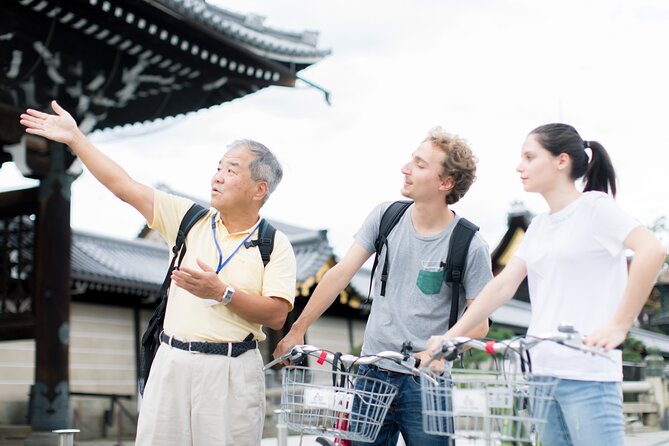
Kyoto’s best moments often happen away from the main temple routes, and this private morning e-bike tour takes you into those quieter corners. You’ll pedal through old wooden lanes in Miyagawacho, pass the refined streets of Gion, ride beside the Kamo River, and cross the broad grounds near Kyoto Imperial Palace.
I like the small private group, which means your guide can adjust the pace and answer questions without a microphone or a long line of bicycles. I also like the electric assistance, especially in Kyoto’s heat, when covering several neighborhoods on foot can turn sightseeing into a sweaty chore.
The main drawback is the fixed three-hour length. You cover a lot of ground, but stops are fairly short, and rain can change the ride into a walking trip by bus or metro. A few riders also found the English level of one guide limited, so guide assignment can matter.
In This Review
- Key points at a glance
- Why an e-bike makes sense in Kyoto
- Miyagawacho, Kyoto’s wooden geisha district
- Gion and the surviving old-city feel
- Tatsumi Bridge and the willow-lined stream
- Kyoto Imperial Palace by bicycle
- A rest beside the Kamo River
- What the private format really changes
- Weather, comfort, and riding ability
- How much English support should you expect?
- Booking timing and cancellation caution
- Who should book this Kyoto e-bike tour?
- Should you book it?
- FAQ
- How long does the Kyoto e-bike tour last?
- Where does the tour start and finish?
- How many people can join one guide?
- What places does the tour visit?
- Is the tour available in rainy weather?
- Can children join the e-bike tour?
- Is the tour private?
Key points at a glance
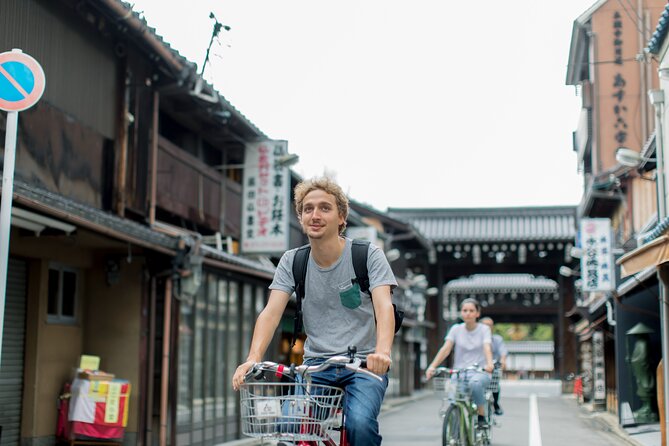
- Old Kyoto lanes: Ride through Miyagawacho, a geisha district lined with traditional wooden houses.
- Private pace: Your group of two to six people rides with one guide, with an extra guide available for groups of seven to twelve.
- Five useful stops: The route links Miyagawacho, Gion, Tatsumi Bridge, Kyoto Imperial Palace, and the Kamo River.
- A smart first-day tour: You see a wide section of central Kyoto without walking several miles.
- Weather flexibility: Rain ponchos are supplied for a bike ride, or you can switch to public transportation at no extra charge.
- Practical age rule: Children must be at least 10 years old, 145 centimeters or taller, and able to ride safely on the road without help.
Why an e-bike makes sense in Kyoto
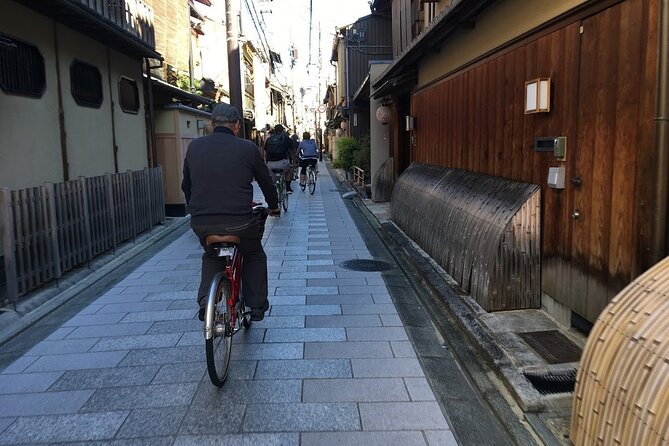
Kyoto is easy to picture as a walking city, but its sights spread across a wide area. Gion lies southeast of the Imperial Palace, while the Kamo River gives you a natural route between several central districts. Connecting those places on foot takes time and energy. A bicycle lets you see more without spending the whole morning on pavement.
The electric motor is the useful part, not a gimmick. You still pedal, but the battery-powered assistance takes the strain out of a hot morning and makes the ride more comfortable for anyone who does not cycle regularly. One practical tip: if you are not used to bike seats, padded shorts or padded pants may save you some discomfort.
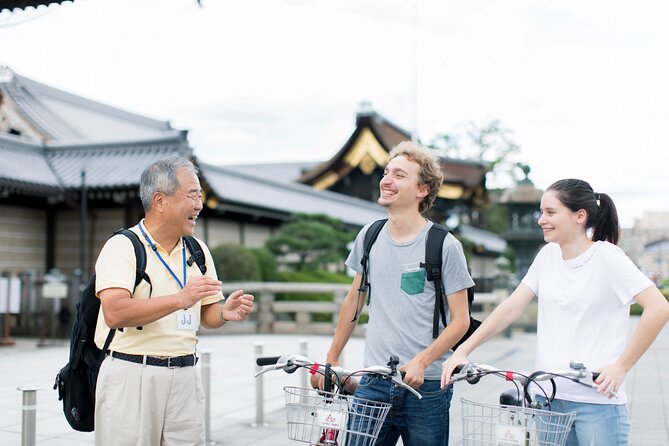
This is not a race or a big convoy. The group limit is two to six people per guide, and the private format lets you stop for questions or request a modest change in emphasis. Past guides have included Rich, Yuichi, and Annie, though your guide will depend on availability.
The 9:00 a.m. start is well chosen. You get an early look at quiet lanes before the day becomes busier, and you still have most of the afternoon free. The start and finish are at 552-13 Higashiaburanokōjichō in Shimogyo Ward, so plan your morning around reaching that point on time.
A few more Kyoto tours and experiences worth a look


Miyagawacho, Kyoto’s wooden geisha district
The first stop is Miyagawacho Kaburenjo, in Miyagawacho, one of Kyoto’s five traditional geisha districts. It is also the city’s second-largest geisha district, according to the tour description. You spend about 15 minutes here, with no admission fee.
The appeal is the setting. The lane is lined with traditional wooden houses, giving you a calmer sense of old Kyoto than you may find on the city’s most photographed streets. Your guide can explain the role of geiko and maiko culture while you look at the architecture and layout of the district.
This is a place for respectful observation. The people who work in these districts are not performers waiting for tourist cameras. Stay quiet, do not block entrances, and follow your guide’s advice about photography. The short stop works well because the value comes from the atmosphere and explanation, not from entering an attraction.
For a first morning in Kyoto, Miyagawacho gives you useful context. You begin with a traditional neighborhood rather than a major ticketed sight, and you start to see how Kyoto’s cultural districts fit into ordinary city streets.
Gion and the surviving old-city feel
From Miyagawacho, the ride continues to Gion, another famous geisha district. You spend roughly 15 minutes here, again without an admission charge.
Gion developed as a major district for maiko and geiko, and parts of its old character remain visible in its narrow streets and traditional buildings. The short stop is enough to orient you, but it is not a full cultural program or a long neighborhood walk. Think of it as a guided introduction that helps you notice details you might otherwise pass without understanding.
I like the way the route pairs Gion with Miyagawacho. Seeing two districts in one morning gives you a broader picture of Kyoto’s traditional entertainment quarters, while the bike keeps the transition quick. You are not spending half the tour walking between them.
Your guide is an important part of this stop. Rich, one of the guides named in past bookings, was praised for answering sustained questions about Kyoto and Japan. Yuichi was also able to adapt the ride to requests, including a coffee break and a route along the river. Those examples suggest that an inquisitive group can get more from the tour by asking questions rather than simply following the bike.
Tatsumi Bridge and the willow-lined stream
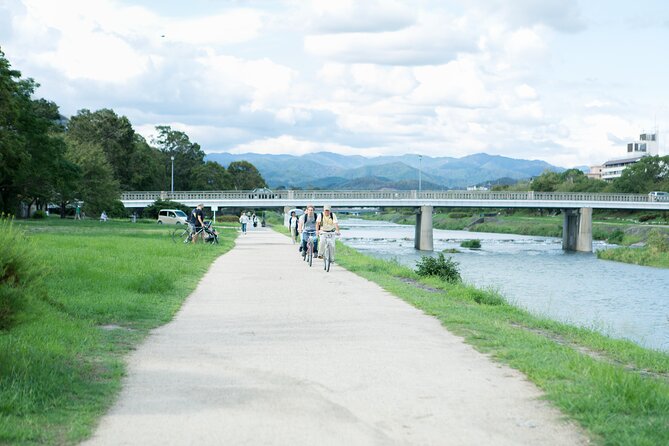
The next stop is Tatsumi Bridge, where the route follows a small stream. You have about 15 minutes to pause and enjoy the water, willows, and quiet path.
This is a welcome change from the denser streets of Gion. The bridge and stream offer a simple visual reset, and the willows give the place a distinctly Kyoto feel. It is not a major monument with a long history lesson attached, but that is part of its charm. The stop lets you enjoy a peaceful corner without turning every minute into a checklist.
The bridge also shows why cycling works here. You can reach small scenic places that might be easy to skip when building a temple-heavy walking plan. If you want grand interiors and formal gardens, this stop may feel modest. If you want a sense of daily Kyoto and attractive streets between major sights, it earns its place.
Kyoto Imperial Palace by bicycle
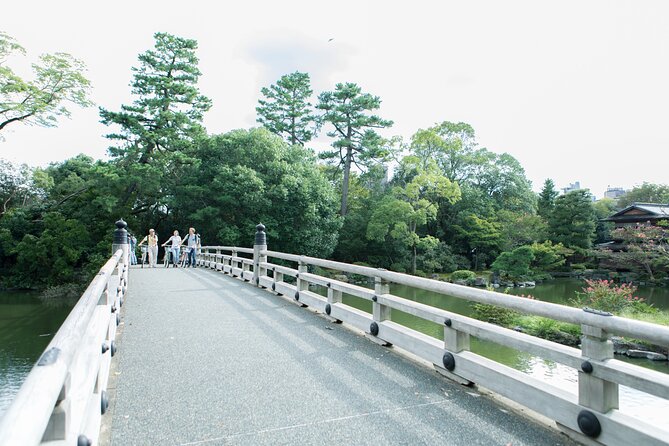
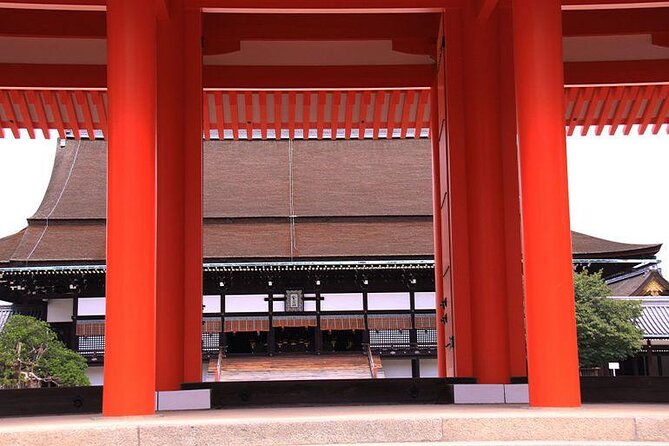
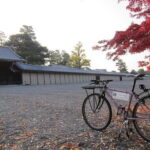
The route then heads to Kyoto Imperial Palace, once the residence of Japan’s Imperial Family. Today, the palace grounds are open to the public as a national garden, with seasonal flowers and broad paths.
You spend about 20 minutes here and cycle along the gravel paths. That detail matters. This is not a palace interior tour, and the experience does not include a long visit to every building. You are seeing the setting from the outside and using the grounds as part of a larger city ride.
The Imperial Palace provides scale after the narrow lanes of the geisha districts. The contrast is useful: first, compact wooden streets and streams, then open garden space with room to breathe. Depending on the season, flowers add color, but the tour description does not promise a particular bloom period.
Gravel can feel different from smooth pavement, so follow the guide’s pace and take care on turns. The e-bike makes the distance easier, but it does not remove the need for normal road and path awareness. You must be able to ride safely without assistance, which is also why the child requirements are specific.
A few more Kyoto tours and experiences worth a look
A rest beside the Kamo River
The final named stop is Kashiwayacho, where you can relax beside the Kamo River. This pause lasts about 20 minutes and includes admission.
The river is a local favorite, and it gives the morning a natural finish. After several cultural neighborhoods and city streets, sitting near the water creates time to talk with your guide and let the route settle. One group requested a coffee break, and the guide fitted it into the morning, so it is worth asking if you would appreciate a short pause. A café stop is not guaranteed, but the private format gives you some room to make a request.
The Kamo River stop is also a good place to ask for practical Kyoto advice. Guides such as Rich have handled extended questions about culture, religion, and the city’s past, while other guides have shared suggestions for the rest of the visit. The value here is not only the view. It is the chance to turn a sightseeing ride into a useful conversation.
After this stop, the activity returns to the original meeting point. The stated duration is about three hours, so do not expect a full day of cycling or a long stop at each location.
What the private format really changes
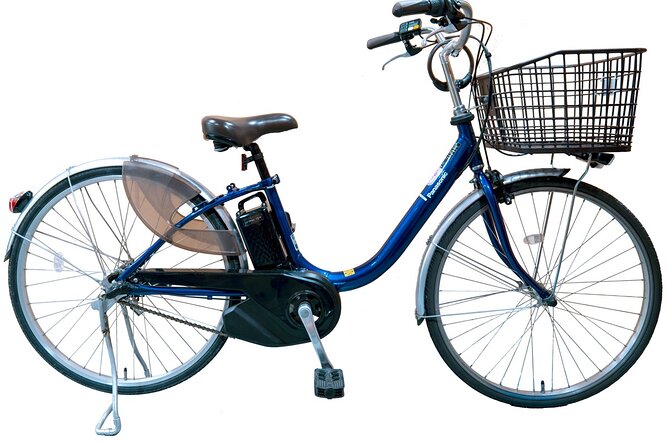
A private tour is more expensive than joining a large group, but the price of $103.04 per person includes the e-bike and equipment rental. For a group of two, that is a fairly substantial outlay. For four to six people sharing the same private guide, the cost becomes easier to justify, particularly if you value flexibility and personal questions.
The guide can set a comfortable pace for your group rather than waiting for a slow rider or asking everyone to keep up with the fastest one. You also avoid the hassle of map reading while moving through unfamiliar streets. That matters in Kyoto, where a wrong turn can cost time and where the most interesting lanes are not always the easiest to connect on your own.
The strongest value is the amount of city you see in one morning. This experience can replace several separate walks, giving you a quick understanding of where Gion, Miyagawacho, the Imperial Palace, and the river sit in relation to one another. It is especially useful early in your visit, when you are still learning Kyoto’s layout.
The tradeoff is depth. Fifteen minutes in each geisha district is enough for orientation, not for a long architectural study or an extended neighborhood wander. If your priority is entering major monuments, you will need separate visits later.
Weather, comfort, and riding ability
The tour operates in rain rather than automatically canceling. You can continue by bicycle with a free rain poncho, or switch to a walking tour using public transportation, with bus or metro costs included in the tour fee.
That is helpful, but a rainy walking version is not the same experience. You lose the easy movement through backstreets and spend more time dealing with transfers and wet streets. If rain is forecast, contact the provider before the tour if you have a strong preference.
Heat is less disruptive because of the electric bikes, though you should still dress for cycling and bring whatever personal essentials you need for a morning outdoors. The route includes gravel paths, roads, bridges, and urban lanes, so basic confidence on a bicycle matters.
Children must be at least 10 years old and at least 145 centimeters tall. They also need to ride safely on the road without help. There is no indication of a child seat or trailer, so this is not designed for younger children who cannot manage a standard bicycle independently.
How much English support should you expect?
The guide’s explanations are central to the experience. Strong communication can turn a ride past a wooden house or riverbank into a useful lesson about Kyoto’s customs, religion, and past.
Several guides have been praised for clear explanations and patience with questions. Rich was described as especially willing to answer questions throughout the morning. Annie was praised for being attentive and generous with explanations, while Yuichi was able to follow requests and offer local tips.
Still, guide quality can vary. One booking found the assigned guide’s English too limited for a detailed exchange, even though the guide was pleasant and helpful with the transport change. If deep conversation in English is essential to your plans, keep that possibility in mind. The ride itself may still work well, but the educational side depends heavily on who leads it.
Booking timing and cancellation caution
The experience is often reserved about 47 days ahead, so booking early is sensible if your Kyoto dates are fixed. Confirmation is sent within 48 hours, subject to availability.
The supplied terms contain an important conflict. One section says you can receive a refund if you cancel at least three days before the tour date by 6:00 p.m. Japan time, while the separate cancellation policy says the experience is non-refundable and cannot be changed. Because those terms do not match, ask KCTP to confirm the current rule before paying, and treat the booking as non-refundable until you receive clear confirmation.
The tour needs a minimum number of participants. If it is canceled because that minimum is not met, you should be offered another date or experience, or receive a full refund. Groups of seven to twelve can request an additional guide.
Who should book this Kyoto e-bike tour?
I would choose this for a first or second day in Kyoto, when you want a practical overview before deciding where to return. It suits couples, families with older children, and small groups who prefer a private pace over a fixed large-group schedule.
It is also a good choice if walking several miles sounds tiring, or if you want to see more of central Kyoto during hot weather. The battery assistance and short rests make the morning manageable, while the route still includes cultural districts, water, gardens, and quiet streets.
I would hesitate if you dislike cycling in city traffic, need a fully indoor activity, or want extended time inside major sights. I would also think twice if rain would spoil the morning, since the alternative public-transport walking format may feel less attractive.
Should you book it?
Book this tour if you want wide Kyoto coverage in three hours, personal guidance, and a relaxed way to connect places that are spread across the city. The strongest reasons are the private group size, useful e-bikes, flexible pace, and mix of traditional lanes, Gion, the Imperial Palace grounds, and the Kamo River.
Skip it if your main goal is a slow, detailed visit to one district or a formal palace tour. For most small groups, though, the $103.04 price is reasonable when you consider the equipment, guide, and amount of ground covered. Bring padded cycling clothing if you need it, ask for your preferred pace, and clarify the cancellation terms before booking.
FAQ
How long does the Kyoto e-bike tour last?
The tour lasts approximately three hours and begins at 9:00 a.m. It ends back at the original meeting point.
Where does the tour start and finish?
It starts at 552-13 Higashiaburanokōjichō, Shimogyo Ward, Kyoto, 600-8235, Japan. The activity ends at the same meeting point.
How many people can join one guide?
The standard group size is two to six people per guide. One-person bookings are not accepted. For groups of seven to twelve, an additional guide can be arranged.
What places does the tour visit?
The route includes Miyagawacho Kaburenjo, Gion, Tatsumi Bridge, Kyoto Imperial Palace, and Kashiwayacho beside the Kamo River.
Is the tour available in rainy weather?
Yes. You can continue by bicycle with a free rain poncho, or switch to a walking tour using public transportation. Bus or metro costs are included in the tour fee.
Can children join the e-bike tour?
Children must be at least 10 years old, at least 145 centimeters tall, and able to ride a bicycle safely on the road without assistance.
Is the tour private?
Yes. Only your group participates in the activity, with a maximum of six people per guide under the standard arrangement.
More Morning in Kyoto
More Backstreet & Hidden Rides in Kyoto
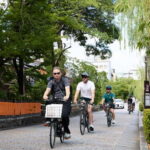
More tours in Kyoto we've reviewed


Backstreet & Hidden Rides, compared.
 ★ 5.03h Tokyo E-Bike Tour: Hidden Gems, and Local Life with guideFrom $63
 ★ 5.0Arashiyama Bamboo Forest & Hidden Gems Bike Tour (Early Bird)From $106
 ★ 5.0Afternoon Kyoto Bike Tour: Bamboo Forest, Monkeys & Hidden SpotsFrom $106
 ★ 4.83-hour Guided E-Bike Tour of the City’s Hidden GemsFrom $65
 ★ 5.0South Kyoto in a Nutshell: Gentle Backstreet Bike Tour!From $79
 ★ 4.9Kyoto: Hidden Gems E-Bike Tour with Local Japanese GuideFrom $753h 30m
 ★ 5.0Tokyo downtown bicycle tour Tokyo Backstreets Bike TourFrom $65
 ★ 4.73-Hour Bike or E-Bike Tour of City’s Hidden GemsFrom $603 hours
Browse the lists this tour appears in