
Reviewed · KYOTO CYCLING TOURS
KIYOTO’s Kyoto Private E-Cycling Tour: Highlights & Hidden Gems
Kyoto’s best sights are spread across a wide city, and this private e-bike tour lets you cover far more ground than you could on foot. You may pedal from Fushimi Inari to Gion, then continue north toward Nanzen-ji, the Philosopher’s Walk, Shimogamo Shrine, and the Kamo River.
I like the flexible pace and the chance to slip through ordinary Kyoto streets between famous sights. I also like that the bikes, guide, and photography help are included, so you can focus on the city rather than equipment. The main consideration is stamina: you must be comfortable riding a bicycle, and the long version can last up to eight hours.
In This Review
- Key Points at a Glance
- Why an E-Bike Makes Sense in Kyoto
- Starting at Sunny CycleJapan
- Fushimi Inari and Tofuku-ji
- Yasaka Pagoda, Gion, and the Shirakawa Waterway
- Heian Jingu, Nanzen-ji, and the Aqueduct
- The Philosopher’s Walk and Honen-in
- Shimogamo Shrine and the Kamogawa Delta
- Kyoto Gyoen, Central Streets, and Everyday Kyoto
- How Much Can You Really See?
- Guides, Bikes, and the Human Side
- Price, Timing, and Who Gets Good Value
- Should You Book KIYOTO’s Kyoto E-Cycling Tour?
- FAQ
- How long does the Kyoto private e-cycling tour last?
- Is an electric bicycle included?
- Can children join the tour?
- Where does the tour start and finish?
- Are temple and shrine admission fees included?
- Is this a group tour?
- Can I cancel for a full refund?
Key Points at a Glance
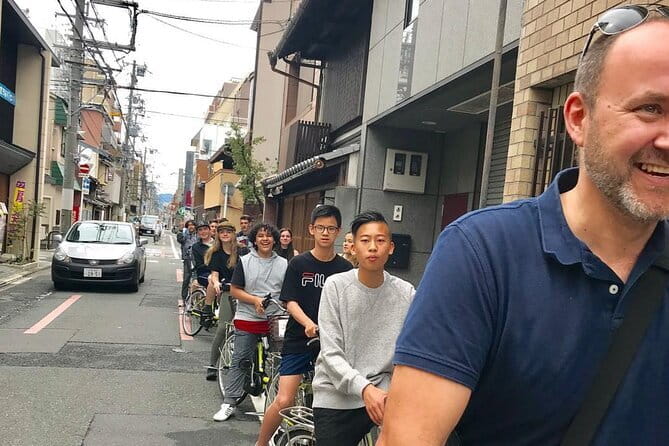
- Private route planning: Your guide can adjust the ride around sights you have already visited and places you still want to see.
- Major sights by bicycle: Reach Fushimi Inari, Tofuku-ji, Gion, Nanzen-ji, and northern Kyoto in one outing.
- E-bike included: A regular bicycle is also available, while limited children’s bikes and child seats require advance requests.
- Local streets and quiet corners: The route includes small waterways, temple gardens, shopping lanes, and residential areas between the headline sights.
- Guide-led storytelling: Guides such as Yonnie, Yuhey, Yuichi, Mana, Polina, and Takuma add history, customs, and everyday Kyoto observations.
- Flexible length: The experience lasts about four to eight hours, making it possible to choose a shorter highlights ride or a fuller city tour.
Why an E-Bike Makes Sense in Kyoto
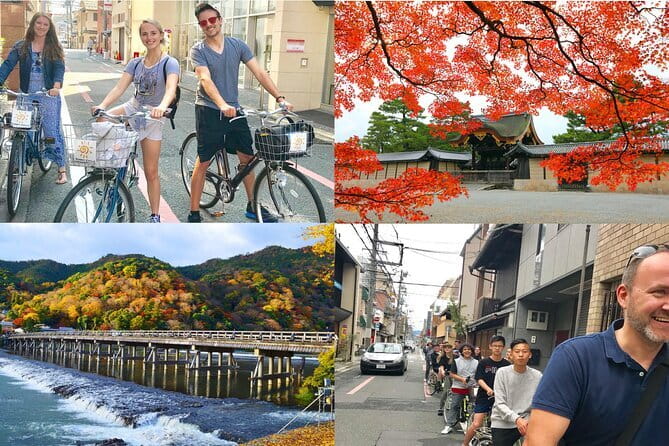
Kyoto is easy to admire on a map and surprisingly spread out in person. Fushimi Inari is in the south, Gion and Yasaka Pagoda are farther north, and Nanzen-ji, the Philosopher’s Walk, and Shimogamo Shrine continue toward the city’s northeastern side.
On foot, connecting all of these places would take a great deal of time. Public transportation helps, but trains and buses do not always deliver you close to the small lanes and riverside paths that give Kyoto much of its character.
An electric bicycle offers a useful middle ground. You still move at street level, but you can cover more distance without turning the day into a hard workout. I especially like the way this format joins famous landmarks with quieter stops that are easy to miss from a bus or taxi.
The private setup matters, too. You are not locked into the same pace as a large group. If your children need a break, you want extra time at a shrine, or you have already seen one of the major temples, your guide can adjust the plan.
A few more Kyoto tours and experiences worth a look

Starting at Sunny CycleJapan
The tour begins at Sunny CycleJapan at 477 1F Ōhorichō, Shimogyo Ward, Kyoto 600-8419. The meeting point is near public transportation, and the activity finishes back there.
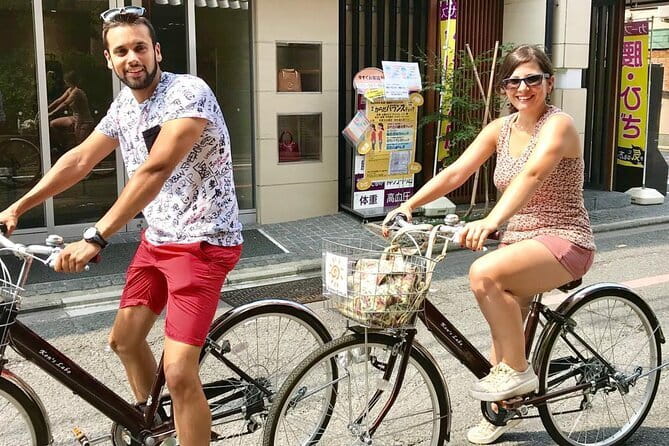
Your rental includes an electric bike, though a normal bicycle can be arranged. Children’s non-electric bikes and child seats are available in limited numbers, so request them when booking rather than counting on getting one at the start.
You need to be able to ride a bicycle and have a moderate level of physical fitness. The e-bike reduces effort, but it does not remove the need to pedal, steer, and remain alert during a city ride.
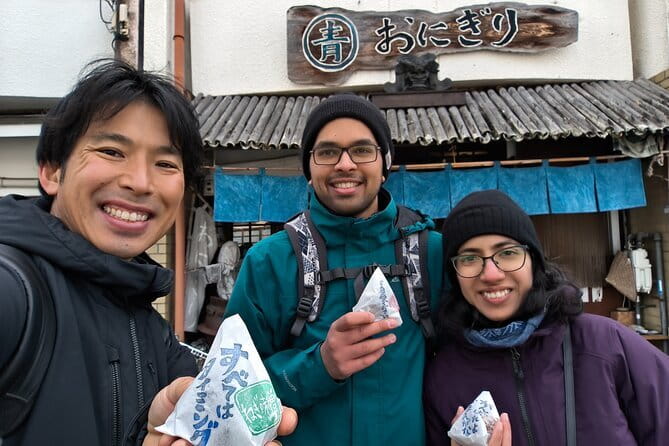
The guides are also part of the appeal. Names connected with the tours include Yonnie, Yuhey, Yuichi, Mana, Polina, Takuma, and Kento. You cannot assume a particular person will lead your outing, but the guiding style described across the experience is friendly, flexible, and focused on Kyoto’s customs and daily life as well as its monuments.
Fushimi Inari and Tofuku-ji
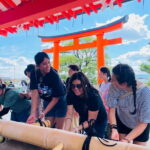
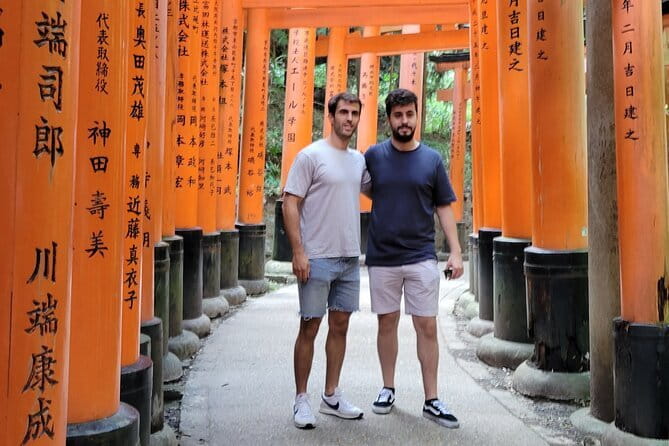
Fushimi Inari-taisha is one of Kyoto’s essential stops. It is the head shrine of more than 30,000 Inari shrines in Japan, and its mountain path is famous for thousands of red torii gates.
The planned stop is about 40 minutes, with no admission charge. That is enough time to enter the shrine grounds and walk through an initial section of gates, but not enough to hike the full mountain route. Keep that distinction in mind if Fushimi Inari is your main reason for booking.
A bicycle gets you to the shrine efficiently, but it cannot carry you up the torii trail. You will park and walk, so comfortable shoes still matter.
Next comes Komyo-in, a sub-temple of Tofuku-ji. Its quiet garden offers a welcome change from Fushimi Inari’s famous approach. Autumn is especially attractive here, when maple leaves set off the moss and garden design.
The visit lasts about 20 minutes, and admission is not included. That makes it one of the stops where you should ask your guide about the current entrance cost before deciding how long to stay.
Tofuku-ji follows with a short 10-minute stop. Its Tsutenkyo Bridge is well known for autumn color and views into the wooded valley. The timing suggests a photo stop rather than a full temple visit, so you may want to request more time if you care about the temple’s buildings and gardens.
Yasaka Pagoda, Gion, and the Shirakawa Waterway
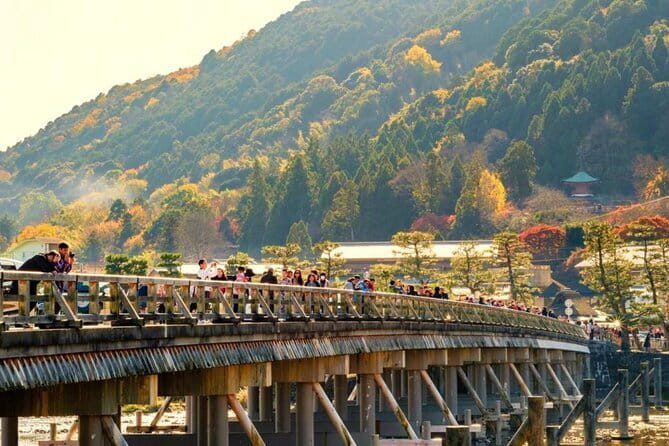
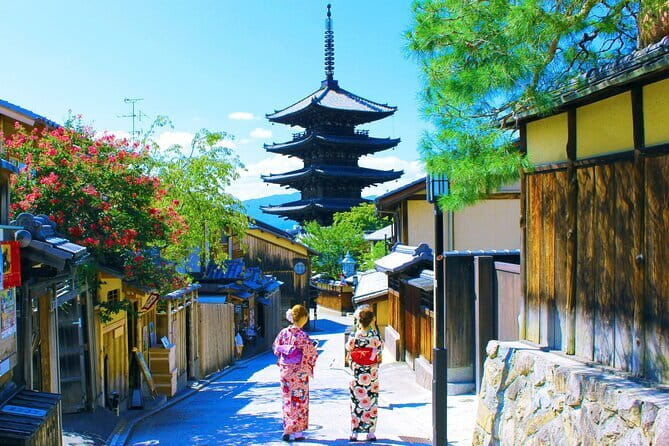
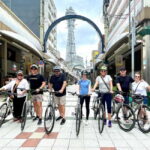
Hōkan-ji Temple, better known for its Yasaka Pagoda, gives you one of Kyoto’s most recognizable street views. The pagoda rises above the historic Higashiyama district, where traditional-looking lanes and old wooden buildings create an especially photogenic setting.
The stop is scheduled for about 20 minutes and admission is listed as free. The appeal here is the surrounding street scene as much as the pagoda itself. Expect a popular area, and use your guide’s help to find a considerate place for photographs without blocking narrow lanes.
Yasui-Konpiragu offers a different kind of religious experience. The shrine is associated with breaking unwanted relationships and forming better ones. Its stone monument has a hole that people crawl through as part of the ritual.
You have about 10 minutes here. That is enough to understand the custom and see the monument, though not enough for a long visit if you want to study the shrine grounds.
Hanamikoji Street takes you into Gion. This traditional lane is lined with tea houses and restaurants, and it offers a glimpse of the district associated with geisha culture. A 10-minute stop keeps the tour moving, but you should treat this as a look at the street rather than a guaranteed encounter with geisha.
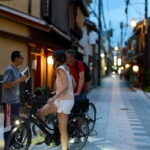
Tatsumi Bridge and the Shirakawa Canal slow the mood. The small wooden bridge crosses the Shirakawa River, while the canal area has willow trees, traditional machiya houses, and a calm old-Kyoto feel.
Together, these stops allow around 25 minutes. I like this portion because it shows how Kyoto’s atmosphere often comes from water, wooden architecture, and narrow lanes rather than one grand monument.
The River Terrace adds another 15 minutes beside the Shirakawa. Stone paths, benches, and flowing water make it a pleasant pause. After several temple visits, this short break can be welcome, especially on a warm day.
Heian Jingu, Nanzen-ji, and the Aqueduct
The Great Torii of Heian Jingu is hard to miss. At 24.2 meters tall, the vermilion gate was built in 1929 to mark Emperor Showa’s enthronement. The tour schedules about 15 minutes here, mainly for the scale of the gate and a few photographs.
The torii is not the same as visiting the shrine grounds, so tell your guide if you want to enter Heian Jingu itself. The listed route focuses on the gate.
Nanzen-ji receives another 15-minute stop. This major Rinzai Zen temple began in 1291 under Emperor Kameyama and is known for its gardens and broad temple grounds.
Fifteen minutes is a quick introduction. You can see the setting and get a sense of the temple complex, but a slower visit would be better if gardens are central to your Kyoto plans.
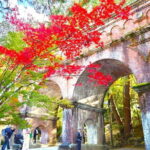
Nearby, Nanzenji Suirokaku brings an unusual piece of modern-era infrastructure into the day. The brick aqueduct was completed in 1888 to carry water from Lake Biwa. Its arches contrast sharply with the older temple buildings around it.
The 10-minute stop is short but worthwhile. It helps explain that Kyoto is not only a city of shrines and gardens. Waterworks, transport, and later engineering also shaped the city you see today.
A few more Kyoto tours and experiences worth a look
The Philosopher’s Walk and Honen-in
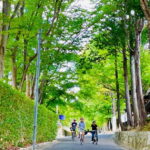
The Philosopher’s Walk follows the Biwa Canal for roughly two kilometers. It links the southern end near Wakamiya Shrine with the northern temple area, and it is known for its trees, water, and gentle walking route.
The tour allows about 30 minutes. That is enough for a pleasant section, but not the entire path at a slow pace. You may need to walk your bicycle in parts, and your guide will determine how the route works on the day.
Honen-in provides one of the quieter temple visits. Set in a wooded area, it is associated with Honen Shonin and has a calm atmosphere shaped by trees, moss, and simple temple grounds.
The stop lasts around 15 minutes. This is a good place to ask your guide for a little silence rather than a long explanation. The value comes from the change in pace after the busier southern sights.
Shimogamo Shrine and the Kamogawa Delta
Shimogamo Jinja, formally Kamomioya Shrine, is one of the oldest Shinto shrines in the area, with roots traditionally traced to around 90 BC. Its setting in the Sakyo Ward gives the tour another chance to show Kyoto’s long connection with sacred woodland and river corridors.
The planned visit is about 30 minutes, longer than several of the central stops. That gives you enough time to look around without feeling rushed.
The Kamogawa Delta is where the Kamo and Takano Rivers meet. Stepping stones shaped like turtles and birds cross the water, making this a popular place for a short stop and photographs.
You get about 15 minutes here. I would not treat it as a formal sightseeing site. It is more of a local-feeling pause where you can watch the river, hop across stones if conditions allow, and see how Kyoto residents use open space.
Kyoto Gyoen, Central Streets, and Everyday Kyoto
Kyoto Gyoen surrounds the former Imperial Palace and offers a broad park setting in the middle of the city. Its trees, open paths, and historic buildings make it a useful contrast to the tight lanes of Gion.
The route also includes stepping stones at Kojin, known as Ebisugawa Tobiishi. These stones cross the Ebisugawa, a tributary of the Kamo River, and create another brief, playful stop along the water.
Teramachi-dori adds shopping and ordinary city life. The north-south street has traditional Japanese goods, cafes, and clothing shops, so you can see Kyoto functioning as a modern city rather than a collection of preserved monuments.
Sanjo Street is another central corridor, with restaurants, cafes, historic buildings, and easy access to the Kawaramachi and Kamo River areas. These streets are useful additions because they connect the temple districts to the places where people eat, shop, work, and meet.
The itinerary also lists Higashi Hongan-ji, a major Jodo Shinshu Buddhist temple founded in 1602. Its vast grounds and Goeido main hall make it an important central Kyoto sight. Because the route is private, ask your guide how it fits with your selected duration and priorities.
How Much Can You Really See?
The full route contains far more stops than most people can properly visit in four hours. The shorter version should be viewed as a customized highlights ride, not a promise that you will spend equal time at every location.
A longer outing of six to eight hours gives you more room for temple grounds, photographs, food breaks, and unhurried cycling. Even then, you will need to choose between lingering at major sites and seeing a wider range of neighborhoods.
This is where the private format earns its keep. You can tell the guide that Fushimi Inari matters more than shopping, or that you have already seen Gion and would rather spend time around Shimogamo and the Philosopher’s Walk.
Past rides have also been adjusted around places already visited and sights close to a group’s neighborhood. That can make the tour more useful on a second Kyoto visit, when you want local streets and smaller temples instead of the standard first-day checklist.
Guides, Bikes, and the Human Side
The strongest part of the experience is the guiding. Yonnie is described as careful on crowded Kyoto streets and strong on local history and culture. Yuhey has experience keeping children engaged, while Yuichi is known for mixing facts with humor.
Mana is noted for helping before the ride with questions about Kyoto and Kobe. Polina brings an easy manner and anecdotes to narrow backstreets, and Takuma is praised for making the outing fun. Kento has also helped shape rides around local areas and places the group had not yet seen.
Those details point to a tour that works best when you speak up. Tell your guide your interests, your preferred pace, and any places you have already covered.
The bikes are described as comfortable and well maintained. You still need to expect city riding, narrow streets, and periods of moderate physical effort. The electric assist helps, but this is not a passive sightseeing bus.
The guide can also take photographs, a useful touch when you are busy managing a bicycle and trying to enjoy the view. Food and drinks are not included, so plan to buy refreshments separately during a longer ride.
Price, Timing, and Who Gets Good Value
At $198.15 per person, this is not the cheapest way to see Kyoto. The value depends heavily on your group size, the length you choose, and how much you value private planning.
For a private group that wants to see several far-apart districts in one day, the price can make sense. You are paying for the bikes, route flexibility, guide service, and the time saved by avoiding a patchwork of buses and trains.
A four-hour version suits you if you want a brisk overview. The six-to-eight-hour option is stronger value if you want to combine southern Kyoto, Gion, northeastern temples, riverside paths, and central shopping streets without constantly checking a map.
Group discounts are available. Since this is a private activity, a larger group may find the per-person cost easier to justify, provided everyone is comfortable riding.
The tour has a 98 percent recommendation rate and a 4.9 rating from 48 reviews. That is a strong record, though the experience will still depend on weather, traffic, your guide, and your own cycling comfort.
Free cancellation is available up to 24 hours before the start time for a full refund. Changes or cancellations inside that window are not accepted for a refund.
Should You Book KIYOTO’s Kyoto E-Cycling Tour?
Book it if you want to see a wide slice of Kyoto in one day and prefer moving through real streets to sitting on a bus. It is especially useful for first-time visitors with limited time, families wanting a flexible schedule, and repeat visitors who want quieter temples and neighborhood routes.
I would choose at least five or six hours if your goal is to combine Fushimi Inari, Gion, Nanzen-ji, and northern Kyoto. Choose the shorter ride only if you are happy with quick stops and a tighter selection.
Skip it if you dislike cycling, want long quiet visits inside every temple, or prefer a slow walking day centered on one district. For everyone else, the private e-bike format offers a practical way to connect Kyoto’s famous gates, gardens, canals, rivers, and local streets without spending the whole day in transit.
FAQ
How long does the Kyoto private e-cycling tour last?
The tour lasts approximately four to eight hours. Your private guide can tailor the pace and route to your group’s interests.
Is an electric bicycle included?
Yes. An electric bike is included, and a normal bicycle is available as well.
Can children join the tour?
Children can join if they can ride a bicycle. Limited children’s non-electric bikes and child seats are available, but you must request them when booking.
Where does the tour start and finish?
The tour starts at Sunny CycleJapan, 477 1F Ōhorichō, Shimogyo Ward, Kyoto 600-8419. It ends back at the same meeting point.
Are temple and shrine admission fees included?
Paid entrance fees are not included. Several listed stops have no admission charge, while Komyo-in specifically lists admission as not included.
Is this a group tour?
No. This is a private activity, so only your group participates.
Can I cancel for a full refund?
Yes, if you cancel at least 24 hours before the experience start time. Cancellations or changes made less than 24 hours in advance are not eligible for a refund.
More Backstreet & Hidden Rides in Kyoto



More E-Bike Tours in Kyoto
More Kyoto Cycling Tours in Kyoto
More tours in Kyoto we've reviewed


Kyoto Cycling Tours, compared.
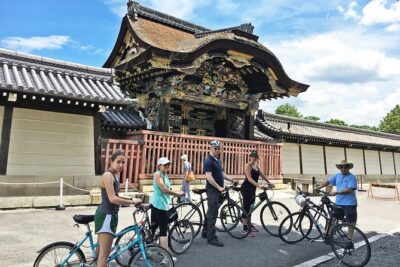 ★ 5.0Bike Tour Exploring North Kyoto plus LunchFrom $106
 ★ 5.05 Top Highlights of Kyoto Full Day Bike Tour (E-bike option)From $172
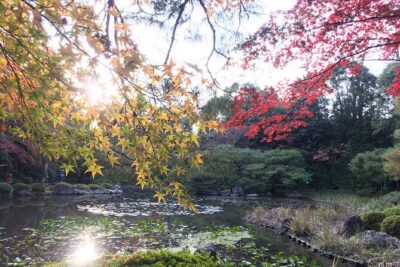 ★ 5.0E-Bike Tours of the highlights of Kyoto!!!From $109
 ★ 5.0Afternoon Kyoto Bike Tour: Bamboo Forest, Monkeys & Hidden SpotsFrom $106
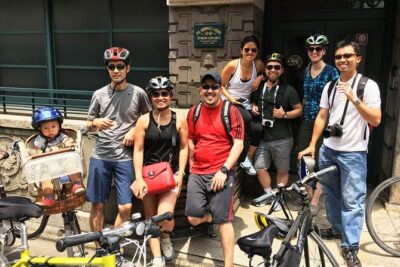 ★ 5.0South Kyoto in a Nutshell: Gentle Backstreet Bike Tour!From $79
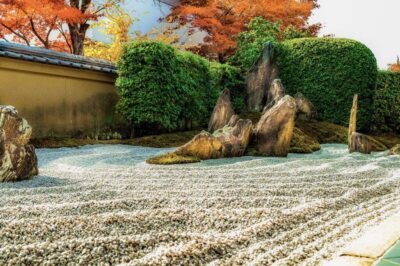 ★ 4.9Kyoto: City Secrets eBike TourFrom $1273h 45m
 ★ 5.0Pedal Adventure Kyoto’s iconic landmarks on an e-bike tourFrom $86
 ★ 4.9Kyoto: Hidden Gems E-Bike Tour with Local Japanese GuideFrom $753h 30m
Browse the lists this tour appears in