
Reviewed · KYOTO CYCLING TOURS
Start from Kyoto Station: Early Morning E-Bike Tour with Kyotoite
Kyoto is at its best before the crowds arrive. This early-morning e-bike tour trades packed trains and long walks for a smooth ride through shrine paths, old lanes, river corridors, and several of the city’s essential sights. You cover far more ground than you could on foot, yet the pace still leaves room for photos and short explanations.
I like the tiny group limit of six, which makes it easier to stay with your guide and ask questions. I also like the route’s mix of famous places and less obvious streets, especially the ride beside the Shirakawa River through Miyagawa-cho and Gion. The main consideration is that this is still an active outing: reviews note some hills, and rain can arrive before the ride is over.
In This Review
- Key details worth knowing before you book
- Why an early e-bike ride works so well in Kyoto
- Starting near Kyoto Station with a small group
- Fushimi Inari and its thousands of torii gates
- Sanjusangendo and a change of pace
- Gion by the Shirakawa River and old backstreets
- Nanzen-ji, one of Kyoto’s major Zen temples
- Heian Shrine and the old capital of Kyoto
- Returning along the Kamogawa River
- Bikes, weather, and physical effort
- What the $84.92 price really buys you
- Who should book this Kyoto bicycle tour?
- Should you book it?
- FAQ
- Where does the Kyoto e-bike tour start?
- Where does the tour finish?
- How long does the tour last?
- How many people can join the tour?
- What equipment is included?
- Are snacks included?
- What sights are visited?
- What happens if I need to cancel?
Key details worth knowing before you book
- Fushimi Inari comes early: You reach the shrine after about 20 minutes of riding, while the morning timing helps you avoid the worst crowds.
- The group never exceeds six people: This keeps navigation simple and gives you better access to guides such as Aki, Sato, and Ryuto.
- The route connects Kyoto’s major districts: Fushimi, Gion, Nanzen-ji, Heian Shrine, and the Kamogawa River all fit into one outing.
- The ride is friendly to ordinary cyclists: The e-bikes provide assistance, but some hills remain, and the total time is about three and a half hours.
- Practical gear is supplied: Your booking includes the bicycle, helmet, bottled water, raincoat, and liability insurance. Snacks are not included.
- You finish where you start: The meeting point is Kyoto ECO TRIP Flagship shop near Kyoto Station, at 58 Higashikujo Muromachi.
Why an early e-bike ride works so well in Kyoto
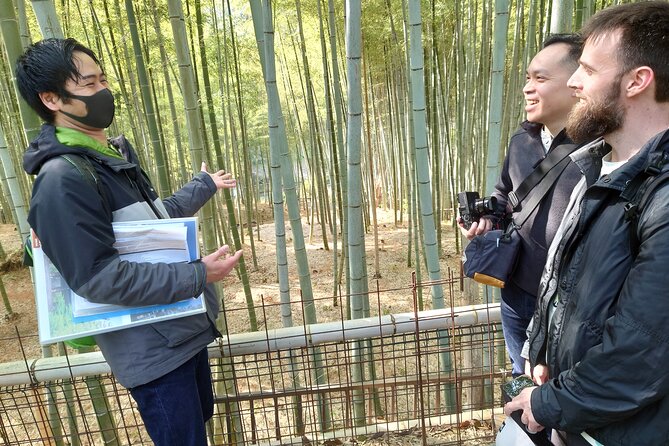
Kyoto’s sights are spread across a surprisingly large area. Fushimi Inari is southeast of the station, Gion sits farther north, and Nanzen-ji and Heian Shrine are beyond the central shopping streets. By train and on foot, you spend part of the morning changing lines, finding exits, and threading through crowds.
A bicycle gives you a better sense of how these neighborhoods connect. You pass from one district to the next instead of treating each sight as an isolated stop. The e-bike matters because it takes the sting out of longer stretches and modest climbs, though you still need to pedal and steer in city traffic.
The early start is a real advantage. The schedule begins at 7:30 a.m. from March through June, with a later 8:30 a.m. start listed for Mondays from January through February. Exact operating dates and times depend on the season, so check your booking carefully before setting your alarm.
This is not a race. The published duration is about three hours and 30 minutes, including riding time. Some past outings ran longer, particularly when the group had many questions, so I would avoid booking a tight lunch reservation immediately afterward.
A few more Kyoto tours and experiences worth a look

Starting near Kyoto Station with a small group
You meet at Rental Bicycle KYOTO ECO TRIP Flagship shop, 58 Higashikujo Muromachi, in Minami Ward. The location is close to Kyoto Station, making it a practical launch point if you are staying near the station or arriving by train.
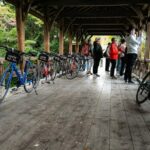
After the bicycle and helmet are provided, your guide leads the group onto the route. The maximum of six people is one of the strongest features here. A guide can give directions without shouting across a large pack, and you are less likely to lose sight of the group at crossings or busy corners.
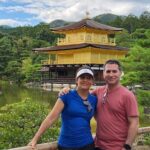
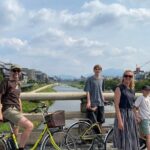
The guides featured in the tour’s feedback include Aki, Sato, and Ryuto, also spelled Riuto in some places. Aki is praised for taking family photos at several stops. Sato is noted for food suggestions after the ride, while Ryuto is described as a Kyoto-born English student who explained Shinto, Buddhism, and the city’s past clearly.
Those details point to the character of the experience. You are not simply handed a bicycle and sent after a route on a phone. The guide handles navigation and adds context along the way. Still, the amount of explanation can vary with the guide and with the questions your group asks.
Fushimi Inari and its thousands of torii gates
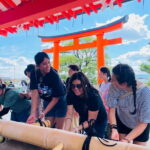
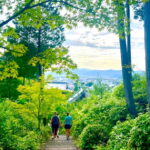
The first major stop is Fushimi Inari-taisha, reached after about 20 minutes of riding. This is one of Kyoto’s most recognizable sights, famous for its thousands of orange torii gates climbing through the wooded shrine grounds.
The tour allows about 50 minutes here. That is enough time to see the lower shrine area, walk among the gates, take photos, and hear why Fushimi Inari is so important. It is not enough time to walk the full mountain route, which takes much longer, so set your expectations accordingly.
The early arrival is especially useful at Fushimi Inari. Its torii corridors can become packed later in the morning, making photographs and quiet pauses harder. You should still expect other people, but the timing gives you a better chance of seeing the shrine before the heaviest flow begins.
The route also includes lesser-seen parts of the shrine area, according to the tour description. The precise path can vary, so do not assume you will cover every famous gate. Wear shoes that are comfortable for a short amount of walking, since the bicycle does not take you through the shrine grounds themselves.
Sanjusangendo and a change of pace
From Fushimi Inari, you ride about 15 minutes to the area around Sanjusangendo Temple. The temple is famous for its hall containing 1,001 statues of Kannon, the Buddhist figure associated with mercy.
This stop is described as a pass through the Sanjusangendo area rather than a long temple visit. The key distinction matters: the tour can introduce you to one of Kyoto’s great religious buildings, but the listed route does not promise a full interior visit or an extended admission period.
That makes this portion useful for orientation. Fushimi Inari offers a strong outdoor visual experience, while Sanjusangendo points you toward Kyoto’s Buddhist art and temple culture. If the 1,001 statues are a top priority, plan a separate visit when you can give the temple more time.
Gion by the Shirakawa River and old backstreets
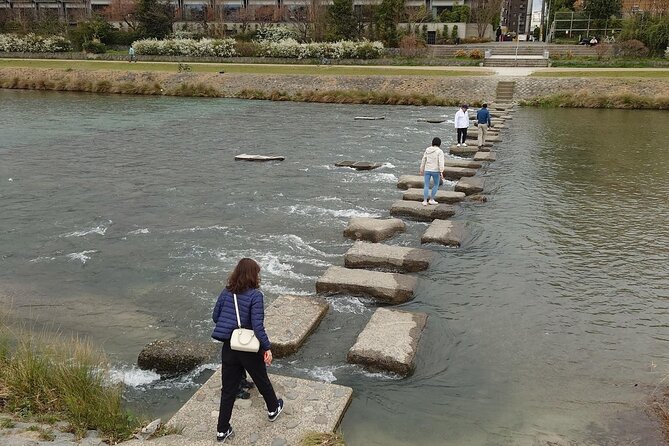
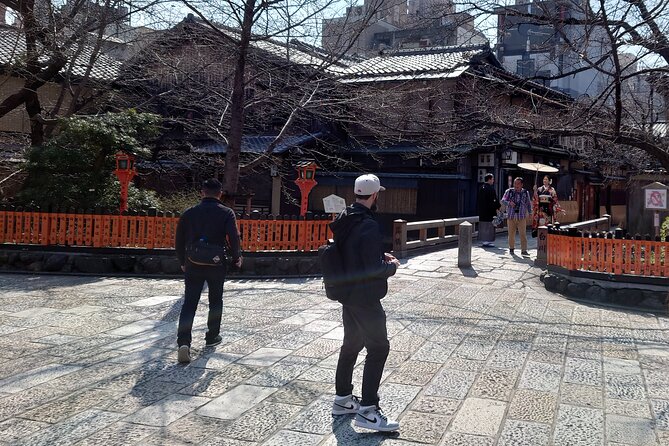
After roughly 10 minutes on the bike, the group follows the Shirakawa River toward Miyagawa-cho and Tatsumi Bridge in Gion. This is one of the most appealing parts of the route because it shows Kyoto at street level, away from the main tourist corridors.
The narrow lanes around Gion are associated with geisha culture, traditional wooden buildings, small bridges, and quiet waterways. The ride gives you a quick look at how the district feels before the day fully gets going. You will want to slow down for photographs, but remember that you are passing through residential and working areas. Follow your guide’s advice and keep the road clear.
This section also demonstrates why the bicycle format is valuable. A walking tour can cover these lanes, but the bike lets you reach them after visiting Fushimi and Sanjusangendo without spending the whole morning on foot. The trade-off is that you cannot linger at every corner.
A few more Kyoto tours and experiences worth a look
Nanzen-ji, one of Kyoto’s major Zen temples
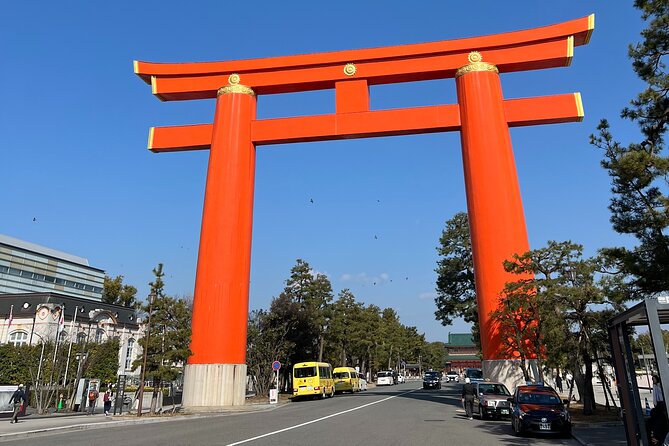
About 15 minutes after Gion, the route reaches Nanzen-ji Temple. The stop lasts around 20 minutes and is one of the tour’s clearest introductions to Zen Kyoto.
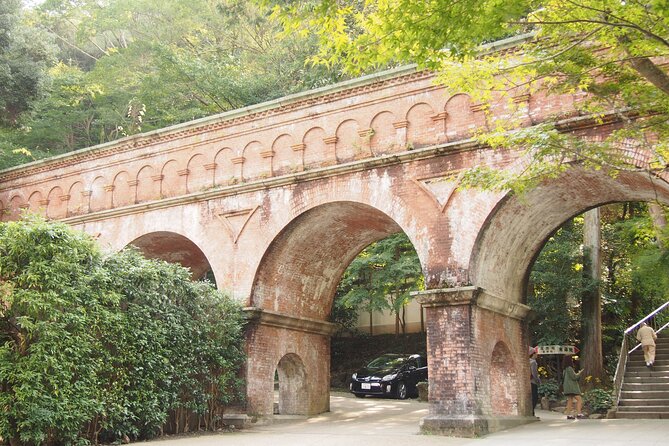
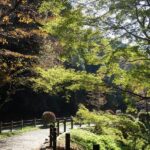
Nanzen-ji is known for its temple grounds, gates, gardens, and large brick aqueduct. The tour gives you time to look around and hear about the temple’s place in Kyoto’s religious life, though the short stop does not allow a full exploration of every subtemple or garden.
This is also where the hills mentioned in the feedback may be more noticeable. The e-bike assistance helps, but you should not treat the ride as entirely effortless. If you are comfortable on a bicycle but not used to hills, use the lower effort setting and follow the guide’s pace.
The payoff is a calmer section of Kyoto than the central shopping streets. Nanzen-ji feels spacious, and the surrounding lanes connect naturally with the ride toward Heian Shrine.
Heian Shrine and the old capital of Kyoto
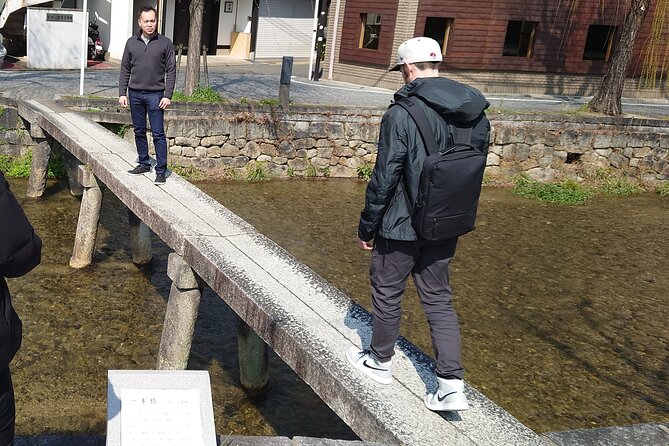
The next ride takes about 10 minutes, ending at Heian Shrine. The stop lasts around 20 minutes.
Heian Shrine is easy to recognize by its large vermilion gates and broad approach. It commemorates the former imperial capital and is described here as a symbol of Kyoto’s role as Japan’s capital about 800 years ago. The scale is different from Fushimi Inari and Nanzen-ji, so the sequence gives you a useful range of shrine and temple architecture in one morning.
You have time for photographs and a brief explanation of the shrine’s meaning. As with the other stops, this is an introduction rather than a detailed visit. If you want to explore the shrine gardens or spend time inside particular buildings, return later on your own.
The stop works well near the end of the tour because it is visually large and easy to appreciate without a long hike. After the morning’s smaller lanes and temple grounds, the wide approach gives you room to pause before the final ride.
Returning along the Kamogawa River
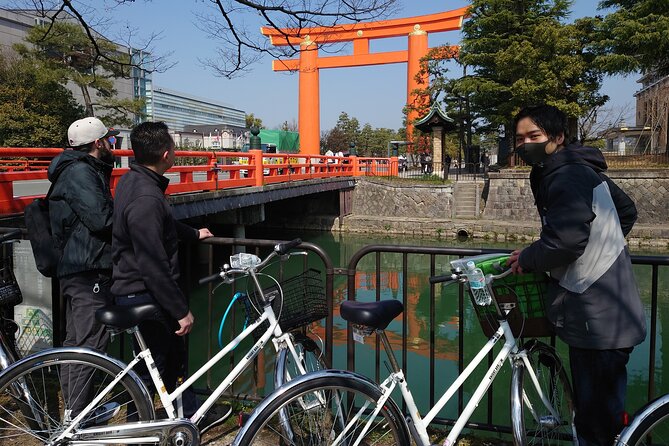
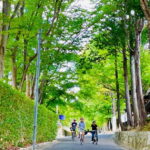
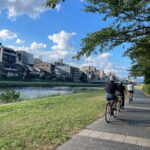
The ride back follows the Kamogawa River and takes about 20 minutes. This is a pleasant way to close the loop, with a more open route after the narrow streets of Gion and the temple districts.
The river is one of Kyoto’s best orientation points. Riding beside it helps you understand the city’s layout, and the route back avoids repeating the same streets. It also gives you a final stretch to enjoy the bicycle without another scheduled attraction competing for your attention.
The activity ends back at the original meeting point. Bottled water is included, which is useful on a warm morning, and a raincoat is supplied. Snacks are not included, so eat before departure or bring something suitable if you need food during the ride.
Bikes, weather, and physical effort
The bicycles are described in the feedback as more traditional in shape and not overly bulky. That is good news if you dislike heavy rental bikes, but the tour still requires basic comfort on two wheels.
The e-bike assistance helps on the route’s hills and longer connections. It does not remove the need to pedal, brake, steer, and pay attention to other road users. Most people can participate, but the ride is a poor fit if you are not comfortable cycling or if you want a completely passive sightseeing experience.
Weather deserves attention. A raincoat is included, and one outing ended with rain, but protective gear does not guarantee a dry ride. Check the forecast, wear clothing that can handle changing conditions, and remember that wet roads can make cycling less comfortable.
The tour is suitable for families with older children and teenagers. A family of five with children aged 13, 17, and 19 enjoyed the route, but younger children may require individual judgment because the tour involves city riding and several hours in the saddle.
What the $84.92 price really buys you
At $84.92 per person, this is not the cheapest way to rent a bicycle for a morning. The price makes more sense when you count the guide, e-bike, helmet, water, raincoat, and insurance, along with the time saved planning a route between distant districts.
You are also paying for navigation. Kyoto’s quieter lanes are rewarding, but finding a safe and efficient path from Kyoto Station to Fushimi Inari, Gion, Nanzen-ji, and Heian Shrine would take preparation. A local guide can connect those places in a single outing and adjust the pace for a small group.
The value is strongest if you have limited time in Kyoto or want an overview before exploring on your own. It is weaker if you already know the city well, prefer long temple visits, or only want to cycle at your own speed.
The rating is 5 out of 5 from 15 ratings, with 100 percent recommending the activity. That is a small sample, so I would treat it as encouraging rather than definitive. The consistent strengths are the guides, the route design, the photo help, and the manageable cycling pace.
Who should book this Kyoto bicycle tour?
I would choose this tour if you want to see several parts of Kyoto in one morning without relying on crowded public transport. It suits first-time visitors who want an overview, families with teenagers, couples, and people who enjoy learning as they move.
It is particularly useful at the beginning of a Kyoto stay. The route introduces Fushimi, Gion, the eastern temple area, and the Kamogawa River, giving you a sense of which neighborhoods deserve a longer return visit.
I would hesitate if your priority is deep temple sightseeing. The 20-minute stops at Nanzen-ji and Heian Shrine are enough for an introduction, not a full study. You should also think twice if hills, rain, or several hours of cycling would make the morning stressful.
Free cancellation is available until 24 hours before the start time. Cancellations or changes inside that window are not accepted for a refund, so keep that deadline in mind when your plans are still shifting.
Should you book it?
Book this tour if you want an active, well-organized introduction to Kyoto with a small group and a guide who can explain the city as you ride. The combination of early timing, e-bike assistance, quiet backstreets, and famous sights gives you more variety than a standard walking route.
Skip it if you want to linger inside every temple, avoid bicycles altogether, or prefer a late and leisurely morning. For most reasonably fit cyclists, though, the $84.92 cost is fair for the equipment, local guidance, and amount of Kyoto covered before lunch.
FAQ
Where does the Kyoto e-bike tour start?
It starts at Rental Bicycle KYOTO ECO TRIP Flagship shop, 58 Higashikujo Muromachi, Minami Ward, Kyoto, 601-8001, Japan.
Where does the tour finish?
The activity ends back at the original meeting point near Kyoto Station.
How long does the tour last?
The listed duration is approximately three hours and 30 minutes, including travel time.
How many people can join the tour?
The maximum group size is six people.
What equipment is included?
The booking includes use of an e-bike, a helmet, bottled water, a raincoat, and liability insurance.
Are snacks included?
No. Snacks are not included.
What sights are visited?
The route includes Fushimi Inari-taisha Shrine, the Sanjusangendo area, Miyagawa-cho and Tatsumi Bridge in Gion, Nanzen-ji Temple, Heian Shrine, and the Kamogawa River.
What happens if I need to cancel?
You can cancel up to 24 hours before the start time for a full refund. Cancellations and changes made less than 24 hours before the start time are not accepted for a refund.
More Cycling Tours in Kyoto


More E-Bike Tours in Kyoto
More Kyoto Cycling Tours in Kyoto
More tours in Kyoto we've reviewed

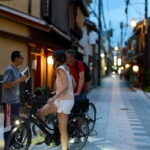
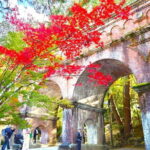
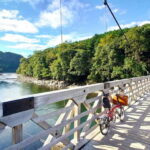
Kyoto Cycling Tours, compared.
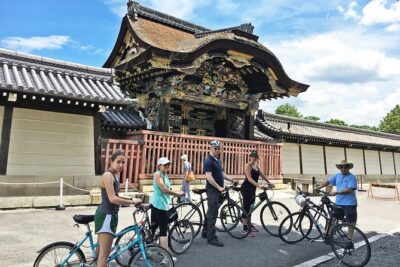 ★ 5.0Bike Tour Exploring North Kyoto plus LunchFrom $106
 ★ 5.05 Top Highlights of Kyoto Full Day Bike Tour (E-bike option)From $172
 ★ 5.0E-Bike Tours of the highlights of Kyoto!!!From $109
 ★ 5.0Afternoon Kyoto Bike Tour: Bamboo Forest, Monkeys & Hidden SpotsFrom $106
 ★ 5.0South Kyoto in a Nutshell: Gentle Backstreet Bike Tour!From $79
 ★ 4.9Kyoto: City Secrets eBike TourFrom $1273h 45m
 ★ 4.9Kyoto: Hidden Gems E-Bike Tour with Local Japanese GuideFrom $753h 30m
 ★ 5.0Pedal Adventure Kyoto’s iconic landmarks on an e-bike tourFrom $86
Browse the lists this tour appears in