

Reviewed · CYCLING TOURS
Okunoshima Rabbit Island Cycling Tour with Local Guide
Okunoshima is famous for rabbits, but its most important story is much darker. On this two-hour cycling tour, you ride past poison gas ruins, a power plant, a shrine, and a northern cannon battery while a local guide explains why this small island was once removed from maps. The rabbits are friendly companions, but they are not the whole point.
I like the balance here. You get gentle outdoor time and Seto Inland Sea views, then pause for clear explanations of the island’s wartime past. I also like the small group, capped at five people, and guide Junko’s warm, personal approach. The main drawback is that several ruins are closed for safety, so you view some buildings from outside rather than entering them. You’ll also need to pay the 360-yen ferry fee separately.
In This Review
- Key points before you book
- Why Okunoshima is more than Rabbit Island
- Starting at Kyukamura Okunoshima
- Okunoshima Lighthouse and the first sea views
- Cycling the four-kilometer island
- Okuno Shrine and the island’s gentler side
- Nagaura Poison Gas Storage Ruins
- Power Plant Ruins and the cost of secrecy
- Northern Cannon Battery Remnants
- What the two-hour schedule feels like
- Is the cycling difficult?
- The weather and cancellation rules
- Who will get the most from this tour?
- Is Okunoshima Rabbit Island Cycling Tour worth $59.12?
- Should you book it?
- FAQ
- How long does the Okunoshima cycling tour last?
- Where does the tour start and finish?
- Is the ferry included in the tour price?
- How many people can join the tour?
- Can I enter the lighthouse and wartime ruins?
- What does the tour price include?
- What happens if the weather is bad?
Key points before you book
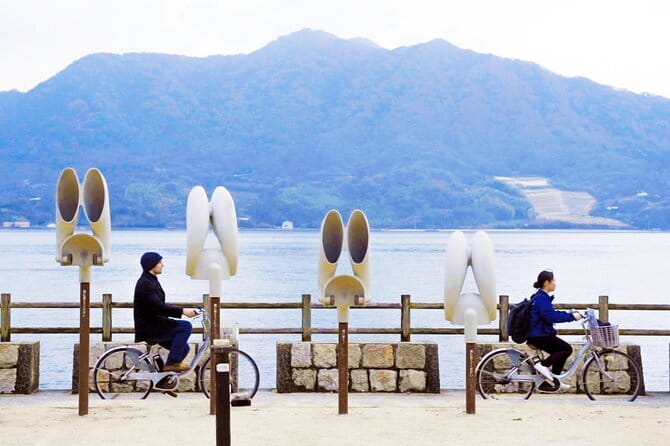
- Rabbits and wartime history share the same island: The tour gives you both the cheerful and painful sides of Okunoshima.
- Guide Junko brings the story to life: Her talks focus on the island’s difficult past, not only its cute animals.
- The ride covers about four kilometers: Okunoshima is small, but the tour visits several scattered sites.
- Several ruins can only be viewed from outside: The poison gas storage facility and power plant are closed for safety.
- Small groups make questions easier: The tour accepts no more than five people and needs at least two to operate.
- The ferry costs extra: The 360-yen crossing from Tadanoumi to Okunoshima is not included in the tour price.
Why Okunoshima is more than Rabbit Island

The easy version of Okunoshima is a cute island covered with rabbits. That is certainly part of the appeal. You may see rabbits near the roads, shrine, and hotel area, and the sight of wild animals hopping through such a peaceful setting is memorable.
But the island’s quiet beauty hides a painful past. Okunoshima was once used for the secret production and storage of poison gas during wartime. Its name was removed from maps, helping keep its work hidden. Today, the empty buildings and military remains offer a direct way to understand that history.
I think the bicycle is the right way to see the island. Okunoshima has a circumference of about four kilometers, so you can cover a good portion of it without rushing. Walking would also be possible for some people, but a bike lets you move between the lighthouse, shrine, ruins, and cannon battery with less wasted time.
The tour is shared, though the group size is limited to five. That is useful here. The subject is serious, and a small group gives you a better chance to ask questions or pause when something needs more explanation. The experience needs at least two people to run, so a solo booking may depend on another person joining.
Other cycling tours in Hiroshima


Starting at Kyukamura Okunoshima
The meeting and finishing point is in front of Kyukamura Okunoshima, the island hotel. You need to arrange your own ferry from Tadanoumi. The crossing fee is listed separately at 360 yen, and food and drinks are also your responsibility.
The tour includes the bicycle, taxes, and travel insurance. That makes the $59.12 price easier to judge. You are not paying only for a rental bike. You are paying for a guided route, historical explanation, insurance, and a compact way to see sites that would take more planning to connect on your own.
Still, you should think of the price alongside the ferry and any meal or drink you buy. The tour lasts about two hours, so it is not a full-day island program. Its value comes from the guide and the route, not from a long list of included extras.
You should arrive ready to ride. The tour calls for moderate physical fitness, and the itinerary involves cycling between several stops. The island is small, but the day can still feel tiring if you are not comfortable on a bicycle or if the weather is warm.
Okunoshima Lighthouse and the first sea views
The lighthouse is the first listed stop and takes about ten minutes. You cannot enter it, so the visit is an exterior stop rather than a climb or indoor tour.
That limitation is worth knowing in advance. If you expect a tower visit, you may find this brief. The reward is the setting: from this part of the island, you can look out across the Seto Inland Sea and its many islands. The view gives you a calm opening before the tour turns toward the island’s wartime remains.
I like this kind of first stop because it establishes Okunoshima as a real place, not just a themed animal attraction. The sea, the small roads, and the lighthouse show why the island feels peaceful today. Your guide can then explain how that peaceful setting was used for secret military work.
Cycling the four-kilometer island
The main island portion takes about one hour. Okunoshima measures roughly four kilometers around, making it compact enough for a short guided ride but varied enough to contain several very different sights.
This is where the tour’s format makes practical sense. You are not spending the whole visit walking the same route. Instead, you move through the island with a clear purpose, stopping for short talks and photographs. The bike also gives you a better sense of how close the sites are to one another.
The rabbits add an unpredictable element. They are wild, so you should not expect them to appear on command or gather at every stop. The tour description presents them as friendly companions, and the personal accounts connected with this experience describe seeing many of them. Still, the history remains the central reason to book.
If you are hoping for an animal encounter alone, a self-guided visit might be enough. If you want to understand why the island looks the way it does, the guide makes a major difference.
Okuno Shrine and the island’s gentler side
Okuno Shrine is the island’s only shrine and takes about ten minutes. It is also a place where you may see rabbits, linking the island’s present-day image with its older religious setting.
The stop is short, but it gives the ride a useful change of mood. After hearing about military facilities, you have a quiet place connected with local spiritual life. The rabbits make the shrine feel approachable, though you should keep your attention on the setting and the guide’s explanation rather than treating it as a simple photo stop.
Guide Junko is especially important during moments like this. The strongest praise connected with the tour focuses on her kindness and passion for explaining the island’s past. That matters because Okunoshima’s story needs care. A guide who treats the subject seriously can help you understand the human cost without turning the visit into a grim checklist.
Other guided tours in Hiroshima

Nagaura Poison Gas Storage Ruins
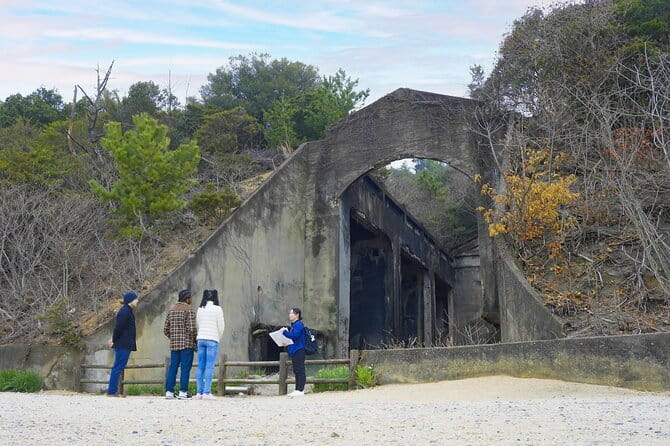
The Nagaura Poison Gas Storage Ruins are one of the most significant stops. This facility stored tanks filled with poison gas, but you cannot enter it for safety reasons. You view the remains from a short distance, with the guide providing the context.
Do not book this expecting a walk through abandoned interiors. The restriction is a real part of the experience. At the same time, the closed building can make the story more affecting. You are looking at an actual remnant of secret wartime work, not a recreated exhibit designed for visitors.
This is also where Junko’s role carries the most weight. The island’s past is not obvious from its sunny sea views and rabbits. Without explanation, a visitor could pass the ruins and see only old concrete and damaged walls. With a guide, the site becomes evidence of what the island was used for and why it was kept out of public view.
I recommend listening closely here and allowing extra mental space for the subject. The tour is not only a pleasant bike ride. It asks you to hold two images of Okunoshima at once: a peaceful island with rabbits and a place tied to a terrible weapon.
Power Plant Ruins and the cost of secrecy
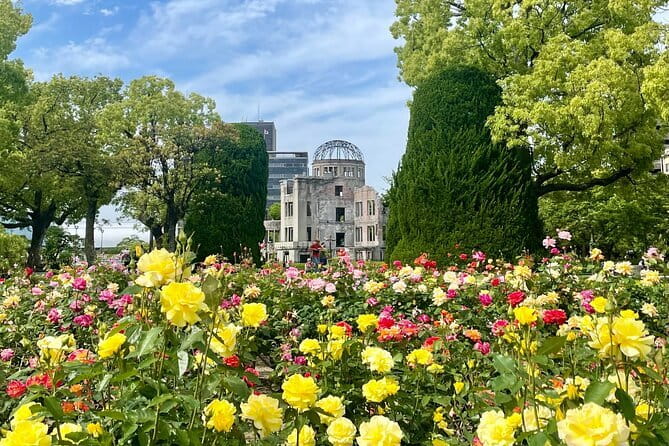
The power plant is another ten-minute stop. It supplied power when poison gas was secretly produced on the island. Like the storage ruins, the building is closed for safety, so you see it from outside.
The stop may seem similar to Nagaura, but it adds an important piece to the story. The storage facility shows where poison gas was kept. The power plant points to the systems needed to make that secret work. Together, the two sites help you picture Okunoshima as a functioning military production center rather than an isolated ruin.
The short time here is probably enough for most people. You get the explanation and a look at the remains, but you do not spend long examining a building you cannot enter. If you want extensive archaeological detail, this tour may feel brisk. If you want a clear introduction within two hours, the pacing is sensible.
Northern Cannon Battery Remnants

The northern cannon battery is the longest single historical stop, at about fifteen minutes. Unlike the two poison gas sites, you can see the battery remnants closely.
This is a useful contrast. The battery represents the island’s defensive role, while the storage and power plant connect to its secret chemical production. Seeing these remains at close range gives you a stronger sense of the island’s military purpose.
Fifteen minutes is still not a long time, but it allows more direct inspection. You can look at the structure, hear how it fit into the island’s defenses, and take in the surrounding setting. The stop also rounds out the tour, showing that Okunoshima’s wartime importance involved more than one type of facility.
What the two-hour schedule feels like
The listed stops add up to roughly one hour and fifty-five minutes, which fits the advertised two-hour duration. That means the schedule is fairly full. You should expect a steady sequence of cycling, short stops, and guide talks rather than a slow day with long breaks.
The rhythm works well for a visitor who has limited time on the island. You see the main points without needing to plan your own route. The tradeoff is flexibility. You may not have much time to linger wherever rabbits happen to gather or to sit for a long meal.
The itinerary also has a serious tone beneath its pleasant setting. The lighthouse and shrine offer lighter moments, while the poison gas sites and cannon battery require attention. I like that the tour does not hide the difficult parts behind the rabbits. That honesty gives the island more meaning.
You should bring your own food or drink if you need them, since they are not included. The tour also does not provide private transportation. Its transport is the bicycle, and the ferry must be arranged separately.
Is the cycling difficult?
The tour asks for moderate physical fitness. That does not mean you need to be an athlete, but you should be comfortable riding for the duration and moving between multiple stops.
The island’s approximate four-kilometer circumference makes the distance manageable for many people. However, the data does not specify road conditions, hills, bicycle type, or assistance for anyone who has trouble cycling. If you are uncertain about your ability, contact the provider before booking.
The small group size is helpful for the social side of the ride. With no more than five people, the guide can keep the group together more easily than on a large coach-style outing. It also makes a question about the island’s history feel more natural.
The weather and cancellation rules
Weather matters because the tour takes place outdoors and depends on cycling. If the Japan Meteorological Agency forecasts a 60 percent or higher chance of rain by noon on the day before the tour, the experience is cancelled without a cancellation fee.
If poor weather cancels the tour, you can choose another date or receive a full refund. The same general choice applies if the minimum number of two people is not reached.
For your own cancellation, you can receive a full refund if you cancel at least 24 hours before the start time. Changes or cancellations inside that window are not accepted or refunded. The cutoff uses local Japanese time, so check the clock carefully if you are arranging the tour from another time zone.
Who will get the most from this tour?
I would choose this experience if you want three things in one short outing: cycling, wild rabbits, and a guided look at Okunoshima’s wartime past. It suits a first visit when you want structure and context instead of simply wandering around the island.
It is also a good match for history-minded visitors who do not want to spend an entire day in museums. The guide’s explanations connect ordinary-looking ruins to the island’s former role. Junko’s passion, kindness, and focus on education are central strengths of the experience.
Families may like the rabbits and bicycles, but adults should prepare children for the serious subject matter. This is not only a cute animal visit. The poison gas sites deserve respectful attention.
You may want to skip it if you dislike cycling, need a completely private tour, or expect to enter every ruin. You may also prefer a longer self-guided visit if your main goal is to spend unhurried time watching rabbits.
Is Okunoshima Rabbit Island Cycling Tour worth $59.12?
At $59.12 per person, I see this as a fair price for a small-group guided experience rather than a cheap bike rental. The bicycle, taxes, and travel insurance are included, and the group is limited to five. Most important, you receive a human explanation of an island whose meaning is easy to miss.
The extra ferry charge of 360 yen and the cost of your own food and drinks raise the total slightly. That is normal for an island outing, but include it in your budget.
The tour has a 4.7 rating from 17 reviews, with 94 percent recommending it. The most strongly praised feature is not simply the rabbits. It is Junko’s personal way of explaining the island and helping you see its painful past alongside its present beauty.
Should you book it?
Book this tour if you want Okunoshima to make sense, not just look cute in photographs. The bike route covers the key sights efficiently, and the small group gives Junko room to explain the poison gas facilities, cannon battery, shrine, and island setting with care.
Skip it if you want indoor access to the ruins, a long leisure ride, or a private departure. For most visitors with moderate fitness and about two hours to spare, this is a thoughtful way to see Rabbit Island as a place with both charm and consequence.
FAQ
How long does the Okunoshima cycling tour last?
The tour lasts approximately two hours.
Where does the tour start and finish?
It starts and ends in front of Kyukamura Okunoshima, at 5476-4 Tadanoumicho, Takehara, Hiroshima.
Is the ferry included in the tour price?
No. The ferry from Tadanoumi to Okunoshima costs 360 yen and is not included.
How many people can join the tour?
The tour is a shared group experience with a maximum of five people. At least two participants are required for it to operate.
Can I enter the lighthouse and wartime ruins?
No. The lighthouse, Nagaura Poison Gas Storage Ruins, and Power Plant Ruins are closed to entry for safety reasons. You view them from outside. The northern cannon battery remnants can be seen closely.
What does the tour price include?
The price includes bicycle use, all fees and taxes, and travel insurance. Food, drinks, and private transportation are not included.
What happens if the weather is bad?
If the Japan Meteorological Agency forecasts a 60 percent or higher chance of rain by noon the day before the tour, it may be cancelled without a cancellation fee. You can then choose another date or receive a full refund.
More Guided Tours in Hiroshima
More Cycling Tours in Hiroshima
More tours in Hiroshima we've reviewed
Cycling Tours, compared.
 ★ 5.0Bike Tour Exploring North Kyoto plus LunchFrom $106
 ★ 5.0Tokyo Great Cycling TourFrom $99
 ★ 5.0Tokyo Top Highlights 3h Guided E-bike TourFrom $63
 ★ 5.03h Tokyo E-Bike Tour: Hidden Gems, and Local Life with guideFrom $63
 ★ 5.0Arashiyama Bamboo Forest & Hidden Gems Bike Tour (Early Bird)From $106
 ★ 5.0Hiroshima in a Nutshell: Morning Bike AdventureFrom $72
 ★ 5.05 Top Highlights of Kyoto Full Day Bike Tour (E-bike option)From $172
 ★ 4.83-Hour Bike or E-Bike City Highlights TourFrom $453 hours
Browse the lists this tour appears in