
Reviewed · HIROSHIMA CYCLING TOURS
Hiroshima: City and Miyajima Bike and Boat Tour
Hiroshima’s story comes into sharp focus when you see it first by bicycle, then from the water on the way to Miyajima Island. This 7.5-hour tour links the Peace Park, A-bomb Dome, Hiroshima Castle, and Itsukushima Shrine without making you sort out each train, ferry, and bike rental yourself.
I like the flat cycling route, which keeps the focus on the city rather than on athletic effort. I also like the small group limit of eight, since guides such as Ishan, Aimee-Linh, Melissa, and Sage have room to answer questions and adjust their pace. The main consideration is the long day and the amount of walking on Miyajima, so this suits active visitors more than anyone needing a slow, seated outing.
In This Review
- Key points to know before you book
- Why this Hiroshima day works so well
- Starting with Hiroshima’s Peace Park by bicycle
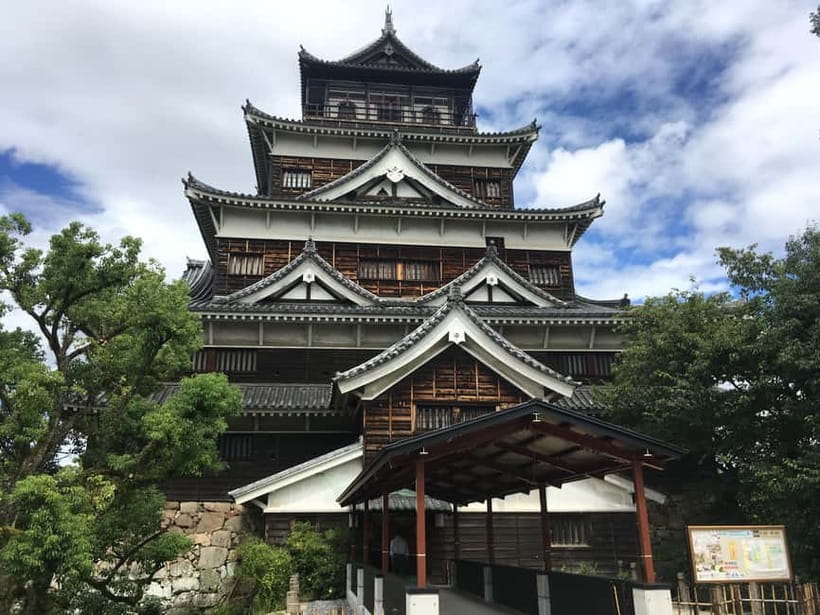
- Hiroshima Castle and the city before 1945
- Taking the train and ferry to Miyajima
- Walking through Miyajima’s religious center
- What the guides add to the day
- Bikes, comfort, and the practical side
- Lunch, timing, and the value of one long day
- Who should book this Hiroshima and Miyajima tour
- Should you book it?
- FAQ
- How long does the Hiroshima and Miyajima tour last?
- Is the cycling route difficult?
- What transport is included?
- Is lunch included?
- Is the tour conducted in English?
- What happens if it rains?
- Who is the tour not suitable for?
Key points to know before you book
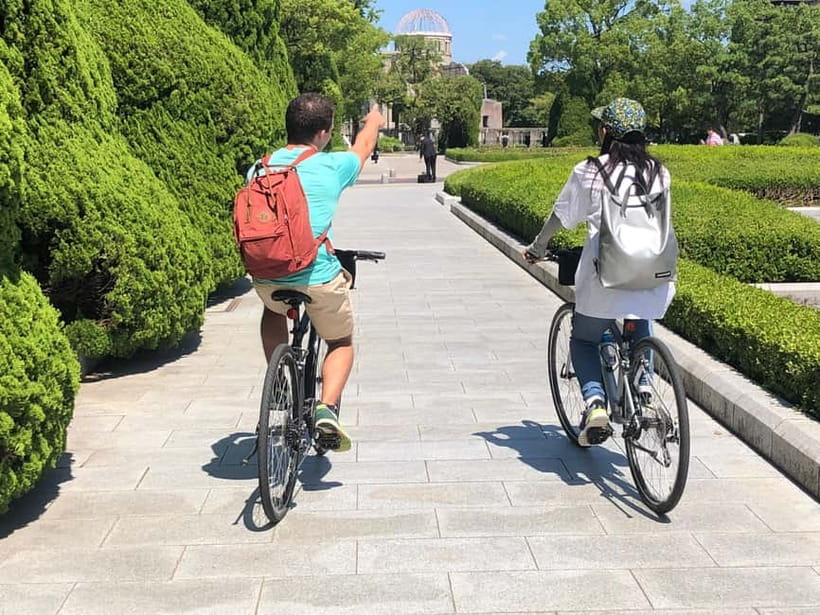
- The cycling is flat and gentle: You need to know how to ride a bike, but no special cycling skill is expected.
- The day covers two very different places: Hiroshima’s memorial sites and castle give way to Miyajima’s wooded island setting and Shinto buildings.
- Transport is part of the plan: Train and ferry transfers to Miyajima are included, along with the ferry ticket.
- The guide shapes the experience: English-speaking guides provide history, answer questions, and support slower riders.
- Lunch and water are included: You can focus on the day rather than arranging a midday meal.
- Rain has a clear backup plan: The operator may offer a walking tour around Peace Park or a full refund if weather disrupts cycling.
Why this Hiroshima day works so well
You can see Hiroshima independently, but this route solves a real planning problem. Peace Park, Hiroshima Castle, and Miyajima are not one compact sight cluster. Combining them by bike, train, ferry, and foot gives you a full day without asking you to build the connections yourself.
The order also makes sense. You begin with Hiroshima’s modern memory and wartime history, then move back toward the city’s feudal past before heading to Miyajima, an island shaped by religion and nature. The result is not just a list of attractions. It is a useful introduction to how Hiroshima changed over time.
At $138 per person, this is not a budget sightseeing ride. Still, the cost includes a Trek bike, helmet, guide, lunch, water, train and ferry transfers, and a walking tour on Miyajima. If you would otherwise rent a bicycle, pay for transport, arrange the ferry, and book a separate island visit, the price becomes easier to justify.
You also get a small group, limited to eight people. That matters here. The Peace Park calls for thoughtful explanation, and Miyajima often raises practical questions about the shrine, the island’s religious role, and what you are seeing. A group of eight gives the guide a fair chance to respond rather than deliver only a fixed speech.
A few more Hiroshima tours and experiences worth a look


Starting with Hiroshima’s Peace Park by bicycle
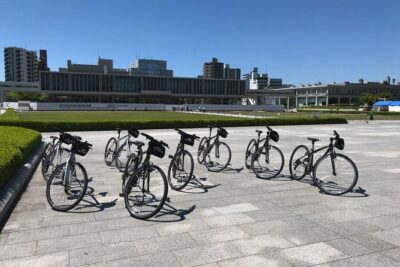
The first major section takes you around Peace Park and the A-bomb Dome by bike. The route is completely flat, and the pace is intended to work for anyone who can ride. That makes the bicycle useful as a quiet way to cover ground, not as a sporting challenge.
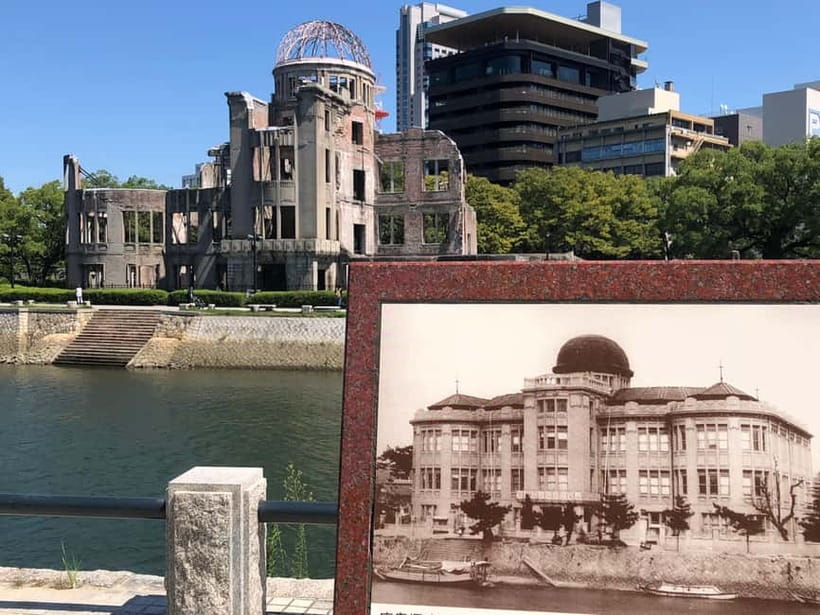
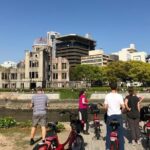
The A-bomb Dome is one of Hiroshima’s most powerful sights. Its damaged structure remains closely tied to the city’s memory of the atomic bombing. Seeing it with a guide gives you a clearer sense of the place and its meaning than simply stopping for a photograph.
Your guide provides commentary on the bombing, the memorial area, and Hiroshima’s efforts to remember what happened. This part can feel heavy, and it should. The best version of the tour treats the subject with care while also showing how the city chose to rebuild and live with its past.
A guide can also help you pace the experience. You are not being pushed through a string of displays on a bicycle. You can stop, listen, ask questions, and take in the setting before moving on. Guides Ishan, Melissa, Sage, and Aimee-Linh have each been praised for clear explanations, enthusiasm, humor, and a willingness to answer questions.
If you prefer to visit the Peace Memorial Museum in detail, check the tour description carefully before booking. The included experience specifically promises Peace Park and the A-bomb Dome, not a separate museum visit. This tour is better suited to learning the setting and major themes while seeing more of Hiroshima in one day.
Hiroshima Castle and the city before 1945
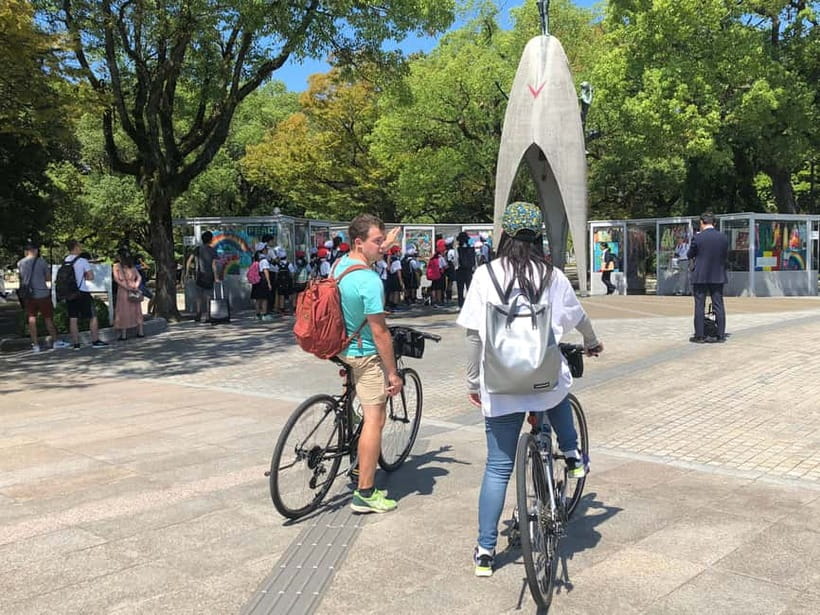
The stop at Hiroshima Castle adds an important change of mood. After the difficult story of the Peace Park, you turn to the city’s feudal past and the period before the modern tragedy.
The castle helps place Hiroshima in a longer timeline. Your guide discusses the city before the Meiji era, including the feudal setting that shaped its development. This gives you more than a quick castle photo. You begin to see Hiroshima as an old city with political and cultural roots, not only as a place defined by 1945.
The contrast between the castle and the A-bomb Dome is one of the strongest features of the itinerary. One site points toward Hiroshima’s earlier power and identity. The other carries the memory of destruction and recovery. Because the stops come in the same morning, the connections are easier to grasp.
Do not expect an entire castle complex tour with unlimited time. This is one part of a packed day, and Miyajima is still ahead. The value here comes from the guide’s context and from seeing a different side of Hiroshima, rather than from spending hours at the castle.
Taking the train and ferry to Miyajima
After Hiroshima’s city sights, you travel by train and then board a ferry for Miyajima. These transfers are included, which removes much of the guesswork from the day. You do not need to plan a separate route from the city to the island or work out the ferry ticket on your own.
The ferry ride is more than a practical link. It gives you a clean break between the two halves of the day. Hiroshima’s roads and memorial sites give way to water, wooded slopes, and the island’s orange Shinto buildings.
That change is a major reason to choose this tour instead of a city-only bicycle outing. You see how close the two settings are, yet how different they feel. The island offers a quieter visual setting, while the city section carries a more direct historical weight.
The schedule lasts 450 minutes, or seven and a half hours. That is a full day, and the transfers add to the rhythm. You should expect some waiting, boarding, and walking around transport connections. In return, you get a much wider look at the area than a short ride around Peace Park could provide.
Walking through Miyajima’s religious center
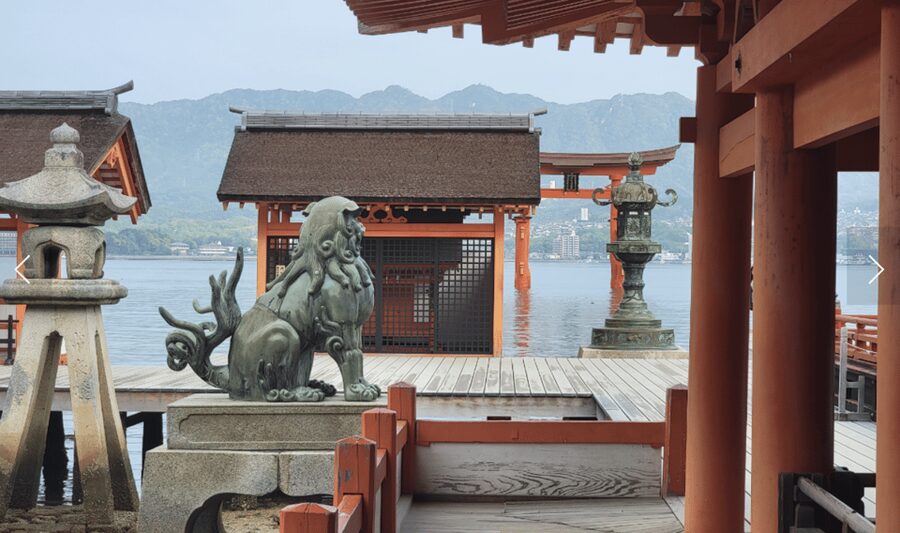
On Miyajima, the bicycle portion gives way to a walking tour. The guide explains how the island developed as a religious center and leads you through its lanes and major sights.
This section is where the tour feels most different from a standard city excursion. You are not only looking for a famous structure. You are learning why the island mattered and how its religious identity shaped the buildings and streets you see.
The main included sight is Itsukushima Shrine, known for its orange Shinto architecture and striking position by the water. The shrine is the visual high point of the island visit, but the surrounding lanes also matter. Walking lets you notice the smaller details, changing views, and the relationship between the shrine buildings and the wooded island behind them.
Miyajima is also the most scenic part of the day. The lush greenery creates a strong contrast with Hiroshima’s urban streets and memorial spaces. You have time for photographs, though the exact amount of free time depends on the group’s pace, transport timing, and the guide’s route.
The walking portion does require more effort than the cycling. The bike route is flat and slow, but Miyajima involves being on your feet. Comfortable shoes are specifically recommended, and you should bring clothes suited to a long day outdoors.
Other boat tours in Hiroshima
What the guides add to the day
The guide is the thread that holds this varied route together. Without one, you would still see the A-bomb Dome, castle, and shrine, but the links between them would be weaker.
I would pay attention to the guide’s approach when choosing this experience. Ishan has been singled out for enthusiasm and for handling many questions. Aimee-Linh has been praised for combining detailed knowledge of Hiroshima with humor. Melissa has been noted for explaining both the difficult side of the atomic bombing and the city’s positive work of remembrance. Sage has been credited with giving detailed background while supporting slower riders, including during wet weather.
Those details matter because the tour covers emotionally serious material. You want a guide who can explain the bombing plainly without turning the Peace Park into a rushed history lecture. You also want someone who can shift naturally from wartime memory to castle history and then to Miyajima’s religious background.
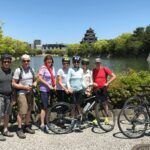
The small group helps. With no more than eight people, you can ask about a specific building, pause for clarification, or tell the guide that you need a little more time. Slower riders are supported, and the cycling is described as easy and slow rather than competitive.
Bikes, comfort, and the practical side
The tour uses Trek bikes in several sizes. Step-through bikes and child-sized bikes are also available, which gives the operator more flexibility for mixed groups. You must provide everyone’s height when booking so the right bikes can be prepared.
You receive a helmet, and lunch and water are included. Those extras make a difference on a day that combines riding, city sightseeing, transport, and walking. You can still bring a camera, and you should wear comfortable clothing and shoes.
The route is suitable for all cycling skill levels if you can ride a bike. It is not suitable for people who cannot cycle, wheelchair users, or pregnant women. The tour is also not a good choice if you want a fully relaxed day with minimal movement.
Smoking is not allowed during the activity. Hotel pickup and drop-off are not included, so you need to reach the meeting point yourself. The supplied details do not specify the exact starting location or start time, so check availability and meeting instructions before you commit to the day.
Rain is handled sensibly. If conditions make cycling impractical, the operator contacts you and offers either a walking tour around Peace Park or a full refund. Make sure the booking contact details are current and that you can be reached on the day.
Lunch, timing, and the value of one long day
A seven-and-a-half-hour tour gives the guide room to cover both Hiroshima and Miyajima, but it can feel long. I see that as a fair trade for the range of sights, especially if you have only one day in the area.
The tour is most valuable when you want an introduction rather than an intense specialist visit. You can learn the main historical themes, get your bearings, see the signature sights, and decide where you would like to return for more time.
Lunch and water are included, and dietary restrictions should be provided in advance. That is a useful detail for a full-day booking. You will not need to stop the group while trying to solve a meal plan, though the information does not specify the lunch menu.
The $138 price also includes the ferry ticket and train transfer. Those inclusions make the comparison fairer than looking only at the bike rental cost. You are paying for a guide-led day, equipment, food, and transport, with a group small enough to feel personal.
Free cancellation up to 24 hours before the start and the option to reserve now and pay later give you some planning flexibility. They do not remove the need to check the weather, your cycling ability, and your energy for a long active day.
Who should book this Hiroshima and Miyajima tour
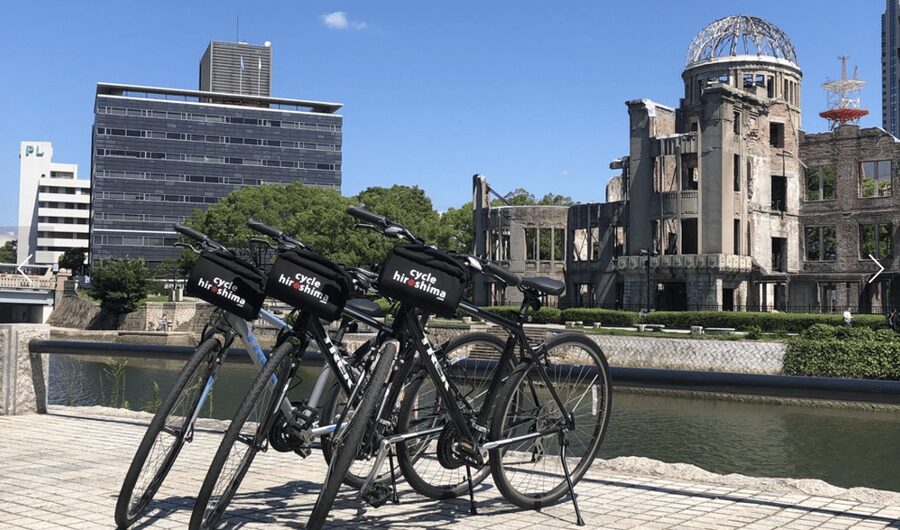
I would choose this tour if I had one full day and wanted both the city and island without managing the connections alone. It is especially useful for first-time visitors who want historical explanation rather than a quick photo stop.
It also works well for mixed-pace groups. The route is flat, the bikes come in several formats, and the guides support slower riders. Families should provide everyone’s heights and ask about the available child-sized bikes before booking.
You should think twice if your main goal is a detailed museum visit, a long castle exploration, or a full day with lots of free time. The itinerary covers several major places, so each stop receives part of the day rather than becoming an extended visit.
This is also not the right choice for anyone who cannot ride, uses a wheelchair, is pregnant, or dislikes walking. The cycling is easy, but the entire outing still involves transport changes and a walking tour on Miyajima.
Should you book it?
I recommend booking this tour if you want an efficient, thoughtful first look at Hiroshima and Miyajima. The strongest points are the flat bike route, the small group, the included transport and lunch, and guides who can handle serious history with care.
The best reason to go is the contrast. You move from the A-bomb Dome and Peace Park to Hiroshima Castle, then cross to an island shaped by Shinto tradition and greenery. For $138, that is a substantial day of sightseeing with the difficult logistics handled for you.
Choose something else if you need wheelchair access, cannot ride a bicycle, want a museum-heavy visit, or prefer to explore each location at your own pace. For an active visitor with one day in Hiroshima, this is a well-balanced way to see the city and Miyajima together.
FAQ
How long does the Hiroshima and Miyajima tour last?
The tour lasts 450 minutes, which is seven and a half hours. It includes cycling, sightseeing, train and ferry transfers, and walking on Miyajima.
Is the cycling route difficult?
The cycling route is completely flat and suitable for anyone who can ride a bike. The tour is described as easy and slow, and slower riders are supported.
What transport is included?
Train and ferry transfers to Miyajima Island are included, including the boat ticket.
Is lunch included?
Yes. Lunch and water are included. You should provide information about any dietary restrictions when booking.
Is the tour conducted in English?
Yes. The tour has a live English-speaking guide.
What happens if it rains?
The operator contacts you if rain affects the cycling portion. You may be offered a walking tour around Peace Park or a full refund.
Who is the tour not suitable for?
The tour is not suitable for pregnant women, people who cannot ride a bike, or wheelchair users. Comfortable shoes and clothing are recommended for the cycling and walking portions.
More Cycling Tours in Hiroshima
More Boat Tours & Cruises in Hiroshima
More Hiroshima Cycling Tours in Hiroshima
More tours in Hiroshima we've reviewed

Hiroshima Cycling Tours, compared.
 ★ 5.0Hiroshima in a Nutshell: Morning Bike AdventureFrom $72
 ★ 5.0Hiroshima 2hr Peace Cycling Tour with Local GuideFrom $59
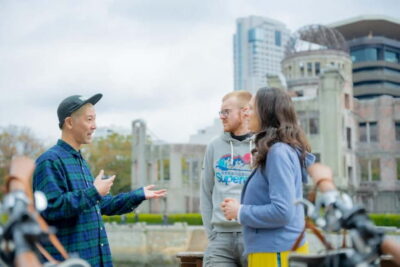 ★ 4.8Hiroshima: Peace Cycling Tour with Local GuideFrom $522 - 3 hours
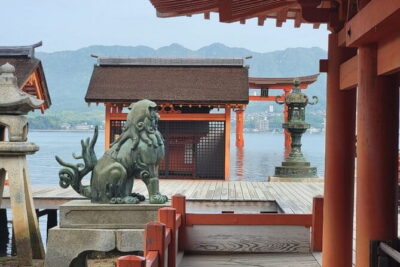 ★ 5.0Hiroshima and Miyajima by Bike and BoatFrom $142
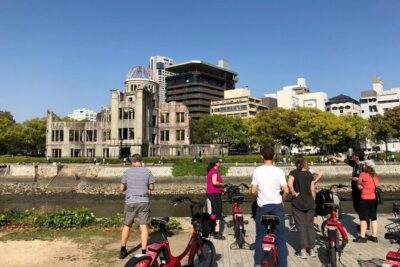 ★ 5.0Hiroshima 3hr Peace Cycling Tour with Local GuideFrom $85
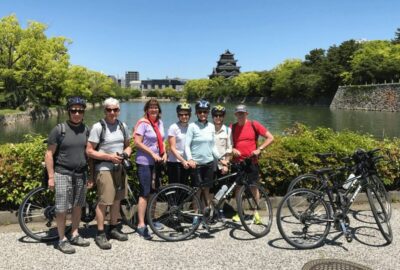 ★ 4.9Hiroshima: Best of Hiroshima Guided Bike TourFrom $703h 30m
 ★ 5.0Hiroshima Country Cycling: Explore Rural Life 1 HR from CityFrom $85
 ★ 5.0Hiroshima Scenic Cycling Guided TourFrom $73
Browse the lists this tour appears in