
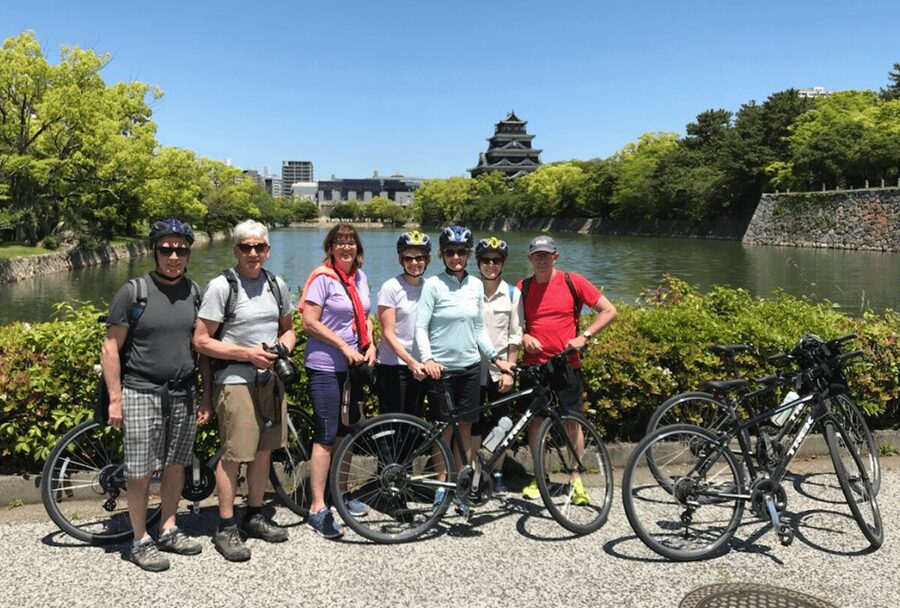
Reviewed · HIROSHIMA CYCLING TOURS
Hiroshima: Best of Hiroshima Guided Bike Tour
Hiroshima is easy to reach on foot, but a bicycle lets you cover much more ground without turning the day into a march. This 3.5-hour guided ride links the Atomic Bomb Dome and Peace Memorial Park with Gokoku Jinja, Hiroshima Castle, and Shukkei-en Garden, giving you both the city’s hardest history and its quieter beauty.
I like the flat route, which keeps the ride gentle, and the small groups, capped at eight people. Guides such as Awais, Aimee, Miyu, James, and Ehsan have earned high praise for clear storytelling, personal family connections, photo stops, and patient answers. The main drawback is that you need good weather, and the tour is not suitable for children under 12, pregnant women, or people with certain medical conditions.
In This Review
- Key points to know before you book
- Why a bicycle makes sense in Hiroshima
- Riverside riding to Peace Memorial Park
- The Atomic Bomb Dome and the meaning of August 6
- Gokoku Jinja, Hiroshima’s popular shrine
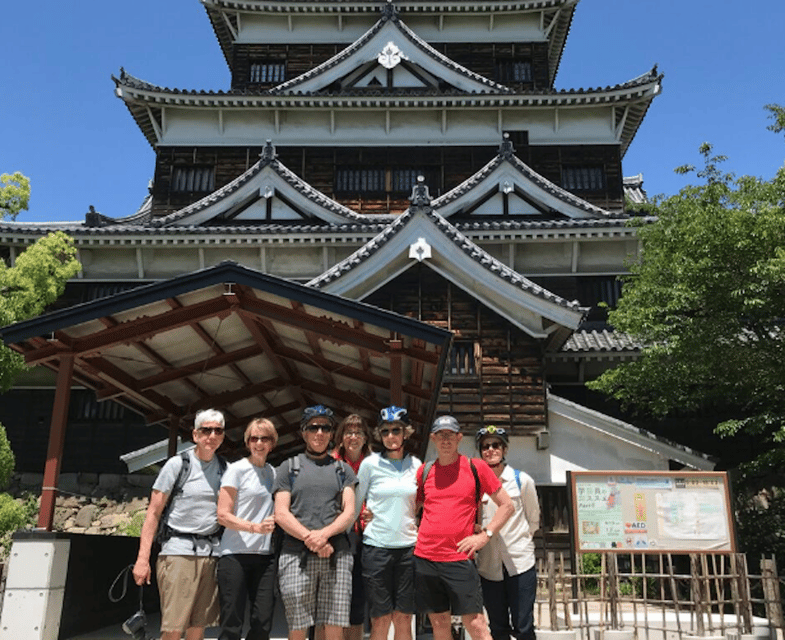
- Hiroshima Castle and a glimpse of samurai-era Japan
- Shukkei-en Garden closes the ride on a quiet note
- Bikes, helmets, and comfort on the route
- Guides make the difference
- Is $70 a fair price?
- Weather, timing, and practical planning
- Who should book this Hiroshima bike tour?
- Should you book it?
- FAQ
- How long does the Hiroshima bike tour last?
- What sights does the tour visit?
- Is the cycling route difficult?
- What is included in the price?
- What kind of bicycles are available?
- How many people can join the tour?
- What happens if the weather is poor?
Key points to know before you book
- About 10 kilometers of mostly flat cycling: You can see several major sights without spending the whole day walking.
- The Atomic Bomb Dome and Peace Memorial Park: The guide provides context for the bombing of August 6, 1945, with time for questions and quiet reflection.
- A wider view of Hiroshima: The route continues beyond the Peace Park to a shrine, castle grounds, and an Edo-period garden.
- Comfortable equipment: Trek bikes, step-through bikes, e-bikes, and child-sized bikes are available, along with helmets and bottled water.
- Small English-speaking groups: The maximum is eight people, which allows room for questions and a more personal pace.
- Good value at $70: The price includes the guide, bike, helmet, water, and entry to Shukkei-en Garden.
Why a bicycle makes sense in Hiroshima
Hiroshima’s main sights sit within a manageable part of the city, but they are spread far enough apart that walking between them takes time and energy. Public transport can help, yet it also adds waiting, route planning, and short walks at both ends.
The bicycle solves that neatly. You ride beside the river, through parks, and along routes that cars and buses cannot use. The route is described as completely flat, and one tour covered about 10 kilometers at a relaxed pace. That is enough movement to feel like you have explored the city, but not so much that the day becomes a fitness test.
I would not book this as a speed-focused cycling trip. The point is to stop often, listen, take photos, and let the guide connect the places you see. At a comfortable pace, you get a useful introduction to Hiroshima in one half-day, then still have time to visit the Peace Memorial Museum or find lunch on your own.
You meet at Cycle Hiroshima HQ, marked by a large Cycle Hiroshima sign. Allow a little time before departure for the short orientation and bike fitting. Arriving early is sensible, especially if you want a particular frame style or need the seat adjusted carefully.
A few more Hiroshima tours and experiences worth a look


Riverside riding to Peace Memorial Park
The tour begins with a calm ride along the river toward Peace Memorial Park. This opening section helps you get comfortable with the bicycle before the more serious parts of the day.
The riverside setting also gives you a first sense of Hiroshima’s layout. The city has broad waterways, open spaces, and a mostly gentle grade, so you are not constantly watching for steep hills. Guides also explain local cycling habits and help the group move safely together.
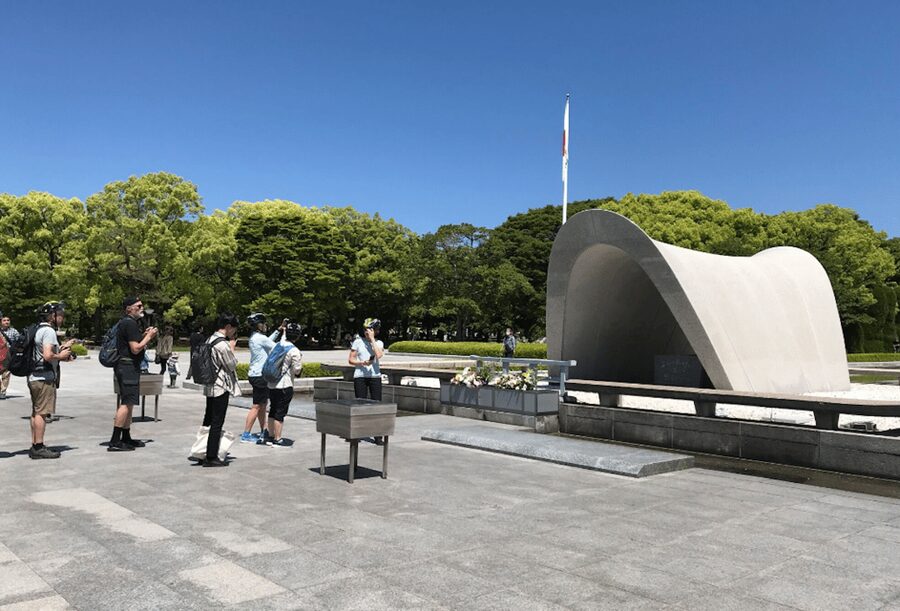
The experience changes once you enter Peace Memorial Park. This is not a quick photo stop. The guide pauses at important sites and explains what happened before, during, and after the atomic bombing. The best guides, including Miyu, Aimee, and Ehsan, have been praised for balancing clear facts with personal stories and a respectful tone.
That balance matters. Hiroshima’s wartime past can be difficult to process, and a bicycle tour gives you a little physical space between stops. You are not rushed from one monument to the next. You can ask questions, take a moment, and look closely before riding on.
Hot weather may bring more rest stops. A summer group appreciated regular breaks, and the route’s easy grade makes it possible to pause without losing the flow of the tour. On cooler or rainy days, the ride continues, but comfortable clothing and shoes become especially useful.
The Atomic Bomb Dome and the meaning of August 6
The Atomic Bomb Dome is the central landmark of the route and a UNESCO World Heritage Site. Its damaged structure remains beside the river, a direct and powerful reminder of the destruction caused by the atomic bomb on August 6, 1945.
You will have time to see the building from different angles and hear about its place in Hiroshima’s story. The guide’s explanation is particularly useful here because the structure can otherwise seem like a stark ruin without enough context.
The surrounding Peace Memorial Park adds more layers. The tour visits several monuments connected with the bombing and its victims, and the guide explains how Hiroshima rebuilt itself as the City of Peace. Some guides also discuss Sadako and the paper cranes, a story that gives younger visitors a personal way into the larger subject.
Do not expect a light sightseeing stop. The subject is painful, and the experience asks you to pay attention. That is also its value. You are not simply ticking off a famous landmark. You are given time to think about what happened, how people survived, and how the city chose to remember.
The guide’s personal connection can make this section especially affecting. Miyu and Melissa have shared family stories, while other guides bring their own local perspective and historical research. The quality of the explanation may vary slightly by guide, but the consistently strong feedback points to a team that treats the subject with care.
Gokoku Jinja, Hiroshima’s popular shrine
After the Peace Park, the ride heads north to Gokoku Jinja. This is described as the city’s most popular Shinto shrine, and it gives the tour a clear change of mood.
The shrine introduces you to a living part of Hiroshima rather than another memorial. You can see the traditional religious setting, observe the grounds, and ask the guide about what the shrine means in local life. It is a useful stop because it shows that Hiroshima is not defined only by 1945.
The ride between the Peace Park and the shrine is part of the story too. You move through present-day Hiroshima, seeing ordinary streets and city spaces between major sights. That wider view helps you understand the city as a place where daily life continued and grew after the bombing.
The route may include areas that are awkward to reach by tour bus. A bicycle can pull over more easily and move through park paths or quieter stretches, although you should still expect some cycling near roads. The guide sets the pace and leads the group, so you are not left to work out the route yourself.
Hiroshima Castle and a glimpse of samurai-era Japan
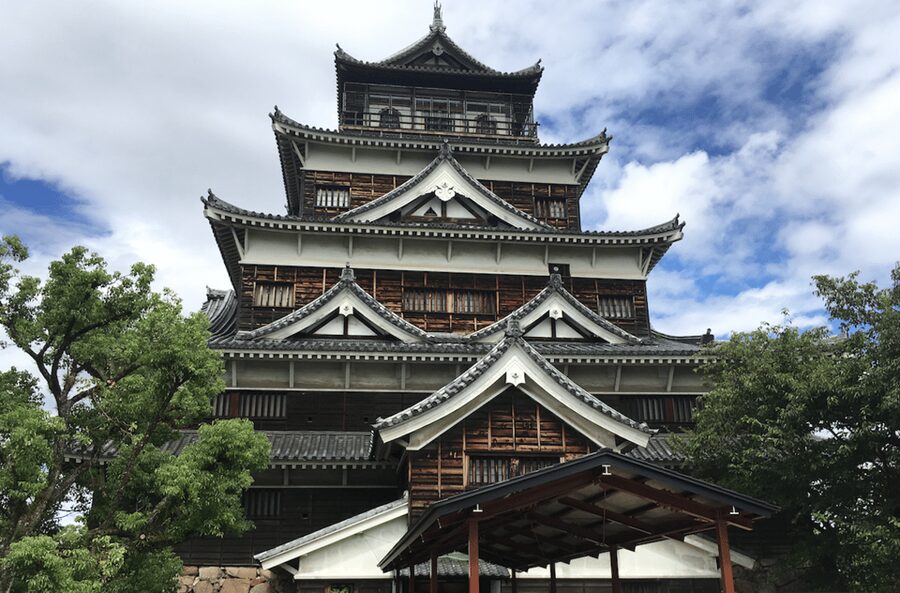
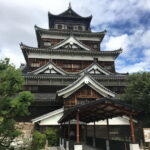
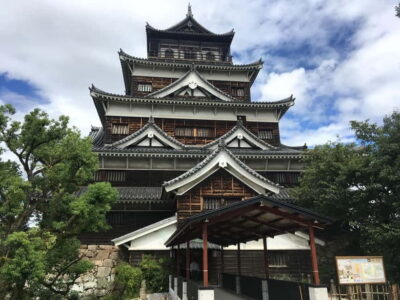
The next major stop is Hiroshima Castle. The tour takes you through the castle grounds rather than treating it as an isolated attraction.
This section shifts the focus back before the modern city and before the bombing, toward Hiroshima’s samurai-era past. The grounds offer a welcome contrast to the solemn memorial sites. After spending time with the history of war and destruction, it is useful to see a place connected with the city’s earlier political and military life.
The castle stop is also a good reason to choose this tour over a Peace Park-only walk. You leave with a broader sense of Hiroshima, not just an understanding of the atomic bombing.
The tour description does not promise a full interior visit or a long castle lecture, so you should think of this as a grounds and history stop. If the castle is a top priority, you may want to return later with more time. The guided ride gives you an introduction, not an exhaustive museum visit.
Other cycling tours in Hiroshima
Shukkei-en Garden closes the ride on a quiet note
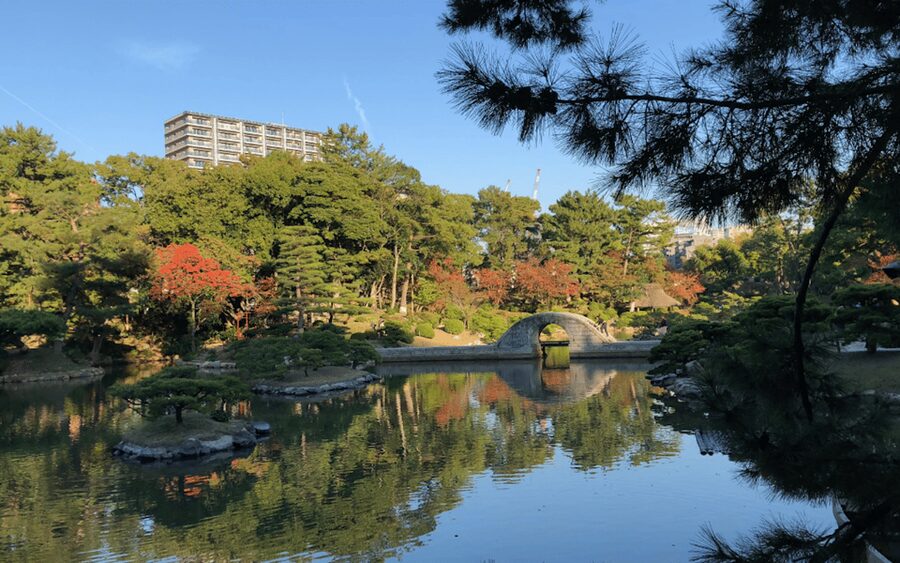
The final major stop is Shukkei-en Garden, built during the Edo Period and regarded as one of the finest traditional gardens in Western Japan. Entry is included in the $70 price, which adds real value to the outing.
The garden is a smart ending. The Peace Park asks for attention and reflection, while Shukkei-en offers stillness, carefully arranged scenery, and a slower final pause. Several guides have also made this their last stop because it provides such a calm contrast to the morning’s difficult subject.
You are not simply riding past the garden gate. Included entry gives you the chance to see the grounds properly, though the total time available depends on the group and the guide’s pace. If you are passionate about Japanese gardens, plan a separate visit if you want to linger over every path and detail.
For many people, this final change of pace may become one of the tour’s most memorable parts. It reminds you that Hiroshima contains centuries of art, religion, politics, loss, and renewal within a relatively compact area.
Bikes, helmets, and comfort on the route
Cycle Hiroshima provides Trek bikes in several sizes, plus step-through bikes, e-bikes, and child-sized bikes. A helmet and bottled water are included.
The ordinary bikes should be enough for most people because the route is flat. One rider upgraded to an e-bike and found it excellent, but also noted that the assistance was not necessary on the mostly level ground. I would consider an e-bike if you dislike exertion, are concerned about heat, or simply want the easiest possible ride.
The minimum height is 4 feet 6 inches, or 140 centimeters. Children under 12 are not accepted, even though child-sized bikes are available, so families should check the age rule before booking.
Wear comfortable shoes and clothes. You are not asked to wear special cycling gear, and this is not a technical ride. Still, you will be on a bicycle for several hours, getting on and off at stops, so stiff shoes or restrictive clothing would work against you.
The route is accessible for anyone who can ride a bike, but that does not mean it suits every physical condition. The activity is not suitable for pregnant women, people with back or heart problems, or people with pre-existing medical conditions. If you are unsure, choose a walking or vehicle-based sightseeing option instead.
Guides make the difference
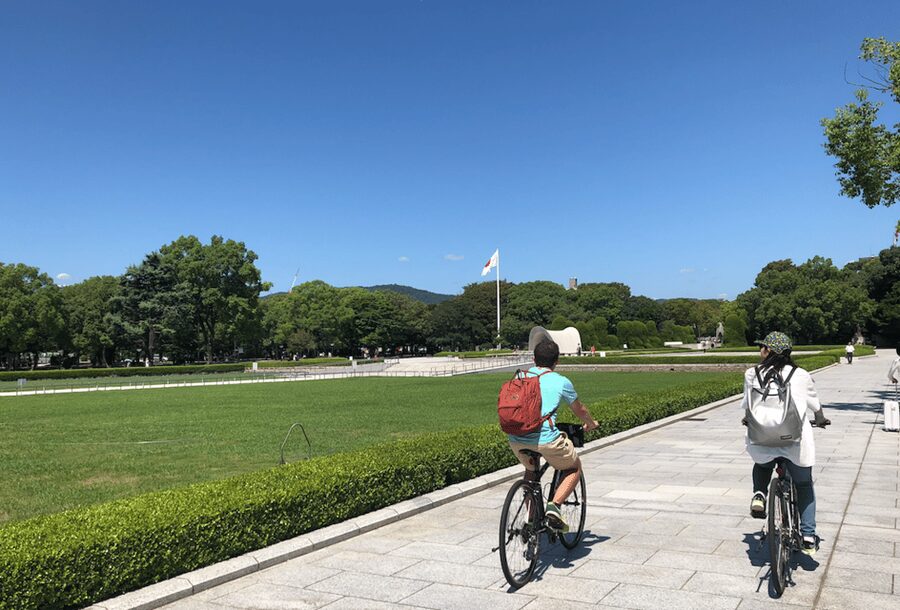
The route is strong, but the guide shapes the experience. Awais has been praised repeatedly for patient explanations, excellent English, safe bike setup, and a strong grasp of Hiroshima’s past. Aimee is known for warmth, humor, respectful storytelling, photo help, and useful local suggestions.
Miyu brings local family stories and a calm pace. James has been praised for careful explanations and, when time allowed, extending the tour to show extra sites. Ehsan is described as an engaging storyteller who presents different viewpoints and encourages thoughtful questions.
Names and assignments can change, so you should not book expecting one particular guide unless the operator confirms it. Still, the repeated praise for Awais, Aimee, Miyu, James, and Ehsan suggests that the experience is not dependent on a single star performer.
Small groups help here. With no more than eight people, the guide can stop for photos, answer questions, and watch the pace of the riders. One small summer group found the outing casual and intimate, while another guide extended the ride by an hour when everyone had extra time. Do not count on an extension, but the small format gives the guide more room to respond to the group.
Is $70 a fair price?
At $70 per person, this is not the cheapest way to see Hiroshima. You can walk around Peace Memorial Park for free, and many of the city’s public sights cost little or nothing to view from outside.
The price makes more sense when you count what is included: 210 minutes with an English-speaking guide, a quality bicycle, helmet, bottled water, and entry to Shukkei-en Garden. You are also paying for a planned route, bike fitting, local direction, and historical interpretation.
I see the strongest value in time saved. If you have only one day in Hiroshima, the tour connects the Peace Park, shrine, castle, and garden without asking you to arrange each leg yourself. It also saves your feet, a point that matters on a busy Japan itinerary.
The cost is less compelling if you have several days and prefer slow, independent visits. You may want to spend half a day in the Peace Memorial Museum alone, then explore the castle and garden at your own pace. In that case, book the bike tour only if the moving format and guide’s storytelling appeal to you.
Weather, timing, and practical planning
The tour requires good weather. If poor weather causes cancellation, you are offered another date or a full refund. Check the forecast before you set aside your Hiroshima sightseeing time, especially during Japan’s wetter or hotter seasons.
Summer heat can be serious, but regular breaks help. Bring comfortable clothes, use the provided water, and expect the guide to adjust the pace when conditions call for it. Rain does not necessarily ruin the experience, but it can make cycling less pleasant, so flexible plans are useful.
The tour does not include hotel pickup or drop-off. You need to make your own way to Cycle Hiroshima HQ, which is easy to identify by the large sign outside. Alcoholic drinks are also not included, though that is hardly a surprise on a bicycle ride.
Free cancellation is available up to 24 hours before the start time, and you can reserve now and pay later. Those terms are useful if your Japan route is still shifting.
Who should book this Hiroshima bike tour?
I would choose this for a first visit, a short stay, or a day when you want a clear introduction before exploring alone. It suits adults and children aged 12 or older who can ride comfortably and want history, scenery, and local context in one outing.
It is also a good fit if walking long distances is tiring. You still get fresh air and movement, but the bicycle carries you between major stops. Solo visitors can benefit from the small-group format, and couples or families can share a structured experience without hiring a private guide.
I would be more cautious if you need a slow, fully accessible sightseeing plan, dislike cycling near any roads, or want long uninterrupted time inside museums and monuments. This is a guided overview, not a substitute for the Peace Memorial Museum or a full day at each attraction.
Should you book it?
Book this tour if you want to understand Hiroshima as a whole city, not only visit the Atomic Bomb Dome. The combination of a flat ride, careful historical explanation, castle grounds, shrine, and Shukkei-en Garden gives you a well-shaped half-day.
The strongest reasons to go are the excellent guide-led storytelling and the amount of ground covered without exhausting yourself. The main question is not fitness. It is mood. You need to be comfortable processing painful history while riding through a beautiful, living city.
For most first-time visitors with one day in Hiroshima, I think $70 is fair value. Arrive early for the bike fitting, wear comfortable clothes, and keep extra time afterward for the Peace Memorial Museum or a meal. Book it if you want an efficient, thoughtful introduction. Skip it only if you prefer to explore every sight slowly and independently.
FAQ
How long does the Hiroshima bike tour last?
The tour lasts 210 minutes, or about three and a half hours.
What sights does the tour visit?
The route includes Peace Memorial Park, the Atomic Bomb Dome, Gokoku Jinja, Hiroshima Castle grounds, and Shukkei-en Garden.
Is the cycling route difficult?
The route is completely flat and is suitable for anyone who can ride a bicycle. One reported route covered about 10 kilometers at a relaxed pace.
What is included in the price?
The $70 price includes an English-speaking guide, a high-quality bike, helmet rental, bottled water, and entry to Shukkei-en Garden.
What kind of bicycles are available?
Cycle Hiroshima offers Trek bikes in different sizes, step-through bikes, e-bikes, and child-sized bikes.
How many people can join the tour?
The tour has a maximum of eight participants.
What happens if the weather is poor?
The experience requires good weather. If it is canceled because of poor weather, you can choose another date or receive a full refund.
More Guided Tours in Hiroshima
More Cycling Tours in Hiroshima
More Hiroshima Cycling Tours in Hiroshima
More tours in Hiroshima we've reviewed
Hiroshima Cycling Tours, compared.
 ★ 5.0Hiroshima in a Nutshell: Morning Bike AdventureFrom $72
 ★ 5.0Hiroshima 2hr Peace Cycling Tour with Local GuideFrom $59
 ★ 4.8Hiroshima: Peace Cycling Tour with Local GuideFrom $522 - 3 hours
 ★ 5.0Hiroshima and Miyajima by Bike and BoatFrom $142
 ★ 5.0Hiroshima 3hr Peace Cycling Tour with Local GuideFrom $85
 ★ 5.0Hiroshima Country Cycling: Explore Rural Life 1 HR from CityFrom $85
 ★ 5.0Hiroshima: City and Miyajima Bike and Boat TourFrom $1387h 30m
 ★ 5.0Hiroshima Scenic Cycling Guided TourFrom $73
Browse the lists this tour appears in