
Reviewed · HIROSHIMA CYCLING TOURS
Hiroshima Country Cycling: Explore Rural Life 1 HR from City
The best part of this Hiroshima outing is that it gets you far from the city without demanding a heroic cycling effort. You pedal an electric bike through rice fields, streams, steep country roads, and old farming villages, then stop for lunch made with local produce. I like the small group of no more than eight and the chance to see daily life that most Hiroshima itineraries skip.
I also like the thoughtful support: helmets, accident insurance, water refill points, and clear bus instructions. Guide Jonah has earned praise for careful communication and for bringing a poncho when rain arrived. The main drawback is the extra cost and planning. The $85.39 tour price does not include the round-trip highway bus or lunch, and the ride still calls for moderate fitness and independent bike skills.
In This Review
- Key things to know before you book
- Why this ride shows you another Hiroshima
- Getting from Hiroshima to the Oasa meeting point
- Kakeyama and the first taste of country roads
- Doitaya, rice fields, streams, and traditional homes
- Lunch at Ainosato Herb Garden
- Old Oasa and its quiet main street
- What the small group changes
- The real cost and the value of the day
- Weather, fitness, and who should skip it
- Should you book the Oasa cycling tour?
- FAQ
- How long is the Hiroshima countryside cycling tour?
- Where does the tour start and finish?
- Is transportation from Hiroshima included?
- Is lunch included?
- Can I request a vegan meal?
- Do I need previous e-bike experience?
- What happens if bad weather cancels the tour?
Key things to know before you book
- You ride an e-bike through rural Oasa: Electric assistance makes the steep sections manageable, even for riders new to e-bikes.
- The group stays small: A maximum of eight people gives the guide room to explain local life and adjust the pace.
- Lunch is paid separately: Herb-garden lunch costs 900 to 1,250 yen, or farmhouse sushi costs 2,000 yen from December through March.
- The bus is part of the day: Add 3,560 yen round trip between Hiroshima and Oasa to your budget.
- The route mixes nature and village life: Kakeyama, Doitaya, Ainosato Herb Garden, and old Oasa each offer a different view of the area.
- Rain can change the plan: The tour needs good weather, with a new date or full refund offered if poor conditions force cancellation.
Why this ride shows you another Hiroshima
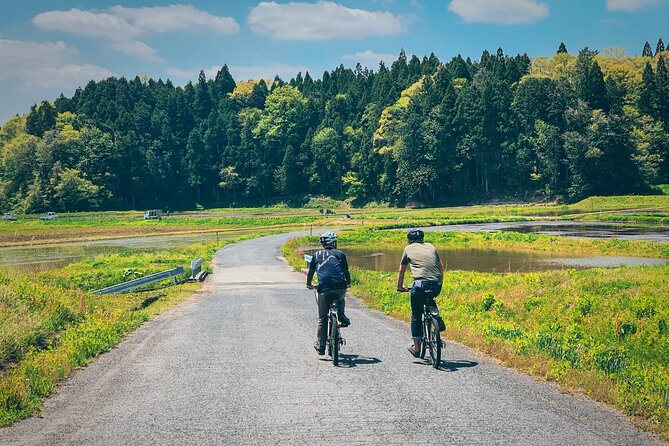
Hiroshima is rightly known for the Peace Memorial Park, Miyajima, and its food scene. Those places matter, but they do not show much of the prefecture’s inland countryside. This four-hour ride takes you roughly an hour from the city to Oasa, where the pace is slower and the setting is shaped by farming, streams, wooded hills, and older buildings.
I like this change of scale. Instead of looking at Japan through a train window, you move slowly enough to notice small details. You might see water running beside a lane, rice fields arranged around homes, or a quiet main street that once served a larger local population.
The electric bikes matter more than they may at first seem. Rural Japan is not always flat, and the route includes steep hills. The motor lets you enjoy the ride without turning it into a test of endurance. You still need to pedal, steer, and ride on your own, but the bike takes much of the strain out of climbing.
This is not a racing trip. It is a guided outing with regular stops, explanations, and time to look around. That makes it a good choice if you want active sightseeing but do not want to spend four hours pushing hard.
A few more Hiroshima tours and experiences worth a look

Getting from Hiroshima to the Oasa meeting point
The starting point is the Oasa I.C. Bus Stop at 2310 Shinjō, Kitahiroshima, Yamagata District, Hiroshima 731-2103. The activity begins at 10:00 a.m. and ends back at the same meeting point.
You need to arrange the highway bus between Hiroshima and Oasa yourself. The round-trip fare is 3,560 yen, so add it to the advertised tour price when judging the total cost. The bus connection is an important part of the day, not a minor footnote. Read the departure and pickup details carefully, and allow enough time to reach the stop.
One useful point is that the operator provides clear information about the bus schedule and pickup arrangements. Jonah was specifically praised for making these instructions easy to follow. Still, you should confirm the details at booking, especially if your Hiroshima plans are tight.
The meeting point is near public transportation, but the countryside setting means you should not treat this like a city walking tour where you can simply wander over from a nearby hotel. Plan the transfer before the morning of the ride.
Kakeyama and the first taste of country roads
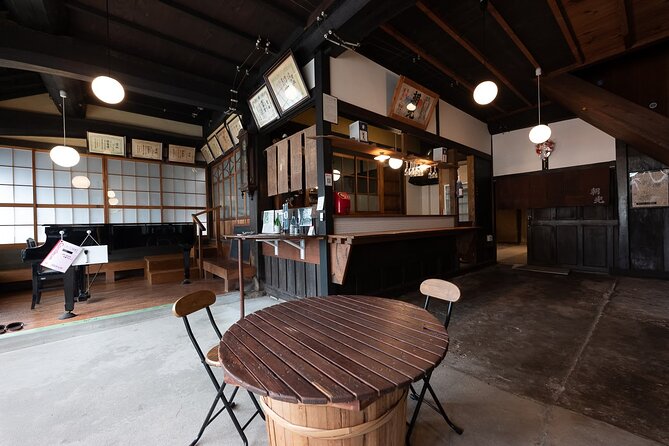
The first section takes you through Kakeyama. This is where the electric bike proves its worth, since the route includes steep hills that would make an ordinary bicycle much less pleasant.
You can expect the guide to help you get comfortable with the bike and its motor assistance. Even if you have never used an e-bike, the support should make the climbs feel approachable. You still need to be able to ride independently, and the minimum height is 140 centimeters, or about 4 feet 6 inches.
Kakeyama sets the tone for the rest of the outing. The point is not to hurry from one marked attraction to another. The pleasure comes from moving through a rural area under your own power, with the motor smoothing out the difficult parts.
I would treat this section as a practical test of your comfort level. If you can ride a bicycle on your own and have moderate physical fitness, the electric assistance should help. If you are uneasy on bikes, have trouble steering, or want a completely passive sightseeing trip, this is not the right activity.
Doitaya, rice fields, streams, and traditional homes
The route continues into Doitaya, a farming community that has kept much of its older appearance. The setting includes traditional houses, rice fields, and streams where wildlife can be found.
This is the part of the ride that gives the strongest sense of local life. You are not just seeing pretty countryside from the roadside. You are passing through a community shaped by agriculture and water, where the layout of homes and fields still reflects the area’s older way of living.
The guide’s role is especially useful here. Without context, a quiet village can look like a pleasant backdrop and little more. Jonah’s explanations help connect the houses, fields, streams, and local customs to the people who live there.
The route also gives you a reason to slow down. The group makes regular stops, so you can listen, look around, and catch your breath. That relaxed rhythm received high praise from the people who took the tour, including one rider who enjoyed it even on a rainy day.
Doitaya will appeal most to you if you value ordinary places. There is no promise of a major monument or a dramatic show. The reward is seeing a working rural community with enough time to notice its details.
Lunch at Ainosato Herb Garden
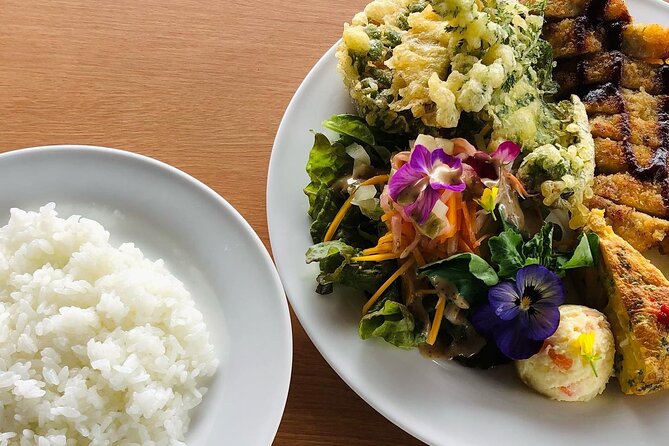
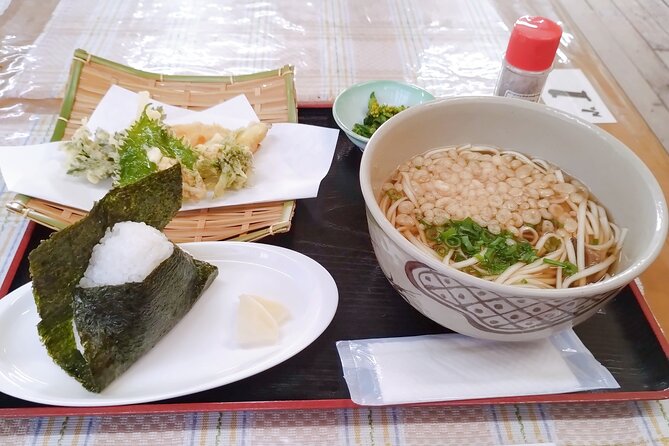
Ainosato Herb Garden provides the main meal stop. The restaurant serves locally grown vegetables and edible flowers, with produce described as free of harmful pesticides.
Lunch is not included in the $85.39 tour price. The herb-garden meal costs between 900 and 1,250 yen per person. That extra charge is reasonable to keep in mind, since meals are part of the day but not part of the headline cost.
From December through March, the food plan changes to sushi at a farmhouse, priced at 2,000 yen per person. This seasonal switch gives the ride a different feel depending on when you visit. If you have a strong preference, check which meal applies to your date before booking.
Vegan lunch is available if you request it at least three days ahead. That is a useful option, but it is not something to leave until the morning of the tour.
I like the lunch stop because it ties the food to the countryside you have just ridden through. You are not simply grabbing a convenient meal between activities. The vegetables and edible flowers reflect the local setting, and the farmhouse sushi option offers a seasonal alternative.
Do not expect a long restaurant visit built around many courses. The supplied details do not promise a particular menu or dining length. Think of lunch as a practical and local pause during an active morning.
Other cycling tours in Hiroshima
Old Oasa and its quiet main street
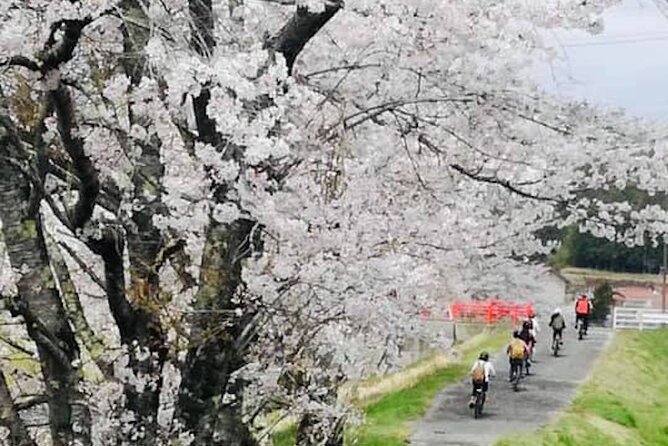
The final stop is Oasa itself. Its main street was once a busy center of shops and daily activity. Today it is quieter, with older buildings recalling the town’s more prosperous years and a handful of shops still operating.
This change is worth seeing because it gives you a more honest view of rural Japan. Not every small town is preserved as a picture-perfect attraction. Some places are quiet because populations and businesses have changed. Oasa lets you see both the appeal and the challenges of rural communities.
I appreciate that the tour does not need to dress up this setting as something it is not. The old buildings, empty stretches, and remaining shops are part of the story. You can look at the town’s past while also seeing its present.
The stop may be less exciting if you need constant activity or famous sights. Its value lies in the mood and the chance to observe a real small town. One person who took the outing said they fell in love with Oasa despite visiting in the rain. That says something about the place’s quiet appeal, but you should still arrive with realistic expectations.
What the small group changes
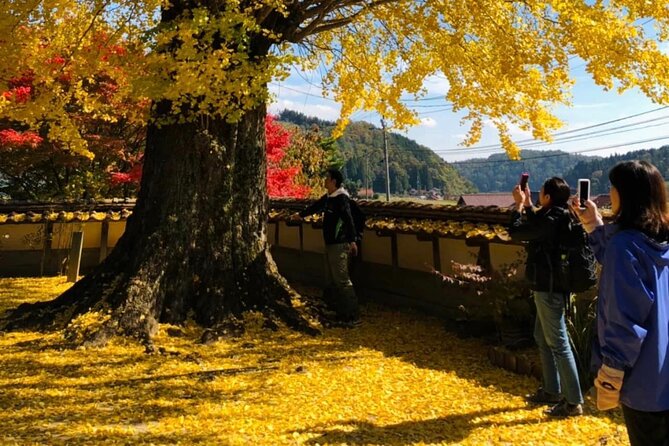
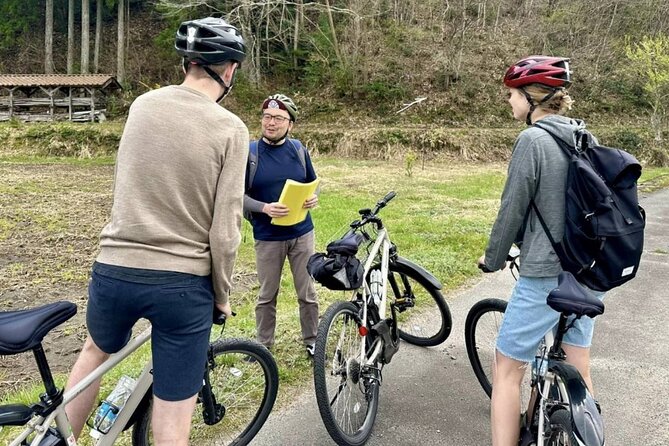
With a maximum of eight people, this is much more personal than a large bus excursion. A small group makes it easier to hear the guide, ask questions, stop without creating a traffic jam, and keep the ride relaxed.
Jonah is named as one of the guides, and his care with practical details made a strong impression. He supplied a poncho during a rainy ride, which is a small gesture but exactly the sort of help that matters outdoors.
The group format also means the pace can feel social. You are riding with other people, not taking a private route at your own schedule. If one person needs more time or the weather slows the group, the outing may not move as quickly as you expect.
The guide fee, bicycle, helmet, and accident insurance are included. Water refill stations are available along the route, but you need to bring your own bottle. That is an easy detail to miss, so pack one before leaving Hiroshima.
The real cost and the value of the day
The listed price is $85.39 per person, but your actual spending will be higher. You need to add 3,560 yen for the highway bus and either 900 to 1,250 yen for herb-garden lunch or 2,000 yen for seasonal farmhouse sushi.
That total can still represent good value if you want a guided rural outing without renting gear or planning a route yourself. The fee covers the e-bike, helmet, guide, insurance, and a carefully arranged half-day. An ordinary bicycle rental would not provide the same assistance on hills or the same local explanation.
The value is less convincing if you only want to see Hiroshima’s main sights or if you already have easy access to a bicycle and know the countryside well. You also need to spend much of a day on transport and cycling rather than adding another city attraction.
For me, the strongest value comes from the combination of access and interpretation. The bus takes you out of Hiroshima, the e-bike lets you cover rural roads comfortably, and the guide gives meaning to the villages and old town. You are paying for a complete outing, not only for a bicycle.
The fact that the tour is often booked 61 days ahead suggests you should not assume last-minute availability. If this fits your schedule, booking early is sensible, especially for a specific date or a vegan meal request.
Weather, fitness, and who should skip it
The activity requires good weather. If poor conditions lead to cancellation, you can choose another date or receive a full refund. You can also cancel for a full refund if you do so at least 24 hours before the 10:00 a.m. start.
Rain does not automatically mean the day will be miserable. A rider completed the route in rainy conditions and received a poncho from Jonah. Still, weather changes the comfort of cycling, the views, and the feel of the village stops, so I would avoid scheduling this on a day when you cannot tolerate wet conditions.
You should be able to ride a bicycle independently and have moderate physical fitness. The e-bike reduces the effort on hills, but it does not remove the need to balance, steer, brake, and remain alert for about four hours.
This outing suits you best if you:
- Want a physical activity with a relaxed pace
- Are curious about farming villages and small-town Japan
- Prefer a small group to a large coach tour
- Can handle a bus transfer and separate meal costs
- Meet the 140-centimeter height requirement
- Enjoy local food and explanations about daily life
It is a poor match if you cannot ride a bike, want a fixed indoor plan in uncertain weather, or have very limited time in Hiroshima.
Should you book the Oasa cycling tour?
Book it if you want to add a quieter, more local side of Hiroshima to your trip. The e-bike removes much of the pain from the hills, while the small group and guide make the rural setting easier to understand. Kakeyama, Doitaya, Ainosato Herb Garden, and old Oasa each contribute something different, from scenery and farming life to food and town history.
Before booking, budget for the bus and lunch, check the weather forecast, and make sure every rider can cycle independently. Bring a water bottle, confirm the bus details, and request vegan food at least three days ahead if needed.
If you want famous sights, this will take you away from them. If you want a calm, active day in real countryside with a guide who pays attention to practical details, this is one of the more rewarding ways to see what lies beyond central Hiroshima.
FAQ
How long is the Hiroshima countryside cycling tour?
The activity lasts approximately four hours and begins at 10:00 a.m. It finishes back at the Oasa I.C. Bus Stop.
Where does the tour start and finish?
It starts and ends at the Oasa I.C. Bus Stop, 2310 Shinjō, Kitahiroshima, Yamagata District, Hiroshima 731-2103, Japan.
Is transportation from Hiroshima included?
No. The highway bus between Hiroshima and Oasa costs 3,560 yen round trip and is not included in the tour price.
Is lunch included?
No. Lunch at Ainosato Herb Garden costs 900 to 1,250 yen per person. From December through March, sushi lunch at a farmhouse costs 2,000 yen per person.
Can I request a vegan meal?
Yes. Vegan lunch is available if you request it at least three days before the tour.
Do I need previous e-bike experience?
No previous e-bike experience is required, but you must be able to ride a bicycle on your own. The tour also calls for moderate physical fitness.
What happens if bad weather cancels the tour?
If poor weather causes cancellation, you can choose a different date or receive a full refund. You may also cancel for a full refund up to 24 hours before the start time.
More City Tours in Hiroshima
More Cycling Tours in Hiroshima
More Hiroshima Cycling Tours in Hiroshima
More tours in Hiroshima we've reviewed
Hiroshima Cycling Tours, compared.
 ★ 5.0Hiroshima in a Nutshell: Morning Bike AdventureFrom $72
 ★ 5.0Hiroshima 2hr Peace Cycling Tour with Local GuideFrom $59
 ★ 4.8Hiroshima: Peace Cycling Tour with Local GuideFrom $522 - 3 hours
 ★ 5.0Hiroshima and Miyajima by Bike and BoatFrom $142
 ★ 5.0Hiroshima 3hr Peace Cycling Tour with Local GuideFrom $85
 ★ 4.9Hiroshima: Best of Hiroshima Guided Bike TourFrom $703h 30m
 ★ 5.0Hiroshima: City and Miyajima Bike and Boat TourFrom $1387h 30m
 ★ 5.0Hiroshima Scenic Cycling Guided TourFrom $73
Browse the lists this tour appears in