
Reviewed · HIROSHIMA CYCLING TOURS
Hiroshima Scenic Cycling Guided Tour
Hiroshima’s best cycling surprise is Mitaki Temple, a quiet hillside site that most city tours skip. This 3.5-hour ride links it with Peace Memorial Park and Hiroshima Castle, giving you a fuller picture of the city than a walking tour in the center. I like the electric bikes and the small maximum group of eight. You can cover more ground without turning the morning into a race.
I also like that the bicycle stays with you after the guided portion, so the $73.57 price includes a chance to keep exploring. The main caution is fitness: the motor helps, but you still pedal uphill, and you need to bend your knees to about 90 degrees. Summer heat, vertigo, or medication that makes driving unsafe are good reasons to reconsider.
In This Review
- Key points to know before you book
- Why this route gives you more than central Hiroshima
- Peace Memorial Park: a thoughtful 45-minute beginning
- Hiroshima Castle: moat views and a feudal change of pace
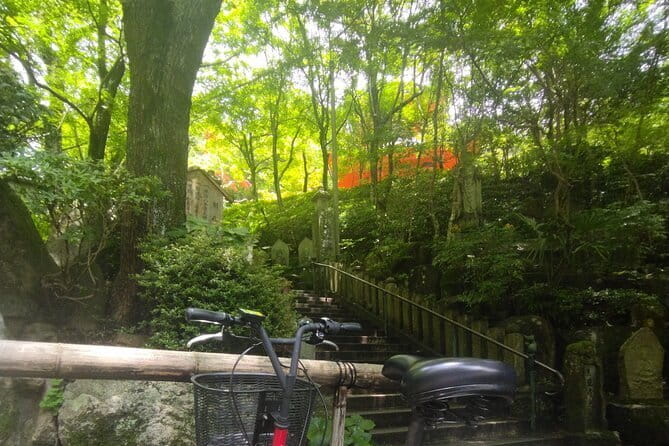
- Mitaki Temple: the quiet centerpiece of the ride
- What the guide adds to the morning
- The bike and the physical demands
- The full-day bike option improves the value
- Who will get the most from this experience
- Timing, meeting point, and cancellation details
- Should you book the Hiroshima cycling tour?
- FAQ
- How long does the Hiroshima Scenic Cycling Guided Tour last?
- What places does the cycling tour visit?
- Is the bicycle included in the price?
- How many people can join the tour?
- How fit do I need to be?
- Where does the tour start and finish?
- What happens if the weather is poor?
Key points to know before you book
- Mitaki Temple is the tour’s rare stop: The route takes you to a temple described as one of the most beautiful in the Chugoku region, with one hour set aside for the visit.
- Peace Memorial Park gets more than a quick pass: You have about 45 minutes for the Atomic Bomb Dome, monuments, bridges, and guide-led stories.
- Electric assistance makes the distance manageable: The bikes reduce the strain, but they do not remove the need to pedal on hills.
- The group is capped at eight people: That keeps the ride more personal and makes it easier to ask questions.
- The bike is yours for the full day: After the tour, you can continue exploring Hiroshima on your own.
- The finish is useful for lunch and transport: You end near JR Yokogawa Station, with trams, buses, JR trains, and okonomiyaki nearby.
Why this route gives you more than central Hiroshima
Most first visits to Hiroshima focus on two subjects: the 1945 atomic bombing and the city’s role as a modern regional center. Those are essential, but they are not the whole story. This ride lets you begin with the city’s memorial core, then move toward its castle district and wooded temple grounds.
That change of mood is the real strength of the experience. You spend time in a place of solemn remembrance, then see older religious and feudal landmarks that survived or were rebuilt through a very different part of Hiroshima’s story.
The electric bicycle matters here. Hiroshima is spread out enough that walking between these areas would take time, while public transport can make the route feel like a series of separate stops. By bike, you move through the city at street level and can cover ground without exhausting yourself before reaching Mitaki Temple.
I would think of this as a city orientation with historical depth, rather than a hard-core cycling excursion. The ride is relaxed, but not completely effortless. You still need to steer, balance, pedal, and manage some uphill work.
A few more Hiroshima tours and experiences worth a look

Peace Memorial Park: a thoughtful 45-minute beginning
The tour starts at Lucky Bakery at 5-5 Motomachi, in Naka Ward. The 10:00 a.m. start gives you a useful morning window, especially if you want to eat lunch near the final stop afterward.
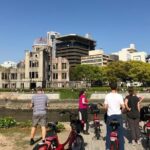
At Peace Memorial Park, you see more than one famous structure. The route includes the Atomic Bomb Dome, several monuments, and bridges that survived the blast. The guide explains stories and facts connected to the area, which gives the park a human scale that a quick photo stop cannot provide.
Allow yourself to slow down here. Even with a bicycle waiting nearby, this is not a place to rush through while thinking about the next stop. The guide’s role is especially valuable because the park contains many memorials, and it is not always clear how each one connects to Hiroshima’s past.
The allotted 45 minutes is enough for a focused introduction, but not enough to inspect every memorial or museum at length. If you want a long visit to the Hiroshima Peace Memorial Museum, plan that separately before or after the cycling experience. This ride gives you context and orientation, not a full museum program.
I like the order of the morning. Beginning at the park places the city’s tragic past at the center of the experience, while the later stops remind you that Hiroshima is also a living city with temples, food, transport links, and ordinary daily routines.
Hiroshima Castle: moat views and a feudal change of pace
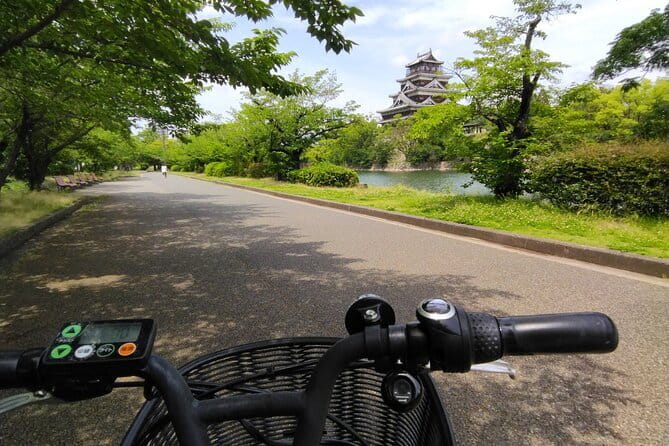
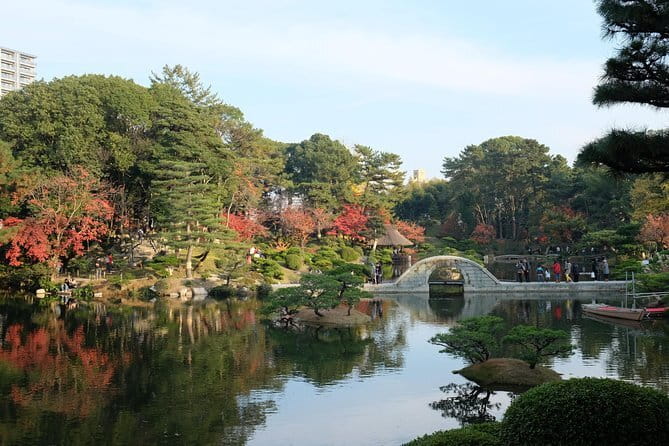
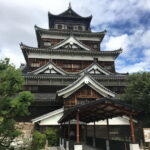
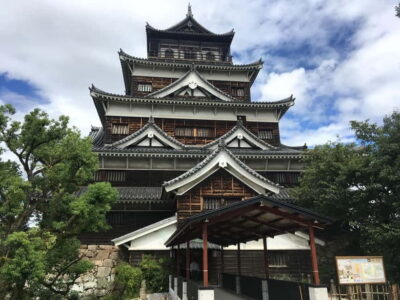
The second stop is Hiroshima Castle, with about 30 minutes to look around. The moat offers some of the best photo opportunities on this part of the route, and the grounds give you a feel for a Japanese fortress from the 1600s.
That short visit works well if you want a broad introduction rather than a detailed castle study. You can see the moat, enter the castle grounds, and take in the shift from memorial architecture to feudal Japan.
The castle’s current form is part of Hiroshima’s rebuilt city, so you should not expect an untouched 1600s structure. Still, the site helps explain Hiroshima before the modern era and gives the ride another layer of context.
The grounds also include Hiroshima’s largest temple, according to the tour description. That makes this stop more than a simple castle photo break. Your guide can connect the surrounding religious and military sites, and you can ask questions as the group moves through the area.
Thirty minutes passes quickly. If castle interiors are a major interest for you, you may want to return on your own later, though the included route is designed to keep moving toward Mitaki Temple. The tour’s strength is the combination of places, not long independent time at any one landmark.
Mitaki Temple: the quiet centerpiece of the ride
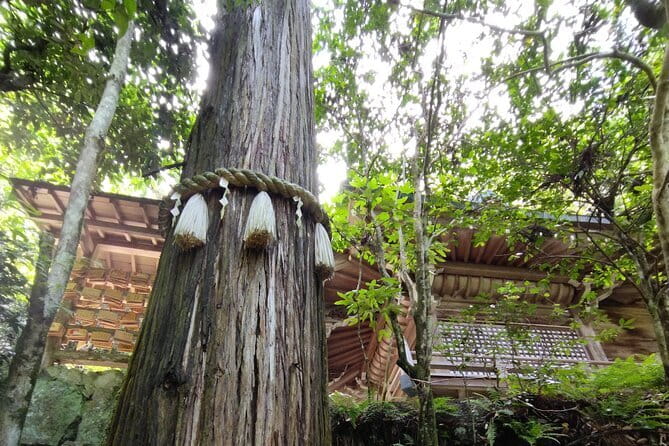
Mitaki Temple receives the longest stop, about one hour, and for good reason. The tour identifies this as the only Hiroshima cycling route that visits the temple, making it the most distinctive part of the morning.
The temple is described as one of the most beautiful in the Chugoku region, with some comparisons to Kyoto’s best-known sites. You should treat that comparison as a sign of atmosphere and setting rather than a promise that it will replace Kyoto’s major temples. The important point is that Mitaki offers a quieter spiritual setting away from the city center.
The route to a hillside temple also explains why the electric bike is useful. You still need to pedal uphill, but assistance takes much of the sting out of the climb. One person specifically noted that the bikes help but do not eliminate uphill effort. That is the right expectation to carry.
Entrance is free, with a suggested donation. You may also have a chance to buy a pastry, ice cream, coffee, or another snack at your own expense during the day. Coffee and tea are not included, so bring some cash or a payment method if a break sounds appealing.
Give this stop your full hour. Unlike the castle visit, Mitaki is not simply a place to take a quick photograph and leave. The longer pause lets you absorb the temple grounds, listen to the guide, and enjoy the change from urban streets to a more peaceful setting.
If you have already seen several major temples in Kyoto or Nara, you may not find every feature entirely new. Even so, its place in a compact Hiroshima route makes it valuable. You get a religious site without giving up the city’s central memorial landmarks.
What the guide adds to the morning
The human side of this tour is important. The strongest praise focuses on the guide’s storytelling, answers to questions, and ability to explain places beyond their surface appearance. Joshua is named in several pieces of feedback, including a family group of five, and is described as friendly and well informed.
That does not mean every tour will have Joshua, so do not book solely on the assumption that he will lead your ride. The experience provider is Sunset Tour in Hiroshima’s Peace Park, and the guide assigned on your date may differ.
What you can reasonably expect is a local guide who gives stories and facts at the stops and answers questions while you ride. That is especially useful at Peace Memorial Park, where context matters, and at Mitaki Temple, where a short visit without background can feel less meaningful.
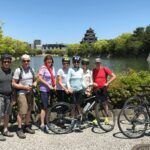
A small group helps. With no more than eight people, the guide can keep the pace together and respond to individual interests more easily than on a large coach excursion. Families and couples can also enjoy a more relaxed rhythm than they might get on a tightly timed bus tour.
There was one report of a minor bike problem at the beginning that was sorted out. I would not treat that as a major warning, but it is sensible to check your brakes, seat position, and electric assistance before leaving the meeting point. A few minutes spent getting comfortable can prevent an awkward start.
Other cycling tours in Hiroshima
The bike and the physical demands
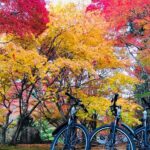
The electric-assisted bicycle is included, as is the guide. It is the feature that makes this route realistic for many visitors who would not choose a traditional cycling tour.
Still, do not read e-bike as no-effort. You need a moderate level of physical fitness, and the hills require some pedaling. You should also be able to bend your knee to roughly 90 degrees, which affects whether mounting and riding will be comfortable.
The operator advises against the tour for people prone to heat stroke during summer. That warning deserves attention. Hiroshima can be hot, and a moving bicycle does not always feel as tiring as it is. Wear suitable clothing, drink water, and be honest about your tolerance for heat.
Vertigo is another concern, as is taking medication that is not safe for driving. Since you are operating a bicycle in city streets, you need to be alert and able to control it safely.
The route is not presented as a race, and the small group format supports a laid-back pace. Even so, it is not the best choice if you want a completely passive sightseeing morning. For that, a walking tour or vehicle-based option would suit you better.
The full-day bike option improves the value
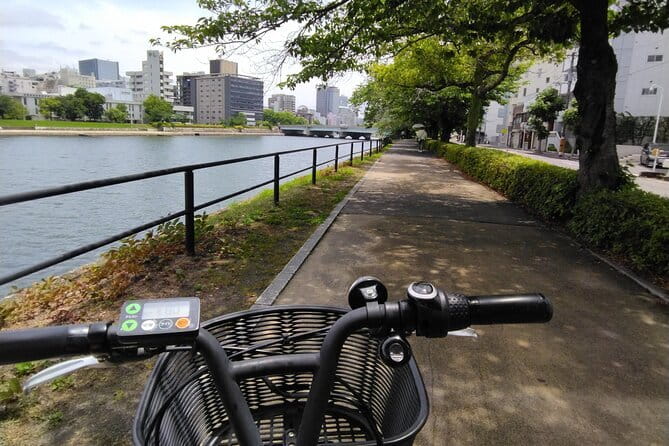
The ride itself lasts about three and a half hours, but you keep the bike for the full day. That changes the value calculation.
At $73.57 per person, the price is not just paying for a guide and a short rental. You are also paying for a planned route between three different parts of Hiroshima, local explanations, electric assistance, and the ability to continue riding afterward.
The extra bike time is especially useful because the tour ends after lunch time near JR Yokogawa Station. You can return the bicycle there after exploring more, or use the remaining time to see another area at your own pace. The supplied details do not specify a separate return deadline, so confirm the exact arrangement with the operator when you book.
The final area is practical. JR Yokogawa Station has JR service, trams, and buses, and you can find lunch nearby. Several restaurants have English menus, and okonomiyaki is widely available in the area. That makes the end of the tour convenient rather than leaving you stranded at an isolated attraction.
Group discounts may be available, which could improve the price for families or friends traveling together. Since the group limit is eight, check the current rate for your party before booking.
Who will get the most from this experience
I would recommend this ride to you if you want to see Hiroshima’s major themes in one morning but do not want to spend the whole day inside the city center. It suits first-time visitors who appreciate a guide’s explanations and like switching between memorials, castle grounds, and temples.
Families can also do well here, particularly if everyone can ride comfortably. A family of five enjoyed the experience with Joshua, and the small group setting can make the day easier to manage than a large organized outing.
It is less suitable for anyone with limited knee movement, serious heat sensitivity, vertigo, or difficulty riding uphill. You should also avoid it if you want a slow, unstructured temple visit or a detailed museum day.
The route has enough physical activity to feel active, but the electric assistance keeps it from becoming a demanding sports outing. That middle ground is its appeal.
Timing, meeting point, and cancellation details
Meet at Lucky Bakery, 5-5 Motomachi, at 10:00 a.m. The tour ends at 1-chome 15-16 Misasamachi near JR Yokogawa Station, just after lunch time.
The start and finish are in different parts of Hiroshima, so the route is convenient rather than circular. Public transport is available at the end, and the nearby food options make it easy to continue your day.
Confirmation arrives at booking, and the start is near public transportation. The experience requires good weather. You can cancel for a full refund up to 24 hours before the start time, but cancellations or changes inside that window are not accepted. If poor weather causes the operator to cancel, you are offered another date or a full refund.
The tour is booked an average of 22 days ahead, so I would not leave it until the last minute if your Hiroshima schedule is fixed.
Should you book the Hiroshima cycling tour?
I would book it if you want a practical way to connect Hiroshima’s memorial park with two less central sights, especially Mitaki Temple. The guide-led stories, electric bike, small group, and full-day bike use make the $73.57 fare reasonable for an active half-day.
Book with care if you are sensitive to heat or hills. The motor assists you, but it does not do all the work.
For many visitors, the best reason to choose this experience is the contrast. You begin with Hiroshima’s most serious memorial site, pass through castle grounds, and finish in a quiet temple setting. That range gives you a more complete sense of the city than a tour focused on only one chapter of its past.
FAQ
How long does the Hiroshima Scenic Cycling Guided Tour last?
The guided cycling experience lasts approximately 3 hours and 30 minutes. It starts at 10:00 a.m. and ends just after lunch time near JR Yokogawa Station.
What places does the cycling tour visit?
The route includes Hiroshima Peace Memorial Park, Hiroshima Castle, and Mitaki Temple. The Peace Memorial Park visit lasts about 45 minutes, Hiroshima Castle about 30 minutes, and Mitaki Temple about one hour.
Is the bicycle included in the price?
Yes. Use of the bicycle and a guide are included. The bike is available for the full day, allowing you to continue exploring after the guided tour.
How many people can join the tour?
The activity has a maximum of eight travelers, creating a small-group format.
How fit do I need to be?
You need a moderate level of physical fitness. The electric bike assists with riding, but you still need to pedal uphill. You should also be able to bend your knee to about 90 degrees.
Where does the tour start and finish?
The tour starts at Lucky Bakery, 5-5 Motomachi, Naka Ward, Hiroshima. It finishes near JR Yokogawa Station at 1-chome 15-16 Misasamachi, where JR trains, trams, and buses are available.
What happens if the weather is poor?
The experience requires good weather. If the operator cancels because of poor weather, you can choose another date or receive a full refund. You can cancel your own booking for a full refund up to 24 hours before the start time.
More Guided Tours in Hiroshima

More Cycling Tours in Hiroshima
More Hiroshima Cycling Tours in Hiroshima
More tours in Hiroshima we've reviewed
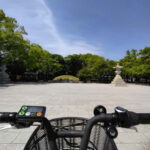
Hiroshima Cycling Tours, compared.
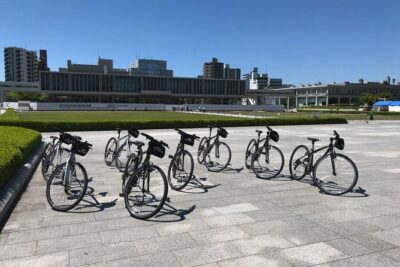 ★ 5.0Hiroshima in a Nutshell: Morning Bike AdventureFrom $72
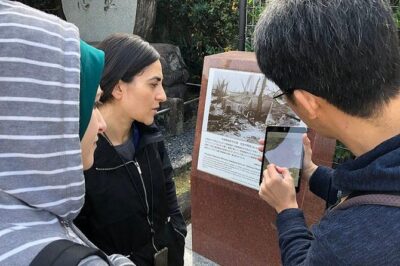 ★ 5.0Hiroshima 2hr Peace Cycling Tour with Local GuideFrom $59
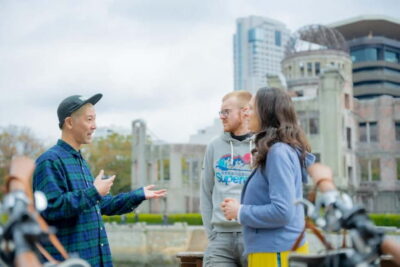 ★ 4.8Hiroshima: Peace Cycling Tour with Local GuideFrom $522 - 3 hours
 ★ 5.0Hiroshima and Miyajima by Bike and BoatFrom $142
 ★ 5.0Hiroshima 3hr Peace Cycling Tour with Local GuideFrom $85
 ★ 4.9Hiroshima: Best of Hiroshima Guided Bike TourFrom $703h 30m
 ★ 5.0Hiroshima Country Cycling: Explore Rural Life 1 HR from CityFrom $85
 ★ 5.0Hiroshima: City and Miyajima Bike and Boat TourFrom $1387h 30m
Browse the lists this tour appears in