
Reviewed · HIROSHIMA CYCLING TOURS
Hiroshima: Peace Park, Castle, and Mitaki Temple E-Bike Tour
Hiroshima’s most moving sights are in the city center, but Mitaki Temple sits apart from the usual route, up in wooded hills beyond the castle. This e-bike tour connects the city’s painful past, historic center, and quieter Buddhist side in one half-day outing.
I like the clear progression from the Peace Park to Hiroshima Castle, then out along riverside paths to Mitaki. I also like the small group size, limited to six people, and the relaxed electric-bike pace. The main catch is that you need to be comfortable riding about 10 kilometers, and drink stops may feel too few on a hot day.
In This Review
- Key points to know
- Why this route gives you a fuller Hiroshima visit
- Starting at LUCKY BAKERY beside the Atomic Bomb Dome
- The Peace Park: start with Hiroshima’s hardest story
- Riverside riding toward Hiroshima Castle
- Hiroshima Castle and the city before 1945
- Riding uphill to Mitaki Temple
- Pace, group size, and what the ride feels like
- What the $70 price gets you
- Who should book this Hiroshima e-bike tour?
- Practical details before you reserve
- Should you book it?
- FAQ
- How long does the Hiroshima e-bike tour last?
- How far do you ride?
- Where does the tour start?
- Where does the tour finish?
- Which places are included?
- Is the tour conducted in English?
- Are food and drinks included?
- Can children join the tour?
Key points to know
- See three very different sides of Hiroshima: The Peace Park, Hiroshima Castle, and Mitaki Temple each tell a different part of the city’s story.
- Meet across from the Atomic Bomb Dome: The start is at LUCKY BAKERY, with your guide carrying a large orange backpack.
- Ride at a casual pace: Battery assistance helps with the distance and the climb toward Mitaki Temple.
- Expect a personal tour: Groups are capped at six, and guide Joshua leads the English-language experience.
- Plan for roughly 210 minutes: The route covers about 10 kilometers, with time for guided visits and scenic riding.
- Bring your own refreshment budget: Food and drinks are not included, though there are chances to stop along the way.
Why this route gives you a fuller Hiroshima visit
Many first-time visits to Hiroshima focus on the Peace Memorial Park and the ferry to Miyajima. Those are worthwhile, but this ride gives you a broader view of the city itself. You begin with the place that shaped Hiroshima’s modern identity, pass through its traditional political center, and finish among trees, temple buildings, and mountain air.
That change of setting is the tour’s best idea. The Peace Park asks for quiet attention. Hiroshima Castle gives you a look at the city before the atomic bombing. Mitaki Temple offers a pause from urban streets and a chance to see a religious site that can be missed when you stick to the standard sightseeing circuit.
The e-bike matters here. You cover about 10 kilometers without spending the whole day on foot, and the battery assistance makes the ride more manageable in warm weather and on the uphill approach to Mitaki. You still need to pedal and steer, but this is not presented as a hard cycling workout.
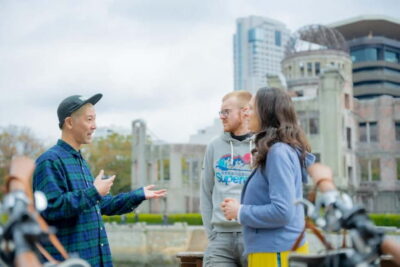
Guide Joshua is the name most closely connected with this experience. He is described as an English-speaking American living in Hiroshima, and the tour places strong emphasis on explanation rather than simply leading you from one stop to the next. That is useful at the Peace Park, where the meaning of each monument and the design of the park can be easy to miss without context.
A few more Hiroshima tours and experiences worth a look

Starting at LUCKY BAKERY beside the Atomic Bomb Dome
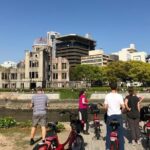
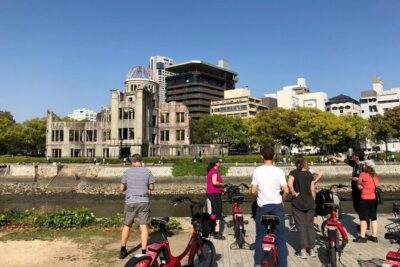
The meeting point is LUCKY BAKERY, across the street from Hiroshima Peace Memorial Park. The bakery is in full view of the Atomic Bomb Dome, so you have a clear landmark while making your way there.
Look for the guide with the large orange backpack. That detail is practical, especially if you are arriving through busy central Hiroshima and do not want to spend time searching among pedestrians and cyclists.
The location also sets the tone immediately. You do not begin at a distant bike shop or hotel. You meet right beside the city’s most recognizable symbol, then move into the Peace Park on foot for the opening guided portion.
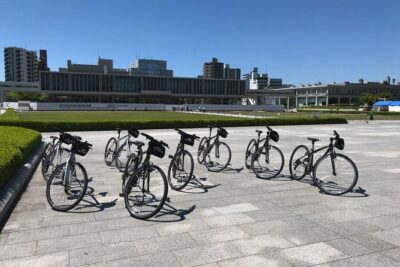
The bikes and helmets are handled as part of the tour. Helmets are available if requested, so ask for one when you meet the guide if you want to wear one. Hotel pickup and drop-off are not provided, so you need to make your own way to the bakery.
The Peace Park: start with Hiroshima’s hardest story
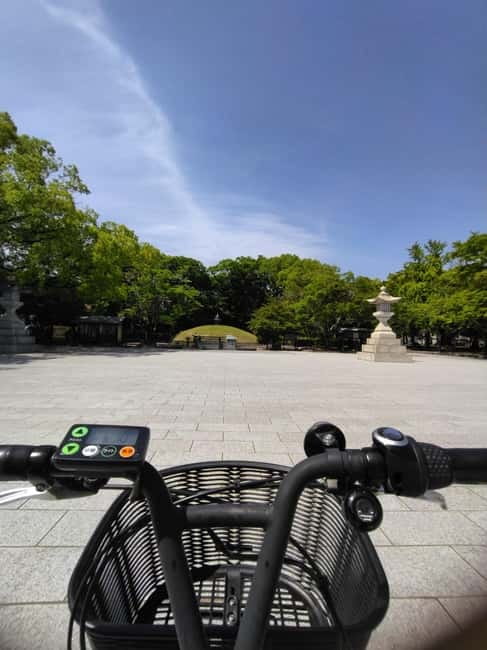
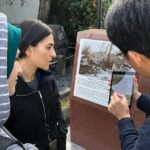
The tour spends about an hour in Hiroshima Peace Memorial Park. This is the right place to begin because it gives meaning to everything that follows.
You can expect the guide to explain the park’s monuments and architecture, not just point out famous structures. The Atomic Bomb Dome is visible from the meeting point, and the nearby memorial spaces form a setting where Hiroshima’s wartime destruction and later rebuilding are central to the visit.
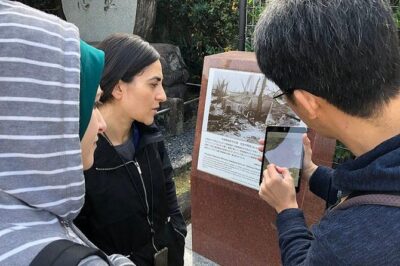
I appreciate having a guide here because the park can otherwise become a quick checklist of photographs. The buildings and memorials carry different meanings, and the layout itself helps you understand how Hiroshima remembers August 6, 1945. A guided hour will not cover every museum display or memorial in the city, but it gives you a structured introduction.
This portion is not a substitute for the Hiroshima Peace Memorial Museum. The tour information does not include museum admission or a museum visit, so you should allow separate time if you want the fullest account of the bombing and its aftermath.
The opening walk is also a useful contrast with the bike ride. You begin slowly and quietly, then leave the park by bicycle along city routes and riverside paths. That change helps you see Hiroshima as a living city rather than only as a place defined by its past.
Riverside riding toward Hiroshima Castle
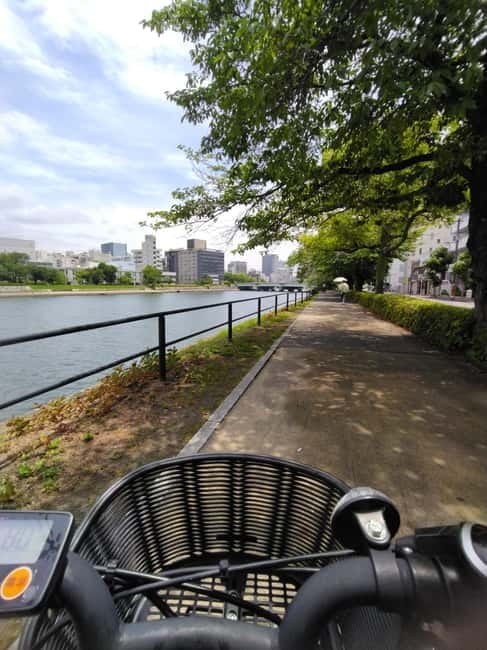
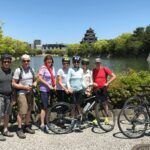
After the Peace Park, you get on the e-bikes and ride toward Hiroshima Castle. The trip uses scenic riverside paths where possible, offering a calmer way to cross the city than a direct run through traffic-heavy streets.
The riding is described as casual, which makes this suitable for people who cycle from time to time but do not want a demanding excursion. The electric assistance is especially useful as the day warms up. Hiroshima can feel hot and humid, and an assisted bike lets you spend more energy listening and looking around instead of arriving at each stop overheated.
You should still be ready for normal cycling responsibilities. You need to ride under control, follow the guide, and manage a total route of about 10 kilometers. This is not a sightseeing bus with a few minutes of pedaling between stops.
The bike also lets you notice the spaces between major attractions. You get a sense of Hiroshima’s rivers, streets, and everyday rhythm, rather than moving only between isolated monuments. For me, that is part of the value of the tour: the city becomes connected.
Hiroshima Castle and the city before 1945
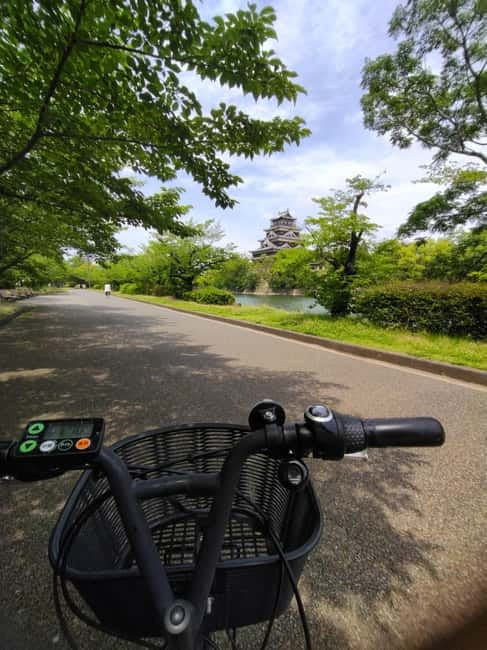
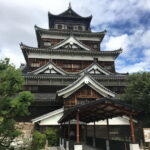
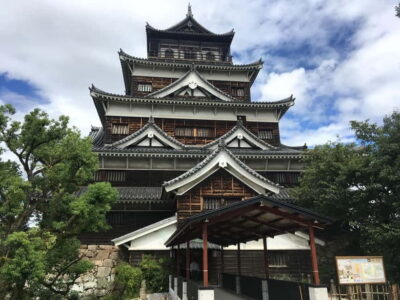
Hiroshima Castle gives the ride a different historical focus. The castle area represents Hiroshima’s older political and cultural identity, before the atomic bombing changed the city forever.
The guide explains the significance of the castle and its surroundings. You should expect an exterior and area visit rather than assume that a full castle museum tour is included. The supplied details promise a visit to Hiroshima Castle, but they do not specify admission to the interior or a detailed museum program.
That distinction matters when you plan your day. If you want to study the castle exhibits, check how much free time you have afterward and consider returning separately. The guided stop is better understood as part of a wider city tour, where the castle helps set historical context.
The castle also works well in the route because it breaks up the heavier subject matter of the Peace Park. Hiroshima’s story is not only about destruction. The castle area points to the city’s earlier life and its place in Japanese history.
Riding uphill to Mitaki Temple
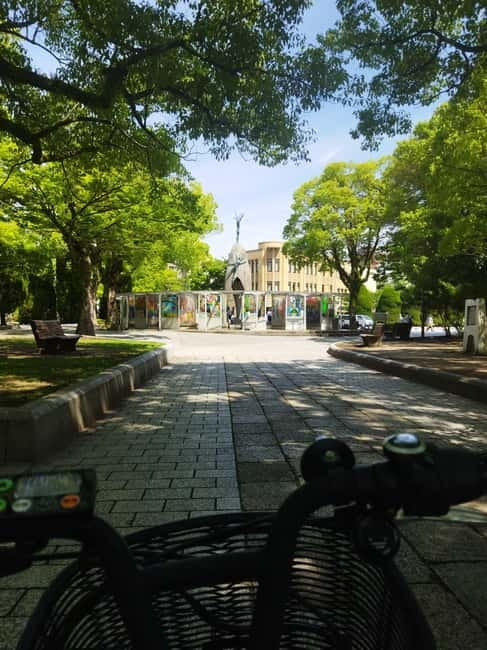
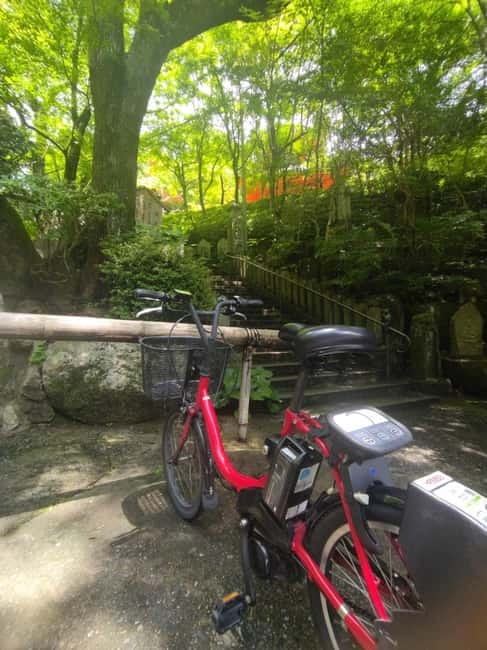
Mitaki Temple is the tour’s most unusual stop. It lies beyond the central sightseeing zone, and the route heads toward the hills after the castle. The ride takes you away from the city center and into a setting shaped by trees, slopes, and Buddhist religious buildings.
This is where the e-bike earns its keep. The ride toward the temple includes an uphill element, and battery assistance makes the approach more approachable for a wider range of riders. You should not read that as meaning the route requires no effort. You still need to be able to ride a bicycle, and the tour is not suitable for people who cannot cycle.
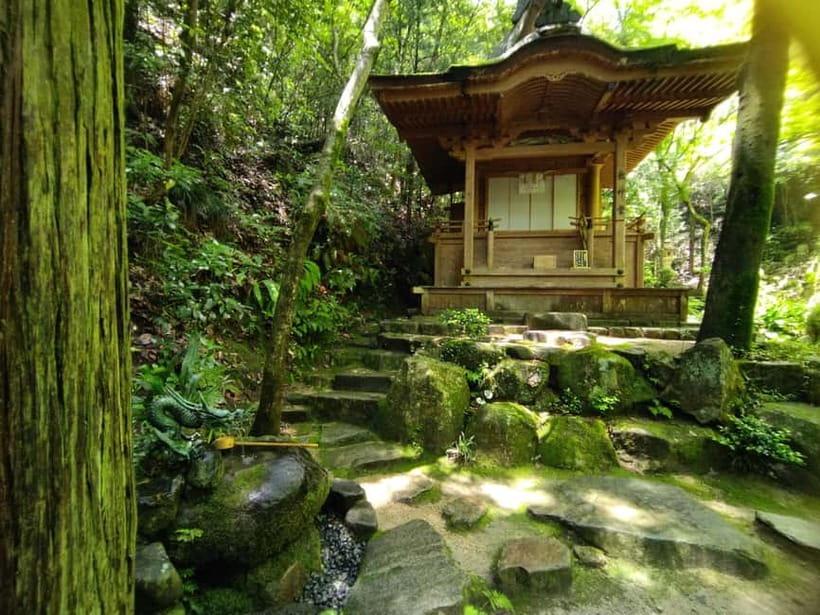
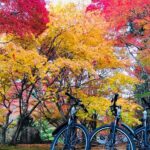
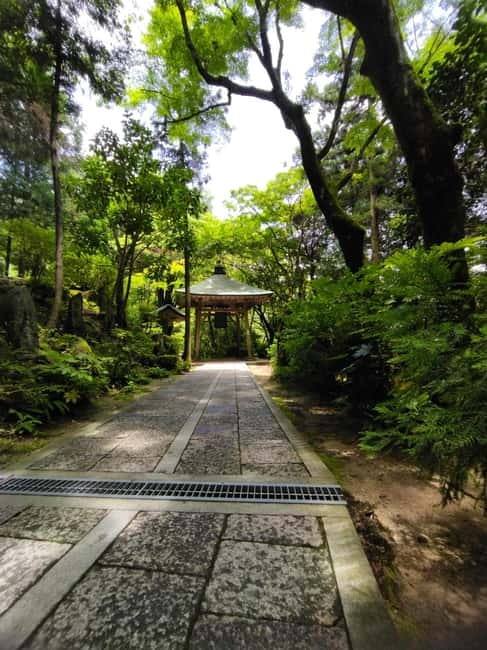
At Mitaki, the mood changes completely. Instead of memorials and central-city landmarks, you get a quieter temple visit surrounded by nature. The setting offers a visual mix of Buddhist culture and wooded scenery, making it a strong finish to the main sightseeing portion.
I especially like that this stop is not an obvious add-on. Many short Hiroshima tours stay near the Peace Park, castle, and shopping streets. Mitaki gives you a reason to leave the central grid. The combination of temple buildings and natural surroundings is also likely to appeal to you if you want a break from museums and urban streets.
Do not expect a long, silent retreat. This is still a guided bike outing with a fixed duration. The temple visit is one part of a route that also includes riding time. If you want to explore every corner of the grounds at a slow pace, you may prefer to return independently on another day.
Pace, group size, and what the ride feels like
The tour lasts 210 minutes, or three and a half hours. That is enough time for a meaningful introduction to the Peace Park, a look at Hiroshima Castle, the ride to Mitaki, and the return toward Yokogawa Station without turning the day into an endurance test.
The group is limited to six people. That small size should make it easier to hear the guide and ask questions, especially during the Peace Park explanation. It also allows the group to move through city paths more easily than a large cycling party.
The tour ends at Yokogawa Station, not back at the bakery. Keep that in mind when arranging the rest of your day. Yokogawa is useful for continuing around Hiroshima, and the ending point avoids sending you back over the same route.
The ride is casual, but the weather can change how it feels. On a warm day, you will appreciate the motor assistance. You will also want water, sun protection, and sensible clothing. Food and drinks are not included, though the tour allows opportunities to buy snacks and beverages along the way.
One practical note: ask Franky’s Tours before booking if you hope to keep the bike after the tour. Some outings have allowed participants to retain the bikes for the rest of the day, but you should confirm that this is available for your date rather than assume it is part of every booking.
What the $70 price gets you
At $70 per person, the tour sits in the mid-range for a guided half-day experience. The price includes the e-bike, a live English-speaking guide, and the route linking three quite different parts of Hiroshima.
The strongest value comes from the distance and the guide’s local explanation. You are not paying only for bike hire. You are paying to avoid planning a route between the Peace Park, castle, and hillside temple, while also getting historical context along the way.
The small group makes the price easier to justify. A six-person limit gives the outing a more personal feel than a large coach or mass walking tour. It also means the guide can respond to questions and adjust the pace within reason.
Still, you should compare the cost with your own plans. If you already intend to rent a bicycle and visit only the Peace Park, the tour may be more than you need. If you want to reach Mitaki Temple, understand Hiroshima’s history, and cover a broad area in one outing, the e-bike and guiding make the fee more reasonable.
Remember to budget separately for snacks, drinks, and any attraction admission not specifically included. Hotel transfers are also not part of the price.
Who should book this Hiroshima e-bike tour?
I would recommend it to adults and older children who can ride confidently and want more than the central memorial sights. It is particularly suitable if you like learning while moving, prefer a small group, and want a mix of history, architecture, riverside cycling, and nature.
It can work well early in a Hiroshima stay because the route gives you a useful overview. Afterward, you can decide where to return for a longer visit, such as the Peace Memorial Museum or the castle grounds.
The age limit is clear: children under 10 cannot join. Baby carriages are not allowed, and the tour is not suitable for anyone unable to ride a bike. Alcohol and drugs are also prohibited.
You may want a different experience if you dislike cycling, need frequent long breaks, or want a detailed museum-focused day. The tour gives you an accessible overview, not an exhaustive study of every historical site.
Practical details before you reserve
The experience is offered in English, with a live guide. Joshua is the guide name associated with the tour, and he is described as an American living in Hiroshima.
You meet at LUCKY BAKERY across from the Peace Park, with the Atomic Bomb Dome visible nearby. The tour finishes at Yokogawa Station.
The route covers about 10 kilometers at a casual speed. E-bike rental is included, while helmets are available if requested. Food and drinks are extra.
You can cancel up to 24 hours before the start for a full refund, and the reserve-now-pay-later option lets you hold a place without paying immediately. Starting times depend on availability, so check the date that suits your plans.
Should you book it?
Book this tour if you want Hiroshima’s major historical setting, an older castle district, and a peaceful temple visit in one well-shaped ride. The best reason to choose it is Mitaki Temple, a quieter stop that is easy to miss when you stay near the Peace Park.
I also like the balance of serious history and open-air movement. Joshua’s English guidance, the six-person limit, and the battery-assisted bikes add real value to the $70 cost.
Skip it if you cannot ride comfortably for about 10 kilometers, need a museum-heavy experience, or want complete control over how long you spend at each site. For everyone else, this is a smart way to see more of Hiroshima without making the day feel like a race.
FAQ
How long does the Hiroshima e-bike tour last?
The tour lasts 210 minutes, or three and a half hours.
How far do you ride?
The tour covers approximately 10 kilometers.
Where does the tour start?
It starts at LUCKY BAKERY, across the street from Hiroshima Peace Memorial Park and in full view of the Atomic Bomb Dome.
Where does the tour finish?
The tour finishes at Yokogawa Station.
Which places are included?
The route includes Hiroshima Peace Memorial Park, Hiroshima Castle, and Mitaki Temple.
Is the tour conducted in English?
Yes. It includes a live English-speaking guide.
Are food and drinks included?
No. Food and drinks are not included, though there are opportunities to purchase snacks and beverages along the way.
Can children join the tour?
Children under 10 are not allowed to join. Participants must also be able to ride a bicycle.
More Hiroshima Cycling Tours in Hiroshima
More tours in Hiroshima we've reviewed

Hiroshima Cycling Tours, compared.
 ★ 5.0Hiroshima in a Nutshell: Morning Bike AdventureFrom $72
 ★ 5.0Hiroshima 2hr Peace Cycling Tour with Local GuideFrom $59
 ★ 4.8Hiroshima: Peace Cycling Tour with Local GuideFrom $522 - 3 hours
 ★ 5.0Hiroshima and Miyajima by Bike and BoatFrom $142
 ★ 5.0Hiroshima 3hr Peace Cycling Tour with Local GuideFrom $85
 ★ 4.9Hiroshima: Best of Hiroshima Guided Bike TourFrom $703h 30m
 ★ 5.0Hiroshima Country Cycling: Explore Rural Life 1 HR from CityFrom $85
 ★ 5.0Hiroshima: City and Miyajima Bike and Boat TourFrom $1387h 30m
Browse the lists this tour appears in