
Reviewed · KYOTO CYCLING TOURS
Kyoto: Arashiyama Bamboo Forest Morning Tour by Bike
Arashiyama’s bamboo grove is at its best before the crowds arrive, and this early-morning bike tour gets you there while the tall green stalks still feel calm and spacious. You’ll also reach Togetsukyo Bridge, Tenryuji’s gardens, and quieter corners that are easy to miss on foot.
I like two things especially: the mostly flat cycling makes it approachable, and the route shows you ordinary Kyoto life alongside the famous sights. Guides such as Ray, Rob, Milo, Peter, and Yuki add useful context about customs, temples, food, and local neighborhoods. The main drawback is the early start, and some riders may wish for more time at the bridge or in central Arashiyama.
In This Review
- Key points at a glance
- Why an early start changes Arashiyama
- Riding into the bamboo forest
- Togetsukyo Bridge and the riverfront
- Tenryuji gardens and smaller sacred sites
- Rice fields and everyday Kyoto
- What the guides add
- Is the cycling difficult?
- The $103 price and what it covers
- Weather, timing, and practical planning
- Who should book this morning ride?
- Should you book the Arashiyama bike tour?
- FAQ
- How long does the Kyoto Arashiyama bike tour last?
- What time does the tour start?
- What sights are included?
- Is the tour conducted in English?
- How many people are in each group?
- Are bicycles and helmets provided?
- Is water included?
- Is hotel pickup included?
- What happens if it rains?
Key points at a glance
- Bamboo before the crowds: Visit Arashiyama’s most famous path in the early morning, when it is generally calmer.
- More than a forest stop: The route can include Togetsukyo Bridge, Tenryuji gardens, smaller temples, shrines, rice fields, and residential lanes.
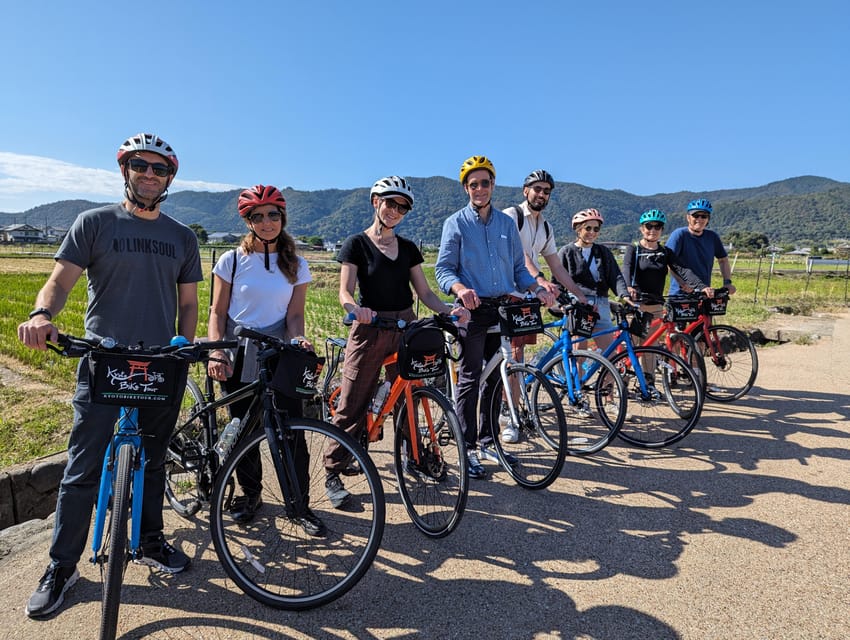
- An easygoing ride: The route is mainly flat, with regular stops, though you still need to feel comfortable cycling near other people and on local roads.
- Small-group attention: Groups are limited to eight, so guides can keep an eye on pace, safety, and questions.
- Strong guiding team: Ray, Rob, Milo, Peter, and Yuki have been singled out for clear explanations, friendly conversation, local stories, and careful riding support.
- Useful extras included: Your bicycle, helmet, bottled water, and admission fees are covered in the $103 price.
Why an early start changes Arashiyama
Arashiyama is one of Kyoto’s most popular districts, and its bamboo path can become crowded surprisingly early. This tour uses the morning to put the famous grove near the front of your visit, before the day’s full wave of sightseeing groups reaches it.
That timing is the chief reason to choose this experience instead of simply renting a bicycle later. You are not promised an empty forest, but an early visit gives you a better chance of walking or riding through the bamboo without constant stops for foot traffic.
The guide leads you through the district by bike, so you cover more ground than you could comfortably manage on foot. You also avoid treating Arashiyama as a single postcard stop. The area unfolds as a mix of temple grounds, river views, village-like lanes, homes, farms, and tourist sights.
You should expect the tour to last 210 minutes, or three and a half hours. That is enough time for a broad introduction to western Kyoto, but not enough for long, unhurried visits at every stop. The pace is designed to keep moving while allowing regular pauses.
A few more Kyoto tours and experiences worth a look
Riding into the bamboo forest
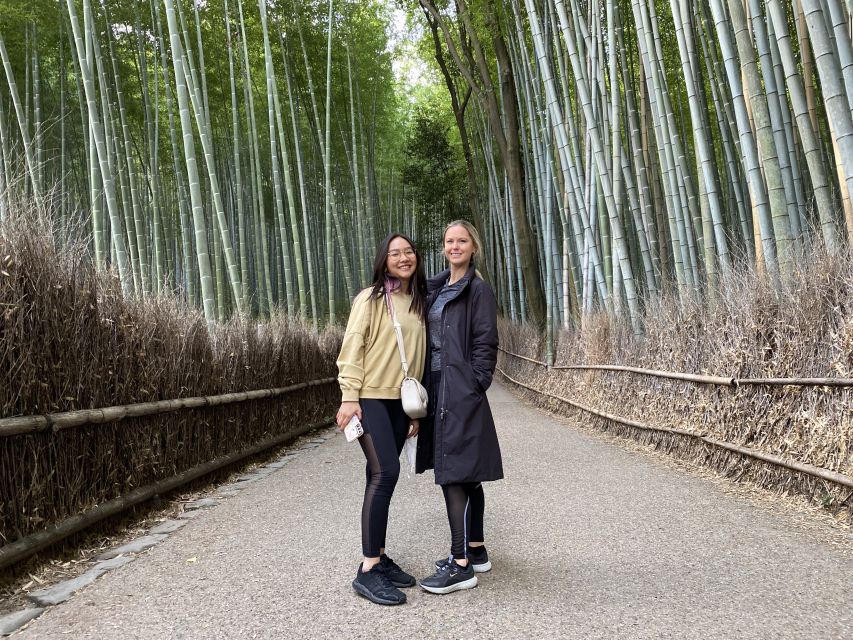
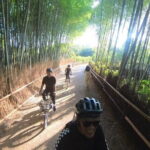
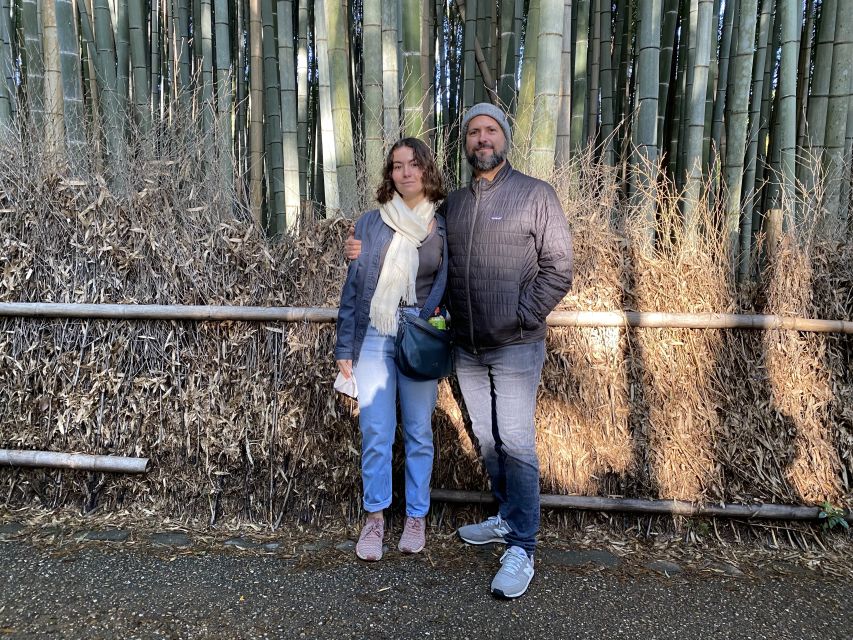
The bamboo grove is the obvious headline, and rightly so. Tall bamboo rises on both sides of the path, creating a narrow green corridor that feels very different from Kyoto’s dense central streets.
You will not spend the whole morning inside the grove. That is a good thing. The bamboo path itself is short, and the wider value of this tour comes from seeing how it connects with the rest of Arashiyama.
Your guide can help you make sense of the setting rather than simply pointing out a photo stop. The tour’s English-speaking guides are praised for explaining Japanese customs, temple practices, local language, and the meaning behind places that might otherwise look decorative or mysterious.
Bring patience for the riding section through the popular area. Even in the morning, you may need to slow down and steer around people. One rider described the route as easy and mainly flat, but also noted the need to dodge tourists. That is a realistic picture of cycling here.
Togetsukyo Bridge and the riverfront
Togetsukyo Bridge is one of Arashiyama’s signature views. Its setting gives you a wider outlook after the enclosed bamboo grove, with the river and surrounding hills creating a sense of space.
The bridge is also one of the places where the tour’s timing matters. The morning light can be pleasant, and reaching the area before the busiest part of the day makes it easier to pause without feeling swept along by foot traffic.
Still, do not book this tour expecting an extended bridge-side visit. The route has several stops, and one four-star assessment specifically wished for more time in central Arashiyama and by the bridge. That criticism is useful: the tour favors variety and local routes over lingering at one major sight.
If the bridge is your top priority, plan to return after the bike tour. The morning format lets you see it, but it does not turn the experience into a long riverfront photography session.
Tenryuji gardens and smaller sacred sites
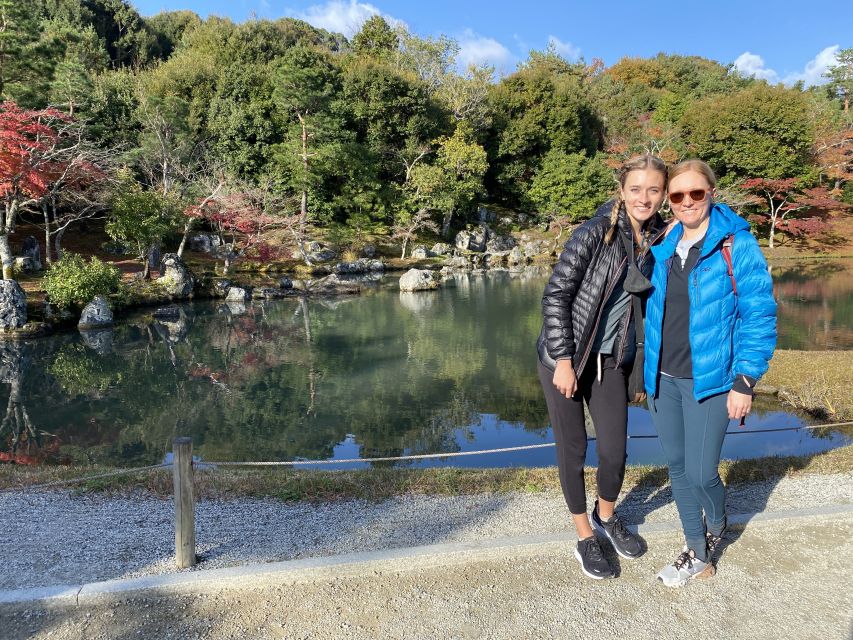
Tenryuji, a UNESCO-listed Zen temple, adds a major cultural stop to the ride. Its gardens offer a quieter counterpoint to the bamboo grove and bridge, with carefully arranged views and a strong sense of order.
Admission fees are included, which matters here. You can visit without reaching for extra cash each time the group enters a paid site. The guide also helps explain how to behave at temples and shrines, an especially useful service if this is your first visit to Japan.
The route may also include a smaller temple and one or more shrines away from the most familiar tourist circuit. These stops are not just filler. They give you a chance to ask about worship, local customs, and the difference between a shrine and a temple in a setting that feels less rushed.
Several guides have been praised for finding places that visitors would probably not reach alone. Ray, in particular, is noted for taking groups to a shrine and a temple with appealing photo spots. Yuki has also taken groups through the countryside and to quieter religious sites.
The exact stops can vary, so do not treat the listed sights as a rigid minute-by-minute program. The provider sends the meeting point and other pre-tour information after booking, and the route may respond to weather, local conditions, or the group’s pace.
Rice fields and everyday Kyoto
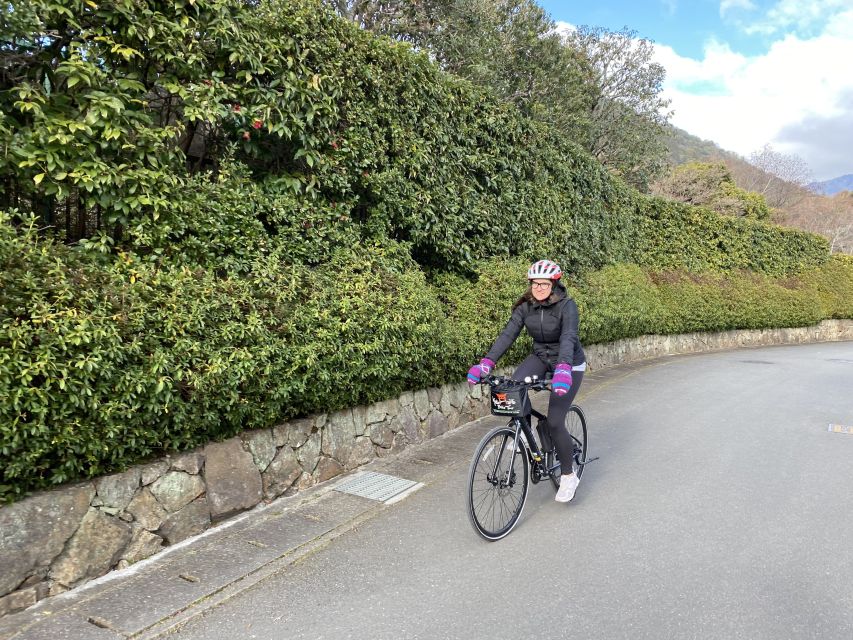
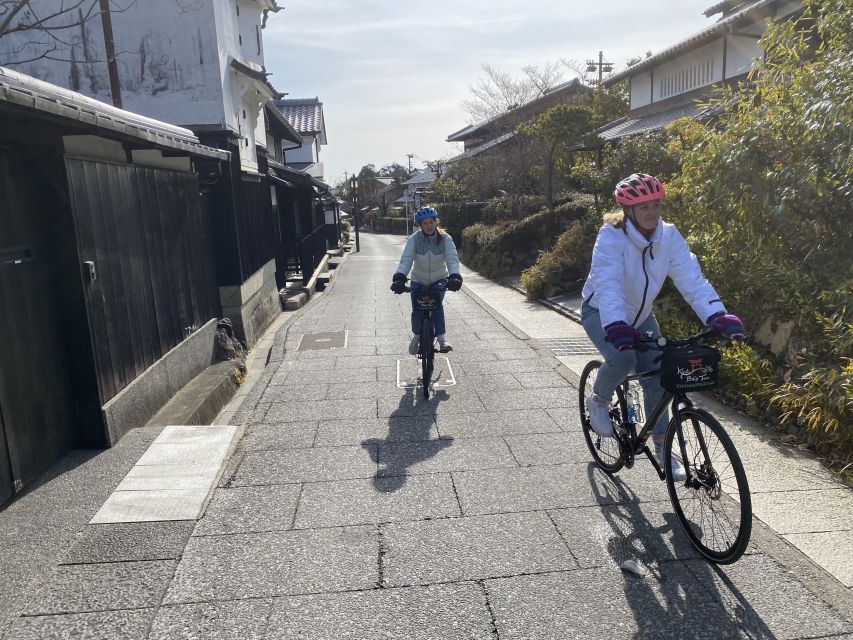
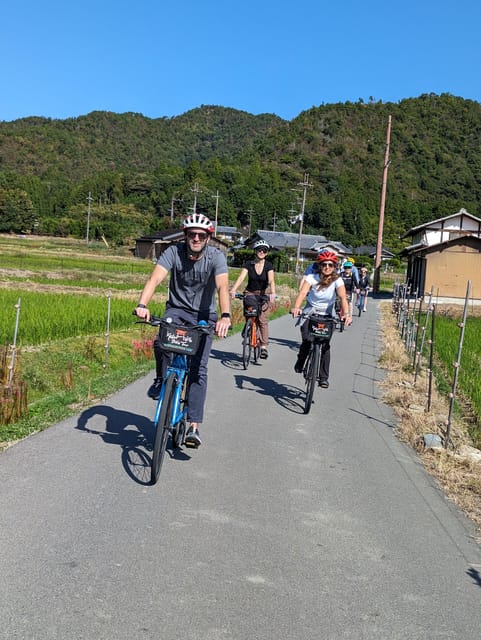
The most memorable part for many people may come after the headline sights. The bicycles carry you into rural edges of Arashiyama, where rice paddies, local homes, and quiet backstreets replace the steady flow around the bamboo grove.
This is where the tour earns its price. You are paying not only for a bicycle and a guide, but also for a route that links famous Kyoto with daily life. You might see farmers working in the fields, pass traditional-looking homes, and gain a clearer sense of how the city fades into the countryside.
The ride also gives you a better feel for the district’s geography. On foot, you can easily spend your energy moving between the station, bamboo path, temple, and bridge. By bicycle, you can connect those areas with less effort and still reach places beyond the standard walking loop.
One rider described the morning as a blend of temples and daily life. That is the right way to think about it. This is not a high-speed cycling trip, and it is not a formal temple lecture. It is a moving introduction to Arashiyama, with frequent stops for stories and views.
A few more Kyoto tours and experiences worth a look

What the guides add
The guide is central to the experience. The strongest praise has gone to Ray, Rob, Milo, Peter, and Yuki, each of whom has been described as friendly, careful, and well informed about Kyoto and Japanese culture.
Ray is repeatedly associated with thoughtful explanations, local knowledge, good photo locations, and patient answers. Rob is praised for making the ride fun while explaining history, food, culture, and small details along the route. Milo is described as especially attentive and insightful, with a talent for finding places you might not discover on your own.
Peter has led families through the area at a comfortable pace, stopping at temples, shrines, and countryside views. Yuki has been praised for checking that the group stayed together and for helping less confident riders feel secure.
The names are worth noting, but guide assignments can change. You should choose this tour for the quality of the guiding format rather than assume you will receive a particular person.
A small group, capped at eight, helps. You can ask questions without holding up a large crowd, and the guide has a fair chance of noticing if someone is falling behind. Guides have also helped with road safety, adjusted the pace, and offered practical suggestions for food or further sightseeing after the tour.
Is the cycling difficult?
The available accounts describe a mostly flat route with an enjoyable pace and regular stops. That makes the tour suitable for many casual riders, including families with older children and people who do not cycle every day.
You still need to be comfortable on a bicycle. The route passes through streets and busy tourist areas, so you may need to steer around pedestrians and stay alert near roads. This is not a private path from beginning to end.
The bicycles are described as well maintained, with adjustable seat heights. Helmets are provided and can be adjusted, and bottled water is included. One nervous cyclist felt safe and able to keep up, while another rider felt there was not quite enough actual bike riding compared with the number of stops.
That difference tells you what to expect. The tour is sightseeing by bicycle, not a training ride or a long-distance excursion. If you want miles and speed, this may feel stop-heavy. If you want to reach several areas while hearing stories along the way, the balance should work well.
Families may find the format especially useful. A group of four with children aged 10 and 14 enjoyed the mix of riding, temple visits, a shrine, countryside, and a treat stop. Another family with teenagers found the cycling manageable even on a hot day because the group stopped often.
The $103 price and what it covers
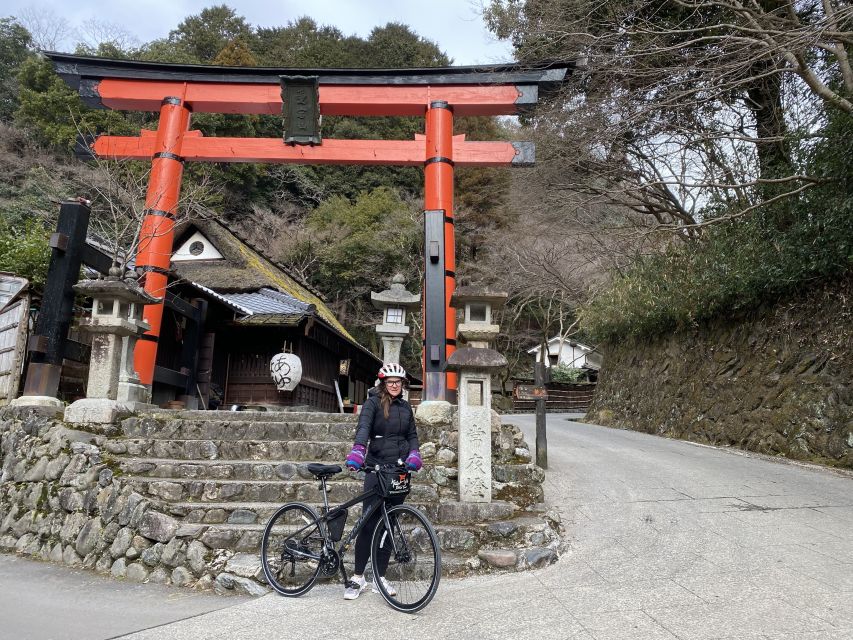
At $103 per person, this is not the cheapest way to see Arashiyama. You could visit the bamboo grove and bridge independently for little or no admission cost, depending on the sites you enter.
The comparison changes once you count the bicycle, helmet, bottled water, guide, and admission fees. You are also buying route planning and local interpretation. The guide handles the transitions between major sights and less obvious areas, which is difficult to recreate if you are new to Kyoto.
I think the price is reasonable for visitors who value context and efficient sightseeing. In three and a half hours, you can see the bamboo grove, riverfront, temple grounds, countryside, and quieter neighborhoods without spending a day working out the route.
The value is weaker if you mainly want a leisurely bamboo-forest visit or a long stop at Togetsukyo Bridge. You may feel hurried at the major sights because the tour intentionally covers a wide area.
Food and drinks are not included, though water is provided. Hotel pickup and drop-off are also not included. The provider sends the meeting point after booking, so check that message carefully and leave enough time to reach the start.
Weather, timing, and practical planning
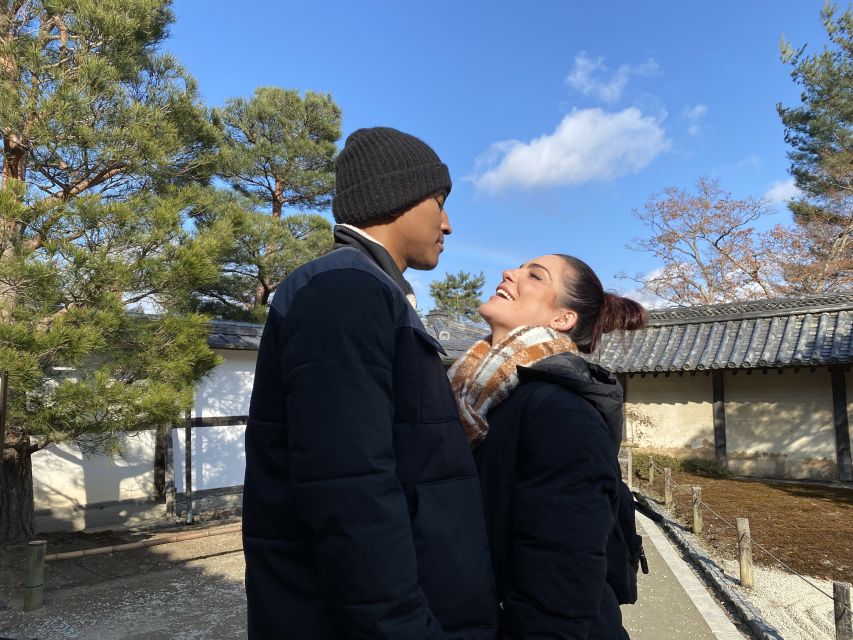
This experience is available only in the early morning. That is both its greatest advantage and its main limitation.
Schedule it early in your Kyoto stay if possible. You will learn the shape of Arashiyama, receive ideas for food and other sights, and still have much of the day available afterward. One guide has even offered restaurant suggestions and help with onward transport, though those personal extras should not be treated as guaranteed features.
Rain needs attention. If rain is forecast, you will receive a message about possible rescheduling or cancellation. Keep your booking contact details current and avoid arranging a tight, nonrefundable plan immediately afterward.
Wear clothing that works for cycling and temple visits. The provided information does not specify a dress code or luggage service, so travel light and follow the guide’s instructions at religious sites.
Free cancellation is available up to 24 hours before the tour for a full refund. You can also reserve now and pay later, useful if your Kyoto plans are still shifting.
Who should book this morning ride?
I would choose this tour if you want Arashiyama’s famous sights but also want to see rice fields, homes, shrines, and quieter roads. It is particularly good for first-time visitors who want a local guide to explain what they are seeing instead of simply following a map.
It suits families with older children, couples, small groups of friends, and solo visitors who like an active morning. The small group and generally gentle pace make it less intimidating than a large cycling excursion.
You should think twice if you dislike early starts, are uncomfortable cycling around pedestrians, or want extended time inside each temple and at the bridge. The route has variety, but variety means some stops are brief.
Should you book the Arashiyama bike tour?
Book it if you want to see Arashiyama from several angles in one morning. The bamboo grove is the draw, but the rice fields, local streets, smaller religious sites, and careful guiding are what make the outing worthwhile.
The strongest reason to go is the combination of early access and local perspective. You get a better chance at a calmer bamboo visit, then use the bicycle to reach parts of Arashiyama that a standard walking route often leaves out.
Skip it if your ideal morning means lingering quietly at one temple or spending a long time beside the river. For most visitors who want an active, informative introduction to western Kyoto, the $103 cost is justified by the equipment, admissions, small group, and amount of ground covered.
FAQ
How long does the Kyoto Arashiyama bike tour last?
The tour lasts 210 minutes, or three and a half hours.
What time does the tour start?
The experience is available only in the early morning. Starting times depend on availability.
What sights are included?
The route includes the Arashiyama Bamboo Forest, Togetsukyo Bridge, and the gardens of Tenryuji Zen Temple. Guides may also take you to shrines, smaller temples, rice fields, countryside areas, and quiet backstreets.
Is the tour conducted in English?
Yes. The tour has a live English-speaking guide.
How many people are in each group?
The group is limited to eight participants.
Are bicycles and helmets provided?
Yes. A bicycle and helmet are included. The bicycles have adjustable seat heights, and the helmets can also be adjusted.
Is water included?
Yes. Bottled water is included. Food and other drinks are not included.
Is hotel pickup included?
No. Hotel pickup and drop-off are not included. The provider sends the meeting point and pre-tour details after booking.
What happens if it rains?
If rain is forecast, you will receive a message about possible rescheduling or cancellation. You can cancel up to 24 hours in advance for a full refund.
More Cycling Tours in Kyoto
More Bamboo Forest Rides in Kyoto
More Kyoto Cycling Tours in Kyoto
More tours in Kyoto we've reviewed
Kyoto Cycling Tours, compared.
 ★ 5.0Bike Tour Exploring North Kyoto plus LunchFrom $106
 ★ 5.05 Top Highlights of Kyoto Full Day Bike Tour (E-bike option)From $172
 ★ 5.0E-Bike Tours of the highlights of Kyoto!!!From $109
 ★ 5.0Afternoon Kyoto Bike Tour: Bamboo Forest, Monkeys & Hidden SpotsFrom $106
 ★ 5.0South Kyoto in a Nutshell: Gentle Backstreet Bike Tour!From $79
 ★ 4.9Kyoto: City Secrets eBike TourFrom $1273h 45m
 ★ 5.0Pedal Adventure Kyoto’s iconic landmarks on an e-bike tourFrom $86
 ★ 4.9Kyoto: Hidden Gems E-Bike Tour with Local Japanese GuideFrom $753h 30m
Browse the lists this tour appears in