
Reviewed · KYOTO CYCLING TOURS
Discover Kyoto by Bike Full Day Tour
Kyoto makes far more sense from a bicycle than from a bus. This full-day ride links major temples with quiet backstreets, canal paths, and riverside lanes, giving you a better feel for how the city fits together. You cover about 32 kilometers, but the e-bike helps keep the distance manageable.
I like the mix of famous sights and less-visited stops, especially Honen-in, Miyagawacho, and the Lake Biwa Canal. I also like that the tour is private, so Jaime can explain Kyoto at your group’s pace. The main drawback is simple: this is a serious day in the saddle, and narrow paths require steady bike handling. Lunch is not included, so you’ll need to budget for it and fit it into the day.
In This Review
- Key things to know before you book
- Why cycling is a smart way to see Kyoto
- Starting at Toji and Umekoji Park
- Nishi Honganji and the city’s Buddhist heart
- Following the Kamo River toward Miyagawacho
- Heian Shrine and the Lake Biwa Canal
- Nanzen-ji and the red-brick aqueduct
- The Philosopher’s Path at a slower pace
- Honen-in, a quiet temple in the hills
- Ginkakuji, the Silver Pavilion that was never silver
- Finishing through Gion’s traditional lanes
- What the $128.48 price includes
- Fitness, bikes, weather, and timing
- Who will get the most from this ride
- Should you book the Discover Kyoto by Bike tour?
- FAQ
- How long does the Discover Kyoto by Bike tour last?
- What time does the tour start?
- Where do I meet the guide?
- Where does the tour end?
- Is the tour private?
- Is an e-bike included?
- How far do I need to ride?
- Is lunch included?
- What happens if the weather is poor?
Key things to know before you book
- About 32 kilometers by e-bike: You need moderate fitness and confidence on narrow paths, even with electric assistance.
- A private tour with Jaime: Only your group takes part, allowing for a more personal pace and conversation.
- A useful Kyoto mix: The route combines Toji, Nishi Honganji, Nanzen-ji, Ginkakuji, Heian Shrine, Gion, and quieter corners.
- Rivers, canals, and back lanes: The Kamo River, Philosopher’s Path, and Lake Biwa Canal add variety between temple visits.
- Seven to eight hours from 9 a.m.: This is a full sightseeing day, not a short orientation ride.
- Lunch costs extra: One published comment describes lunch positively, but lunch is not part of the tour price.
Why cycling is a smart way to see Kyoto
At $128.48 per person, this is not the cheapest way to visit Kyoto’s temples. It can be good value if you want a full day of guiding, an e-bike, and transport between sights without arranging several separate bus or taxi rides.
The real benefit is access. Kyoto’s most famous temples are spread across different parts of the city, and public transport often leaves you with a walk at each end. A bicycle carries you through the spaces between them. You see residential streets, university grounds, riverbanks, traditional lanes, and modern city life that can disappear behind a coach window.
The e-bike matters because 32 kilometers is a long ride for many holidaymakers. It does not remove the need to pedal or steer, but it should make the distance less tiring than a standard bicycle. You still need enough fitness to remain comfortable for most of a day and enough control to ride safely on narrow paths.
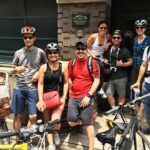
This is also a private experience. That matters in Kyoto, where a quiet temple visit can feel very different from a stop made with a large group. With only your own party, you can ask questions, pause for photos, and spend a little more or less time at a place within the limits of the schedule.
A few more Kyoto tours and experiences worth a look
Starting at Toji and Umekoji Park
Meet Jaime at 9 a.m. outside the 7-Eleven at 44-1 Higashikujō Kamitonodachō in Minami Ward. The tour begins near Toji, one of Kyoto’s best-known Buddhist temples and a UNESCO World Heritage Site.
Toji is famous for its five-story pagoda, the tallest wooden tower in Japan. You have about 15 minutes here, enough for a peaceful look around the grounds and an introduction to the temple’s place in Kyoto. The short stop works well at the start of a long day because it gives you an important sight without using too much of your riding time.
Next comes Umekoji Park. The route shifts from temple grounds to open green space, with trees, seasonal flowers, and a pond. This is a useful contrast. Kyoto is often pictured as a city of lanes and wooden buildings, but the park shows you where local residents go for breathing room.
The early section also passes through the Ryukoku University Omiya Campus. You have about 10 minutes here. The campus connects Kyoto’s Buddhist traditions with present-day education, since the university was founded by the Nishi Hongwanji sect. It is not a major sightseeing stop, but it gives the ride a more ordinary, lived-in quality.
Nishi Honganji and the city’s Buddhist heart
Nishi Honganji receives about 30 minutes, making it one of the more substantial early stops. This major Jodo Shinshu temple is also a UNESCO site, known for its broad courtyard and fine wooden buildings.
I like the placement of Nishi Honganji in this route. Many Kyoto visitors rush toward the eastern temple districts and leave the western side of central Kyoto unexplored. Here, you get an important religious site before the ride moves toward the Kamo River and eastern Kyoto.
Your guide explains the temple’s role and architecture while you walk through the grounds. Since admission is free, there is no extra entry charge at this point. The tour is not built around lengthy indoor visits, so expect an outdoor introduction rather than a slow, detailed examination of every building.
From here, the bicycle becomes the main sightseeing tool. You ride toward the Kamo River, one of the best places in Kyoto to see the city at a relaxed pace.
Following the Kamo River toward Miyagawacho
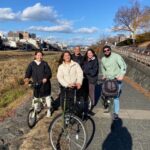
The Kamo River gives the day a welcome change of rhythm. People use its banks for walking, jogging, resting, and enjoying the water. Cycling beside it lets you see Kyoto’s urban life without the traffic and walls that surround many temple compounds.
The route then reaches Miyagawacho, a quieter geisha district near Gion. Its narrow lanes and traditional buildings offer a more subdued look at old Kyoto than the city’s most famous entertainment quarter.
You should keep your expectations sensible here. This is a ride through a historic district, not a guaranteed geisha encounter or performance. The value lies in seeing the streets respectfully and learning about the area’s connection to geiko and maiko culture.
This section is one of the reasons I prefer the tour to a standard temple checklist. You are not only collecting photographs of major gates. You are also moving through neighborhoods where Kyoto’s older character remains part of the street scene.
Heian Shrine and the Lake Biwa Canal
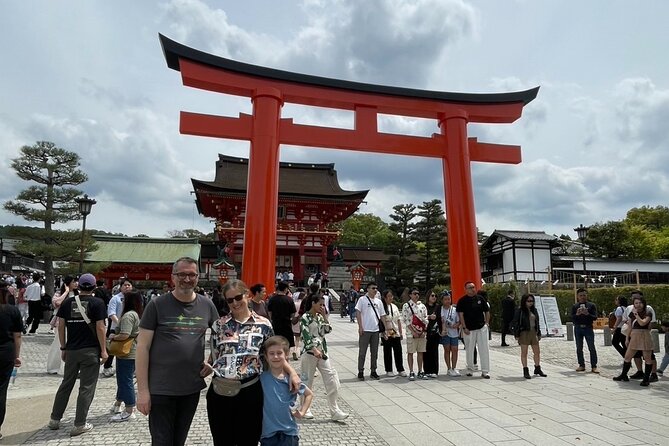
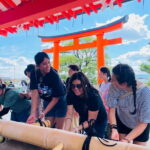
Heian Shrine is a short stop of about 10 minutes. Its huge vermilion torii and brightly colored buildings are based on the ancient Imperial Palace, and the shrine was built in 1895 to mark Kyoto’s 1,100th anniversary.
The stop is designed for orientation and photographs rather than a long visit. The scale and color make it a strong visual break after the quieter river ride. You’ll also see one of Japan’s largest torii nearby, adding a sense of the shrine’s monumental design.
The route continues to the Lake Biwa Canal and the Biwa Aqueduct Museum, where you have about 10 minutes. The canal was an ambitious engineering project from the 1890s, built to bring water, electricity, and renewed economic energy to Kyoto after the capital moved to Tokyo.
That piece of history is easy to miss if you focus only on temples. The canal shows how Kyoto adapted to modern pressures while keeping its older religious and artistic identity. The small museum gives context, though the short stop means you should expect a brief visit rather than a detailed technical tour.
Other cycling tours in Kyoto


Nanzen-ji and the red-brick aqueduct
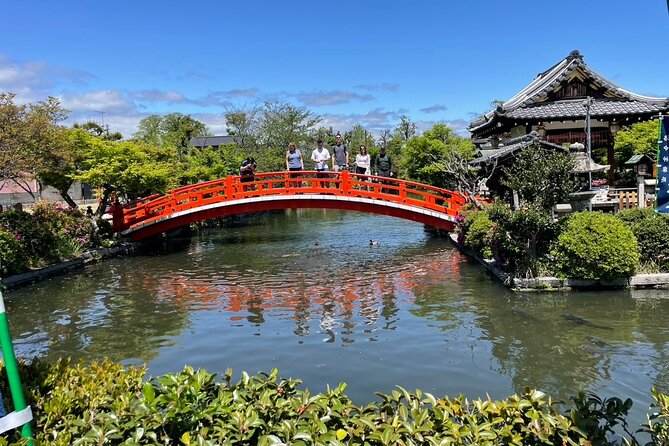
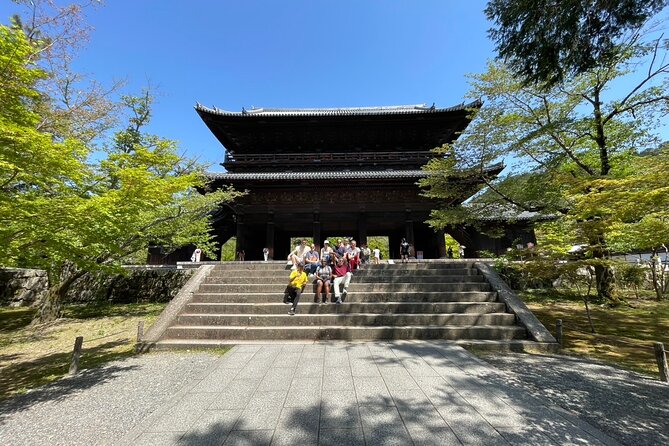
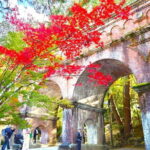
Nanzen-ji receives about 25 minutes. This is one of Kyoto’s major Zen temples, founded in the 13th century and known for its large Sanmon gate, gardens, and red-brick aqueduct.
The aqueduct is especially memorable because it runs through the temple grounds and looks unlike the wooden architecture found at many other stops. Its brick arches bring the Lake Biwa Canal story into the temple district, linking engineering and religion in one place.
The time here should let you see the main visual highlights and hear the basic background from Jaime. It will not allow an unhurried visit to every garden or building, so anyone wanting a detailed Nanzen-ji exploration should plan a separate return visit.
Still, this is a well-chosen stop for a bike route. The temple sits near the eastern hills, and cycling brings you close to the next part of the day without requiring a complicated transfer.
The Philosopher’s Path at a slower pace
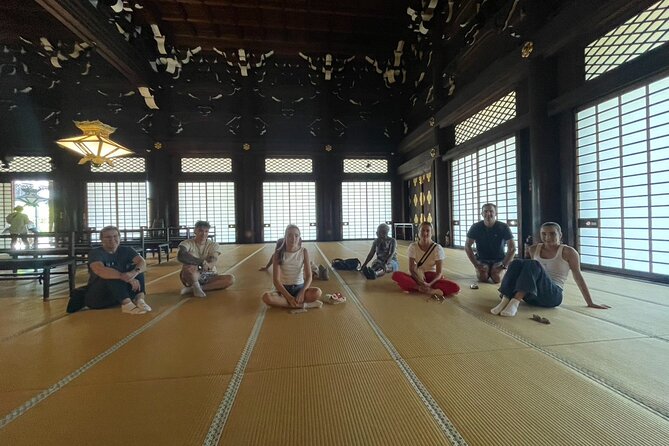
The Philosopher’s Path follows a canal beneath rows of cherry trees. Its name comes from Nishida Kitaro, a Kyoto University professor who used the route while thinking and walking.
The path is best known in spring, but its appeal is not limited to cherry blossom season. The canal, trees, and narrow walkway create a calmer stretch after the larger shrine and temple compounds.
You should be ready for slower riding here. The path is not a broad road built for fast cycling, and the tour specifically requires you to maneuver safely on narrow paths. That is one reason the moderate fitness requirement includes bike skills, not just stamina.
The route’s quiet character is a strength, but it can also be affected by crowds at popular times. Jaime’s guidance is useful because the ride needs to balance sightseeing with courtesy toward people walking along the canal.
Honen-in, a quiet temple in the hills
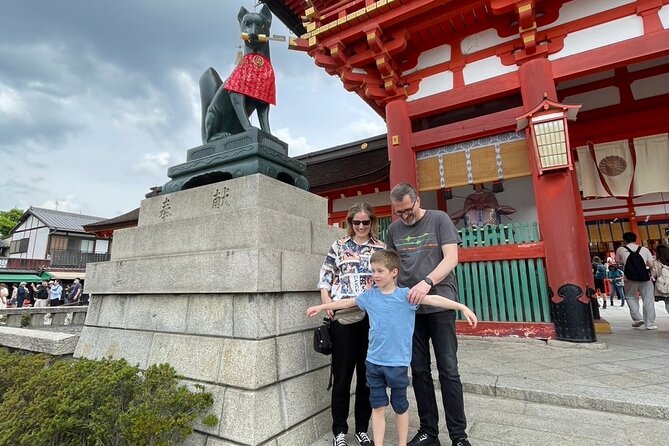
Honen-in gets about 20 minutes and is one of the day’s more peaceful stops. The temple is tucked into the hills and was founded in the 1600s to honor the Buddhist priest Honen, who helped spread Pure Land teachings.
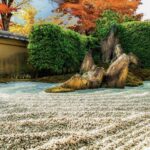
Its mossy gate and white sand patterns give the visit a gentler mood than the grander temples earlier in the day. The sand designs are carefully maintained and change over time, so this is a place to pause and look closely rather than hurry through with a checklist.
I especially like that Honen-in appears alongside Ginkakuji. The two are close enough to connect easily, but they offer different experiences. Honen-in feels restrained and quiet, while the Silver Pavilion is one of Kyoto’s major attractions.
As always, remember that quiet temples depend on respectful behavior. Keep voices low and follow any instructions about where bicycles may be left or where you may walk.
Ginkakuji, the Silver Pavilion that was never silver
Ginkakuji, or the Silver Pavilion, is the longest temple visit in the eastern section, with about 25 minutes and admission included.
The pavilion was built in the late 1400s by shogun Ashikaga Yoshimasa. Despite its name, it was never covered in silver. The building itself is only part of the appeal. The grounds and garden design make the visit worthwhile, especially when you take time to notice how the structures sit within the wooded setting.
Twenty-five minutes gives you a clear look at the principal area, but it is still a compact visit. Ginkakuji can reward a longer, slower examination, so you may want to return independently if gardens and architecture are a major reason for your Kyoto trip.
The included admission is useful here, since this is the one listed stop with an entry ticket included. The other temple and shrine visits do not list separate admission charges.
Finishing through Gion’s traditional lanes
The final major stop is Gion, Kyoto’s most famous geisha district. You have about 15 minutes to ride through lanes lined with traditional wooden machiya houses and learn about geiko and maiko culture.
Gion is often crowded, particularly around its best-known streets. The tour’s bicycle route helps you see more than one viewpoint, but you should not expect the district to feel empty. The quieter Miyagawacho stop earlier in the day may actually offer the more relaxed neighborhood experience.
A short Gion visit is enough to understand the district’s layout and traditional appearance. It is not enough for a full museum visit, evening performance, or extended meal. Think of it as the final chapter of a route that has already shown you several sides of Kyoto’s older quarters.
The activity ends back at the original meeting point. After seven to eight hours and roughly 32 kilometers, you will likely appreciate not having to arrange a separate return transfer.
What the $128.48 price includes
The $128.48 per-person price covers use of an e-bike and the private guided route. It also includes admission to Ginkakuji. Most of the other listed stops are free to enter.
The price makes the most sense for you if you value time and local orientation. You are paying to connect far-flung places in one day, avoid figuring out several transport links, and receive explanations from Jaime along the way.
It is less compelling if you prefer to spend an hour or two inside each temple. The schedule visits many places, but several stops last only 10 to 25 minutes. You gain range and variety, while giving up the slow pace of a single-district walking tour.
Lunch is not included. One account of the experience describes lunch as enjoyable, but you should treat food as an extra cost and ask Jaime how the meal stop fits into that day’s timing.
Fitness, bikes, weather, and timing
You need moderate physical fitness for this experience. The stated distance is about 32 kilometers, and you must be comfortable riding and steering on narrow paths. An e-bike reduces effort, but it does not turn the activity into a passive sightseeing ride.
Wear practical clothes and shoes suitable for several hours of cycling and walking. The tour begins at 9 a.m., lasts roughly seven to eight hours, and requires good weather. If poor conditions cancel the ride, you can choose another date or receive a full refund.
The booking offers free cancellation up to 24 hours before the start time. Changes or cancellations inside that window are not accepted for a refund. The activity may also be canceled if its minimum number is not met, with another date or a refund offered.
Who will get the most from this ride
I would choose this tour if you have at least one full day in Kyoto and want a broad introduction without spending the day on buses. It is particularly suited to couples, families with older children, friends, or solo visitors who like having a private guide.
It also works well early in a Kyoto stay. The route helps you understand how Toji, central Kyoto, the Kamo River, the eastern temple district, and Gion relate to one another. You can then decide which places deserve a longer return visit.
I would think twice if you dislike long bike rides, tire quickly in warm weather, or want a completely unhurried temple experience. The private format gives you flexibility, but the distance and number of stops still make this an active, full schedule.
Should you book the Discover Kyoto by Bike tour?
Book it if you want to cover a lot of Kyoto by e-bike while still seeing quiet lanes and less familiar places. The mix of Toji, Nishi Honganji, the Kamo River, Miyagawacho, Nanzen-ji, Honen-in, Ginkakuji, and Gion gives you much more variety than a single temple walk.
Skip it if 32 kilometers sounds intimidating or if your priority is extended time inside each major temple. For the right rider, the private format, local guidance from Jaime, and access to backstreets make the $128.48 price reasonable. Just plan for lunch as an extra and arrive ready for a full day outdoors.
FAQ
How long does the Discover Kyoto by Bike tour last?
The tour lasts approximately seven to eight hours.
What time does the tour start?
It starts at 9:00 a.m.
Where do I meet the guide?
The meeting point is the 7-Eleven at 44-1 Higashikujō Kamitonodachō, Minami Ward, Kyoto, 601-8002, Japan.
Where does the tour end?
The activity ends back at the original meeting point.
Is the tour private?
Yes. Only your group participates in the activity.
Is an e-bike included?
Yes. Use of an e-bike is included in the tour.
How far do I need to ride?
You need to be fit enough to ride approximately 32 kilometers and maneuver safely on narrow paths.
Is lunch included?
No. Lunch is not included in the tour price.
What happens if the weather is poor?
The experience requires good weather. If it is canceled because of poor weather, you can choose another date or receive a full refund.
More Full-Day in Kyoto
More Cycling Tours in Kyoto
More Kyoto Cycling Tours in Kyoto
More tours in Kyoto we've reviewed
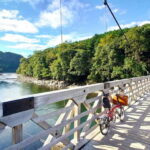
Kyoto Cycling Tours, compared.
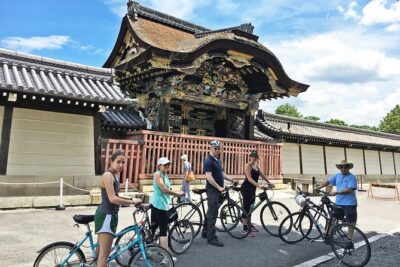 ★ 5.0Bike Tour Exploring North Kyoto plus LunchFrom $106
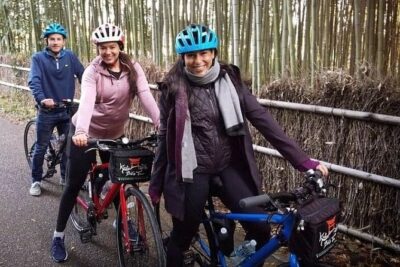 ★ 5.05 Top Highlights of Kyoto Full Day Bike Tour (E-bike option)From $172
 ★ 5.0E-Bike Tours of the highlights of Kyoto!!!From $109
 ★ 5.0Afternoon Kyoto Bike Tour: Bamboo Forest, Monkeys & Hidden SpotsFrom $106
 ★ 5.0South Kyoto in a Nutshell: Gentle Backstreet Bike Tour!From $79
 ★ 4.9Kyoto: City Secrets eBike TourFrom $1273h 45m
 ★ 5.0Pedal Adventure Kyoto’s iconic landmarks on an e-bike tourFrom $86
 ★ 4.9Kyoto: Hidden Gems E-Bike Tour with Local Japanese GuideFrom $753h 30m
Browse the lists this tour appears in