
Reviewed · KYOTO CYCLING TOURS
Cycle Kyoto’s Hidden Gems & Gion Stroll
Kyoto reveals its quieter side from a bicycle seat. This tour follows riverside paths, residential lanes, university grounds, shrines, and temple approaches that are easy to miss when you move around only by bus. I like the mix of major sights and peaceful local corners, especially the Imperial Palace and Shimogamo Shrine. I also like that the walking finish includes Japanese tea and sweets at a traditional snack shop.
The guides, including Benjamin, Ko, Claire, and Mr. Go, are described as friendly and attentive, with Mr. Go earning special praise for patiently helping two children aged nine and ten. The main caution is simple: this is not a sightseeing bus ride. You need to ride a bicycle comfortably, and children under nine cannot join. Hot, humid weather or rain may also affect your enjoyment.
In This Review
- Key points to know before you book
- Why a bicycle works so well in Kyoto
- Starting beside Sanjo Ohashi
- Along the river and toward a quiet shrine
- The Imperial Palace gives the ride scale
- A Zen temple and the quieter side of central Kyoto
- Shimogamo Shrine and its primitive forest
- The river junction and the ride back
- Tea, sweets, and a short walk in Gion or Pontocho
- What the $73 price really covers
- Who will enjoy this Kyoto outing most
- Should you book Cycle Kyoto’s Hidden Gems and Gion Stroll?
- FAQ
- How long does the experience last?
- Where does the tour begin?
- Where does the tour finish?
- Is a bicycle included?
- Can I request an electric bicycle?
- Is the tour suitable for children?
- What places are visited during the ride?
- Does the walking portion always take place in Gion?
- What is included besides the bike?
- Does the tour run in bad weather?
Key points to know before you book
- A quiet route through central Kyoto: Ride beside the river, through residential areas, and past university campuses rather than staying only on the usual tourist streets.
- Several worthwhile stops: The route includes the Imperial Palace, a Zen temple, Shimogamo Shrine, a natural spring, and a distinctive river junction.
- A gentle cultural finish: After the ride, spend about 30 minutes walking in Gion or Pontocho and learn how Kyoto’s geisha districts work.
- Tea and sweets are included: The traditional snack shop stop adds a small but welcome taste of everyday Japanese hospitality.
- Good for cycling families: Children aged nine and older can join, and guides have shown patience with younger riders.
- Plan for the bike upgrade: A standard rental bike is included, while an electric bike costs an extra 1,000 yen, paid locally.
Why a bicycle works so well in Kyoto
Kyoto’s central sights are not far apart on a map, but moving between them can be slow. Buses fill up, traffic lights interrupt your progress, and walking all day can leave you tired before the best parts of the city appear.
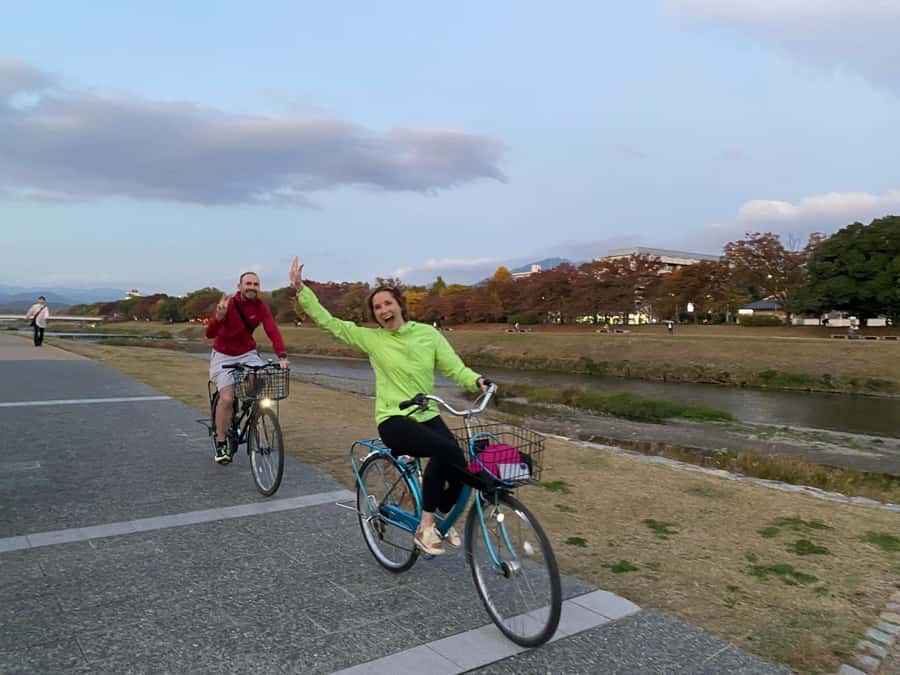
A bicycle changes the pace. You cover enough ground to see several districts, but you still move slowly enough to notice trees, old walls, small shrines, and the shape of the streets. I like that this outing uses the open air as part of the experience. You feel the weather, hear the city, and get a clearer sense of how the river corridors connect Kyoto.
The route is also designed for variety. You are not simply pedaling from one famous sight to another. The ride begins on a quiet riverside road, then shifts between historic sites, campus areas, residential streets, wooded shrine grounds, and another riverside stretch on the way back.
That variety matters. Kyoto can feel crowded around its most famous temples, but a bicycle lets you see a calmer side of the city without giving up the major landmarks entirely.
A few more Kyoto tours and experiences worth a look

Starting beside Sanjo Ohashi
The meeting point is at the kneeling man statue on the southeast corner of the Sanjo Ohashi intersection. From the east end of Sanjo Ohashi Bridge, cross the street and look for the statue.
This is a practical location in central Kyoto, but take a moment to find it before the start time. If you arrive by subway, the instructions advise going up to street level first, then locating the statue. You do not want to be searching around the intersection while the group is preparing the bikes.
The tour ends back at this same meeting point. That makes the outing easy to fit into a day of sightseeing, though you should not bring luggage or a large bag. Comfortable shoes, water, a camera, and clothing suited to the weather are the sensible basics.
Along the river and toward a quiet shrine
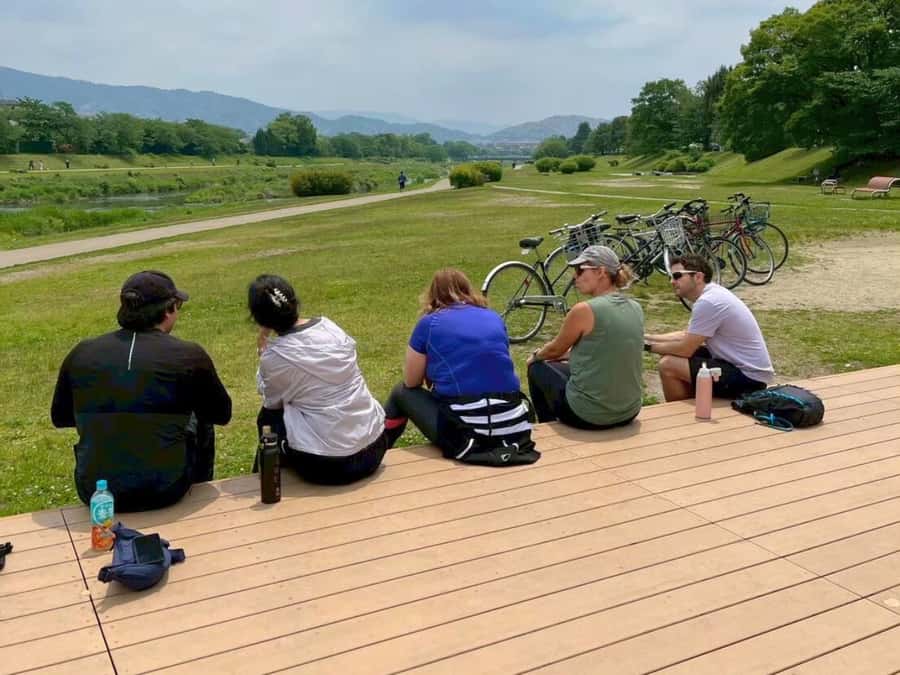
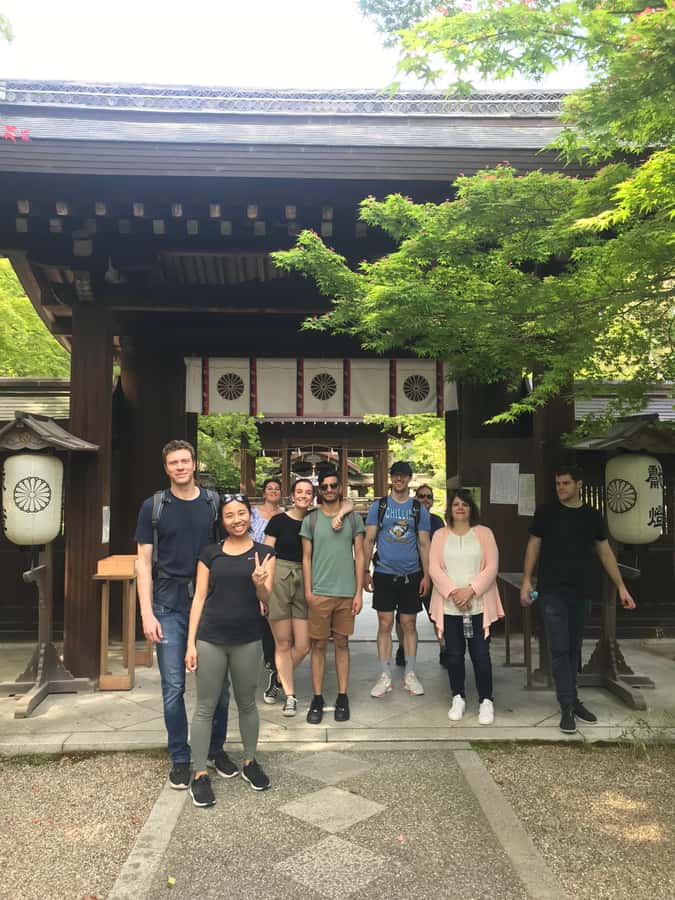
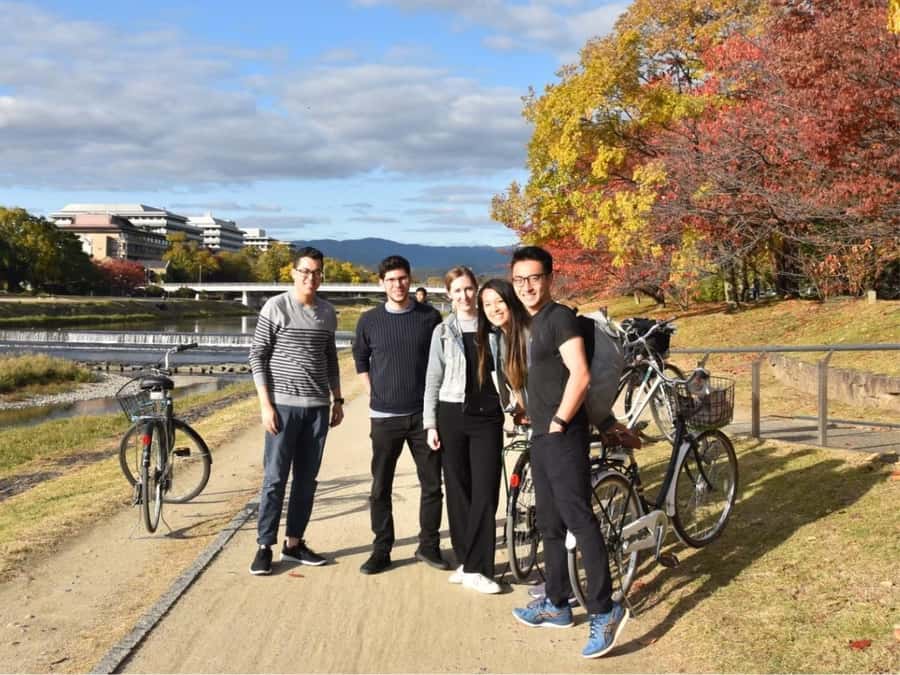
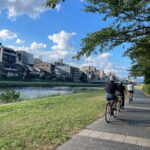
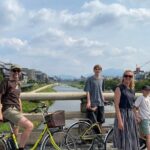
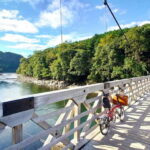
The first part of the ride follows a peaceful riverside road. This is one of the most appealing sections for families and anyone who wants a break from Kyoto’s traffic. You get open sky, moving water, and a relatively relaxed start before the more structured sightseeing begins.
The group stops at a lesser-known shrine where you can try natural spring water. That small stop gives the route a local feel. It is not simply a photo opportunity, but a chance to connect the shrine with one of the everyday traditions that make Kyoto’s sacred places feel lived in.
The ride itself is described as refreshing, but you should still judge your fitness honestly. The tour is not suitable for anyone who cannot ride a bike. Children under nine are excluded, while children aged nine and ten have joined successfully with patient guide support.
An electric bike is available for an additional 1,000 yen. I would consider it if you are worried about heat, hills, stamina, or keeping pace with a group. The standard bike is included in the $73 price, so the upgrade is optional rather than a hidden required charge.
The Imperial Palace gives the ride scale
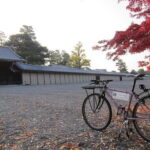
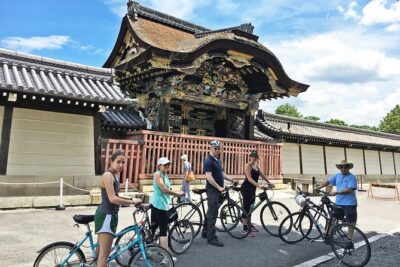
The Imperial Palace is one of the route’s major stops and provides a strong contrast with the narrow streets and smaller shrines. Its large grounds give you a sense of Kyoto’s former role as Japan’s imperial capital.
The attraction here is scale and setting rather than a long indoor visit. You can take in broad paths, trees, and formal spaces before returning to the bicycle route. The palace also helps anchor the day. After riding through quiet corners, you suddenly reach one of the city’s best-known landmarks.
Because the tour covers several places in a limited time, do not expect a full palace complex tour or a long independent visit. The guide-led format is better for orientation and variety than for examining every building in detail.
That tradeoff suits me. If you have only one morning or afternoon, combining the palace with temples, a shrine, and riverside riding gives you more range than spending the same time at one large site.
A Zen temple and the quieter side of central Kyoto
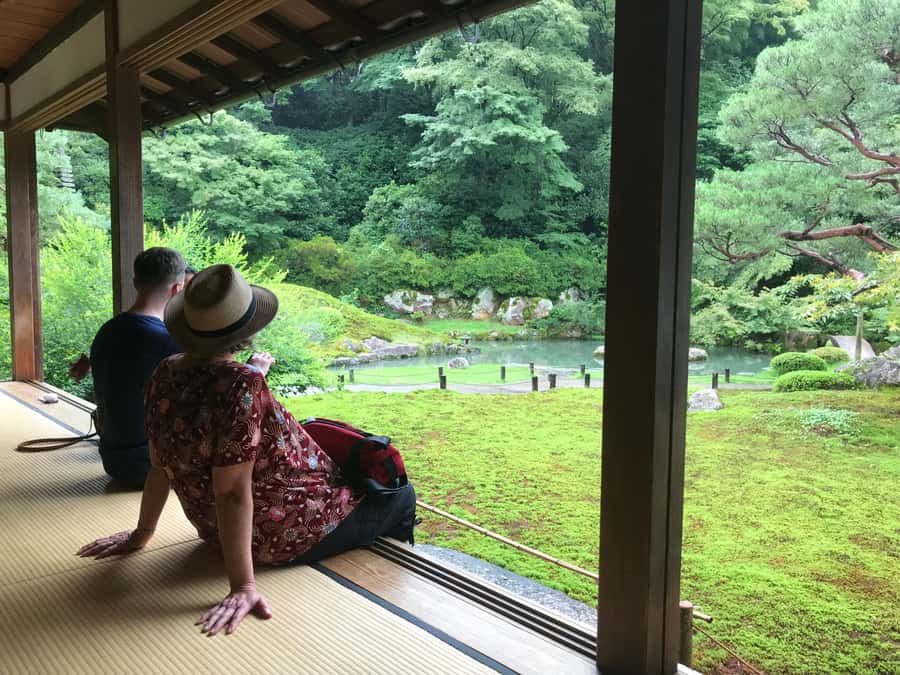
The itinerary includes a famous Zen temple, though the exact temple may change. That flexibility is important. The destinations are examples rather than a fixed promise, and the route can adjust according to conditions.
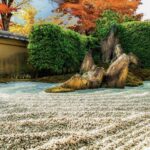
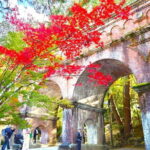
A Zen temple stop adds a different kind of calm to the day. After the movement of the bicycle ride, the temple provides a chance to slow down and notice architecture, garden space, and the restrained atmosphere associated with Zen sites.
The guide’s explanations are useful here because temple details can otherwise blur together during a busy Japan trip. Guides such as Benjamin, Ko, Claire, and Mr. Go have been praised for clear explanations and thoughtful care, but the specific guide assigned to your date is not guaranteed.
The ride also passes university campuses and quiet residential areas. These sections may sound less dramatic than a temple, but they are part of what makes the route worthwhile. You see how Kyoto functions beyond its postcard sights, with ordinary streets linking the historic center to the river and shrine districts.
A few more Kyoto tours and experiences worth a look


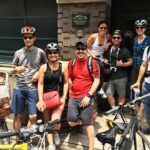
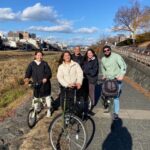
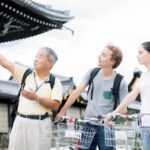
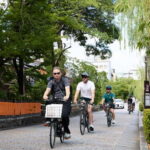
Shimogamo Shrine and its primitive forest
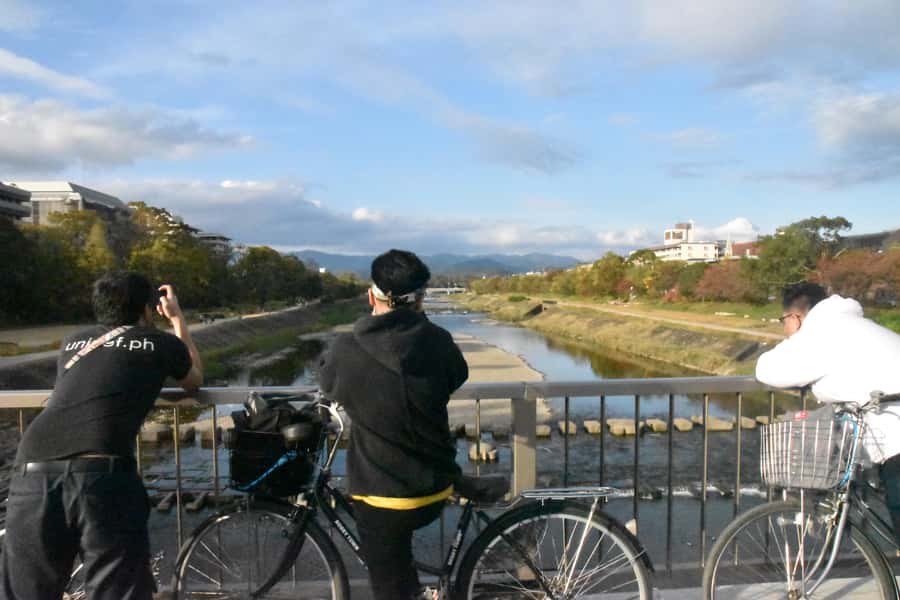
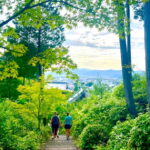
Shimogamo Shrine is a UNESCO World Heritage site and one of the strongest stops on the route. Its grounds include a primitive forest, beautiful shrine buildings, and a feeling of separation from the busy city nearby.
The forest is especially valuable on a warm day. Kyoto summers can be hot and humid, and the trees offer shade and a change of pace. You also get a more natural setting than the formal grounds of the Imperial Palace.
This is the kind of place that rewards a guide. A large shrine can seem confusing if you do not know which buildings matter or how the spaces fit together. You can ask questions, take photographs, and enjoy the quiet without needing to plan the route yourself.
Still, remember that bicycle tours are time-managed. You will not have unlimited time at Shimogamo Shrine. If this is the one place you most want to study, a separate visit may be better. On this outing, its value comes from being part of a well-paced sequence.
The river junction and the ride back
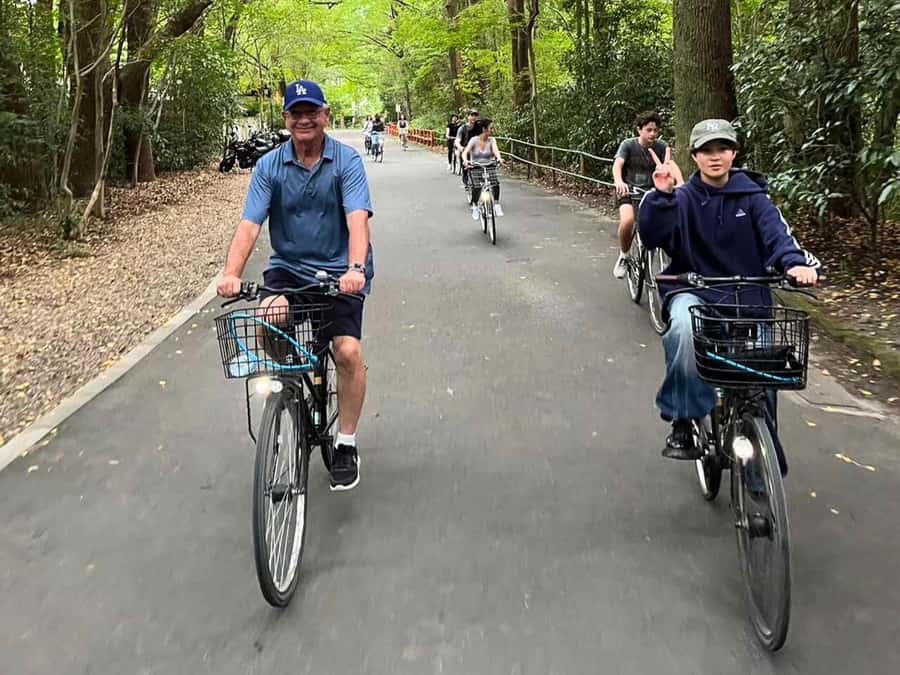
After Shimogamo Shrine, the route heads toward a unique river junction point. The exact appeal depends on the conditions and the guide’s chosen route, but the stop adds a geographic feature to the day instead of another temple or shrine.
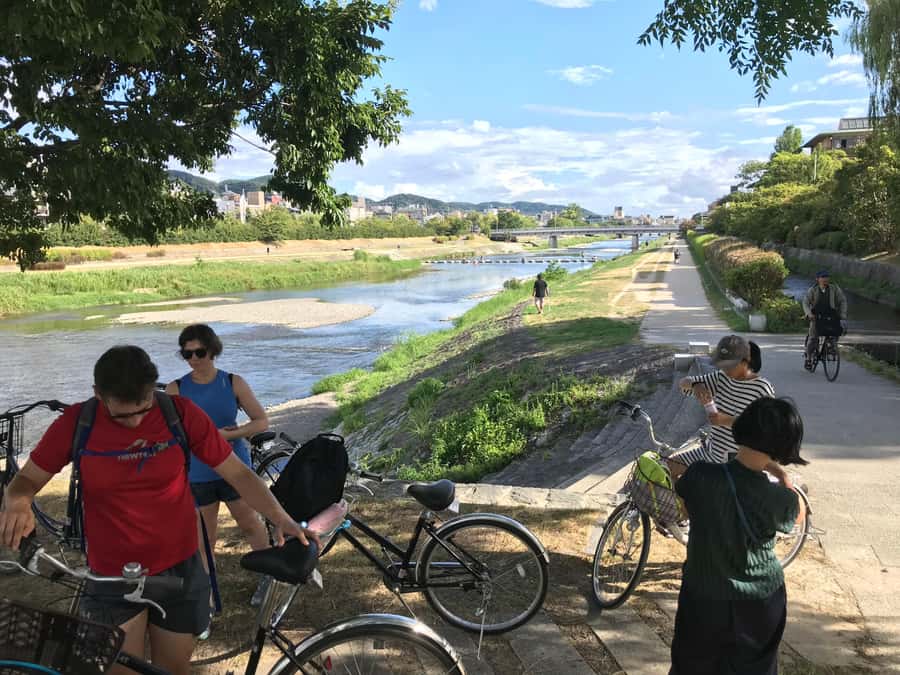
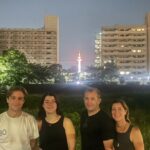
From there, you follow a scenic riverside route back toward the starting point. The description refers to a refreshing, lighted-up riverside, giving this final section a pleasant change from the earlier roads.
I like ending with a return along the water. You have already seen several historic sites, so the last stretch does not need another major attraction. It lets you enjoy the simple pleasure of cycling through Kyoto, with the city opening up around you.
The route is also efficient. A bicycle allows the group to link places that might require several separate bus rides. That efficiency is one reason the $73 price can make sense, particularly if you value a guide, bike rental, and a planned route rather than arranging every connection yourself.
Tea, sweets, and a short walk in Gion or Pontocho
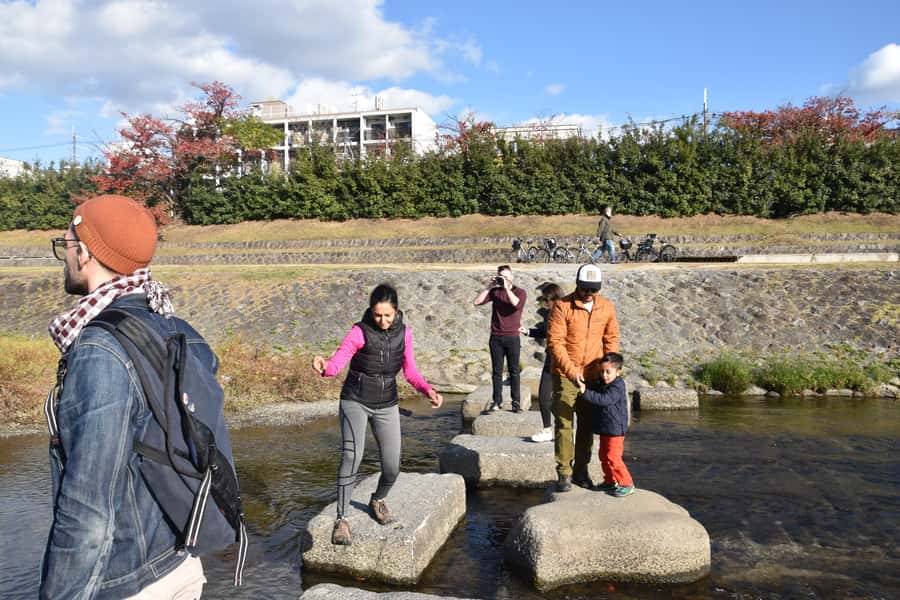
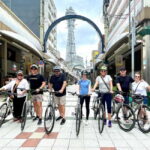
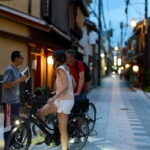
After returning the bikes, the tour continues with about 30 minutes on foot in either Gion or Pontocho. These are Kyoto’s best-known entertainment districts, with narrow, photogenic streets and traditional Flower Towns, the areas associated with geisha culture.
The walking portion is brief, so think of it as an introduction rather than a full evening in Gion. You will hear how the geisha system works and learn about the role of these districts. If you are lucky, you might see a geisha, but that is never something you should count on or chase.
The guide can also suggest restaurants and bars based on your requests. This is a useful extra at the end of a day, especially if you are unsure how to choose among the many dining options around Gion or Pontocho. Ask early about the type of food, budget, or atmosphere you want.
The included stop at a traditional snack shop is another nice touch. Japanese tea and sweet snacks are provided, giving you a short rest after the ride and a taste of a more traditional setting. This is a small inclusion, but it helps the activity feel more complete than a standard bike rental with a guide.
What the $73 price really covers
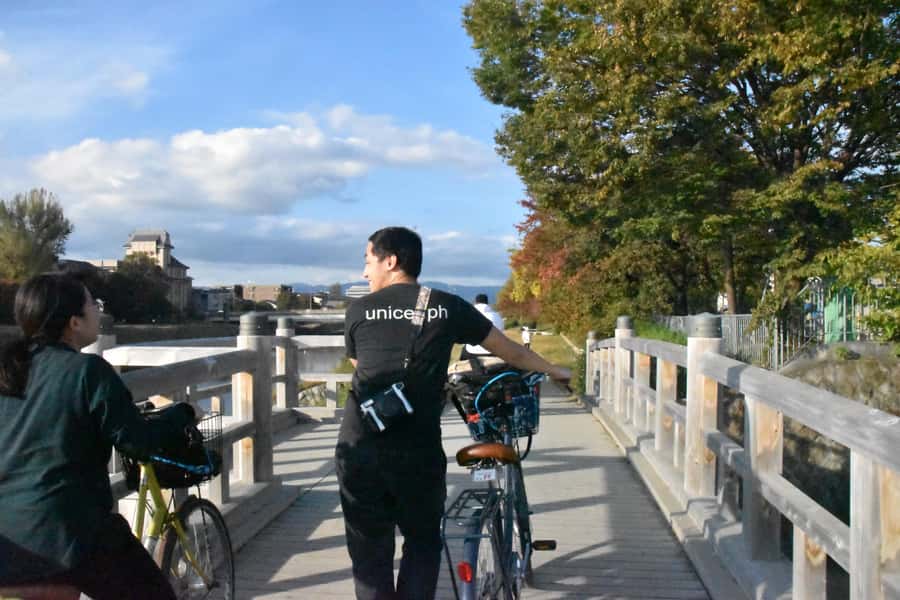
At $73 per person, the tour is not the cheapest way to rent a bicycle in Kyoto. You are paying for more than wheels, though. The price includes the rental bike, the guide, the planned route, Japanese tea, sweet snacks, and any temple or shrine entrance fee required for an alternative rainy-day plan.
The strongest value is the route planning. You could visit the Imperial Palace and Shimogamo Shrine independently, but linking them with a spring-water stop, riverside roads, a Zen temple, residential areas, and a Gion or Pontocho walk takes time and local knowledge.
The price is also easier to justify if you are visiting Kyoto for a short stay. In roughly four hours, you get a broad introduction to the city and several ideas for places to return to later.
It is less compelling if you already know Kyoto well, dislike guided activities, or want long visits at each temple. You may prefer renting a bike independently and setting your own pace.
Rain does not automatically cancel the experience. It operates in rain or shine, and the destinations may change. If rain affects the cycling plan, an alternative temple or shrine plan may include entrance fees. Bring weather-appropriate clothing and understand that a rainy-day version may feel different from the riverside ride described here.
Who will enjoy this Kyoto outing most
I would recommend it most strongly to families with children aged nine and older, first-time Kyoto visitors, and active adults who want to cover ground without spending the whole day on buses.
The family angle is convincing because the route includes frequent points of interest, open-air riding, and patient guide support. Mr. Go was specifically praised for helping two children aged nine and ten, while other guides have been described as friendly and attentive.
It also suits you if you want a mix of famous and quieter places. The Imperial Palace and Shimogamo Shrine give the day recognizable landmarks, while the river roads, spring, residential areas, and campuses keep it from feeling like a checklist.
You should think twice if you cannot ride comfortably, dislike humid weather, or want a slow architectural study. Smoking, pets, luggage, and large bags are not allowed, so arrive ready for a moving outdoor activity rather than a casual city walk.
Cancel at least 24 hours ahead for a full refund. You can reserve now and pay later, which is helpful if your Japan schedule is still shifting.
Should you book Cycle Kyoto’s Hidden Gems and Gion Stroll?
Book it if you want an active, well-planned introduction to Kyoto that combines riverside riding, major cultural sites, quiet streets, and a short geisha-district walk. The strongest reasons are the varied route, the included bike and refreshments, and the care shown by guides such as Benjamin, Ko, Claire, and Mr. Go.
Skip it if cycling is not comfortable for you, if you need a completely fixed itinerary, or if you prefer spending half a day at one temple. For everyone else, $73 is a fair price for a compact outing that shows you more of Kyoto than the usual central walking circuit.
FAQ
How long does the experience last?
The activity includes about 3.5 hours of cycling and a 30-minute walking portion, for roughly four hours in total.
Where does the tour begin?
It begins at the kneeling man statue at the southeast corner of the Sanjo Ohashi intersection. From the east end of Sanjo Ohashi Bridge, cross the street and look for the statue.
Where does the tour finish?
The activity ends back at the Sanjo Ohashi meeting point.
Is a bicycle included?
Yes. Rental of a standard bicycle is included in the price.
Can I request an electric bicycle?
Yes. An electric bike costs an additional 1,000 yen, paid on the spot.
Is the tour suitable for children?
Children under nine cannot join. Children aged nine and older can participate if they can ride a bicycle comfortably.
What places are visited during the ride?
The route may include a riverside road, a shrine with natural spring water, the Imperial Palace, a Zen temple, university campuses, residential areas, Shimogamo Shrine, and a distinctive river junction.
Does the walking portion always take place in Gion?
The walk takes place in either Gion or Pontocho. The exact destination can vary.
What is included besides the bike?
Japanese sweet snacks and Japanese tea at a traditional snack shop are included. Entrance fees for a temple or shrine used in an alternative rainy-day plan are also included.
Does the tour run in bad weather?
Yes. It operates in rain or shine, but the destinations are examples and may change. You should bring weather-appropriate clothing.
More Cycling Tours in Kyoto
More Backstreet & Hidden Rides in Kyoto
More Kyoto Cycling Tours in Kyoto
More tours in Kyoto we've reviewed


Kyoto Cycling Tours, compared.
 ★ 5.0Bike Tour Exploring North Kyoto plus LunchFrom $106
 ★ 5.05 Top Highlights of Kyoto Full Day Bike Tour (E-bike option)From $172
 ★ 5.0E-Bike Tours of the highlights of Kyoto!!!From $109
 ★ 5.0Afternoon Kyoto Bike Tour: Bamboo Forest, Monkeys & Hidden SpotsFrom $106
 ★ 5.0South Kyoto in a Nutshell: Gentle Backstreet Bike Tour!From $79
 ★ 4.9Kyoto: City Secrets eBike TourFrom $1273h 45m
 ★ 5.0Pedal Adventure Kyoto’s iconic landmarks on an e-bike tourFrom $86
 ★ 4.9Kyoto: Hidden Gems E-Bike Tour with Local Japanese GuideFrom $753h 30m
Browse the lists this tour appears in