
Reviewed · KYOTO CYCLING TOURS
Kyoto Satoyama Cycling with Lunch and English Guide
Sonobe offers the kind of Kyoto experience most city visitors miss: quiet farm roads, mountain views, shrines, and running water instead of crowded lanes and souvenir shops. The English-speaking local guides, including Maki and Yasu, add a personal touch because they grew up in the area.
I like the freshly made soba lunch and the freedom to choose extra activities, such as a kimono photo or koto lesson. I also like that the e-bikes make rural cycling practical for a wide range of abilities. The main consideration is timing: optional stops can push the outing beyond 2 PM, and the tour needs good weather.
In This Review
- Key points to know before booking
- Why Sonobe makes a good change from central Kyoto
- E-bikes on quiet roads through Kyoto’s countryside
- Ikimi Tenmangu Shrine and prayers for study
- Sonobe Castle ruins and an unusual school entrance
- Making soba in a former elementary school
- Make Shrine and the agricultural roots of Tamba
- Picking two or three extra activities
- The value of local guides Maki and Yasu
- Timing, weather, and practical planning
- Who will enjoy this Sonobe outing most
- Should you book Kyoto Satoyama Cycling?
- FAQ
- How long does the Kyoto Satoyama cycling tour last?
- What time and where does the tour begin?
- Is lunch included?
- Can special diets be accommodated?
- What extra activities can I choose?
- What happens if bad weather cancels the tour?
Key points to know before booking
- Sonobe is close to Kyoto City: The meeting point is about a 30-minute train ride from central Kyoto, making this a manageable countryside day trip.
- Fresh soba is part of the experience: Course A includes hands-on noodle making with locally grown buckwheat, followed by a soba set meal.
- You choose extra activities: Depending on the time available, you can select two or three options, including a castle visit, shrine worship, spring water, kimono photos, koto, or Mt. Komugi.
- The tour is private: Only your group participates, which helps families, school groups, and friends set a comfortable pace.
- The cycling is scenic, not rushed: Travel between stops takes about 10 to 20 minutes, with time to notice fields, houses, shrines, trees, and mountain views.
- Food needs can be handled: Vegan, vegetarian, and allergy-friendly meals are available when requested in advance.
Why Sonobe makes a good change from central Kyoto
Central Kyoto is famous for temples, gardens, and narrow streets lined with cafés. Sonobe gives you a very different picture of Kyoto Prefecture, one shaped by fields, rivers, wooded hills, and small communities.
The area is known locally as Kyoto Satoyama. The word describes a rural zone where people and nature have long shared space. Here, you can hear birds and flowing water as you cycle between stops. That simple soundscape is part of the appeal. You are not just checking off sights. You are seeing how the countryside around Kyoto feels.
The tour begins at 10 AM in Sonobe, at Mizobe-6-21 Sonobechō Oyama Higashimachi in Nantan. The experience returns to the same meeting point. Since the tour is private, it works especially well for a family, a group of friends, or a school outing. Solo participants can also join, though the listed participation fee of 15,000 yen for one person makes the value better for a larger group.
The advertised price is $78.83 per person, while the additional information lists a participation fee of 15,000 yen for one person. Currency values can change, so check the final price shown when you book. For that cost, you are paying for an English guide, e-bike use, several stops, lunch, and a private format. That is a fair package if you want local food and countryside access rather than simply renting a bicycle.
A few more Kyoto Prefecture tours and experiences worth a look
E-bikes on quiet roads through Kyoto’s countryside
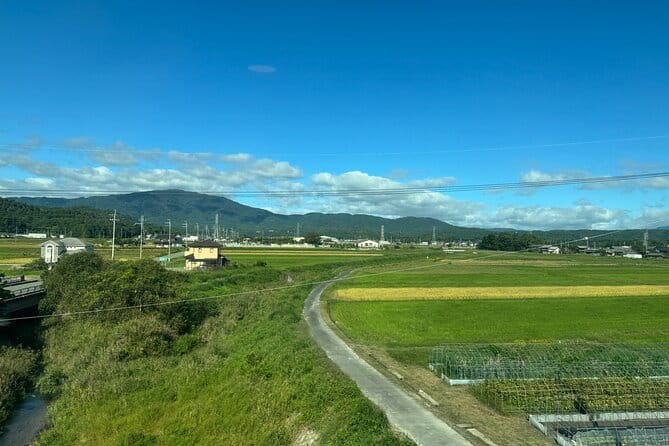
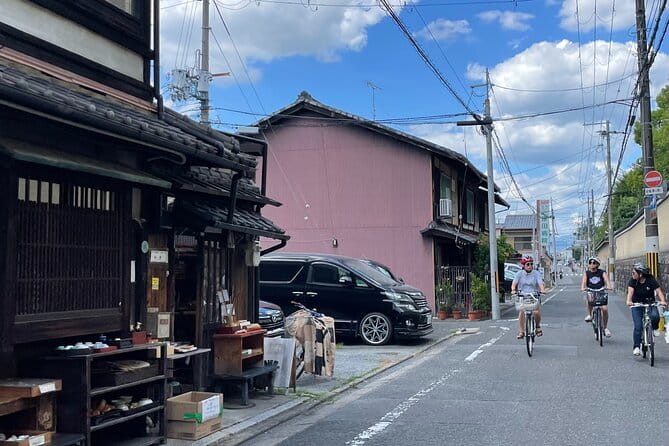
The cycling is the thread that holds the day together. You ride from one point to the next, with each stretch taking roughly 10 to 20 minutes. The short distances keep the focus on the surroundings rather than athletic effort.
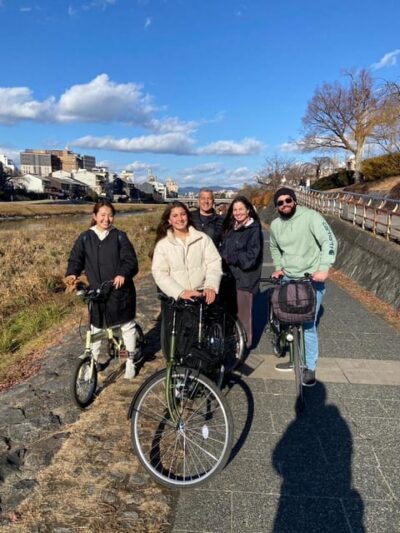
The e-bikes matter here. Sonobe includes rural roads and small rises, and electric assistance lets you enjoy the scenery without turning the outing into a fitness test. You can expect views of fields, Japanese homes, trees, and mountains. The tour is not designed as a long-distance cycling challenge, so I would choose it for a relaxed introduction to the area.
The guides also pay attention to comfort and weather. Information provided before one winter outing included advice on what to wear, and the team prepared disposable hand warmers and neck warmers. That does not mean you should arrive unprepared. Dress for the forecast, and remember that cycling can feel cooler than standing still.
Most people can participate, but the tour does involve riding between all four main stops. If you are unsure about your cycling ability, ask the operator before booking. The total duration includes bike travel, not just time spent at attractions.
Ikimi Tenmangu Shrine and prayers for study
The first stop is Ikimi Tenmangu Shrine, visited for about 10 minutes. It is described as the oldest Tenmangu Shrine in Japan and is dedicated to Sugawara no Michizane, a figure associated with learning and academic success.
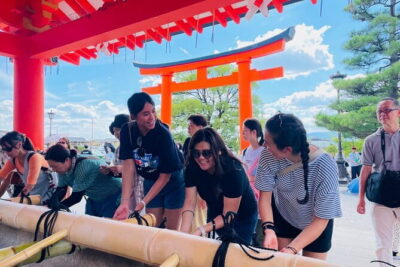
Many people visit Tenmangu shrines to pray before exams. That gives this brief stop a clear cultural purpose, rather than making it just another photo opportunity. Your guide can explain the proper way to worship, one of the optional activities included in the tour.
Ten minutes is enough for a quick introduction, but not for a long, quiet temple visit. If you want extended time at religious sites, you may find this portion brisk. The trade-off is that the tour covers several different sides of Sonobe without spending the entire morning at one place.
Sonobe Castle ruins and an unusual school entrance
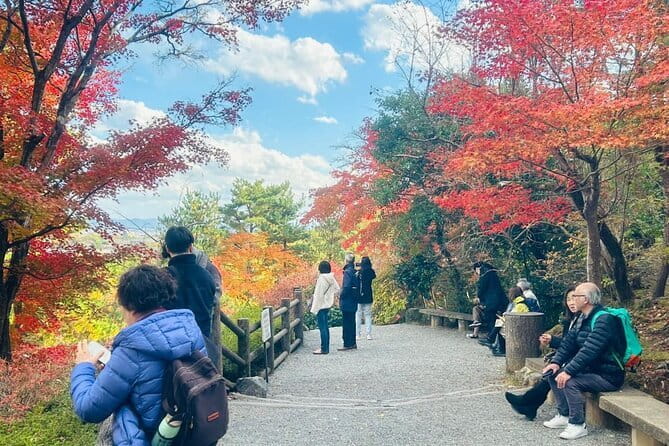
Next comes the ruins of Sonobe Castle, with about 20 minutes set aside. The remaining features include the main gate, castle walls, turrets, and a guardhouse. The most unusual detail is that the main gate now serves as the entrance to Sonobe High School.
The site is described as the last castle built in Japan. That claim gives the stop an interesting place in the country’s castle story, but you should expect remnants rather than a complete castle complex. The setting also shows how historic structures can continue to function in everyday community life.
A castle visit is one of the optional activities you can choose at the start. The itinerary includes the ruins, but the exact access or length of the visit can depend on the schedule. Allow the guide to set the pace, especially if your group selects several other extras.
Making soba in a former elementary school
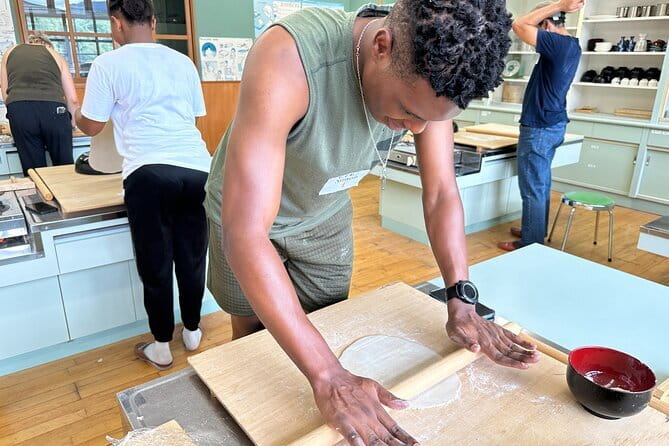
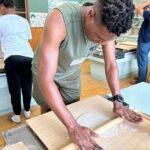
The longest stop is at the former Maki Elementary School, where you spend about one hour and 50 minutes. This is the heart of the outing for anyone who likes food with a sense of place.
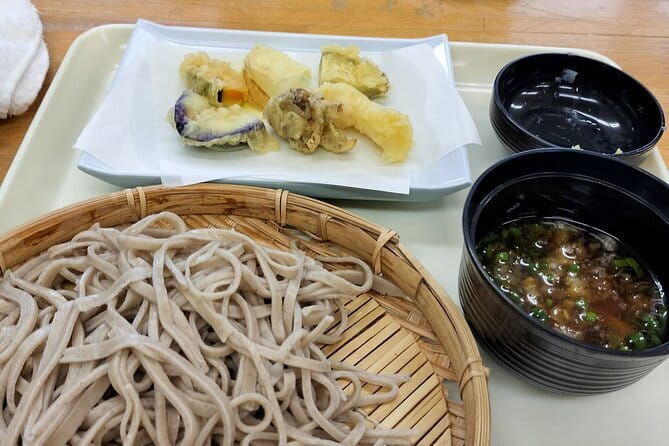
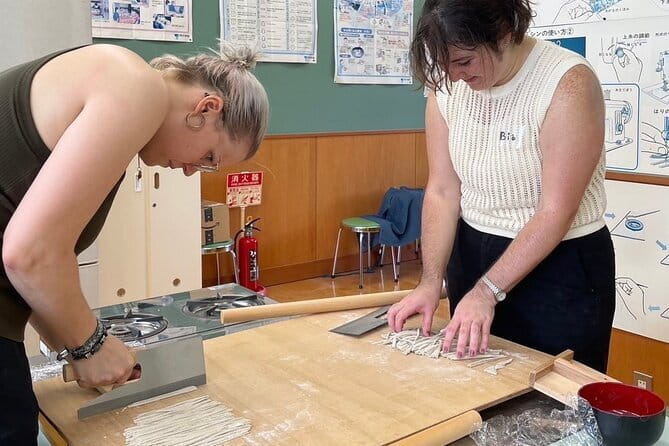
You use buckwheat flour harvested locally to make soba noodles by hand. Afterward, the noodles are freshly boiled and served as part of a set meal with tempura and rice balls. You are not simply handed a plate of noodles. You see part of the process and then eat what you helped prepare.
The school setting adds character. A closed elementary school reused for a food activity feels more connected to local life than a standard restaurant kitchen. It also gives the meal a clear link to the surrounding farms and rural economy.
Course A includes the soba-making session and soba set meal. Course B instead features local produce at a restaurant in a traditional Japanese house. If you are comparing the two, choose Course A when hands-on cooking is a priority. Choose Course B if you prefer a more relaxed meal in an old-style home.
The lunch stop takes up nearly half the tour, so food is not a small extra here. That is good news if you want a substantial cultural activity, but less appealing if you prefer to keep moving. Vegan, vegetarian, and allergy-friendly meals are available by request. Make that request before the day rather than waiting until you arrive.
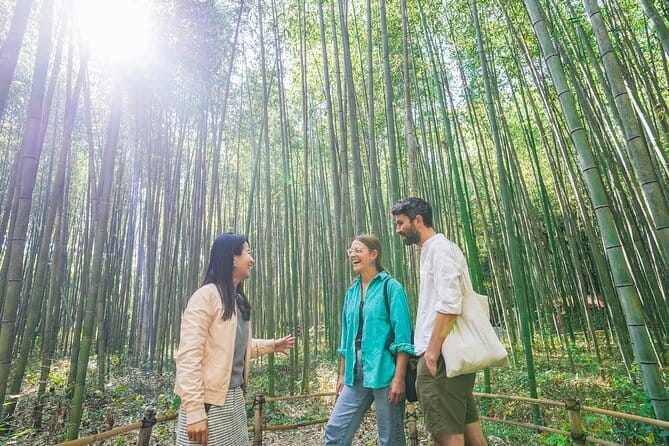
Make Shrine and the agricultural roots of Tamba
The final listed stop is Make Shrine, visited for about 30 minutes. The shrine honors the agricultural god of the Tamba region, an area that has historically helped supply food to Kyoto.
The main hall has a traditional thatched roof, an architectural detail that gives the stop a strong rural identity. You can also learn the proper worship method here. That small instruction is useful because Shinto shrine visits have simple rituals that many first-time visitors do not know.
This stop ties together the rest of the tour. The cycling shows the fields and villages, the soba uses local buckwheat, and Make Shrine connects agriculture with religious practice. It is a short visit, but it helps explain why the countryside around Kyoto matters to the city nearby.
Picking two or three extra activities
One of the best features is the ability to choose two or three additional experiences at the start. The choices include:
- Visiting the castle
- Worshipping at Shinto shrines
- Drinking spring water after going over a small mountain
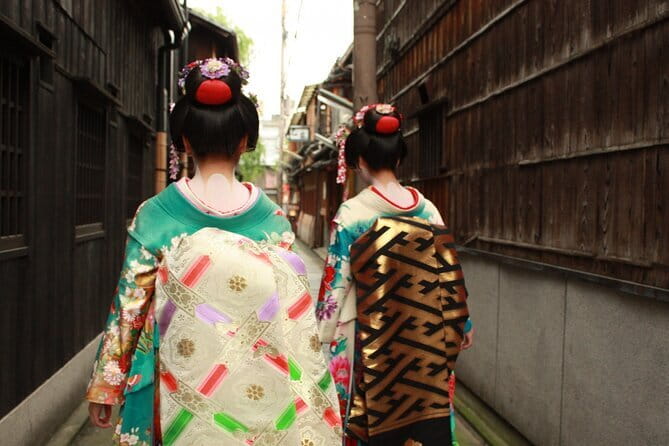
- Taking a photograph in a kimono
- Playing the koto, a traditional Japanese instrument
- Exploring Mt. Komugi, associated with the birthplace of Mario
These options make the private format more useful. A family may prefer a kimono photograph and koto session. A history-minded group may choose the castle and shrine activities. A curious group may want the spring water and Mt. Komugi.
The Mario connection is an unusual extra, but it needs a time warning. Exploring Mt. Komugi can extend the outing beyond 2 PM. If you have a fixed train reservation, dinner booking, or another Kyoto activity, tell the guide at the beginning and avoid selecting too many additions.
The options are included in the tour price, according to the provided details. Their availability and timing can depend on the day, so think of them as choices to discuss with the guide rather than a promise that every listed activity will fit.
The value of local guides Maki and Yasu
The guides are a major part of the experience. Maki is specifically identified as a guide, and visitors have also been welcomed by her husband and Yasu. Their role is more than leading a bike route. They explain local culture, help with the stops, and create the friendly tone that makes a small rural outing work.
That local connection is especially useful in Sonobe, where the appeal is spread across ordinary roads, shrines, food, and community spaces. A guide born and raised in the town can give those details meaning. You may learn why a shrine matters, how to worship properly, or how the food relates to the region.
The private arrangement also changes the mood. You do not have to match the pace of a large mixed group. School groups of up to 16 people have used the experience, and families with children have found the format workable. Larger groups should confirm the exact arrangements when booking, but the tour is built to handle more than just couples.
Timing, weather, and practical planning
The stated duration is about four to five hours, beginning at 10 AM. The core route includes cycling, two shrine visits, the castle area, and the long soba or local-produce lunch stop. Optional activities can make the day longer.
Sonobe is near public transportation, and the tour is described as roughly 30 minutes by train from Kyoto City. The exact train route is not provided, so give yourself enough time to reach the meeting point before 10 AM. The meeting point is not central Kyoto, and arriving late could affect the number of optional activities you can fit in.
Weather matters. If poor weather forces cancellation, the operator will notify reservation holders by 5 PM the previous day. You can then choose transportation by car, reschedule, or cancel without a fee. For ordinary cancellations, you receive a full refund if you cancel at least 24 hours before the start time. Cancellations or changes made inside that window are not accepted.
Bring a phone for your mobile ticket and dress for outdoor riding. The provided details do not specify bike sizes, child seats, or a minimum age, so ask about those points if they matter to your group.
Who will enjoy this Sonobe outing most
I would choose this tour if you have already seen some of Kyoto’s major temples and want a quieter day outside the city. It suits people who like food preparation, gentle cycling, local history, and small cultural encounters.
Families may appreciate the range of activities. Making noodles, taking a kimono photograph, and seeing a castle gate used by a school can hold a child’s attention better than a long museum visit. The private format also gives parents more control over pauses and questions.
It is a strong choice for school groups and larger parties, too. The cycling adds movement, while the soba session gives everyone a shared task. English guidance helps keep the day accessible to international participants.
I would hesitate if your main goal is strenuous cycling, a long castle visit, or a tightly timed half-day. The route is relaxed, the castle remains are limited, and the optional activities can stretch the schedule. You should also be comfortable spending a large portion of the outing at lunch and the noodle-making session.
Should you book Kyoto Satoyama Cycling?
Book it if you want rural Kyoto with real local contact, especially if soba making sounds better than another temple entrance. The combination of e-bike riding, shrines, castle remains, a former school, and regional food gives the outing more range than its four to five hours suggest.
The best value comes when you are sharing the private tour with family or friends and selecting extras that match your interests. Solo visitors can still enjoy it, but the 15,000-yen one-person fee deserves a careful price check.
Choose your course and optional activities before the day, leave room for the weather, and do not plan another fixed appointment too soon afterward. If you want a calm, personal look at the countryside beyond Kyoto City, Sonobe is a smart choice.
FAQ
How long does the Kyoto Satoyama cycling tour last?
The tour lasts approximately four to five hours, including cycling time between stops. Optional activities, especially Mt. Komugi exploration, may extend the outing beyond 2 PM.
What time and where does the tour begin?
The tour starts at 10 AM at Mizobe-6-21 Sonobechō Oyama Higashimachi, Nantan, Kyoto 622-0041, Japan. It ends back at the meeting point.
Is lunch included?
Yes. Course A includes hands-on soba noodle making and a soba set meal with tempura and rice balls. Course B includes local produce served at a restaurant in a traditional Japanese house.
Can special diets be accommodated?
Vegan, vegetarian, and allergy-friendly meals are available upon request. You should provide those details when booking or before the tour.
What extra activities can I choose?
You can choose two or three extra activities from options including a castle visit, Shinto shrine worship, spring water, a kimono photograph, playing the koto, and exploring Mt. Komugi.
What happens if bad weather cancels the tour?
If bad weather causes cancellation, you can choose transportation by car, reschedule for another date, or cancel without a fee. For a full refund from a normal cancellation, you must cancel at least 24 hours before the start time.
More Cycling Tours in Kyoto Prefecture
More Rides with Lunch in Kyoto Prefecture
More Kyoto Cycling Tours in Kyoto Prefecture
More tours in Kyoto Prefecture we've reviewed
Kyoto Cycling Tours, compared.
 ★ 5.0Bike Tour Exploring North Kyoto plus LunchFrom $106
 ★ 5.05 Top Highlights of Kyoto Full Day Bike Tour (E-bike option)From $172
 ★ 5.0E-Bike Tours of the highlights of Kyoto!!!From $109
 ★ 5.0Afternoon Kyoto Bike Tour: Bamboo Forest, Monkeys & Hidden SpotsFrom $106
 ★ 5.0South Kyoto in a Nutshell: Gentle Backstreet Bike Tour!From $79
 ★ 4.9Kyoto: City Secrets eBike TourFrom $1273h 45m
 ★ 4.9Kyoto: Hidden Gems E-Bike Tour with Local Japanese GuideFrom $753h 30m
 ★ 5.0Pedal Adventure Kyoto’s iconic landmarks on an e-bike tourFrom $86
Browse the lists this tour appears in