
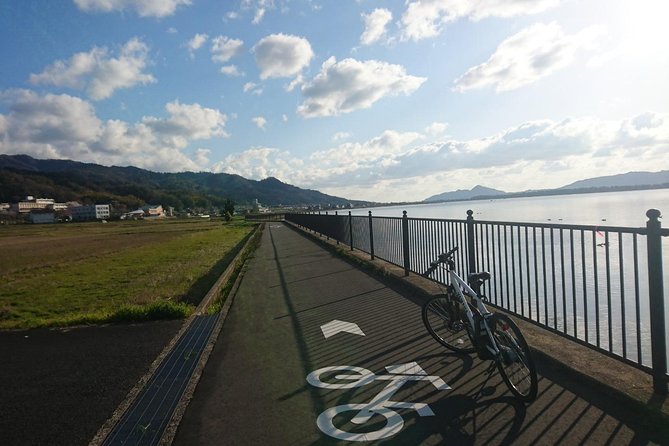
Reviewed · E-BIKE TOURS
Amanohashidate Sand bar & culture e-bike tour
Amanohashidate is best understood from two angles: at sea level, where you pedal across its tree-lined sandbar, and from above, where the narrow strip of land appears to float between two stretches of water. This private e-bike tour links both views with beaches, shrines, rice fields, and old roads that are easy to miss on a short visit.
I like the ride across the sandbar and the way the route moves beyond the obvious photo stop. I also like the flexibility: one guide adjusted the course to a flatter, shadier route during very hot weather. The main drawback is that Amanohashidate View Land costs extra, and the 2.5-hour schedule leaves limited time for lingering at every shrine or beach.
In This Review
- Key points at a glance
- Why the Amanohashidate sandbar makes a good bike route
- Amanohashidate Shrine, a brief first stop
- Chion-ji Temple and the start of the route
- Crossing the sandbar by electric bike
- View Land for the classic high view
- Manai Shrine and an older sacred setting
- Motoise Konojinja and the thatched-roof shrine
- Rice fields, old roads, and the value of going beyond the shore
- Is $97.73 a fair price?
- Who will enjoy this ride most?
- Booking, weather, and timing tips
- Should you book the Amanohashidate e-bike tour?
- FAQ
- How long does the Amanohashidate e-bike tour last?
- What does the tour include?
- Is admission to Amanohashidate View Land included?
- Can I skip Amanohashidate View Land?
- Is this a private tour?
- What happens if the weather is poor?
Key points at a glance
- Cycle the 3-kilometer sandbar: Amanohashidate is closed to cars, so the ride feels calm and unusual.
- Visit three sacred sites: Amanohashidate Shrine, Manai Shrine, and Motoise Konojinja each add a different layer of local tradition.
- Use an e-bike, not a racing bike: The motor assistance makes the route practical for a wide range of fitness levels.
- Expect a private outing: Only your own group takes part, which makes route changes easier.
- Plan for the View Land fee: The high viewpoint is part of the suggested route, but admission is not included.
- Leave room for swimming: One account specifically recommends bringing swimwear for the beaches.
Why the Amanohashidate sandbar makes a good bike route
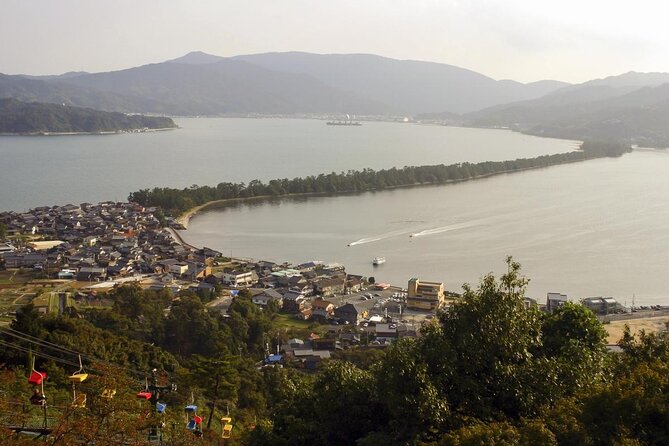
Amanohashidate stretches for about 3 kilometers and is famous as one of Japan’s Three Most Scenic Spots. Its name means Bridge to Heaven, a fitting description when you look along the narrow strip of land from a hilltop.
The sandbar is especially suited to a bicycle because only pedestrians and bicycles can pass through it. You are not sharing the route with regular road traffic. That does not mean you should race. The point is to notice the ocean, the beaches, and the unusual shape of the place as you move through it.
An e-bike makes a real difference here. You still pedal, but the motor helps take the edge off the effort. That matters if you have spent the morning sightseeing, are not used to hills, or are visiting during hot weather. The guide can also adjust the ride, as one outing did when the heat called for a flatter, shadier route.
You should still expect some physical activity. The tour is not a vehicle-based sightseeing loop. You will ride, stop, climb to a viewpoint, and continue between several sites. The reward is a closer sense of the area than you get from simply taking a photograph from the shore.
A few more Kyoto Prefecture tours and experiences worth a look
Amanohashidate Shrine, a brief first stop
The ride begins with Amanohashidate Shrine, located on the sandbar itself. The scheduled stop is short, about five minutes, and admission is free.
That short visit works well as an introduction. You can see how a sacred site sits within the natural setting rather than apart from it. The shrine is not treated as a long museum visit. Instead, it gives you a quick cultural marker before the main ride begins.
Do not expect a detailed architectural tour at this stop. The value is in its position and symbolism. You are standing on the very feature that has long been viewed as a road between earth and heaven, then visiting a shrine built into that setting.
Chion-ji Temple and the start of the route
Chion-ji Temple is another brief stop, also free of charge. Only about five minutes are set aside, so this is a look rather than an extended temple visit.
The temple helps show that Amanohashidate is more than a scenic sandbar. The area combines religious sites, water, beaches, and working countryside. The quick stop also keeps the tour moving, which is important when the full outing lasts roughly two and a half hours.
If you prefer slow temple visits, this may feel rushed. If you want a compact introduction before spending most of your time outdoors, the timing is sensible. I would listen closely to the guide here, since a few minutes of context can make the next part of the ride more meaningful.
Crossing the sandbar by electric bike
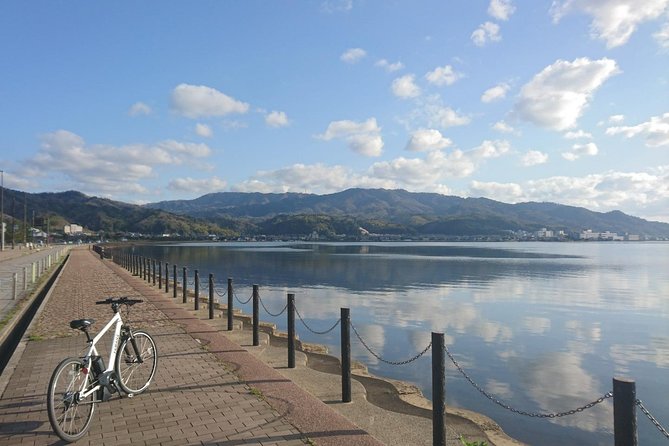
The central ride across Amanohashidate takes about 20 minutes. That timing gives you a useful sense of the sandbar without turning the outing into an all-day cycling trip.
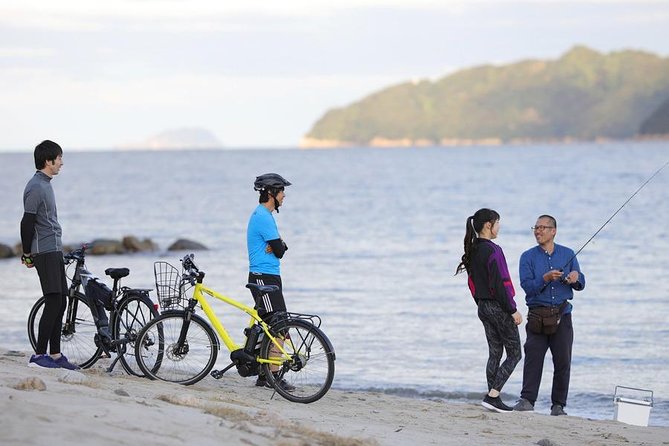
The route is limited to walkers and bicycles, a small detail that makes a big difference. You can focus on the sea and the trees instead of watching constantly for cars. You will also have the freedom to stop at the beaches along the way, depending on the guide’s pacing and the group’s interests.
Bring water and sun protection, especially in warm weather. The heat is not a minor concern here. The schedule is outdoors, and even an e-bike cannot remove the effect of sun and humidity. The private format helps because the guide can respond to your pace rather than forcing every group member into a fixed rhythm.
The beach access adds a welcome practical touch. One account specifically recommends bringing swimwear, so pack it if you like the idea of getting in the water. The provided details do not promise a dedicated swimming session, but the beaches are part of the experience and worth preparing for.
View Land for the classic high view
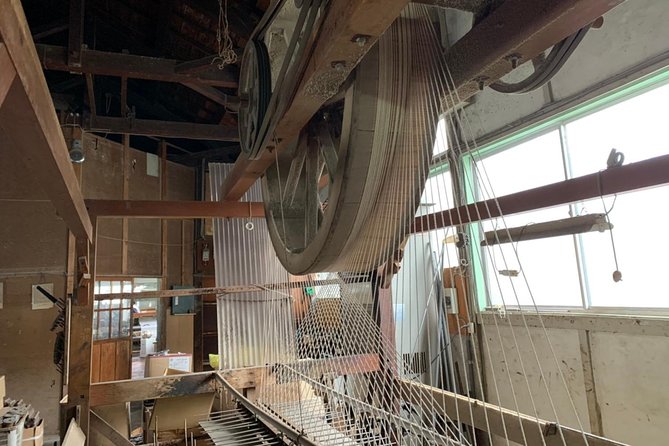
Amanohashidate View Land provides the tour’s elevated look at the sandbar. You ride or continue to the area, then climb up for a view of the long strip between the waters.
This is the image most people associate with Amanohashidate. From above, the sandbar’s shape becomes clear in a way it cannot from ground level. The viewpoint also helps you understand why the place has been treated as something almost mythical for centuries.
The entrance charge is separate, so include it in your budget. If you have already visited View Land, you can skip this part. That option is useful for repeat visitors, though first-time visitors will probably find the view worth the added cost.
The stop is listed at about 20 minutes. That is enough for the main view but not for a long visit. The route also refers to climbing up, so consider your energy before booking if you want a completely flat outing. The e-bike helps with the cycling, but it does not remove the need for stairs or uphill movement at the viewpoint.
A cable car may be part of the visit, and one account describes it as a bonus. Still, the supplied details do not spell out exactly how every group reaches the viewpoint, so you should treat the separate admission as the firm planning point.
Other cycling tours in Kyoto Prefecture

Manai Shrine and an older sacred setting
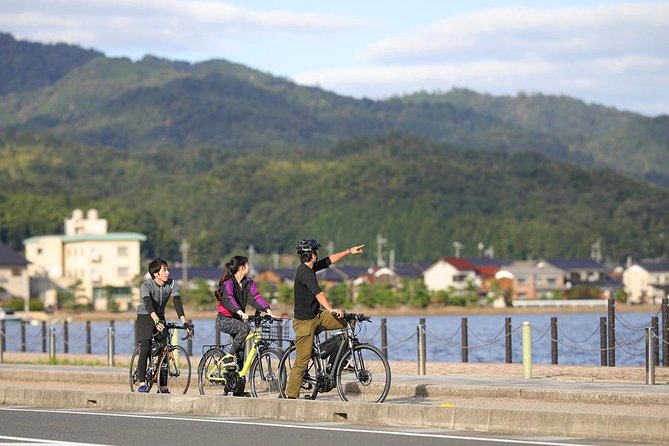
Manai Shrine is one of the more distinctive stops. The site is described as a sacred place where the gods are said to have first descended from heaven. The visit lasts about 10 minutes and is free.
You can see holy water, bamboo forests, and the gods’ boats. Those details give the stop a quieter, more symbolic character than the sandbar itself. Instead of only looking at scenery, you are seeing the religious ideas that help define the region.
This is also where the guide’s local knowledge matters most. A short explanation can help you understand why the water, bamboo, and boats are treated as part of the sacred setting. Without that context, you might pass through quickly and see only a small shrine in a wooded place.
The stop is not designed as a long ceremonial visit. You will have time to look around and listen, but not to linger for an hour. That trade-off is fair in a 2.5-hour tour, though anyone wanting a slow shrine visit should plan a separate return.
Motoise Konojinja and the thatched-roof shrine
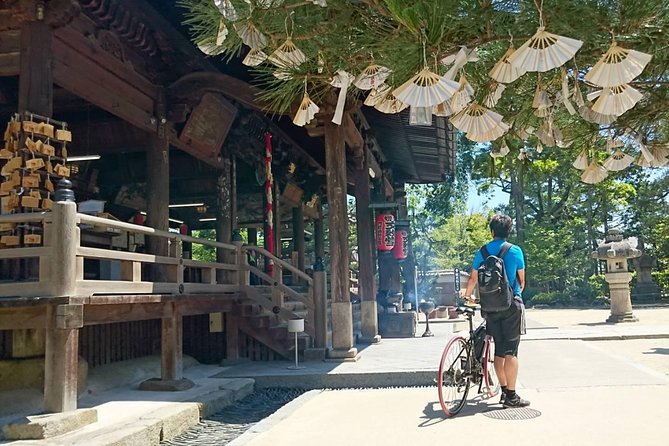
Motoise Konojinja is another free stop, with about 10 minutes scheduled. Like Manai Shrine, it is linked to the story of the gods’ first descent from heaven.
The visual details make it memorable: a thatched-roof shrine and turtles. These are the sort of small features a local guide can point out while you are still standing in front of them. The visit adds contrast to the open water and beaches, giving the ride a more grounded cultural finish.
The two shrine stops are close in theme, but they should not feel interchangeable. Manai Shrine is described through holy water, bamboo, and divine boats. Motoise Konojinja brings the thatched roof and turtles. Together, they show how sacred places in the area connect natural features with old stories.
Again, 10 minutes is enough for a focused stop, not an unhurried exploration. Keep your expectations realistic. This is a compact route that samples several places rather than a full religious tour.
Rice fields, old roads, and the value of going beyond the shore
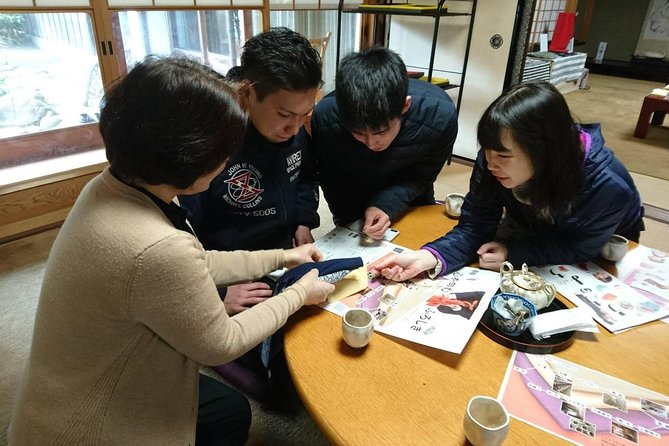
The tour is not limited to the famous sandbar. Between the major stops, you ride through rice fields and along historic roads. That transition is one of the strongest reasons to choose the bike option.
A viewpoint tells you what Amanohashidate looks like. A bicycle shows you how the surrounding area feels at ground level. Rice fields bring you away from the postcard view, while old roads connect the shrines and shore to the wider countryside.
The route is also designed around places that many short-term visitors may skip. The emphasis is on local recommendations, including the two shrines farther from the central sandbar. That makes the tour more useful for anyone who has already taken the standard view from above and wants more context.
A private tour format helps here. Your group is the only group participating, so the guide can spend more time on what interests you. You can ask about the shrine traditions, pause for a photograph, or request a gentler route if conditions are difficult. The exact flexibility will depend on time and the guide, but the format is better suited to adjustments than a large shared bus tour.
Is $97.73 a fair price?
At $97.73 per person, this is not the cheapest way to see Amanohashidate. The price makes more sense when you count what is bundled into the outing: an e-bike, a guide, a private group, the sandbar crossing, countryside riding, and several cultural stops.
You are paying for structure as much as transport. Without a guide, you could see Amanohashidate on your own, but you would need to arrange the bike, choose a route, locate the shrines, and manage the timing yourself. The tour reduces that planning work and connects sights that are not all part of the usual central viewpoint visit.
The value improves for small groups, especially if group discounts apply. A private experience can be costly for one person, but more reasonable when shared by friends or family. View Land admission remains an extra expense, so do not treat the advertised price as the complete cost of the day.
I would book it for a visitor with limited time who wants scenery and culture together. I would skip it if I wanted a long beach day, a slow shrine visit, or a full-day cycling adventure. The 2.5-hour format is a sampler, not an exhaustive tour.
Who will enjoy this ride most?
This outing suits you if you want to be active without committing to a demanding cycle trip. The latest e-bikes make the route approachable for most people, and the guide can adjust the course when heat or fitness becomes an issue.
It also works well for first-time visitors who want a clear introduction to Amanohashidate. You get the signature sandbar, an overhead view, beaches, and several shrines in one compact outing.
Families and private groups may appreciate the ability to move at their own pace. The tour is also near public transportation, which makes it practical to fit into a wider Kyoto Prefecture route.
You should think twice if you dislike cycling, need a fully flat activity, or want guaranteed long stops at each site. The tour includes riding and a climb toward View Land. Most people can participate, but it is not a passive sightseeing experience.
Booking, weather, and timing tips
Confirmation is sent within 48 hours, subject to availability. The tour is usually booked about 52 days ahead, so reserve early if your dates are fixed, especially during a popular travel period.
The activity depends on good weather. If poor conditions force cancellation, you can choose another date or receive a full refund. For your own cancellation, you need to cancel at least 24 hours before the local start time to receive a full refund. Changes made inside that window are not accepted.
A mobile ticket keeps the booking simple. Wear clothing suited to cycling and bring sun protection, water, and swimwear if you want the option of enjoying the beaches. Since the route may be adjusted for shade and heat, tell the guide early if you need a slower or flatter ride.
Should you book the Amanohashidate e-bike tour?
Book it if you want to do more than photograph Amanohashidate from a cable car or viewpoint. The sandbar crossing, e-bike assistance, beaches, rice fields, and old shrines give you a fuller picture of the area in a manageable 2.5 hours.
The best reason to choose it is the balance between movement and local culture. You get the famous view, but you also reach Manai Shrine and Motoise Konojinja, places that can be easy to miss when you are focused only on the sandbar.
Skip it if the extra View Land fee bothers you, if you want a completely relaxed ride, or if your schedule allows only a short photo stop. For everyone else, the private format and adjustable route make this a practical way to see Amanohashidate from the water’s edge, the countryside, and above.
FAQ
How long does the Amanohashidate e-bike tour last?
The tour lasts approximately 2 hours and 30 minutes.
What does the tour include?
You ride an electric bike across the Amanohashidate sandbar and visit Amanohashidate Shrine, Chion-ji Temple, Amanohashidate View Land, Manai Shrine, and Motoise Konojinja Shrine. The shrine admissions are free.
Is admission to Amanohashidate View Land included?
No. The entrance fee for Amanohashidate View Land is charged separately.
Can I skip Amanohashidate View Land?
Yes. If you have already visited it before the tour, you can skip that stop.
Is this a private tour?
Yes. Only your own group participates in the activity.
What happens if the weather is poor?
The experience requires good weather. If it is canceled because of poor conditions, you can choose a different date or receive a full refund.
More E-Bikes in Kyoto Prefecture
More Cycling Tours in Kyoto Prefecture
More E-Bike Tours in Kyoto Prefecture
More tours in Kyoto Prefecture we've reviewed
E-Bike Tours, compared.
 ★ 5.0Tokyo Top Highlights 3h Guided E-bike TourFrom $63
 ★ 5.03h Tokyo E-Bike Tour: Hidden Gems, and Local Life with guideFrom $63
 ★ 5.05 Top Highlights of Kyoto Full Day Bike Tour (E-bike option)From $172
 ★ 4.83-Hour Bike or E-Bike City Highlights TourFrom $453 hours
 ★ 5.0E-Bike Tours of the highlights of Kyoto!!!From $109
 ★ 4.83-hour Guided E-Bike Tour of the City’s Hidden GemsFrom $65
 ★ 5.0Osaka E-Bike Tour with a Local GuideFrom $59
 ★ 5.03-Hour Bike/E-Bike Tour of the City’s HighlightsFrom $63
Browse the lists this tour appears in