
Reviewed · E-BIKE TOURS
Sakurajima One Day Round Journey with E-bike
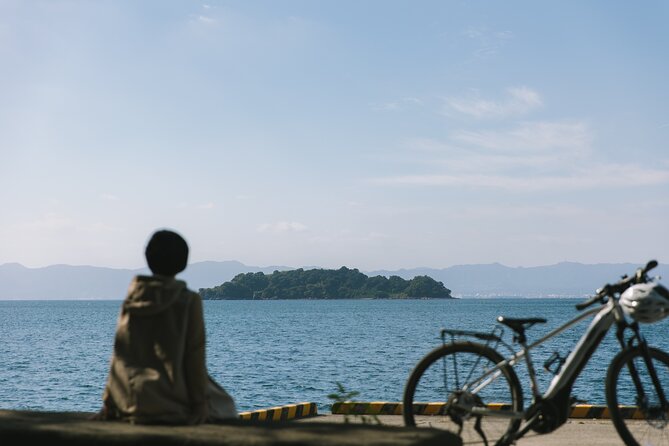
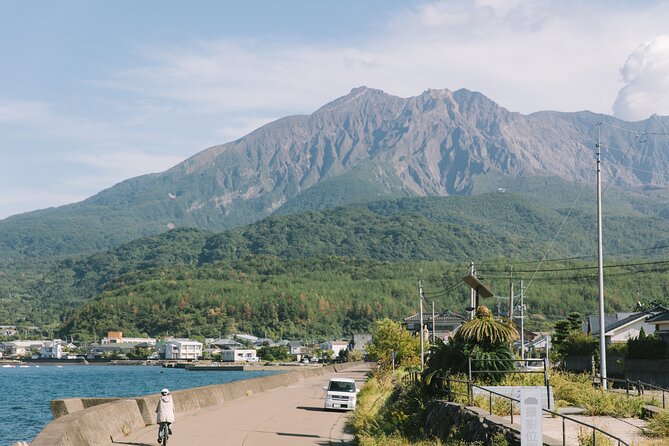
Sakurajima is not just a volcano viewed from Kagoshima. It is a lived-in national park, with villages, farms, lava fields, shrines, coast roads, and communities shaped by eruptions. This six-hour e-bike journey takes you around the base of the mountain, where guide Rento connects the scenery with daily life on the island.
I like the small group of no more than six people, which keeps the ride personal and makes stops easier. I also like the nearly new Yamaha e-bikes, which help with Sakurajima’s hills without turning the day into a cycling test.
The main caution is simple: this is still a five-hour ride, not a bus tour with a quick photo stop. You need strong physical fitness, and the experience depends on good weather. At $194.15 per person, it makes the most sense if you want an active, close-up day rather than a basic sightseeing circuit.
In This Review
- Key points at a glance
- Why an e-bike is the right way to see Sakurajima
- Starting at the Sakurajima Visitor Center
- Five hours around Mount Sakurajima
- The buried shrine gate and Sakurajima’s power
- Arimura Lava Lookout and the return of vegetation
- The International Volcano Sabo Center
- What makes the guide important
- Is $194.15 a fair price?
- Who should book this Sakurajima ride?
- Booking details and cancellation
- Should you book it?
- FAQ
- Where does the Sakurajima e-bike tour start?
- What time does the tour begin?
- Where does the tour end?
- How long does the experience last?
- How many people can join the tour?
- Do I need to be physically fit?
- What places are visited?
- Is the tour available in poor weather?
- What is the cancellation policy?
Key points at a glance
- Ride around the whole island: Spend most of the day cycling along Sakurajima’s coastal roads and lower slopes.
- See the buried shrine gate: A striking reminder of how quickly volcanic ash can reshape ordinary life.
- Stop at Arimura Lava Lookout: View historic lava and the plants now growing across it.
- Learn how people live beside an active volcano: The International Volcano Sabo Center explains Sakurajima’s risks and safety measures.
- Ride with guide Rento: Expect clear English, local insight, and an itinerary that can respond to dietary needs.
- Keep the group small: With a maximum of six people, you get more room for questions and a less mechanical pace.
Why an e-bike is the right way to see Sakurajima
Sakurajima rewards slow travel. From a ferry or distant viewpoint, you get the famous smoking cone and a dramatic outline across Kagoshima Bay. On a bicycle, you notice the smaller details: the texture of old lava, the quiet of the shoreline, the way homes and roads fit around volcanic ground, and the changes from one side of the island to another.
That is the real strength of this tour. You are not simply taken to one lookout, then returned to Kagoshima. You spend the day moving through the island’s different foothill areas, with Rento explaining the geology and the social issues tied to living near an active volcano.
The electric assistance matters. The route includes hills, and even a fit cyclist may not want to spend the entire day fighting gradients in Japan’s warmth. The Yamaha e-bikes used here have been described as almost new and include a side storage bag about the size of a small backpack. That is useful for a phone, wallet, water, light layer, and small purchases.
Still, an e-bike does not remove every demand. You will be seated on a bicycle for long stretches, stopping, starting, and riding for much of the five-hour touring portion. If you rarely cycle or have trouble with extended physical activity, this may feel harder than the word e-bike suggests.
A few more Kagoshima tours and experiences worth a look
Starting at the Sakurajima Visitor Center
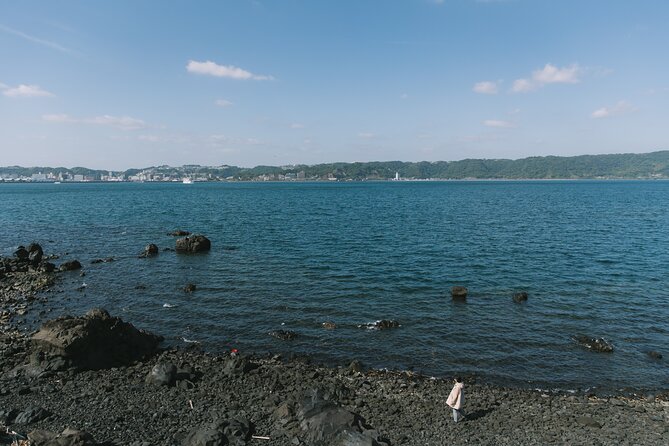
The day begins at 9:30 a.m. at the Sakurajima Visitor Center, at 1722-29 Sakurajimayokoyamacho. The meeting point is near public transportation, and the tour finishes at the same place.
A morning start is useful here. It gives you time to circle the island without making every stop feel rushed, while still leaving the afternoon free for more time in Kagoshima. Since the exact riding pace can change with weather, group ability, and the stops selected by the guide, you should treat the six-hour duration as an approximate full morning and afternoon activity.
Rento’s role is more than leading from the front. He uses an iPad presentation to explain the volcano and helps you understand what you are seeing before you reach the next stop. His English has been described as strong, which is important on a tour where geology, disaster planning, and local life all need more than a quick translation.
The group limit of six is another practical advantage. A large cycling group can become a line of helmets and waiting points. With six or fewer, the guide can answer questions, adjust the pace more easily, and make the food or rest break feel less standardized.
Five hours around Mount Sakurajima
The main portion of the day is a broad circuit around Sakurajima by e-bike. The route follows scenic roads along the water and through the lower areas of the mountain. You get a sense of how the island changes from one district to another, rather than seeing only the most famous volcano viewpoint.
This is where the tour’s local focus pays off. Life at the foot of Sakurajima differs by area, and Rento points out details that are easy to miss when you drive through. The scenery is not only about the volcano itself. It is also about roads, villages, vegetation, shorelines, and the practical choices people make in a place shaped by eruptions.
The tour includes a lunch break of about one hour. The food stop is part of the experience, not merely fuel between cycling sections. The guide has taken groups to a noodle shop, a coffee shop, and other local food stops, and the schedule can be adjusted for vegetarians. One particularly memorable option has been a picnic in a cherry grove, while another day included sandwiches made specifically for vegetarian riders.
Because the supplied details do not promise a fixed restaurant or fixed menu, you should not book this expecting one exact meal. Think of lunch as a guided local break that may change with the day and the group. If you have dietary needs, tell the operator in advance. Rento has shown that he can make thoughtful adjustments, but advance notice is still the sensible move.
The pace also deserves attention. This is not a race and the e-bike makes the hills more manageable, but you should arrive ready to pedal. Comfortable clothing, shoes suited to cycling, and protection from sun or rain will make a real difference. The tour requires good weather, so a wet or poor-weather forecast can affect the plan.
The buried shrine gate and Sakurajima’s power
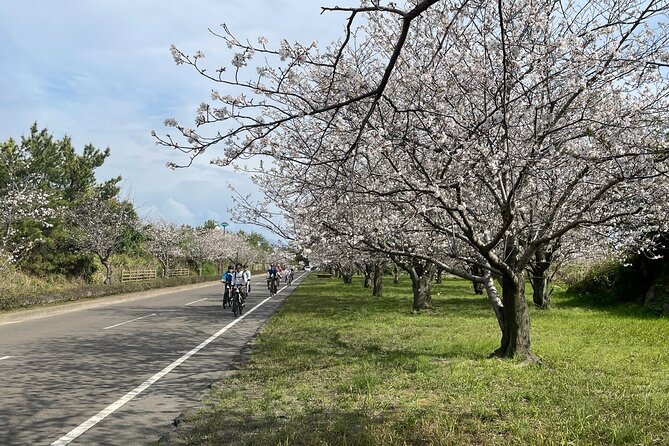
The buried shrine gate is one of the day’s most direct reminders of volcanic force. It sits near the foot of the mountain and shows how an eruption can cover a familiar human structure with ash and debris.
The stop lasts about 20 minutes. That is enough time to take in the gate, hear the explanation, and consider the scale of the event without turning the visit into a long museum session. The value is visual and human. A volcano can feel like a distant natural spectacle until you see its effect on a shrine, a road, or a community.
This stop also helps give the rest of the ride meaning. When you pass homes and cultivated areas later, you are not looking at a generic rural scene. You are seeing a place where daily life continues beside a mountain that remains active.
If you prefer polished monuments and long indoor visits, the buried gate may feel brief. I think its short format works well during a cycling day. You pause, listen, take photographs, and get back on the road before the experience loses momentum.
Arimura Lava Lookout and the return of vegetation
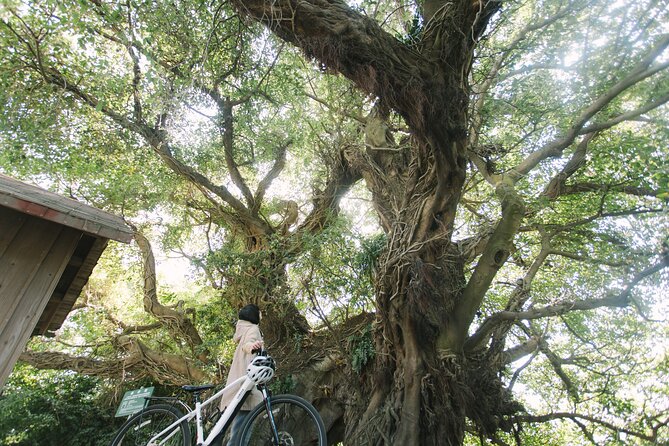
At Arimura Lava Lookout, you stop for about 15 minutes to view old lava and the vegetation that has grown across it. The lookout offers one of the clearest ways to read time on Sakurajima. First comes the dark, raw-looking volcanic ground. Then, slowly, plant life begins to return.
The point is not simply to photograph a dramatic view. The stop shows how volcanic terrain changes and how nature begins again after destruction. You also get a strong vantage point for Sakurajima’s slopes and surrounding scenery.
Fifteen minutes is enough for an introduction, but not a long walk. This is an overlook built into a wider route, so you should not expect a separate hiking excursion here. The benefit is that you see the site without sacrificing the larger circuit around the island.
The lookout is also a good place to appreciate the e-bike format. A vehicle can take you there, but cycling lets you arrive through the changing coastal and foothill scenery. The stop feels connected to the route rather than isolated from it.
Other cycling tours in Kagoshima

The International Volcano Sabo Center
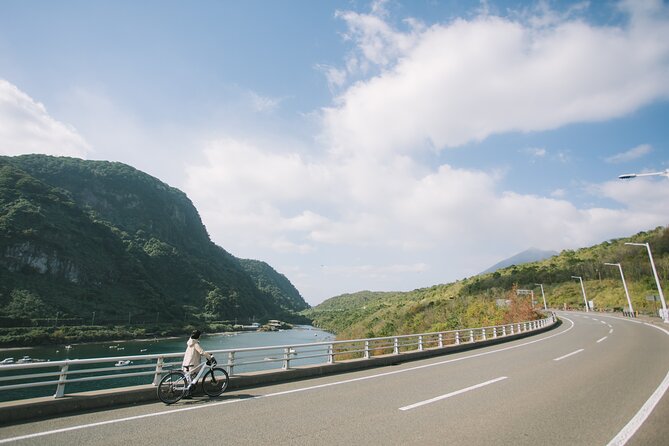
The Sakurajima Sabo Office, also known as the International Volcano Sabo Center, provides the day’s clearest explanation of disaster preparation. The visit lasts about 20 minutes and covers the effects of Sakurajima’s eruptions and why a facility like this is necessary.
The center adds balance to the pretty views. You learn that living beside an active volcano is not only a matter of admiring smoke and lava. It requires planning, information, protective structures, and an understanding of what can happen when volcanic activity changes.
I find this part especially valuable for families and first-time visitors to volcanic regions. It turns a dramatic natural feature into a real place with real responsibilities. You leave with a better sense of how local communities manage risk without treating the volcano as a disaster every minute of the day.
The stop is short, so do not expect a full museum afternoon. Its purpose is to give context during the larger journey. Rento’s iPad presentation adds another layer by helping connect the displays to what you have already seen outdoors.
What makes the guide important
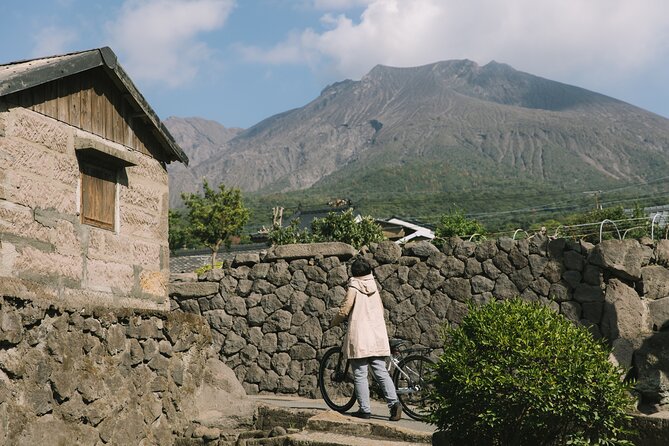
A circuit of Sakurajima is possible without a guide, but the guide is what turns a ride into an informed visit. Rento explains both geological and social questions, including why the island looks different from one area to the next and what it means to live beside an active volcano.
His practical choices also shape the day. He has selected local noodle and coffee stops, arranged vegetarian food, and included rest points that make the ride feel more human. The best version of this experience is not just a route marked on a map. It is a day where the person leading you notices what you need and gives meaning to the places along the way.
The reviews supplied for this experience repeatedly praise Rento’s friendliness, English, and ability to explain the island. That praise is consistent with the tour design: a small group, several short stops, a substantial lunch break, and enough time to ask questions.
You should still remember that a guide-led day has a set rhythm. If you want to stop every few minutes for photographs or spend a long time at one site, the group schedule may limit you. The advantage is that you see more of the island than you likely would by making up your own route.
Is $194.15 a fair price?
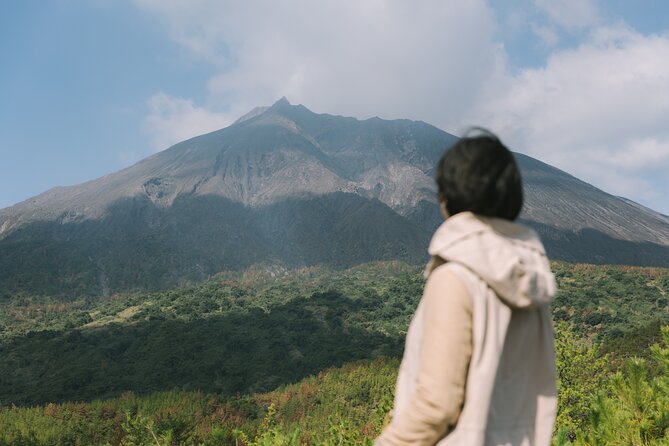
At $194.15 per person, this is not a cheap way to rent a bicycle for an afternoon. You are paying for a guide, e-bike use, a roughly six-hour experience, route planning, interpretation, and a small group capped at six people.
The price becomes easier to justify if you would otherwise need to arrange transport between several parts of Sakurajima, research the volcano’s history, locate the best viewpoints, and work out where to eat. You also get the benefit of electric assistance on a route that could be tiring on a standard bicycle.
Value depends heavily on your interests. If you want one impressive volcano photograph and a quick visit, use public transportation and choose a shorter sightseeing plan. If you want to understand the whole island, meet local places through a guide, and spend a full day outdoors, this tour offers more than a simple point-to-point ride.
The maximum group size helps the price too. Six people is still a group, but it is small enough for direct conversation and flexible food planning. Solo visitors and couples may especially value that personal attention.
Who should book this Sakurajima ride?
I would point this tour toward people who enjoy active sightseeing and want more than the standard volcano view. It suits visitors with strong physical fitness, curious minds, and enough patience for a full day on a bicycle.
It is also a good choice for people who want local food guidance without giving up dietary needs. Vegetarian riders have been accommodated with tailored meals, including sandwiches, and the guide has used cafés and noodle shops as part of the route.
Families with older children or teens may find the e-bike format appealing, but the physical requirement should come first. The data supplied for the tour specifically calls for strong fitness, so I would not treat this as a relaxed ride suitable for everyone.
You should also think about weather. A volcanic island can be beautiful under clear skies and much less comfortable in poor conditions. Since the activity requires good weather, keep some flexibility in your Kagoshima schedule if possible.
Booking details and cancellation
The activity uses a mobile ticket, and confirmation is provided when you book. It starts at 9:30 a.m. at the Sakurajima Visitor Center and ends back there.
You can cancel for a full refund up to 24 hours before the local start time. Cancellations or changes made inside that 24-hour window are not accepted for a refund. If bad weather cancels the tour, you can choose another date or receive a full refund. The same applies if the minimum number of participants is not reached.
Should you book it?
Book this tour if you want to see Sakurajima as a living island, not just a volcano in the distance. The combination of a small group, electric bikes, local food stops, lava scenery, the buried shrine gate, and the volcano center gives you a full picture in one day.
Skip it if you dislike long periods of cycling, need a fixed restaurant and menu, or prefer a short sightseeing outing. For the right rider, the cost buys a carefully planned day with real local context. Rento’s guidance, the strong e-bikes, and the chance to circle the island are the main reasons to choose it.
FAQ
Where does the Sakurajima e-bike tour start?
The tour starts at the Sakurajima Visitor Center, located at 1722-29 Sakurajimayokoyamacho, Kagoshima, 891-1419, Japan.
What time does the tour begin?
The scheduled start time is 9:30 a.m.
Where does the tour end?
The activity ends back at the Sakurajima Visitor Center, the same place where it begins.
How long does the experience last?
The full experience lasts approximately six hours. About five hours are devoted to exploring Sakurajima by e-bike, with a one-hour lunch break during the ride.
How many people can join the tour?
The tour has a maximum of six participants.
Do I need to be physically fit?
Yes. The tour information states that participants should have a strong physical fitness level. Although the e-bikes make hills easier, you still ride for much of the day.
What places are visited?
The route includes Mount Sakurajima, the buried shrine gate, Arimura Lava Lookout, and the Sakurajima Sabo Office, also called the International Volcano Sabo Center.
Is the tour available in poor weather?
The experience requires good weather. If it is canceled because of poor conditions, you can choose another date or receive a full refund.
What is the cancellation policy?
You can cancel up to 24 hours before the experience begins for a full refund. Cancellations or changes made less than 24 hours before the start time are not accepted for a refund.
More E-Bikes in Kagoshima
More Cycling Tours in Kagoshima
More E-Bike Tours in Kagoshima
More tours in Kagoshima we've reviewed
E-Bike Tours, compared.
 ★ 5.0Tokyo Top Highlights 3h Guided E-bike TourFrom $63
 ★ 5.03h Tokyo E-Bike Tour: Hidden Gems, and Local Life with guideFrom $63
 ★ 5.05 Top Highlights of Kyoto Full Day Bike Tour (E-bike option)From $172
 ★ 4.83-Hour Bike or E-Bike City Highlights TourFrom $453 hours
 ★ 5.0E-Bike Tours of the highlights of Kyoto!!!From $109
 ★ 4.83-hour Guided E-Bike Tour of the City’s Hidden GemsFrom $65
 ★ 5.0Osaka E-Bike Tour with a Local GuideFrom $59
 ★ 5.03-Hour Bike/E-Bike Tour of the City’s HighlightsFrom $63
Browse the lists this tour appears in