
Reviewed · TOKYO CYCLING TOURS
Little Adventure with Cycling in Tokyo No. 1 Crystal Clear River
Tokyo has a wild side, and you reach it in about an hour by train. This six-hour outing takes you from Tokyo Urayama Base into the Akigawa Valley by electric bicycle, with an old temple, mountain roads, riverside lunch, and a walk through the river to a waterfall.
I especially like the easy pace and the small group of no more than six people. The mix of e-bike riding and water trekking gives you far more than a standard countryside bus trip. Guide Kenji is known for being kind and accommodating, though rain can force changes to the planned route and river section.
In This Review
- Key points
- From central Tokyo to the Akigawa Valley
- Kotokuji Temple and the giant ginkgo
- E-bikes through bridges, gardens, and valley roads
- A Cuba sandwich beside the Akigawa River
- River trekking to a hidden waterfall
- The final e-bike ride and suspension bridge
- Footbath at Seoto no Yu
- What the $143.34 price delivers
- Who should book this countryside day
- Practical planning for the six-hour route
- Should you book Little Adventure with Cycling in Tokyo No. 1?
- FAQ
- How long does the cycling and river tour last?
- Where does the tour start?
- How many people can join the tour?
- Is lunch included?
- Does the tour include a hot spring?
- What happens if the weather is bad?
Key points
- An hour from central Tokyo: Reach a quiet mountain valley without committing to a long rural journey.
- Electric bicycles do the hard work: You cover plenty of ground while still enjoying the scenery.
- Kotokuji Temple adds local character: Pass through its thatched gate and see its giant ginkgo tree.
- Lunch is served beside the Akigawa River: The special Cuba sandwich lunchbox is eaten outdoors in a secluded spot.
- The river walk is the day’s main adventure: Waterproof gear helps you reach a waterfall through the stream.
- A hot-spring footbath ends the outing: Cross a suspension bridge, rest your feet, and browse for souvenirs.
From central Tokyo to the Akigawa Valley
The clever part of this outing is the setting. Tokyo Prefecture is not all towers, traffic, and packed train platforms. In the upper reaches of the Tama and Akigawa Rivers, forest, bridges, temples, and old mountain villages tell a different story of the region.
The valley is tied to Edo-era life through forestry and charcoal burning. That background gives the ride more meaning than a simple trip into the hills. You are seeing a rural side of Tokyo that many international visitors miss, yet the meeting point remains reachable by public transportation.
The day begins at 10:00 am at Tokyo Urayama Base, located at 219-7 Tateya in Akiruno. The activity finishes back at the same place. Since the tour lasts about six hours, you get a full day outside without needing an overnight stay or a complicated independent route.
The group limit of six matters here. Cycling narrow roads and stopping at small temples or riverside spots is easier with a small party. You can also ask questions without trying to catch a guide’s attention from the back of a large group.
Kotokuji Temple and the giant ginkgo
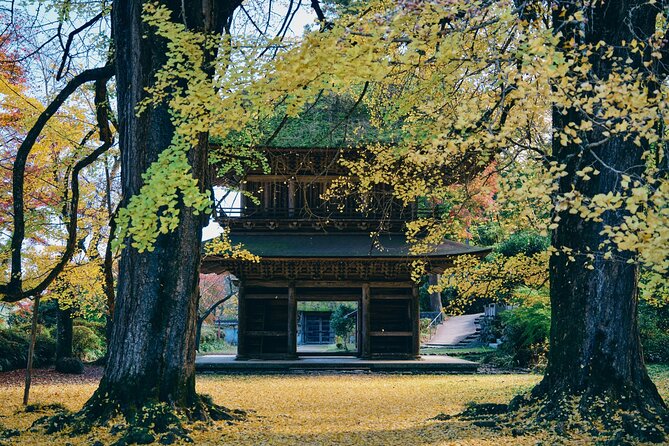
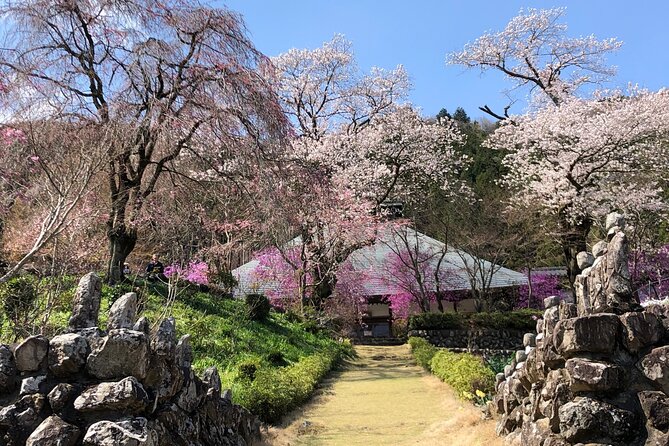
Your first stop is Kotokuji Temple, where you pass through a striking thatched gate. The gate gives the visit a strong sense of place right away. It feels connected to the wooded valley rather than set apart as a formal sightseeing stop.
Look for the giant ginkgo tree and listen as the guide explains the temple’s history. The stop lasts about 30 minutes, which is enough time to look around without turning the morning into a long religious-site tour.
I like this opening because it sets up the rest of the day. You are not just riding through pretty scenery. You begin with a reminder that these mountain communities have their own past, traditions, and connection to the wider Tokyo region.
Admission is included at no extra charge. More important, the stop helps you understand why the route includes old temples, gardens, bridges, and wooded lanes later in the morning.
E-bikes through bridges, gardens, and valley roads
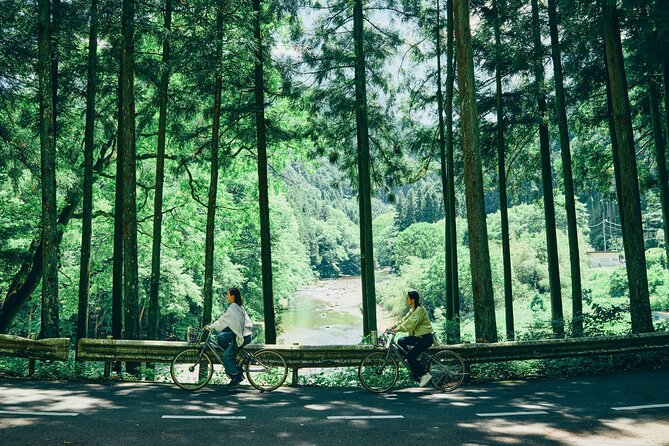
After preparing for the ride, you use electric bicycles for the first half of the tour. The motor assistance is useful because it lets you cover a good stretch of the valley without making the day a test of cycling fitness.
You stop along the way at scenic bridges, old temples, Japanese gardens, and cafes with terraces facing the valley. These pauses keep the ride from becoming a point-to-point transfer. You have time to notice the river, take photographs, and hear local details from the guide.
The e-bikes also make this a practical choice for people who want rural scenery but do not want a demanding bicycle tour. The available information says most people can take part, and the electric assistance should help you enjoy the route with less concern about hills. Still, you should be comfortable riding a bicycle, managing a few hours of outdoor activity, and later walking in a river.
The small group helps the cycling feel personal. Kenji is one guide named in the available tour feedback, and his communication and willingness to accommodate plans were specifically praised. Guide availability may vary, so do not assume Kenji will lead every departure.
A Cuba sandwich beside the Akigawa River
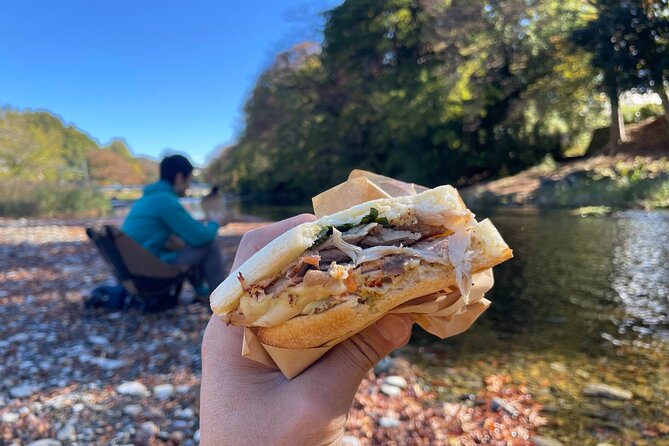
Around noon, the group sets up outdoor chairs at a special riverside spot for lunch. The meal is a Cuba sandwich lunchbox, a fun change from the usual Japanese picnic fare.
This is one of the outing’s strongest details. You are not being sent to a generic restaurant with a fixed view. Instead, lunch becomes part of the outdoor setting, with the river providing the background and a quiet place to slow down before the afternoon activity.
The lunch period runs from 12:00 to 1:00 pm. That hour gives you time to eat and rest rather than rushing through a boxed meal. The food was singled out as very good in the available comments, but the real value is the combination of a prepared meal, a secluded riverside location, and no need to arrange lunch on your own.
Keep your expectations sensible. This is an outdoor lunch, not a restaurant meal with a menu and indoor seating. If you prefer a broad choice of food or need a special diet, the supplied information does not explain the options, so asking before booking would be wise.
River trekking to a hidden waterfall
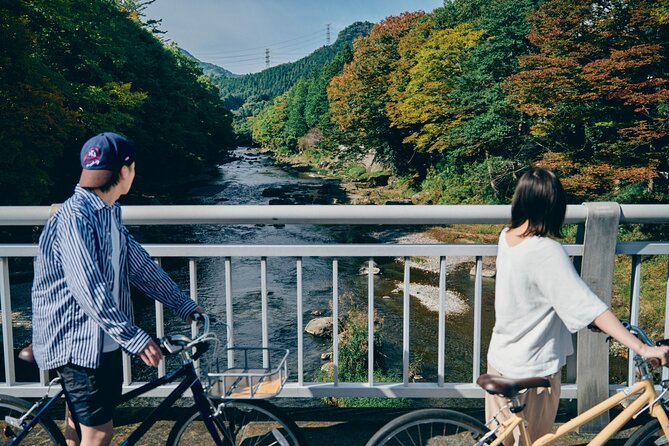
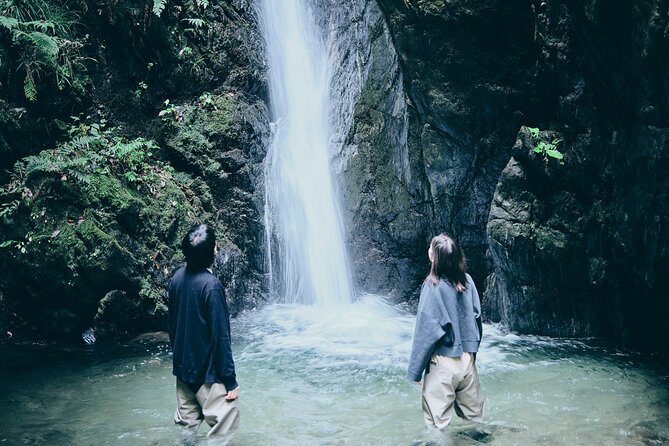
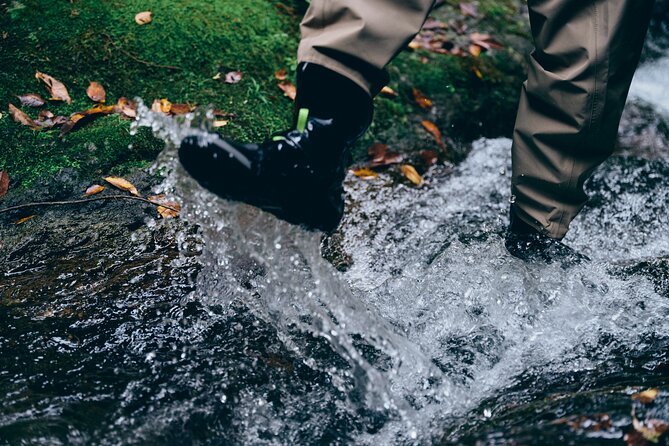
From 1:00 to 2:00 pm, the day shifts from cycling to river trekking. Wearing waterproof gear, you walk through the river toward a waterfall tucked away from the main sightseeing route.
This is the most unusual part of the tour. A valley walk can be pleasant, but moving through the water changes your sense of the place. You notice the sound of the current, the temperature, and the rocks underfoot in a way you cannot from a paved viewpoint.
The river section is also the part that requires the most attention. The tour needs good weather, and rain can lead to an adjusted plan. That is not a minor footnote. Water levels and conditions matter when your route runs through a river, so a poor-weather cancellation or change is a sensible safety measure.
The supplied details do not state how deep or fast the water is, nor do they list every item you should bring. Waterproof gear is provided or arranged as part of the activity, but you should still ask the operator what footwear and clothing are suitable. Plan for clothes that can handle getting wet and for an outdoor afternoon rather than a polished city excursion.
The waterfall is described as hidden, which means the reward comes from reaching it rather than simply pulling up beside it. If you want a more active day and enjoy unusual ways to see nature, this section is likely to be the highlight.
The final e-bike ride and suspension bridge
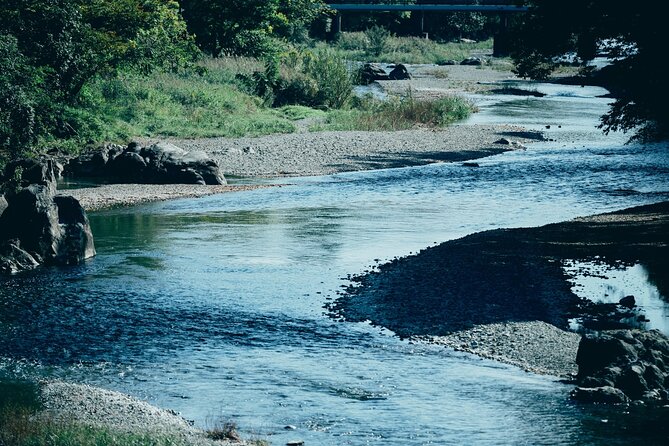
After the river trek, you return to the electric bicycles for the second half of the route, scheduled from 2:00 to 2:40 pm. This short ride helps connect the waterfall section with the final stop.
The change from water to cycling gives the afternoon a pleasant rhythm. You are active, but the day does not ask you to spend all six hours walking or pedaling. The electric motor is especially useful after the river portion, when you may be ready for a quieter ride.
The route includes a suspension bridge before you reach the hot spring. Crossing it adds one more clear mountain-valley moment to the day. The bridge is also a good example of how this outing works best as a series of small experiences rather than one major attraction.
Footbath at Seoto no Yu
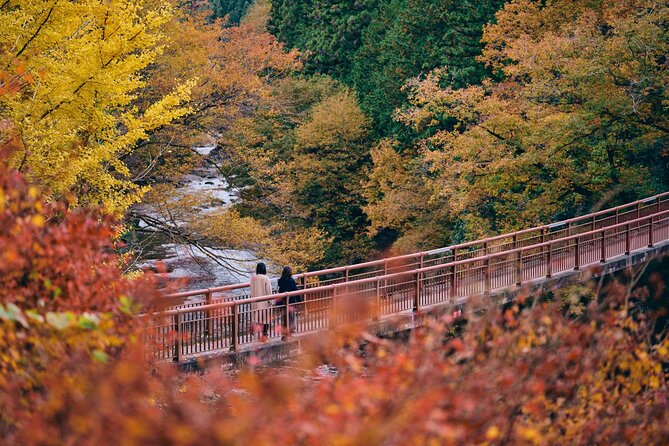
The final stop is Seoto no Yu, written in the supplied details as 秋川溪谷瀨音之湯. Here you cross the suspension bridge, enjoy a hot-spring footbath, and have time for souvenir shopping.
Only your feet go into the hot spring, so this is not a full bathing session. That makes it a simple, low-key way to end the day. After cycling and walking through the river, warm water for tired feet is a welcome finish.
The footbath also keeps the schedule practical. You get a taste of the area’s hot-spring culture without needing the time, privacy, or preparation required for a full bath. The stop is planned for roughly 2:40 to 3:30 pm, with the activity then returning to the meeting point.
Souvenir shopping is included in this final block, but the available details do not specify the shops or products. Treat it as an optional browsing stop rather than the main reason to book.
What the $143.34 price delivers
At $143.34 per person, this is not the cheapest way to see the outskirts of Tokyo. The price makes more sense when you consider what is bundled into the day: a guide, electric bicycle use, organized transport between the activity sections, a riverside lunch, waterproof equipment for the river trek, temple visits, and the hot-spring footbath stop.
You are also paying for a route that would take effort to arrange independently. Finding the right train connection, renting a suitable e-bike, locating a safe river route, choosing a lunch spot, and identifying a waterfall would take time. The guide links those pieces into one compact day.
Value depends on what you want from Tokyo. If your priority is famous city sights, museums, or food neighborhoods, this outing uses a full day away from central Tokyo. If you already plan to spend several days in Tokyo and want one day with forests, local temples, and physical activity, the price is easier to justify.
The maximum of six is another part of the value. A small group can move more easily and makes the guide’s help more useful, especially during the cycling and river portions. You are not paying for a large coach operation with long waits and broad, generic commentary.
Who should book this countryside day
I would point this tour toward active adults, couples, friends, and families with older children who can cycle and handle a river walk. It suits you if you want to see a quieter side of Tokyo and prefer doing something outdoors to spending another day among major urban sights.
It is also a good fit if you enjoy variety. The schedule moves from temple to bicycle ride, from lunch to river trekking, and from a suspension bridge to a hot-spring footbath. No single part dominates the whole day.
You may want to skip it if you dislike getting wet, have limited cycling ability, or want a fully predictable itinerary. Weather affects the experience, and the river section can be adjusted when conditions are poor. The available information says most people can participate, but it does not provide detailed accessibility information for the bikes, uneven outdoor route, or river crossing.
The outing is less suited to anyone seeking a luxurious spa day. The hot spring is a footbath, not a full bathing visit, and lunch is outdoors. Think rural activity day, not resort retreat.
Practical planning for the six-hour route
Use the mobile ticket and arrive ready for a 10:00 am start at Tokyo Urayama Base. Since the activity begins outside central Tokyo, allow enough time to reach Akiruno by train. The meeting point is near public transportation, but the supplied information does not give a recommended train route or travel time from your particular hotel.
Wear clothing suited to cycling and water activity. The operator provides waterproof gear for the river trek, but you should confirm exactly what is supplied before departure. A change of clothes may be sensible, since the route is designed around walking through the river.
The weather policy is clear: if poor conditions make the activity unsafe, you can receive a full refund or choose another date. If the minimum number of participants is not reached, the operator offers a different date or activity, or a full refund. You can cancel for a full refund up to 24 hours before the local start time. Late cancellations and changes are not accepted.
The tour is usually booked well ahead, with an average booking lead time of 46 days. That suggests you should not leave it until the last minute if the date matters to your Tokyo plans.
Should you book Little Adventure with Cycling in Tokyo No. 1?
Book it if you want a real change of pace from central Tokyo. The combination of e-bikes, a thatched temple gate, a riverside Cuba sandwich, river trekking, a waterfall, and a hot-spring footbath gives you a full and unusual day for $143.34.
I would be especially keen to book in good weather, when the river section can operate as planned. Just understand the trade-off: this is active, outdoors, and weather-dependent. If that sounds like the point rather than a problem, this is one of the more distinctive ways to experience Tokyo Prefecture.
FAQ
How long does the cycling and river tour last?
The activity lasts approximately six hours. It starts at 10:00 am and finishes back at Tokyo Urayama Base.
Where does the tour start?
The meeting point is Tokyo Urayama Base at 219-7 Tateya, Akiruno, Tokyo 190-0163, Japan.
How many people can join the tour?
The activity has a maximum of six participants.
Is lunch included?
Yes. Lunch is served outdoors beside the Akigawa River and is described as a special Cuba sandwich lunchbox.
Does the tour include a hot spring?
The tour includes a hot-spring footbath at Seoto no Yu, along with souvenir shopping. The information provided describes a footbath rather than a full hot-spring bathing session.
What happens if the weather is bad?
The activity requires good weather. If it is canceled because of poor conditions, you can choose another date or receive a full refund.
Tokyo Cycling Tours, compared.
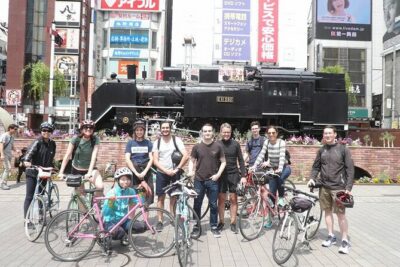 ★ 5.0Tokyo Great Cycling TourFrom $99
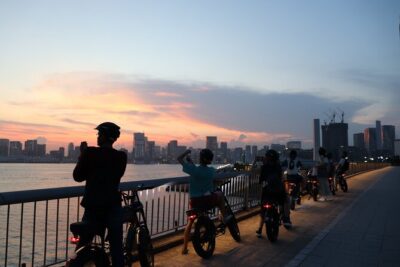 ★ 5.0Tokyo Top Highlights 3h Guided E-bike TourFrom $63
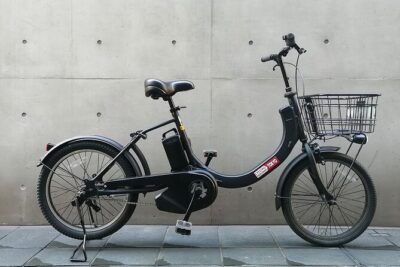 ★ 5.03h Tokyo E-Bike Tour: Hidden Gems, and Local Life with guideFrom $63
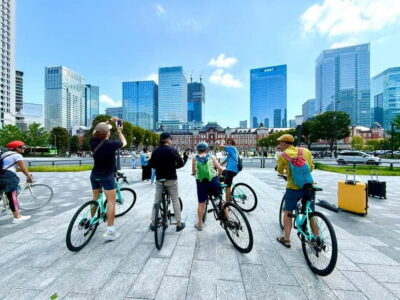 ★ 4.83-Hour Bike or E-Bike City Highlights TourFrom $453 hours
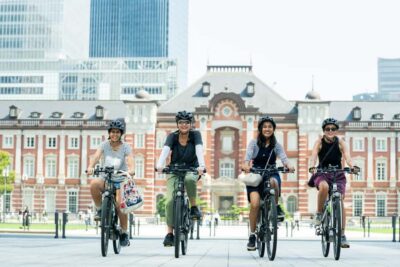 ★ 4.83-hour Guided E-Bike Tour of the City’s Hidden GemsFrom $65
 ★ 5.0Tokyo West-Side Cycling & Food TourFrom $99
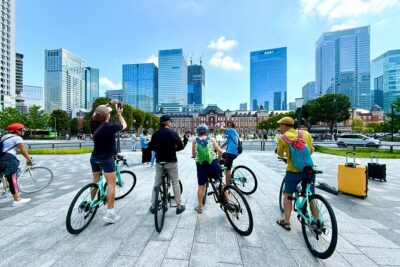 ★ 5.03-Hour Bike/E-Bike Tour of the City’s HighlightsFrom $63
 ★ 5.0Small Group Cycling Tour in TokyoFrom $66
Browse the lists this tour appears in