
Reviewed · E-BIKE TOURS
Winter Special: Clear View Mt. Fuji E-Bike Tour
Fuji City offers something the famous Hakone and Kawaguchiko routes often cannot: quiet roads with room to notice daily life. On this 2.5-hour ride, you pedal from Shin-Fuji Station toward temples, coastline, villages, spring-water sites, and some of the clearest Mt. Fuji viewpoints in winter. Guide Yasu Hasegawa adds local stories and helps with photographs.
I like the electric-assisted Miyata Ridge Runner because it lets you cover real ground without turning the outing into a fitness test. I also like the small maximum group of five, which suits a relaxed pace and makes it easier to stop for pictures or ask questions. The main catch is simple: this is a weather-dependent ride, and Mt. Fuji can still hide behind clouds even on a good day.
In This Review
- Key points at a glance
- Why Fuji City makes a smart base for this ride
- Starting at Shin-Fuji Station
- Myoho-ji Temple, then downhill toward the sea
- Yusui Park and Fuji’s spring water
- Hounji and a drink from the fountain
- Fujisan Yume No Ōhashi Bridge and the main photo stop
- The Miyata Ridge Runner and what the ride feels like
- A guide who makes the city easier to understand
- Is $105.42 good value?
- Who should book this experience
- Booking and cancellation details
- Should you book the Fuji City e-bike tour?
- FAQ
- Where does the Fuji e-bike tour start?
- Where does the tour end?
- How long does the experience last?
- How many people can join the tour?
- What bicycle is provided?
- Are a helmet and insurance included?
- Are drinks included?
- What happens if bad weather cancels the tour?
Key points at a glance
- A quieter Fuji experience: Ride through rural roads, traditional villages, and coastline rather than staying with the busiest sightseeing routes.
- Electric help included: The Miyata Ridge Runner takes the strain out of the ride, though you still need to be comfortable cycling.
- Small group size: The tour accepts no more than five people, making it easier to hear the guide and keep the pace pleasant.
- Strong winter viewing conditions: Crisp air can give Mt. Fuji a clean outline, especially at Fujisan Yume No Ōhashi Bridge.
- Spring water and sea views: You see both Mt. Fuji’s freshwater sources and Suruga Bay, Japan’s deepest bay.
- Useful seasonal extras: A helmet, insurance, and free heat packs called kairo are supplied in winter. Bring your own drink.
Why Fuji City makes a smart base for this ride
Many people treat Fuji City as a place to pass through on the way to a better-known Mt. Fuji destination. That is precisely what makes this ride appealing. You see a working city and its quieter edges, not just a prepared photo stop with a mountain in the background.
The route links several parts of the area that make sense together. You get a temple, the sea, countryside roads, traditional villages, water flowing from Mt. Fuji, and a bridge built for a wide mountain view. The result feels more like a look at local life than a checklist of famous attractions.
I especially like the contrast between Suruga Bay and Mt. Fuji. The mountain is usually presented as the whole story, but from Fuji City you can connect its snow and spring water with the coast below. That gives the outing a clearer sense of place.
The tour lasts about two and a half hours, including the ride back to Shin-Fuji Station. That is long enough to see several parts of the city without taking up an entire day. It also makes this a useful choice if you are fitting Fuji City between train connections or other sightseeing plans.
Starting at Shin-Fuji Station
The meeting point is the south exit of Shin-Fuji Station in Fuji, Shizuoka. The tour begins and ends there, so you do not need to arrange a separate return transfer or wonder where to leave the group.
This start point is practical, but do not treat it as a sightseeing stop in itself. The station is your anchor for the outing. Arrive ready to ride, with drinks packed because bottled water is not included.
The group size is capped at five people. That matters on a bicycle tour. A large line of riders can make quiet streets feel less quiet, while a small group can stop more easily and stay close to the guide. Yasu Hasegawa has led the ride for families, couples, and mixed-age groups, and his approach includes helping with photos and explaining Fuji City’s traditions, culture, and industries.
Myoho-ji Temple, then downhill toward the sea
One of the first stops is Bishamonten Myoho-ji Temple, one of Fuji City’s best-known temples. You spend about ten minutes here before continuing toward the coast.
That time is enough for a short look and a few photographs, not a full temple visit. Think of it as an opening glimpse of the city’s religious and local character. The value comes from seeing the temple as part of a wider route, rather than stopping at an isolated attraction and immediately returning to the station.
From the temple, the ride heads toward the sea. The route includes views of Suruga Bay and Mt. Fuji, a pairing that gives you two major natural features in one frame. The coast also changes the mood of the ride. After the temple, you get open air, broader views, and a sense of how close the mountain and bay are to everyday neighborhoods.
Winter is the season this tour is designed to highlight. Cold, dry air often gives distant mountain views more definition, though no tour can guarantee a cloud-free summit. Wear warm layers that allow your arms to move freely. Heat packs are provided during winter, which is a small but useful touch when you are exposed to wind near the coast.
Yusui Park and Fuji’s spring water
The next part of the route focuses on spring water sites. At Yusui Park, you spend around ten minutes seeing water connected to Mt. Fuji.
This stop gives the ride more substance than a string of viewpoints. Mt. Fuji is not only something to photograph from a distance. Its snow and rain feed underground water, which emerges in springs around the foothills and nearby city areas. The stop helps you connect the mountain you are looking at with a resource used in local life.
The water is described as exceptionally clear and beautiful. You can enjoy the site as a brief nature stop, but the schedule does not suggest a long walk or extended visit. Keep your expectations at the right scale: this is a guided cycling route with short pauses, not a full park excursion.
Hounji and a drink from the fountain
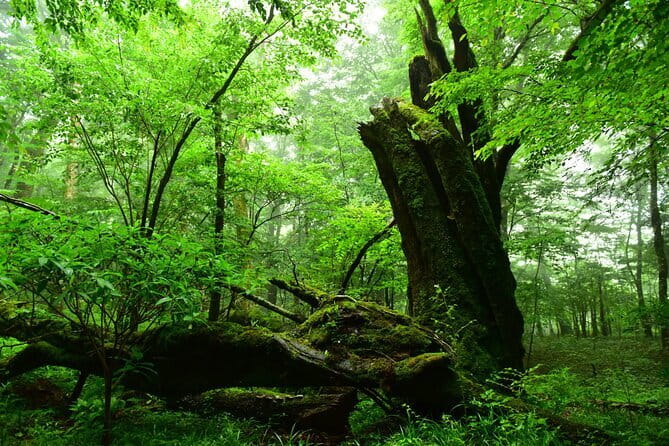
At Hounji, the pause is shorter, about five minutes. The feature here is a fountain where you can drink Mt. Fuji spring water.
Since bottled water is not supplied, you should bring your own drink for the ride. The fountain may be an interesting chance to taste the local water, but it should not replace carrying something with you. The tour covers several stops and includes cycling along roads and coastal stretches, so a personal bottle is the sensible choice.
I like this stop because it is direct and local. You are not being shown a polished attraction built only for sightseeing. You are seeing how Mt. Fuji’s water appears in the city and how a short stop can explain the relationship between the mountain and the communities below it.
Fujisan Yume No Ōhashi Bridge and the main photo stop
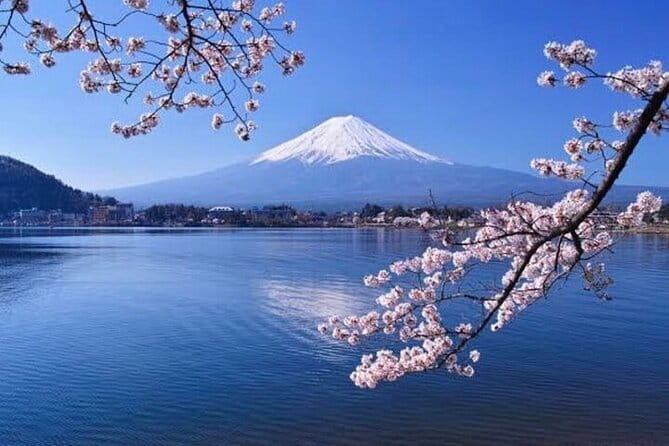
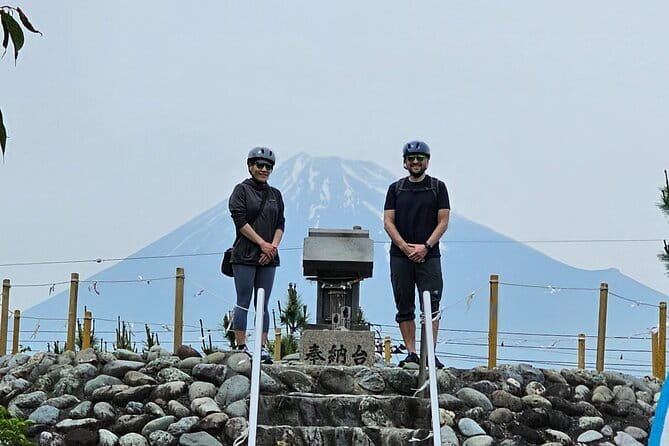
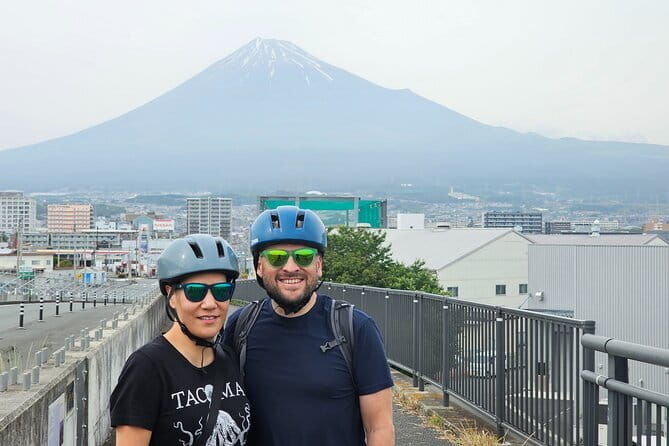
The bridge is likely to be the visual high point of the tour. From Fujisan Yume No Ōhashi Bridge, you can enjoy a broad view of Mt. Fuji, with the road and surrounding city helping give the mountain scale.
The stop lasts about ten minutes. The south side has a staircase with 50 steps, so plan for a little walking if you want to use that side for photographs. This is worth knowing before you arrive, especially if you are counting on an easy ride with no stairs at all.
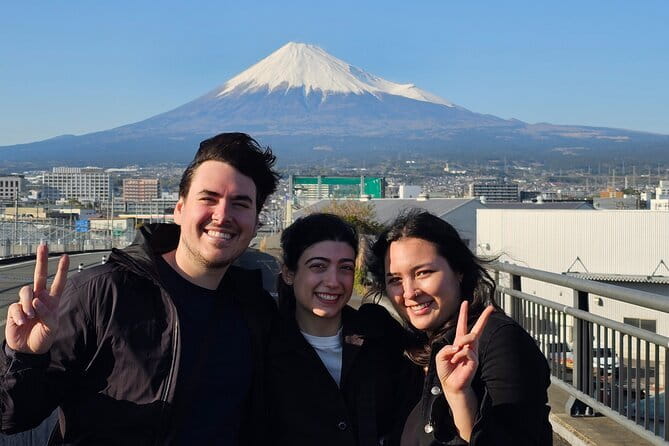
The photo help from Yasu is useful here. Several past rides have included many picture stops, and Yasu has been praised for helping families and couples get good shots. You should still expect to handle your own phone or camera, but you will not be left guessing where to stand.
Mt. Fuji remains the unpredictable part of the experience. Clear winter air improves your odds, but clouds can still cover the mountain. If the summit is hidden, the coast, bridge, villages, temple, and spring-water sites still give the ride purpose. If the mountain appears sharply above the city, this is the stop most likely to supply the image you hoped for.
The Miyata Ridge Runner and what the ride feels like
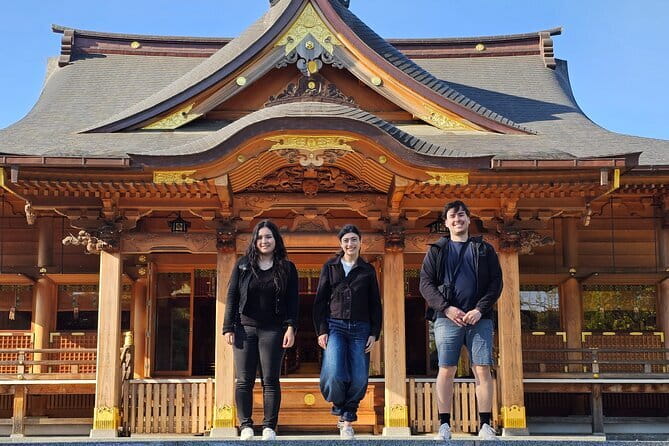
The included bicycle is a Miyata Ridge Runner with electric assistance. You still pedal, but the motor helps reduce the effort. That makes it possible to cover more of Fuji City while keeping enough energy to look around and listen to the guide.
An e-bike does not turn cycling into a passive activity. You need to balance, steer, pedal, and feel comfortable on public roads. The description says most people can participate, but it does not provide a detailed fitness or cycling requirement. If you rarely ride a bicycle, contact the operator before booking so you can confirm that the route suits you.
The electric assistance is especially useful for a mixed group. One person may want a gentle outing while another is comfortable riding farther. The motor can help narrow that gap. Families have completed the ride, and Yasu has adjusted his explanations so both children and adults can stay interested.
A helmet is included, as is insurance, with the insurance fee covered by the operator. In winter, free kairo heat packs are provided. The warmers are helpful, but they do not replace a proper jacket, gloves, and clothing that protects you from wind.
A guide who makes the city easier to understand
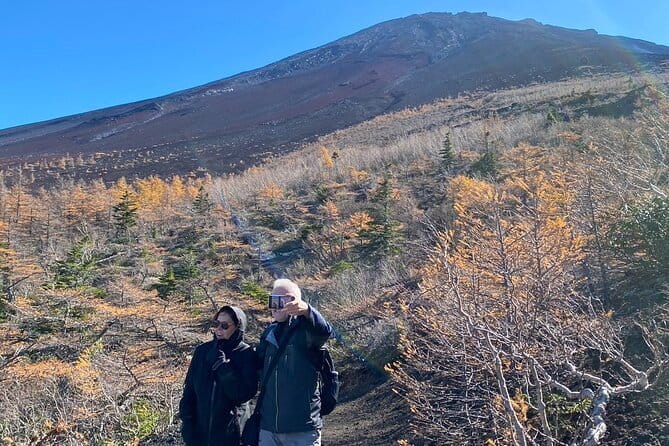
Yasu Hasegawa is the guide named in the tour information and the responses from the operator. His role goes beyond leading the bicycles from one stop to the next. He explains Fuji City’s culture, history, traditions, and industries, and he takes pride in showing how local people live.
That local focus is one of the strongest reasons to choose this ride. You are not only being delivered to a viewpoint. You are moving through neighborhoods and countryside where the guide can explain what you are seeing. The route has also included a tea shop, tea experiences, and a paper museum on other versions of the ride, but those stops are not listed as fixed parts of this winter itinerary. Do not book expecting them unless the operator confirms they are included on your date.
Yasu has also provided air-conditioned vests on hot summer rides. Those vests are not part of the winter package, so they should not affect your planning for this seasonal tour. The consistent practical detail is his attention to comfort, safety, photos, and keeping the ride interesting for different ages.
Is $105.42 good value?
At $105.42 per person, this is not the cheapest way to see Mt. Fuji. You are paying for more than bicycle rental, though. The price includes a Miyata electric-assisted bike, helmet, guide, and insurance. Winter heat packs are also included, and the group is limited to five people.
The value depends on what you want from Fuji City. If your only goal is a quick photograph of the mountain, a station-area viewpoint or public transport stop may cost less. If you want transport between several local sights, help with photos, and explanations about the city without planning the route yourself, the price is easier to justify.
I see the tour as good value for a visitor who wants a half-day introduction to the quieter side of Fuji City. The small group matters here. You are not paying for a large bus circuit. You are paying for a guided ride that reaches places you might not link together on your own.
The price is also fairer for people who would otherwise need to rent a bicycle, find a suitable route, navigate to the stops, and arrange their own return to Shin-Fuji Station. The e-bike removes some physical strain, while the guide removes much of the planning work.
Who should book this experience
I would recommend it to confident casual cyclists, couples, families with children who can ride, and anyone who wants Mt. Fuji views without spending the day in a major resort area.
It is a good fit if you enjoy:
- Quiet roads more than packed sightseeing streets
- Local neighborhoods and countryside
- Short stops with a clear purpose
- Photography, especially wide mountain views
- A guide who explains daily life rather than only naming attractions
- A small group and a relaxed pace
You should think twice if you dislike cycling, need a fully indoor activity, or want a guaranteed view of the summit. The tour runs only when weather conditions allow, and even good weather cannot control clouds around Mt. Fuji.
You should also plan around the season. Winter brings the best chance of crisp air, but it also brings cold riding conditions. Bring warm clothing, gloves, and your own drink. The free heat packs are welcome support, not a complete winter clothing plan.
Booking and cancellation details
Confirmation is provided when you book, and mobile tickets are available. The activity ends back at Shin-Fuji Station, which keeps the logistics simple.
You can cancel for a full refund up to 24 hours before the local start time. Cancellations or changes made within 24 hours are not refunded or accepted. If poor weather causes the operator to cancel the tour, you are offered another date or a full refund.
Should you book the Fuji City e-bike tour?
Book it if you want to see Mt. Fuji as part of a real place, not just as a backdrop. The combination of Suruga Bay, Myoho-ji Temple, spring-water sites, rural roads, and the bridge viewpoint gives the outing a clear sense of Fuji City.
The biggest reason to choose it is the balance: electric assistance keeps the ride manageable, a five-person limit keeps it personal, and Yasu’s local guidance adds meaning to otherwise easy-to-miss streets and stops. The main risk is the mountain itself. If clouds cover Mt. Fuji, you will still have a worthwhile city and coast ride, but the signature view may not appear.
For a clear winter day and a visitor who is comfortable on a bicycle, this is a well-priced, practical way to spend two and a half hours. Bring warm layers, carry water, and leave room in your plans for the weather to make the final decision.
FAQ
Where does the Fuji e-bike tour start?
The tour starts at the south exit of Shin-Fuji Station in Kawanarijima, Fuji, Shizuoka, Japan.
Where does the tour end?
The ride ends back at the meeting point at Shin-Fuji Station.
How long does the experience last?
The total duration is approximately two hours and 30 minutes, including the stops, riding time, and return to Shin-Fuji Station.
How many people can join the tour?
The tour has a maximum of five travelers.
What bicycle is provided?
The operator provides a Miyata Ridge Runner electric-assisted bicycle.
Are a helmet and insurance included?
Yes. A rental helmet is included, and the operator covers the insurance fee.
Are drinks included?
No. Bottled water is not included, so you should prepare your own drink.
What happens if bad weather cancels the tour?
Because the tour requires good weather, the operator will offer a different date or a full refund if poor weather causes cancellation.
E-Bike Tours, compared.
 ★ 5.0Tokyo Top Highlights 3h Guided E-bike TourFrom $63
 ★ 5.03h Tokyo E-Bike Tour: Hidden Gems, and Local Life with guideFrom $63
 ★ 5.05 Top Highlights of Kyoto Full Day Bike Tour (E-bike option)From $172
 ★ 4.83-Hour Bike or E-Bike City Highlights TourFrom $453 hours
 ★ 5.0E-Bike Tours of the highlights of Kyoto!!!From $109
 ★ 4.83-hour Guided E-Bike Tour of the City’s Hidden GemsFrom $65
 ★ 5.0Osaka E-Bike Tour with a Local GuideFrom $59
 ★ 5.03-Hour Bike/E-Bike Tour of the City’s HighlightsFrom $63
Browse the lists this tour appears in