
Reviewed · CYCLING TOURS
Short Morning Cycling Tour in Hida
Hida’s best sights are not grand attractions. They are the rice fields beyond town, old farmhouses, spring water, a small market, a quiet shrine, and the people who live among them. This 12-kilometer cycling route links those everyday places with a local guide who explains what you are seeing.
I like the small group of up to eight, which makes it easy to ask questions and keep the pace relaxed. I also like that the ride is mostly flat and suitable for families, including children at least six years old and 125 centimeters tall. The main consideration is the price: at $161.18 per person, this is not a cheap bike rental, so you need to value the guide, equipment, and local access.
In This Review
- Key points to know before booking
- Starting at 10:15 in Furukawa
- Pedaling through Hida Furukawa’s quiet streets
- Rice fields, farming, and the Satoyama setting
- Local markets and everyday encounters
- Shrines, spring water, and small discoveries
- Guides who make the route meaningful
- What the 2.5-hour pace feels like
- Is $161.18 a fair price?
- Who will enjoy this ride most
- Practical details that can affect your morning
- Should you book the Hida cycling tour?
- FAQ
- Where does the Hida cycling tour start?
- What time does the morning tour depart?
- How long does the cycling tour last?
- How far do you cycle?
- Is the cycling route difficult?
- What is included in the price?
- Are food and drinks included?
- Are bicycles equipped with baskets?
- Can children join the tour?
- How many people can join one booking?
- Does the tour return to the starting point?
- Can you cancel for a full refund?
Key points to know before booking

- A gentle 12-kilometer route: The ride is mostly flat and designed as a comfortable mix of exercise and rest.
- A close look at rural Hida: You pass farms, rice fields, old houses, markets, shrines, and quiet countryside.
- A guide-led experience: Guides such as Nanami, Miyuki, Marino, Akiko, and Ryoto explain farming, wildlife, homes, culture, and local customs.
- Small groups matter: The maximum is eight people, with the chance to stop, ask questions, and chat with local people.
- Useful inclusions: Bicycle, helmet, insurance, local taxes, snacks, and coffee or tea are included.
- Bring only what you need: The bikes do not have baskets, and additional food and drinks are not included.
Starting at 10:15 in Furukawa
You meet at the SATOYAMA EXPERIENCE office at 11-32 Furukawachō Ninomachi in Hida, Gifu. The morning departure is scheduled for 10:15 am, and the tour returns to this same point after about two and a half hours.
That timing works well if you are staying in Hida Furukawa and want to use the afternoon for sightseeing. It can also fit a day trip from nearby Takayama, since Furukawa is reachable by train or bus. Still, check your transport times carefully. The activity begins in Furukawa, not in central Takayama, and you do not want to start the morning watching your train timetable.
Before setting out, you meet your guide and receive a bicycle and helmet. The exact bike style is not specified, so ask the operator about fit if that matters to you. There is no basket attached to the bike, which is a small but important detail. Carry a light bag only, and avoid planning to shop heavily along the route.
The maximum group size is eight. That is large enough for a social outing but small enough for a guide to keep an eye on the group. Some departures may be smaller, depending on bookings. A family traveling with a six-year-old has previously had a private-feeling outing, but you should not assume every booking will be private.
Other cycling tours in Gifu Prefecture
Pedaling through Hida Furukawa’s quiet streets
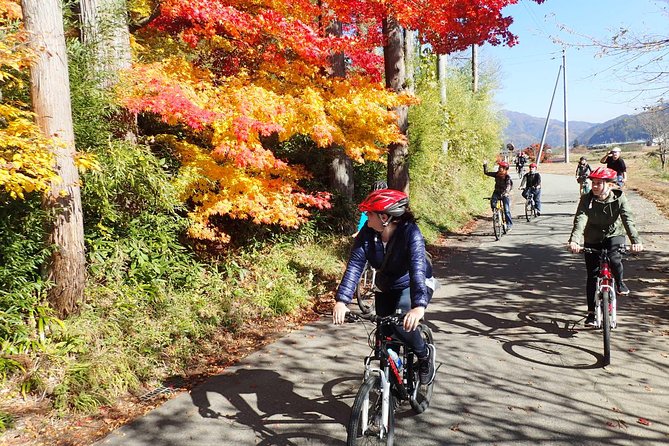
The first part of the ride takes you through a peaceful town in Hida Furukawa. This is not a race through a list of sights. The point is to notice how the town works, and to hear why its buildings, water, farms, and food matter.
The route gradually leaves the town and reaches the countryside. You see traditional houses, fields, and mountains around the farming villages. Large old folk houses appear among the farmland, giving you a sense of how rural families once lived and how some homes still shape the area today.
The riding is gentle enough for people who do not think of themselves as cyclists. Several people describe it as easy for non-bike enthusiasts, and that is useful context. You should still be comfortable riding for roughly 12 kilometers, but the tour is not presented as a fitness challenge.
The route’s mostly flat profile is especially helpful for families and mixed-ability groups. You can concentrate on the scenery and conversation rather than hills. The trade-off is that serious cyclists may find the pace too mild. This is a cultural outing on bicycles, not a demanding ride through mountain roads.
Rice fields, farming, and the Satoyama setting
The countryside here gives you a direct view of rice farming. Rather than hearing a general talk about Japanese agriculture, you see the fields and the village pattern around them. The guide can explain how rice growing fits into local life, along with subjects such as Hida cattle, local plants, and wildlife.
The term Satoyama refers to the lived-in countryside where fields, woods, villages, and human work exist side by side. On this ride, that idea is not presented as a museum display. It appears in the ordinary details around you: vegetables prepared for sale, farm buildings, water sources, and homes spread through the fields.
This is one of the tour’s strongest features. Japan’s famous cities and temples can show you the country’s polished public face. A bicycle ride through Hida lets you see the working countryside behind it.
The scenery changes with the season, and the experience can change with the weather. A hot day may make the included drink stop welcome. Rain does not necessarily cancel the outing, and waterproof clothing has been provided when needed, but wet roads and cooler air will affect your comfort. Pack clothing suited to the forecast rather than assuming a sunny morning.
Local markets and everyday encounters
A stop at a local market gives the ride a practical purpose. You may see local vegetables lined up for sale and get a closer look at the food produced in the area. The tour information does not promise a specific purchase or market item, so think of this as a chance to observe and perhaps buy a small snack, not a formal food tour.
The guide also helps you meet and speak with local people at various points. That human contact is what separates this activity from simply renting a bicycle and following a map. You get a chance to ask how people live, work, and care for the town.
The conversations are not scripted in the same way as a major attraction. That can make them more memorable, but it also means the exact stops may vary. Your guide may spend more time on farming, local homes, plants, wildlife, or customs depending on the group’s questions and the day’s conditions.
A useful tip is to come prepared to participate. Ask about the houses you pass, the vegetables at the market, or the water flowing through town. The more curious you are, the more the ride becomes a personal exchange instead of a standard sightseeing loop.
Shrines, spring water, and small discoveries
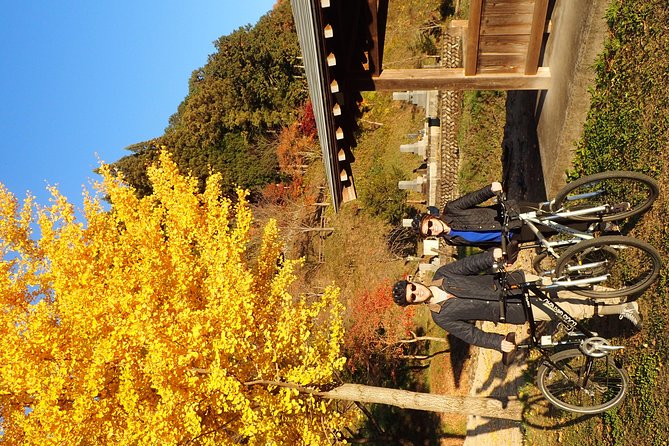
The route can include quiet shrines and local spring water. These are modest stops, not major monuments with long entrance lines. Their value is the way they fit into daily life.
One reported stop at spring water was especially welcome on a hot day. If you visit in warm weather, bring a reusable bottle if you have one. The tour includes coffee or tea, but the details of water service at each stop can vary, so do not rely on the cycling tour as your only source of hydration.
A shrine visit gives your guide room to explain local beliefs and the role these places play in a community. You may also see a small waterfall or other natural feature along the way. The attraction is not one spectacular viewpoint. It is the steady stream of small details that you would likely miss from a vehicle.
This is why the bicycle works so well here. You move slowly enough to notice a house set back from the road, a field surrounded by mountains, or a change from town streets to farm lanes. You also stop without the sense that every minute must be spent taking photographs.
Guides who make the route meaningful
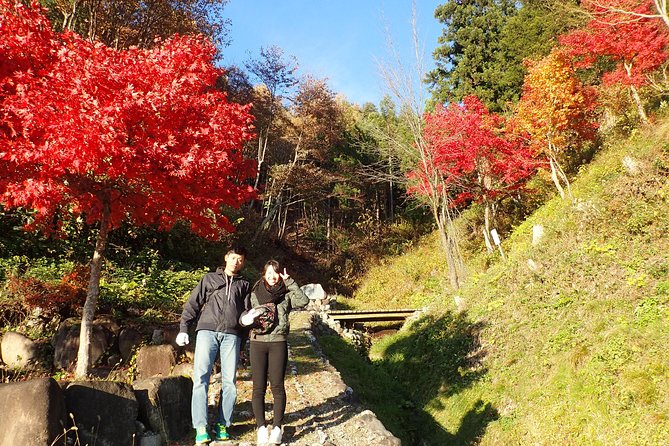
The guide is the main reason to book this rather than arrange your own ride. Several guides have led this experience, including Nanami, Miyuki, Marino, Akiko, and Ryoto. Your assigned guide will depend on the date and the operator’s schedule.
Nanami has been praised for her enthusiasm when explaining local plants, wildlife, farming, and culture. Miyuki has guided families and explained Hida cattle, rice farming, old houses, and local customs. Marino has been appreciated for answering questions as a local and for making the ride feel like a shared conversation.
Akiko has led rides that included traditional houses, shrines, and countryside stops. Ryoto has guided families and has spoken English well, while French-speaking visitors have enjoyed his explanations in French. These details do not guarantee a particular guide or language for your departure, so contact SATOYAMA EXPERIENCE if language support is essential.
The best guides on this route do more than point out objects. They connect what you see to local work and local values. A rice field becomes part of a farming system. An old house becomes evidence of how families used space. A market becomes a sign of what the surrounding villages produce.
What the 2.5-hour pace feels like
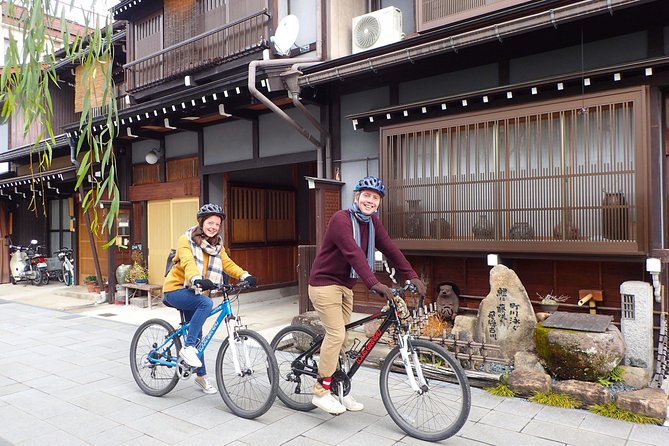
Two and a half hours is a useful length. You have enough time to leave the town, reach the farmland, make several stops, and return without giving up an entire day.
The ride includes breaks and time for explanation. A mid-morning tea stop has been part of the experience, with coffee and tea included. Snacks are also listed as included. Additional food and drinks are not included, so plan to pay for any purchases at the market or elsewhere.
The pace is relaxed rather than tightly timed. One small group enjoyed having room to linger, with only the tea break treated as a fixed pause. That flexibility is a plus if you like questions and conversation. It can be less appealing if you want a precise timetable or a high number of formal attractions.
You should also allow for the weather. Hida’s countryside can feel wonderful in warm sunshine, but rain changes the character of the ride. Waterproofs may be available when needed, as they have been provided on wet departures, but confirm current arrangements if rain is forecast.
Is $161.18 a fair price?
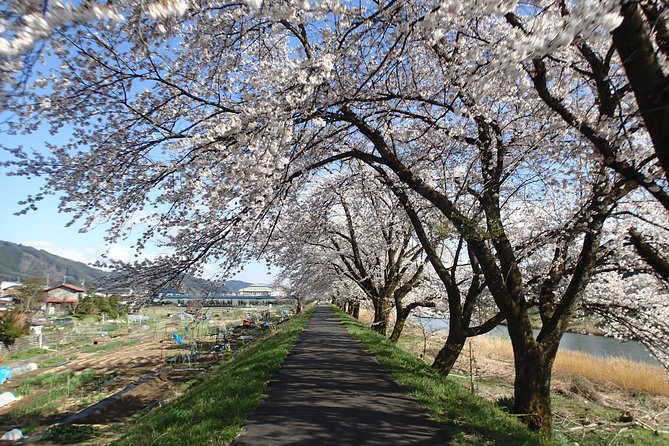
At $161.18 per person, the cost is high compared with an ordinary bicycle rental. You are paying for more than the bicycle. The price includes a local guide, helmet, insurance, local taxes, snacks, and coffee or tea.
The bigger value is access. You could cycle around Furukawa on your own for less, but you would not automatically know which farm roads to use, what the old homes represent, where local produce is sold, or how to approach conversations with residents. The guide turns an attractive ride into a lesson in how Hida functions.
The small group also helps justify the cost. With no more than eight people, the guide can explain details without shouting and adjust the conversation to your interests. Families may find the price easier to accept because the ride combines sightseeing, outdoor activity, and cultural learning in one morning.
I would not recommend it to a budget-minded visitor who simply wants transportation on two wheels. I would recommend comparing it with the cost of a half-day guided activity in the region, especially if you value local context and do not have a car.
Group discounts are available, which may improve the value for families or friends booking together. The published information does not give the discount amount, so check the final booking price rather than assuming a fixed reduction.
Who will enjoy this ride most
This tour suits you if you want to see rural Japan without taking on a strenuous cycling route. It is a good match for families with children who meet the minimum age and height requirements, couples, and adults who prefer a calm morning outside.
It also suits you if you have already seen major urban sights and want a clearer sense of everyday life. The route offers farming villages, rice fields, old houses, local produce, shrines, spring water, and conversations with people in the area.
You may want a different activity if you are looking for steep climbs, speed, long-distance riding, or dramatic mountain cycling. The gentle route is a strength for most participants, but it is not the main attraction for athletic cyclists.
The experience can also work well for visitors without a car. Furukawa is accessible by public transportation, and the tour begins and ends at the same office. That makes planning simpler than a point-to-point ride.
For families, remember the minimum age is six and the minimum height is 125 centimeters, about 4.1 feet. Most people can participate, but you should be able to ride a bicycle for the full route and follow the guide’s directions.
Practical details that can affect your morning
Book ahead if your schedule is fixed. The activity is booked an average of 65 days in advance, and confirmation arrives within 48 hours, subject to availability.
Wear comfortable clothes for cycling and check the forecast before you leave. You receive a helmet, but the supplied details do not specify clothing, footwear, or bike accessories. Since there is no basket, keep belongings small and secure.
The tour is offered as a group activity with a maximum of eight people. The experience ends back at the meeting point, which is useful if you have luggage stored nearby or want to continue exploring Furukawa afterward.
Free cancellation is available if you cancel at least 24 hours before the local start time. Cancellations or changes made later are not accepted for a refund, so watch the deadline if rain or a transport problem threatens your plans.
Should you book the Hida cycling tour?
Book it if you want a gentle, well-guided look at rural Hida and you care more about local life than a packed list of sights. The strongest reasons are the flat 12-kilometer route, the small group, the guide’s explanations, and the chance to meet people outside the usual sightseeing circuit.
At $161.18, it is a considered purchase. I would choose it over a simple rental if this is your main chance to see the countryside, learn about rice farming and old homes, and ask questions in English or another supported language. I would skip it if you want a strenuous ride or need to keep activity costs low.
For most visitors with a morning to spare in Hida Furukawa, this is a thoughtful way to connect the town with the farms and villages around it. You return with more than photographs: you understand a little better how this part of Japan works.
FAQ
Where does the Hida cycling tour start?
The tour starts at the Furukawa office, located at 11-32 Furukawachō Ninomachi, Hida, Gifu 509-4235, Japan.
What time does the morning tour depart?
The morning departure is scheduled for 10:15 am.
How long does the cycling tour last?
The activity lasts approximately 2 hours and 30 minutes.
How far do you cycle?
The route covers about 12 kilometers.
Is the cycling route difficult?
The route is mostly flat and is described as a gentle balance of exercise and relaxation. It is suitable for people who are not regular cyclists, provided they can ride for the full route.
What is included in the price?
The price includes a local guide, bicycle, helmet, insurance, local taxes, snacks, and coffee or tea.
Are food and drinks included?
Snacks and coffee or tea are included. Additional food and drinks are not included.
Are bicycles equipped with baskets?
No. A basket is not attached to the bicycle, so bring only belongings you can carry safely without one.
Can children join the tour?
Children can participate from age six, with a minimum height of 125 centimeters, about 4.1 feet. The activity states that most people can participate.
How many people can join one booking?
The maximum is eight people per booking, and the activity has a maximum group size of eight travelers.
Does the tour return to the starting point?
Yes. The activity ends back at the meeting point.
Can you cancel for a full refund?
Yes. You can receive a full refund by canceling at least 24 hours before the experience start time. Cancellations or changes made less than 24 hours before the start are not accepted for a refund.
More Morning in Gifu Prefecture
More Cycling Tours in Gifu Prefecture
More tours in Gifu Prefecture we've reviewed
Cycling Tours, compared.
 ★ 5.0Bike Tour Exploring North Kyoto plus LunchFrom $106
 ★ 5.0Tokyo Great Cycling TourFrom $99
 ★ 5.0Tokyo Top Highlights 3h Guided E-bike TourFrom $63
 ★ 5.03h Tokyo E-Bike Tour: Hidden Gems, and Local Life with guideFrom $63
 ★ 5.0Arashiyama Bamboo Forest & Hidden Gems Bike Tour (Early Bird)From $106
 ★ 5.0Hiroshima in a Nutshell: Morning Bike AdventureFrom $72
 ★ 5.05 Top Highlights of Kyoto Full Day Bike Tour (E-bike option)From $172
 ★ 4.83-Hour Bike or E-Bike City Highlights TourFrom $453 hours
Browse the lists this tour appears in