
Reviewed · CYCLING TOURS
Private E-MTB guided cycling around Mt. Aso volcano & grasslands
Mt. Aso is not a place you simply look at from a bus window. On this private E-MTB tour, you ride from Aso Station through open grasslands toward Nakadake Crater, climbing about 800 meters to reach the smoking volcanic heart of the caldera.
I like two things right away: the electric bike makes a serious uphill route possible for ordinary cyclists, and guides Joe and Fuji add context about Aso’s scenery and history. The private format also lets your group stop for photos, take breaks, and adjust the pace.
The main caution is the price, about $204 per person, and the need for decent weather and moderate fitness. The motor helps a great deal, but this is still a four-hour mountain ride, not a casual pedal around town.
In This Review
- Key points at a glance
- Riding from Aso Station into the caldera
- The Kusa no Michi and the 800-meter ascent
- Reaching the smoking Nakadake Crater
- The downhill return and wide caldera views
- What the private format adds
- Grassland conservation and the meaning of the route
- Food, clothing, and what to bring
- Who will get the most from this Aso tour
- Is $203.63 per person good value?
- Booking details and cancellation
- Should you book the Mt. Aso E-MTB tour?
- FAQ
- Where does the tour begin?
- What time does the tour start?
- How long does the tour last?
- Where does the tour finish?
- Is the tour private?
- Do I need advanced cycling skills?
- How much climbing is involved?
- What equipment is provided?
- Is food or bottled water included?
- Can I leave luggage with the tour provider?
Key points at a glance
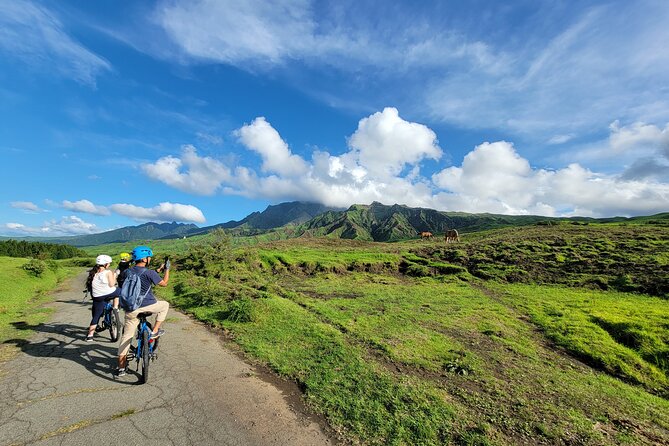
- 800-meter climb to Nakadake Crater: You ride from roughly 500 meters above sea level near Aso Station to about 1,260 to 1,300 meters.
- Electric assistance for beginners: The E-MTBs provide strong help on the uphill sections, with a test ride and instruction before departure.
- Private access through Aso’s grasslands: Your guide takes you along the Kusa no Michi, a route normally inaccessible to standard sightseeing trips.
- Aso’s scenery without engine noise: Much of the appeal comes from feeling the wind and open space by bicycle instead of viewing it through a vehicle window.
- Practical support included: Helmets, gloves, luggage storage, and an air-conditioned vehicle are included.
- A conservation-minded tour: Part of the participation fee goes to the grassland association supporting the Millennium Grassland.
Riding from Aso Station into the caldera
The tour begins at 1 p.m. at the entrance to JR Aso Station. That location is useful if you are arriving by train or building the ride into a day around Aso. You can leave your luggage with the tour provider, which means you do not need to carry a full travel bag up the mountain.
Your guide starts with an introduction to Mt. Aso and the surrounding grasslands. This is more than a quick safety talk. Aso’s open fields are shaped by long-running local practices, and the tour connects the scenery with the volcanic forces below it and the people who care for the grasslands today.
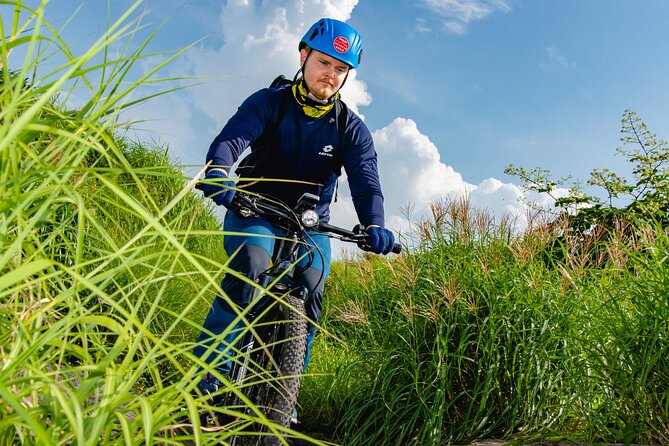
You then receive an E-MTB, helmet, and gloves. Before setting off, you get time to test the bicycle. If you have never used an electric mountain bike, ask questions early and make sure you are comfortable with the controls. The guides explain how to use the assistance, so you do not need advanced cycling skills.
Still, do not confuse electric assistance with effortless travel. The motor helps you manage the climb, but you will be cycling for much of the four-hour experience. A moderate level of fitness is expected, and the uneven mountain route may feel demanding if you are not used to riding.
The Kusa no Michi and the 800-meter ascent
The route climbs from the floor of the Aso caldera, near Aso Station at around 500 meters, toward Nakadake at roughly 1,260 meters. That is an elevation gain of about 800 meters, or 2,600 feet. The figures explain why the E-MTB matters.
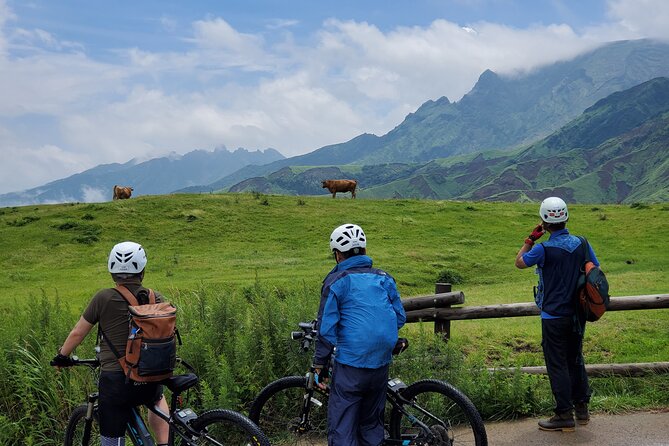
The ride follows the Kusa no Michi, or the grass road. This was once used as a path by mountain ascetics. Today, it provides access to broad grasslands and views that many people miss when they stick to the main sightseeing roads.
I especially like the way this route changes your sense of scale. From a vehicle, the caldera can seem like a large scenic backdrop. On a bicycle, the steady climb makes you feel the distance between the caldera floor and the volcanic summit. You notice the wind, the slope, and the silence between stops.
The tour is private, so your guide can choose sensible break points and explain what you are seeing along the way. One positive detail from the experience is the use of appropriate rest stops, which matters on a climb of this length. If weather or fitness becomes an issue, speak up rather than trying to push through.
Reaching the smoking Nakadake Crater
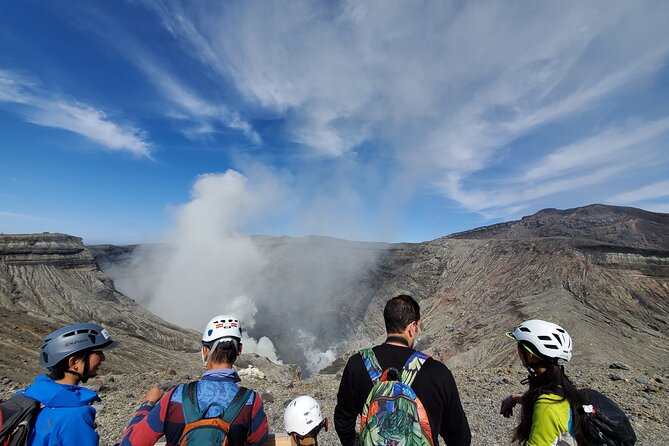
The high point of the tour is the approach to Aso Nakadake Crater. At about 1,260 meters, you get close to the active volcanic area and may see smoke rising from the crater. This is the part that turns the ride from a pleasant countryside outing into a real Aso experience.
Conditions at the crater can change quickly. One tour day included sudden rain, followed by clearing weather and wide views. That is a useful reminder to bring clothing suitable for changing conditions, even though the tour requires good weather to operate. The provider may cancel for poor weather and offer another date or a full refund.
Volcanic access can also depend on conditions at the time of your visit. The supplied information does not promise that every part of the crater area will always be open, so keep your expectations flexible. The tour’s central appeal is the route and the view toward the volcanic center, not a guarantee of unlimited access to every crater zone.
The reward is the close sense of Aso’s activity. You are not just looking at a distant cone. You are near a crater that emits smoke, surrounded by the broad volcanic bowl that gives the region its character.
The downhill return and wide caldera views
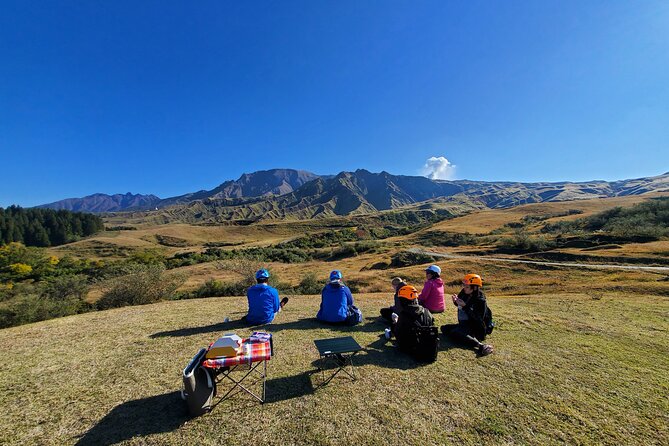
After the ascent, the ride heads back down. The return is where the route’s scale opens up in a different way. Instead of concentrating on the climb, you can look outward across the caldera and grasslands.
The downhill portion should feel easier than the ascent, but you still need to handle the bicycle carefully. It is an E-MTB, not a sightseeing cart, and the route is described as a mountain cycling experience. Use the helmet, follow the guide’s instructions, and control your speed.
The views are the strongest reason to choose this tour over a standard transfer to a lookout. You earn the changing outlook as you ride, and you can stop for photographs along the way. Guides Joe and Fuji also take photographs during the tour and send them afterward, according to the experience details. That is a useful touch if you want to focus on riding rather than constantly reaching for your phone.
The return ends at the entrance to JR Aso Station unless you arrange a ride to your accommodation. The listed experience also includes an air-conditioned vehicle, though the exact role of that vehicle is not explained in the available details. If you need hotel transport, confirm it when booking rather than assuming it is part of the standard end point.
What the private format adds
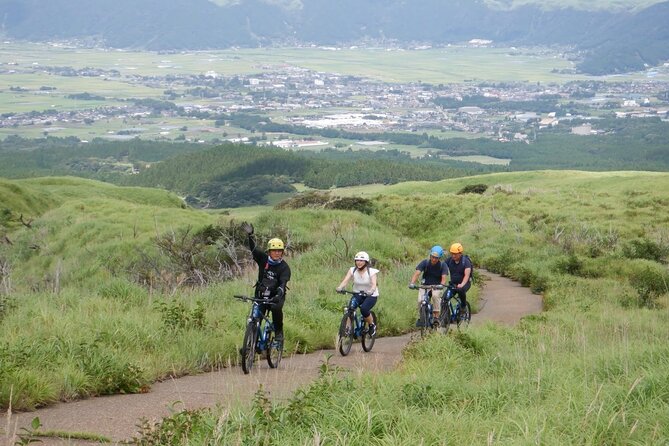
A private tour costs more than a large group outing, but the format has real value here. You are dealing with a climb, changing conditions, and mixed cycling ability. Your group can take breaks without waiting for strangers, and the guide can spend more time explaining Aso’s geology and local background.
This flexibility also helped one mixed-age group take part with different arrangements, including E-MTBs, a taxi, and a small off-road vehicle. That does not mean every group automatically receives the same setup, but it suggests you should discuss mobility or fitness concerns before booking.
The private format is most useful for couples, families, and small groups who want a quieter ride. It is less useful if you simply want a cheap way to reach the crater. In that case, regular transport may cost less and require less effort, though it will not provide the same route or cycling experience.
The guides are another part of the value. Joe and Fuji are named as the guides connected with the experience, and the available feedback gives particular credit to their helpful explanations, friendly manner, and photography. The best guide-led outdoor trips do not just point out scenery. They help you understand why the place looks and functions as it does.
Grassland conservation and the meaning of the route
A portion of the tour fee goes to the grassland association for conservation work in the Millennium Grassland. That gives the ride a stronger local connection than a standard outdoor activity where all the money simply pays for equipment and guiding.
Aso’s grasslands are not untouched wilderness in the simple sense. They are part of a long relationship between people, fire, grazing, and land care. The supplied tour information does not provide a full explanation of those practices, but it does make clear that the grassland needs active conservation.
I value this part of the tour because your route passes through a place that requires care to remain open. You are not merely consuming a view. Your participation helps support the setting that makes the ride possible. That does not erase the tour’s environmental footprint, but traveling by bicycle instead of using an exhaust-producing sightseeing vehicle for the whole route is a meaningful choice.
Food, clothing, and what to bring
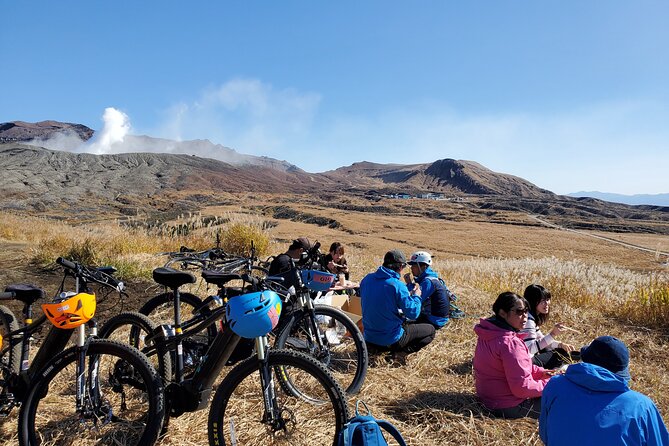
Food and bottled water are not included. Bring your own water, and plan a meal before the 1 p.m. start or carry something suitable for the ride. One experience included lunch in a meadow, but the official inclusions specifically exclude food and drink, so you should not assume a meal is part of your booking.
Wear clothing that allows comfortable movement and shoes suitable for cycling. The tour supplies a helmet and gloves, but you remain responsible for dressing for the weather. Mt. Aso conditions can shift, as shown by the report of sudden rain followed by clearing skies.
Luggage storage is available, which is convenient if you arrive at Aso Station with bags. You can ride in a lighter style rather than carrying everything on your back. Ask about the storage arrangement when you meet the guide and keep valuables with you.
The afternoon start gives you time to reach Aso Station, but it also means you should watch the weather forecast closely. The tour lasts about four hours, so you will finish in the early evening if the schedule runs normally.
Who will get the most from this Aso tour
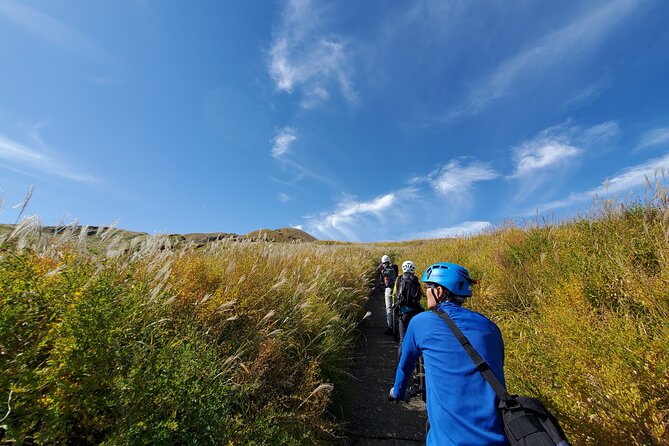
I would recommend this ride to you if you want more than a photo stop at Mt. Aso. It suits people who enjoy being outdoors, want a close look at the caldera, and are comfortable spending several hours on a bicycle.
Beginners can join because the bicycles are electrically assisted and the guides provide instruction. You should still be willing to pedal, manage a bicycle, and handle a mountain route. The tour is not a substitute for a completely passive sightseeing outing.
It can also work well for older participants or groups with mixed abilities, but discuss your needs in advance. The example of an older group using different transport arrangements is encouraging, yet the available details do not promise a particular vehicle or alternative for every booking.
I would be cautious about booking if you dislike uncertain weather, have no interest in cycling, or need a tightly timed schedule. The crater area and mountain conditions may affect the day, and a four-hour private ride takes a meaningful part of your Aso visit.
Is $203.63 per person good value?
At $203.63 per person, this is not a budget activity. The price pays for a private guide, an E-MTB, helmet, gloves, route access, luggage storage, and the planning needed to combine the caldera floor with the crater area in about four hours.
The value improves if you are traveling as a small private group and would otherwise pay separately for transportation, bike hire, and a guide. It also improves if you care about a quieter route, local explanations, and photographs sent after the ride.
The value is weaker if your main goal is only to see Nakadake Crater. You can find less active ways to reach volcanic viewpoints, though this tour offers access to grassland routes and views that standard transport does not provide.
A portion of the fee supports grassland conservation, which adds a practical reason to choose this provider. It should not be your only reason to book, but it is a welcome part of the pricing.
Booking details and cancellation
The tour starts at 1 p.m. at Aso Station in Aso, Kumamoto, and normally ends back at the same meeting point. Pickup can be offered, and you should confirm the details if you want to finish at your accommodation.
Confirmation is sent within 48 hours, subject to availability. The activity is private, so only your group takes part. It is near public transportation, making Aso Station a sensible meeting point for visitors using the train.
You can cancel free of charge up to 24 hours before the start time for a full refund. Changes or cancellations inside that 24-hour window are not accepted and are not refunded. If poor weather causes cancellation, you will be offered another date or a full refund. The same applies if the minimum number of participants is not reached.
Should you book the Mt. Aso E-MTB tour?
Book it if you want an active, close-up way to understand Aso, especially if the idea of climbing through grasslands to a smoking crater appeals to you. The electric motor removes much of the fear from the ascent, while the private guide, photo support, and conservation contribution add value beyond simple bike rental.
Skip it if you want the cheapest crater visit, cannot manage a moderate cycling effort, or need guaranteed weather and a fixed access plan. For the right person, though, this is one of the better ways to connect Aso Station, the caldera, the grasslands, and Nakadake into one memorable half-day outing.
FAQ
Where does the tour begin?
The tour begins at the entrance of Aso Station in Kurokawa, Aso, Kumamoto, Japan.
What time does the tour start?
The scheduled start time is 1 p.m.
How long does the tour last?
The experience lasts approximately four hours.
Where does the tour finish?
It normally ends back at the meeting point at Aso Station. A ride to your accommodation may be available if arranged.
Is the tour private?
Yes. Only your group participates in the activity.
Do I need advanced cycling skills?
No. Beginners are welcome, and the guide explains how to use the bicycle. You should still have a moderate level of physical fitness.
How much climbing is involved?
The route climbs from about 500 meters above sea level at Aso Station to roughly 1,260 to 1,300 meters near Nakadake Crater, an elevation difference of about 800 meters.
What equipment is provided?
An E-MTB, helmet, and gloves are included. An air-conditioned vehicle is also listed among the inclusions.
Is food or bottled water included?
No. Food, drinks, and bottled water are not included.
Can I leave luggage with the tour provider?
Yes. You can leave your luggage with the provider so you can ride through the grasslands with less to carry.
Cycling Tours, compared.
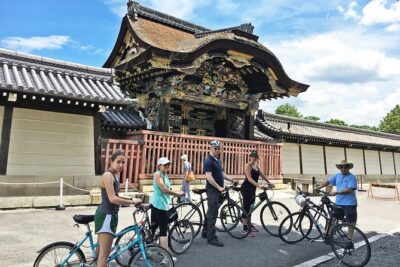 ★ 5.0Bike Tour Exploring North Kyoto plus LunchFrom $106
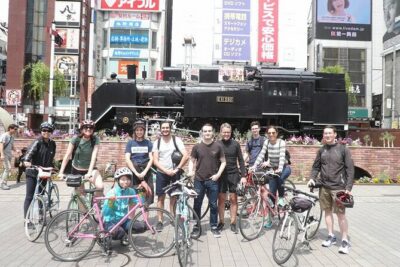 ★ 5.0Tokyo Great Cycling TourFrom $99
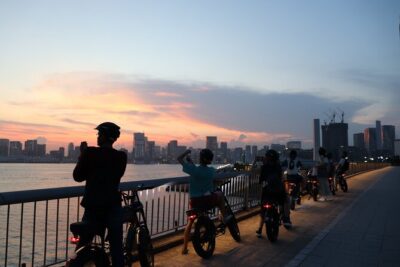 ★ 5.0Tokyo Top Highlights 3h Guided E-bike TourFrom $63
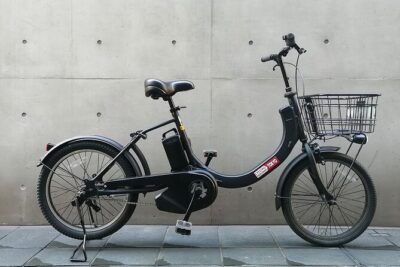 ★ 5.03h Tokyo E-Bike Tour: Hidden Gems, and Local Life with guideFrom $63
 ★ 5.0Arashiyama Bamboo Forest & Hidden Gems Bike Tour (Early Bird)From $106
 ★ 5.0Hiroshima in a Nutshell: Morning Bike AdventureFrom $72
 ★ 5.05 Top Highlights of Kyoto Full Day Bike Tour (E-bike option)From $172
 ★ 4.83-Hour Bike or E-Bike City Highlights TourFrom $453 hours