
Reviewed · CYCLING TOURS
Naoshima Day Tour from Uno Station with Cycling or Public Bus
Naoshima turns contemporary art into an island-wide adventure. Museums sink into the hills, bright sculptures greet the ferry, and small village streets lead to artworks inside old houses. This private eight-hour tour gives you a practical way to connect the major sites from Uno Station.
I like the included ferry, museum tickets, and bicycle rental, plus the freedom to switch to the public bus when needed. I also like having a private English-speaking guide, since Naoshima can be awkward to organize on your own. The main catch is price: at $233.25 per person, lunch and the Chichu Art Museum ticket are extra, and the schedule may feel tight.
In This Review
- Key points to know before you book
- Why Naoshima works so well as an art day trip
- Meeting at Uno Station and crossing to the island
- Choosing between a bicycle and the public bus
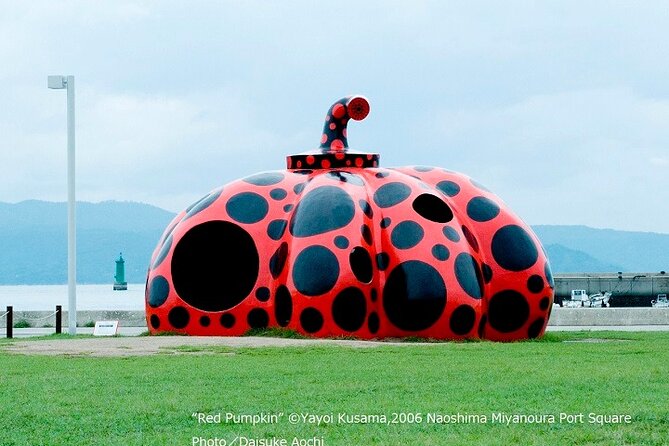
- The Red Pumpkin at Miyanoura Port
- Benesse House Museum, where art and architecture share the room
- Honmura’s Art House Project
- I Love Yu, an artwork you see from outside
- The Chichu question: important, but not included
- What the $233.25 price really covers
- How the guiding can shape the day
- Who should book this Naoshima day?
- FAQ
- Where does the tour begin?
- Where does the tour end?
- Is the ferry to Naoshima included?
- Is bicycle rental included?
- Is lunch included?
- Is Chichu Art Museum admission included?
- Is the tour private?
- Can children join the tour?
- Should you book it?
Key points to know before you book
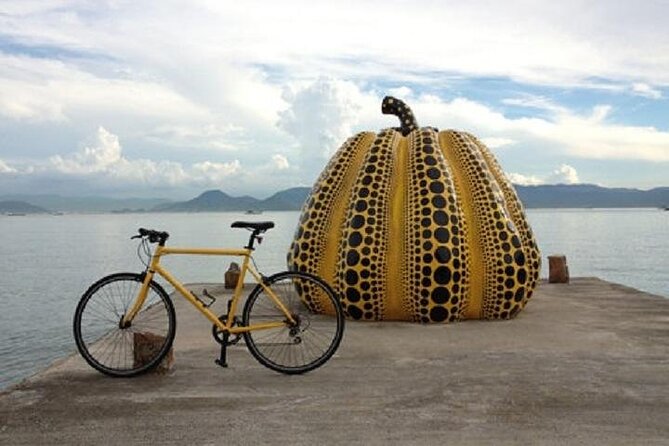
- Naoshima by e-bike: Ride between the island’s best-known art sites with a rental bicycle included, subject to availability.
- Two major art stops included: Your price covers Benesse House Museum and the Art House Project multi-site ticket.
- Chichu Art Museum costs extra: The ¥2,100 entrance ticket is not included, and there may not be enough time for a full visit.
- Private guiding on the island: Your English-speaking guide meets you at Uno Station and helps arrange the island day.
- Return ferry is self-guided: The guide’s service ends on Naoshima, although the round-trip boat fare is included.
- Good fitness is required: Cycling, walking, ferry connections, and a packed schedule make this a poor fit for anyone who needs an easy-paced outing.
Why Naoshima works so well as an art day trip
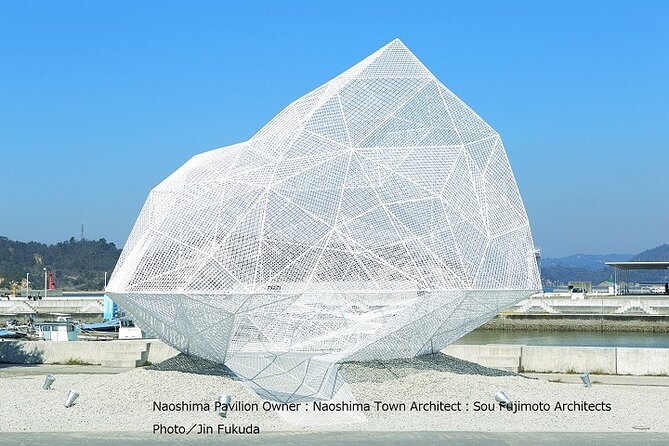
Naoshima is not simply a place with several museums. Art appears at the ferry port, in village houses, beside roads, and inside buildings designed to frame the Seto Inland Sea setting.
The island belongs to a 27-island township administered by Kagawa Prefecture, although this tour begins across the water in Okayama Prefecture. Its documented past reaches back to the Heian period. Today, its identity is tied to contemporary art and the Setouchi Triennale, a regional art event held every three years.
The island’s place within Seto Inland Sea National Park also shapes what you see. Strict rules limit the visual impact of new construction, so several museums are partly or largely built into the ground. You are not just walking into galleries. You are moving through carefully controlled spaces where concrete, light, earth, sea, and art work together.
That makes a guide useful, especially if you are new to contemporary art. The strongest days on Naoshima are not about racing from one famous object to another. They are about understanding why the buildings are so quiet, why the art is placed where it is, and how the old villages fit into the picture.
Meeting at Uno Station and crossing to the island
The day begins at 9:00 am at Uno Station, at 1 Chome-1 Chikko in Tamano. The meeting point is close to Uno Port, and the tour includes the round-trip ferry fare.
The boat crossing is part of the experience, not just a transfer. Naoshima is an island, and arriving by water gives you a clear sense of its setting before the art museums take over the day. The first major sight at Miyanoura Port is the famous Red Pumpkin, a large red form by Yayoi Kusama that welcomes arriving passengers.
The ferry timing matters. You need to arrive at the meeting point on time, since a late start can reduce the time available on the island. The guide meets you at Uno Station, so you do not need to work out the opening steps alone, but the return journey is different. The guide does not accompany you on the return ferry.
That arrangement is worth understanding before you pay. You receive help during the main sightseeing portion, then make your own way back to Uno Port. The return boat is included, but the end of the day is not a fully guided transfer.
Choosing between a bicycle and the public bus
Once you reach Naoshima, the tour normally uses a rental bicycle, with the rental charge included. The bicycle option gives you more control than following a fixed bus timetable. You can move between the port, museum area, and Honmura district with less waiting.
Cycling also suits the island’s scale. You see more of the setting between stops, and the day feels less like a string of indoor museum visits. The guide can help you adjust the plan, skip a place, or change the schedule on the day.
There is an important condition: bikes may not be available during crowded periods. In that case, transport may switch to the public bus. This is not necessarily a bad substitute, but it changes the rhythm. You lose some flexibility and become more dependent on the island’s timetable.
You should also take the fitness warning seriously. The tour requires a strong physical fitness level, and cycling adds effort to an already full day of walking and museum visits. Children under five, and children under 135 centimeters in height, cannot take part.
This is not the right choice if you want to sit back all day. It is better for someone who enjoys active sightseeing and can handle a schedule with several substantial stops.
The Red Pumpkin at Miyanoura Port
The Red Pumpkin is the island’s simplest introduction to Naoshima’s art scene. You see it near the port as you arrive, and its scale and color make it easy to recognize.
It is also a useful reminder that Naoshima does not keep art behind museum doors. The work is part of the public arrival point, where ferry passengers, island residents, and day visitors all pass through.
The stop itself is brief, but do not dismiss it as a quick photo stop. It helps set the tone for the rest of the day. You will continue to find art in places that would otherwise look like ordinary public spaces.
Benesse House Museum, where art and architecture share the room
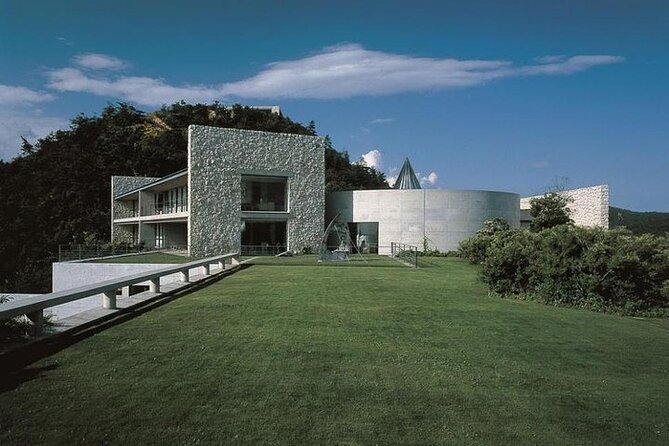
The tour allows about one hour and 40 minutes at Benesse House Museum, with the ¥1,300 admission fee included.
Benesse House opened in 1992 as a combined museum and hotel. Its idea is to bring together art, architecture, and nature. That combination is central to the Naoshima experience. The building does not simply hold the collection. Its design controls how you approach the works and how much of the outside world you see alongside them.
This is one of the tour’s strongest inclusions because admission is already covered and the visit receives a meaningful amount of time. Still, one hour and 40 minutes is not endless. If you stop to study every work, you may feel pressed.
Your guide’s contribution can make a major difference here. One guide, Okita Keisuke, received especially warm praise for making the island feel easier to manage and more personal. He had recently retired and was guiding for the first time, so guiding styles may vary, but his example shows how much the day benefits from a guide who can explain the art clearly and help you use your time.
That point matters because contemporary art can be difficult when you are looking at it alone and wondering what you are meant to notice. A good explanation should give you an entry point without telling you what to think.
The tour is less suitable if Benesse House is your only priority and you want a slow, museum-focused visit. The route has several other major stops, so the overall plan favors breadth.
Honmura’s Art House Project
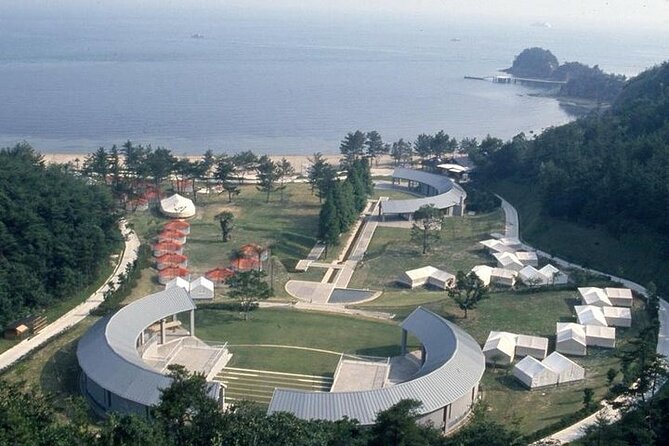
The Art House Project occupies about one hour and 30 minutes of the schedule, and the included multi-site ticket costs ¥1,050.
This project uses the Honmura district rather than a single purpose-built museum. Art occupies old houses and other buildings in the village, giving you a different experience from Benesse House. You move through a lived-in neighborhood and encounter works adapted to specific rooms, structures, and spaces.
The ticket is a multi-site pass, but it does not cover every possible site. That wording matters. You should ask your guide which locations are part of the day’s route and which are not, rather than assuming you will see the entire project.
I like this stop because it gives the tour some local texture. The art is not isolated from the village. You are seeing how a small community has become part of a large contemporary art destination, while still retaining the feeling of a neighborhood.
The drawback is time. Ninety minutes may be enough for a focused selection, but it will not support a slow visit to every location. If you prefer old streets and small-scale installations to large museums, you may wish the schedule gave Honmura more room.
I Love Yu, an artwork you see from outside
The Naoshima Bath, known as I Love Yu, is an art installation that also functions as a public bath. The design turns an everyday local service into a meeting place for residents and people from Japan and abroad.
On this tour, you see it from the outside only. You should not expect bathing time or an interior visit. Even so, the exterior adds an important piece to the island’s character. It shows that Naoshima’s art scene is not limited to expensive museum buildings and internationally known names.
I consider this a quick but worthwhile stop, especially if your interest goes beyond gallery interiors. Just keep your expectations in check. It is a look at the building, not a bathhouse visit.
The Chichu question: important, but not included
Chichu Art Museum is the biggest point to clarify before booking. The entrance fee is ¥2,100 per person, paid separately, and you are expected to buy the ticket online.
The tour information also warns that there may not be enough time for a proper visit. That is crucial. Chichu is not simply an extra checkbox you can add without affecting the rest of the day. If you want to see it carefully, you may need to reduce time elsewhere or make a specific request in advance.
You can customize the tour, and the guide may help change the plan. You can also skip a listed stop without receiving a refund, or request another place. Added sites may bring extra admission or transportation costs, payable on the spot.
For many people, Chichu is the main reason to come to Naoshima. If that describes you, confirm the schedule before booking and do not assume the standard route provides enough time. If you are satisfied with Benesse House, the Art House Project, and public artworks, the included plan may be a better match.
What the $233.25 price really covers
The cost is high for an eight-hour day, especially since lunch is not included and the Chichu ticket costs extra. You should budget for your own meal and any additional admission or transport requested during the day.
The price does include several meaningful items:
- Round-trip ferry travel between Uno Port and Naoshima
- Bicycle rental or public bus fare on Naoshima
- A private English-speaking guide on the island
- Benesse House Museum admission
- The Art House Project multi-site ticket
- Bottled water
The private format is the main reason the price may make sense. Only your group participates, and the schedule can be adjusted to suit your interests. A small group that wants help with orientation, art context, and transport may find the cost reasonable.
For a solo visitor or a couple focused on keeping costs low, the price is harder to justify. Naoshima can be visited independently, and this tour does not remove every extra expense. Its value comes from convenience and personal guidance, not from being an all-inclusive package.
Group discounts are available, although the exact saving is not provided. If you are traveling with several people, check the final per-person price before deciding.
How the guiding can shape the day
The best part of a private tour is not merely having someone point toward the next museum. It is the ability to ask questions, change pace, and spend more time on the art that speaks to you.
That benefit depends on the guide. The information describes an English-speaking private guide, and the experience of Okita Keisuke shows that a warm, helpful personality can make the day memorable. Another guide was praised for passion, local knowledge, and helping fit more into the schedule.
You should also allow for variation. One account described a guide who was difficult to understand and not well prepared to discuss contemporary art. That is a fair warning for anyone booking primarily for art interpretation. The private format gives you direct access to your guide, so ask questions early and say clearly what interests you.
The guide can help with requests even on the day, but do not expect a refund if you skip a prepaid stop. Ask in advance if Chichu, a longer village visit, or a particular museum is essential.
Who should book this Naoshima day?
I would recommend this tour to you if you have one day for Naoshima, want to see several major art sites, and prefer not to manage ferry connections, bike rental, museum admissions, and island transport alone.
It also suits an active couple, family group that meets the height and age rules, or small party that wants a private schedule. The included tickets make the day easier to organize, and the choice of bicycle or bus is useful.
I would be more cautious if you want a slow museum day, need a low-cost outing, or consider Chichu Art Museum essential. The schedule is full, lunch is extra, the guide does not return with you by ferry, and cycling may be replaced by bus during busy periods.
Book as early as possible if your dates matter. This experience is commonly reserved well ahead, with an average booking lead time of about 52 days. Confirmation arrives within 48 hours, subject to availability.
The cancellation terms are strict: the booking is non-refundable and cannot be changed. The exception is a cancellation by the operator because of poor weather or insufficient participation, in which case you are offered another date or experience, or a full refund.
FAQ
Where does the tour begin?
The tour begins at 9:00 am at Uno Station, 1 Chome-1 Chikko, Tamano, Okayama 706-0002, Japan.
Where does the tour end?
The stated end point is Uno Port, 1 Chome-2 Chikko, Tamano, Okayama 706-0002, Japan.
Is the ferry to Naoshima included?
Yes. The round-trip ferry or boat fare between Uno Port and Naoshima is included.
Is bicycle rental included?
Yes. Bicycle rental on Naoshima is included. If a rental bicycle cannot be reserved during a crowded period, transport may be changed to the public bus.
Is lunch included?
No. You need to arrange and pay for lunch yourself.
Is Chichu Art Museum admission included?
No. The entrance fee is ¥2,100 per person, and you should purchase the ticket online. The schedule may not allow enough time for a full visit.
Is the tour private?
Yes. Only your own group participates in this private activity.
Can children join the tour?
Children under five years old, or children under 135 centimeters in height, are not allowed to participate.
Should you book it?
Book this tour if you want a well-organized, active introduction to Naoshima and value a private guide more than a low price. The ferry, bike or bus transport, Benesse House admission, and Art House Project ticket remove much of the day’s planning work.
Skip it if you want to set your own museum pace or keep spending under control. If Chichu Art Museum is your top priority, ask for a detailed time plan before committing. For everyone else, this is a sensible way to see Naoshima’s best-known art in one demanding but rewarding day, provided you arrive fit, prepared for extra costs, and ready to make your own way back across the water.
Cycling Tours, compared.
 ★ 5.0Bike Tour Exploring North Kyoto plus LunchFrom $106
 ★ 5.0Tokyo Great Cycling TourFrom $99
 ★ 5.0Tokyo Top Highlights 3h Guided E-bike TourFrom $63
 ★ 5.03h Tokyo E-Bike Tour: Hidden Gems, and Local Life with guideFrom $63
 ★ 5.0Arashiyama Bamboo Forest & Hidden Gems Bike Tour (Early Bird)From $106
 ★ 5.0Hiroshima in a Nutshell: Morning Bike AdventureFrom $72
 ★ 5.05 Top Highlights of Kyoto Full Day Bike Tour (E-bike option)From $172
 ★ 4.83-Hour Bike or E-Bike City Highlights TourFrom $453 hours