
Reviewed · TEMPLE & SHRINE RIDES
Naha: Guided E-Bike Tour of the 12 Zodiac Temples
Shuri’s temples are easy to miss. They sit along quiet lanes, behind traditional houses, and beyond the main sights most visitors see. This three-hour e-bike ride links them into a clear story about Okinawa’s Buddhist, Shinto, and Ryukyu-era traditions, with the famous Shureimon Gate as one of its best-known stops.
I like two things right away: the electric bike makes Shuri’s steel hills far more manageable, and a group limited to five keeps the ride personal. Guides such as Maki, Maria, Hiro, and Reiji have been praised for clear explanations, careful cycling advice, and friendly check-ins. The main drawback is simple: you need to be comfortable riding a bicycle, and Okinawa’s sun can make water, sunscreen, and a hat essential.
In This Review
- Key points at a glance
- Why an e-bike is the right way to see Shuri
- Shuri Kannon Temple and the first view over the district
- Ankokuji, traditional houses, and an old gajumaru
- Shureimon Gate, the tour’s signature photograph
- Daruma Temple and everyday prayers
- Seikoji Temple and a quieter pause
- Saki Kasahigawa, water from the forest
- Sogenji Temple and the former royal mausoleum
- What the guides add to the experience
- Price, timing, and what you need to bring
- Who should book this ride
- Final call: a practical way into Shuri’s quieter side
- FAQ
- Where does the Naha e-bike tour start and finish?
- How long does the tour last?
- What languages are available?
- Are electric bikes and helmets included?
- Do I need to know how to ride a bicycle?
- What should I bring and wear?
- Are meals, drinks, and temple offerings included?
- What happens if the weather is bad?
Key points at a glance
- Quiet Shuri lanes: Reach small temples and shrines that are difficult to locate without local help.
- Electric assistance: The bikes take much of the strain out of Shuri’s hills, though you still need basic cycling skills.
- Six memorable cultural stops: See Shuri Kannon Temple, Ankokuji, Daruma Temple, Seikoji, Saki Kasahigawa spring, and Sogenji.
- Shureimon photo stop: Park your bike beside Okinawa’s famous red gate for a useful souvenir photograph.
- Helmet intercoms: The guide can speak with the group while you ride, making directions easier to follow.
- Small-group format: With no more than five participants, the guide can adjust the pace and answer questions.
Why an e-bike is the right way to see Shuri
Shuri is not a flat sightseeing district. The old royal area rises and falls, and several of the temples are tucked away from the main roads. An ordinary bicycle would make the ride more demanding, especially in Okinawa’s heat. The electric bikes remove much of that strain while keeping you exposed to the streets, gardens, houses, and everyday sounds of the city.
That matters because this is not simply a ride between famous landmarks. You are moving through the spaces between them. A car would pass too quickly, while walking would limit the distance you can cover in three hours. The e-bike gives you a useful middle ground.
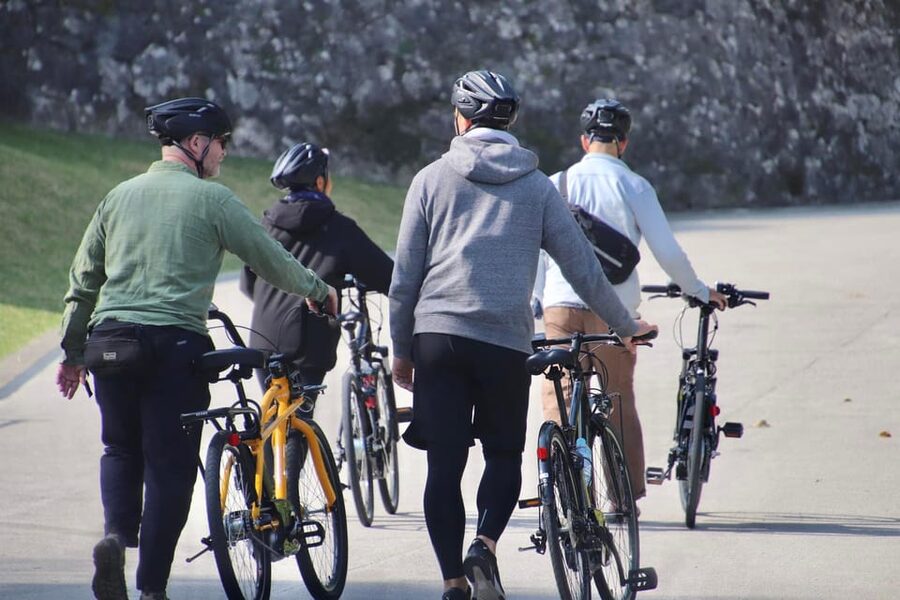
The tour begins and ends at the same shop, a five-minute walk from Monorail Makishi Station and next to the post office. You receive a bike fitting, a helmet, and an intercom system before setting off. The intercom is a practical touch. Your guide can explain where to turn and speak about a temple without requiring the group to stop every few minutes.
The listed route describes several riding sections of roughly 15 to 20 minutes. Some booking information labels these sections as pedicab or rickshaw transfers, while the included equipment is clearly an electric bicycle. In practical terms, you should expect to ride between the stops on an e-bike.
A few more Naha tours and experiences worth a look


Shuri Kannon Temple and the first view over the district
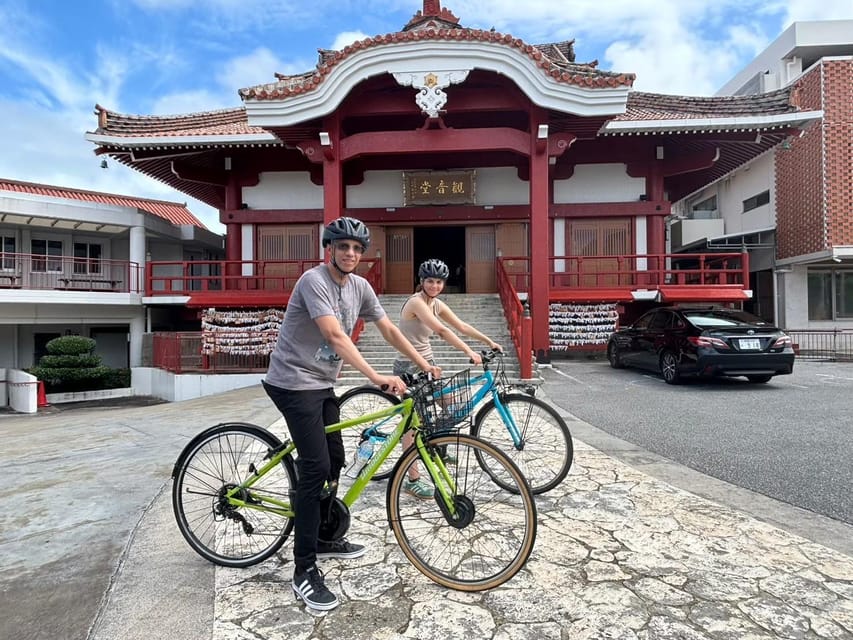
The first major visit is Shuri Kannon Temple, also called Shuri Kannondo. It served as a guardian temple during the Ryukyu Kingdom, giving the stop more weight than a quick photo opportunity. Your guide explains the temple’s role and points out its carvings and decorations.
The bright red building gives you an early sense of Okinawa’s visual style. From here, you can look out over Shuri, which helps place the temples within the old royal district. It is a good opening stop because you get both an architectural subject and a wider view of the area.
The temple visit also sets the tone for the tour. You are not rushing through a list of buildings. You are learning why a place matters, how people use it, and how Buddhist and local Okinawan customs appear in the same district.
As with any active religious site, keep your voice low and follow your guide’s advice about where to stand and how to behave. Money for temple or shrine offerings is not included, so bring cash if you want to make an offering, though it is not required for the tour.
Ankokuji, traditional houses, and an old gajumaru
Ankokuji Temple is a shorter stop, listed at about five minutes, but it adds a different setting. The temple sits near traditional houses, and the ancient gate gives you a closer look at older construction details. A large gajumaru tree adds the unmistakable feel of Okinawa.
Gajumaru, or banyan trees, are a familiar part of Okinawan scenery. Their twisting roots and broad crowns often make them feel older than the buildings around them. Here, the tree is not just decoration. It helps you notice how nature and religious sites are woven together.
Do not expect a long formal visit at every stop. Ankokuji is brief, and that is part of the rhythm. You ride, pause, hear the main story, look closely, then continue. If you prefer extended time at one temple for photographs or quiet reflection, the schedule may feel brisk.
Shureimon Gate, the tour’s signature photograph

Shureimon Gate is the most recognizable stop on the route. Its red structure and ornate details have become a visual symbol of Okinawa, and the chance to photograph it with your bike gives the tour a playful personal touch.
This is also where the cycling format pays off. You arrive as part of a small group, park nearby, and can frame the bike with the gate rather than simply joining a crowd for a standard landmark photo. Your guide may also help with photographs, something that several participants have valued on this experience.
The gate is famous, so it is less secluded than the smaller temples. That contrast is useful. The ride lets you see a celebrated Okinawan symbol, then takes you back into side streets and lesser-known religious sites instead of keeping you on the main sightseeing circuit.
Daruma Temple and everyday prayers
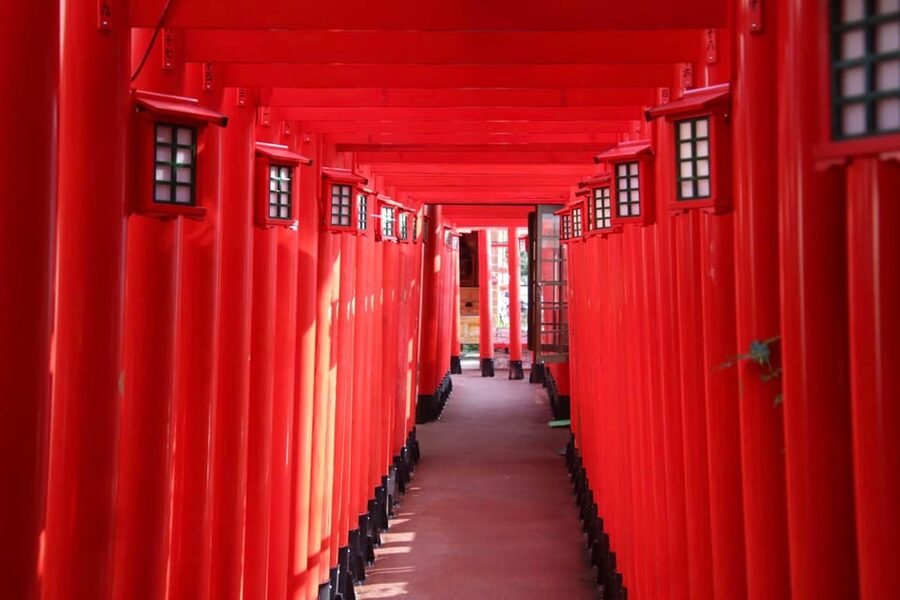
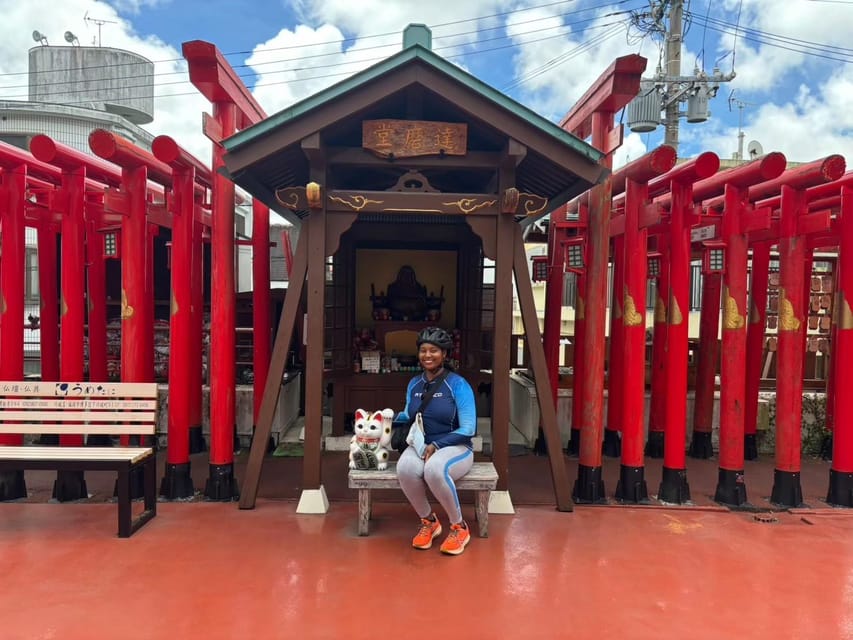
Daruma Temple brings a bright change of mood. It is associated with prayers for health and pregnancy, and the site is marked by red daruma dolls and a red torii gate. The dolls are instantly eye-catching, but the important point is the personal side of the temple.
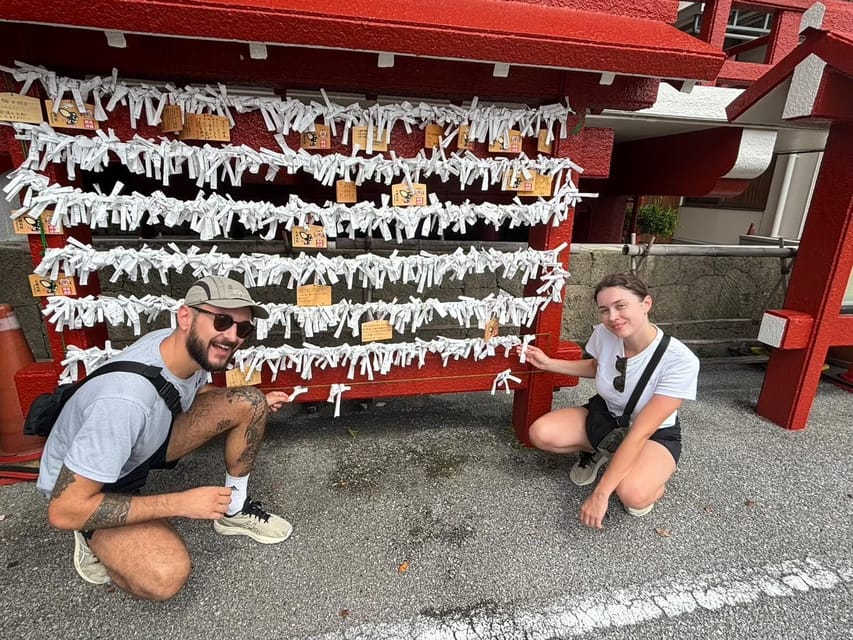
Religious buildings can seem abstract when you only see them as historic monuments. A place connected with health and pregnancy shows how temples remain part of ordinary life. Your guide explains the customs and the kind of prayers made here, giving the decorations a human meaning.
The scheduled visit is about 20 minutes, enough time to look at the dolls, see the gate, listen to the explanation, and take photographs without turning the stop into a long ceremony. You should dress respectfully and remember that this is an active place of worship, not only a sightseeing set.
A few more Naha tours and experiences worth a look
Seikoji Temple and a quieter pause
Seikoji Temple offers a calmer section of the route. It has a peaceful atmosphere, Jizo statues, and a modern building. The combination is useful because it shows that religious practice in Okinawa is not limited to old gates and wooden structures.
Jizo statues are often linked with protection and care, and your guide can explain what you are seeing in the local setting. The modern building also keeps the stop from feeling like a museum visit. This is a living religious space that has changed over time.
The visit is listed at about 10 minutes. That is enough for a focused introduction, but not for a long independent exploration. I would treat Seikoji as a pause to absorb the tour’s cultural themes rather than a major architectural centerpiece.
Saki Kasahigawa, water from the forest
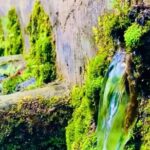
The Saki Kasahigawa is described as a miracle spring flowing from deep forest. After several temples and urban lanes, the flowing water changes the pace again. It gives you a direct connection to the natural side of Okinawan spiritual life.
Springs often carry a sense of place that a large building cannot. Water continues to move, and the story attached to it gives the stop a local texture. Your guide helps connect the spring to the area’s past, while you get a simple sensory break from cycling and concrete streets.
The supplied schedule does not give a separate visit length for the spring, so do not expect a long stop with extensive facilities. Bring your own water for the ride. The spring is something to see and understand, not a replacement for your drinking bottle.
Sogenji Temple and the former royal mausoleum
The final cultural stop is Sogenji Temple, a former royal mausoleum. Its park offers what the tour describes as pure air, along with a gate and another large gajumaru tree.
This is a fitting ending. Shuri’s royal past is present throughout the district, but Sogenji gives that theme a direct focus. The gate marks the entrance, the tree provides a strong visual anchor, and the open park creates a quieter finish before you return to the bike shop.
By this point, the tour has shown several sides of Shuri: a guardian temple, old houses, personal prayer traditions, modern religious architecture, a sacred spring, and a royal memorial site. The value is in the connections between those places, not simply in the number of stops.
What the guides add to the experience
The guide is the main reason to choose this tour instead of renting an e-bike on your own. Several guides have led the experience, including Maki, Maria, Hiro, Reiji, Jojo, Tiny, Sally, and Qwan. Guide assignments can change, but the strongest pattern is clear: expect help with both cultural explanations and road safety.
Maki has been praised for adapting the route to the group, taking photographs, and explaining temple customs. Maria has been singled out for strong English, personal attention, and useful suggestions for extra sights when time allows. Hiro has been described as enthusiastic and careful about hydration. Reiji has provided detailed explanations at each stop, while Jojo has been appreciated for making communication fun through the helmet system.
That does not mean every outing will feel identical. Your group size, guide, weather, and cycling ability will shape the day. Still, the small maximum of five participants gives the guide room to check your bike, repeat directions, or adjust the pace.
The intercom helmet is especially useful in traffic. You can hear navigation advice while riding, and the group can communicate without shouting across the street. It also helps create a more social ride, though people who prefer complete quiet may find the ongoing commentary less appealing.
Price, timing, and what you need to bring
At $95 per person, this is not the cheapest way to see Naha. You are paying for three hours of electric-bike use, a helmet with intercom, a guide in your chosen language, route planning, and access to sites that are difficult to connect on your own.
I think the price is fair if you value context and convenience. Renting a bike independently may cost less, but you would need to find the temples, choose safe routes, manage the hills, and work out what each place means. The guide turns scattered stops into a coherent morning or afternoon.
The tour is offered in English, Chinese, and Japanese. Food and drinks are not included. A bakery stop has occasionally been added by a guide, but you should not count on that as part of the standard plan. Eat beforehand or carry what you need, and bring water, sunscreen, and a hat.
Wear comfortable clothing and proper shoes. Sandals and flip flops are not allowed, and that rule makes sense on a bicycle. Smoking is also not allowed during the tour.
The activity lasts three hours, with start times based on availability. If the chance of rain exceeds 70 percent or severe weather is expected, the plan may change, and the operator says it will contact you the day before. You can cancel up to 24 hours ahead for a full refund, and the reserve-now, pay-later option can help if your Naha schedule is still moving.
Who should book this ride
I would choose this tour if you want more than Shuri Castle and the main streets. It suits people who enjoy light activity, local stories, small religious sites, and the freedom to cover hills without exhausting themselves.
It is also a strong choice for first-time visitors to Naha. The guide handles the route, explains customs, and helps you see places you might otherwise walk past. Families and mixed-ability groups can benefit from the electric assistance, provided everyone can ride a bicycle safely.
You should think twice if you cannot cycle, dislike riding near traffic, or want long, unhurried visits at each temple. The tour covers several places in three hours, so it has a steady pace. It is also less appealing in very hot or wet weather, although weather changes may lead to a revised plan.
Final call: a practical way into Shuri’s quieter side
Book this tour if you want to combine sightseeing with a little exercise and prefer local explanation over a self-guided checklist. The small group, electric bikes, and helmet intercom make the ride manageable, while the temples, spring, royal site, and Shureimon Gate give the route real variety.
Skip it if you are not comfortable on a bike or if your main aim is to spend hours inside one major monument. For everyone else, $95 buys a well-planned look at the side of Shuri that is easy to miss, with enough guidance to make the old lanes and religious sites meaningful rather than merely picturesque.
FAQ
Where does the Naha e-bike tour start and finish?
The tour starts and ends at the same bike shop, listed as ダイショウビル. The shop is a five-minute walk from Monorail Makishi Station, next to the post office.
How long does the tour last?
The experience lasts three hours, including the bike fitting, riding between sites, temple visits, and the return to the shop.
What languages are available?
A live guide is available in English, Chinese, or Japanese. Guide assignments can vary by date.
Are electric bikes and helmets included?
Yes. Electric bicycle rental and a helmet with an intercom system are included.
Do I need to know how to ride a bicycle?
Yes. People who cannot ride a bike are not suitable for this tour. The electric assistance helps with hills, but you still need to control the bicycle and follow traffic directions.
What should I bring and wear?
Bring comfortable shoes, water, sunscreen, and a hat. Wear clothing suitable for cycling. Sandals and flip flops are not allowed.
Are meals, drinks, and temple offerings included?
No. Meals, drinks, and money for offerings at temples and shrines are not included.
What happens if the weather is bad?
If the precipitation probability is above 70 percent or severe weather is expected, the operator may change the plan and will contact you the day before.
More Temple & Shrine Rides in Naha
More E-Bike Tours in Naha
More Okinawa Cycling Tours in Naha
More tours in Naha we've reviewed
Temple & Shrine Rides, compared.
 ★ 4.8E-Bike Nara Highlights – Todaiji, Knives, Deer, ShrineFrom $903h 30m
 ★ 5.0Kyoto: Fushimi Inari Shrine and Tofukuji Temple E-Bike TourFrom $834 hours
 ★ 4.5E-Bike Nara Highlights – Todaiji, Knives, Deer, Shrine, and GemsFrom $92
 ★ 5.0Zodiac Shrines and Naha Backstreets Cycling TourFrom $108
 ★ 5.0Osaka Half-day E-bike Adventure: Minoh Falls & Katsuoji TempleFrom $34
 ★ 4.9Kyoto: Half-day Guided Bike Tour with Fushimi InariFrom $773h 30m
 ★ 5.0Kanazawa Ninja Temple Half Day E-bike tourFrom $133
 ★ 4.8Hiroshima: Peace Park, Castle, and Mitaki Temple E-Bike TourFrom $703h 30m
Browse the lists this tour appears in