
Reviewed · NARA CYCLING TOURS
E-Bike Nara Highlights – Todaiji, Knives, Deer, Shrine
Nara’s main sights spread across a large park, and this tour uses an e-bike to link them without turning your day into a long march. In about three and a half hours, you visit Todaiji, bow to the deer, see Kasuga Taisha, pause at Ukimido, and stop at a traditional knife shop.
I like the efficient route and the strong local guiding, especially the historical and cultural explanations from guides such as Chris, Remi, Robert, and Melody. I also like the knife stop, which gives the tour a useful connection to everyday Japanese craft rather than stopping at temples alone. The main consideration is pace: the cycling can be fairly brisk, and one recent rider found the bike less suitable for a taller person.
In This Review
- Key points
- Why an e-bike makes sense in Nara Park
- Nandaimon Gate and the first deer encounters
- Todaiji and the Great Buddha hall
- Mount Wakakusa and riding beyond the temple crowds
- Kikuichimonjushirokanenaga and the Japanese knife connection
- Kasuga Taisha and the lantern-lined approach
- Ukimido and the quieter finish
- Guides, group size, and the feel of the tour
- Is $90 a fair price?
- The practical details that affect your day
- Who should book this Nara e-bike tour?
- Should you book it?
- FAQ
- Where does the e-bike tour meet?
- How early should I arrive?
- How long does the tour last?
- Which languages are available?
- Is Todaiji admission included?
- Are deer crackers included?
- Can children under 10 join?
- Can a solo traveler book?
- Is bicycle insurance included?
- What should I bring?
Key points
- Covers a lot of Nara Park: The e-bikes connect Todaiji, Mount Wakakusa, Kasuga Taisha, and Ukimido in one outing.
- Todaiji admission is included: You enter the temple grounds and have free time to see the Great Buddha hall.
- Deer feeding is part of the tour: Your guide shows you how to offer the deer crackers in the local way.
- The knife visit adds a different side of Nara: Learn about Japanese cutlery and browse a family knife business with a long sword-making tradition.
- Guiding is a major strength: The team offers English and French tours, with guides including Chris, Remi, Robert, Melody, and others.
- The best fit is an able cyclist: The e-bikes help with distance and hills, but this is not a slow sightseeing ride.
Why an e-bike makes sense in Nara Park
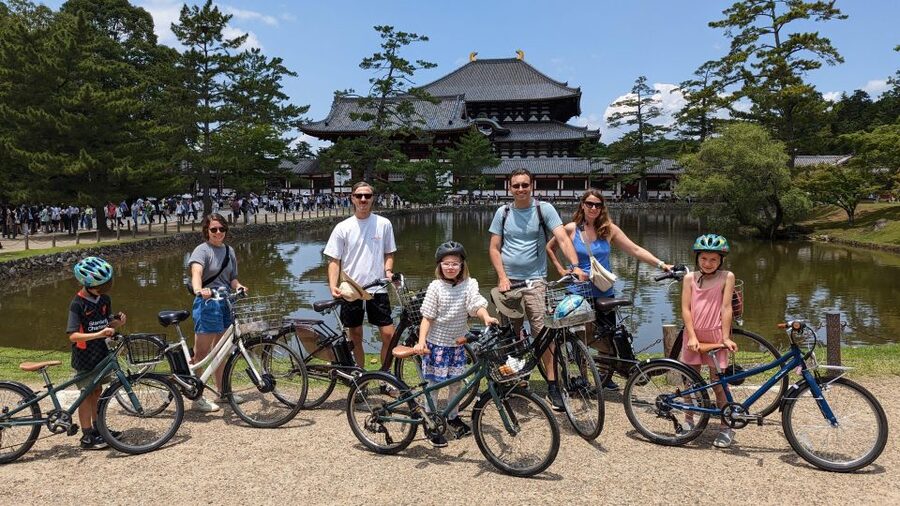
Nara is easy to underestimate. The railway stations, deer, temples, shrine paths, ponds, and wooded slopes are all part of one broad sightseeing area, but the distances add up quickly on foot. A walking visit can easily leave you choosing between major sights.
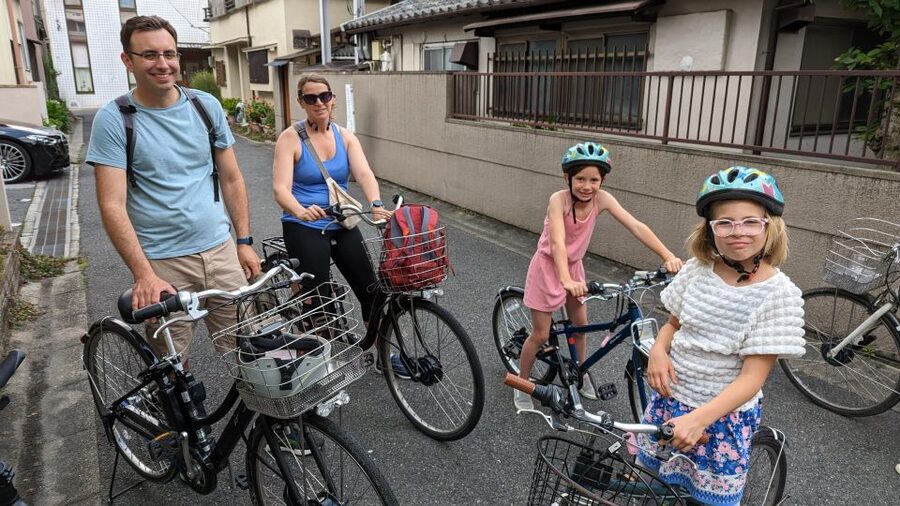
This tour solves that problem in a practical way. You ride from the base at 16-1 Takamaichicho, only a few minutes from Kintetsu Nara Station, then use the bikes to move between the main stops. You still walk inside the temple and shrine areas, but you do not spend the whole day trudging from one entrance to the next.
The electric assist matters most around Mount Wakakusa and on longer stretches through the park. One 60-year-old rider who described being out of shape still managed the ride comfortably, while another parent found the e-bikes useful for keeping children interested in the sightseeing. That said, the ride is not designed for someone who cannot ride confidently. Bicycle insurance is not included, so you need to be comfortable handling a bike in shared public areas.
You should arrive 15 minutes early. The meeting point is near Kintetsu Nara Station, not JR Nara Station. Look for the LIFE 21 building and the guide in a JTA uniform, with a navy cap and red polo shirt.
A few more Nara tours and experiences worth a look
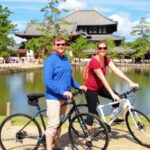
Nandaimon Gate and the first deer encounters
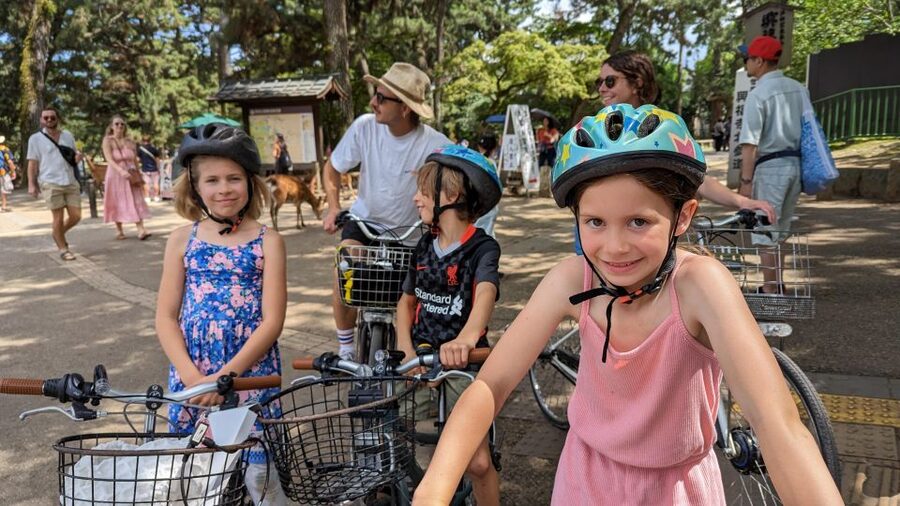
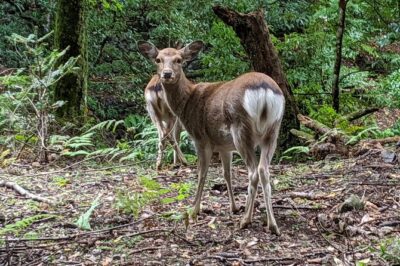
The ride through Nara Park begins with scenery and wildlife rather than a long history lecture at the meeting point. Deer appear throughout the park, and the guide provides deer crackers for you to feed them.
There is a right way to do this. Offer a cracker, then show empty hands once you are finished. The deer are accustomed to visitors, but they can be persistent when they spot food. Your guide’s demonstration is useful because it keeps the interaction calm and gives you a better chance to enjoy it instead of being surrounded by eager animals.
The first major stop is Nandaimon Gate, the huge entrance to Todaiji. This is a good place for photographs and for understanding the scale of the temple complex before you enter. The gate’s wooden structure and guardian figures make it more than a quick photo backdrop, and the guide helps connect what you see to the wider Buddhist setting.
You have roughly 20 minutes here for a guided visit, walking, photographs, and deer viewing. That is enough for an introduction, but not enough for a long, slow examination of every carving. If you like to linger over architecture, keep that in mind.
Todaiji and the Great Buddha hall
Todaiji receives the longest stop, about 45 minutes. Entrance is included, which is important because this is the tour’s central cultural visit rather than a drive-by sight.
Inside, the scale does the work. Todaiji is famous for its enormous bronze Buddha and its vast wooden hall. You get free time to look around, shop, and make your own visit through the temple, while the guide remains available for context and questions.
The balance between guided explanation and free time works well here. You are not tied to a speech while trying to take in the building, but you also do not have to guess why the temple matters. Guides such as Robert, Remi, and Chris have been praised for explaining Buddhism, Shinto, Japanese culture, and Nara’s place in the country’s story in clear terms.
The stop is self-guided once inside, so do not expect a private lecture beside every feature. The value comes from having the guide frame the visit, then giving you room to look at the hall at your own speed.
Mount Wakakusa and riding beyond the temple crowds
After Todaiji, the route passes Mount Wakakusa. The stop lasts about 15 minutes and focuses on photographs, views, deer, and the pleasure of being on the bike.
You do not climb the mountain as a major hiking activity. Instead, you see it as part of the park setting and benefit from the e-bike’s help on the route. This is one of the reasons the experience feels broader than a basic deer and temple visit. You get movement, trees, open views, and a sense of how large the park really is.
The cycling sections are generally forward-moving rather than leisurely. One rider specifically noted that the group kept a good pace and that this might not suit someone expecting a very slow ride. I would treat that as useful booking advice. You need to watch the guide, manage your bike, and stay comfortable around other park users.
The bikes have generally been described as being in good condition, with several riders praising their quality and ease of use. Still, maintenance and fit can vary. If you are tall, ask about bike suitability before booking, especially since one rider found the equipment less comfortable for taller users.
Kikuichimonjushirokanenaga and the Japanese knife connection
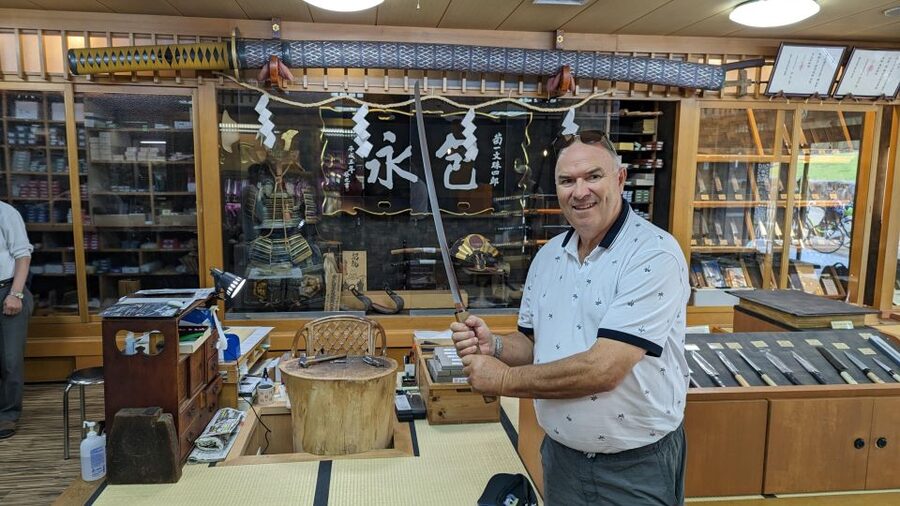
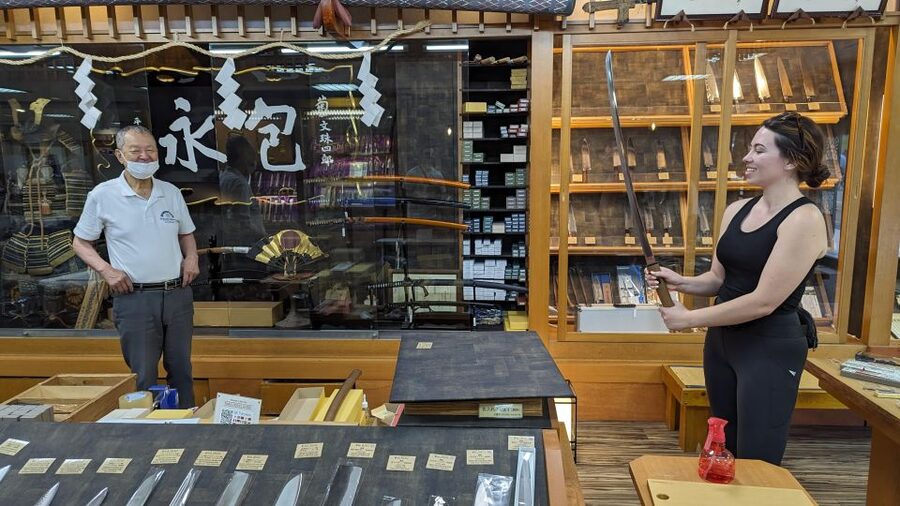
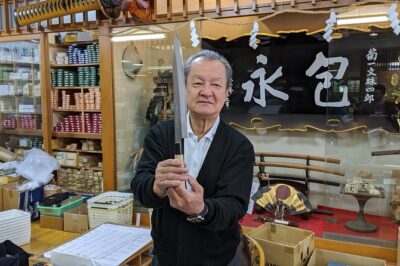
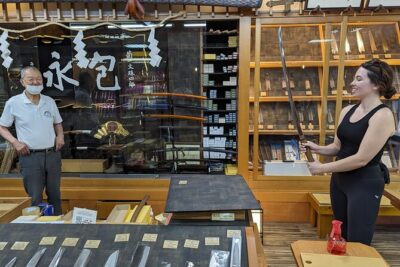
The most distinctive stop is Kikuichimonjushirokanaga honten, a traditional cutlery shop. You have about 30 minutes for a break, photographs, snacks, crafts, and shopping.
This is not just a generic souvenir stop. The experience includes an introduction to Japanese cutlery and its history, and the shop is connected with a family tradition that includes earlier generations of sword makers. That gives the visit a stronger sense of place than a standard retail stop.
The guide can help explain the knives, answer questions, and assist with shopping if you want to buy something. This support is useful because Japanese cutlery can be a serious purchase, not a small trinket. You may be comparing blade types, sizes, uses, and care instructions, and a bilingual guide can make the conversation easier.
You are not required to buy anything. But you should know that the stop has a persuasive effect. One rider arrived determined not to shop and left wishing they had bought a set or several gifts. Another was already using the knives at home and praised their sharpness.
A Japanese snack called Kanoko is included for each participant. Extra food and drinks are not included, so carry some cash for purchases and refreshments. The tour asks you to bring cash, passport, comfortable clothes, and comfortable shoes. The passport requirement is worth noting if you plan to make a purchase that needs identification or if the operator requires it for the activity.
A few more Nara tours and experiences worth a look
Kasuga Taisha and the lantern-lined approach
Kasuga Taisha is the tour’s main Shinto shrine stop, with about 30 minutes for photographs, walking, sightseeing, and deer viewing.
The shrine is known for its many stone and bronze lanterns. The approach through the wooded park feels different from the open space around Todaiji, and the change helps you see Nara as more than a single temple district. Your guide can explain the difference between Buddhist and Shinto settings, along with the customs and beliefs connected to the shrine.
Thirty minutes gives you a useful introduction, but it is a compact visit. If Kasuga Taisha is your personal priority, you may want to return later with more time. The tour is built to show you several major places in one morning or afternoon, not to give each site the attention of a full-day private visit.
The deer add another layer here. You see them in a more wooded shrine setting, rather than only near the temple entrance or park lawns. You should still follow the guide’s instructions with food and keep your attention on the animals.
Ukimido and the quieter finish
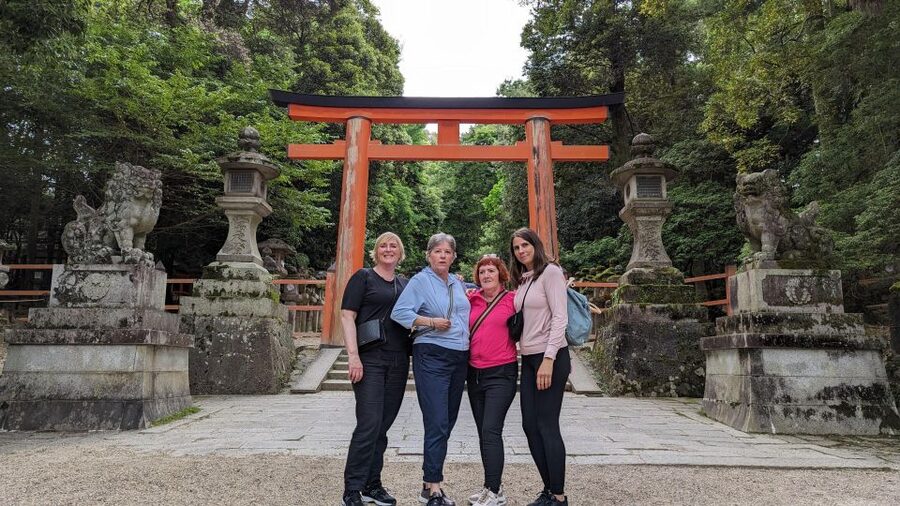
The route returns through Nara Park before stopping at Ukimido for about 15 minutes. This pavilion on the water gives you a calmer pause after the temple, shrine, and knife shop.
It is a good photo stop and a useful change of rhythm. You can walk, take in the view, and let the tour feel less like a checklist. The visit is short, so think of Ukimido as a scenic interlude rather than a major historical presentation.
The final cycling section takes about 10 minutes before you return to the base. The full activity lasts 210 minutes, though the exact end time can vary. One rainy-day group found that its tour ran long, and the riders were happy with that, but you should avoid scheduling a tight train connection immediately afterward.
Guides, group size, and the feel of the tour

The provider offers English and French guiding, with private and small-group options. English is the safer assumption for a shared departure. French-speaking guides are available, but French cannot be guaranteed when different nationalities are combined, so contact the operator ahead of time if French is important to you.
The guide is a major part of the value. Chris and Christian have been praised for friendly, flexible handling of the route. Remi has been noted for wide-ranging explanations of Japanese culture and local history. Robert is often singled out for detailed site explanations, patience, and safety. Melody and Elodie have also been appreciated for clear guidance, kindness, and adapting to group needs.
Do not assume you will get a particular guide, but the pattern is clear: the team aims to do more than lead a bicycle line. Guides may answer questions about religion, history, daily life, and shopping. Some also take photographs during the ride and share them afterward, though you should confirm this rather than treat it as a guaranteed inclusion.
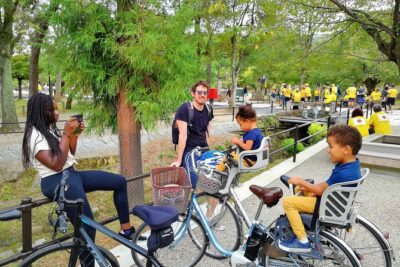
A single person can book, but the departure requires at least two participants to go ahead. If the minimum is not met, the session may be canceled, with rescheduling or a full refund offered. Families can request child seats for riders under 10, with up to one child seat per e-bike.
Is $90 a fair price?
At $90 per person, this is not the cheapest way to see Nara Park. You are paying for the e-bike rental, local bilingual guide, deer crackers, Todaiji entrance, Kanoko snack, and the route planning that links several locations without making you work out bike access yourself.
The price makes the most sense if you have only one day in Nara, dislike long walks, or want cultural explanation along with transport. A private or very small group also gives you more chance to ask questions and adjust the pace.
The value is less convincing if you are happy walking, already know the temple and shrine areas, or mainly want a slow ride. One person felt the tour was somewhat expensive compared with similar options, and another thought the bikes were priced high even for a private booking. Those are fair reservations.
Still, the included Todaiji admission and the time saved matter. A walking route covering the same stops could take much longer, especially in hot weather. Several riders specifically appreciated avoiding an all-day trek, while others liked seeing more of Nara during a short stay.
The practical details that affect your day
This is a three-and-a-half-hour experience, so it fits well on the day you arrive or as a focused morning before another Nara activity. Morning departures can help you avoid some crowds, though the exact starting times depend on availability.
Wear shoes and clothes you can ride and walk in. Bring cash for extra deer crackers, food, drinks, knives, or souvenirs. Helmets are available if requested, subject to availability.
The tour does not include bicycle insurance. You should be able to ride properly before booking, and you should tell the operator about any concern involving your height, cycling ability, or a child seat.
Free cancellation is available up to 24 hours before departure, and you can reserve now and pay later. Pets, alcohol, drugs, and audio recording are not allowed.
Who should book this Nara e-bike tour?
I would choose this for a first visit to Nara when you want the major sights but have limited time. It is especially useful for families with older children, active adults, and anyone who finds a full day of walking tiring.
It also suits you if you want a guide who can explain the difference between Todaiji and Kasuga Taisha, show you how to feed the deer, and help you make sense of a Japanese knife purchase. The mix of temples, wildlife, scenery, and craft shopping gives the outing more range than a standard park loop.
I would hesitate if you want a slow, quiet cycling tour, dislike shopping stops, or are not fully comfortable on a bicycle. Tall riders should check bike fit in advance, and anyone traveling alone should understand the two-person minimum.
Should you book it?
Book it if your Nara schedule is tight and you want to see Todaiji, Nandaimon, Mount Wakakusa, Kasuga Taisha, Ukimido, and the deer in one well-organized outing. The guide, included temple admission, quality e-bikes, and knife-shop introduction give the $90 price a reasonable foundation.
Skip it if you prefer setting your own pace or can devote a full day to walking. For most first-time visitors who want efficient sightseeing with real cultural explanation, this is a fun and practical way to make Nara’s wide park manageable.
FAQ
Where does the e-bike tour meet?
Meet your guide at the bicycle base at 16-1 Takamaichicho, in front of the LIFE 21 building. It is less than a five-minute walk from Kintetsu Nara Station, not JR Nara Station.
How early should I arrive?
Arrive 15 minutes before the scheduled departure to avoid delaying the group.
How long does the tour last?
The activity lasts 210 minutes, or about three and a half hours. The tour may occasionally run longer, so avoid booking a tight connection afterward.
Which languages are available?
English and French are available. French cannot be guaranteed on a shared tour, so contact the provider in advance if you need a French-speaking guide.
Is Todaiji admission included?
Yes. The entrance fee for Todaiji is included in the tour price.
Are deer crackers included?
Yes. Deer crackers are included for feeding the deer. Extra crackers are not included.
Can children under 10 join?
Yes. Child seats can be provided for young riders, with up to one child seat per e-bike.
Can a solo traveler book?
Yes, but the departure requires at least two participants to go ahead. If the minimum is not reached, the operator may offer a new date or a full refund.
Is bicycle insurance included?
No. Bicycle insurance is not included, and you should be able to ride a bicycle properly before booking.
What should I bring?
Bring your passport, comfortable shoes, comfortable clothes, and cash. Extra food, drinks, and purchases are not included.
More Temple & Shrine Rides in Nara
More E-Bike Tours in Nara
More Nara Cycling Tours in Nara
More tours in Nara we've reviewed
Nara Cycling Tours, compared.
 ★ 4.5Nara – Highlights Bike TourFrom $72
 ★ 5.0Nara: Bike Tour in Ancient Capital UNESCO World HeritageFrom $222 hours
 ★ 4.9Nara: City Highlights Shared Group or Private Bike TourFrom $703 hours - 210 minutes
 ★ 4.5E-Bike Nara Highlights – Todaiji, Knives, Deer, Shrine, and GemsFrom $92
 ★ 5.0Nara – Heart of Nature Cross Bike TourFrom $275
 ★ 5.0Nara – Private Family Bike TourFrom $195
Browse the lists this tour appears in