
Reviewed · CYCLING TOURS
Morioka City Cycle with local guide: Temples, Treats & Townscapes
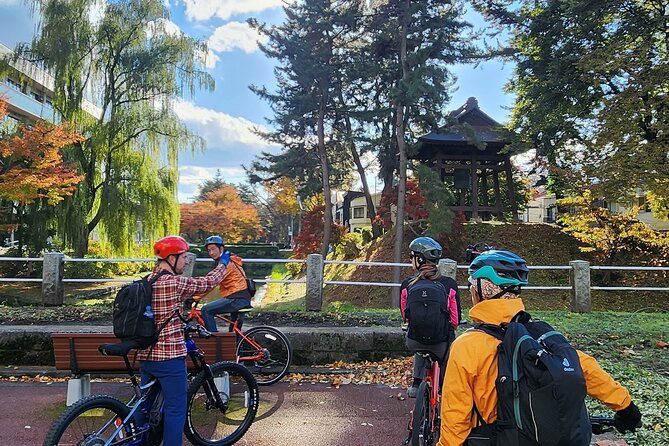
Morioka reveals itself best at street level, and this three-hour e-bike ride gives you a smart way to cover a lot without turning the day into a march. You cross Kaiunbashi Bridge, pass the Kitakami River, roll through Odori shopping street, and stop at places tied to Morioka’s past and local legends. The route has real variety: stone castle walls, sacred rocks, old townhouses, bakeries, and city streets.
I like the balance of history and everyday Morioka. You are not simply looking at monuments from a bus window. You are riding between them, with time to pause at Sakurayama Shrine, Iwate Park, and Mitsuishi Shrine. I also like the practical e-bikes, which make the ride more manageable and come with a built-in lock for the frequent stops.
The main consideration is the short three-hour schedule. You see several important places, but this is an overview rather than a slow, detailed tour of each site. You must also arrange your own cycling insurance, and meals and drinks are not included.
In This Review
- Key points at a glance
- Starting at Morioka Station and Kaiunbashi Bridge
- Iwate Park and the Stone Walls of Morioka Castle
- Machiya Townhouses and Morioka’s Older Streets
- Mitsuishi Shrine and the Story Behind Iwate
- Fukuda-pan and the Taste of a Local Institution
- What the E-Bikes Add
- How the Price Compares With the Experience
- Who Should Book This Morioka Ride
- Meeting Details and Booking Advice
- FAQ
- Where does the Morioka cycling tour start?
- Where does the tour end?
- How long does the cycling tour last?
- What is included in the price?
- Are food, drinks, and cycling insurance included?
- How many people can join the tour?
- Should You Book It?
Key points at a glance
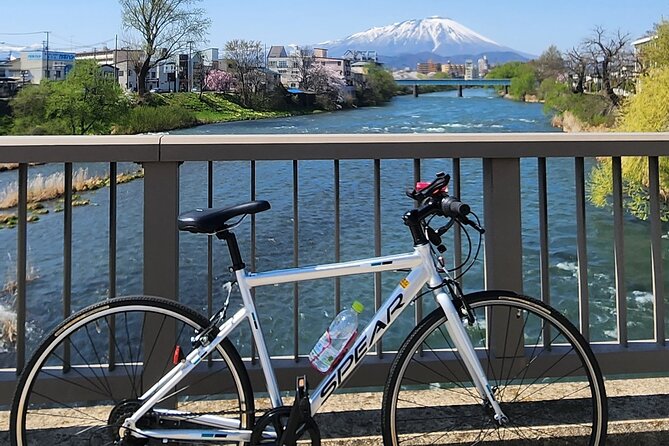
- Kaiunbashi Bridge sets the scene: Enjoy views toward the Kitakami River and Mt. Iwate before entering central Morioka.
- E-bikes make the city practical: You can cover more ground than on foot while still moving at street level.
- Morioka Castle ruins add historical weight: Iwate Park combines stone walls, leafy paths, and the remains of the city’s feudal center.
- Mitsuishi Shrine explains Iwate’s name: The Three Rock Deities connect a small sacred site with a major regional origin story.
- Fukuda-pan adds a local food stop: You pass the well-loved bakery, known for custom-made sandwiches.
- Small groups keep the ride personal: The maximum is eight people, and guide Katy has led a family of five through Morioka.
Morioka is one of those Japanese cities that rewards patient looking. Its center is compact enough to explore, but its attractions are spread across rivers, shopping streets, shrine grounds, parks, and older neighborhoods. An e-bike gives you a useful middle ground. You move faster than a walker, but you still notice bridges, shopfronts, stonework, and changing streets.
This tour costs $97.73 per person and lasts about three hours. That is not a cheap quick ride, but the price includes the e-bike and a local guide, which matters in a city where the value comes from understanding what you are seeing. If you tried to connect all these stops alone, you could get from place to place, but you might miss the story linking Morioka’s name, castle ruins, shrines, and local food culture.
The tour starts and ends at Morioka Station Waterfall Square. That makes it easy to fit into a train-based visit, especially if Morioka is a stop between other destinations in Iwate Prefecture. The activity is booked an average of 26 days ahead, so I would not leave it until the last minute if your schedule is fixed.
Starting at Morioka Station and Kaiunbashi Bridge
Meeting at Waterfall Square beside Morioka Station keeps the beginning simple. You do not need a separate ride across town, and the return to the same point means you can leave luggage plans and onward transport for after the tour. The activity uses a mobile ticket, and confirmation is provided when you book.
Once the bikes are ready, the route heads toward the city center. The first notable view comes at Kaiunbashi Bridge, where you can look across the Kitakami River toward Mt. Iwate in the distance. Weather will affect how clear the mountain view is, but the bridge gives you an immediate sense of Morioka’s setting and scale.
I like this opening because it provides orientation without a formal lecture. You see the river, the bridge, and the mountain relationship that helps explain the city. On a bike, you also get a better sense of how the center fits together than you would from one isolated sightseeing stop.
The ride continues through Odori shopping street. This brings the tour into ordinary city life, with local boutiques and cafes along the way. It is a useful counterpoint to the shrines and castle grounds. Morioka is not presented as a museum. You see a working city, then turn onto streets with older buildings and religious sites.
Iwate Park and the Stone Walls of Morioka Castle
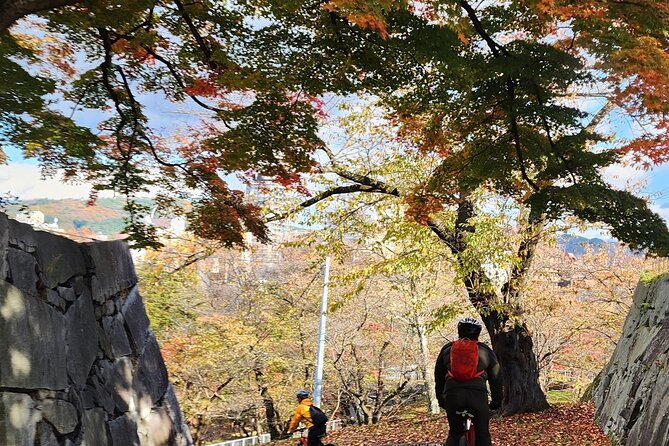
The first major stop is Iwate Park, also known as Morioka Castle Ruins Park. Admission is free, and the park gives you a clear look at the city’s feudal past without requiring a full day at a castle museum.
The castle itself is gone, but the stone walls remain. Those walls, along with leafy paths, make the site more than a quick photo stop. You can read the shape of the former stronghold through the surviving masonry and the park’s layout. Your guide can provide the context that bare stone cannot.
The listed schedule allows about 1 hour and 30 minutes around this part of the route, though the overall tour lasts roughly three hours and includes cycling between stops. That is a generous share of a half-day outing, but it likely includes movement and explanations rather than 90 minutes spent only inside the park.
For me, this is one of the tour’s strongest sections. Morioka’s history can feel scattered when you visit independently. The castle grounds give it an anchor. You are not just looking at a shrine, a bridge, or an old house as separate sights. You begin to see the city as a former castle town that grew into the modern center around it.
The park is also a good reason to choose an e-bike rather than a walking-only tour. You arrive without spending your energy on long connections between sights, then have time to walk the paths and examine the stonework. The bike keeps the city portion efficient.
Machiya Townhouses and Morioka’s Older Streets
After the castle grounds, the route passes traditional machiya townhouses. These buildings offer a glimpse into historic city life, though the tour information does not promise entry into private interiors. You should think of this part as a streetside look at Morioka’s built character.
Machiya are valuable because they show how people lived and worked in the same urban spaces. Even when you only see the exteriors, details such as narrow fronts and traditional forms help distinguish an older commercial quarter from newer city blocks. Your guide can point out what you might otherwise cycle past without noticing.
This is also where the bike format earns its keep. You can cover several streets and compare the older townhouses with the modern shopping areas. Walking would give you a closer pace, but it would take longer to connect the city’s separate districts. A taxi would be faster, but it would erase much of the in-between scenery.
Do not expect a long architectural study. The three-hour format favors a broad introduction. If old buildings are your main interest, you may want extra time before or after the tour to explore on your own. The ride gives you the map in your head and a useful first look.
Mitsuishi Shrine and the Story Behind Iwate
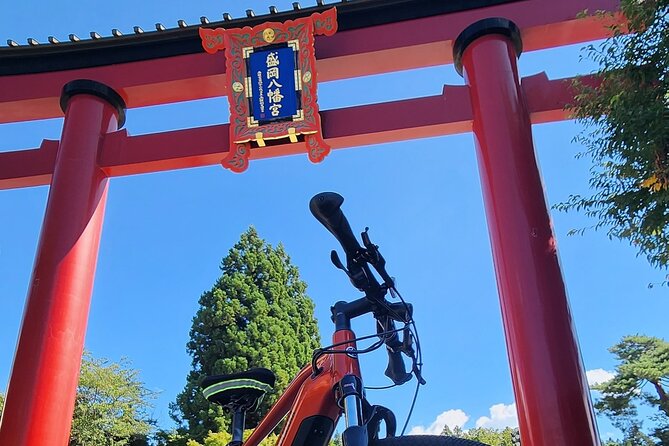
Mitsuishi Shrine is the tour’s most distinctive cultural stop. It is associated with the Three Rock Deities and the legend connected to the origin of the name Iwate Prefecture. That makes this more than a routine shrine visit.
The name Iwate is tied to a local story involving the rocks at the shrine. The supplied details do not spell out the full legend, so your guide’s explanation is an important part of what you are paying for. At a site like this, the physical setting and the story belong together. Without the story, you see sacred stones. With the story, you understand why they matter to the region.
I like that the tour includes a small, specific place rather than only the city’s largest attractions. A castle park is easy to place on a sightseeing list. A shrine linked to the prefecture’s name gives the outing a stronger local identity.
You should allow time for a respectful visit. The tour is not presented as a religious ceremony, but Mitsuishi Shrine is a sacred place, so ordinary shrine manners are appropriate. Follow your guide’s lead, keep your voice low, and avoid treating the site as a stage set.
The listed timing gives about 1 hour and 30 minutes for this portion, including the surrounding ride and other nearby sights. Again, the exact pace will depend on the group, traffic, and how much explanation is offered at each stop. With a maximum of eight people, questions should be easier to ask than on a large coach excursion.
Fukuda-pan and the Taste of a Local Institution
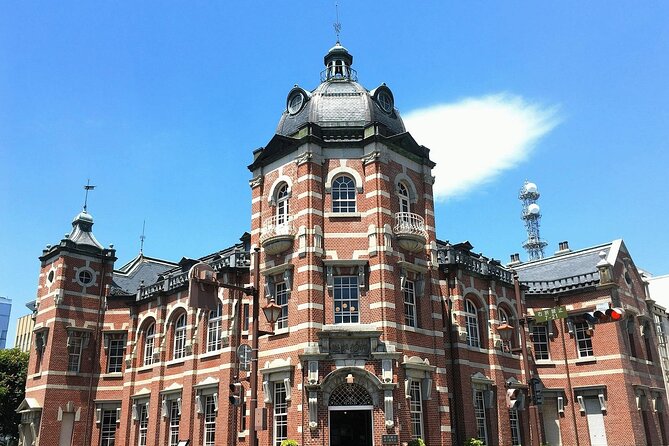
The route passes Fukuda-pan, a beloved local bakery known for custom-made sandwiches. Meals and drinks are not included, so any purchase is your responsibility. The details do not promise a formal tasting or a guaranteed food stop, so treat this as a chance to see or visit the bakery rather than a prepaid meal.
That distinction matters. The tour’s title points toward treats, but the included services are the guide and e-bike only. Bring money if you want to buy something, and do not count on lunch being supplied as part of the $97.73 price.
Still, this is a useful food detail. A local bakery says something about daily Morioka that a monument cannot. Custom-made sandwiches also give you a practical option if you want a simple bite after the ride, though the tour itself does not state how long you will have to order or eat.
I would ask the guide at the start how the bakery fits into that day’s route. The guide can tell you whether there is time to stop, buy something, or return later on your own. This is a small point, but it helps prevent a mismatch between expecting a food tour and getting a city cycling tour with a bakery pass.
What the E-Bikes Add
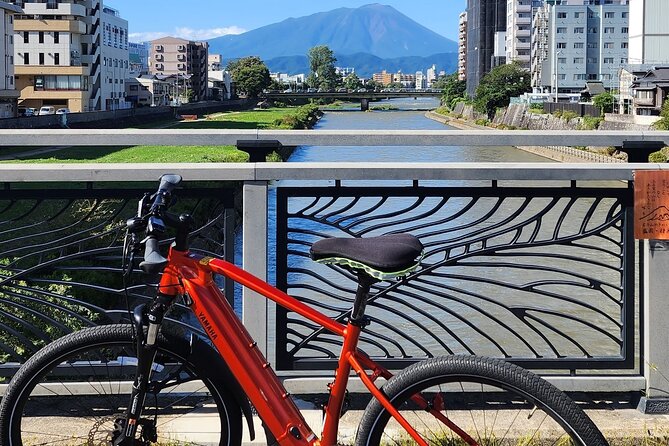
The e-bike rental is included, along with the guide and instructor fee. That removes the biggest practical hurdle for a cycling tour in an unfamiliar city. You do not need to arrange a bicycle separately or work out how to connect all the stops.
A previous family group of five found the e-bikes comfortable and particularly useful because the bikes had built-in locks. That detail is worth noting. The route includes many short stops, and a built-in lock makes it easier to secure the bike while you look around.
The tour is not described as a strenuous athletic ride. Most people can participate, according to the supplied information, but you are still cycling in a city and should be comfortable riding a bike. You must purchase your own cycling insurance, which is not included in the price.
The group limit of eight is another plus. A small group can stop more neatly, and a guide can adjust explanations better than with a large crowd. It also keeps the activity from feeling like a line of bikes dominating the street.
The tradeoff is that the route remains subject to city conditions. You may stop at bridges, shopping streets, shrines, and parks, but you are not getting a private car or a fully controlled sightseeing environment. That is part of the appeal for many people, but it also means you should arrive ready for an active outing.
How the Price Compares With the Experience
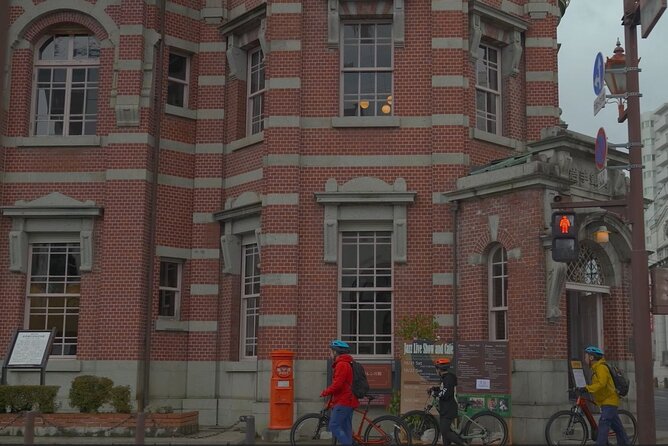
At $97.73 per person, this tour is best judged as a guided orientation to Morioka, not simply as a bicycle rental. The e-bike has value, but the local interpretation is the main reason to book. You are paying to connect the city’s sights and hear why they matter.
The price makes more sense if you have limited time in Morioka. In three hours, you can reach the castle grounds, Mitsuishi Shrine, the riverside, Odori shopping street, historic townhouses, and Fukuda-pan. Doing that alone would require planning, route checking, and enough confidence to navigate between stops.
It is less compelling if you already know Morioka well, have several days in town, or mainly want a long, relaxed bike ride. In those cases, renting a bike independently could give you more freedom, though you would not receive the same guided context.
The free admission at Iwate Park and Mitsuishi Shrine keeps extra sightseeing costs low. You should budget separately for food, drinks, insurance, and anything you buy at Fukuda-pan. Transportation to the meeting point is also not included, though the start at Morioka Station makes that part fairly straightforward.
Who Should Book This Morioka Ride
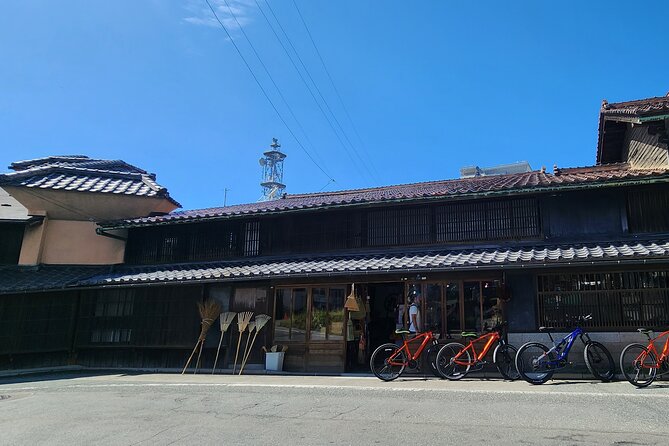
I would recommend this tour to first-time visitors who want a clear introduction to Morioka without spending a full day indoors or on foot. It suits people who enjoy seeing how historical places sit within a living city.
Families may find the format useful, provided everyone can ride comfortably. The e-bikes and built-in locks were practical for a family of five, and the maximum group size is small enough to keep the ride manageable. The tour also works well for couples, solo visitors, and small friend groups who prefer a guide but do not want a large bus tour.
History fans will appreciate Iwate Park and the link between Mitsuishi Shrine and the prefecture’s name. Food-minded visitors will like the connection to Fukuda-pan, but should remember that this is not a meal-included food tour.
You may want something else if you dislike cycling, need a fully passive sightseeing option, or want lengthy visits at each site. The route covers a lot, and that means each place receives only part of the half-day. Anyone seeking a specialized architecture, religious, or food tour should check the focus carefully before booking.
Meeting Details and Booking Advice
You meet at Morioka Station Waterfall Square, at 1 Moriokaekimaedori, Morioka, Iwate 020-0034. The tour ends at the same meeting point, which is convenient for onward plans.
Confirmation arrives at booking, and the mobile ticket is useful for a simple station meeting. The experience operates near public transportation, and most people can participate. The maximum group size is eight.
Free cancellation is available if you cancel at least 24 hours before the local start time. A cancellation inside that window is not refunded, and late changes are not accepted. If your train schedule is uncertain, pay close attention to that cutoff before committing.
FAQ
Where does the Morioka cycling tour start?
It starts at Morioka Station Waterfall Square, at 1 Moriokaekimaedori, Morioka, Iwate 020-0034, Japan.
Where does the tour end?
The activity ends back at the meeting point at Morioka Station Waterfall Square.
How long does the cycling tour last?
The tour lasts approximately three hours.
What is included in the price?
The price includes a local guide and instructor fee, plus the e-bike rental.
Are food, drinks, and cycling insurance included?
No. Meals and beverages are not included, and you must purchase your own cycling insurance.
How many people can join the tour?
The activity has a maximum of eight participants.
Should You Book It?
Book this ride if you want to understand Morioka quickly and actively. The strongest parts are the combination of Morioka Castle ruins and Mitsuishi Shrine, the river and mountain views from Kaiunbashi Bridge, and the chance to see older streets and local food culture between formal sights.
I would especially choose it for a first visit, a short stay, or a train itinerary that gives you only half a day in the city. The e-bike saves effort, the small group keeps the outing personal, and guide Katy’s successful family outing suggests the format can work well for mixed-age groups.
Skip it if you want a slow, detailed visit to every site or prefer to explore without a fixed route. For most first-time visitors, though, this is a practical and engaging way to get your bearings in Morioka, with enough local stories and everyday detail to make the city stick with you.
Cycling Tours, compared.
 ★ 5.0Bike Tour Exploring North Kyoto plus LunchFrom $106
 ★ 5.0Tokyo Great Cycling TourFrom $99
 ★ 5.0Tokyo Top Highlights 3h Guided E-bike TourFrom $63
 ★ 5.03h Tokyo E-Bike Tour: Hidden Gems, and Local Life with guideFrom $63
 ★ 5.0Arashiyama Bamboo Forest & Hidden Gems Bike Tour (Early Bird)From $106
 ★ 5.0Hiroshima in a Nutshell: Morning Bike AdventureFrom $72
 ★ 5.05 Top Highlights of Kyoto Full Day Bike Tour (E-bike option)From $172
 ★ 4.83-Hour Bike or E-Bike City Highlights TourFrom $453 hours
Browse the lists this tour appears in