
Reviewed · CYCLING TOURS
Kurashiki History and Culture Guided Cycling Tour
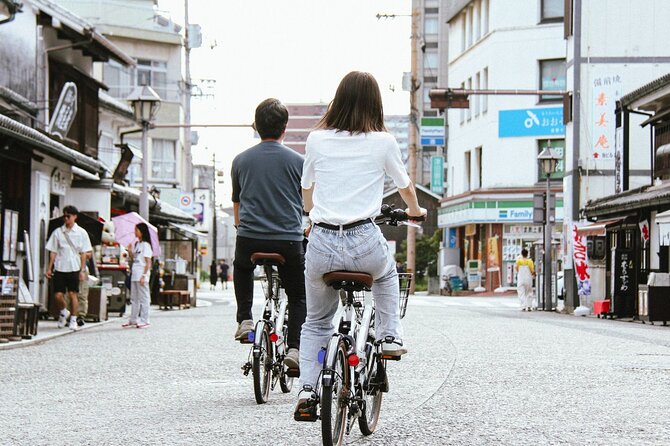
Kurashiki’s best stories are not all sitting on the postcard streets. This small-group tour begins in the Bikan Historical Quarter, then follows the Kurashiki River toward Sakazu Reservoir by bicycle. Along the way, guide Shota Oura connects vanished waterways, old transport routes, entertainment districts, spinning mills, and local pottery.
I like two things right away: the tour reaches places most international visitors miss, and the bicycle route gives you a clear sense of how Kurashiki once worked as a transport center. The visit to Sakazuyaki Kamamoto, a local pottery workshop, is another strong point. The main consideration is physical effort. You need moderate fitness, and children are best suited to the ride if they are about 140 centimeters or taller.
In This Review
- Key points at a glance
- Why this route shows more than Kurashiki’s postcard streets
- Walking the Bikan Historical Quarter and its invisible river
- Cycling upstream toward Sakazu Reservoir
- Sakazu Reservoir and the changing Kurashiki River
- A short visit to Sakazuyaki Kamamoto
- Lunch at a cafe, with food paid separately
- What the $53.65 price includes
- E-bikes, summer heat, and the practical effort level
- The advantages of a three-person group
- Where the tour begins and ends
- Who should book this Kurashiki cycling tour?
- Should you book it?
- FAQ
- How long does the Kurashiki cycling tour last?
- What is the price per person?
- What does the tour price include?
- Is food included?
- How many people can join the tour?
- Can children take part?
- Where does the tour start and end?
Key points at a glance
- A 45-minute walk through the Bikan Quarter: Learn how a river can still shape a town even when part of it now runs underground.
- A roughly 3-kilometer cycle to Sakazu Reservoir: Follow the Kurashiki River and irrigation canals by rental bicycle.
- A small group of no more than three people: Shota can explain local details and adjust the pace more easily than on a large bus tour.
- A pottery workshop visit: Meet the story of potter Kensaku Okamoto and see a side of Kurashiki beyond its best-known streets.
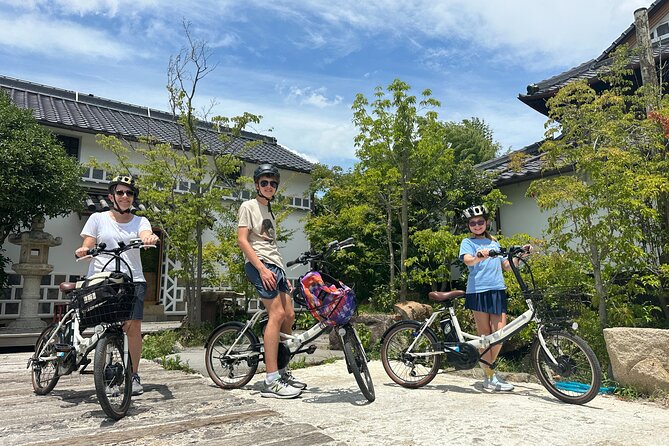
- E-bikes are available: They made the ride comfortable for a family with children aged 14 and 11, including in summer heat.
- Cafe food costs extra: Lunch is part of the outing, but you pay separately for food and drinks.
Why this route shows more than Kurashiki’s postcard streets
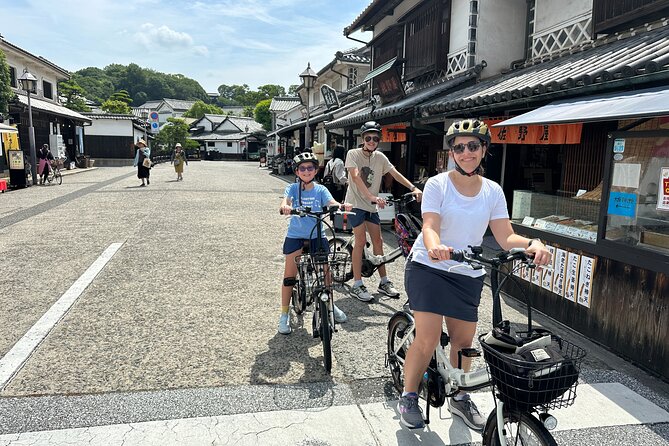
Most first visits to Kurashiki focus on the Bikan Historical Quarter, and rightly so. Its white-walled storehouses, dark timber, willow-lined waterway, and carefully preserved streets make it one of Okayama Prefecture’s most distinctive places.
This tour uses that quarter as a starting point rather than a finish line. You spend about 45 minutes walking with a guide, then switch to bicycles and follow the river system toward Sakazu. That change matters. On foot, you see the polished historic center. By bicycle, you trace the less obvious connections that helped Kurashiki grow.
Shota Oura is the guide named for this experience. His style, based on the tour details, is suited to people who want more than dates and building names. He explains what used to be where, including waterways that have disappeared from view, and he has shown flexibility when conditions required a change of plan.
The group limit is three people. That is a major advantage if you want to ask questions or need a little help with the cycling pace. It also means this is not the right choice if you want a big social outing with a large group.
Walking the Bikan Historical Quarter and its invisible river
The first section is a walking tour in Kurashiki’s central historic district. The theme is unusual: a river that still exists in some form, though part of it is no longer visible.
The Kurashiki River once had a much wider riverbed. Takasebune boats traveled back and forth along the waterway, carrying goods through the town. Today, some of that water runs underground through a culvert called an ankyo. The tour uses historical materials and surviving clues to show how the old river system shaped Kurashiki.
That kind of explanation can change how you look at the Bikan Quarter. Instead of seeing only attractive buildings and a scenic canal, you begin to read the district as a working commercial center. The water was not just decoration. It helped move goods and linked Kurashiki with the wider region.
I like this opening because it gives the famous district a practical purpose. If you have already walked the Bikan Quarter on your own, the guide’s focus on water, trade, and transport can add a fresh layer. If it is your first visit, it gives you useful context before the cycling begins.
Admission to this part is included. The walk lasts about 45 minutes, so you get orientation without spending the entire activity on foot.
Cycling upstream toward Sakazu Reservoir
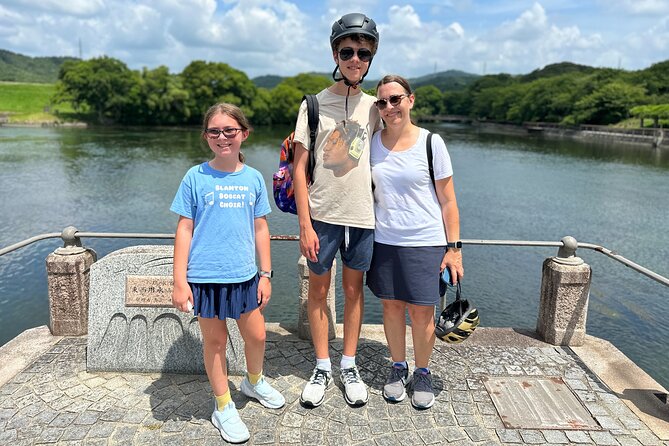
After the historic-center walk, you use the included rental bicycle and head toward Sakazu Reservoir. The destination is about 3 kilometers away, but the tour is not simply a point-to-point ride.
You follow the Kurashiki River and irrigation canals while Shota explains how the area changed. The route passes places tied to former entertainment districts, Kurashiki’s role as a transport hub, and sites where spinning mills once operated. These details help connect the old center with the less polished areas beyond it.
This is where the tour earns its price. A standard sightseeing walk can show you the preserved quarter, but a bicycle lets you cover more ground and see how the town extends beyond the central canal. You are not just moving between attractions. You are following the old economic network through the present-day town.
The cycling also gives the experience a welcome change of rhythm. You walk through the historic streets, then ride beside waterways and canals. In Japan’s hot summer weather, the bicycle portion can feel like a relief, though the heat still matters. One family found the e-bikes comfortable and said the children, aged 14 and 11, had no trouble with the ride. The tour information recommends children be around 140 centimeters or taller, so families should take that guidance seriously.
You need moderate physical fitness. The tour includes walking, cycling, and getting on and off a bicycle, so it may not suit anyone looking for a completely relaxed, vehicle-based sightseeing experience.
Sakazu Reservoir and the changing Kurashiki River
Sakazu Reservoir is the main cycling destination. The stop itself is listed at about 15 minutes, but its importance comes from the route leading there.
The reservoir and surrounding waterways help you see Kurashiki as a place shaped by water management. The tour discusses irrigation canals and the old river course, including parts that have been covered or altered over time. What you see today is only one stage in a much longer story.
The supplied information does not promise a long stop for photography or free time, so you should think of Sakazu as a viewing and interpretation point rather than a full afternoon at the water. The value is in understanding how the river system supported movement, farming, and industry.
I would especially recommend this section if you have already seen Kurashiki’s main sights and want a broader sense of the city. It is less about collecting famous landmarks and more about seeing how ordinary infrastructure shaped local life.
A short visit to Sakazuyaki Kamamoto
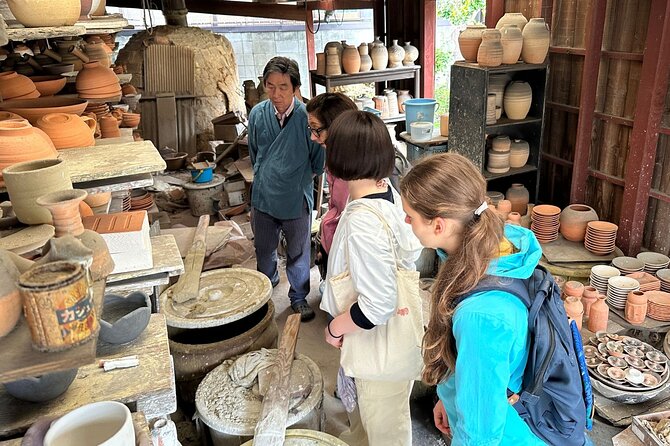
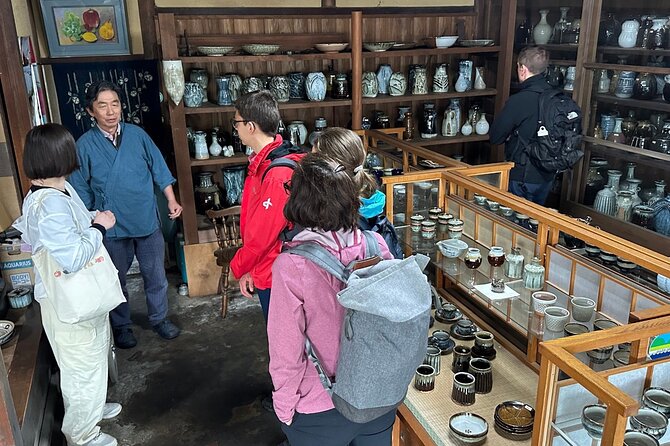
The pottery workshop is likely the most memorable stop for many people. After lunch, you visit Sakazuyaki Kamamoto, the workshop connected with potter Kensaku Okamoto.
The stop lasts about 20 minutes. That is not long enough for a full pottery course, and the tour does not promise hands-on making. Instead, you visit the workshop and learn about the potter, the local tradition, and the site’s connection to the vanished Higashi Takahashi River and a transformed pond.
This is a particularly good match for anyone who enjoys working traditions, craft, and local stories. The workshop gives the tour a human scale. You move from waterways and industry to the hands of an individual maker.
The pottery stop also helps explain why this tour feels different from a standard city sightseeing circuit. You are not limited to preserved architecture. You see a living local practice and a place that many overseas visitors would not find on their own.
The workshop’s website is in Japanese, but the guide has provided it for people who want to learn more. A translation tool can help if you want to explore the pottery after the tour.
Lunch at a cafe, with food paid separately
Lunch is part of the flow of the outing, but food and drinks are not included in the $53.65 price. You should budget extra for the cafe.
That arrangement keeps the base cost clear, but it also means you should not mistake the tour price for an all-inclusive package. The cafe stop gives you a chance to rest before visiting the pottery workshop, yet you will choose and pay for what you order.
I see this as a fair setup for a small local tour. You are not forced into a fixed meal, and people with different appetites can make their own choices. Still, ask about the timing or menu when you meet if you have dietary concerns, since the supplied details do not specify the cafe, dishes, or dietary accommodations.
What the $53.65 price includes
At $53.65 per person, the tour sits in a reasonable range for a nearly four-hour guided experience with bicycle rental and insurance included.
You are paying for more than a short ride. The price covers:
- A guided walk through the Bikan Historical Quarter
- A rental bicycle
- Insurance
- Guided cycling to Sakazu Reservoir
- Historical interpretation along the route
- A visit to Sakazuyaki Kamamoto
Food and drinks at the cafe are extra. The bicycle matters when judging value. Renting on your own could give you transport, but not the explanation of the buried river, old boat traffic, entertainment districts, industrial sites, and pottery tradition.
The group size also improves the value. With a maximum of three people, you are getting a private-feeling experience without the usual cost of a fully private tour. If Shota has room to adjust the pace or offer an alternative, the small group makes that easier.
E-bikes, summer heat, and the practical effort level
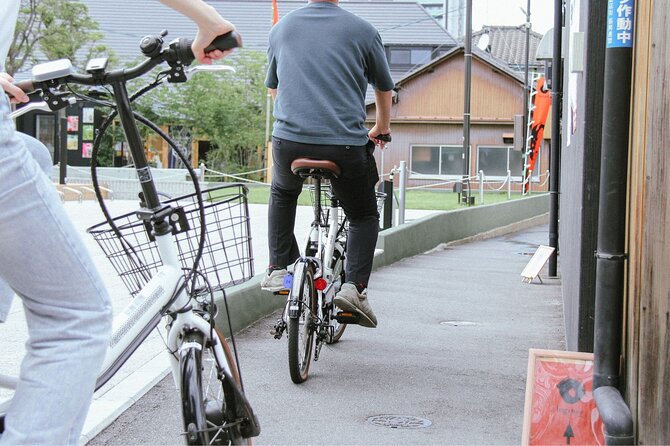
The bicycle is not a minor detail. It shapes the experience.
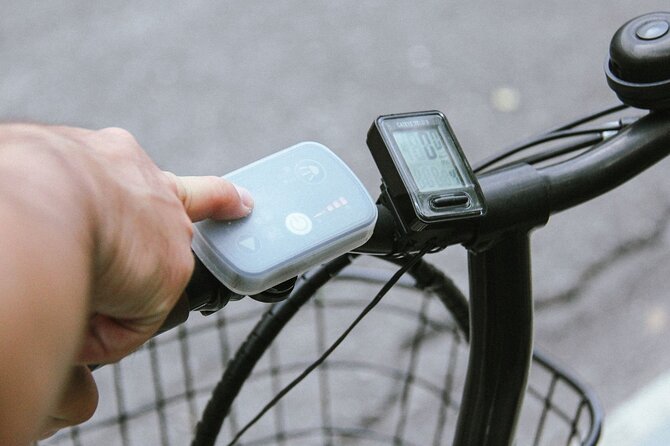
The route involves moderate physical activity, but e-bikes have been used on the tour and were described as comfortable by a family riding with two children. That makes the distance more manageable, especially during hot weather. You still need to be comfortable cycling, stopping, and handling a bike in town.
Summer heat deserves attention. One participant specifically thanked Shota for explaining things despite the heat, while another found the cycling a welcome break from it. Plan your clothing and water accordingly, even though the provided details do not state whether water is supplied.
Children can join, but the recommended height is about 140 centimeters or taller. The family experience suggests older children can handle the route well with e-bikes. For younger or shorter children, you should confirm suitability before booking rather than assume the recommendation is flexible.
The advantages of a three-person group
The maximum group size is three people, which gives this activity a very different feel from a large guided walk.
You can ask about a building, a canal, or a former factory as soon as your curiosity comes up. Shota can spend more time on the subjects that interest you, and the ride is less likely to feel like a line of bicycles following a flag.
The small size also helps with the pottery stop. A workshop visit can feel rushed or impersonal in a large group. Here, the guide can frame the visit around the local story and answer questions afterward.
The trade-off is simple: availability may be limited. Confirmation arrives within 48 hours of booking and depends on availability. Since the activity is booked on average 24 days ahead, planning early makes sense, especially if your dates in Kurashiki are fixed.
Where the tour begins and ends
The meeting point is at 2-chome-6-1 Chuo, Kurashiki, Okayama 710-0046. The end point is TAKAHASHIGAWA TRAVEL at 2-chome-209 Achi, Kurashiki, Okayama 710-0055.
The tour is near public transportation, which helps if you are building it into a day of sightseeing. Check the exact map locations before setting out, since the start and end addresses are different.
That separate end point is worth noting if you have luggage, a later reservation, or a tight train connection. The activity lasts about 3 hours and 45 minutes, so leave a cushion after the scheduled finish rather than booking an immediate departure.
Free cancellation is available until 24 hours before the start time. Cancellations or changes made inside that window are not accepted for a refund, and all cut-off times use local time in Japan.
Who should book this Kurashiki cycling tour?
I would choose this experience if you want to understand Kurashiki beyond its most photographed street. It suits people who like local history, waterways, industrial stories, traditional craft, and a bit of exercise in the same morning or afternoon.
It is also a strong fit for families with older children. The e-bikes make the ride easier, and the 140-centimeter recommendation gives you a useful planning guide. The small group is another plus for families who want to ask questions at their own pace.
You may want to skip it if you want a purely relaxed walking tour, dislike bicycles, or have limited mobility. The tour includes a 3-kilometer ride, and the supplied information recommends moderate fitness.
Should you book it?
Book this tour if the idea of seeing Kurashiki’s old waterways, local industry, and pottery tradition appeals more than simply photographing the Bikan Quarter. The strongest reasons are the small group, Shota Oura’s personal guiding style, the comfortable e-bikes, and the pottery workshop visit.
The drawbacks are manageable but real: lunch costs extra, summer heat can make the ride demanding, and the activity is not built for people seeking a no-effort sightseeing experience. For most active visitors, though, $53.65 is a fair price for nearly four hours that combines the famous historic district with places you are unlikely to find on a standard city walk.
FAQ
How long does the Kurashiki cycling tour last?
The experience lasts approximately 3 hours and 45 minutes.
What is the price per person?
The listed price is $53.65 per person.
What does the tour price include?
The price includes a rental bicycle and the insurance premium.
Is food included?
No. Food and drinks at the cafe are not included, so you pay for them separately.
How many people can join the tour?
The activity has a maximum of three participants.
Can children take part?
Yes, children are welcome. A height of about 140 centimeters or taller is recommended because the experience includes bicycle riding.
Where does the tour start and end?
The tour starts at 2-chome-6-1 Chuo, Kurashiki, Okayama 710-0046, and ends at TAKAHASHIGAWA TRAVEL in Achi, Kurashiki, Okayama 710-0055.
Cycling Tours, compared.
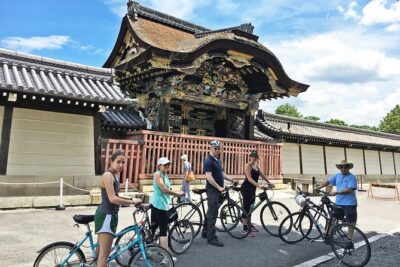 ★ 5.0Bike Tour Exploring North Kyoto plus LunchFrom $106
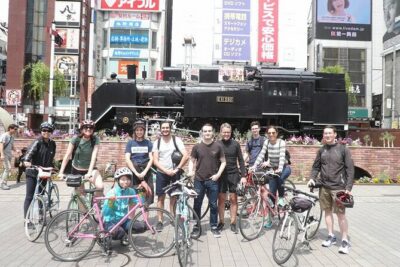 ★ 5.0Tokyo Great Cycling TourFrom $99
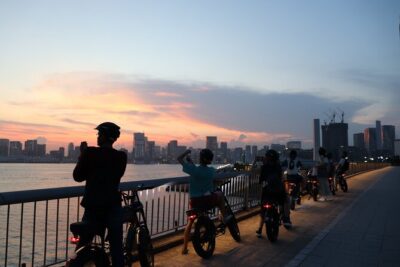 ★ 5.0Tokyo Top Highlights 3h Guided E-bike TourFrom $63
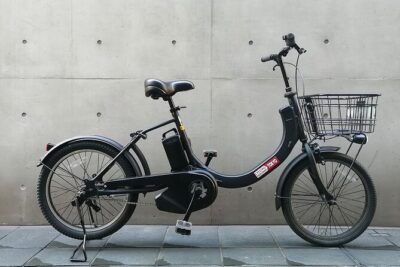 ★ 5.03h Tokyo E-Bike Tour: Hidden Gems, and Local Life with guideFrom $63
 ★ 5.0Arashiyama Bamboo Forest & Hidden Gems Bike Tour (Early Bird)From $106
 ★ 5.0Hiroshima in a Nutshell: Morning Bike AdventureFrom $72
 ★ 5.05 Top Highlights of Kyoto Full Day Bike Tour (E-bike option)From $172
 ★ 4.83-Hour Bike or E-Bike City Highlights TourFrom $453 hours
Browse the lists this tour appears in