
Reviewed · E-BIKE TOURS
Kanazawa Half Day E-bike Tour
Kanazawa is compact on a map, but its major sights are spread across several historic districts. This four-hour e-bike tour links the geisha quarter, Kenrokuen Garden, Kanazawa Castle, and the samurai streets without making you spend the day marching between them. You get a moving introduction to the city, plus time to stop and listen.
I especially like the small maximum group of eight, which makes it easier to ask questions and ride at a comfortable pace. I also like the tea break with matcha and traditional Wagashi. The main consideration is weather: rain, snow, strong winds, or unsafe roads can cancel the cycling portion, and the route may switch to walking and public transportation.
In This Review
- Key points to know before booking
- Starting beneath Kanazawa Station’s Tsuzumi Gate
- Higashi Chaya and the world of the chaya
- Kenrokuen Garden, with time for tea
- Kanazawa Castle and the Maeda family
- Gyokusen’inmaru, a quieter garden near the castle
- Nagamachi and the samurai quarter
- What the e-bike adds to a half-day visit
- The guides and the value of local advice
- Price, timing, and weather rules
- Who should book this Kanazawa e-bike tour?
- Should you book it?
- FAQ
- How long does the Kanazawa Half Day E-bike Tour last?
- Where does the tour begin?
- Does the tour finish at the same place?
- What sights are included?
- Is the e-bike rental included in the price?
- Are helmets available?
- Can children or shorter riders use the e-bike?
- What happens if it rains?
- How many people can join the tour?
- What is the cancellation policy?
Key points to know before booking
- Four major historic areas in one outing: Visit Higashi Chaya, Kenrokuen, Kanazawa Castle, Gyokusen’inmaru Garden, and Nagamachi.
- Local guides who add useful context: Guides named Rina, Nicola, Liam, and Ti have led this experience, with a strong focus on local stories and practical advice.
- An easy way to cover Kanazawa: The electric motor helps you travel between districts without turning the tour into a hard workout.
- Matcha and Wagashi are included: The tea stop gives the tour a calm cultural pause rather than a nonstop ride.
- Small-group format: The activity is capped at eight people, though other groups may join your departure.
- Weather matters: Poor conditions can lead to a different date, a refund, or a walking and bus-based version of the outing.
Starting beneath Kanazawa Station’s Tsuzumi Gate
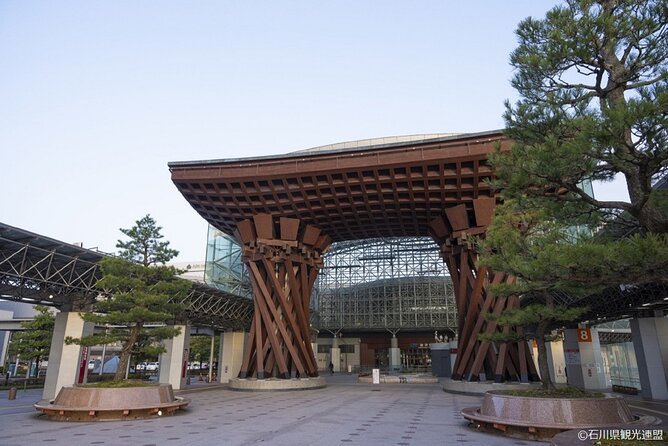
The tour begins at the McDonald’s at 1-1-1 Kinoshinbomachi, near Kanazawa Station. The station itself is worth a few minutes before you set off. Its large Motenashi Dome shelters the entrance, while the wooden Tsuzumi Gate takes its shape from the traditional Japanese drum.
This is a smart place to begin because the station is both a transport hub and a modern introduction to Kanazawa. Your guide can help place the city in context before you head into older neighborhoods. The scheduled station stop lasts about 30 minutes and has no admission charge.
You will be riding in a group, so expect some basic orientation and practice before leaving. This matters if you have not ridden in years. Rina has been especially patient with rusty cyclists, allowing time to get used to the e-bike before setting off.
The bikes are described as being in good condition, and helmets are available on request. The e-bike is not recommended for riders under 145 centimeters. I would also wear shoes that work for both cycling and walking, since several stops require you to leave the bike and explore on foot.
A few more Kanazawa tours and experiences worth a look
Higashi Chaya and the world of the chaya
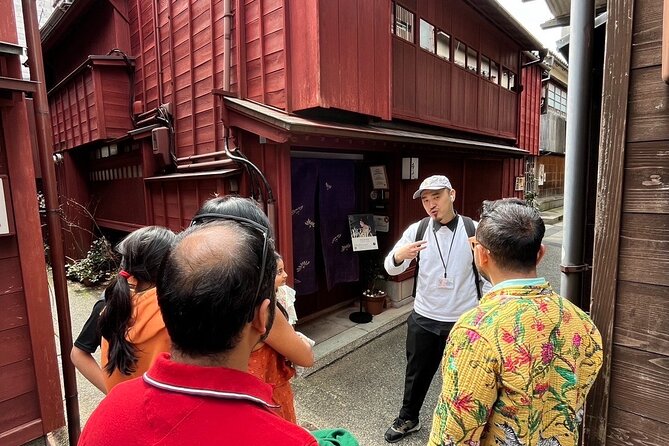
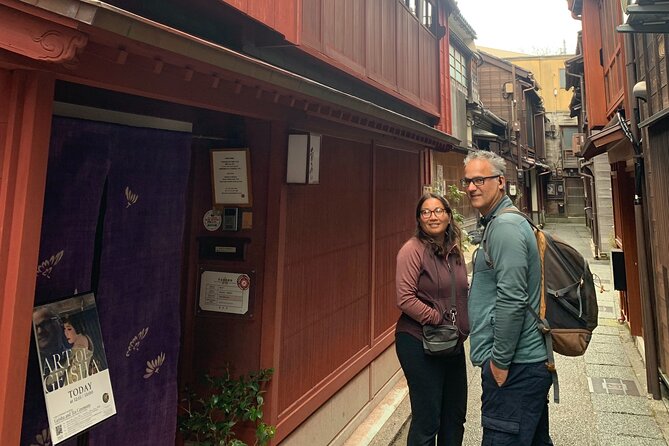
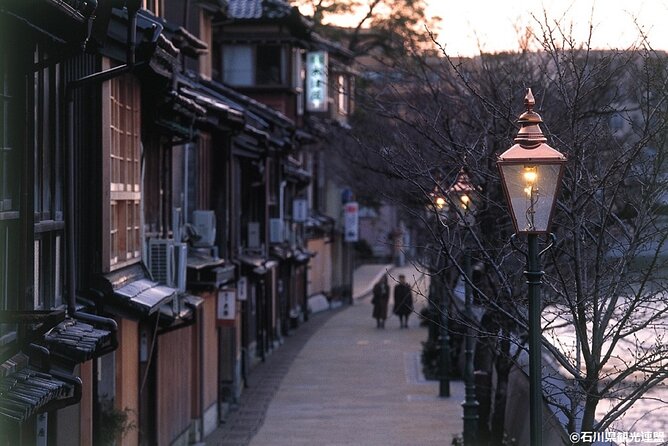
From the station, the route heads toward Higashi Chaya District, one of Kanazawa’s best-preserved geisha areas. The streets have a pleasing old-fashioned feel, with wooden facades, narrow lanes, and traditional teahouses. The appeal is not simply taking photographs. The guide explains how chaya culture worked and how Kanazawa’s merchant society was organized during the Edo period.
This is where the local guide makes the biggest difference. The buildings are attractive, but without context they can blur into a row of pretty wooden fronts. Rina has explained the city’s districts, its ties to the shogun, and even the story behind Kanazawa’s name. Nicola, Liam, and Ti have also been praised for adding local suggestions and answering questions in an easy, personal way.
The stop lasts about an hour, giving you time to leave the bike, look around, and take photographs. The route is not presented as a quick pass through town. You get explanations at each location, with a pace that allows the place to register.
One practical point: Higashi Chaya can be busy at popular times, and bicycles are not useful in every narrow lane. The value here comes from the combination of riding to the district and walking through its most atmospheric sections. You cover distance efficiently, then slow down where the streets call for it.
Kenrokuen Garden, with time for tea
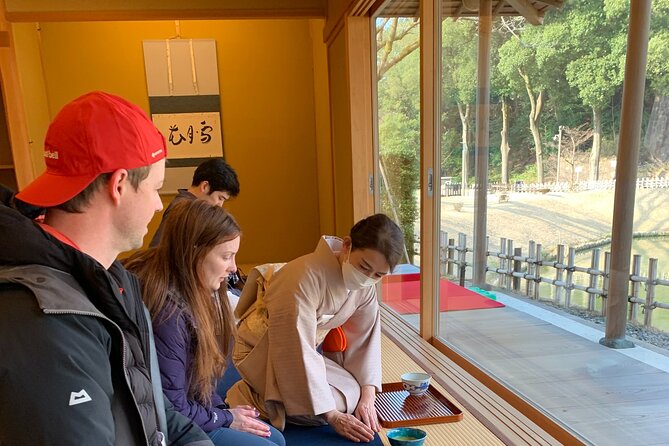
Kenrokuen is the tour’s longest stop, at about an hour, and it is easy to see why. It is one of Japan’s Three Great Gardens, laid out with the careful balance associated with feudal-era garden design. Paths, ponds, bridges, trees, and changing views are arranged so that the garden reveals itself bit by bit as you walk.
Your guide explains more than the names of plants or the best photo points. You learn how the garden was planned and why its design reflects the power and taste of the Maeda clan. That background helps you read the garden as a work of design, not just a pleasant park.
The tour includes admission to Kenrokuen, which is useful because you do not need to arrange a separate ticket during the outing. You should still expect to walk. An e-bike gets you to the garden, but it does not replace time on the paths.
The included tea and Wagashi stop adds a welcome change of pace. Several accounts of the experience identify tea in or near Kenrokuen as a highlight, especially when the weather is wet. It gives you a chance to sit, enjoy a traditional sweet, and take in the garden without rushing to the next stop.
If you are choosing this tour mainly for cycling, the garden visit may feel like a pause in the ride. I see that as a strength. Kanazawa is not a city to experience only from a bicycle seat. The best moments come from switching between movement, explanation, and quiet observation.
Kanazawa Castle and the Maeda family
The next stop is Kanazawa Castle’s Ishikawa Gate, where you cycle around the white walls and imposing defensive structures. The castle was the seat of the Maeda clan for more than 280 years, making it central to the city’s development.
The guide discusses practical features of the architecture, including fire-resistant storehouses and maze-like defensive planning. These details make the castle easier to understand. Instead of seeing only white walls and a grand gate, you begin to notice how the complex was built to protect wealth, people, and power.
The scheduled visit lasts around 30 minutes and does not include a separate admission charge for the outside viewing described here. That makes it a relatively efficient stop. You get the essential setting and explanation without spending a large portion of a half-day inside a single complex.
The castle area also helps connect Kenrokuen to the rest of the route. The garden was not an isolated attraction. It belonged to the same ruling world as the castle, and the tour uses the short ride between them to show how the city’s political center was organized.
Gyokusen’inmaru, a quieter garden near the castle
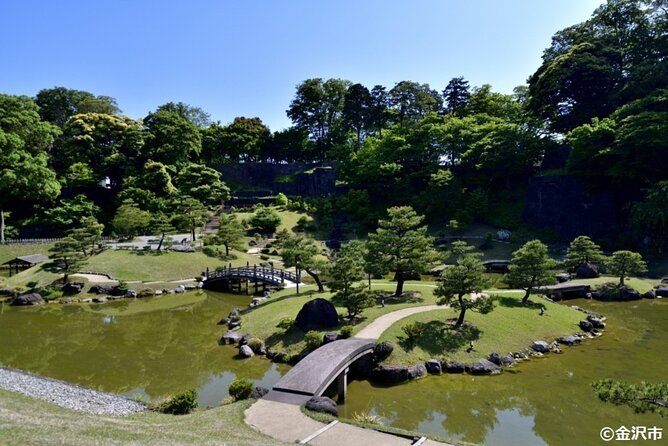
Gyokusen’inmaru Garden offers a different mood from Kenrokuen. Tucked behind the castle grounds, this was once a private garden for the feudal lord. It has been restored with the help of historical records, and its smaller scale makes it a calmer stop.
I like having both gardens on the same route because they show two sides of elite garden culture. Kenrokuen feels broad and carefully staged for changing views. Gyokusen’inmaru feels more private and contained. The contrast is more useful than seeing two similar gardens back to back.
You receive admission to Gyokusen’inmaru as part of the tour. The planned stop lasts about 30 minutes, enough for a guided look without turning the outing into a garden marathon.
This is also a good place to appreciate the tour’s pacing. You have already seen the station, geisha district, and Kenrokuen. A quieter garden gives your eyes and legs a break before the final historic quarter. The experience is active, but it is not designed as a race to collect attractions.
Nagamachi and the samurai quarter
The final major district is Nagamachi, the former samurai quarter. Its stone-paved lanes, earthen walls, and narrow canals preserve a strong sense of how the warrior class lived within Kanazawa’s old social order.
The guide explains the lives of the samurai and how that class adapted to changing conditions. This is an important part of the tour because Kanazawa’s past was not only about geisha entertainment, gardens, and castle rulers. Nagamachi brings attention to the people who served the ruling system and lived within its strict ranks.
The stop lasts around 30 minutes and has no separate admission charge for the streets and exterior areas described. You should expect another short walking section, since the charm lies in the lanes themselves.
This district is also a good test of the guide’s route planning. One rider specifically appreciated being kept away from busy streets and moving at a comfortable pace. That is the sort of detail I value on a city bike tour. You want to see a lot, but you do not want the traffic to dominate the day.
What the e-bike adds to a half-day visit
Kanazawa’s central sights can be visited on foot and by local transportation, but the connections take time. The e-bike lets you move from the station to Higashi Chaya, then across to the castle and gardens, before reaching Nagamachi. You spend more of your four hours seeing places and less of it waiting or retracing your steps.
The electric assistance is most useful for riders who want to cycle but do not want a demanding physical outing. You still pedal and remain responsible for handling the bike, but the motor reduces the strain. The route is therefore a good fit for many adults, including people returning to cycling after a long break.
There are limits. An e-bike does not make narrow historic streets wide, and it cannot remove the need to walk inside gardens or around cultural sites. You should also be comfortable riding in a group and following the guide through city streets.
The small group size helps. With a maximum of eight people, the guide can usually keep the pace together and respond to individual questions. It is not a private tour, and other groups may participate, but it should feel more personal than a large coach outing.
The guides and the value of local advice
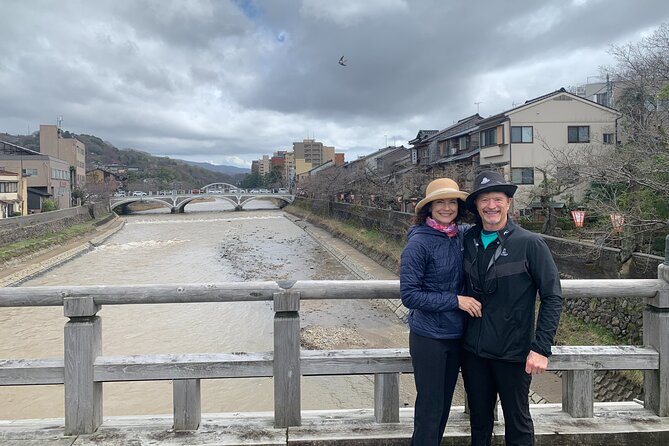
The named guides connected with this experience include Rina, Nicola, Liam, and Ti. The guide you receive will depend on the departure, but the pattern is clear: expect more than a route leader.
Rina has been praised for patient bike instruction, careful communication, and an upbeat way of sharing Kanazawa. Nicola has been described as friendly and good at making the day fun. Liam has led at an unhurried pace, explaining each stop and navigating the route with care. Ti has customized stops for a solo rider and offered restaurant advice for the rest of the stay.
That last point matters. A good orientation tour should improve the days that follow. The guides can point you toward places to eat and suggest additional sights, based on what you want from Kanazawa. If you can schedule this near the start of your visit, you may get more value from those suggestions.
The commentary also goes beyond dates and building names. You can ask about Kanazawa’s connection with the shogun, the city’s districts, the Maeda family, and the social roles behind the chaya and samurai quarters. I would come with a few questions ready. A small group gives you a better chance to shape the conversation.
Price, timing, and weather rules
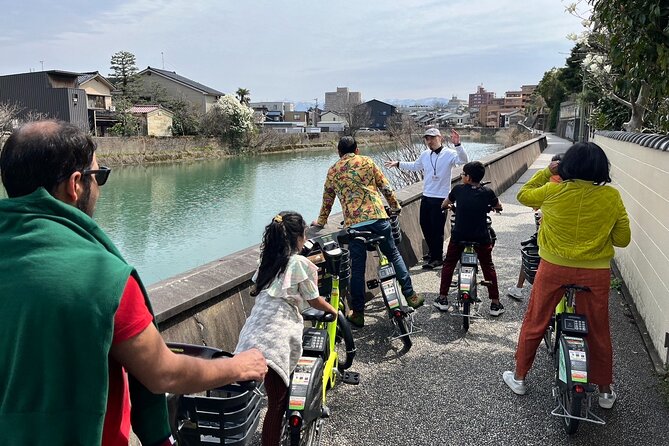
At $125.50 per person, this is not the cheapest way to see Kanazawa. The price includes the electric bicycle, a local guide, entrance fees, traditional snacks, and matcha. You are paying for the bike, but also for a carefully linked route and several hours of explanation.
The value is strongest if you have only one full day in Kanazawa. The tour can serve as both sightseeing and orientation, covering districts that would take more planning on your own. It is also useful if you want historical context rather than a simple bicycle rental.
The four-hour duration is approximate. Although some people describe the experience as taking most of a day, the supplied schedule is built around a half-day route. Allow extra time around the start and finish, especially since the activity ends at a different location from the meeting point. Confirm the ending details before booking your onward plans.
Hotel pickup and drop-off are not included. Additional food, drinks, and personal expenses are also your responsibility. The meeting point is near public transportation, so it is practical for an independent itinerary.
Weather is the largest uncertainty. Cycling can be canceled for rain, snow, strong winds, or unsafe road conditions. If that happens, you may be offered another date or a full refund. On some rainy departures, the guide has continued with walking and public transportation instead, and the cultural stops and tea break still made the outing worthwhile. Do not assume the cycling format is guaranteed in poor weather.
For a full refund, cancel at least 24 hours before the local start time. Changes or cancellations inside that window are not accepted for a refund.
Who should book this Kanazawa e-bike tour?
I would choose this for a first visit, especially if you have limited time and want a clear picture of Kanazawa’s major historic areas. It suits curious riders who enjoy asking questions, stopping for photographs, and hearing how gardens, castles, merchants, geisha, and samurai fit together.
It is also a good choice for people who like active sightseeing but do not want a strenuous cycling day. The electric assistance and relaxed pace make the route approachable, while the walking stops keep it from feeling like a transport exercise.
You might prefer to explore independently if you want long, unstructured visits inside each attraction or if cycling in uncertain weather would cause stress. The tour gives you breadth and context, not unlimited time at one site.
Should you book it?
Book this tour if you want to cover Kanazawa efficiently and understand what you are seeing. The combination of e-bike travel, Kenrokuen and Gyokusen’inmaru, castle architecture, Higashi Chaya, Nagamachi, and a matcha break gives you a well-shaped introduction to the city.
I would book it early in a short stay, ideally when you can still use the guide’s restaurant and sightseeing advice afterward. Check the weather forecast, wear clothes suitable for both riding and walking, and remember that helmets are available on request. At $125.50, it is best value for a first-time visitor who wants local explanation and several major sights in one manageable outing.
FAQ
How long does the Kanazawa Half Day E-bike Tour last?
The experience lasts approximately four hours. The planned route includes six stops, with time for riding, explanations, photographs, garden visits, and a tea break.
Where does the tour begin?
The meeting point is the McDonald’s at 1-1-1 Kinoshinbomachi, Kanazawa, Ishikawa 920-0858, Japan, near Kanazawa Station.
Does the tour finish at the same place?
No. The activity ends at a different location from the meeting point. Check the end details when booking before arranging onward transportation.
What sights are included?
The route includes Kanazawa Station, Higashi Chaya District, Kenrokuen Garden, Kanazawa Castle’s Ishikawa Gate, Gyokusen’inmaru Garden, and the former samurai quarter of Nagamachi.
Is the e-bike rental included in the price?
Yes. Electric bicycle rental is included, along with a local guide, entrance fees, traditional Japanese snacks, and matcha.
Are helmets available?
Yes. Helmets are available upon request.
Can children or shorter riders use the e-bike?
The e-bike is not recommended for riders under 145 centimeters. The supplied information does not give a minimum age.
What happens if it rains?
The cycling tour may be canceled because of rain, snow, strong winds, or unsafe road conditions. You may be offered a different date or a full refund. On some rainy outings, the route has continued by walking and public transportation.
How many people can join the tour?
The maximum group size is eight people. It is a group activity, so other groups may participate.
What is the cancellation policy?
You can cancel for a full refund up to 24 hours before the experience start time. Cancellations or changes made less than 24 hours before the start are not accepted for a refund.
More Cycling Tours in Kanazawa
More E-Bike Tours in Kanazawa
More Kanazawa Cycling Tours in Kanazawa
More tours in Kanazawa we've reviewed
E-Bike Tours, compared.
 ★ 5.0Tokyo Top Highlights 3h Guided E-bike TourFrom $63
 ★ 5.03h Tokyo E-Bike Tour: Hidden Gems, and Local Life with guideFrom $63
 ★ 5.05 Top Highlights of Kyoto Full Day Bike Tour (E-bike option)From $172
 ★ 4.83-Hour Bike or E-Bike City Highlights TourFrom $453 hours
 ★ 5.0E-Bike Tours of the highlights of Kyoto!!!From $109
 ★ 4.83-hour Guided E-Bike Tour of the City’s Hidden GemsFrom $65
 ★ 5.0Osaka E-Bike Tour with a Local GuideFrom $59
 ★ 5.03-Hour Bike/E-Bike Tour of the City’s HighlightsFrom $63
Browse the lists this tour appears in