
Reviewed · CYCLING TOURS
Kamakura Heritage Bike or Walk Tour with ex-Rickshaw guide
Kamakura is easiest to understand when you connect its famous temples and shrines with the streets between them. This private tour does that by bike or on foot, with Ichi, a guide who spent five years driving rickshaws through Kamakura. You get major sights, local stories, and a route that reaches both the central shrine district and the Hase area.
I like the private format, since your pace and interests shape the four-hour outing. I also like the way the tour mixes famous stops, such as the Great Buddha, with quieter places including the grave of Minamoto no Sanetomo and Egara Tenjin Shrine. Ichi also takes plenty of photos, a useful bonus when you want a record of the day without constantly stopping to use your own phone.
The main consideration is distance. The route covers a wide stretch of Kamakura, so biking makes it easier to see everything comfortably. Walking gives you more time to notice side streets and temple details, but you should be ready for a full half-day on your feet. The tour is not recommended for children under 13 who cannot ride an adult-sized bike.
In This Review
- Key points to know before booking
- Why a bike works so well in Kamakura
- Starting at Kamakura Station
- The Great Buddha at Kotoku-in
- Tsurugaoka Hachimangu and the samurai city
- A brief stop at Minamoto no Sanetomo’s grave
- Hokokuji’s bamboo grove and matcha
- Yuigahama Beach and Kamakura’s coastal side
- Hasedera’s gardens, Kannon, and coastal views
- Egara Tenjin Shrine and a quieter finish
- What Ichi adds to the experience
- Price, inclusions, and the real value
- Who should choose the bike or walking option
- Practical details that affect your day
- Should you book this Kamakura tour?
- FAQ
- How long is the Kamakura Heritage Bike or Walk Tour?
- Where does the tour start?
- Can I choose between biking and walking?
- Is the tour private?
- What is included in the price?
- Is cancellation free?
Key points to know before booking
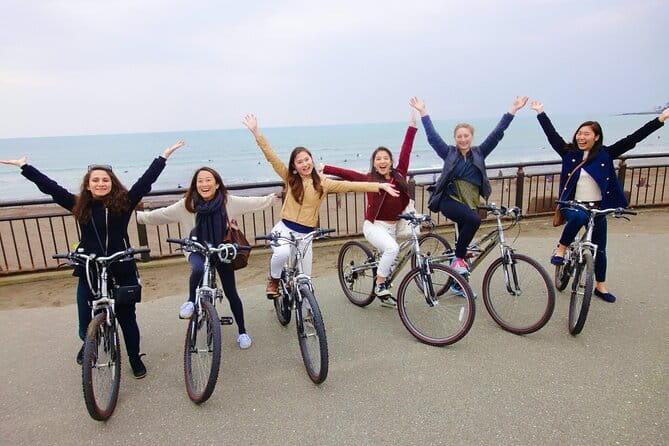
- A former rickshaw guide leads the route: Ichi brings five years of experience on Kamakura’s streets and explains local customs as well as history.
- You see both famous and quieter Kamakura: The route includes the Great Buddha, Tsurugaoka Hachimangu, Hokokuji, Hasedera, Yuigahama Beach, and smaller historical sites.
- Bike and walking options are available: Choose the style that suits your group, then adjust the pace and timing within the four-hour tour.
- The private setup adds flexibility: Only your group participates, so you can spend more time on the places that interest you most.
- Admission is partly covered: Entry to the Great Buddha and Hokokuji is included. Food and optional matcha are extra.
- Good weather matters: If poor weather cancels the tour, you can choose another date or receive a full refund.
Why a bike works so well in Kamakura
Kamakura’s sights are spread across several districts. Tsurugaoka Hachimangu and Egara Tenjin are in the central and eastern part of town, while the Great Buddha and Hasedera are in the Hase area near the coast. Hokokuji sits farther east, and Yuigahama Beach adds another change of scene.
A bike links these places without making the day feel like a series of train rides and station walks. You see ordinary streets, small stretches of coast, and the spaces between the headline sights. That is the real strength of this experience. Kamakura becomes a living town rather than a list of temple entrances.
The bike option also helps you cover the full route in four hours. One person described the use of e-bikes as a bonus, but the supplied details do not promise an electric bike for every departure. If that matters to you, ask Ichi or confirm the bike type before booking.
The walking option has its own appeal. You move more slowly and can focus on gates, gardens, stone paths, and neighborhood details. Still, this is not a short central walking loop. The route includes multiple districts, so I would choose walking only if your group is comfortable spending much of the half-day on foot.
Starting at Kamakura Station
The meeting point is Kamakura Station, at 1-chome-1-15 Onarimachi. This is a practical start because the station is close to the city’s main historic sights and is served by public transportation.
Your guide can shape the day around your group, but the listed route gives you a useful sense of the tour’s scope. It moves from major religious sites to samurai-era history, bamboo gardens, the coast, and temple views. The order may change to suit timing and conditions.
Because this is a private tour, you do not have to match the pace of a large group. That matters at places where you may want a little longer for photos or a clearer explanation. It also means you can tell Ichi if you care more about religious art, samurai history, gardens, or scenic stops.
The Great Buddha at Kotoku-in
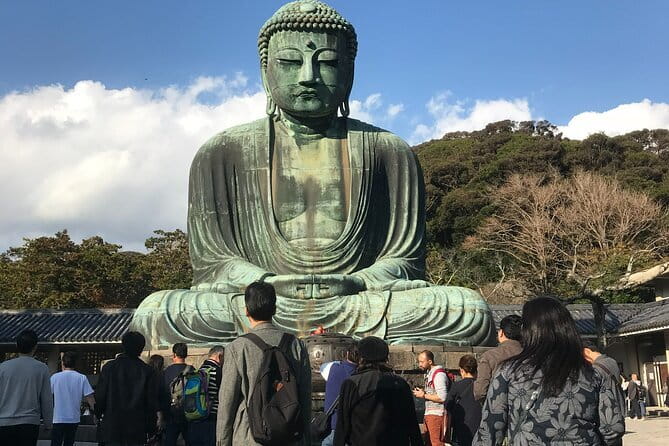
The Great Buddha is the tour’s biggest visual moment. At Kotoku-in Temple, you see the immense seated bronze figure that has become Kamakura’s best-known symbol. The stop lasts about 30 minutes, and admission is included.
This is a good place for Ichi’s historical explanation. The statue is not simply a photo stop. It gives you an opening into Kamakura’s religious traditions and the city’s role in medieval Japan.
Thirty minutes is enough to see the statue and hear the main story, but it is not a long temple visit. If you want to linger over every detail, you may need to make that clear early in the tour. The private format helps here, though the day still has several more stops to cover.
Tsurugaoka Hachimangu and the samurai city
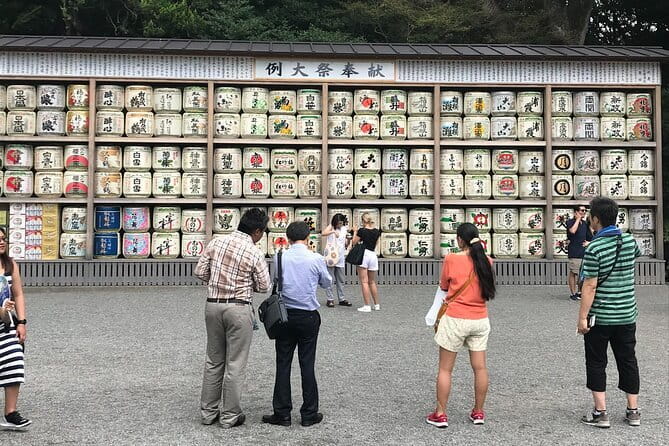
Tsurugaoka Hachimangu Shrine is the spiritual center of Kamakura. The shrine is linked with samurai culture and is dedicated to a deity associated with war. Its broad grounds and formal architecture make it a strong contrast to the intimate paths at Hokokuji and Hasedera.
Allow about 30 minutes. I would listen closely here, because this is where the story of Kamakura’s political rise becomes easier to follow. Ichi has been praised for explaining the beginnings of the Bakufu, the military government that began in Kamakura, in a concise way without flattening the complicated history.
The shrine is also one of the most popular stops on the route. You should expect a more public, active setting than at the smaller sites. That is not a flaw, but it means the quieter parts of the tour may feel more personal.
A brief stop at Minamoto no Sanetomo’s grave
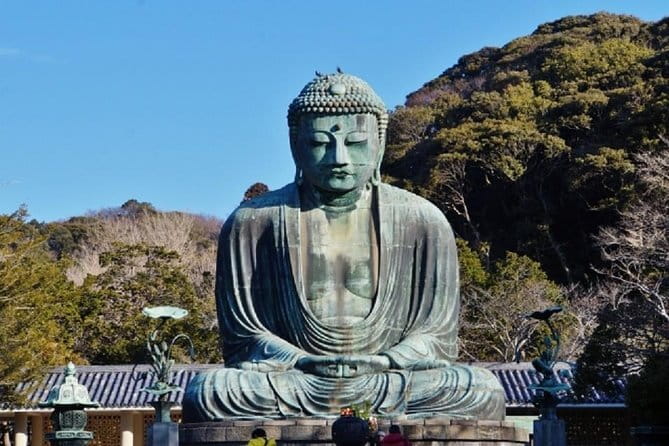
The grave of Minamoto no Sanetomo and Hojo Masako receives only about 10 minutes, but it adds useful context. Minamoto no Sanetomo was the third shogun of the Kamakura shogunate, and his story reflects the political tension of the period.
This is a short stop, not a major monument visit. Its value comes from the explanation. You get a direct link between the temples and shrines you are seeing and the people who shaped Kamakura’s government.
If you have a strong interest in medieval Japanese politics, tell Ichi. The private setting gives you a better chance to ask questions than a fixed group excursion.
Hokokuji’s bamboo grove and matcha
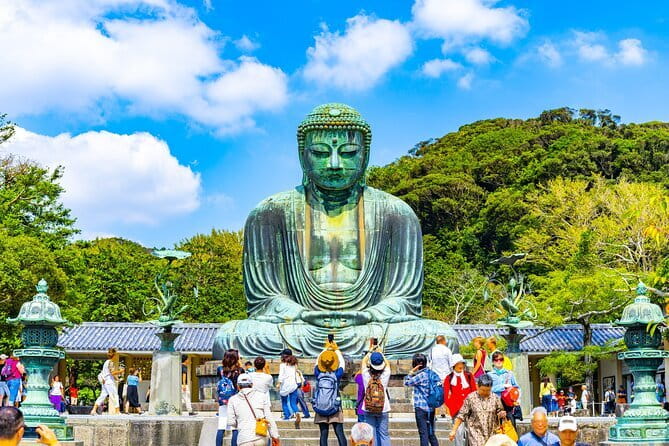
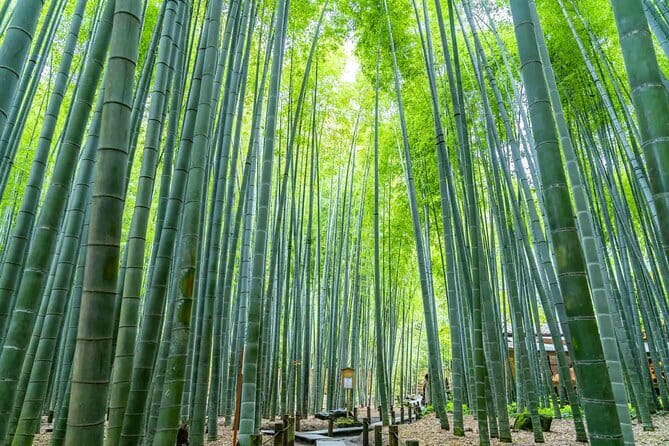
Hokokuji Temple is one of the most calming parts of the route. Its bamboo grove offers a cool, enclosed change from the open shrine grounds and city streets. The visit lasts about 30 minutes, and admission is included.
You can also stop for matcha at the temple café for 500 yen, about 3 dollars. Tea is optional and not part of the tour price. I would treat it as a pleasant pause rather than a full tea ceremony, since the supplied details describe a café stop.
Hokokuji is especially well suited to the walking choice, since the bamboo grove rewards a slower pace. On a bike tour, I would still make time to pause rather than rush through it. This is one of the places where the four-hour schedule can feel tight if your group wants many photos.
Yuigahama Beach and Kamakura’s coastal side
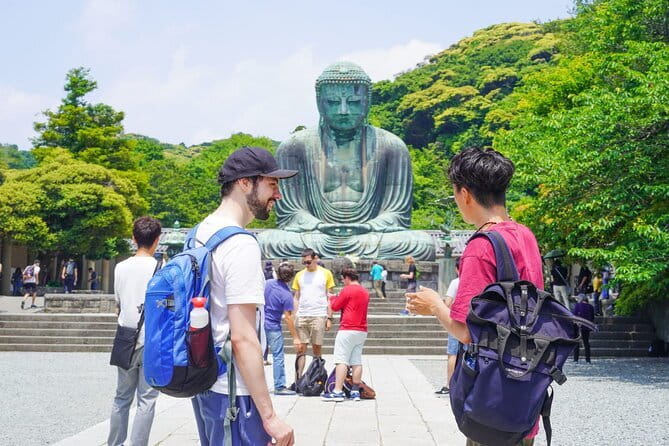
The route then shifts from temples to the sea at Yuigahama Beach. You ride or walk along the seaside road, seeing a different side of Kamakura from the one found around the shrines.
The beach is described as relaxing, but summer brings more people and a livelier atmosphere. That seasonal note matters if you are seeking quiet. Outside the busiest summer periods, this section can provide a welcome break between temple visits.
The stop is more about the setting and the ride than a formal activity. You are not promised beach time, swimming, or a long pause on the sand. Think of it as a scenic connection between the inland historic district and the Hase temples.
Hasedera’s gardens, Kannon, and coastal views
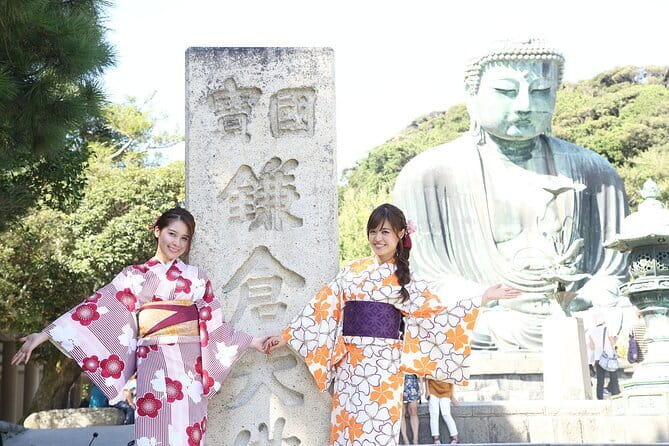
Hasedera Temple, also called Hase Temple, is known for gardens and views toward the coast. The planned visit lasts about 20 minutes and includes the chance to see the 9.18-meter wooden statue of Kannon, the Goddess of Mercy.
This stop packs several features into a short window. You have religious art, gardens, and a broad view toward the water. I would ask Ichi how much time is available for each part, especially if your group wants to focus on the statue or the views.
The supplied details show no admission fee for this stop, while the Great Buddha and Hokokuji specifically include admission. That makes it important to distinguish what is covered: do not assume every optional purchase or site cost is included simply because the tour includes several entrances.
Egara Tenjin Shrine and a quieter finish
Egara Tenjin Shrine is dedicated to Sugawara no Michizane, a deity associated with scholarship and learning. It is a quieter, more intimate stop than Tsurugaoka Hachimangu, with about 10 minutes planned.
This shrine works well near the end of a route because it brings the focus back to local religious practice. It is not as famous as the Great Buddha or Hasedera, but that is part of its value. Ichi can show you a place that many first-time visitors might otherwise skip.
Ten minutes is brief, so expect a focused visit rather than a long exploration. The listed admission is included.
What Ichi adds to the experience
The guide is the main reason to consider this tour instead of simply following a Kamakura map. Ichi has five years of experience as a rickshaw driver guide on these streets, which gives him practical knowledge of how the city fits together.
His role is not limited to naming buildings. He explains Japanese customs and traditions, tells stories about Kamakura’s leaders, and connects the Bakufu period with the places in front of you. His English is described as good, and his manner comes across as friendly and funny.
That combination is useful. Kamakura’s history can become a blur of shoguns, temples, and religious figures if you do not have a clear thread. Ichi’s strongest reported quality is the ability to explain complex history in a concise way while adding details that make the sites easier to remember.
He also takes photos throughout the outing. More than 20 photos were provided for one walking group, and the guide’s familiarity with the area helps him find appealing spots. This is a small service, but it has real value when you are traveling with friends and want everyone in the picture.
Price, inclusions, and the real value
At $150.24 per person, this is not a bargain sightseeing loop. The price makes more sense for a private group that wants a guide’s time, flexible pacing, and transportation between far-flung sights.
Your fee includes the professional guide, private tour format, and entry to the Great Buddha and Hokokuji Temple. Matcha at Hokokuji costs 500 yen, and lunch is not included. You should also cover personal damage caused by your own actions.
The value is strongest if you would otherwise pay for separate transport, research the route yourself, and visit the sites without context. It is weaker if you prefer to move independently, spend a long time at one temple, or keep costs very low.
The tour is often reserved well ahead, with an average booking time of 44 days. That suggests you should plan early for a particular date, especially if your schedule in Japan is fixed.
Who should choose the bike or walking option
I would choose the bike tour if you want to see the full range of Kamakura in four hours and enjoy moving through ordinary streets between the sights. It is also the better choice for anyone concerned about the distance between the central area, Hokokuji, the coast, and Hase.
Choose walking if your priority is a slower look at the temples and shrine grounds. You should be comfortable with a substantial amount of walking, and children under 13 who cannot ride an adult-sized bike are not recommended for the experience.
This tour suits first-time visitors who want an organized introduction, couples or friends who prefer a private outing, and people who enjoy history explained in person. It also works well for a mixed group, including someone familiar with Japan and someone seeing Kamakura for the first time.
The route may be less suitable for you if you want a long tea experience, extended beach time, or detailed visits at every temple. Four hours gives you breadth, not unlimited time at each stop.
Practical details that affect your day
The tour ends back at Kamakura Station, so you can continue exploring or return by train afterward. Confirmation is sent within 48 hours of booking, subject to availability.
Wear shoes suitable for walking, even if you select bikes. The tour includes temple and shrine grounds, and you may spend time standing while listening to explanations. Summer beach conditions can be busier, and the experience requires good weather.
You can cancel for a full refund up to 24 hours before the start time. Cancellations or changes made inside that period are not refunded or accepted. If poor weather forces cancellation, you are offered another date or a full refund.
Should you book this Kamakura tour?
Book it if you want to connect Kamakura’s major sights in one private half-day and prefer a local guide to explain what you are seeing. I especially like it for people who want the Great Buddha and Hasedera but also want quieter stops, samurai-era stories, a coastal ride, and help with photos.
I would choose the bike option for the fullest route, then ask ahead about e-bike availability if that is important to you. Choose walking only if you welcome a longer day on foot.
Skip it if you want to explore at your own speed, avoid a fixed four-hour schedule, or spend most of the day at one temple. For everyone else, Ichi’s former rickshaw experience, private format, and broad route make the $150.24 price easier to justify, particularly when shared by a small group.
FAQ
How long is the Kamakura Heritage Bike or Walk Tour?
The tour lasts approximately four hours and ends back at the Kamakura Station meeting point.
Where does the tour start?
It starts at Kamakura Station, at 1-chōme-1-15 Onarimachi, Kamakura, Kanagawa 248-0012, Japan.
Can I choose between biking and walking?
Yes. You can choose a bike ride or a walking tour, and the schedule can be adjusted within the tour time to suit your pace and interests.
Is the tour private?
Yes. Only your group participates in this private activity.
What is included in the price?
The price includes a professional guide, the private tour, and admission fees for the Great Buddha and Hokokuji Temple.
Is cancellation free?
You can cancel up to 24 hours before the experience starts for a full refund. If poor weather causes the tour to be canceled, you can choose another date or receive a full refund.
Cycling Tours, compared.
 ★ 5.0Bike Tour Exploring North Kyoto plus LunchFrom $106
 ★ 5.0Tokyo Great Cycling TourFrom $99
 ★ 5.0Tokyo Top Highlights 3h Guided E-bike TourFrom $63
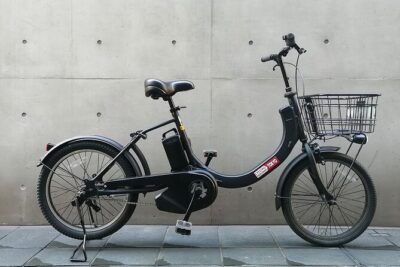 ★ 5.03h Tokyo E-Bike Tour: Hidden Gems, and Local Life with guideFrom $63
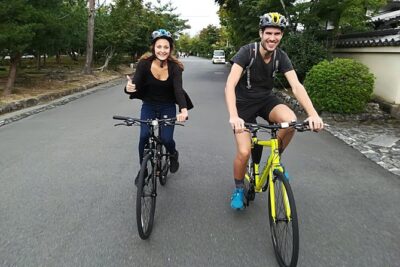 ★ 5.0Arashiyama Bamboo Forest & Hidden Gems Bike Tour (Early Bird)From $106
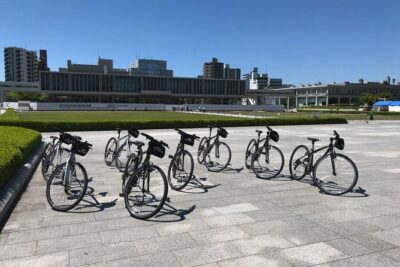 ★ 5.0Hiroshima in a Nutshell: Morning Bike AdventureFrom $72
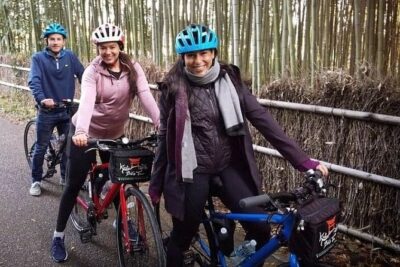 ★ 5.05 Top Highlights of Kyoto Full Day Bike Tour (E-bike option)From $172
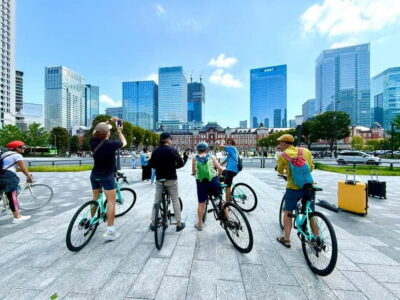 ★ 4.83-Hour Bike or E-Bike City Highlights TourFrom $453 hours
Browse the lists this tour appears in