
Reviewed · CYCLING TOURS
eTour de Matsumoto – Electric Bike Tour
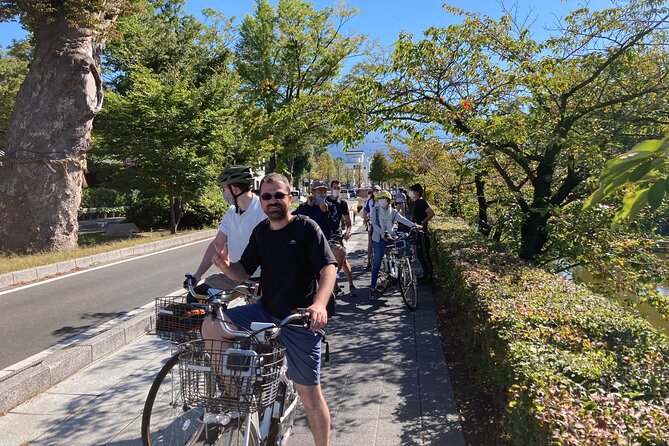
Matsumoto is one of Japan’s best cities for seeing by bicycle, and this tour gets you beyond the castle streets into rice fields, farm lanes, and quiet valleys with the Japanese Alps behind you. You also visit Fukashi Shrine, Asama-Onsen, and Matsumoto Castle, so the ride mixes countryside with the city’s major sights.
I like the easy assistance of an electric bicycle and the small maximum group of eight. I also like the local focus: secluded shrines, traditional farmhouses, and the Yamabe Valley offer a side of Matsumoto that a standard walking tour misses. The main consideration is simple: four hours of cycling still calls for moderate fitness, and the tour depends on good weather.
In This Review
- Key points at a glance
- Why an e-bike is a smart way to see Matsumoto
- Starting at Matsumoto Station
- Fukashi Shrine and the stories behind local worship
- The Susuki-gawa River and Yamabe Valley
- Asama-Onsen, a look at Japanese bathing culture
- Matsumoto Castle, the grand finish
- What the guide adds to the ride
- How demanding is the cycling?
- The price and what you receive
- When this tour gives you the best value
- Should you book the eTour de Matsumoto?
- FAQ
- Where does the eTour de Matsumoto begin?
- Where does the tour finish?
- How long does the tour last?
- Is an electric bicycle included?
- Is a guide included?
- How large is the group?
- Is lunch included?
- What happens if bad weather cancels the tour?
Key points at a glance
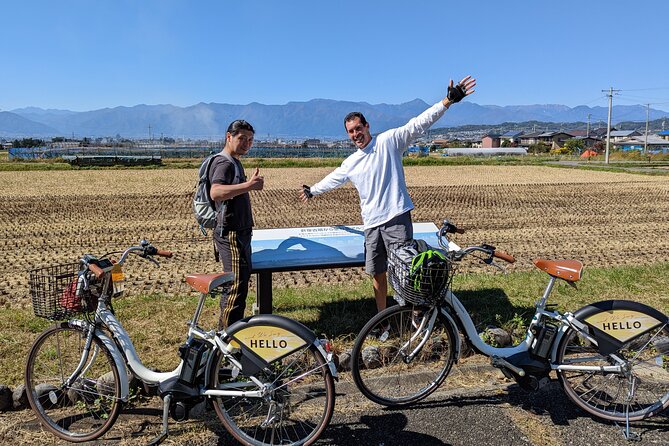
- Countryside beyond the castle: Cycle past rice fields, vineyards, farmhouses, and mountain views east of Matsumoto.
- A useful electric boost: The e-bike makes a moderate cycling route more manageable, especially beyond the city center.
- Four worthwhile stops: See Fukashi Shrine, the Susuki-gawa River area, Asama-Onsen, and National Treasure Matsumoto Castle.
- Relaxed pace: The route includes breaks for sightseeing and photographs rather than a race through town.
- Small group size: No more than eight people can join, which leaves room for questions and guide commentary.
- Bring your own extras: A helmet and bicycle are included, but you need water, snacks, sun protection, and any other safety gear you want.
Why an e-bike is a smart way to see Matsumoto
Matsumoto’s center is compact, but the city opens into broad farmland surprisingly quickly. The castle is easy to reach on foot, yet walking does not take you to the rice fields, mountain foothills, and rural shrines that give the area its character.
An electric bicycle bridges that gap. You still pedal and feel connected to the countryside, but the motor helps keep the ride comfortable as the route moves away from the station. I see this as a good middle ground between a bus tour and a demanding bicycle outing. You get fresh air and a closer look at the area without spending the day fighting hills or covering long distances on foot.
The tour lasts about four hours. That is long enough to see several parts of Matsumoto, but short enough to fit around other plans, such as an evening meal or a visit to the castle interior. The pace is designed for discovery, with stops to take photographs and hear about local history.
The group limit of eight matters here. Rural cycling is more pleasant when you are not stuck behind a large procession, and a small group makes it easier to hear the guide at a shrine or ask about the farms and temples along the way.
Starting at Matsumoto Station
The meeting point is Matsumoto Station, at 1 Chome-1 Fukashi. That is convenient if you arrive by train and want to begin exploring right away. The tour also ends at the same meeting point, so you do not need to arrange a separate ride back from the countryside.
You receive a mobile ticket, and confirmation is provided at booking. The activity is near public transportation, which makes the start and finish practical for a day in town. Since the tour returns to the station, you can leave larger luggage at your accommodation or use an appropriate storage option before meeting the guide.
Expect a brief transition from the station area into the quieter parts of town. The appeal of this ride is not speed. It is the change in scenery as shops and traffic give way to open fields, waterways, shrines, and old farm buildings.
Fukashi Shrine and the stories behind local worship
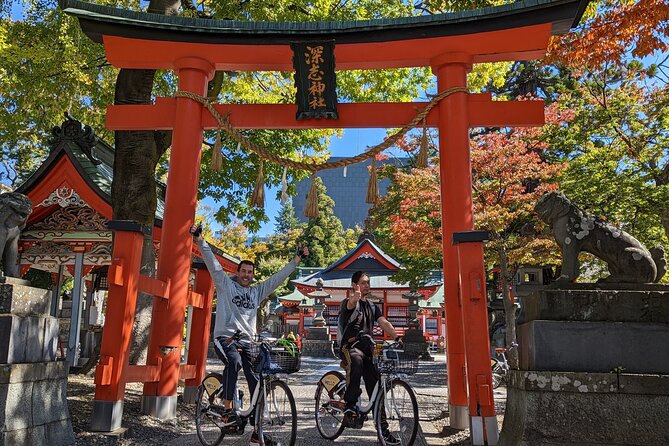
Fukashi Shrine is dedicated to Suwamiyojin, associated with wind, water, and agriculture, and Tenjin, associated with scholarship. Those roles tell you something important about Matsumoto’s older rural life. Water and farming were central to survival, while education and learning had their own place in local religious practice.
The shrine’s Tenjin Matsuri is its best-known festival. Even if your visit does not coincide with the festival, the guide can help connect the site to the wider traditions of the area. This is one of the better reasons to take the tour with a guide rather than simply cycling past a shrine on your own. A quiet religious site can be easy to overlook when you do not know what you are seeing.
Fukashi Shrine also helps set the tone for the day. You are not stopping only at famous postcard sights. You are seeing places that matter to local communities, including shrines that receive fewer international visitors.
You should still keep expectations realistic. This is a sightseeing stop during a cycling route, not a long shrine study or a formal religious tour. The value comes from the setting, the story, and the chance to see a less familiar part of Matsumoto.
The Susuki-gawa River and Yamabe Valley
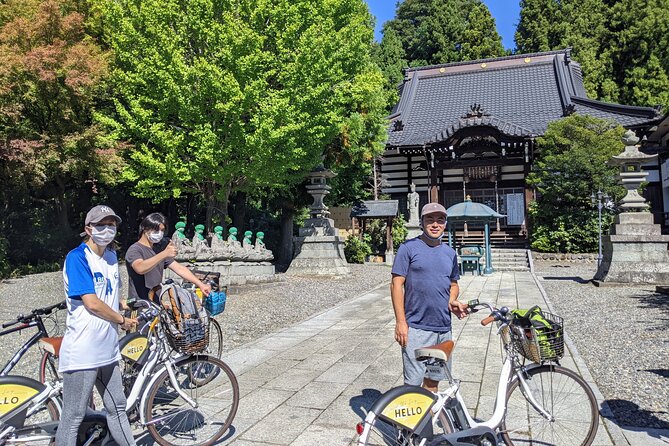
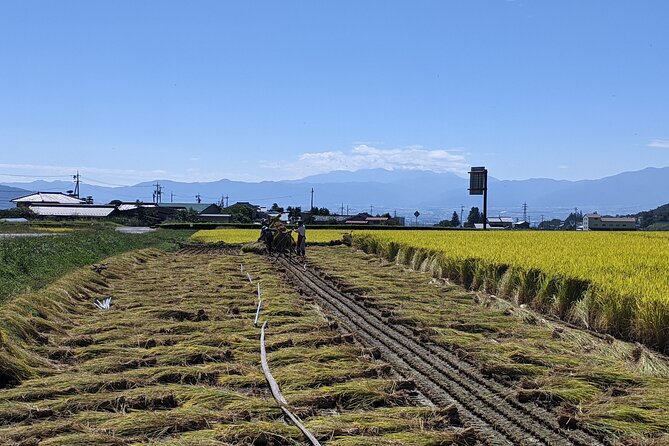
East of town, the Susuki-gawa River runs down from the mountains through vineyards and rice fields toward the Yamabe Valley. This is likely the most scenic part of the ride for many people. You get open views, rural buildings, cultivated land, and the mountain backdrop that makes Matsumoto feel very different from Japan’s major cities.
The route lets you spend time in the countryside without giving up the structure of a guided outing. You can stop for photographs, look at the fields, and notice how water from the mountains supports farming below. The ride is a practical lesson in the geography of the region: mountain streams, valley farms, and the city gathered around its historic center.
I especially like this portion for people who want more than a checklist of attractions. You are not simply passing between monuments. You are seeing how Matsumoto works as a place, with agriculture and mountain water still shaping the view.
The scenery will change with the season, and weather affects the experience. On clear days, the Alps can provide a striking backdrop. On cloudy days, the ride may feel quieter and more atmospheric, but mountain views can be less distinct. Since the activity requires good weather, a poor forecast may lead to a new date or a full refund.
Asama-Onsen, a look at Japanese bathing culture
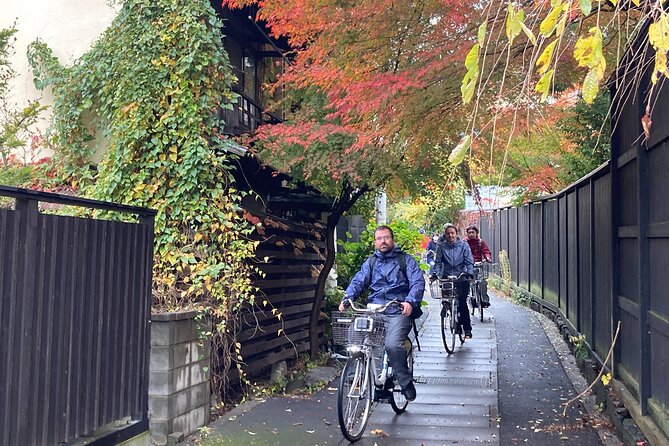
Asama-Onsen Village sits north of Matsumoto and is known for its natural hot springs. Onsen bathing is an important part of Japanese culture, and this stop gives you context for one of the region’s most familiar traditions.
Do not expect the tour to turn into a full bathing session. The supplied details describe a visit to the hot spring village, not an included bath. If you want to use an onsen during your trip, you should treat that as a separate plan and check the facilities and entry arrangements yourself.
Even without bathing, Asama-Onsen adds variety to the route. You have moved from a shrine and open farmland to a traditional hot spring area with its own identity. The stop also gives the guide another chance to explain how local culture connects to the natural resources around Matsumoto.
For many people, this will be one of the more interesting stops because it introduces a custom that is easy to misunderstand from outside Japan. The guide can provide the setting and background, while you decide if you want to return later for a longer onsen visit.
Matsumoto Castle, the grand finish
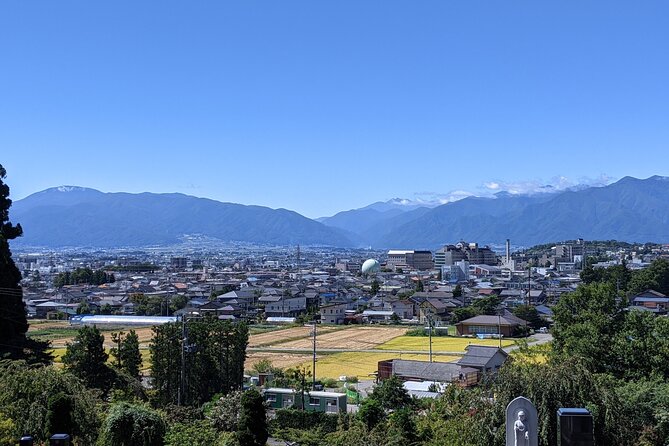
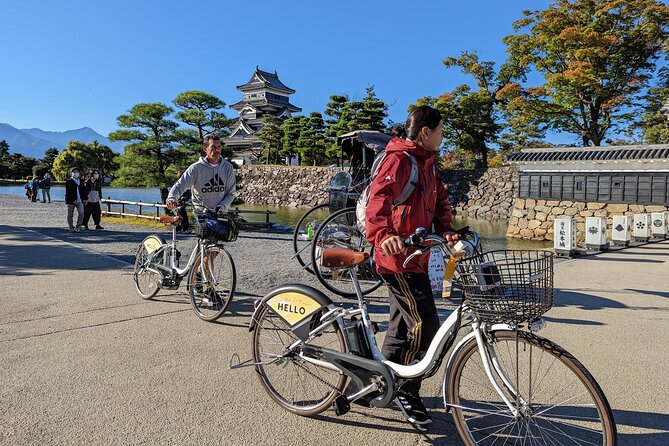
Matsumoto Castle is the best-known sight on the route and one of only five Japanese castles designated a National Treasure. Its original construction dates back more than 400 years, giving the castle a long connection to the city and surrounding region.
The castle is often called the Crow Castle because of its dark exterior, though that nickname is not part of the listed tour details. What matters for this outing is its place in the city: after seeing rural Matsumoto, you return to the historic center and finish with the landmark most people come to see.
A guided bicycle tour does not necessarily include castle admission. The listed inclusions cover the bicycle, helmet, and English-speaking guide, but not entrance fees. If you want to tour the castle interior, confirm the arrangements and allow extra time outside the four-hour ride.
That distinction is useful when planning your day. You can treat the cycling tour as a city-and-countryside overview, then return to the castle separately if you want a slower visit inside. Or, if your schedule is tight, you can enjoy the exterior and grounds as part of the route and save the interior for another trip.
What the guide adds to the ride
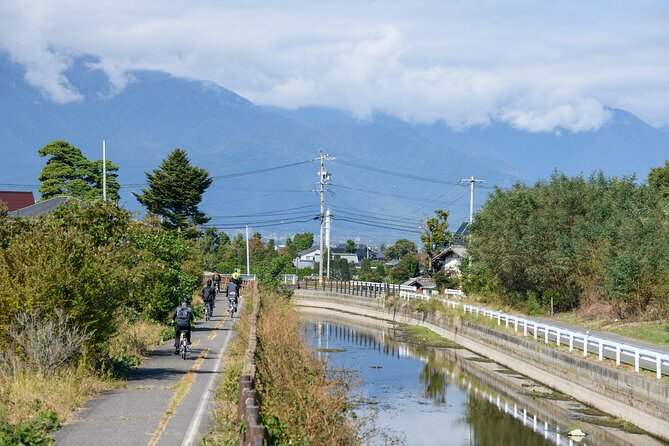
The English-speaking guide is central to the experience. Without commentary, you would still have a pleasant bicycle ride, but the shrines, hot spring village, farms, and castle would remain separate sights. The guide connects them through local history and geography.
Kevin has led the tour and is described as having extensive knowledge of the area. His role is not just to point out landmarks. A good guide on this route explains why a shrine is important, how the valley is used, and what makes the countryside around Matsumoto different from the urban parts of Japan.
The strongest praise for this experience focuses on that combination of scenery and explanation. The ride offers quiet countryside, secluded religious sites, valley views, and local history in one outing. That makes it more useful than a simple bike rental, especially if you have only a short stay in Matsumoto.
Guide quality can always vary by date, but the tour is built around personal interpretation rather than an audio device or printed route. If you enjoy asking questions and learning as you go, that is a real advantage.
How demanding is the cycling?
The tour is described as suitable for most fitness levels, with a moderate amount of cycling. It is not presented as a racing tour or a long-distance athletic ride. The pace is relaxed, and sightseeing and photo breaks are part of the design.
Still, you should be comfortable riding a bicycle for several hours. You may encounter stretches outside the city, and the route includes enough movement that this is not a casual ten-minute rental. The electric assist helps, but it does not remove the need to pedal, balance, and pay attention to the road.
Wear practical clothing and shoes. Bring water, snacks, and sun protection, particularly in summer. The tour provides a helmet, and wearing it is required. Other safety equipment is not included, so bring anything extra you normally use for cycling.
This outing suits people who want active sightseeing but do not want a hard workout. It may be a poor match if you dislike bicycles, struggle with moderate physical activity, or want an entirely vehicle-based tour.
The price and what you receive
The cost is $88.02 per person. For about four hours, that is not the cheapest way to see Matsumoto, but it is a fair price if you value equipment, a guide, and access to the countryside in one organized outing.
Your fee includes the electric bicycle, helmet, and English-speaking guide. Those inclusions matter because renting a bicycle alone would leave you to plan the route, find the rural sights, and interpret the places you pass. Here, the guide handles the route and adds local background.
Lunch is not included, and neither are snacks, souvenirs, insurance, or miscellaneous fees during the activity. One possible plan is to carry a small snack and water, then arrange a meal before or after the tour. A local soba lunch has been enjoyed as part of a day around the tour, but you should not assume lunch is part of the booking.
At an average booking lead time of 33 days, it is sensible to reserve ahead if your Matsumoto dates are fixed. The maximum group is eight, and popular travel periods can reduce choices even when the experience is not a large-scale activity.
When this tour gives you the best value
I would choose this ride early in a Matsumoto visit. It gives you a broad sense of the city and its surroundings, which can help you decide where to spend more time later. You see the castle, but you also learn that Matsumoto is more than one famous building.
It is particularly useful for:
- First-time visitors who want an overview beyond the central streets
- Couples and friends who enjoy active sightseeing
- People interested in rural Japan, farming, shrines, and hot springs
- Visitors with enough time for a half-day outing
- Cyclists who want electric assistance and a relaxed pace
- Anyone who prefers a small group to a large bus tour
I would be more cautious if your schedule allows only a quick stop in Matsumoto. The tour takes about four hours, and you may want additional time for the castle interior. I would also avoid booking it as your only fixed plan if rain is likely, since poor weather can cancel the activity.
Free cancellation is available if you cancel at least 24 hours before the start time. Changes or cancellations inside that window are not accepted for a refund. If weather forces cancellation, you are offered another date or a full refund.
Should you book the eTour de Matsumoto?
Book it if you want to see Matsumoto as a working city surrounded by farms, waterways, shrines, and mountains, not just as the home of a famous castle. The electric bicycle, relaxed pace, small group, and English-speaking guide make the route accessible without turning it into a strenuous sports outing.
The best reason to go is the mix of places: Fukashi Shrine, the Susuki-gawa River and Yamabe Valley, Asama-Onsen, and Matsumoto Castle. You get quiet local sights as well as the major landmark, with Kevin or another English-speaking guide supplying the context that makes the route meaningful.
Skip it if you are looking for a purely historical walking tour, a castle-only visit, or a fast cycling challenge. For most visitors with moderate fitness and a half-day to spare, this is a strong way to connect Matsumoto’s city center with the countryside around it.
FAQ
Where does the eTour de Matsumoto begin?
The tour begins at Matsumoto Station, at 1 Chome-1 Fukashi, Matsumoto, Nagano 390-0815, Japan.
Where does the tour finish?
The activity ends back at the meeting point at Matsumoto Station.
How long does the tour last?
The tour lasts approximately four hours.
Is an electric bicycle included?
Yes. Bicycle use is included in the price, along with a helmet.
Is a guide included?
Yes. An English-speaking guide is included. Kevin has led this tour.
How large is the group?
The tour has a maximum of eight travelers.
Is lunch included?
No. Lunch is not included. Snacks, souvenirs, and other miscellaneous fees are also separate.
What happens if bad weather cancels the tour?
If the activity is canceled because of poor weather, you can choose a different date or receive a full refund.
Cycling Tours, compared.
 ★ 5.0Bike Tour Exploring North Kyoto plus LunchFrom $106
 ★ 5.0Tokyo Great Cycling TourFrom $99
 ★ 5.0Tokyo Top Highlights 3h Guided E-bike TourFrom $63
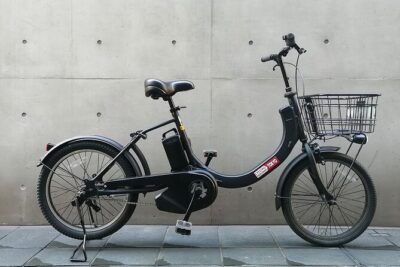 ★ 5.03h Tokyo E-Bike Tour: Hidden Gems, and Local Life with guideFrom $63
 ★ 5.0Arashiyama Bamboo Forest & Hidden Gems Bike Tour (Early Bird)From $106
 ★ 5.0Hiroshima in a Nutshell: Morning Bike AdventureFrom $72
 ★ 5.05 Top Highlights of Kyoto Full Day Bike Tour (E-bike option)From $172
 ★ 4.83-Hour Bike or E-Bike City Highlights TourFrom $453 hours