
Reviewed · OSAKA CYCLING TOURS
Urban Canvas: Osaka Street Art Bike Tour
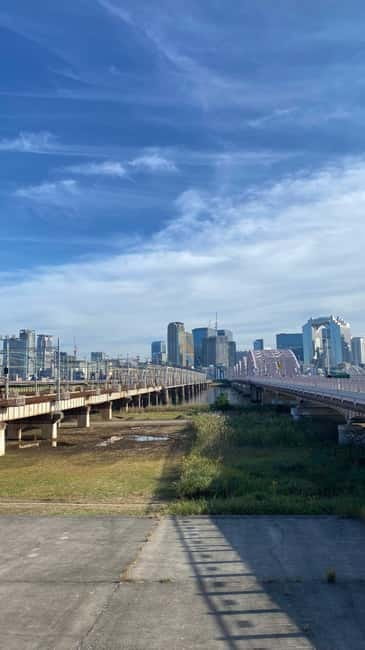
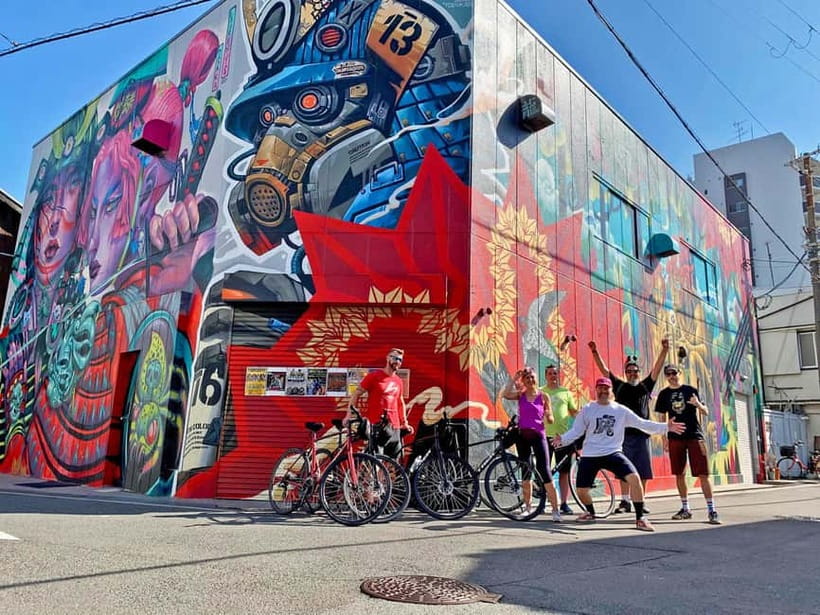
Osaka’s most interesting art is not always in a gallery. It appears beside railway tracks, on aging concrete walls, under bridges, and along streets most sightseeing routes skip. This four-and-a-half-hour bike tour takes you through Tenma, Juso, and Nakazaki-cho, showing you an Osaka of graffiti, old buildings, train lines, rivers, and sharp modern towers.
I like the small group, limited to six people, because you can ask questions without shouting over a crowd. I also like the mix of art and ordinary neighborhood life: a coffee stop, a standing bar, and a slice of pizza served in a 100-year-old building. The main drawback is the distance. One outing covered about 23 kilometers, so this is not a gentle ride for anyone who dislikes steady cycling.
In This Review
- Key points to know before booking
- Why this ride shows a different Osaka
- Starting near Tenmabashi and entering Tenma
- Crossing the Yodo River into Juso
- Reading Osaka through walls, rails, and bridges
- Nakazaki-cho: from rough edges to small shops
- The pace, distance, and physical demands
- Is $87 a fair price?
- Who will enjoy this Osaka bike tour?
- Practical tips for a smoother ride
- Should you book Urban Canvas?
- FAQ
- Where does the Osaka Street Art Bike Tour meet?
- How long does the tour last?
- How much does the tour cost?
- What neighborhoods does the route visit?
- Does the tour cross the Yodo River?
- Is the tour conducted in English?
- How many people are in the group?
- What is included in the price?
- Is hotel pickup included?
- What happens if it rains?
Key points to know before booking
- About 23 kilometers by bike: Expect a real city ride rather than a short spin around one neighborhood.
- Juso is the tour’s characterful center: Cross the Yodo River and enter a part of Osaka that most sightseeing routes miss.
- Street art comes with local context: English-speaking guides such as Ruben and Eric explain the artists, the works, and the city around them.
- Three neighborhoods, three moods: Tenma feels gritty and urban, Juso has a rough-edged local energy, and Nakazaki-cho brings small shops and galleries.
- Food is part of the route: A pizza slice is included, while coffee and bar stops may require extra spending.
- Weather can change the plan: If rain is more than 60 percent likely during the tour, the operator cancels and offers another date or a full refund.
Why this ride shows a different Osaka
Most first visits to Osaka revolve around famous food streets, neon signs, shopping arcades, and major sights. This ride takes you just outside that familiar picture. You follow the city’s working edges and residential streets, where the scenery changes every few minutes.
I like that the tour does not treat street art as decoration alone. Your guide connects the paintings and graffiti to Osaka’s urban setting, including the bridges, rail corridors, old structures, and newer skyline. The result is less about ticking off named attractions and more about learning how the city expresses itself between official spaces.
The route also gives you a useful sense of Osaka’s size. You ride from Tenma toward the Yodo River, cross into Juso, then continue toward Nakazaki-cho. Along the way, you see how water, railways, roads, and dense housing shape the city.
This is an active tour. You are not stopping at every artwork for a long lecture, but you do get time to photograph pieces and ask questions. Guides Ruben and Eric have been singled out for their enthusiasm and strong grasp of the art and local neighborhoods. If you want a guide who can talk about Osaka as well as murals, that is an important part of the appeal.
A few more Osaka tours and experiences worth a look

Starting near Tenmabashi and entering Tenma
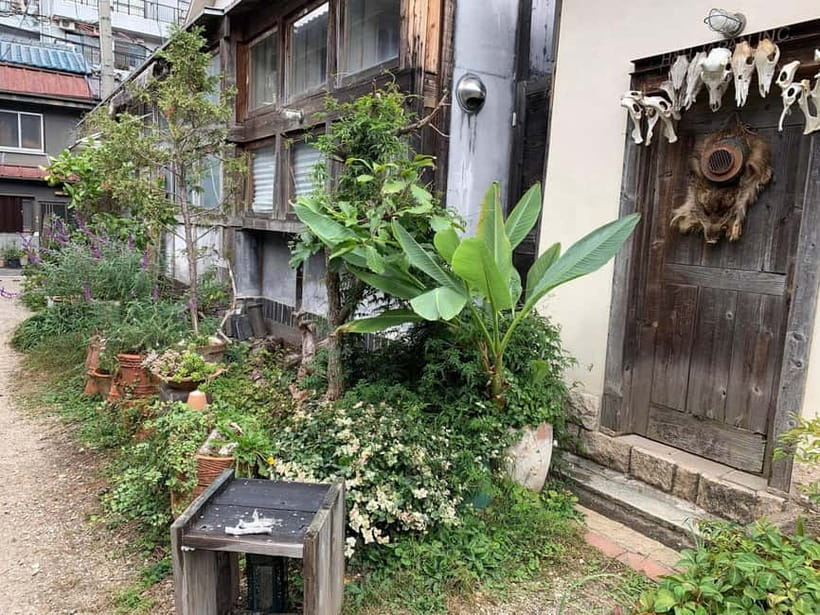
The meeting point is about a 10-minute walk from Tenmabashi Station, served by the Osaka Metro and Keihan Line. There is no hotel pickup, so give yourself time to find the meeting point and arrive ready to ride.
Tenma provides an appropriate opening. It is close to central Osaka, yet the route quickly moves you away from the polished core and into streets where old buildings, infrastructure, and everyday city life take priority. The tour uses bicycles to cover ground efficiently, but the pace also lets you notice details that disappear from a train window or taxi.
Your bike, helmet, and water are provided. Wear clothes that are easy to move in and shoes you can pedal in for several hours. You should also bring a camera. Street art changes, fades, and sometimes disappears, so photographs are useful if you want to remember the works later.
The group size matters here. With no more than six participants, the guide can usually keep the ride together and make room for questions at stops. It also makes the experience feel more like a guided outing with a local than a large procession through city streets.
Crossing the Yodo River into Juso
The ride across the Yodo River is one of the route’s strongest transitions. You leave the central city behind and enter Juso, a neighborhood described as one of the centers of Osaka’s street art scene.
Juso is not presented as a polished attraction. Its appeal comes from its rougher, more ordinary character. You see urban walls, rail lines, bridges, and dense streets, then stop to consider works by local and international artists. The art feels tied to its surroundings rather than placed in a spotless gallery.
The guide’s commentary is especially useful here. Without some explanation, you may see only a striking wall or a clever piece of graffiti. With context, you can pay closer attention to the artist’s choices and to the way the work fits the neighborhood. The exact artworks can change, but the larger point remains: Osaka’s creative life is not limited to its museums.
Juso also brings the tour’s most distinctive social stops. The route includes a specialty coffee stop and an old-school standing bar. These pauses break up the cycling and give you a look at places built for local routines rather than sightseeing.
The supplied details confirm that pizza and water are included, but they do not say that coffee or bar purchases are covered. I would bring some yen for these extras. If you prefer a strictly scheduled ride with no informal stops, this part may feel loose. If you enjoy seeing how a neighborhood eats and pauses, it adds real value.
Reading Osaka through walls, rails, and bridges
The art is only one layer of the experience. You also spend much of the ride looking at the city’s physical structure. Expect a mix of railway lines, river crossings, concrete, graffiti, modern skylines, and older buildings.
This is where a bicycle works better than a standard walking tour. The neighborhoods are spread out, and the bike lets you connect them without spending the day on trains. You move from one kind of city space to another while staying close enough to stop for photographs.
The ride also gives you a better understanding of Osaka’s contrasts. A modern tower may appear beyond a low neighborhood street. A rail line may cut through an area filled with small businesses. A bridge can shift the mood from central Osaka to Juso in a matter of minutes.
I would not book this tour only for a list of famous murals. The art scene is changing, and individual works may not remain in place. Book it for the wider experience: seeing how artists use the city, learning about Osaka’s less formal creative spaces, and covering several neighborhoods in one outing.
Nakazaki-cho: from rough edges to small shops
After the grittier parts of Juso and Tenma, the route heads toward Nakazaki-cho. This neighborhood has a different feel, with boutique shops, galleries, and older buildings adapted to newer uses.
Nakazaki-cho is a good counterpoint to Juso. Instead of focusing mainly on rough urban infrastructure, this section shows a more styled and creative side of Osaka. You can expect narrow streets, independent businesses, and places that reward looking closely rather than rushing through.
The food stop here is a local institution serving pizza slices in a 100-year-old building. A simple slice may not sound like a major sightseeing event, but it fits the tour’s approach. You are eating in a place with an everyday role and a long physical connection to the neighborhood, not stopping at an anonymous chain near a station.
Pizza is included in the tour price, which makes this a useful refreshment during a long ride. It also gives the day a clear finish after the cycling and art stops. If you have dietary restrictions, provide that information when booking. The operator specifically asks for dietary details in advance.
Other cycling tours in Osaka
The pace, distance, and physical demands
At 270 minutes, this is a substantial half-day activity. The distance of about 23 kilometers, recorded on one outing, is the most useful practical detail for judging the tour.
You do not need to be a serious cyclist, but you should be comfortable riding in an urban setting for several hours. The tour is not suitable for people with mobility impairments or wheelchair users. Children under 10 cannot join, and children under 13 are not recommended.
The route includes bridges and city streets, so expect changes in scenery and some effort. Comfortable clothing and shoes are more important than looking smart. The helmet is supplied, as is the bike, so you do not need to arrange cycling equipment yourself.
The small group can help with the pace. A guide leading six or fewer people has more room to keep the ride together and allow photo stops. One outing allowed enough time to photograph the artworks while maintaining a steady pace. Still, you should not assume a relaxed, short-distance ride. If you want the easiest possible way to see Osaka, use public transport. If you want to connect several outlying areas under your own pedal power, this tour makes more sense.
Is $87 a fair price?
At $87 per person, the tour costs more than renting a bicycle and wandering around on your own. The comparison is not quite equal, though. The fee includes the bike, helmet, English-speaking local guide, water, a pizza slice, and a four-and-a-half-hour route through several neighborhoods.
The strongest part of the value is the access to local interpretation. You could find street art independently, but you would not necessarily know which districts to connect, where to look, or what the works mean in their setting. A guide also removes the need to plan a 23-kilometer route through unfamiliar streets.
The six-person limit adds value for people who like conversation and questions. It is less compelling if you prefer to stop whenever you want or dislike following a set route. You should also budget for any coffee or standing-bar purchases, since only the pizza and water are specifically included.
Free cancellation up to 24 hours before the start and the reserve-now, pay-later option reduce the financial risk. Weather is the bigger uncertainty. If the chance of rain is higher than 60 percent during the tour, the operator cancels and offers a different date or a full refund. Keep your phone reachable so you receive that update.
Who will enjoy this Osaka bike tour?
I would recommend it to you if you have already seen some of Osaka’s main sights and want a less familiar side of the city. It also suits visitors who enjoy street photography, urban architecture, independent shops, and small food stops more than formal museums.
The tour is a particularly good fit for:
- Confident casual cyclists who can handle several hours in the saddle
- Visitors interested in graffiti and street art beyond major galleries
- People who want an English-speaking guide and a small group
- Photographers who like changing city scenes and large-scale wall art
- Repeat visitors looking for Tenma, Juso, and Nakazaki-cho
- Couples or friends who enjoy mixing culture, food, and exercise
I would think twice if you have limited mobility, do not ride bikes comfortably, or are visiting during a period of uncertain weather. I would also choose another activity if your main aim is Osaka’s headline attractions. This tour is about the spaces between them.
Practical tips for a smoother ride
Arrive at the Tenmabashi meeting area early enough for the 10-minute walk from the station. Wear comfortable clothes and shoes, and bring a camera if you want to record the artwork.
Send the heights of everyone in your group before the tour. This helps the operator prepare suitable bikes. Also provide any dietary restrictions in advance, even though the included food is only a pizza slice.
Bring a little extra money for coffee and the standing-bar stop. Smoking is not allowed. Since the tour may be canceled when rain is more than 60 percent likely, keep your phone available on the day.
Guides may explain many individual works, but no printed art guide is provided. If you want to remember names or facts, save notes in your phone during breaks. That small habit will make the experience easier to recall later.
Should you book Urban Canvas?
Book this tour if you want to see Osaka through its side streets, rail corridors, river crossings, and independent businesses. The strongest reasons are the small group, the 23-kilometer connection between three distinct neighborhoods, and guides such as Ruben and Eric, who bring clear enthusiasm for both the art and the city.
Skip it if you want a short, effortless outing or if cycling is difficult for you. At $87, it is worthwhile for the guide, equipment, included food, and route planning, but only if you will use the full four-and-a-half hours. For an active visitor who wants an offbeat view of Osaka, this is one of the more distinctive ways to spend a half-day.
FAQ
Where does the Osaka Street Art Bike Tour meet?
The meeting point is about a 10-minute walk from Tenmabashi Station, served by the Osaka Metro and Keihan Line.
How long does the tour last?
The tour lasts 270 minutes, or four and a half hours.
How much does the tour cost?
The price is $87 per person.
What neighborhoods does the route visit?
The route goes through Tenma, Juso, and Nakazaki-cho.
Does the tour cross the Yodo River?
Yes. The route crosses the Yodo River and continues into Juso.
Is the tour conducted in English?
Yes. The live tour guide speaks English.
How many people are in the group?
The group is limited to six participants.
What is included in the price?
The price includes a bike, helmet, bike tour, local guide, pizza slice, and water.
Is hotel pickup included?
No. Hotel pickup and drop-off are not included.
What happens if it rains?
If the chance of rain is higher than 60 percent during the tour, the operator cancels and offers another date or a full refund. You should remain reachable for updates.
More Street Art in Osaka
More Cycling Tours in Osaka
More Osaka Cycling Tours in Osaka
More tours in Osaka we've reviewed
Osaka Cycling Tours, compared.
 ★ 5.05-Hour Osaka Bike Tour to the Neighborhood of Osaka CastleFrom $87
 ★ 5.0One-Day Osaka Bike Adventure: 5–6 HoursFrom $106
 ★ 5.0Eat, Drink & Cycle: Osaka Foodie Bike TourFrom $99
 ★ 5.0Osaka E-Bike Tour with a Local GuideFrom $59
 ★ 4.85-Hour Osaka Highlights Bike Tour with LunchFrom $855 hours
 ★ 5.0Osaka in a Nutshell: Three hour bike tourFrom $72
★ 4.7Osaka E-Bike Tour With A Local GuideFrom $573 hours
★ 5.0Urban Canvas: Osaka Street Art Bike TourFrom $89
★ 5.0Osaka in a Nutshell: Three hour bike tourFrom $72
★ 4.7Osaka E-Bike Tour With A Local GuideFrom $573 hours
★ 5.0Urban Canvas: Osaka Street Art Bike TourFrom $89
Browse the lists this tour appears in